
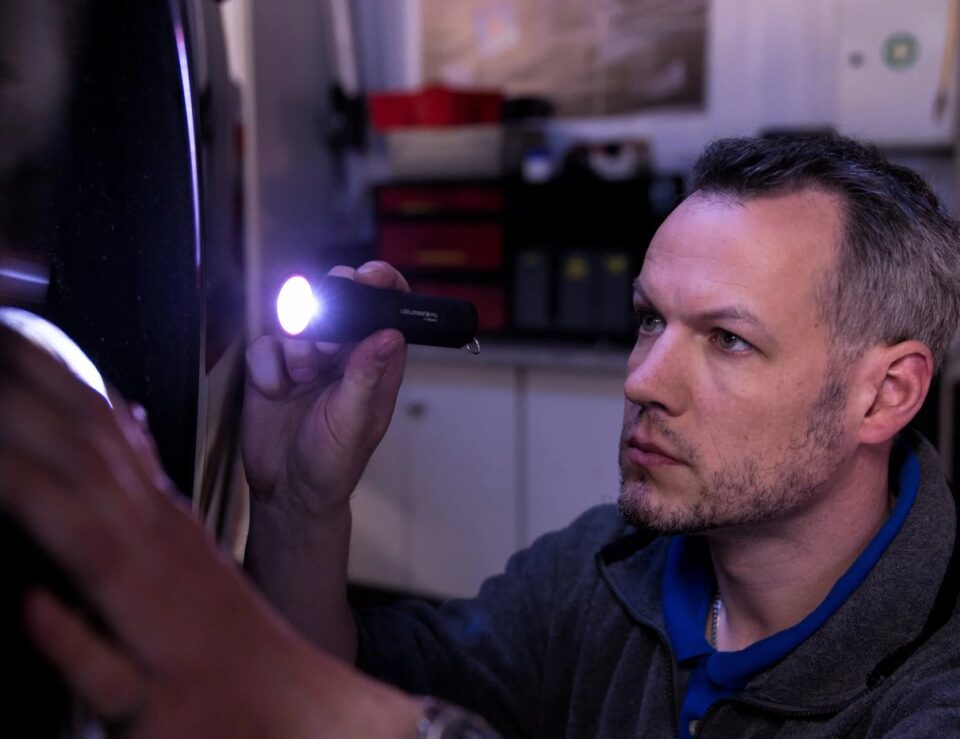
A torch that is bright enough on paper can still be the wrong choice if it is awkward to carry, slow to recharge or too specialised for the jobs you have in mind.
We reviewed the UK catalogue and product information from Ledlenser to build a practical way to narrow the range. Start with how you need to use the light, then weigh beam control, power format and wearing style; the highest output figure is only one part of the decision.
The examples below focus on three rechargeable head torches, from adaptable outdoor use to more demanding work. Treat listed specifications as a starting point and confirm the current details on the relevant product page before choosing.
This article contains affiliate links. If you buy through them, we may earn a commission at no extra cost to you.
Before you read on
- Choose a hands-free head torch when a task needs both hands.
- The H7R Signature balances adjustable output and beam focus for mixed outdoor and DIY use.
- The H9R Signature adds adaptive beam features and coloured light modes for varied outdoor situations.
- The H19R Pro is aimed at demanding work where helmet mounting and glove-friendly controls matter.
What job should the light handle most often?
Write down the main task before comparing models. Walking a dog on familiar paths, checking a fuse box and working around a site after dark do not call for the same setup. A compact handheld torch can be easier to pocket and direct, while a head torch frees both hands for repairs, setting up camp or carrying equipment.
Next, separate routine needs from occasional ones. If most use is close-range, a controllable low setting and a broad beam may be more useful than a short maximum-output mode. For distance, look at the stated beam range and whether the focus can shift between flood and spot. On selected Ledlenser models, the Advanced Focus System is designed to change the beam from broad illumination to a more concentrated spot.
- Choose a handheld format for quick checks and pocket carry.
- Choose a head torch when both hands need to remain free.
- Choose a work light for illuminating a wider area rather than a single line of sight.
- Match weather resistance and mounting options to the setting, not to a hypothetical worst case.
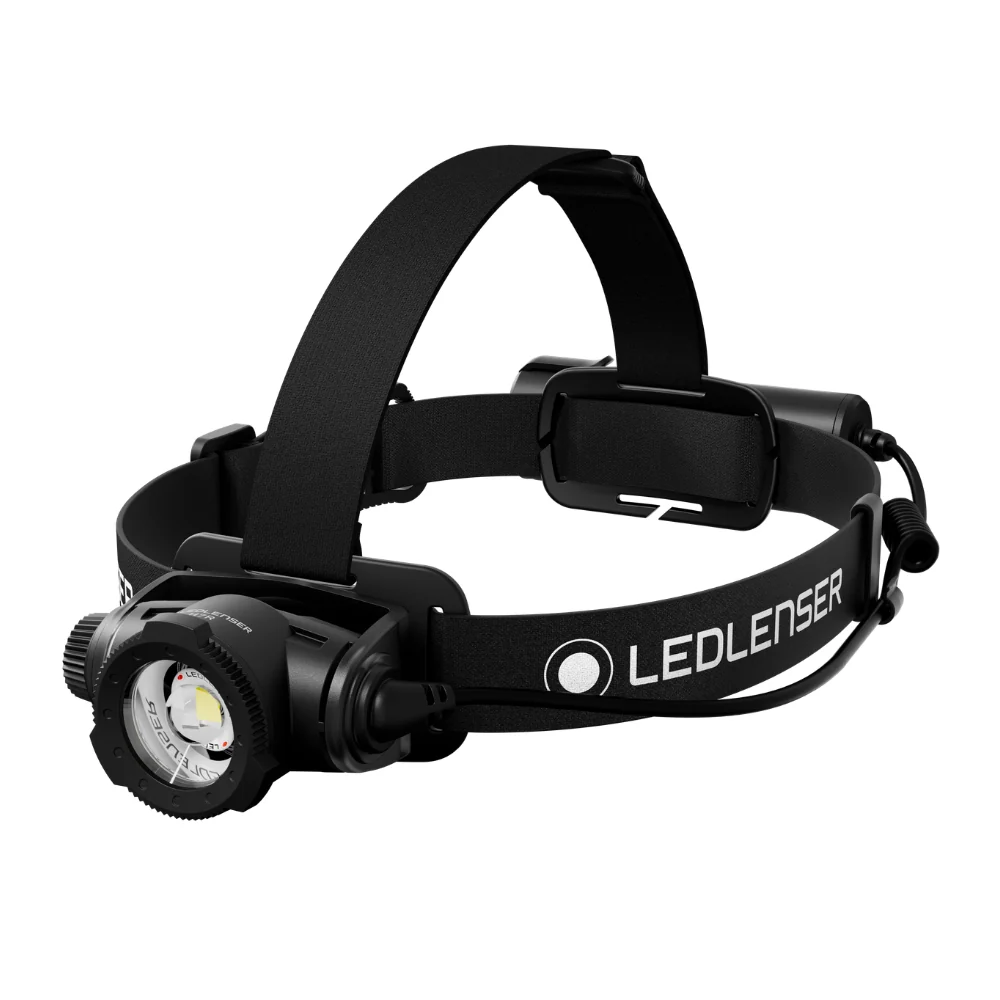
For frequent close and mid-range work, the H7R Signature lists stepless dimming and a focus ring, letting the user adjust brightness and beam shape. The UK product page also lists a rear-mounted battery, pass-through charging and a carry pouch. Those features make it a plausible all-rounder when use varies, though a feature-rich head torch may be more than a simple household check requires.
How much beam control and output do you need?
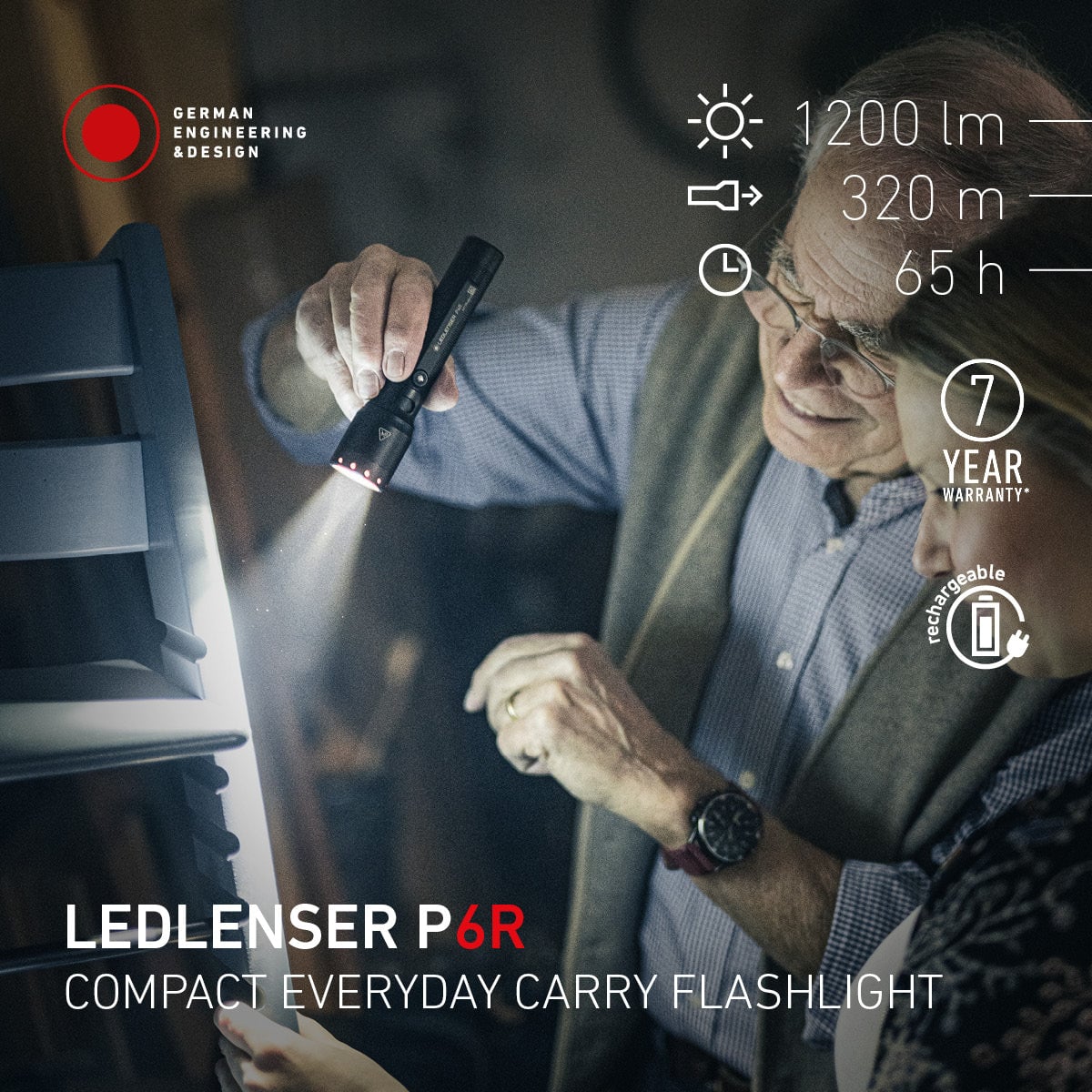
Think in terms of control, not just maximum output. A lower setting can reduce glare in a tent or workshop and help conserve power, while a focused beam helps when the target is farther away. The H7R Signature page lists several output modes and a maximum spot range; that range is a manufacturer specification, not a guarantee of how well a task will be lit in every environment.
The H9R Signature is positioned for outdoor activity and lists Adaptive Light Beam, manual digital focus and red, green and blue light modes. Consider those extras if you expect changing distances or need coloured light for a specific activity. If your usual jobs are close up and predictable, its additional controls may add complexity without making the torch a better fit.
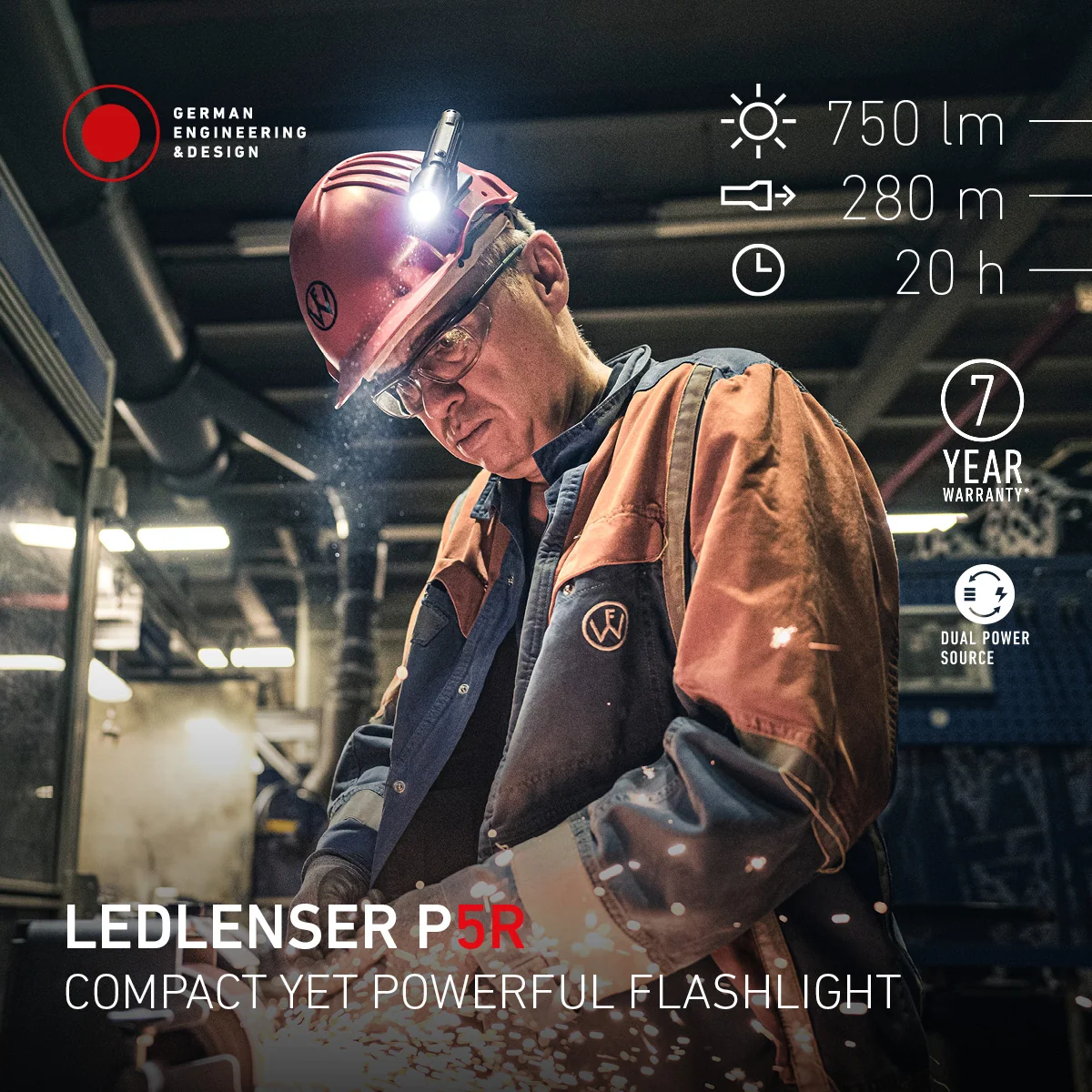
At the more work-oriented end, the H19R Pro lists automatic beam adjustment as well as manual spot-to-flood control, RGB modes and a rear red light option. Its page describes helmet mounting accessories and rubberised controls intended for gloved hands. This is a specialised choice for demanding work, and its broader feature set is unlikely to be necessary for casual evening walks.
| Model | Useful for | Notable detail |
|---|---|---|
| H7R Signature | Mixed outdoor and DIY tasks | Stepless dimming and focus ring |
| H9R Signature | Changing outdoor conditions | Adaptive beam and coloured modes |
| H19R Pro | Demanding work settings | Helmet mounting and glove-friendly controls |
Use the table as a shortlist, then open each product page for its full mode and accessory details. The H7R Signature listing, H9R Signature listing and H19R Pro listing present distinct use cases rather than a universal ranking.
- Prioritise a stable low mode for close work.
- Look for a focus mechanism if you regularly switch between nearby and distant objects.
- Check whether coloured light or a rear visibility light serves a real use case for you.
Will the charging and wearing setup fit your routine?
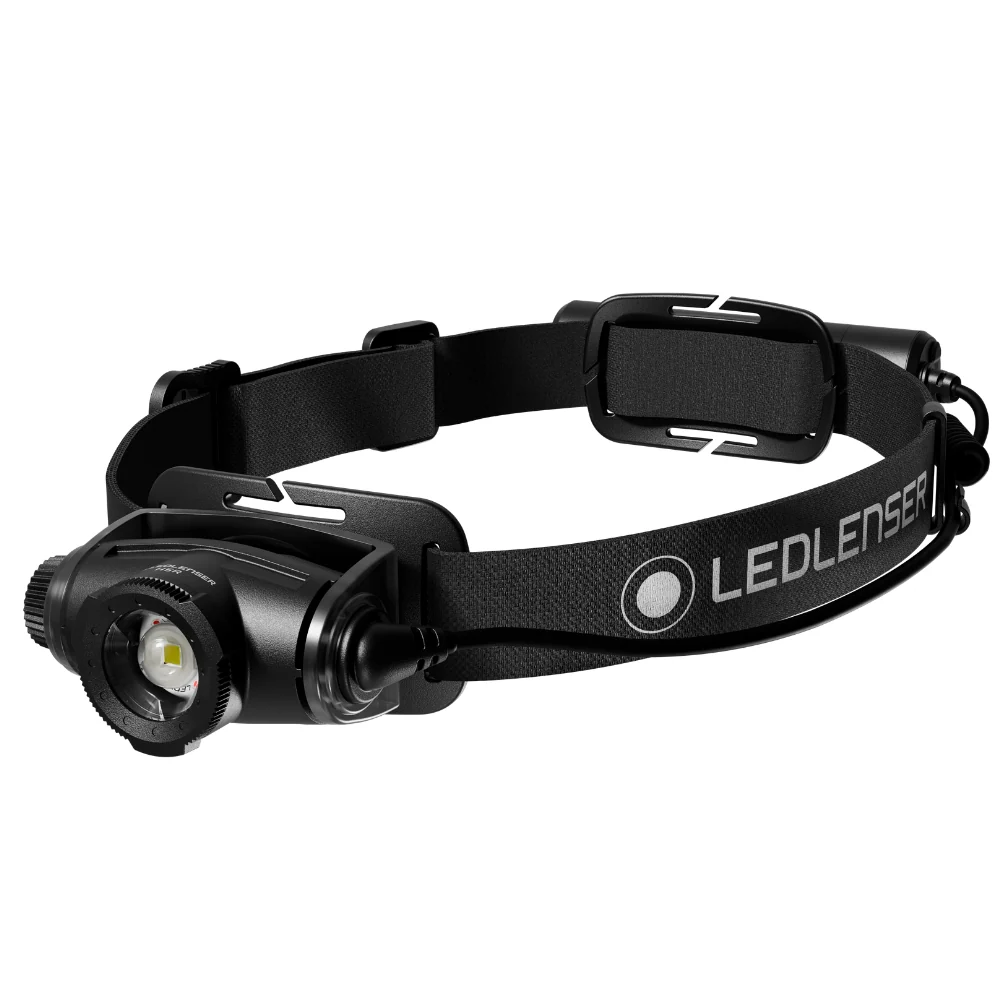
A rechargeable model works best when charging is part of the normal routine. Check whether the torch can operate while charging if long sessions are likely, and note where the battery sits. The rear-mounted battery on the H7R Signature and H9R Signature is listed as a way to balance the fit; pass-through charging is listed for both ranges. Confirm the included cable, charging arrangement and runtime modes on the exact UK listing.
Comfort is personal, so consider what you will wear underneath and whether the light needs to sit on a helmet. A reflective headband may be useful around roads or shared paths, while a helmet kit matters more for work than for a short walk. The H19R Pro is specifically described with helmet mounting accessories and rubberised controls. That focus is useful for the intended setting, but may be unnecessary bulk for general household use.
- Estimate the typical session length and how often you can recharge.
- Check the stated runtime for the mode you expect to use, not only the lowest setting.
- Confirm included mounts, pouch and charging accessories.
- Consider weight distribution and headband adjustment if you will wear it for extended periods.
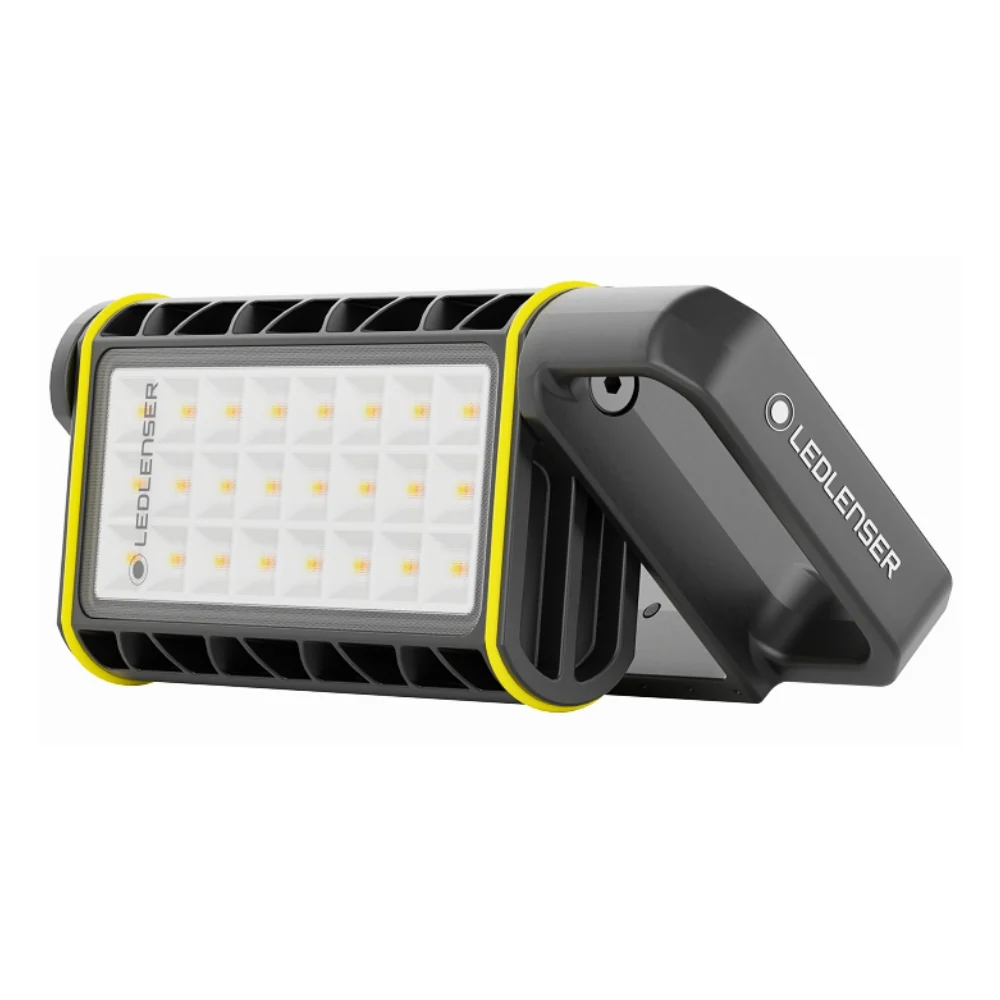
For workshop lighting that does not need to be worn, compare an area light such as the AF4R WORK with a head torch. A flood light can illuminate a broader work zone, while a head torch follows the user’s gaze and keeps the hands free. The product page details will show whether the mounting and charging format suits the place where it will be used.
What should you check on the UK product page?
Before selecting a Ledlenser model, verify the full model name and series. Closely named versions can have different output, controls or accessories, so avoid assuming that a specification carries over from another product in the family. Check the runtime chart at the mode you expect to use, the included charging equipment and the warranty conditions stated on the page.
Then compare the total setup rather than the torch alone. A carry pouch or helmet mount may be included on one product and optional for another; if you need an accessory, confirm compatibility for the exact model. Check current availability and price directly with Ledlenser, since those details can change and are not a stable basis for a long-lived guide.
- Confirm exact model, series and output modes.
- Read the runtime and beam-range notes alongside the mode you will actually use.
- Check included accessories and compatibility before adding extras.
- Review current availability, warranty terms and product care information on the UK store.
Is the H7R Signature suitable for everyday jobs?
It can suit varied tasks where dimming and beam adjustment are useful. For occasional short checks, a simpler torch may be easier to carry and operate.
When do coloured light modes matter?
They matter when a particular activity benefits from them, such as preserving night vision or distinguishing a task. If you have no such use, do not let extra modes outweigh fit and runtime.
Should I choose a head torch or an area light?
Choose a head torch when the light should follow your gaze and leave both hands free. Choose an area light when the work zone needs broader, stationary illumination.
Our recommendation
For a first shortlist, begin with the H7R Signature if you want a rechargeable head torch with adjustable output and beam focus. Consider the H9R Signature when its adaptive beam and coloured modes fit regular outdoor use, and the H19R Pro when helmet mounting and work-focused controls are relevant.
Our limitation is that catalogue specifications cannot tell you whether a headband feels comfortable or a beam suits your particular environment. Compare the listed modes, runtime, accessories and current product details on the UK store, then choose the simplest model that covers your real tasks.