
Choosing an electric bike from a wide catalog is less about the biggest claim and more about matching the frame and equipment to the rides you actually take.
Kingbull Bike focuses on fat-tire electric bikes, with distinct options for off-road routes, mixed city riding, and folding storage. Its US site provides model specifications and separate support pages, so there is enough information to make a shortlist, but buyers still need to check fit, delivery terms, and local rules.
This review is based on the brand’s published product and support information. We have not tested or independently verified the bikes, and advertised performance figures should be treated as manufacturer claims.
This article contains affiliate links. If you buy through them, we may earn a commission at no extra cost to you.
Before you read on
- Kingbull Ranger suits readers drawn to a moped-style silhouette with off-road positioning.
- Kingbull Expedition is the full-suspension model to investigate if range claims are relevant to longer rides.
- Kingbull Literider 2.0 is the folding option, but folded dimensions and lifting weight deserve attention.
- The range’s strongest appeal is its variety of fat-tire formats; its main limitation is that product-page claims do not answer every ownership question.
- Check fit, current configuration, warranty, shipping, and local e-bike rules before committing.
What does Kingbull Bike offer beyond fat tires?
Fat tires are the visual through-line, but the range is not one bike repeated in different colors. Kingbull Bike presents mountain-style models, moped-inspired designs, city-oriented bikes, and folding frames. This gives shoppers a meaningful starting point: decide how you store and ride first, then compare equipment.
The brand’s stated strengths include breadth across riding styles, published model-level specifications, and dedicated pages for warranty, shipping, returns, and owner resources. Those support pages make it easier to ask practical questions before checkout. The tradeoff is that the broad range can make category labels feel interchangeable; names like all-terrain or off-road do not establish how a particular bike handles your route.
Consider what a wide tire and heavier frame mean for your regular routine. They may suit loose surfaces and a planted feel, but stairs, narrow storage, public transport, and carrying the bike can become more demanding. The right choice depends on the whole commute or trail plan, not just the terrain description. For a city-focused alternative, the Trekker step-through is another page to compare, while the Voyager cargo bike is the more relevant cargo format.
Which model has the clearest use case?
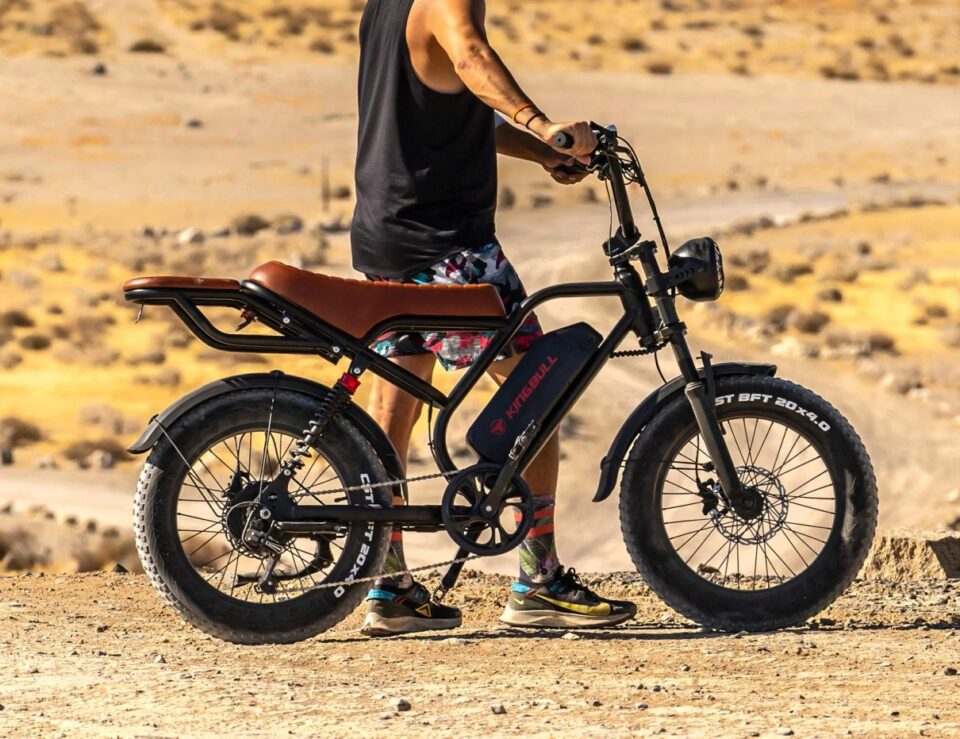
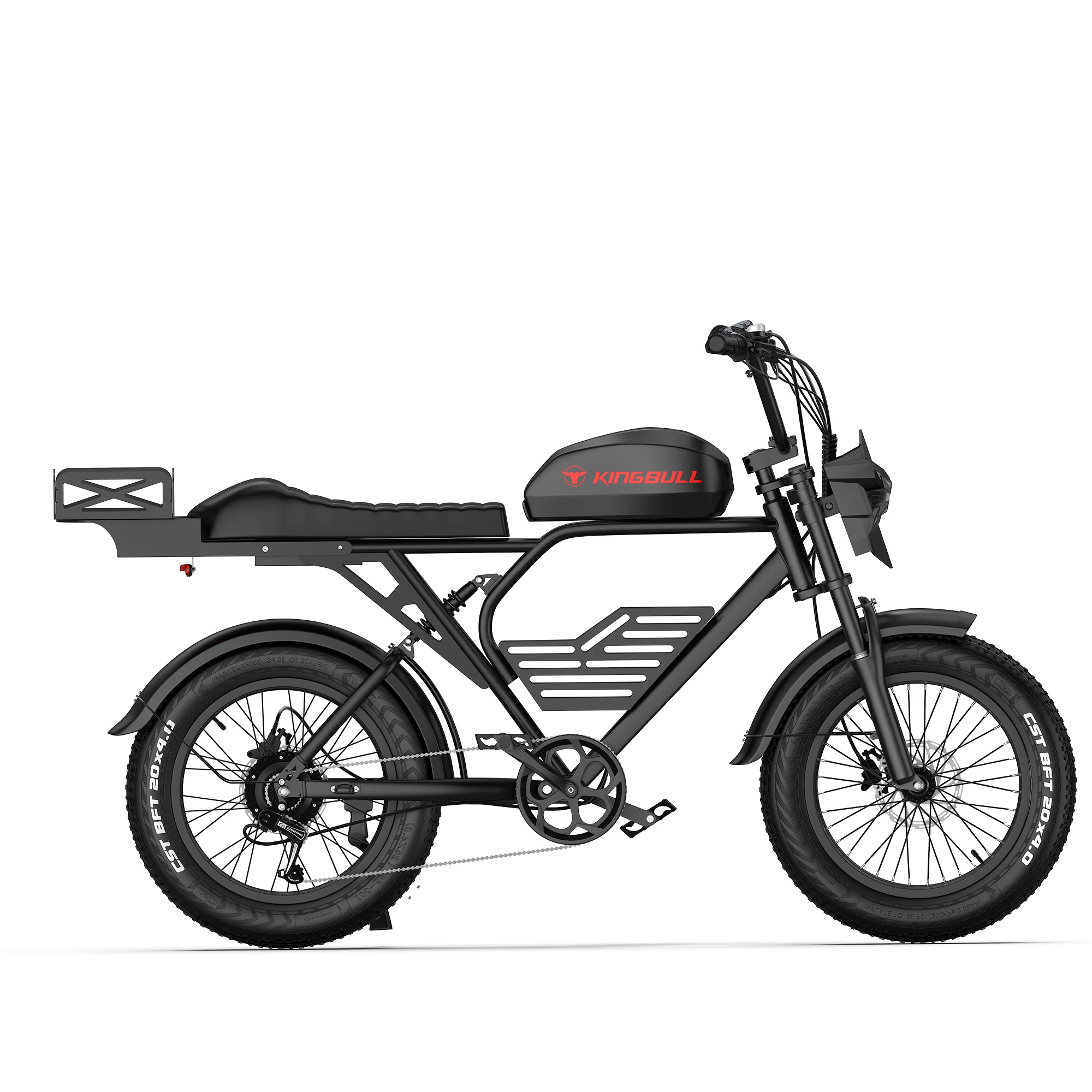
The Kingbull Ranger has an unmistakable moped-style profile. Its product page lists a 750W motor, 1300W peak output, and 85 Nm torque, and describes full-suspension construction. That specification set points toward riders who value a substantial, comfort-oriented setup for mixed terrain. See the Kingbull Ranger details at the model page and confirm the exact configuration before choosing.
Its styling and equipment are also its compromise: a moped-style bike may be less convenient to lift, store, or maneuver than a conventional commuter frame. We would shortlist it for riders with suitable storage and routes, not anyone who needs a compact daily carry. The product page is useful for the headline numbers, but test fit and handling locally if possible. Revisit the Ranger specifications alongside the geometry and weight information before deciding. The Ranger model page is also where to confirm current component and configuration details.
- Prioritize the frame style that fits your storage and riding posture.
- Match the tire, suspension, and motor details to routes you actually use.
- Resolve service, warranty, and local-rule questions before ordering.
The Kingbull Expedition is positioned as an all-terrain moped-style bike with full suspension. Kingbull advertises a long-range figure on its storefront, but range varies with rider weight, assist level, terrain, temperature, and cargo. Treat the published figure as a best-case reference to interrogate, not a guaranteed ride distance. Its full-suspension layout may interest riders seeking comfort on uneven ground, while the larger format calls for a careful check of storage and weight. Compare the Expedition model details with the Ranger frame and equipment if you are deciding between the two moped-style options.
- Ranger: moped-style and full-suspension positioning.
- Expedition: all-terrain moped format with a range claim to verify.
- Literider: folding frame for storage flexibility.
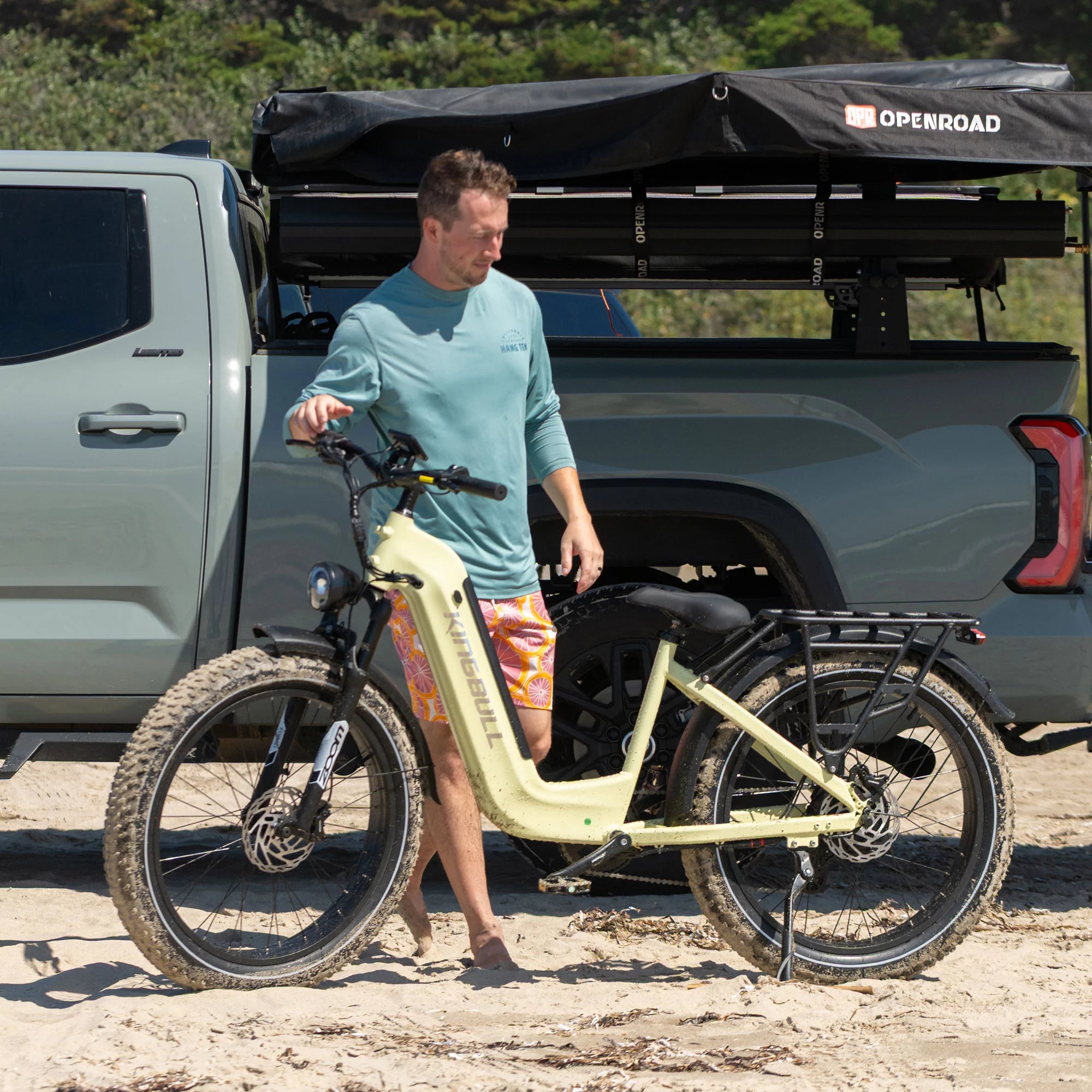
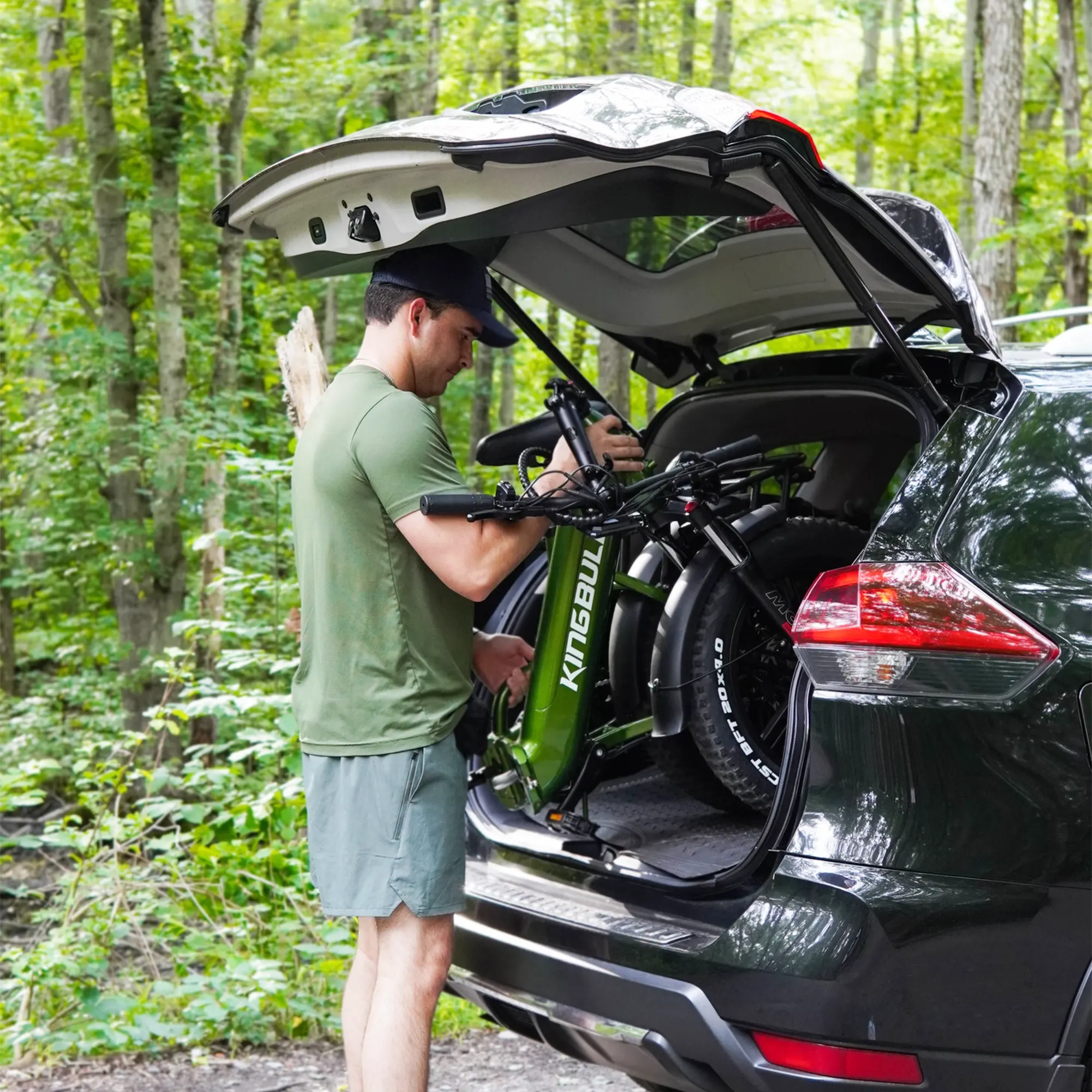
For a different priority, the Kingbull Literider 2.0 folds and is described with a 750W hub motor and removable 48V/720Wh battery. Those details make it the obvious candidate for shoppers balancing ride use with storage constraints. Folding does not automatically mean lightweight or easy to carry, however. Check the folded footprint, actual lifting weight, and whether the battery can be removed conveniently. The Literider 2.0 product page is the place to confirm the current specification, and the folding bike listing should be reviewed for the selected version.
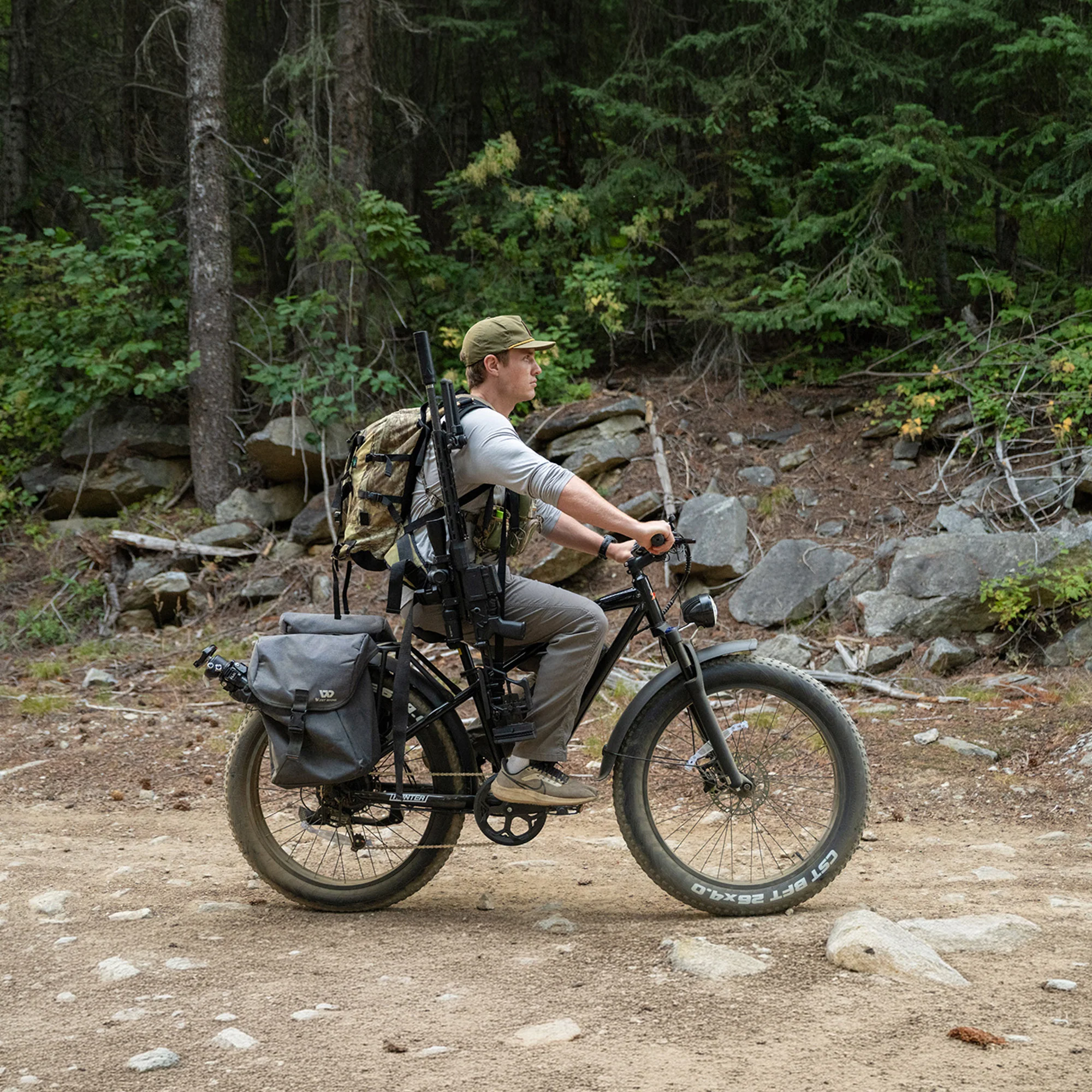
A fourth reference point is the Kingbull Hunter 2.0S, a mountain fat-tire model linked from the storefront’s off-road range. The brand’s imagery and category placement make its role clear, but riders comparing trail capability should check suspension details, component levels, and the intended terrain rather than assuming every fat-tire bike is a trail bike. Find the Hunter 2.0S listing and compare it against your regular route.
Where does the range look strongest, and where does it fall short?
The best argument for Kingbull Bike is choice within a recognizable category. A rider who wants a folding frame can consider the Literider; someone seeking a moped look can compare the Ranger and Expedition; and mountain-oriented riders have the Hunter family. That spread is more helpful than a single generic fat-tire model because it starts to address different storage and riding needs.
- Useful model variety: the store separates folding, mountain, commuter, and moped-style choices.
- Visible specifications: product pages list selected motor, battery, and frame details.
- Pre-purchase support: warranty, shipping, returns, and owner resources have dedicated pages.
- Claims need context: range and terrain language are manufacturer descriptions, not independent measurements.
- Fit remains personal: listed components cannot tell you whether the bike feels manageable for your body, storage, or route.
That last point is central to the review. A broad tire can bring confidence over rougher ground but also adds bulk; a long-range claim can sound reassuring but depends on conditions; and a folding hinge solves only part of a storage problem. Kingbull’s catalog helps with the first round of comparison, but it does not replace checking geometry, total weight, service access, and the rules where you ride.
The wider catalog also includes the Kingbull Voyager 2.0, a fat-tire electric cargo bike. Its role is distinct from a folding commuter: shoppers carrying groceries or gear should inspect the cargo setup and rated capacity, rather than assuming a general fat-tire model will meet that need. The Voyager 2.0 page can help establish the model’s current details.

What should buyers verify before choosing?
Use the brand pages to settle practical details rather than relying on promotional labels. The exact configuration can vary by model or selection, and the store’s published information can change. Before checkout, read its warranty and returns terms, understand shipping arrangements for your address, and ask support about parts or service availability in your area.
- Compare frame geometry and stated rider fit with your height and preferred riding posture.
- Check full bike weight, folded dimensions where relevant, and battery handling.
- Ask how the advertised range was calculated and what assist or terrain conditions it assumes.
- Confirm brake, suspension, and drivetrain specifications on the exact product page.
- Check local rules for motor class, throttle use, paths, and age requirements.
Buyers should also decide whether they want dealer support nearby or are comfortable with direct-to-consumer ownership. Kingbull has a dealer-finder and support resources on its site, but availability and service coverage should be confirmed for the buyer’s location. The brand pages provide a useful starting point: compare the Ranger with the Expedition and the folding Literider using the same checklist.
- Strongest case: several frame formats for distinct riding and storage needs.
- Main caveat: range and terrain claims remain brand-published figures that need personal context.
- Decision check: verify weight, fit, service coverage, and exact model configuration.
Is Kingbull Bike worth shortlisting?
For riders specifically looking for a fat-tire electric bike, Kingbull Bike is worth a considered shortlist because its range offers visibly different formats rather than only cosmetic variants. The Ranger speaks to moped-style preferences, the Expedition emphasizes full suspension and distance claims, and the Literider 2.0 adds a folding frame to the equation.
- Good fit: shoppers choosing between distinct fat-tire frame formats.
- Pause first: buyers who need low carry weight or independent performance evidence.
We would be more cautious if your main need is a lightweight carry bike, independently documented range, or local service certainty. Those questions are not settled by the brand’s product descriptions. Compare the Ranger specifications, Expedition details, and Literider information with your route and storage, then use the store’s support pages to fill in the ownership details before placing an order.
Questions buyers often ask
Are Kingbull Bike range figures guaranteed?
No. Treat stated range as a manufacturer estimate. Actual distance changes with terrain, rider and cargo weight, assist level, weather, tire pressure, and battery condition. Ask what conditions underpin the stated figure.
Is the Literider 2.0 easy to carry?
Its frame folds, which can help with storage, but that alone does not establish portability. Check the current folded dimensions and weight, and consider whether you will need to lift it into a vehicle or up stairs.
Which Kingbull Bike model should a first-time buyer compare?
Start with the use case: compare the Ranger for a moped-style position, the Expedition for full-suspension positioning, and the Literider for folding storage. Then confirm fit, equipment, ownership support, and local rules on the current product pages. Review the Ranger product information, Expedition product information, or Literider product information against your own checklist.
Our recommendation
Kingbull Bike merits a shortlist for shoppers who want fat-tire utility and can choose among distinct frame styles. The published information is enough to identify promising candidates, especially the Ranger, Expedition, and Literider 2.0, but not enough to verify real-world range, fit, or service convenience on its own.
Our recommendation is to choose by storage and route first, then confirm the exact specification and support terms with the brand. If carrying weight, local servicing, or independently verified performance is decisive, resolve those points before buying.