
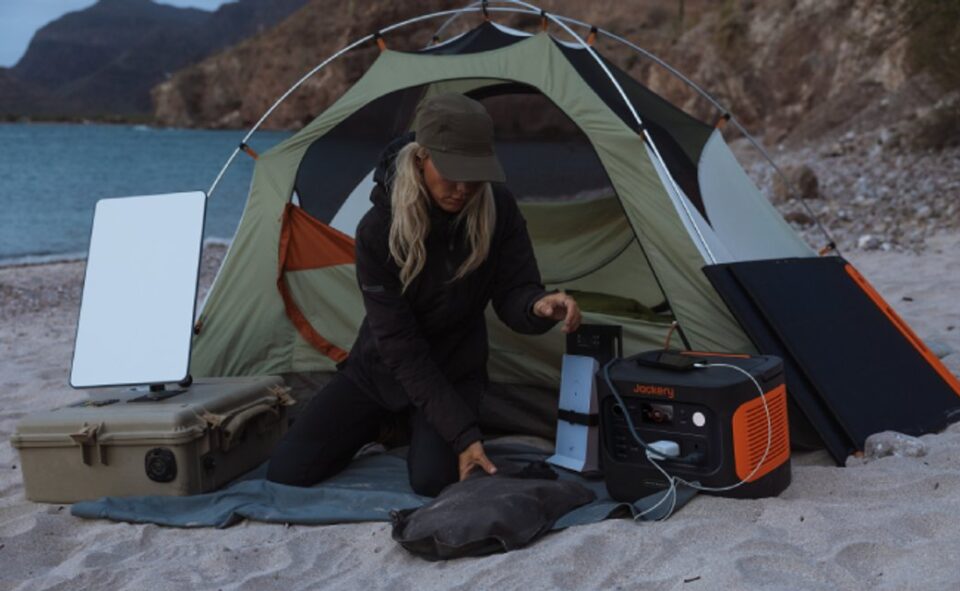
We examine Jackery’s UK-listed power stations, solar options and trade-offs so you can match capacity to the way you actually use portable power.
Portable power stations have moved beyond emergency gadgets. They now sit in the middle of camping kits, caravans, narrowboats and home backup plans, but the right capacity depends on what you need to run and how often you can recharge.
Jackery covers a wide span, from a small 288Wh unit to a 2042Wh model. We reviewed the published specifications, listed prices and stated use cases to separate the practical strengths from the assumptions buyers still need to make.
This article contains affiliate links. If you buy through them, we may earn a commission at no extra cost to you.
At a glance
- Explorer 300D is the compact starting point at a listed £219, with 288Wh capacity and a LiFePO4 battery.
- Explorer 1000 v2 is the middle-ground option at a listed £899, offering 1070Wh and 1500W rated output.
- Explorer 2000 v2 is the higher-capacity choice at a listed £1,399, with 2042Wh and 2200W rated output.
- Solar bundles and foldable panels make off-grid use more practical, but charging depends on conditions and setup.
- The range is strongest for camping, caravans, narrowboats and backup scenarios where portability matters.
The range is really a capacity decision
The most useful way to read Jackery’s line-up is by the gap between a phone-and-lighting companion and a serious backup battery. The Explorer 300D is listed at £219 and offers 288Wh with a LiFePO4 battery. That makes it the easiest model to justify for short trips, small electronics or a compact emergency reserve.
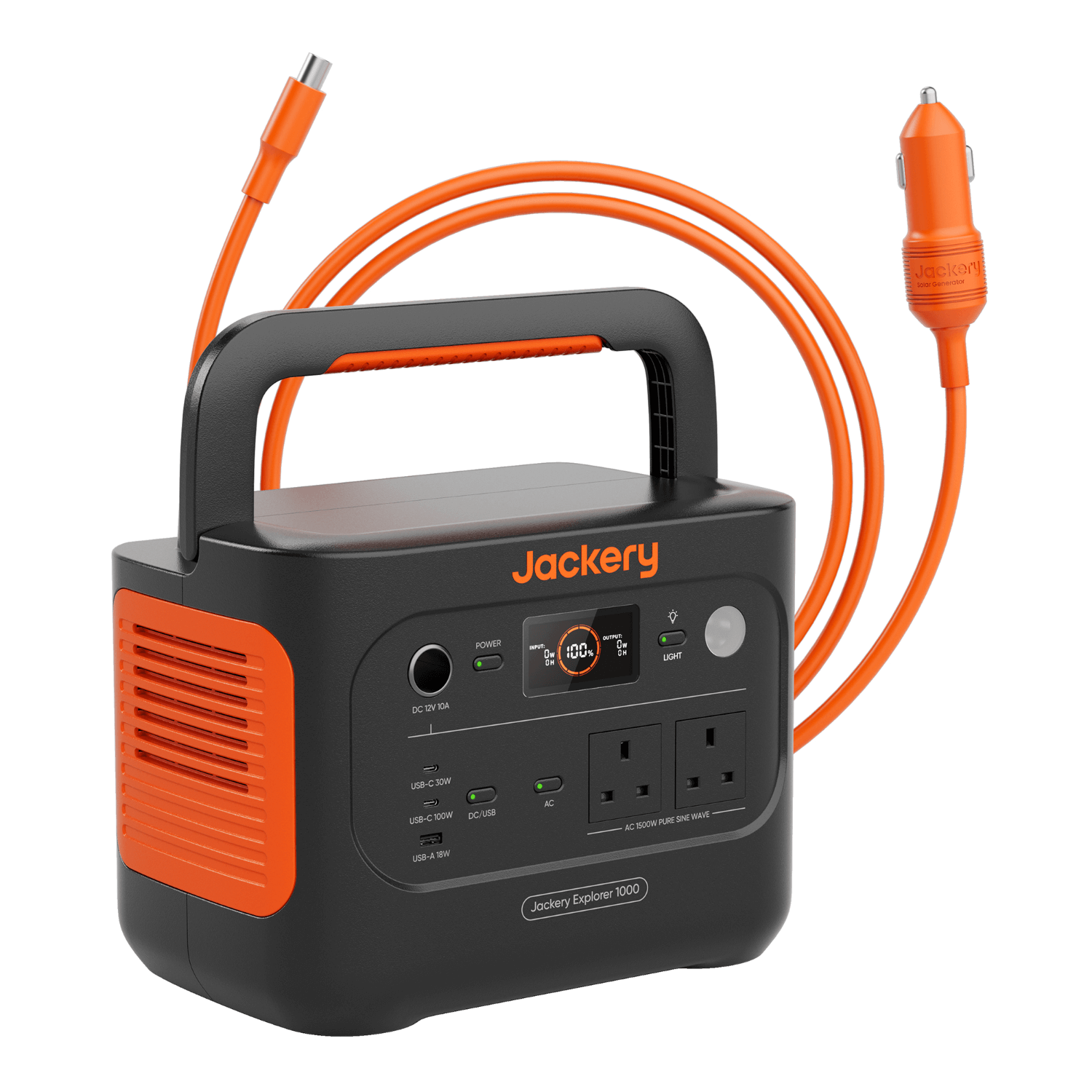
At the middle of the range, the Explorer 1000 v2 is listed at £899. Jackery states a 1070Wh capacity and 1500W rated output. In practical terms, that is the more flexible choice for a weekend basecamp, a caravan setup or several devices running across a day, provided the weight and price fit your plan.
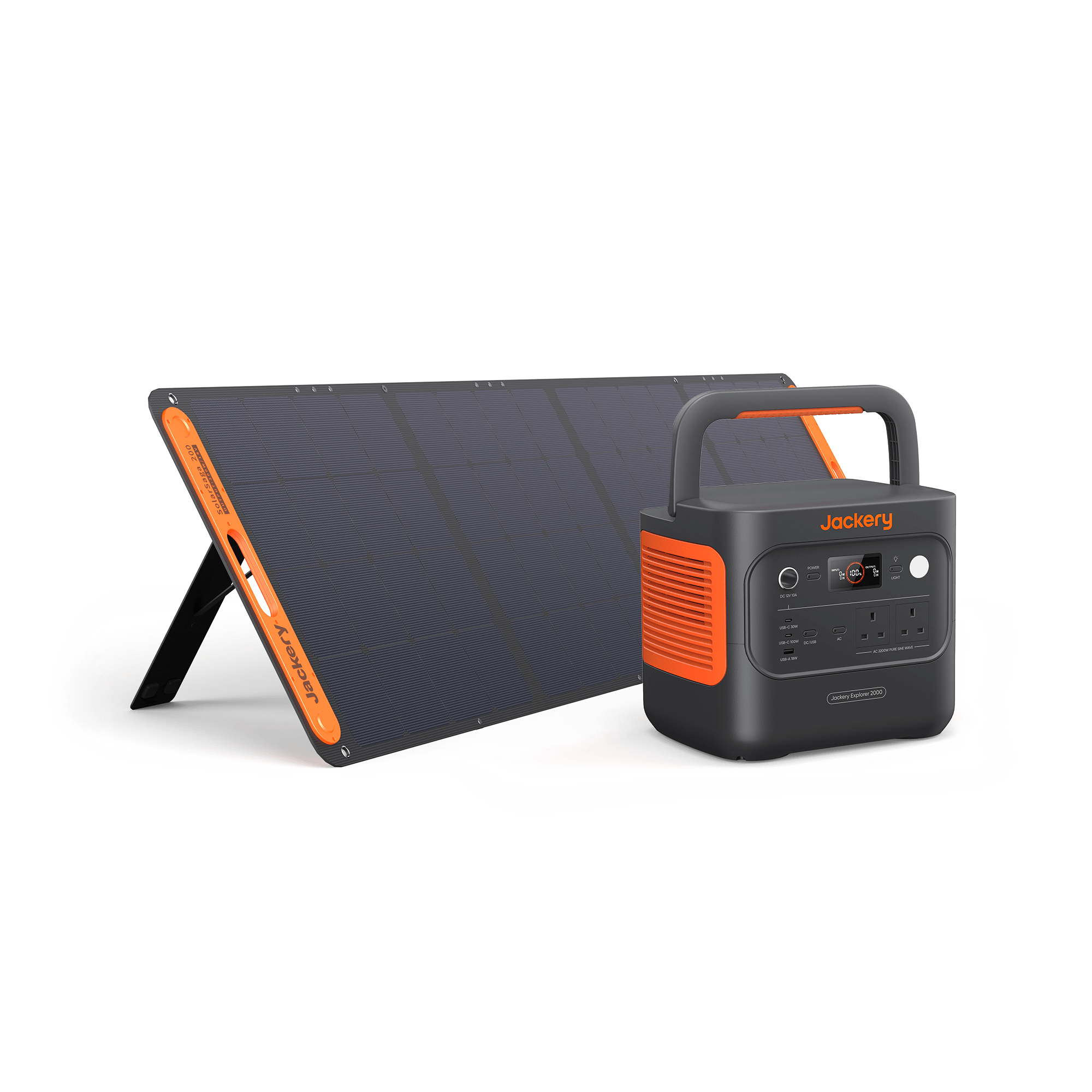
The Explorer 2000 v2 is listed at £1,399, with 2042Wh and 2200W rated output. That extra headroom is relevant when several people share one station or when the goal is more than keeping small devices alive. It also increases the planning burden: buyers need a realistic place to store it, a charging routine and a clear idea of which appliances they expect to connect.
Readers can check the Explorer 2000 v2 listing alongside the Explorer 1000 v2 page before deciding whether the extra reserve is worth the added cost.
- Short trips and small loads: consider the 300D.
- General camping or caravan use: the 1000 v2 is the balanced starting point.
- Longer stays or heavier loads: the 2000 v2 offers more reserve.
- Home backup: check appliance wattage rather than choosing by Wh alone.
What the product pages do well
Jackery’s strongest point is breadth without abandoning a clear naming system. Explorer numbers roughly signal the capacity tier, while the v2 models add a current-generation route for shoppers comparing like with like. The site also connects standalone stations with Solar Generator bundles, so a buyer can plan storage and generation together.
The published details are useful because they put capacity and rated output beside the model names. That is more informative than a vague “portable generator” label. The 300D’s LiFePO4 battery and 288Wh figure make its compact positioning clear; the 1000 v2’s 1070Wh and 1500W figures show why it costs more; and the 2000 v2’s 2042Wh and 2200W figures explain its higher tier.
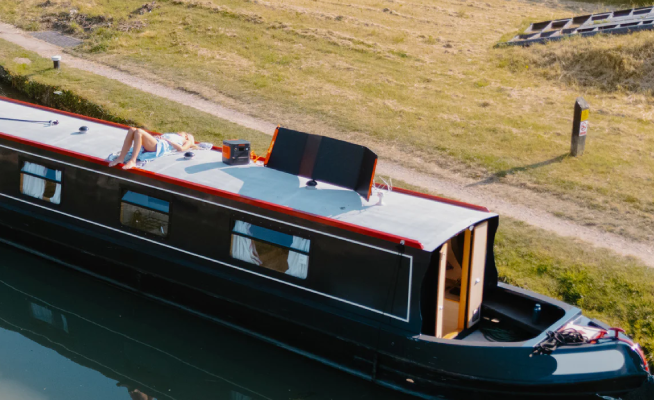
There is also a credible use-case story around outdoor living. Jackery’s UK site presents power for camping, caravans, fishing and narrowboats, not only for power cuts. That matters because portable power is often bought for convenience first and resilience second. The 300D can stay focused on low-demand portability, while the larger models are easier to place in a semi-permanent setup.
For a smaller kit, the Explorer 300D product page is the natural place to confirm its current bundle options. For larger trips, the Explorer 1000 v2 listing gives a better starting point for comparing capacity and output.
- Clear tiering: capacity and output make the main differences legible.
- Solar pairing: bundles reduce the guesswork of matching a panel and station.
- Battery positioning: LiFePO4 appears on the concrete models reviewed here.
- Multiple settings: outdoor and backup use are both addressed by the range.
Solar charging adds value, with conditions attached
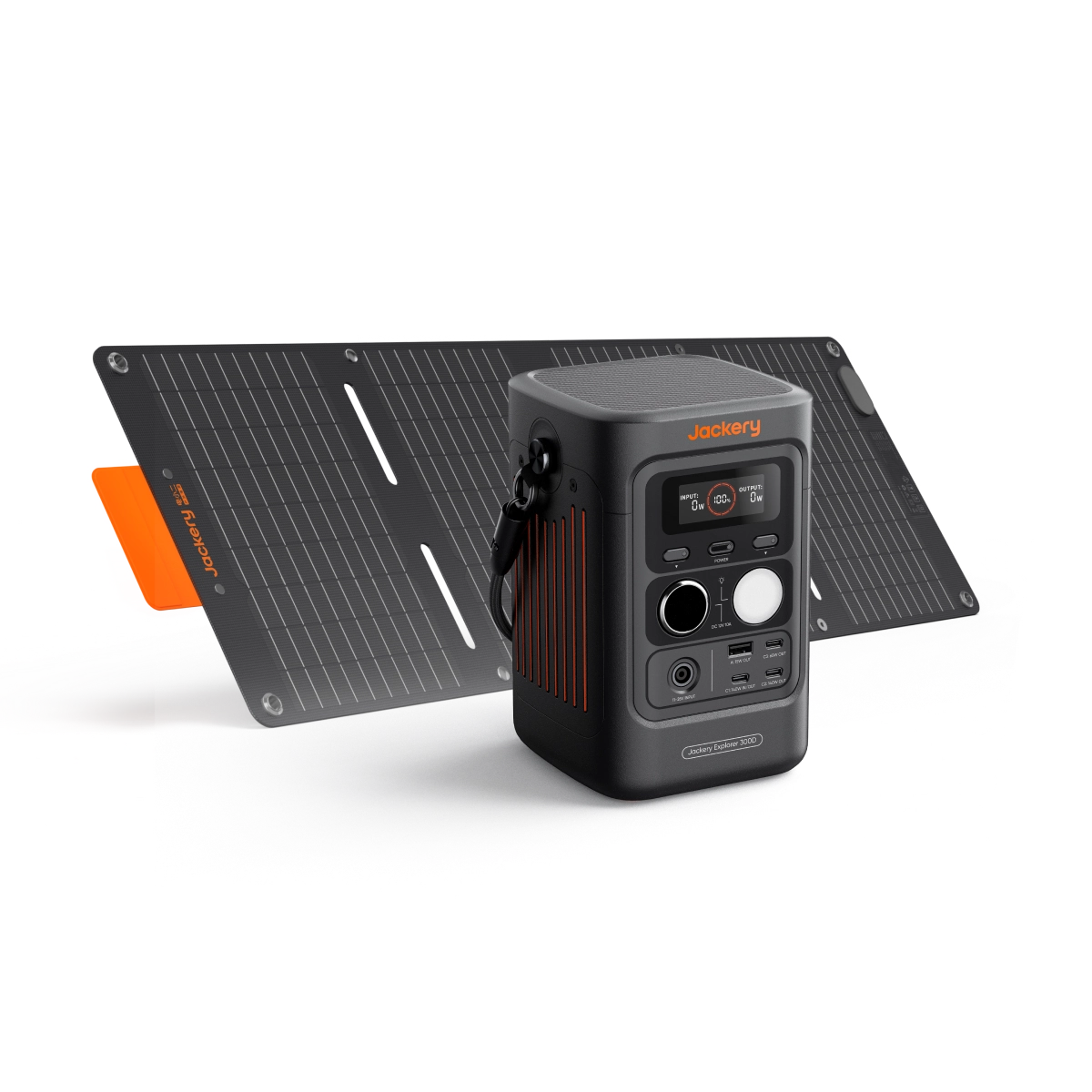
Solar is where Jackery’s offer becomes more than a large battery. The Explorer 2000 v2 image shows the station with a 200W solar panel, while the compact 300D is shown with a 40W mini panel. These combinations communicate the basic trade-off: a smaller panel is easier to carry, but a larger station needs more generation time or a bigger panel arrangement.
That does not mean a panel will restore a full station on a fixed timetable. Sun angle, cloud, season, positioning and the station’s input limits all matter. We would treat the panels as a way to extend a trip or reduce mains dependence, rather than as a guarantee of off-grid independence in British weather.
The Explorer 300D with a mini panel is easier to imagine for lightweight travel, while the larger 2000 v2 bundle makes more sense when the station’s capacity is the main reason for buying.
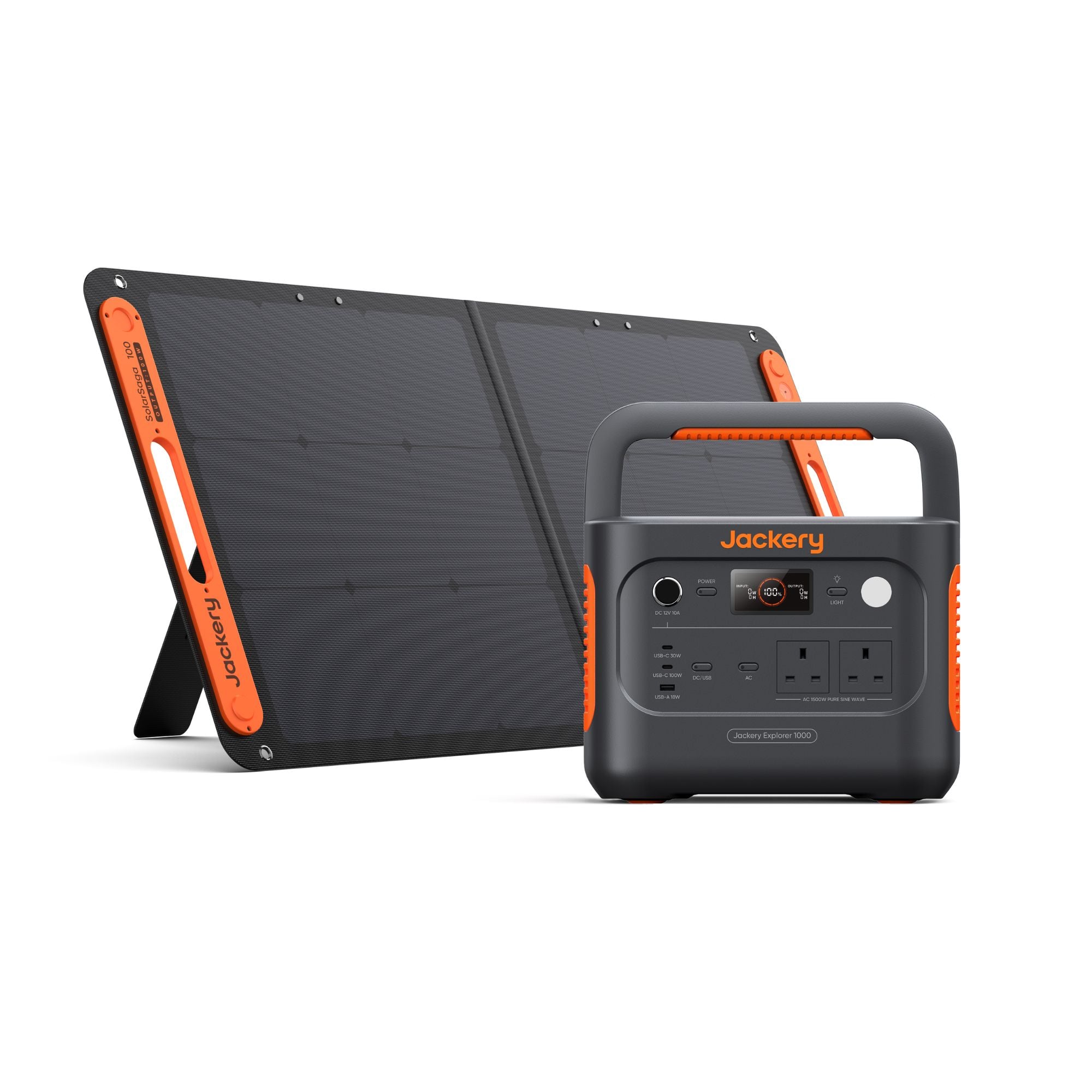
For buyers comparing the Explorer 1000 v2 with a Solar Generator bundle, the question is not simply whether solar is included. It is whether the panel size, expected daily load and available daylight fit the trip. The brand’s own product imagery helps show the combinations, but the final calculation remains the buyer’s responsibility.
Where the range could be clearer
The headline specifications are easy to compare, but they do not answer every ownership question. Listed prices can change with promotions, bundles and stock, so £219, £899 and £1,399 should be read as the prices shown in our research, not permanent guarantees. The product pages also leave the buyer to translate watt-hours into runtime for a particular fridge, kettle, laptop or heater.
Portability is another honest limitation. A bigger capacity usually means a larger object and more money tied up in a device that may spend most of its life stored. The 2000 v2 can be the rational pick for greater reserve, but it is not automatically the better pick for a small tent or a short daytime outing.
Before choosing, compare the compact 300D with the mid-range 1000 v2 using the loads you already own, rather than a hypothetical future setup.
Finally, the solar story needs realistic expectations. A panel can broaden how the station is used, yet poor weather and limited daylight can reduce the benefit. Buyers should check panel compatibility, input specifications, charging time and the return or warranty terms before treating a bundle as a complete resilience plan.
- Do not confuse Wh capacity with guaranteed appliance runtime.
- Check the station’s continuous and peak output against your equipment.
- Read the current product page for bundle contents and price before checkout.
- Allow for storage space, carrying weight and a practical charging location.
- For solar, plan around UK weather rather than an ideal midday result.
Who each model suits best
Explorer 300D: best for readers who value a small footprint and modest loads. Its listed £219 price, 288Wh capacity and LiFePO4 battery make it the approachable option for weekend accessories, USB devices and light outdoor use.
Explorer 1000 v2: best for the broadest group. At a listed £899, it offers a credible middle position for camping, caravan trips and occasional backup, with enough capacity to feel more useful than a basic power bank without reaching the largest tier.
Explorer 2000 v2: best for longer stays, shared use and buyers who value reserve over minimum weight. Its listed £1,399 price and 2042Wh capacity are substantial, but the extra headroom only makes sense if the intended loads justify it.
Current availability and bundle details should be checked on the Explorer 2000 v2 page, just as the smaller option should be checked on the Explorer 300D page.
Questions buyers usually ask
Is Jackery good for camping?
It is a sensible fit when you need quiet, portable power for devices, lighting or selected appliances. Choose by actual wattage and trip length, not by brand familiarity alone.
Is the Explorer 1000 v2 enough for backup?
It can provide useful short-term reserve for compatible loads, but it should not be treated as whole-home backup without checking appliance demand, runtime and charging plans.
Do I need a solar panel?
Not necessarily. Mains or car charging may be enough for occasional use. Solar becomes more valuable when you expect longer outdoor stays or want another charging route.
Our verdict
Jackery’s range earns its place by making the capacity choice relatively clear: the 300D is the compact option, the 1000 v2 is the balanced option and the 2000 v2 is the reserve-focused option. The combination of portable stations, solar bundles and outdoor use cases gives the brand a coherent offer rather than a single one-size-fits-all product.
Our limitation is that published watt-hours and output figures cannot predict your exact runtime, while listed prices and bundle contents can move. For most readers, the Explorer 1000 v2 is the most versatile starting point; the 300D is better when portability dominates, and the 2000 v2 is justified when higher loads and longer stays are genuinely part of the plan.