
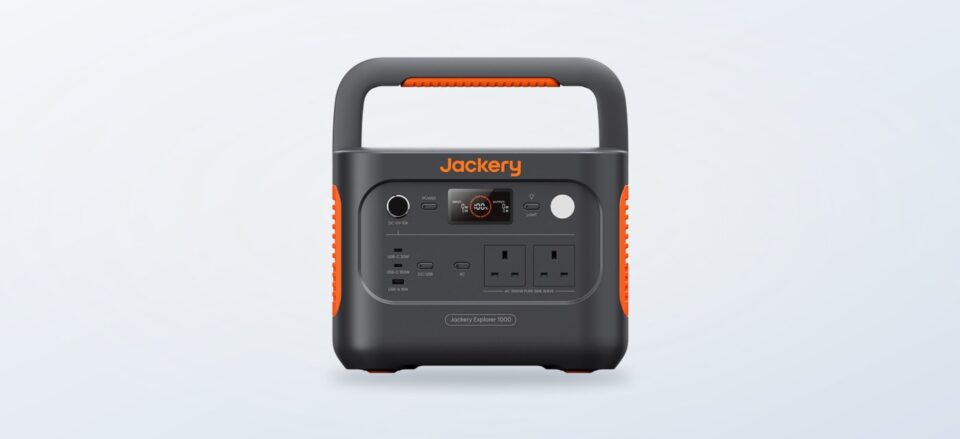
We examine Jackery’s UK portable power range through its listed capacities, prices, use cases and trade-offs.
Portable power stations sit between a power bank and a petrol generator. They can keep smaller devices running at a campsite, support a caravan setup or provide a reserve for selected home essentials, but the right size depends on what you actually need to run.
Our review looks at Jackery as a range rather than treating one model as a universal answer. We checked the UK catalogue’s stated capacities, output figures, product photos and listed prices to see where the brand’s offer is persuasive and where the compromises become important.
This article contains affiliate links. If you buy through them, we may earn a commission at no extra cost to you.
At a glance
- Jackery covers compact, mid-range and high-capacity portable power, from the £149 Explorer 300D to the £1,499 Explorer 3000 v2.
- The Solar Generator 1000 v2 was listed at £569 and combines a 1070Wh station with solar charging in a bundle-led format.
- The Explorer 500 v2 offers 512Wh and 500W output, while the Explorer 3000 v2 is built around 3072Wh for higher-demand use.
- The strongest case is flexible outdoor or backup power; the main limitation is that capacity, weight, charging setup and price rise together.
The broad takeaway is that Jackery gives shoppers a clear ladder. Smaller models address low-draw electronics, mid-range units cover more typical weekend equipment and larger stations target appliances or extended backup. Its wider portable power catalogue also includes foldable panels and accessories, so the system is not limited to a single box.
A range built around capacity choices
Jackery’s public product structure is easy to understand because the model names broadly signal the tier. The Explorer line is the portable power station family, while Solar Generator listings package a station with solar equipment. That distinction matters when comparing prices: a station-only page and a solar bundle are not equivalent purchases.
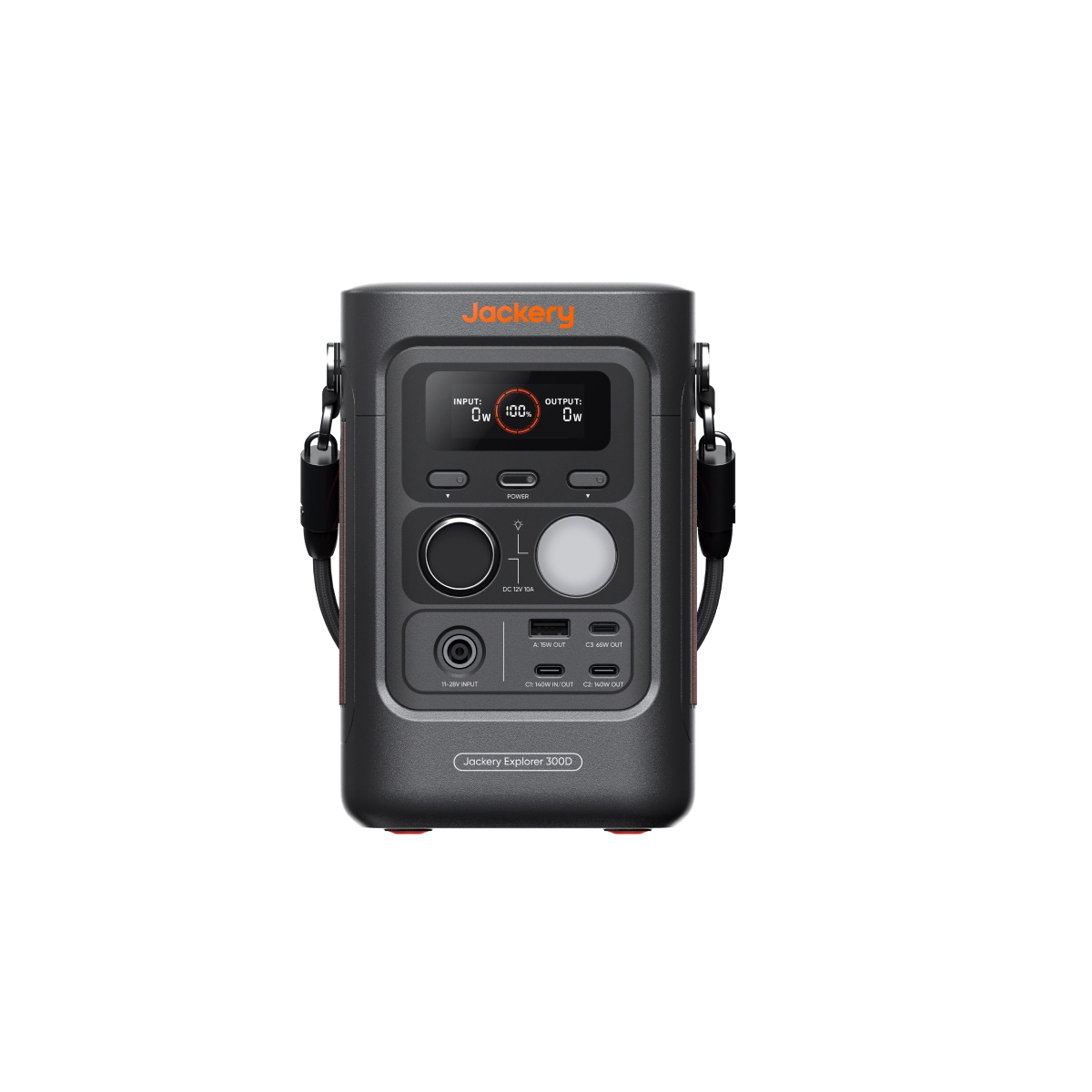
At the compact end, the Jackery Explorer 300D Portable Power Station was listed at £149, with 288Wh capacity and a LiFePO4 battery stated on the catalogue. It is a sensible shape for phones, cameras, lights and other modest loads where portability matters more than long runtime. The limitation is equally clear: 288Wh is not a realistic substitute for a whole-home battery or high-wattage appliance support.
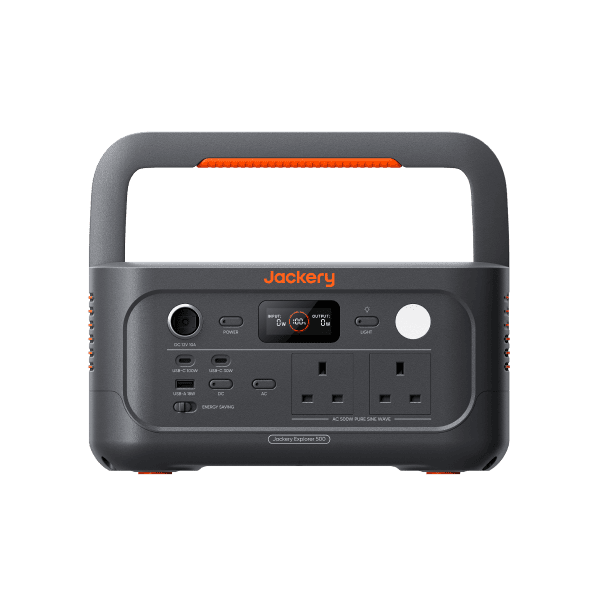
The middle of the range is represented by the Jackery Explorer 500 v2 Portable Power Station. Jackery listed it at £329, with 512Wh capacity and 500W rated output. That combination is more useful for weekend camping, portable work equipment and several small devices at once. We would still check the running wattage of any heater, kettle or cooking appliance before assuming it will work continuously.
For buyers who want solar charging included, the Jackery Solar Generator 1000 v2 was listed at £569. Its stated 1070Wh capacity and 1500W rated output make it a more flexible general-purpose option, while the bundle format can simplify the decision for shoppers who want a panel as part of the same purchase. The word “generator” here refers to a battery and solar system, not a petrol engine.
- Explorer 300D: compact backup for low-draw devices and short trips.
- Explorer 500 v2: a practical mid-range choice for camping and portable work.
- Solar Generator 1000 v2: more reserve and a clearer route into solar charging.
- Explorer 3000 v2: high capacity for demanding equipment and longer backup windows.
This ladder is one of Jackery’s better decisions. A reader can start with a use case, then compare capacity and output without navigating unrelated categories. The catch is that the figures do not tell the whole story: recharge time, panel conditions, cable compatibility, noise expectations and the device’s own starting surge can change the real-world result.
Where solar charging adds value
Solar is the feature that separates Jackery’s offer from a simple mains-charged battery. The SolarSaga 100W Solar Panel was listed with 25% conversion efficiency and IP68 waterproofing on the UK catalogue. Those are useful specifications, but they describe the panel rather than guaranteeing a fixed charging time in British weather.
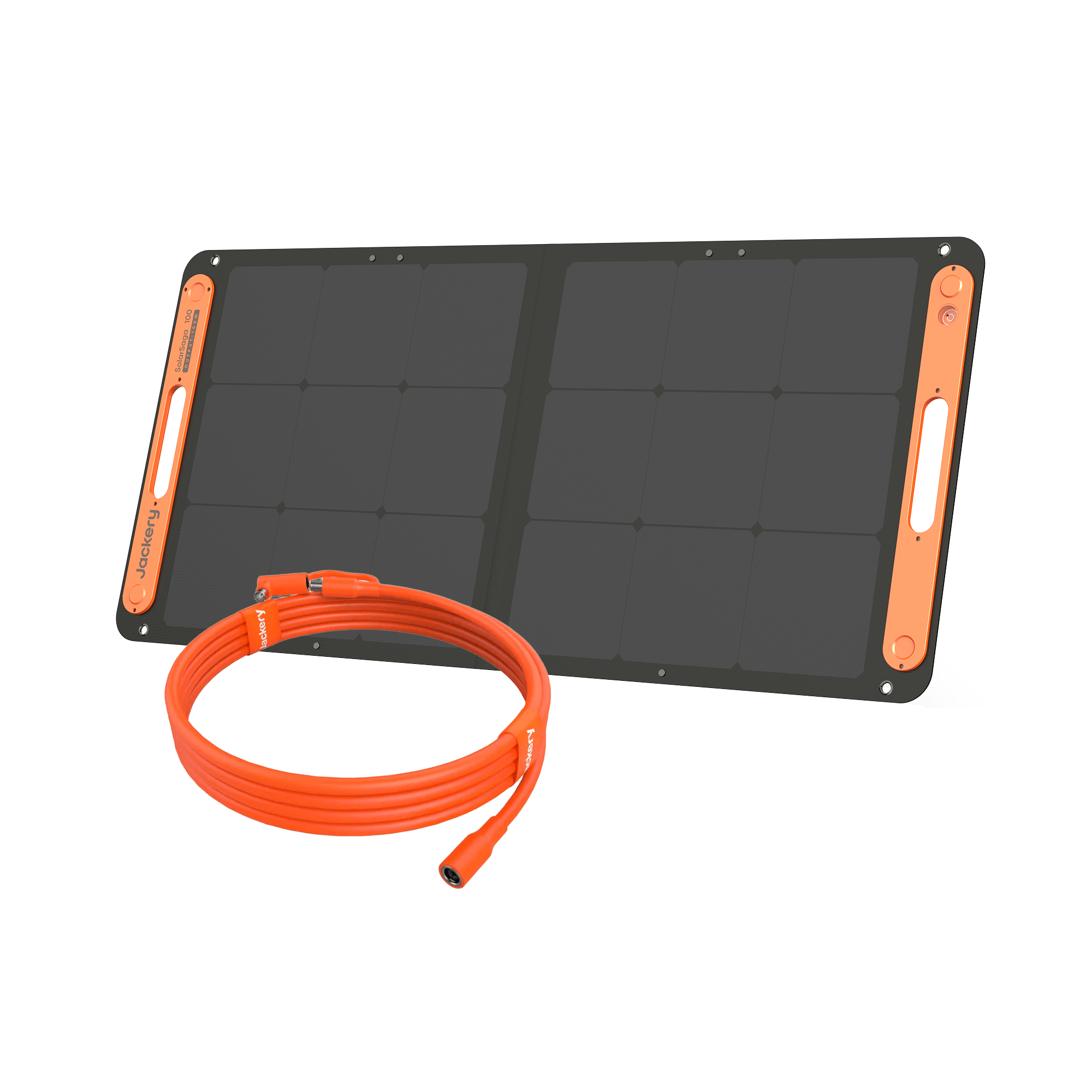
For a camper or caravan owner, a foldable panel can extend independence when the station is used away from a socket. For home backup, it can provide a second charging route during a prolonged outage, subject to daylight, placement and the compatible input limits of the chosen station. Jackery also lists extension cables and connectors, which may help with placement, but these accessories add cost and should be matched to the exact model.
Our view is that solar charging is most valuable when it supports a clear routine: charge devices during the day, store energy for evening use and keep expectations modest in poor conditions. It is less compelling if the station will sit indoors and be topped up from the wall most of the time.
The high-capacity case needs more planning
The Jackery Explorer 3000 v2 Portable Power Station was listed at £1,499, with 3072Wh capacity and a LiFePO4 battery stated by the brand. This is the model for readers whose priority is reserve rather than minimum carry weight. It can make sense for extended off-grid use, a workshop or selected home-backup loads, provided the buyer has checked appliance wattage and understands the physical size of a station at this tier.
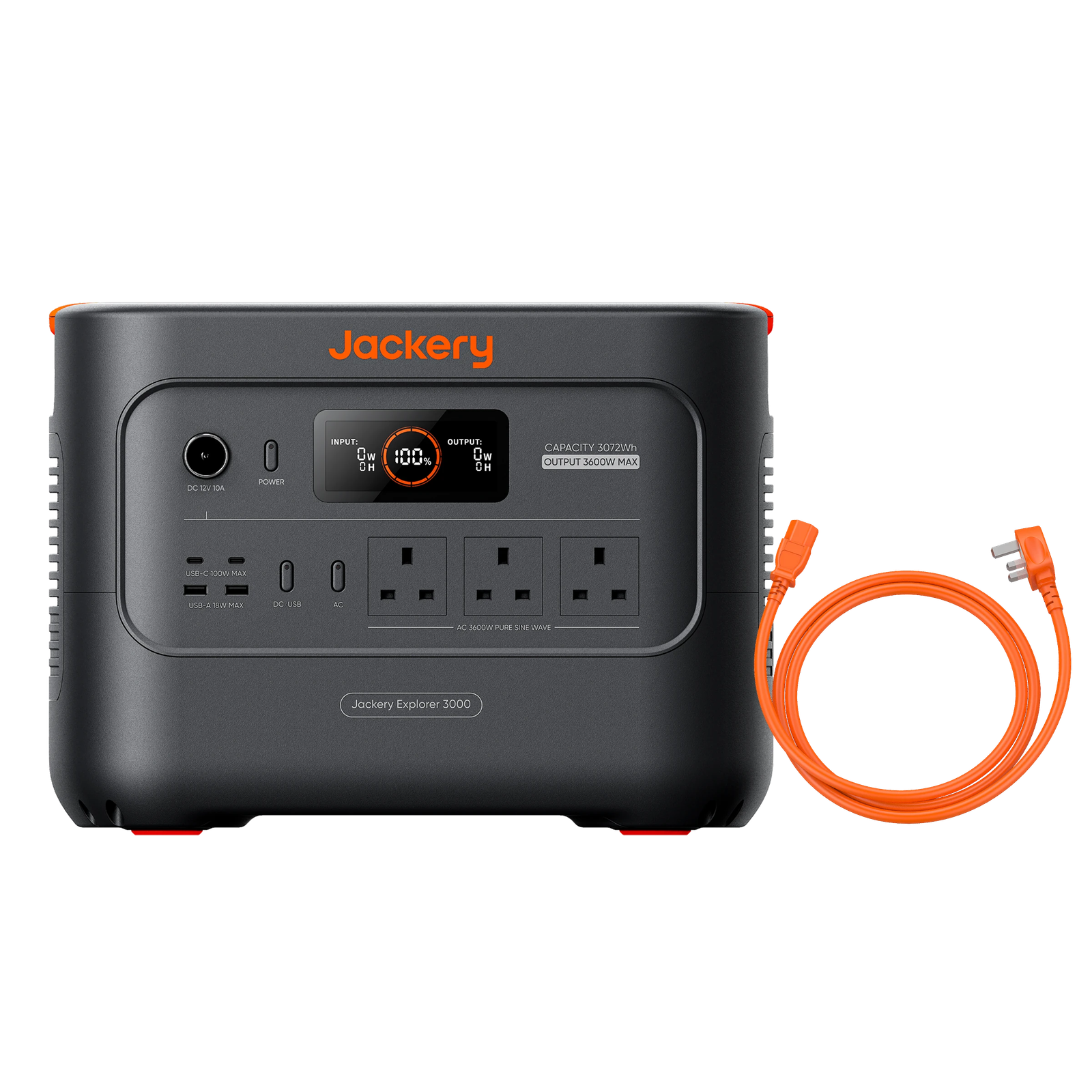
A larger battery is not automatically better value. If the intended load is a phone charger, camera kit and LED lighting, paying for 3072Wh means carrying and storing capacity that may never be used. Conversely, choosing a compact unit for a kettle or power tool can lead to disappointment even if the marketing headline sounds generous.
- Write down the devices you need to run and their wattage.
- Separate short bursts from appliances that run for hours.
- Allow for conversion losses and the station’s input and output limits.
- Decide whether a panel, cable, case or trolley is part of the real budget.
That planning requirement is the main weakness of the category, not a Jackery-specific fault. The brand makes the model ladder visible, but the buyer still has to translate Wh and W figures into a household or travel routine. We would rather see that calculation done before purchase than rely on a sale percentage or a bigger model name.
What Jackery does well, and what could improve
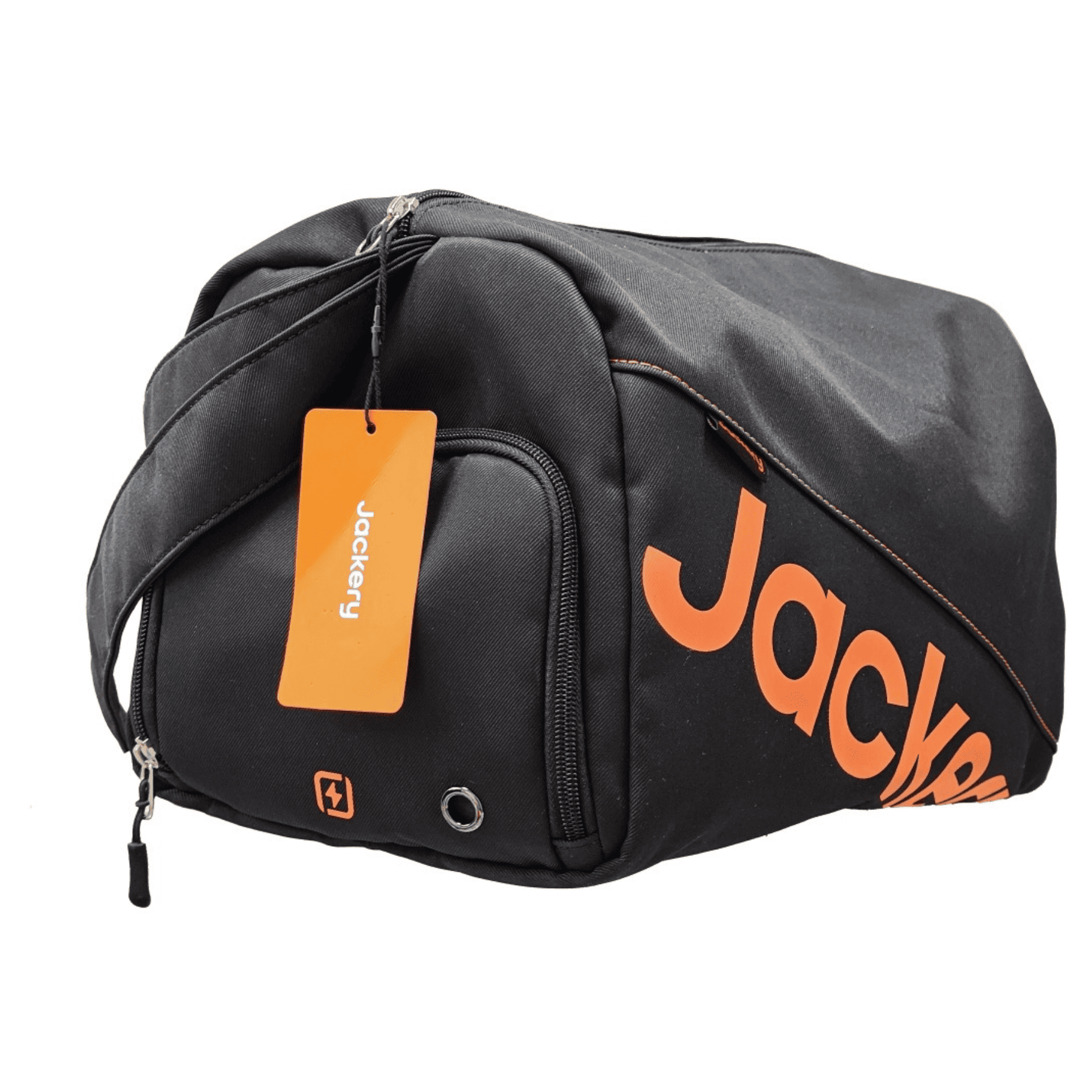
What it does well: Jackery offers a recognisable range, concrete capacity tiers, solar accessories and product pages that make basic selection easier. The UK catalogue also covers practical extras such as the Outdoor Messenger Bag, carrying cases and charging cables, so buyers can think about transport as well as the station itself.
What could improve: the shopping decision still needs more context around weight, recharge time, sustained appliance performance and the difference between station-only and solar-generator bundles. Listed prices can also change with promotions, so readers should treat the figures above as a snapshot rather than a permanent price promise.
- Best for compact travel: Explorer 300D and similar low-capacity models.
- Best balance: Explorer 500 v2 for ordinary camping and portable work.
- Best solar entry: Solar Generator 1000 v2 when a panel is part of the plan.
- Best for higher demand: Explorer 3000 v2, if the extra capacity will genuinely be used.
Is Jackery good for camping?
Yes, particularly when the load is phones, lights, cameras, laptops or small appliances. Choose capacity around the trip rather than assuming the largest station is necessary, and check the product page for output, charging and weight details.
Is the Solar Generator 1000 v2 worth considering?
It is a reasonable option for someone who wants more reserve than a compact station and likes the idea of solar charging in one listed package. The value depends on whether the panel will be used and whether £569 fits the budget at the time of purchase.
Can a Jackery station run any appliance?
No. Check the appliance’s running and starting wattage against the station’s rated and peak output, and remember that runtime varies with the load, conversion and battery condition.
Our verdict
Jackery is strongest for shoppers who want a visible, tiered route into portable power. The Explorer 300D keeps the entry point relatively low, the Explorer 500 v2 looks like the practical middle ground, and the Solar Generator 1000 v2 gives solar charging a clearer role. The Explorer 3000 v2 is a serious high-capacity choice rather than a default recommendation.
The honest limitation is that capacity figures do not remove the need for load planning, and listed prices can move. For the right use case, Jackery’s range is coherent and accessory-supported. For occasional phone charging only, a smaller power bank may be the more proportionate purchase.