
No. The official page describes post-game field access as subject to availability. Check the date-specific details before making it the deciding reason for a visit.
Can groups add an activity or meal?
The Group Tours page says options can include dining or the Cowboys Skills Challenge. Organizers should confirm which additions are available and suitable for their group when requesting current details.
Our recommendation
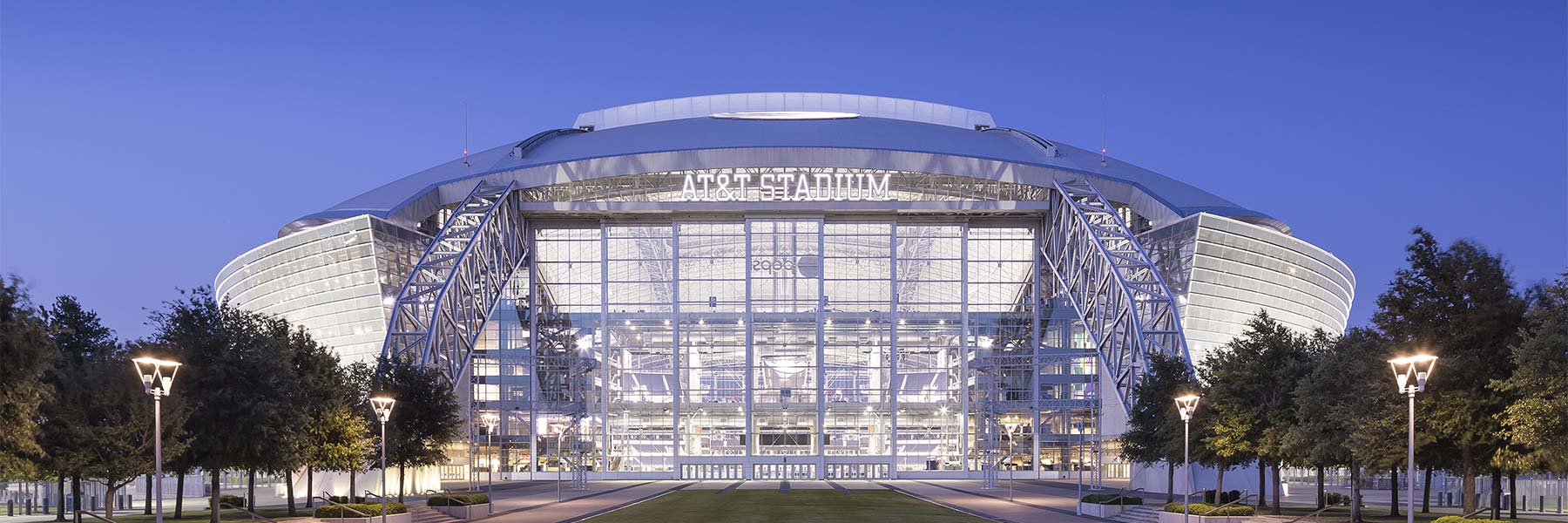
For a first-time reader, we recommend thinking of AT&T Stadium Tours as a venue introduction with several possible emphases. Choose a general visit if you want the broad picture; select Gameday Tours when the Cowboys event context is the point; and investigate Group Tours when shared activities or dining would improve the day. The seasonal Christmas Tours are a natural fit when dates align.
The honest limitation is operational variability: a route or field access can change, and a themed listing may not run on every date. Confirm the current inclusions before arranging travel, then choose the tour whose focus matches what you want to understand about the stadium.
Is field access guaranteed on a Gameday Tour?
No. The official page describes post-game field access as subject to availability. Check the date-specific details before making it the deciding reason for a visit.
Can groups add an activity or meal?
The Group Tours page says options can include dining or the Cowboys Skills Challenge. Organizers should confirm which additions are available and suitable for their group when requesting current details.
Our recommendation
For a first-time reader, we recommend thinking of AT&T Stadium Tours as a venue introduction with several possible emphases. Choose a general visit if you want the broad picture; select Gameday Tours when the Cowboys event context is the point; and investigate Group Tours when shared activities or dining would improve the day. The seasonal Christmas Tours are a natural fit when dates align.
The honest limitation is operational variability: a route or field access can change, and a themed listing may not run on every date. Confirm the current inclusions before arranging travel, then choose the tour whose focus matches what you want to understand about the stadium.
Are the tours only for Dallas Cowboys fans?
No. Football is a major part of the setting, but the official tour range also features architecture, public spaces and contemporary art. A sports fan may focus on the field and team context; another visitor may be more interested in the scale and design of the venue.
Is field access guaranteed on a Gameday Tour?
No. The official page describes post-game field access as subject to availability. Check the date-specific details before making it the deciding reason for a visit.
Can groups add an activity or meal?
The Group Tours page says options can include dining or the Cowboys Skills Challenge. Organizers should confirm which additions are available and suitable for their group when requesting current details.
Our recommendation
For a first-time reader, we recommend thinking of AT&T Stadium Tours as a venue introduction with several possible emphases. Choose a general visit if you want the broad picture; select Gameday Tours when the Cowboys event context is the point; and investigate Group Tours when shared activities or dining would improve the day. The seasonal Christmas Tours are a natural fit when dates align.
The honest limitation is operational variability: a route or field access can change, and a themed listing may not run on every date. Confirm the current inclusions before arranging travel, then choose the tour whose focus matches what you want to understand about the stadium.
What do readers often ask about the tours?
Are the tours only for Dallas Cowboys fans?
No. Football is a major part of the setting, but the official tour range also features architecture, public spaces and contemporary art. A sports fan may focus on the field and team context; another visitor may be more interested in the scale and design of the venue.
Is field access guaranteed on a Gameday Tour?
No. The official page describes post-game field access as subject to availability. Check the date-specific details before making it the deciding reason for a visit.
Can groups add an activity or meal?
The Group Tours page says options can include dining or the Cowboys Skills Challenge. Organizers should confirm which additions are available and suitable for their group when requesting current details.
Our recommendation
For a first-time reader, we recommend thinking of AT&T Stadium Tours as a venue introduction with several possible emphases. Choose a general visit if you want the broad picture; select Gameday Tours when the Cowboys event context is the point; and investigate Group Tours when shared activities or dining would improve the day. The seasonal Christmas Tours are a natural fit when dates align.
The honest limitation is operational variability: a route or field access can change, and a themed listing may not run on every date. Confirm the current inclusions before arranging travel, then choose the tour whose focus matches what you want to understand about the stadium.
For readers who prefer to move at their own pace, the site also lists self-guided options at times. That format changes the balance between structure and flexibility: visitors can explore with less dependence on a group itinerary, while a guided visit can provide more organized context. Check the current listing to see whether a self-guided format is offered for the intended date, and whether any spaces are excluded.
The broad brand promise, then, is a look behind the event through a combination of place, sport and culture. Its strength is variety; its limitation is that the exact route depends on the operating calendar. The official AT&T Stadium Tours options are the useful source for matching those interests to the live schedule.
What should a first-time reader know before choosing?
Tour pages explain the format, but visitors should still treat access details as date-specific. Stadiums host events and operational changes, so an advertised stop may not be open on every visit. The site’s own notes identify location and field access as subject to availability. That is particularly relevant to Gameday Tours, where the relationship to kickoff and post-game access is central to the appeal.
Before planning around a particular feature, check:
- Whether the date has a game, event or other operating constraint.
- Which spaces are included in that tour’s current route.
- Whether field access or a group add-on is available for the selected date.
- What arrival, accessibility and change details apply to your party.
For a game-linked visit, reread the Gameday Tours details close to booking. Group organizers can check the current Group Tours options for add-on details, and seasonal visitors can confirm dates on the Christmas Tours listing. A little confirmation prevents the itinerary from relying on an assumption.
What do readers often ask about the tours?
Are the tours only for Dallas Cowboys fans?
No. Football is a major part of the setting, but the official tour range also features architecture, public spaces and contemporary art. A sports fan may focus on the field and team context; another visitor may be more interested in the scale and design of the venue.
Is field access guaranteed on a Gameday Tour?
No. The official page describes post-game field access as subject to availability. Check the date-specific details before making it the deciding reason for a visit.
Can groups add an activity or meal?
The Group Tours page says options can include dining or the Cowboys Skills Challenge. Organizers should confirm which additions are available and suitable for their group when requesting current details.
Our recommendation
For a first-time reader, we recommend thinking of AT&T Stadium Tours as a venue introduction with several possible emphases. Choose a general visit if you want the broad picture; select Gameday Tours when the Cowboys event context is the point; and investigate Group Tours when shared activities or dining would improve the day. The seasonal Christmas Tours are a natural fit when dates align.
The honest limitation is operational variability: a route or field access can change, and a themed listing may not run on every date. Confirm the current inclusions before arranging travel, then choose the tour whose focus matches what you want to understand about the stadium.
Why does the art collection belong in a stadium story?
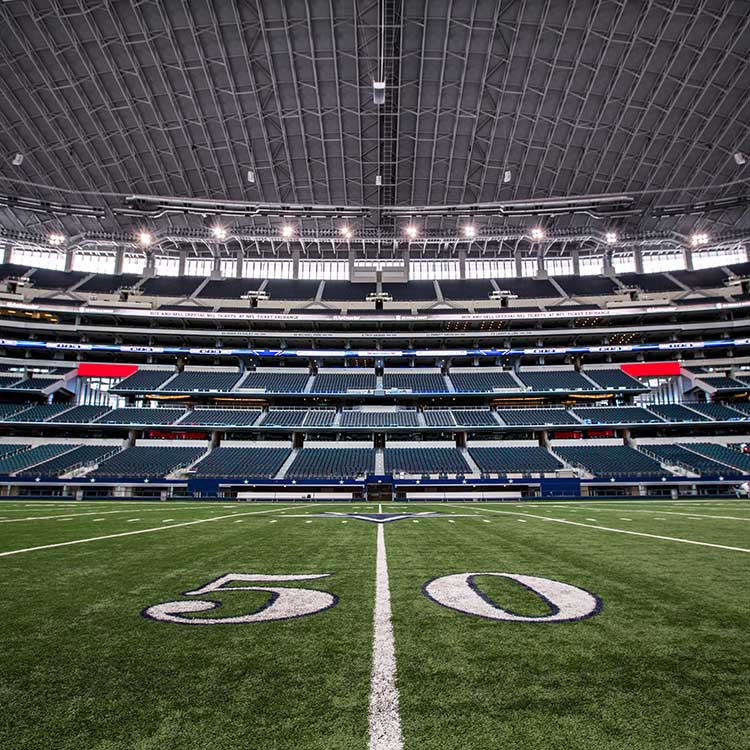
Art changes the way a visitor reads a sports venue. It can offer a pause from the scale of the seating bowl and introduce another point of view on public space, identity and movement. AT&T Stadium’s tour materials foreground a contemporary collection, which gives the visit a cultural dimension even when a reader’s main reason for coming is football.
This does not mean every guest will want an art-centered route. It does mean the brand has more to say than the mechanics of a game. A first-time visitor can use the artwork as a prompt to notice the building’s public areas and the way a large venue hosts different kinds of experiences. The official tour listings indicate which themed options are currently available; works and locations may vary with operations.
For readers who prefer to move at their own pace, the site also lists self-guided options at times. That format changes the balance between structure and flexibility: visitors can explore with less dependence on a group itinerary, while a guided visit can provide more organized context. Check the current listing to see whether a self-guided format is offered for the intended date, and whether any spaces are excluded.
The broad brand promise, then, is a look behind the event through a combination of place, sport and culture. Its strength is variety; its limitation is that the exact route depends on the operating calendar. The official AT&T Stadium Tours options are the useful source for matching those interests to the live schedule.
What should a first-time reader know before choosing?
Tour pages explain the format, but visitors should still treat access details as date-specific. Stadiums host events and operational changes, so an advertised stop may not be open on every visit. The site’s own notes identify location and field access as subject to availability. That is particularly relevant to Gameday Tours, where the relationship to kickoff and post-game access is central to the appeal.
Before planning around a particular feature, check:
- Whether the date has a game, event or other operating constraint.
- Which spaces are included in that tour’s current route.
- Whether field access or a group add-on is available for the selected date.
- What arrival, accessibility and change details apply to your party.
For a game-linked visit, reread the Gameday Tours details close to booking. Group organizers can check the current Group Tours options for add-on details, and seasonal visitors can confirm dates on the Christmas Tours listing. A little confirmation prevents the itinerary from relying on an assumption.
What do readers often ask about the tours?
Are the tours only for Dallas Cowboys fans?
No. Football is a major part of the setting, but the official tour range also features architecture, public spaces and contemporary art. A sports fan may focus on the field and team context; another visitor may be more interested in the scale and design of the venue.
Is field access guaranteed on a Gameday Tour?
No. The official page describes post-game field access as subject to availability. Check the date-specific details before making it the deciding reason for a visit.
Can groups add an activity or meal?
The Group Tours page says options can include dining or the Cowboys Skills Challenge. Organizers should confirm which additions are available and suitable for their group when requesting current details.
Our recommendation
For a first-time reader, we recommend thinking of AT&T Stadium Tours as a venue introduction with several possible emphases. Choose a general visit if you want the broad picture; select Gameday Tours when the Cowboys event context is the point; and investigate Group Tours when shared activities or dining would improve the day. The seasonal Christmas Tours are a natural fit when dates align.
The honest limitation is operational variability: a route or field access can change, and a themed listing may not run on every date. Confirm the current inclusions before arranging travel, then choose the tour whose focus matches what you want to understand about the stadium.
The first brand-level takeaway is that the venue is presented as both a working event space and a destination for people curious about what happens around the game. The tour information is strongest when it shows those strands together, rather than treating the building as a backdrop. Start with the official tour overview if you want to see how the options are currently framed.
How do the tour formats express different sides of the brand?
The range is easier to understand as a set of lenses. A general stadium visit is the broad introduction; a game-day option emphasizes the live sports setting; group formats give organizers a way to build a shared outing; and the seasonal listing uses the building as part of a holiday experience. These distinctions help explain why the same venue can appeal to football fans, visitors interested in large-scale architecture and groups looking for an activity in Arlington.
- Gameday Tours: best aligned with a Cowboys home-game visit and the match-day atmosphere.
- Group Tours: can combine a guided stadium experience with dining or the Cowboys Skills Challenge.
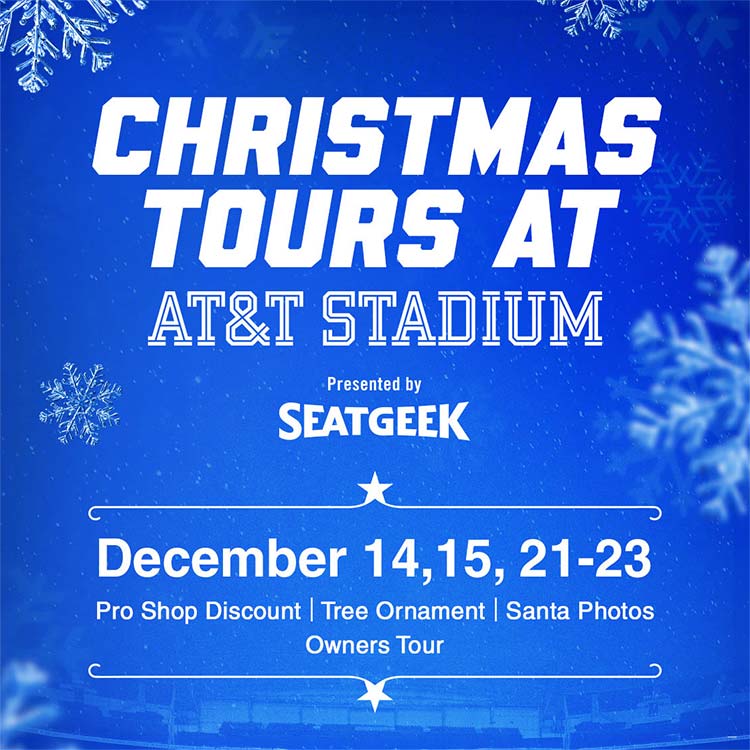
- Christmas Tours: a seasonal option for visitors whose timing and interests fit the holiday calendar.
The specific difference is not simply duration or access. Each format gives the stadium a different social context: the energy around a game, the coordination of a group outing or the visual character of a seasonal visit. The Group Tours information is especially relevant for organizers because it identifies add-ons such as dining and the Cowboys Skills Challenge, turning the visit into a fuller shared program. Those extras need to be checked against current availability and the needs of the group.
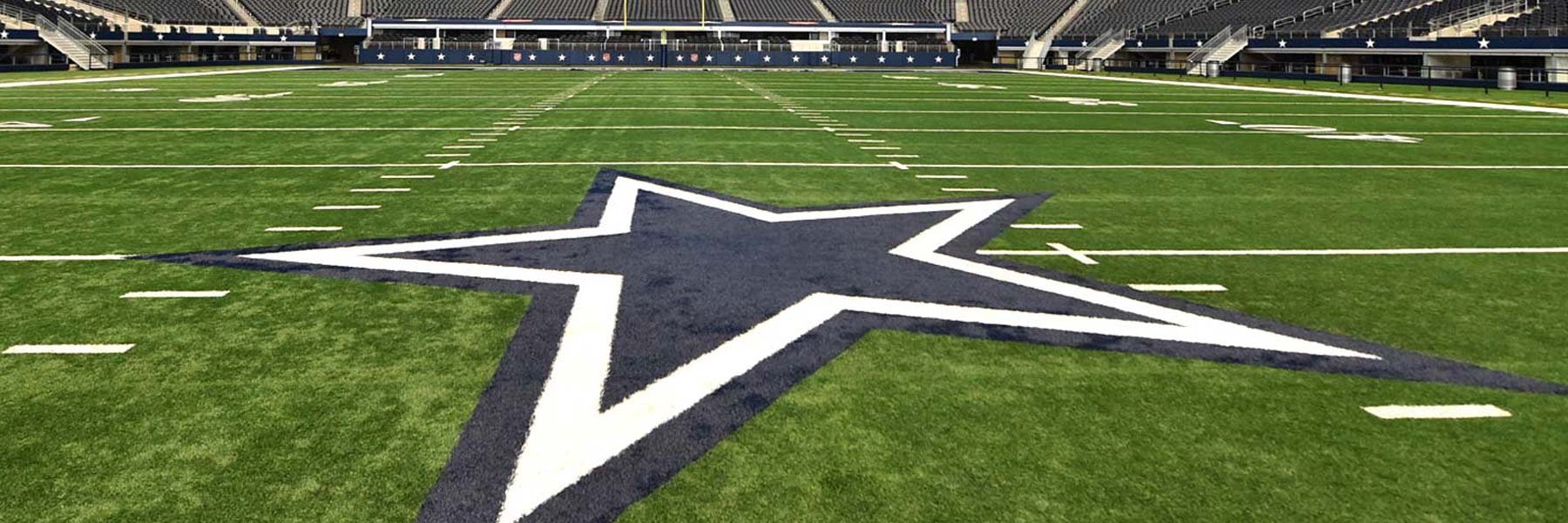
For a first visit without a particular event or group requirement, a general tour is the simplest starting point. Readers with a game on their itinerary may find the game-day format more meaningful, while an organizer can compare group arrangements against the size and interests of the party. These are distinct reasons to go, not interchangeable labels.
Why does the art collection belong in a stadium story?
Art changes the way a visitor reads a sports venue. It can offer a pause from the scale of the seating bowl and introduce another point of view on public space, identity and movement. AT&T Stadium’s tour materials foreground a contemporary collection, which gives the visit a cultural dimension even when a reader’s main reason for coming is football.
This does not mean every guest will want an art-centered route. It does mean the brand has more to say than the mechanics of a game. A first-time visitor can use the artwork as a prompt to notice the building’s public areas and the way a large venue hosts different kinds of experiences. The official tour listings indicate which themed options are currently available; works and locations may vary with operations.
For readers who prefer to move at their own pace, the site also lists self-guided options at times. That format changes the balance between structure and flexibility: visitors can explore with less dependence on a group itinerary, while a guided visit can provide more organized context. Check the current listing to see whether a self-guided format is offered for the intended date, and whether any spaces are excluded.
The broad brand promise, then, is a look behind the event through a combination of place, sport and culture. Its strength is variety; its limitation is that the exact route depends on the operating calendar. The official AT&T Stadium Tours options are the useful source for matching those interests to the live schedule.
What should a first-time reader know before choosing?
Tour pages explain the format, but visitors should still treat access details as date-specific. Stadiums host events and operational changes, so an advertised stop may not be open on every visit. The site’s own notes identify location and field access as subject to availability. That is particularly relevant to Gameday Tours, where the relationship to kickoff and post-game access is central to the appeal.
Before planning around a particular feature, check:
- Whether the date has a game, event or other operating constraint.
- Which spaces are included in that tour’s current route.
- Whether field access or a group add-on is available for the selected date.
- What arrival, accessibility and change details apply to your party.
For a game-linked visit, reread the Gameday Tours details close to booking. Group organizers can check the current Group Tours options for add-on details, and seasonal visitors can confirm dates on the Christmas Tours listing. A little confirmation prevents the itinerary from relying on an assumption.
What do readers often ask about the tours?
Are the tours only for Dallas Cowboys fans?
No. Football is a major part of the setting, but the official tour range also features architecture, public spaces and contemporary art. A sports fan may focus on the field and team context; another visitor may be more interested in the scale and design of the venue.
Is field access guaranteed on a Gameday Tour?
No. The official page describes post-game field access as subject to availability. Check the date-specific details before making it the deciding reason for a visit.
Can groups add an activity or meal?
The Group Tours page says options can include dining or the Cowboys Skills Challenge. Organizers should confirm which additions are available and suitable for their group when requesting current details.
Our recommendation
For a first-time reader, we recommend thinking of AT&T Stadium Tours as a venue introduction with several possible emphases. Choose a general visit if you want the broad picture; select Gameday Tours when the Cowboys event context is the point; and investigate Group Tours when shared activities or dining would improve the day. The seasonal Christmas Tours are a natural fit when dates align.
The honest limitation is operational variability: a route or field access can change, and a themed listing may not run on every date. Confirm the current inclusions before arranging travel, then choose the tour whose focus matches what you want to understand about the stadium.
Before you read on
- Football meets more than football: the tour experience includes stadium spaces alongside a contemporary art collection.
- Gameday Tours connect a visit with Cowboys home games, with post-game field access subject to availability.
- Group Tours can add dining or the Cowboys Skills Challenge to a guided visit.
- Christmas Tours provide a seasonal take on the venue, while dates and schedules are limited by the calendar.
What story does the stadium tell beyond the scoreboard?
A major stadium is easy to understand through its capacity and event calendar. A tour can make the setting more legible by showing how the venue functions as a designed space: the field, seating bowl, public areas and artwork all contribute to the visitor experience. AT&T Stadium’s official tour material places these elements side by side, which gives first-time visitors more than a set of football talking points.
That mix is a useful distinction. Some visitors arrive for the Cowboys or the scale of the playing field; others are drawn by the building itself or its art. The stadium’s displayed collection includes works by contemporary artists, and the official tour range includes an art-focused option in addition to general access formats. Availability of locations can vary, so treat the route description as a guide to the brand’s approach rather than a guarantee that every stop will be open.
For readers who want the sport-centered angle, Gameday Tours make the connection between venue and event explicit. The Gameday Tours page describes a visit tied to Cowboys home games and notes post-game field access subject to availability. That caveat matters: the appeal is clear, but access should not be assumed until the date-specific information confirms it.
The first brand-level takeaway is that the venue is presented as both a working event space and a destination for people curious about what happens around the game. The tour information is strongest when it shows those strands together, rather than treating the building as a backdrop. Start with the official tour overview if you want to see how the options are currently framed.
How do the tour formats express different sides of the brand?
The range is easier to understand as a set of lenses. A general stadium visit is the broad introduction; a game-day option emphasizes the live sports setting; group formats give organizers a way to build a shared outing; and the seasonal listing uses the building as part of a holiday experience. These distinctions help explain why the same venue can appeal to football fans, visitors interested in large-scale architecture and groups looking for an activity in Arlington.
- Gameday Tours: best aligned with a Cowboys home-game visit and the match-day atmosphere.
- Group Tours: can combine a guided stadium experience with dining or the Cowboys Skills Challenge.
- Christmas Tours: a seasonal option for visitors whose timing and interests fit the holiday calendar.
The specific difference is not simply duration or access. Each format gives the stadium a different social context: the energy around a game, the coordination of a group outing or the visual character of a seasonal visit. The Group Tours information is especially relevant for organizers because it identifies add-ons such as dining and the Cowboys Skills Challenge, turning the visit into a fuller shared program. Those extras need to be checked against current availability and the needs of the group.
For a first visit without a particular event or group requirement, a general tour is the simplest starting point. Readers with a game on their itinerary may find the game-day format more meaningful, while an organizer can compare group arrangements against the size and interests of the party. These are distinct reasons to go, not interchangeable labels.
Why does the art collection belong in a stadium story?
Art changes the way a visitor reads a sports venue. It can offer a pause from the scale of the seating bowl and introduce another point of view on public space, identity and movement. AT&T Stadium’s tour materials foreground a contemporary collection, which gives the visit a cultural dimension even when a reader’s main reason for coming is football.
This does not mean every guest will want an art-centered route. It does mean the brand has more to say than the mechanics of a game. A first-time visitor can use the artwork as a prompt to notice the building’s public areas and the way a large venue hosts different kinds of experiences. The official tour listings indicate which themed options are currently available; works and locations may vary with operations.
For readers who prefer to move at their own pace, the site also lists self-guided options at times. That format changes the balance between structure and flexibility: visitors can explore with less dependence on a group itinerary, while a guided visit can provide more organized context. Check the current listing to see whether a self-guided format is offered for the intended date, and whether any spaces are excluded.
The broad brand promise, then, is a look behind the event through a combination of place, sport and culture. Its strength is variety; its limitation is that the exact route depends on the operating calendar. The official AT&T Stadium Tours options are the useful source for matching those interests to the live schedule.
What should a first-time reader know before choosing?
Tour pages explain the format, but visitors should still treat access details as date-specific. Stadiums host events and operational changes, so an advertised stop may not be open on every visit. The site’s own notes identify location and field access as subject to availability. That is particularly relevant to Gameday Tours, where the relationship to kickoff and post-game access is central to the appeal.
Before planning around a particular feature, check:
- Whether the date has a game, event or other operating constraint.
- Which spaces are included in that tour’s current route.
- Whether field access or a group add-on is available for the selected date.
- What arrival, accessibility and change details apply to your party.
For a game-linked visit, reread the Gameday Tours details close to booking. Group organizers can check the current Group Tours options for add-on details, and seasonal visitors can confirm dates on the Christmas Tours listing. A little confirmation prevents the itinerary from relying on an assumption.
What do readers often ask about the tours?
Are the tours only for Dallas Cowboys fans?
No. Football is a major part of the setting, but the official tour range also features architecture, public spaces and contemporary art. A sports fan may focus on the field and team context; another visitor may be more interested in the scale and design of the venue.
Is field access guaranteed on a Gameday Tour?
No. The official page describes post-game field access as subject to availability. Check the date-specific details before making it the deciding reason for a visit.
Can groups add an activity or meal?
The Group Tours page says options can include dining or the Cowboys Skills Challenge. Organizers should confirm which additions are available and suitable for their group when requesting current details.
Our recommendation
For a first-time reader, we recommend thinking of AT&T Stadium Tours as a venue introduction with several possible emphases. Choose a general visit if you want the broad picture; select Gameday Tours when the Cowboys event context is the point; and investigate Group Tours when shared activities or dining would improve the day. The seasonal Christmas Tours are a natural fit when dates align.
The honest limitation is operational variability: a route or field access can change, and a themed listing may not run on every date. Confirm the current inclusions before arranging travel, then choose the tour whose focus matches what you want to understand about the stadium.
Before you read on
- Football meets more than football: the tour experience includes stadium spaces alongside a contemporary art collection.
- Gameday Tours connect a visit with Cowboys home games, with post-game field access subject to availability.
- Group Tours can add dining or the Cowboys Skills Challenge to a guided visit.
- Christmas Tours provide a seasonal take on the venue, while dates and schedules are limited by the calendar.
What story does the stadium tell beyond the scoreboard?
A major stadium is easy to understand through its capacity and event calendar. A tour can make the setting more legible by showing how the venue functions as a designed space: the field, seating bowl, public areas and artwork all contribute to the visitor experience. AT&T Stadium’s official tour material places these elements side by side, which gives first-time visitors more than a set of football talking points.
That mix is a useful distinction. Some visitors arrive for the Cowboys or the scale of the playing field; others are drawn by the building itself or its art. The stadium’s displayed collection includes works by contemporary artists, and the official tour range includes an art-focused option in addition to general access formats. Availability of locations can vary, so treat the route description as a guide to the brand’s approach rather than a guarantee that every stop will be open.
For readers who want the sport-centered angle, Gameday Tours make the connection between venue and event explicit. The Gameday Tours page describes a visit tied to Cowboys home games and notes post-game field access subject to availability. That caveat matters: the appeal is clear, but access should not be assumed until the date-specific information confirms it.
The first brand-level takeaway is that the venue is presented as both a working event space and a destination for people curious about what happens around the game. The tour information is strongest when it shows those strands together, rather than treating the building as a backdrop. Start with the official tour overview if you want to see how the options are currently framed.
How do the tour formats express different sides of the brand?
The range is easier to understand as a set of lenses. A general stadium visit is the broad introduction; a game-day option emphasizes the live sports setting; group formats give organizers a way to build a shared outing; and the seasonal listing uses the building as part of a holiday experience. These distinctions help explain why the same venue can appeal to football fans, visitors interested in large-scale architecture and groups looking for an activity in Arlington.
- Gameday Tours: best aligned with a Cowboys home-game visit and the match-day atmosphere.
- Group Tours: can combine a guided stadium experience with dining or the Cowboys Skills Challenge.
- Christmas Tours: a seasonal option for visitors whose timing and interests fit the holiday calendar.
The specific difference is not simply duration or access. Each format gives the stadium a different social context: the energy around a game, the coordination of a group outing or the visual character of a seasonal visit. The Group Tours information is especially relevant for organizers because it identifies add-ons such as dining and the Cowboys Skills Challenge, turning the visit into a fuller shared program. Those extras need to be checked against current availability and the needs of the group.
For a first visit without a particular event or group requirement, a general tour is the simplest starting point. Readers with a game on their itinerary may find the game-day format more meaningful, while an organizer can compare group arrangements against the size and interests of the party. These are distinct reasons to go, not interchangeable labels.
Why does the art collection belong in a stadium story?
Art changes the way a visitor reads a sports venue. It can offer a pause from the scale of the seating bowl and introduce another point of view on public space, identity and movement. AT&T Stadium’s tour materials foreground a contemporary collection, which gives the visit a cultural dimension even when a reader’s main reason for coming is football.
This does not mean every guest will want an art-centered route. It does mean the brand has more to say than the mechanics of a game. A first-time visitor can use the artwork as a prompt to notice the building’s public areas and the way a large venue hosts different kinds of experiences. The official tour listings indicate which themed options are currently available; works and locations may vary with operations.
For readers who prefer to move at their own pace, the site also lists self-guided options at times. That format changes the balance between structure and flexibility: visitors can explore with less dependence on a group itinerary, while a guided visit can provide more organized context. Check the current listing to see whether a self-guided format is offered for the intended date, and whether any spaces are excluded.
The broad brand promise, then, is a look behind the event through a combination of place, sport and culture. Its strength is variety; its limitation is that the exact route depends on the operating calendar. The official AT&T Stadium Tours options are the useful source for matching those interests to the live schedule.
What should a first-time reader know before choosing?
Tour pages explain the format, but visitors should still treat access details as date-specific. Stadiums host events and operational changes, so an advertised stop may not be open on every visit. The site’s own notes identify location and field access as subject to availability. That is particularly relevant to Gameday Tours, where the relationship to kickoff and post-game access is central to the appeal.
Before planning around a particular feature, check:
- Whether the date has a game, event or other operating constraint.
- Which spaces are included in that tour’s current route.
- Whether field access or a group add-on is available for the selected date.
- What arrival, accessibility and change details apply to your party.
For a game-linked visit, reread the Gameday Tours details close to booking. Group organizers can check the current Group Tours options for add-on details, and seasonal visitors can confirm dates on the Christmas Tours listing. A little confirmation prevents the itinerary from relying on an assumption.
What do readers often ask about the tours?
Are the tours only for Dallas Cowboys fans?
No. Football is a major part of the setting, but the official tour range also features architecture, public spaces and contemporary art. A sports fan may focus on the field and team context; another visitor may be more interested in the scale and design of the venue.
Is field access guaranteed on a Gameday Tour?
No. The official page describes post-game field access as subject to availability. Check the date-specific details before making it the deciding reason for a visit.
Can groups add an activity or meal?
The Group Tours page says options can include dining or the Cowboys Skills Challenge. Organizers should confirm which additions are available and suitable for their group when requesting current details.
Our recommendation
For a first-time reader, we recommend thinking of AT&T Stadium Tours as a venue introduction with several possible emphases. Choose a general visit if you want the broad picture; select Gameday Tours when the Cowboys event context is the point; and investigate Group Tours when shared activities or dining would improve the day. The seasonal Christmas Tours are a natural fit when dates align.
The honest limitation is operational variability: a route or field access can change, and a themed listing may not run on every date. Confirm the current inclusions before arranging travel, then choose the tour whose focus matches what you want to understand about the stadium.
Is field access guaranteed on a Gameday Tour?
No. The official page describes post-game field access as subject to availability. Check the date-specific details before making it the deciding reason for a visit.
Can groups add an activity or meal?
The Group Tours page says options can include dining or the Cowboys Skills Challenge. Organizers should confirm which additions are available and suitable for their group when requesting current details.
Our recommendation
For a first-time reader, we recommend thinking of AT&T Stadium Tours as a venue introduction with several possible emphases. Choose a general visit if you want the broad picture; select Gameday Tours when the Cowboys event context is the point; and investigate Group Tours when shared activities or dining would improve the day. The seasonal Christmas Tours are a natural fit when dates align.
The honest limitation is operational variability: a route or field access can change, and a themed listing may not run on every date. Confirm the current inclusions before arranging travel, then choose the tour whose focus matches what you want to understand about the stadium.
Are the tours only for Dallas Cowboys fans?
No. Football is a major part of the setting, but the official tour range also features architecture, public spaces and contemporary art. A sports fan may focus on the field and team context; another visitor may be more interested in the scale and design of the venue.
Is field access guaranteed on a Gameday Tour?
No. The official page describes post-game field access as subject to availability. Check the date-specific details before making it the deciding reason for a visit.
Can groups add an activity or meal?
The Group Tours page says options can include dining or the Cowboys Skills Challenge. Organizers should confirm which additions are available and suitable for their group when requesting current details.
Our recommendation
For a first-time reader, we recommend thinking of AT&T Stadium Tours as a venue introduction with several possible emphases. Choose a general visit if you want the broad picture; select Gameday Tours when the Cowboys event context is the point; and investigate Group Tours when shared activities or dining would improve the day. The seasonal Christmas Tours are a natural fit when dates align.
The honest limitation is operational variability: a route or field access can change, and a themed listing may not run on every date. Confirm the current inclusions before arranging travel, then choose the tour whose focus matches what you want to understand about the stadium.
What do readers often ask about the tours?
Are the tours only for Dallas Cowboys fans?
No. Football is a major part of the setting, but the official tour range also features architecture, public spaces and contemporary art. A sports fan may focus on the field and team context; another visitor may be more interested in the scale and design of the venue.
Is field access guaranteed on a Gameday Tour?
No. The official page describes post-game field access as subject to availability. Check the date-specific details before making it the deciding reason for a visit.
Can groups add an activity or meal?
The Group Tours page says options can include dining or the Cowboys Skills Challenge. Organizers should confirm which additions are available and suitable for their group when requesting current details.
Our recommendation
For a first-time reader, we recommend thinking of AT&T Stadium Tours as a venue introduction with several possible emphases. Choose a general visit if you want the broad picture; select Gameday Tours when the Cowboys event context is the point; and investigate Group Tours when shared activities or dining would improve the day. The seasonal Christmas Tours are a natural fit when dates align.
The honest limitation is operational variability: a route or field access can change, and a themed listing may not run on every date. Confirm the current inclusions before arranging travel, then choose the tour whose focus matches what you want to understand about the stadium.
For readers who prefer to move at their own pace, the site also lists self-guided options at times. That format changes the balance between structure and flexibility: visitors can explore with less dependence on a group itinerary, while a guided visit can provide more organized context. Check the current listing to see whether a self-guided format is offered for the intended date, and whether any spaces are excluded.
The broad brand promise, then, is a look behind the event through a combination of place, sport and culture. Its strength is variety; its limitation is that the exact route depends on the operating calendar. The official AT&T Stadium Tours options are the useful source for matching those interests to the live schedule.
What should a first-time reader know before choosing?
Tour pages explain the format, but visitors should still treat access details as date-specific. Stadiums host events and operational changes, so an advertised stop may not be open on every visit. The site’s own notes identify location and field access as subject to availability. That is particularly relevant to Gameday Tours, where the relationship to kickoff and post-game access is central to the appeal.
Before planning around a particular feature, check:
- Whether the date has a game, event or other operating constraint.
- Which spaces are included in that tour’s current route.
- Whether field access or a group add-on is available for the selected date.
- What arrival, accessibility and change details apply to your party.
For a game-linked visit, reread the Gameday Tours details close to booking. Group organizers can check the current Group Tours options for add-on details, and seasonal visitors can confirm dates on the Christmas Tours listing. A little confirmation prevents the itinerary from relying on an assumption.
What do readers often ask about the tours?
Are the tours only for Dallas Cowboys fans?
No. Football is a major part of the setting, but the official tour range also features architecture, public spaces and contemporary art. A sports fan may focus on the field and team context; another visitor may be more interested in the scale and design of the venue.
Is field access guaranteed on a Gameday Tour?
No. The official page describes post-game field access as subject to availability. Check the date-specific details before making it the deciding reason for a visit.
Can groups add an activity or meal?
The Group Tours page says options can include dining or the Cowboys Skills Challenge. Organizers should confirm which additions are available and suitable for their group when requesting current details.
Our recommendation
For a first-time reader, we recommend thinking of AT&T Stadium Tours as a venue introduction with several possible emphases. Choose a general visit if you want the broad picture; select Gameday Tours when the Cowboys event context is the point; and investigate Group Tours when shared activities or dining would improve the day. The seasonal Christmas Tours are a natural fit when dates align.
The honest limitation is operational variability: a route or field access can change, and a themed listing may not run on every date. Confirm the current inclusions before arranging travel, then choose the tour whose focus matches what you want to understand about the stadium.
Why does the art collection belong in a stadium story?
Art changes the way a visitor reads a sports venue. It can offer a pause from the scale of the seating bowl and introduce another point of view on public space, identity and movement. AT&T Stadium’s tour materials foreground a contemporary collection, which gives the visit a cultural dimension even when a reader’s main reason for coming is football.
This does not mean every guest will want an art-centered route. It does mean the brand has more to say than the mechanics of a game. A first-time visitor can use the artwork as a prompt to notice the building’s public areas and the way a large venue hosts different kinds of experiences. The official tour listings indicate which themed options are currently available; works and locations may vary with operations.
For readers who prefer to move at their own pace, the site also lists self-guided options at times. That format changes the balance between structure and flexibility: visitors can explore with less dependence on a group itinerary, while a guided visit can provide more organized context. Check the current listing to see whether a self-guided format is offered for the intended date, and whether any spaces are excluded.
The broad brand promise, then, is a look behind the event through a combination of place, sport and culture. Its strength is variety; its limitation is that the exact route depends on the operating calendar. The official AT&T Stadium Tours options are the useful source for matching those interests to the live schedule.
What should a first-time reader know before choosing?
Tour pages explain the format, but visitors should still treat access details as date-specific. Stadiums host events and operational changes, so an advertised stop may not be open on every visit. The site’s own notes identify location and field access as subject to availability. That is particularly relevant to Gameday Tours, where the relationship to kickoff and post-game access is central to the appeal.
Before planning around a particular feature, check:
- Whether the date has a game, event or other operating constraint.
- Which spaces are included in that tour’s current route.
- Whether field access or a group add-on is available for the selected date.
- What arrival, accessibility and change details apply to your party.
For a game-linked visit, reread the Gameday Tours details close to booking. Group organizers can check the current Group Tours options for add-on details, and seasonal visitors can confirm dates on the Christmas Tours listing. A little confirmation prevents the itinerary from relying on an assumption.
What do readers often ask about the tours?
Are the tours only for Dallas Cowboys fans?
No. Football is a major part of the setting, but the official tour range also features architecture, public spaces and contemporary art. A sports fan may focus on the field and team context; another visitor may be more interested in the scale and design of the venue.
Is field access guaranteed on a Gameday Tour?
No. The official page describes post-game field access as subject to availability. Check the date-specific details before making it the deciding reason for a visit.
Can groups add an activity or meal?
The Group Tours page says options can include dining or the Cowboys Skills Challenge. Organizers should confirm which additions are available and suitable for their group when requesting current details.
Our recommendation
For a first-time reader, we recommend thinking of AT&T Stadium Tours as a venue introduction with several possible emphases. Choose a general visit if you want the broad picture; select Gameday Tours when the Cowboys event context is the point; and investigate Group Tours when shared activities or dining would improve the day. The seasonal Christmas Tours are a natural fit when dates align.
The honest limitation is operational variability: a route or field access can change, and a themed listing may not run on every date. Confirm the current inclusions before arranging travel, then choose the tour whose focus matches what you want to understand about the stadium.
The first brand-level takeaway is that the venue is presented as both a working event space and a destination for people curious about what happens around the game. The tour information is strongest when it shows those strands together, rather than treating the building as a backdrop. Start with the official tour overview if you want to see how the options are currently framed.
How do the tour formats express different sides of the brand?
The range is easier to understand as a set of lenses. A general stadium visit is the broad introduction; a game-day option emphasizes the live sports setting; group formats give organizers a way to build a shared outing; and the seasonal listing uses the building as part of a holiday experience. These distinctions help explain why the same venue can appeal to football fans, visitors interested in large-scale architecture and groups looking for an activity in Arlington.
- Gameday Tours: best aligned with a Cowboys home-game visit and the match-day atmosphere.
- Group Tours: can combine a guided stadium experience with dining or the Cowboys Skills Challenge.
- Christmas Tours: a seasonal option for visitors whose timing and interests fit the holiday calendar.
The specific difference is not simply duration or access. Each format gives the stadium a different social context: the energy around a game, the coordination of a group outing or the visual character of a seasonal visit. The Group Tours information is especially relevant for organizers because it identifies add-ons such as dining and the Cowboys Skills Challenge, turning the visit into a fuller shared program. Those extras need to be checked against current availability and the needs of the group.
For a first visit without a particular event or group requirement, a general tour is the simplest starting point. Readers with a game on their itinerary may find the game-day format more meaningful, while an organizer can compare group arrangements against the size and interests of the party. These are distinct reasons to go, not interchangeable labels.
Why does the art collection belong in a stadium story?
Art changes the way a visitor reads a sports venue. It can offer a pause from the scale of the seating bowl and introduce another point of view on public space, identity and movement. AT&T Stadium’s tour materials foreground a contemporary collection, which gives the visit a cultural dimension even when a reader’s main reason for coming is football.
This does not mean every guest will want an art-centered route. It does mean the brand has more to say than the mechanics of a game. A first-time visitor can use the artwork as a prompt to notice the building’s public areas and the way a large venue hosts different kinds of experiences. The official tour listings indicate which themed options are currently available; works and locations may vary with operations.
For readers who prefer to move at their own pace, the site also lists self-guided options at times. That format changes the balance between structure and flexibility: visitors can explore with less dependence on a group itinerary, while a guided visit can provide more organized context. Check the current listing to see whether a self-guided format is offered for the intended date, and whether any spaces are excluded.
The broad brand promise, then, is a look behind the event through a combination of place, sport and culture. Its strength is variety; its limitation is that the exact route depends on the operating calendar. The official AT&T Stadium Tours options are the useful source for matching those interests to the live schedule.
What should a first-time reader know before choosing?
Tour pages explain the format, but visitors should still treat access details as date-specific. Stadiums host events and operational changes, so an advertised stop may not be open on every visit. The site’s own notes identify location and field access as subject to availability. That is particularly relevant to Gameday Tours, where the relationship to kickoff and post-game access is central to the appeal.
Before planning around a particular feature, check:
- Whether the date has a game, event or other operating constraint.
- Which spaces are included in that tour’s current route.
- Whether field access or a group add-on is available for the selected date.
- What arrival, accessibility and change details apply to your party.
For a game-linked visit, reread the Gameday Tours details close to booking. Group organizers can check the current Group Tours options for add-on details, and seasonal visitors can confirm dates on the Christmas Tours listing. A little confirmation prevents the itinerary from relying on an assumption.
What do readers often ask about the tours?
Are the tours only for Dallas Cowboys fans?
No. Football is a major part of the setting, but the official tour range also features architecture, public spaces and contemporary art. A sports fan may focus on the field and team context; another visitor may be more interested in the scale and design of the venue.
Is field access guaranteed on a Gameday Tour?
No. The official page describes post-game field access as subject to availability. Check the date-specific details before making it the deciding reason for a visit.
Can groups add an activity or meal?
The Group Tours page says options can include dining or the Cowboys Skills Challenge. Organizers should confirm which additions are available and suitable for their group when requesting current details.
Our recommendation
For a first-time reader, we recommend thinking of AT&T Stadium Tours as a venue introduction with several possible emphases. Choose a general visit if you want the broad picture; select Gameday Tours when the Cowboys event context is the point; and investigate Group Tours when shared activities or dining would improve the day. The seasonal Christmas Tours are a natural fit when dates align.
The honest limitation is operational variability: a route or field access can change, and a themed listing may not run on every date. Confirm the current inclusions before arranging travel, then choose the tour whose focus matches what you want to understand about the stadium.
Before you read on
- Football meets more than football: the tour experience includes stadium spaces alongside a contemporary art collection.
- Gameday Tours connect a visit with Cowboys home games, with post-game field access subject to availability.
- Group Tours can add dining or the Cowboys Skills Challenge to a guided visit.
- Christmas Tours provide a seasonal take on the venue, while dates and schedules are limited by the calendar.
What story does the stadium tell beyond the scoreboard?
A major stadium is easy to understand through its capacity and event calendar. A tour can make the setting more legible by showing how the venue functions as a designed space: the field, seating bowl, public areas and artwork all contribute to the visitor experience. AT&T Stadium’s official tour material places these elements side by side, which gives first-time visitors more than a set of football talking points.
That mix is a useful distinction. Some visitors arrive for the Cowboys or the scale of the playing field; others are drawn by the building itself or its art. The stadium’s displayed collection includes works by contemporary artists, and the official tour range includes an art-focused option in addition to general access formats. Availability of locations can vary, so treat the route description as a guide to the brand’s approach rather than a guarantee that every stop will be open.
For readers who want the sport-centered angle, Gameday Tours make the connection between venue and event explicit. The Gameday Tours page describes a visit tied to Cowboys home games and notes post-game field access subject to availability. That caveat matters: the appeal is clear, but access should not be assumed until the date-specific information confirms it.
The first brand-level takeaway is that the venue is presented as both a working event space and a destination for people curious about what happens around the game. The tour information is strongest when it shows those strands together, rather than treating the building as a backdrop. Start with the official tour overview if you want to see how the options are currently framed.
How do the tour formats express different sides of the brand?
The range is easier to understand as a set of lenses. A general stadium visit is the broad introduction; a game-day option emphasizes the live sports setting; group formats give organizers a way to build a shared outing; and the seasonal listing uses the building as part of a holiday experience. These distinctions help explain why the same venue can appeal to football fans, visitors interested in large-scale architecture and groups looking for an activity in Arlington.
- Gameday Tours: best aligned with a Cowboys home-game visit and the match-day atmosphere.
- Group Tours: can combine a guided stadium experience with dining or the Cowboys Skills Challenge.
- Christmas Tours: a seasonal option for visitors whose timing and interests fit the holiday calendar.
The specific difference is not simply duration or access. Each format gives the stadium a different social context: the energy around a game, the coordination of a group outing or the visual character of a seasonal visit. The Group Tours information is especially relevant for organizers because it identifies add-ons such as dining and the Cowboys Skills Challenge, turning the visit into a fuller shared program. Those extras need to be checked against current availability and the needs of the group.
For a first visit without a particular event or group requirement, a general tour is the simplest starting point. Readers with a game on their itinerary may find the game-day format more meaningful, while an organizer can compare group arrangements against the size and interests of the party. These are distinct reasons to go, not interchangeable labels.
Why does the art collection belong in a stadium story?
Art changes the way a visitor reads a sports venue. It can offer a pause from the scale of the seating bowl and introduce another point of view on public space, identity and movement. AT&T Stadium’s tour materials foreground a contemporary collection, which gives the visit a cultural dimension even when a reader’s main reason for coming is football.
This does not mean every guest will want an art-centered route. It does mean the brand has more to say than the mechanics of a game. A first-time visitor can use the artwork as a prompt to notice the building’s public areas and the way a large venue hosts different kinds of experiences. The official tour listings indicate which themed options are currently available; works and locations may vary with operations.
For readers who prefer to move at their own pace, the site also lists self-guided options at times. That format changes the balance between structure and flexibility: visitors can explore with less dependence on a group itinerary, while a guided visit can provide more organized context. Check the current listing to see whether a self-guided format is offered for the intended date, and whether any spaces are excluded.
The broad brand promise, then, is a look behind the event through a combination of place, sport and culture. Its strength is variety; its limitation is that the exact route depends on the operating calendar. The official AT&T Stadium Tours options are the useful source for matching those interests to the live schedule.
What should a first-time reader know before choosing?
Tour pages explain the format, but visitors should still treat access details as date-specific. Stadiums host events and operational changes, so an advertised stop may not be open on every visit. The site’s own notes identify location and field access as subject to availability. That is particularly relevant to Gameday Tours, where the relationship to kickoff and post-game access is central to the appeal.
Before planning around a particular feature, check:
- Whether the date has a game, event or other operating constraint.
- Which spaces are included in that tour’s current route.
- Whether field access or a group add-on is available for the selected date.
- What arrival, accessibility and change details apply to your party.
For a game-linked visit, reread the Gameday Tours details close to booking. Group organizers can check the current Group Tours options for add-on details, and seasonal visitors can confirm dates on the Christmas Tours listing. A little confirmation prevents the itinerary from relying on an assumption.
What do readers often ask about the tours?
Are the tours only for Dallas Cowboys fans?
No. Football is a major part of the setting, but the official tour range also features architecture, public spaces and contemporary art. A sports fan may focus on the field and team context; another visitor may be more interested in the scale and design of the venue.
Is field access guaranteed on a Gameday Tour?
No. The official page describes post-game field access as subject to availability. Check the date-specific details before making it the deciding reason for a visit.
Can groups add an activity or meal?
The Group Tours page says options can include dining or the Cowboys Skills Challenge. Organizers should confirm which additions are available and suitable for their group when requesting current details.
Our recommendation
For a first-time reader, we recommend thinking of AT&T Stadium Tours as a venue introduction with several possible emphases. Choose a general visit if you want the broad picture; select Gameday Tours when the Cowboys event context is the point; and investigate Group Tours when shared activities or dining would improve the day. The seasonal Christmas Tours are a natural fit when dates align.
The honest limitation is operational variability: a route or field access can change, and a themed listing may not run on every date. Confirm the current inclusions before arranging travel, then choose the tour whose focus matches what you want to understand about the stadium.
For a first-time visitor, AT&T Stadium can seem like a football landmark first and a tour destination second. The official tour range suggests a broader story, connecting the scale of the venue with art, architecture and different ways of encountering the field.
AT&T Stadium Tours is the official route into that story. The stadium presents itself as home to the Dallas Cowboys, a large event venue and a place where visitors can explore public art and football spaces. The tour pages describe several formats rather than one fixed itinerary, so a visit can be shaped around a game, a group or a particular season.
We reviewed the official tour information for this feature. Access, routes and field availability can change with stadium operations, which makes the official listing the right place to confirm details for a chosen date.
This article contains affiliate links. If you buy through them, we may earn a commission at no extra cost to you.
Before you read on
- Football meets more than football: the tour experience includes stadium spaces alongside a contemporary art collection.
- Gameday Tours connect a visit with Cowboys home games, with post-game field access subject to availability.
- Group Tours can add dining or the Cowboys Skills Challenge to a guided visit.
- Christmas Tours provide a seasonal take on the venue, while dates and schedules are limited by the calendar.
What story does the stadium tell beyond the scoreboard?
A major stadium is easy to understand through its capacity and event calendar. A tour can make the setting more legible by showing how the venue functions as a designed space: the field, seating bowl, public areas and artwork all contribute to the visitor experience. AT&T Stadium’s official tour material places these elements side by side, which gives first-time visitors more than a set of football talking points.
That mix is a useful distinction. Some visitors arrive for the Cowboys or the scale of the playing field; others are drawn by the building itself or its art. The stadium’s displayed collection includes works by contemporary artists, and the official tour range includes an art-focused option in addition to general access formats. Availability of locations can vary, so treat the route description as a guide to the brand’s approach rather than a guarantee that every stop will be open.
For readers who want the sport-centered angle, Gameday Tours make the connection between venue and event explicit. The Gameday Tours page describes a visit tied to Cowboys home games and notes post-game field access subject to availability. That caveat matters: the appeal is clear, but access should not be assumed until the date-specific information confirms it.
The first brand-level takeaway is that the venue is presented as both a working event space and a destination for people curious about what happens around the game. The tour information is strongest when it shows those strands together, rather than treating the building as a backdrop. Start with the official tour overview if you want to see how the options are currently framed.
How do the tour formats express different sides of the brand?
The range is easier to understand as a set of lenses. A general stadium visit is the broad introduction; a game-day option emphasizes the live sports setting; group formats give organizers a way to build a shared outing; and the seasonal listing uses the building as part of a holiday experience. These distinctions help explain why the same venue can appeal to football fans, visitors interested in large-scale architecture and groups looking for an activity in Arlington.
- Gameday Tours: best aligned with a Cowboys home-game visit and the match-day atmosphere.
- Group Tours: can combine a guided stadium experience with dining or the Cowboys Skills Challenge.
- Christmas Tours: a seasonal option for visitors whose timing and interests fit the holiday calendar.
The specific difference is not simply duration or access. Each format gives the stadium a different social context: the energy around a game, the coordination of a group outing or the visual character of a seasonal visit. The Group Tours information is especially relevant for organizers because it identifies add-ons such as dining and the Cowboys Skills Challenge, turning the visit into a fuller shared program. Those extras need to be checked against current availability and the needs of the group.
For a first visit without a particular event or group requirement, a general tour is the simplest starting point. Readers with a game on their itinerary may find the game-day format more meaningful, while an organizer can compare group arrangements against the size and interests of the party. These are distinct reasons to go, not interchangeable labels.
Why does the art collection belong in a stadium story?
Art changes the way a visitor reads a sports venue. It can offer a pause from the scale of the seating bowl and introduce another point of view on public space, identity and movement. AT&T Stadium’s tour materials foreground a contemporary collection, which gives the visit a cultural dimension even when a reader’s main reason for coming is football.
This does not mean every guest will want an art-centered route. It does mean the brand has more to say than the mechanics of a game. A first-time visitor can use the artwork as a prompt to notice the building’s public areas and the way a large venue hosts different kinds of experiences. The official tour listings indicate which themed options are currently available; works and locations may vary with operations.
For readers who prefer to move at their own pace, the site also lists self-guided options at times. That format changes the balance between structure and flexibility: visitors can explore with less dependence on a group itinerary, while a guided visit can provide more organized context. Check the current listing to see whether a self-guided format is offered for the intended date, and whether any spaces are excluded.
The broad brand promise, then, is a look behind the event through a combination of place, sport and culture. Its strength is variety; its limitation is that the exact route depends on the operating calendar. The official AT&T Stadium Tours options are the useful source for matching those interests to the live schedule.
What should a first-time reader know before choosing?
Tour pages explain the format, but visitors should still treat access details as date-specific. Stadiums host events and operational changes, so an advertised stop may not be open on every visit. The site’s own notes identify location and field access as subject to availability. That is particularly relevant to Gameday Tours, where the relationship to kickoff and post-game access is central to the appeal.
Before planning around a particular feature, check:
- Whether the date has a game, event or other operating constraint.
- Which spaces are included in that tour’s current route.
- Whether field access or a group add-on is available for the selected date.
- What arrival, accessibility and change details apply to your party.
For a game-linked visit, reread the Gameday Tours details close to booking. Group organizers can check the current Group Tours options for add-on details, and seasonal visitors can confirm dates on the Christmas Tours listing. A little confirmation prevents the itinerary from relying on an assumption.
What do readers often ask about the tours?
Are the tours only for Dallas Cowboys fans?
No. Football is a major part of the setting, but the official tour range also features architecture, public spaces and contemporary art. A sports fan may focus on the field and team context; another visitor may be more interested in the scale and design of the venue.
Is field access guaranteed on a Gameday Tour?
No. The official page describes post-game field access as subject to availability. Check the date-specific details before making it the deciding reason for a visit.
Can groups add an activity or meal?
The Group Tours page says options can include dining or the Cowboys Skills Challenge. Organizers should confirm which additions are available and suitable for their group when requesting current details.
Our recommendation
For a first-time reader, we recommend thinking of AT&T Stadium Tours as a venue introduction with several possible emphases. Choose a general visit if you want the broad picture; select Gameday Tours when the Cowboys event context is the point; and investigate Group Tours when shared activities or dining would improve the day. The seasonal Christmas Tours are a natural fit when dates align.
The honest limitation is operational variability: a route or field access can change, and a themed listing may not run on every date. Confirm the current inclusions before arranging travel, then choose the tour whose focus matches what you want to understand about the stadium.
For a first-time visitor, AT&T Stadium can seem like a football landmark first and a tour destination second. The official tour range suggests a broader story, connecting the scale of the venue with art, architecture and different ways of encountering the field.
AT&T Stadium Tours is the official route into that story. The stadium presents itself as home to the Dallas Cowboys, a large event venue and a place where visitors can explore public art and football spaces. The tour pages describe several formats rather than one fixed itinerary, so a visit can be shaped around a game, a group or a particular season.
We reviewed the official tour information for this feature. Access, routes and field availability can change with stadium operations, which makes the official listing the right place to confirm details for a chosen date.
This article contains affiliate links. If you buy through them, we may earn a commission at no extra cost to you.
Before you read on
- Football meets more than football: the tour experience includes stadium spaces alongside a contemporary art collection.
- Gameday Tours connect a visit with Cowboys home games, with post-game field access subject to availability.
- Group Tours can add dining or the Cowboys Skills Challenge to a guided visit.
- Christmas Tours provide a seasonal take on the venue, while dates and schedules are limited by the calendar.
What story does the stadium tell beyond the scoreboard?
A major stadium is easy to understand through its capacity and event calendar. A tour can make the setting more legible by showing how the venue functions as a designed space: the field, seating bowl, public areas and artwork all contribute to the visitor experience. AT&T Stadium’s official tour material places these elements side by side, which gives first-time visitors more than a set of football talking points.
That mix is a useful distinction. Some visitors arrive for the Cowboys or the scale of the playing field; others are drawn by the building itself or its art. The stadium’s displayed collection includes works by contemporary artists, and the official tour range includes an art-focused option in addition to general access formats. Availability of locations can vary, so treat the route description as a guide to the brand’s approach rather than a guarantee that every stop will be open.
For readers who want the sport-centered angle, Gameday Tours make the connection between venue and event explicit. The Gameday Tours page describes a visit tied to Cowboys home games and notes post-game field access subject to availability. That caveat matters: the appeal is clear, but access should not be assumed until the date-specific information confirms it.
The first brand-level takeaway is that the venue is presented as both a working event space and a destination for people curious about what happens around the game. The tour information is strongest when it shows those strands together, rather than treating the building as a backdrop. Start with the official tour overview if you want to see how the options are currently framed.
How do the tour formats express different sides of the brand?
The range is easier to understand as a set of lenses. A general stadium visit is the broad introduction; a game-day option emphasizes the live sports setting; group formats give organizers a way to build a shared outing; and the seasonal listing uses the building as part of a holiday experience. These distinctions help explain why the same venue can appeal to football fans, visitors interested in large-scale architecture and groups looking for an activity in Arlington.
- Gameday Tours: best aligned with a Cowboys home-game visit and the match-day atmosphere.
- Group Tours: can combine a guided stadium experience with dining or the Cowboys Skills Challenge.
- Christmas Tours: a seasonal option for visitors whose timing and interests fit the holiday calendar.
The specific difference is not simply duration or access. Each format gives the stadium a different social context: the energy around a game, the coordination of a group outing or the visual character of a seasonal visit. The Group Tours information is especially relevant for organizers because it identifies add-ons such as dining and the Cowboys Skills Challenge, turning the visit into a fuller shared program. Those extras need to be checked against current availability and the needs of the group.
For a first visit without a particular event or group requirement, a general tour is the simplest starting point. Readers with a game on their itinerary may find the game-day format more meaningful, while an organizer can compare group arrangements against the size and interests of the party. These are distinct reasons to go, not interchangeable labels.
Why does the art collection belong in a stadium story?
Art changes the way a visitor reads a sports venue. It can offer a pause from the scale of the seating bowl and introduce another point of view on public space, identity and movement. AT&T Stadium’s tour materials foreground a contemporary collection, which gives the visit a cultural dimension even when a reader’s main reason for coming is football.
This does not mean every guest will want an art-centered route. It does mean the brand has more to say than the mechanics of a game. A first-time visitor can use the artwork as a prompt to notice the building’s public areas and the way a large venue hosts different kinds of experiences. The official tour listings indicate which themed options are currently available; works and locations may vary with operations.
For readers who prefer to move at their own pace, the site also lists self-guided options at times. That format changes the balance between structure and flexibility: visitors can explore with less dependence on a group itinerary, while a guided visit can provide more organized context. Check the current listing to see whether a self-guided format is offered for the intended date, and whether any spaces are excluded.
The broad brand promise, then, is a look behind the event through a combination of place, sport and culture. Its strength is variety; its limitation is that the exact route depends on the operating calendar. The official AT&T Stadium Tours options are the useful source for matching those interests to the live schedule.
What should a first-time reader know before choosing?
Tour pages explain the format, but visitors should still treat access details as date-specific. Stadiums host events and operational changes, so an advertised stop may not be open on every visit. The site’s own notes identify location and field access as subject to availability. That is particularly relevant to Gameday Tours, where the relationship to kickoff and post-game access is central to the appeal.
Before planning around a particular feature, check:
- Whether the date has a game, event or other operating constraint.
- Which spaces are included in that tour’s current route.
- Whether field access or a group add-on is available for the selected date.
- What arrival, accessibility and change details apply to your party.
For a game-linked visit, reread the Gameday Tours details close to booking. Group organizers can check the current Group Tours options for add-on details, and seasonal visitors can confirm dates on the Christmas Tours listing. A little confirmation prevents the itinerary from relying on an assumption.
What do readers often ask about the tours?
Are the tours only for Dallas Cowboys fans?
No. Football is a major part of the setting, but the official tour range also features architecture, public spaces and contemporary art. A sports fan may focus on the field and team context; another visitor may be more interested in the scale and design of the venue.
Is field access guaranteed on a Gameday Tour?
No. The official page describes post-game field access as subject to availability. Check the date-specific details before making it the deciding reason for a visit.
Can groups add an activity or meal?
The Group Tours page says options can include dining or the Cowboys Skills Challenge. Organizers should confirm which additions are available and suitable for their group when requesting current details.
Our recommendation
For a first-time reader, we recommend thinking of AT&T Stadium Tours as a venue introduction with several possible emphases. Choose a general visit if you want the broad picture; select Gameday Tours when the Cowboys event context is the point; and investigate Group Tours when shared activities or dining would improve the day. The seasonal Christmas Tours are a natural fit when dates align.
The honest limitation is operational variability: a route or field access can change, and a themed listing may not run on every date. Confirm the current inclusions before arranging travel, then choose the tour whose focus matches what you want to understand about the stadium.
For a first-time visitor, AT&T Stadium can seem like a football landmark first and a tour destination second. The official tour range suggests a broader story, connecting the scale of the venue with art, architecture and different ways of encountering the field.
AT&T Stadium Tours is the official route into that story. The stadium presents itself as home to the Dallas Cowboys, a large event venue and a place where visitors can explore public art and football spaces. The tour pages describe several formats rather than one fixed itinerary, so a visit can be shaped around a game, a group or a particular season.
We reviewed the official tour information for this feature. Access, routes and field availability can change with stadium operations, which makes the official listing the right place to confirm details for a chosen date.
This article contains affiliate links. If you buy through them, we may earn a commission at no extra cost to you.
Before you read on
- Football meets more than football: the tour experience includes stadium spaces alongside a contemporary art collection.
- Gameday Tours connect a visit with Cowboys home games, with post-game field access subject to availability.
- Group Tours can add dining or the Cowboys Skills Challenge to a guided visit.
- Christmas Tours provide a seasonal take on the venue, while dates and schedules are limited by the calendar.
What story does the stadium tell beyond the scoreboard?
A major stadium is easy to understand through its capacity and event calendar. A tour can make the setting more legible by showing how the venue functions as a designed space: the field, seating bowl, public areas and artwork all contribute to the visitor experience. AT&T Stadium’s official tour material places these elements side by side, which gives first-time visitors more than a set of football talking points.
That mix is a useful distinction. Some visitors arrive for the Cowboys or the scale of the playing field; others are drawn by the building itself or its art. The stadium’s displayed collection includes works by contemporary artists, and the official tour range includes an art-focused option in addition to general access formats. Availability of locations can vary, so treat the route description as a guide to the brand’s approach rather than a guarantee that every stop will be open.
For readers who want the sport-centered angle, Gameday Tours make the connection between venue and event explicit. The Gameday Tours page describes a visit tied to Cowboys home games and notes post-game field access subject to availability. That caveat matters: the appeal is clear, but access should not be assumed until the date-specific information confirms it.
The first brand-level takeaway is that the venue is presented as both a working event space and a destination for people curious about what happens around the game. The tour information is strongest when it shows those strands together, rather than treating the building as a backdrop. Start with the official tour overview if you want to see how the options are currently framed.
How do the tour formats express different sides of the brand?
The range is easier to understand as a set of lenses. A general stadium visit is the broad introduction; a game-day option emphasizes the live sports setting; group formats give organizers a way to build a shared outing; and the seasonal listing uses the building as part of a holiday experience. These distinctions help explain why the same venue can appeal to football fans, visitors interested in large-scale architecture and groups looking for an activity in Arlington.
- Gameday Tours: best aligned with a Cowboys home-game visit and the match-day atmosphere.
- Group Tours: can combine a guided stadium experience with dining or the Cowboys Skills Challenge.
- Christmas Tours: a seasonal option for visitors whose timing and interests fit the holiday calendar.
The specific difference is not simply duration or access. Each format gives the stadium a different social context: the energy around a game, the coordination of a group outing or the visual character of a seasonal visit. The Group Tours information is especially relevant for organizers because it identifies add-ons such as dining and the Cowboys Skills Challenge, turning the visit into a fuller shared program. Those extras need to be checked against current availability and the needs of the group.
For a first visit without a particular event or group requirement, a general tour is the simplest starting point. Readers with a game on their itinerary may find the game-day format more meaningful, while an organizer can compare group arrangements against the size and interests of the party. These are distinct reasons to go, not interchangeable labels.
Why does the art collection belong in a stadium story?
Art changes the way a visitor reads a sports venue. It can offer a pause from the scale of the seating bowl and introduce another point of view on public space, identity and movement. AT&T Stadium’s tour materials foreground a contemporary collection, which gives the visit a cultural dimension even when a reader’s main reason for coming is football.
This does not mean every guest will want an art-centered route. It does mean the brand has more to say than the mechanics of a game. A first-time visitor can use the artwork as a prompt to notice the building’s public areas and the way a large venue hosts different kinds of experiences. The official tour listings indicate which themed options are currently available; works and locations may vary with operations.
For readers who prefer to move at their own pace, the site also lists self-guided options at times. That format changes the balance between structure and flexibility: visitors can explore with less dependence on a group itinerary, while a guided visit can provide more organized context. Check the current listing to see whether a self-guided format is offered for the intended date, and whether any spaces are excluded.
The broad brand promise, then, is a look behind the event through a combination of place, sport and culture. Its strength is variety; its limitation is that the exact route depends on the operating calendar. The official AT&T Stadium Tours options are the useful source for matching those interests to the live schedule.
What should a first-time reader know before choosing?
Tour pages explain the format, but visitors should still treat access details as date-specific. Stadiums host events and operational changes, so an advertised stop may not be open on every visit. The site’s own notes identify location and field access as subject to availability. That is particularly relevant to Gameday Tours, where the relationship to kickoff and post-game access is central to the appeal.
Before planning around a particular feature, check:
- Whether the date has a game, event or other operating constraint.
- Which spaces are included in that tour’s current route.
- Whether field access or a group add-on is available for the selected date.
- What arrival, accessibility and change details apply to your party.
For a game-linked visit, reread the Gameday Tours details close to booking. Group organizers can check the current Group Tours options for add-on details, and seasonal visitors can confirm dates on the Christmas Tours listing. A little confirmation prevents the itinerary from relying on an assumption.
What do readers often ask about the tours?
Are the tours only for Dallas Cowboys fans?
No. Football is a major part of the setting, but the official tour range also features architecture, public spaces and contemporary art. A sports fan may focus on the field and team context; another visitor may be more interested in the scale and design of the venue.
Is field access guaranteed on a Gameday Tour?
No. The official page describes post-game field access as subject to availability. Check the date-specific details before making it the deciding reason for a visit.
Can groups add an activity or meal?
The Group Tours page says options can include dining or the Cowboys Skills Challenge. Organizers should confirm which additions are available and suitable for their group when requesting current details.
Our recommendation
For a first-time reader, we recommend thinking of AT&T Stadium Tours as a venue introduction with several possible emphases. Choose a general visit if you want the broad picture; select Gameday Tours when the Cowboys event context is the point; and investigate Group Tours when shared activities or dining would improve the day. The seasonal Christmas Tours are a natural fit when dates align.
The honest limitation is operational variability: a route or field access can change, and a themed listing may not run on every date. Confirm the current inclusions before arranging travel, then choose the tour whose focus matches what you want to understand about the stadium.
For a first-time visitor, AT&T Stadium can seem like a football landmark first and a tour destination second. The official tour range suggests a broader story, connecting the scale of the venue with art, architecture and different ways of encountering the field.
AT&T Stadium Tours is the official route into that story. The stadium presents itself as home to the Dallas Cowboys, a large event venue and a place where visitors can explore public art and football spaces. The tour pages describe several formats rather than one fixed itinerary, so a visit can be shaped around a game, a group or a particular season.
We reviewed the official tour information for this feature. Access, routes and field availability can change with stadium operations, which makes the official listing the right place to confirm details for a chosen date.
This article contains affiliate links. If you buy through them, we may earn a commission at no extra cost to you.
Before you read on
- Football meets more than football: the tour experience includes stadium spaces alongside a contemporary art collection.
- Gameday Tours connect a visit with Cowboys home games, with post-game field access subject to availability.
- Group Tours can add dining or the Cowboys Skills Challenge to a guided visit.
- Christmas Tours provide a seasonal take on the venue, while dates and schedules are limited by the calendar.
What story does the stadium tell beyond the scoreboard?
A major stadium is easy to understand through its capacity and event calendar. A tour can make the setting more legible by showing how the venue functions as a designed space: the field, seating bowl, public areas and artwork all contribute to the visitor experience. AT&T Stadium’s official tour material places these elements side by side, which gives first-time visitors more than a set of football talking points.
That mix is a useful distinction. Some visitors arrive for the Cowboys or the scale of the playing field; others are drawn by the building itself or its art. The stadium’s displayed collection includes works by contemporary artists, and the official tour range includes an art-focused option in addition to general access formats. Availability of locations can vary, so treat the route description as a guide to the brand’s approach rather than a guarantee that every stop will be open.
For readers who want the sport-centered angle, Gameday Tours make the connection between venue and event explicit. The Gameday Tours page describes a visit tied to Cowboys home games and notes post-game field access subject to availability. That caveat matters: the appeal is clear, but access should not be assumed until the date-specific information confirms it.
The first brand-level takeaway is that the venue is presented as both a working event space and a destination for people curious about what happens around the game. The tour information is strongest when it shows those strands together, rather than treating the building as a backdrop. Start with the official tour overview if you want to see how the options are currently framed.
How do the tour formats express different sides of the brand?
The range is easier to understand as a set of lenses. A general stadium visit is the broad introduction; a game-day option emphasizes the live sports setting; group formats give organizers a way to build a shared outing; and the seasonal listing uses the building as part of a holiday experience. These distinctions help explain why the same venue can appeal to football fans, visitors interested in large-scale architecture and groups looking for an activity in Arlington.
- Gameday Tours: best aligned with a Cowboys home-game visit and the match-day atmosphere.
- Group Tours: can combine a guided stadium experience with dining or the Cowboys Skills Challenge.
- Christmas Tours: a seasonal option for visitors whose timing and interests fit the holiday calendar.
The specific difference is not simply duration or access. Each format gives the stadium a different social context: the energy around a game, the coordination of a group outing or the visual character of a seasonal visit. The Group Tours information is especially relevant for organizers because it identifies add-ons such as dining and the Cowboys Skills Challenge, turning the visit into a fuller shared program. Those extras need to be checked against current availability and the needs of the group.
For a first visit without a particular event or group requirement, a general tour is the simplest starting point. Readers with a game on their itinerary may find the game-day format more meaningful, while an organizer can compare group arrangements against the size and interests of the party. These are distinct reasons to go, not interchangeable labels.
Why does the art collection belong in a stadium story?
Art changes the way a visitor reads a sports venue. It can offer a pause from the scale of the seating bowl and introduce another point of view on public space, identity and movement. AT&T Stadium’s tour materials foreground a contemporary collection, which gives the visit a cultural dimension even when a reader’s main reason for coming is football.
This does not mean every guest will want an art-centered route. It does mean the brand has more to say than the mechanics of a game. A first-time visitor can use the artwork as a prompt to notice the building’s public areas and the way a large venue hosts different kinds of experiences. The official tour listings indicate which themed options are currently available; works and locations may vary with operations.
For readers who prefer to move at their own pace, the site also lists self-guided options at times. That format changes the balance between structure and flexibility: visitors can explore with less dependence on a group itinerary, while a guided visit can provide more organized context. Check the current listing to see whether a self-guided format is offered for the intended date, and whether any spaces are excluded.
The broad brand promise, then, is a look behind the event through a combination of place, sport and culture. Its strength is variety; its limitation is that the exact route depends on the operating calendar. The official AT&T Stadium Tours options are the useful source for matching those interests to the live schedule.
What should a first-time reader know before choosing?
Tour pages explain the format, but visitors should still treat access details as date-specific. Stadiums host events and operational changes, so an advertised stop may not be open on every visit. The site’s own notes identify location and field access as subject to availability. That is particularly relevant to Gameday Tours, where the relationship to kickoff and post-game access is central to the appeal.
Before planning around a particular feature, check:
- Whether the date has a game, event or other operating constraint.
- Which spaces are included in that tour’s current route.
- Whether field access or a group add-on is available for the selected date.
- What arrival, accessibility and change details apply to your party.
For a game-linked visit, reread the Gameday Tours details close to booking. Group organizers can check the current Group Tours options for add-on details, and seasonal visitors can confirm dates on the Christmas Tours listing. A little confirmation prevents the itinerary from relying on an assumption.
What do readers often ask about the tours?
Are the tours only for Dallas Cowboys fans?
No. Football is a major part of the setting, but the official tour range also features architecture, public spaces and contemporary art. A sports fan may focus on the field and team context; another visitor may be more interested in the scale and design of the venue.
Is field access guaranteed on a Gameday Tour?
No. The official page describes post-game field access as subject to availability. Check the date-specific details before making it the deciding reason for a visit.
Can groups add an activity or meal?
The Group Tours page says options can include dining or the Cowboys Skills Challenge. Organizers should confirm which additions are available and suitable for their group when requesting current details.
Our recommendation
For a first-time reader, we recommend thinking of AT&T Stadium Tours as a venue introduction with several possible emphases. Choose a general visit if you want the broad picture; select Gameday Tours when the Cowboys event context is the point; and investigate Group Tours when shared activities or dining would improve the day. The seasonal Christmas Tours are a natural fit when dates align.
The honest limitation is operational variability: a route or field access can change, and a themed listing may not run on every date. Confirm the current inclusions before arranging travel, then choose the tour whose focus matches what you want to understand about the stadium.
For a first-time visitor, AT&T Stadium can seem like a football landmark first and a tour destination second. The official tour range suggests a broader story, connecting the scale of the venue with art, architecture and different ways of encountering the field.
AT&T Stadium Tours is the official route into that story. The stadium presents itself as home to the Dallas Cowboys, a large event venue and a place where visitors can explore public art and football spaces. The tour pages describe several formats rather than one fixed itinerary, so a visit can be shaped around a game, a group or a particular season.
We reviewed the official tour information for this feature. Access, routes and field availability can change with stadium operations, which makes the official listing the right place to confirm details for a chosen date.
This article contains affiliate links. If you buy through them, we may earn a commission at no extra cost to you.
Before you read on
- Football meets more than football: the tour experience includes stadium spaces alongside a contemporary art collection.
- Gameday Tours connect a visit with Cowboys home games, with post-game field access subject to availability.
- Group Tours can add dining or the Cowboys Skills Challenge to a guided visit.
- Christmas Tours provide a seasonal take on the venue, while dates and schedules are limited by the calendar.
What story does the stadium tell beyond the scoreboard?
A major stadium is easy to understand through its capacity and event calendar. A tour can make the setting more legible by showing how the venue functions as a designed space: the field, seating bowl, public areas and artwork all contribute to the visitor experience. AT&T Stadium’s official tour material places these elements side by side, which gives first-time visitors more than a set of football talking points.
That mix is a useful distinction. Some visitors arrive for the Cowboys or the scale of the playing field; others are drawn by the building itself or its art. The stadium’s displayed collection includes works by contemporary artists, and the official tour range includes an art-focused option in addition to general access formats. Availability of locations can vary, so treat the route description as a guide to the brand’s approach rather than a guarantee that every stop will be open.
For readers who want the sport-centered angle, Gameday Tours make the connection between venue and event explicit. The Gameday Tours page describes a visit tied to Cowboys home games and notes post-game field access subject to availability. That caveat matters: the appeal is clear, but access should not be assumed until the date-specific information confirms it.
The first brand-level takeaway is that the venue is presented as both a working event space and a destination for people curious about what happens around the game. The tour information is strongest when it shows those strands together, rather than treating the building as a backdrop. Start with the official tour overview if you want to see how the options are currently framed.
How do the tour formats express different sides of the brand?
The range is easier to understand as a set of lenses. A general stadium visit is the broad introduction; a game-day option emphasizes the live sports setting; group formats give organizers a way to build a shared outing; and the seasonal listing uses the building as part of a holiday experience. These distinctions help explain why the same venue can appeal to football fans, visitors interested in large-scale architecture and groups looking for an activity in Arlington.
- Gameday Tours: best aligned with a Cowboys home-game visit and the match-day atmosphere.
- Group Tours: can combine a guided stadium experience with dining or the Cowboys Skills Challenge.
- Christmas Tours: a seasonal option for visitors whose timing and interests fit the holiday calendar.
The specific difference is not simply duration or access. Each format gives the stadium a different social context: the energy around a game, the coordination of a group outing or the visual character of a seasonal visit. The Group Tours information is especially relevant for organizers because it identifies add-ons such as dining and the Cowboys Skills Challenge, turning the visit into a fuller shared program. Those extras need to be checked against current availability and the needs of the group.
For a first visit without a particular event or group requirement, a general tour is the simplest starting point. Readers with a game on their itinerary may find the game-day format more meaningful, while an organizer can compare group arrangements against the size and interests of the party. These are distinct reasons to go, not interchangeable labels.
Why does the art collection belong in a stadium story?
Art changes the way a visitor reads a sports venue. It can offer a pause from the scale of the seating bowl and introduce another point of view on public space, identity and movement. AT&T Stadium’s tour materials foreground a contemporary collection, which gives the visit a cultural dimension even when a reader’s main reason for coming is football.
This does not mean every guest will want an art-centered route. It does mean the brand has more to say than the mechanics of a game. A first-time visitor can use the artwork as a prompt to notice the building’s public areas and the way a large venue hosts different kinds of experiences. The official tour listings indicate which themed options are currently available; works and locations may vary with operations.
For readers who prefer to move at their own pace, the site also lists self-guided options at times. That format changes the balance between structure and flexibility: visitors can explore with less dependence on a group itinerary, while a guided visit can provide more organized context. Check the current listing to see whether a self-guided format is offered for the intended date, and whether any spaces are excluded.
The broad brand promise, then, is a look behind the event through a combination of place, sport and culture. Its strength is variety; its limitation is that the exact route depends on the operating calendar. The official AT&T Stadium Tours options are the useful source for matching those interests to the live schedule.
What should a first-time reader know before choosing?
Tour pages explain the format, but visitors should still treat access details as date-specific. Stadiums host events and operational changes, so an advertised stop may not be open on every visit. The site’s own notes identify location and field access as subject to availability. That is particularly relevant to Gameday Tours, where the relationship to kickoff and post-game access is central to the appeal.
Before planning around a particular feature, check:
- Whether the date has a game, event or other operating constraint.
- Which spaces are included in that tour’s current route.
- Whether field access or a group add-on is available for the selected date.
- What arrival, accessibility and change details apply to your party.
For a game-linked visit, reread the Gameday Tours details close to booking. Group organizers can check the current Group Tours options for add-on details, and seasonal visitors can confirm dates on the Christmas Tours listing. A little confirmation prevents the itinerary from relying on an assumption.
What do readers often ask about the tours?
Are the tours only for Dallas Cowboys fans?
No. Football is a major part of the setting, but the official tour range also features architecture, public spaces and contemporary art. A sports fan may focus on the field and team context; another visitor may be more interested in the scale and design of the venue.
Is field access guaranteed on a Gameday Tour?
No. The official page describes post-game field access as subject to availability. Check the date-specific details before making it the deciding reason for a visit.
Can groups add an activity or meal?
The Group Tours page says options can include dining or the Cowboys Skills Challenge. Organizers should confirm which additions are available and suitable for their group when requesting current details.
Our recommendation
For a first-time reader, we recommend thinking of AT&T Stadium Tours as a venue introduction with several possible emphases. Choose a general visit if you want the broad picture; select Gameday Tours when the Cowboys event context is the point; and investigate Group Tours when shared activities or dining would improve the day. The seasonal Christmas Tours are a natural fit when dates align.
The honest limitation is operational variability: a route or field access can change, and a themed listing may not run on every date. Confirm the current inclusions before arranging travel, then choose the tour whose focus matches what you want to understand about the stadium.
For a first-time visitor, AT&T Stadium can seem like a football landmark first and a tour destination second. The official tour range suggests a broader story, connecting the scale of the venue with art, architecture and different ways of encountering the field.
AT&T Stadium Tours is the official route into that story. The stadium presents itself as home to the Dallas Cowboys, a large event venue and a place where visitors can explore public art and football spaces. The tour pages describe several formats rather than one fixed itinerary, so a visit can be shaped around a game, a group or a particular season.
We reviewed the official tour information for this feature. Access, routes and field availability can change with stadium operations, which makes the official listing the right place to confirm details for a chosen date.
This article contains affiliate links. If you buy through them, we may earn a commission at no extra cost to you.
Before you read on
- Football meets more than football: the tour experience includes stadium spaces alongside a contemporary art collection.
- Gameday Tours connect a visit with Cowboys home games, with post-game field access subject to availability.
- Group Tours can add dining or the Cowboys Skills Challenge to a guided visit.
- Christmas Tours provide a seasonal take on the venue, while dates and schedules are limited by the calendar.
What story does the stadium tell beyond the scoreboard?
A major stadium is easy to understand through its capacity and event calendar. A tour can make the setting more legible by showing how the venue functions as a designed space: the field, seating bowl, public areas and artwork all contribute to the visitor experience. AT&T Stadium’s official tour material places these elements side by side, which gives first-time visitors more than a set of football talking points.
That mix is a useful distinction. Some visitors arrive for the Cowboys or the scale of the playing field; others are drawn by the building itself or its art. The stadium’s displayed collection includes works by contemporary artists, and the official tour range includes an art-focused option in addition to general access formats. Availability of locations can vary, so treat the route description as a guide to the brand’s approach rather than a guarantee that every stop will be open.
For readers who want the sport-centered angle, Gameday Tours make the connection between venue and event explicit. The Gameday Tours page describes a visit tied to Cowboys home games and notes post-game field access subject to availability. That caveat matters: the appeal is clear, but access should not be assumed until the date-specific information confirms it.
The first brand-level takeaway is that the venue is presented as both a working event space and a destination for people curious about what happens around the game. The tour information is strongest when it shows those strands together, rather than treating the building as a backdrop. Start with the official tour overview if you want to see how the options are currently framed.
How do the tour formats express different sides of the brand?
The range is easier to understand as a set of lenses. A general stadium visit is the broad introduction; a game-day option emphasizes the live sports setting; group formats give organizers a way to build a shared outing; and the seasonal listing uses the building as part of a holiday experience. These distinctions help explain why the same venue can appeal to football fans, visitors interested in large-scale architecture and groups looking for an activity in Arlington.
- Gameday Tours: best aligned with a Cowboys home-game visit and the match-day atmosphere.
- Group Tours: can combine a guided stadium experience with dining or the Cowboys Skills Challenge.
- Christmas Tours: a seasonal option for visitors whose timing and interests fit the holiday calendar.
The specific difference is not simply duration or access. Each format gives the stadium a different social context: the energy around a game, the coordination of a group outing or the visual character of a seasonal visit. The Group Tours information is especially relevant for organizers because it identifies add-ons such as dining and the Cowboys Skills Challenge, turning the visit into a fuller shared program. Those extras need to be checked against current availability and the needs of the group.
For a first visit without a particular event or group requirement, a general tour is the simplest starting point. Readers with a game on their itinerary may find the game-day format more meaningful, while an organizer can compare group arrangements against the size and interests of the party. These are distinct reasons to go, not interchangeable labels.
Why does the art collection belong in a stadium story?
Art changes the way a visitor reads a sports venue. It can offer a pause from the scale of the seating bowl and introduce another point of view on public space, identity and movement. AT&T Stadium’s tour materials foreground a contemporary collection, which gives the visit a cultural dimension even when a reader’s main reason for coming is football.
This does not mean every guest will want an art-centered route. It does mean the brand has more to say than the mechanics of a game. A first-time visitor can use the artwork as a prompt to notice the building’s public areas and the way a large venue hosts different kinds of experiences. The official tour listings indicate which themed options are currently available; works and locations may vary with operations.
For readers who prefer to move at their own pace, the site also lists self-guided options at times. That format changes the balance between structure and flexibility: visitors can explore with less dependence on a group itinerary, while a guided visit can provide more organized context. Check the current listing to see whether a self-guided format is offered for the intended date, and whether any spaces are excluded.
The broad brand promise, then, is a look behind the event through a combination of place, sport and culture. Its strength is variety; its limitation is that the exact route depends on the operating calendar. The official AT&T Stadium Tours options are the useful source for matching those interests to the live schedule.
What should a first-time reader know before choosing?
Tour pages explain the format, but visitors should still treat access details as date-specific. Stadiums host events and operational changes, so an advertised stop may not be open on every visit. The site’s own notes identify location and field access as subject to availability. That is particularly relevant to Gameday Tours, where the relationship to kickoff and post-game access is central to the appeal.
Before planning around a particular feature, check:
- Whether the date has a game, event or other operating constraint.
- Which spaces are included in that tour’s current route.
- Whether field access or a group add-on is available for the selected date.
- What arrival, accessibility and change details apply to your party.
For a game-linked visit, reread the Gameday Tours details close to booking. Group organizers can check the current Group Tours options for add-on details, and seasonal visitors can confirm dates on the Christmas Tours listing. A little confirmation prevents the itinerary from relying on an assumption.
What do readers often ask about the tours?
Are the tours only for Dallas Cowboys fans?
No. Football is a major part of the setting, but the official tour range also features architecture, public spaces and contemporary art. A sports fan may focus on the field and team context; another visitor may be more interested in the scale and design of the venue.
Is field access guaranteed on a Gameday Tour?
No. The official page describes post-game field access as subject to availability. Check the date-specific details before making it the deciding reason for a visit.
Can groups add an activity or meal?
The Group Tours page says options can include dining or the Cowboys Skills Challenge. Organizers should confirm which additions are available and suitable for their group when requesting current details.
Our recommendation
For a first-time reader, we recommend thinking of AT&T Stadium Tours as a venue introduction with several possible emphases. Choose a general visit if you want the broad picture; select Gameday Tours when the Cowboys event context is the point; and investigate Group Tours when shared activities or dining would improve the day. The seasonal Christmas Tours are a natural fit when dates align.
The honest limitation is operational variability: a route or field access can change, and a themed listing may not run on every date. Confirm the current inclusions before arranging travel, then choose the tour whose focus matches what you want to understand about the stadium.
Before you read on
- Football meets more than football: the tour experience includes stadium spaces alongside a contemporary art collection.
- Gameday Tours connect a visit with Cowboys home games, with post-game field access subject to availability.
- Group Tours can add dining or the Cowboys Skills Challenge to a guided visit.
- Christmas Tours provide a seasonal take on the venue, while dates and schedules are limited by the calendar.
What story does the stadium tell beyond the scoreboard?
A major stadium is easy to understand through its capacity and event calendar. A tour can make the setting more legible by showing how the venue functions as a designed space: the field, seating bowl, public areas and artwork all contribute to the visitor experience. AT&T Stadium’s official tour material places these elements side by side, which gives first-time visitors more than a set of football talking points.
That mix is a useful distinction. Some visitors arrive for the Cowboys or the scale of the playing field; others are drawn by the building itself or its art. The stadium’s displayed collection includes works by contemporary artists, and the official tour range includes an art-focused option in addition to general access formats. Availability of locations can vary, so treat the route description as a guide to the brand’s approach rather than a guarantee that every stop will be open.
For readers who want the sport-centered angle, Gameday Tours make the connection between venue and event explicit. The Gameday Tours page describes a visit tied to Cowboys home games and notes post-game field access subject to availability. That caveat matters: the appeal is clear, but access should not be assumed until the date-specific information confirms it.
The first brand-level takeaway is that the venue is presented as both a working event space and a destination for people curious about what happens around the game. The tour information is strongest when it shows those strands together, rather than treating the building as a backdrop. Start with the official tour overview if you want to see how the options are currently framed.
How do the tour formats express different sides of the brand?
The range is easier to understand as a set of lenses. A general stadium visit is the broad introduction; a game-day option emphasizes the live sports setting; group formats give organizers a way to build a shared outing; and the seasonal listing uses the building as part of a holiday experience. These distinctions help explain why the same venue can appeal to football fans, visitors interested in large-scale architecture and groups looking for an activity in Arlington.
- Gameday Tours: best aligned with a Cowboys home-game visit and the match-day atmosphere.
- Group Tours: can combine a guided stadium experience with dining or the Cowboys Skills Challenge.
- Christmas Tours: a seasonal option for visitors whose timing and interests fit the holiday calendar.
The specific difference is not simply duration or access. Each format gives the stadium a different social context: the energy around a game, the coordination of a group outing or the visual character of a seasonal visit. The Group Tours information is especially relevant for organizers because it identifies add-ons such as dining and the Cowboys Skills Challenge, turning the visit into a fuller shared program. Those extras need to be checked against current availability and the needs of the group.
For a first visit without a particular event or group requirement, a general tour is the simplest starting point. Readers with a game on their itinerary may find the game-day format more meaningful, while an organizer can compare group arrangements against the size and interests of the party. These are distinct reasons to go, not interchangeable labels.
Why does the art collection belong in a stadium story?
Art changes the way a visitor reads a sports venue. It can offer a pause from the scale of the seating bowl and introduce another point of view on public space, identity and movement. AT&T Stadium’s tour materials foreground a contemporary collection, which gives the visit a cultural dimension even when a reader’s main reason for coming is football.
This does not mean every guest will want an art-centered route. It does mean the brand has more to say than the mechanics of a game. A first-time visitor can use the artwork as a prompt to notice the building’s public areas and the way a large venue hosts different kinds of experiences. The official tour listings indicate which themed options are currently available; works and locations may vary with operations.
For readers who prefer to move at their own pace, the site also lists self-guided options at times. That format changes the balance between structure and flexibility: visitors can explore with less dependence on a group itinerary, while a guided visit can provide more organized context. Check the current listing to see whether a self-guided format is offered for the intended date, and whether any spaces are excluded.
The broad brand promise, then, is a look behind the event through a combination of place, sport and culture. Its strength is variety; its limitation is that the exact route depends on the operating calendar. The official AT&T Stadium Tours options are the useful source for matching those interests to the live schedule.
What should a first-time reader know before choosing?
Tour pages explain the format, but visitors should still treat access details as date-specific. Stadiums host events and operational changes, so an advertised stop may not be open on every visit. The site’s own notes identify location and field access as subject to availability. That is particularly relevant to Gameday Tours, where the relationship to kickoff and post-game access is central to the appeal.
Before planning around a particular feature, check:
- Whether the date has a game, event or other operating constraint.
- Which spaces are included in that tour’s current route.
- Whether field access or a group add-on is available for the selected date.
- What arrival, accessibility and change details apply to your party.
For a game-linked visit, reread the Gameday Tours details close to booking. Group organizers can check the current Group Tours options for add-on details, and seasonal visitors can confirm dates on the Christmas Tours listing. A little confirmation prevents the itinerary from relying on an assumption.
What do readers often ask about the tours?
Are the tours only for Dallas Cowboys fans?
No. Football is a major part of the setting, but the official tour range also features architecture, public spaces and contemporary art. A sports fan may focus on the field and team context; another visitor may be more interested in the scale and design of the venue.
Is field access guaranteed on a Gameday Tour?
No. The official page describes post-game field access as subject to availability. Check the date-specific details before making it the deciding reason for a visit.
Can groups add an activity or meal?
The Group Tours page says options can include dining or the Cowboys Skills Challenge. Organizers should confirm which additions are available and suitable for their group when requesting current details.
Our recommendation
For a first-time reader, we recommend thinking of AT&T Stadium Tours as a venue introduction with several possible emphases. Choose a general visit if you want the broad picture; select Gameday Tours when the Cowboys event context is the point; and investigate Group Tours when shared activities or dining would improve the day. The seasonal Christmas Tours are a natural fit when dates align.
The honest limitation is operational variability: a route or field access can change, and a themed listing may not run on every date. Confirm the current inclusions before arranging travel, then choose the tour whose focus matches what you want to understand about the stadium.
For a first-time visitor, AT&T Stadium can seem like a football landmark first and a tour destination second. The official tour range suggests a broader story, connecting the scale of the venue with art, architecture and different ways of encountering the field.
AT&T Stadium Tours is the official route into that story. The stadium presents itself as home to the Dallas Cowboys, a large event venue and a place where visitors can explore public art and football spaces. The tour pages describe several formats rather than one fixed itinerary, so a visit can be shaped around a game, a group or a particular season.
We reviewed the official tour information for this feature. Access, routes and field availability can change with stadium operations, which makes the official listing the right place to confirm details for a chosen date.
This article contains affiliate links. If you buy through them, we may earn a commission at no extra cost to you.
Before you read on
- Football meets more than football: the tour experience includes stadium spaces alongside a contemporary art collection.
- Gameday Tours connect a visit with Cowboys home games, with post-game field access subject to availability.
- Group Tours can add dining or the Cowboys Skills Challenge to a guided visit.
- Christmas Tours provide a seasonal take on the venue, while dates and schedules are limited by the calendar.
What story does the stadium tell beyond the scoreboard?
A major stadium is easy to understand through its capacity and event calendar. A tour can make the setting more legible by showing how the venue functions as a designed space: the field, seating bowl, public areas and artwork all contribute to the visitor experience. AT&T Stadium’s official tour material places these elements side by side, which gives first-time visitors more than a set of football talking points.
That mix is a useful distinction. Some visitors arrive for the Cowboys or the scale of the playing field; others are drawn by the building itself or its art. The stadium’s displayed collection includes works by contemporary artists, and the official tour range includes an art-focused option in addition to general access formats. Availability of locations can vary, so treat the route description as a guide to the brand’s approach rather than a guarantee that every stop will be open.
For readers who want the sport-centered angle, Gameday Tours make the connection between venue and event explicit. The Gameday Tours page describes a visit tied to Cowboys home games and notes post-game field access subject to availability. That caveat matters: the appeal is clear, but access should not be assumed until the date-specific information confirms it.
The first brand-level takeaway is that the venue is presented as both a working event space and a destination for people curious about what happens around the game. The tour information is strongest when it shows those strands together, rather than treating the building as a backdrop. Start with the official tour overview if you want to see how the options are currently framed.
How do the tour formats express different sides of the brand?
The range is easier to understand as a set of lenses. A general stadium visit is the broad introduction; a game-day option emphasizes the live sports setting; group formats give organizers a way to build a shared outing; and the seasonal listing uses the building as part of a holiday experience. These distinctions help explain why the same venue can appeal to football fans, visitors interested in large-scale architecture and groups looking for an activity in Arlington.
- Gameday Tours: best aligned with a Cowboys home-game visit and the match-day atmosphere.
- Group Tours: can combine a guided stadium experience with dining or the Cowboys Skills Challenge.
- Christmas Tours: a seasonal option for visitors whose timing and interests fit the holiday calendar.
The specific difference is not simply duration or access. Each format gives the stadium a different social context: the energy around a game, the coordination of a group outing or the visual character of a seasonal visit. The Group Tours information is especially relevant for organizers because it identifies add-ons such as dining and the Cowboys Skills Challenge, turning the visit into a fuller shared program. Those extras need to be checked against current availability and the needs of the group.
For a first visit without a particular event or group requirement, a general tour is the simplest starting point. Readers with a game on their itinerary may find the game-day format more meaningful, while an organizer can compare group arrangements against the size and interests of the party. These are distinct reasons to go, not interchangeable labels.
Why does the art collection belong in a stadium story?
Art changes the way a visitor reads a sports venue. It can offer a pause from the scale of the seating bowl and introduce another point of view on public space, identity and movement. AT&T Stadium’s tour materials foreground a contemporary collection, which gives the visit a cultural dimension even when a reader’s main reason for coming is football.
This does not mean every guest will want an art-centered route. It does mean the brand has more to say than the mechanics of a game. A first-time visitor can use the artwork as a prompt to notice the building’s public areas and the way a large venue hosts different kinds of experiences. The official tour listings indicate which themed options are currently available; works and locations may vary with operations.
For readers who prefer to move at their own pace, the site also lists self-guided options at times. That format changes the balance between structure and flexibility: visitors can explore with less dependence on a group itinerary, while a guided visit can provide more organized context. Check the current listing to see whether a self-guided format is offered for the intended date, and whether any spaces are excluded.
The broad brand promise, then, is a look behind the event through a combination of place, sport and culture. Its strength is variety; its limitation is that the exact route depends on the operating calendar. The official AT&T Stadium Tours options are the useful source for matching those interests to the live schedule.
What should a first-time reader know before choosing?
Tour pages explain the format, but visitors should still treat access details as date-specific. Stadiums host events and operational changes, so an advertised stop may not be open on every visit. The site’s own notes identify location and field access as subject to availability. That is particularly relevant to Gameday Tours, where the relationship to kickoff and post-game access is central to the appeal.
Before planning around a particular feature, check:
- Whether the date has a game, event or other operating constraint.
- Which spaces are included in that tour’s current route.
- Whether field access or a group add-on is available for the selected date.
- What arrival, accessibility and change details apply to your party.
For a game-linked visit, reread the Gameday Tours details close to booking. Group organizers can check the current Group Tours options for add-on details, and seasonal visitors can confirm dates on the Christmas Tours listing. A little confirmation prevents the itinerary from relying on an assumption.
What do readers often ask about the tours?
Are the tours only for Dallas Cowboys fans?
No. Football is a major part of the setting, but the official tour range also features architecture, public spaces and contemporary art. A sports fan may focus on the field and team context; another visitor may be more interested in the scale and design of the venue.
Is field access guaranteed on a Gameday Tour?
No. The official page describes post-game field access as subject to availability. Check the date-specific details before making it the deciding reason for a visit.
Can groups add an activity or meal?
The Group Tours page says options can include dining or the Cowboys Skills Challenge. Organizers should confirm which additions are available and suitable for their group when requesting current details.
Our recommendation
For a first-time reader, we recommend thinking of AT&T Stadium Tours as a venue introduction with several possible emphases. Choose a general visit if you want the broad picture; select Gameday Tours when the Cowboys event context is the point; and investigate Group Tours when shared activities or dining would improve the day. The seasonal Christmas Tours are a natural fit when dates align.
The honest limitation is operational variability: a route or field access can change, and a themed listing may not run on every date. Confirm the current inclusions before arranging travel, then choose the tour whose focus matches what you want to understand about the stadium.
Before you read on
- Football meets more than football: the tour experience includes stadium spaces alongside a contemporary art collection.
- Gameday Tours connect a visit with Cowboys home games, with post-game field access subject to availability.
- Group Tours can add dining or the Cowboys Skills Challenge to a guided visit.
- Christmas Tours provide a seasonal take on the venue, while dates and schedules are limited by the calendar.
What story does the stadium tell beyond the scoreboard?
A major stadium is easy to understand through its capacity and event calendar. A tour can make the setting more legible by showing how the venue functions as a designed space: the field, seating bowl, public areas and artwork all contribute to the visitor experience. AT&T Stadium’s official tour material places these elements side by side, which gives first-time visitors more than a set of football talking points.
That mix is a useful distinction. Some visitors arrive for the Cowboys or the scale of the playing field; others are drawn by the building itself or its art. The stadium’s displayed collection includes works by contemporary artists, and the official tour range includes an art-focused option in addition to general access formats. Availability of locations can vary, so treat the route description as a guide to the brand’s approach rather than a guarantee that every stop will be open.
For readers who want the sport-centered angle, Gameday Tours make the connection between venue and event explicit. The Gameday Tours page describes a visit tied to Cowboys home games and notes post-game field access subject to availability. That caveat matters: the appeal is clear, but access should not be assumed until the date-specific information confirms it.
The first brand-level takeaway is that the venue is presented as both a working event space and a destination for people curious about what happens around the game. The tour information is strongest when it shows those strands together, rather than treating the building as a backdrop. Start with the official tour overview if you want to see how the options are currently framed.
How do the tour formats express different sides of the brand?
The range is easier to understand as a set of lenses. A general stadium visit is the broad introduction; a game-day option emphasizes the live sports setting; group formats give organizers a way to build a shared outing; and the seasonal listing uses the building as part of a holiday experience. These distinctions help explain why the same venue can appeal to football fans, visitors interested in large-scale architecture and groups looking for an activity in Arlington.
- Gameday Tours: best aligned with a Cowboys home-game visit and the match-day atmosphere.
- Group Tours: can combine a guided stadium experience with dining or the Cowboys Skills Challenge.
- Christmas Tours: a seasonal option for visitors whose timing and interests fit the holiday calendar.
The specific difference is not simply duration or access. Each format gives the stadium a different social context: the energy around a game, the coordination of a group outing or the visual character of a seasonal visit. The Group Tours information is especially relevant for organizers because it identifies add-ons such as dining and the Cowboys Skills Challenge, turning the visit into a fuller shared program. Those extras need to be checked against current availability and the needs of the group.
For a first visit without a particular event or group requirement, a general tour is the simplest starting point. Readers with a game on their itinerary may find the game-day format more meaningful, while an organizer can compare group arrangements against the size and interests of the party. These are distinct reasons to go, not interchangeable labels.
Why does the art collection belong in a stadium story?
Art changes the way a visitor reads a sports venue. It can offer a pause from the scale of the seating bowl and introduce another point of view on public space, identity and movement. AT&T Stadium’s tour materials foreground a contemporary collection, which gives the visit a cultural dimension even when a reader’s main reason for coming is football.
This does not mean every guest will want an art-centered route. It does mean the brand has more to say than the mechanics of a game. A first-time visitor can use the artwork as a prompt to notice the building’s public areas and the way a large venue hosts different kinds of experiences. The official tour listings indicate which themed options are currently available; works and locations may vary with operations.
For readers who prefer to move at their own pace, the site also lists self-guided options at times. That format changes the balance between structure and flexibility: visitors can explore with less dependence on a group itinerary, while a guided visit can provide more organized context. Check the current listing to see whether a self-guided format is offered for the intended date, and whether any spaces are excluded.
The broad brand promise, then, is a look behind the event through a combination of place, sport and culture. Its strength is variety; its limitation is that the exact route depends on the operating calendar. The official AT&T Stadium Tours options are the useful source for matching those interests to the live schedule.
What should a first-time reader know before choosing?
Tour pages explain the format, but visitors should still treat access details as date-specific. Stadiums host events and operational changes, so an advertised stop may not be open on every visit. The site’s own notes identify location and field access as subject to availability. That is particularly relevant to Gameday Tours, where the relationship to kickoff and post-game access is central to the appeal.
Before planning around a particular feature, check:
- Whether the date has a game, event or other operating constraint.
- Which spaces are included in that tour’s current route.
- Whether field access or a group add-on is available for the selected date.
- What arrival, accessibility and change details apply to your party.
For a game-linked visit, reread the Gameday Tours details close to booking. Group organizers can check the current Group Tours options for add-on details, and seasonal visitors can confirm dates on the Christmas Tours listing. A little confirmation prevents the itinerary from relying on an assumption.
What do readers often ask about the tours?
Are the tours only for Dallas Cowboys fans?
No. Football is a major part of the setting, but the official tour range also features architecture, public spaces and contemporary art. A sports fan may focus on the field and team context; another visitor may be more interested in the scale and design of the venue.
Is field access guaranteed on a Gameday Tour?
No. The official page describes post-game field access as subject to availability. Check the date-specific details before making it the deciding reason for a visit.
Can groups add an activity or meal?
The Group Tours page says options can include dining or the Cowboys Skills Challenge. Organizers should confirm which additions are available and suitable for their group when requesting current details.
Our recommendation
For a first-time reader, we recommend thinking of AT&T Stadium Tours as a venue introduction with several possible emphases. Choose a general visit if you want the broad picture; select Gameday Tours when the Cowboys event context is the point; and investigate Group Tours when shared activities or dining would improve the day. The seasonal Christmas Tours are a natural fit when dates align.
The honest limitation is operational variability: a route or field access can change, and a themed listing may not run on every date. Confirm the current inclusions before arranging travel, then choose the tour whose focus matches what you want to understand about the stadium.
For a first-time visitor, AT&T Stadium can seem like a football landmark first and a tour destination second. The official tour range suggests a broader story, connecting the scale of the venue with art, architecture and different ways of encountering the field.
AT&T Stadium Tours is the official route into that story. The stadium presents itself as home to the Dallas Cowboys, a large event venue and a place where visitors can explore public art and football spaces. The tour pages describe several formats rather than one fixed itinerary, so a visit can be shaped around a game, a group or a particular season.
We reviewed the official tour information for this feature. Access, routes and field availability can change with stadium operations, which makes the official listing the right place to confirm details for a chosen date.
This article contains affiliate links. If you buy through them, we may earn a commission at no extra cost to you.
Before you read on
- Football meets more than football: the tour experience includes stadium spaces alongside a contemporary art collection.
- Gameday Tours connect a visit with Cowboys home games, with post-game field access subject to availability.
- Group Tours can add dining or the Cowboys Skills Challenge to a guided visit.
- Christmas Tours provide a seasonal take on the venue, while dates and schedules are limited by the calendar.
What story does the stadium tell beyond the scoreboard?
A major stadium is easy to understand through its capacity and event calendar. A tour can make the setting more legible by showing how the venue functions as a designed space: the field, seating bowl, public areas and artwork all contribute to the visitor experience. AT&T Stadium’s official tour material places these elements side by side, which gives first-time visitors more than a set of football talking points.
That mix is a useful distinction. Some visitors arrive for the Cowboys or the scale of the playing field; others are drawn by the building itself or its art. The stadium’s displayed collection includes works by contemporary artists, and the official tour range includes an art-focused option in addition to general access formats. Availability of locations can vary, so treat the route description as a guide to the brand’s approach rather than a guarantee that every stop will be open.
For readers who want the sport-centered angle, Gameday Tours make the connection between venue and event explicit. The Gameday Tours page describes a visit tied to Cowboys home games and notes post-game field access subject to availability. That caveat matters: the appeal is clear, but access should not be assumed until the date-specific information confirms it.
The first brand-level takeaway is that the venue is presented as both a working event space and a destination for people curious about what happens around the game. The tour information is strongest when it shows those strands together, rather than treating the building as a backdrop. Start with the official tour overview if you want to see how the options are currently framed.
How do the tour formats express different sides of the brand?
The range is easier to understand as a set of lenses. A general stadium visit is the broad introduction; a game-day option emphasizes the live sports setting; group formats give organizers a way to build a shared outing; and the seasonal listing uses the building as part of a holiday experience. These distinctions help explain why the same venue can appeal to football fans, visitors interested in large-scale architecture and groups looking for an activity in Arlington.
- Gameday Tours: best aligned with a Cowboys home-game visit and the match-day atmosphere.
- Group Tours: can combine a guided stadium experience with dining or the Cowboys Skills Challenge.
- Christmas Tours: a seasonal option for visitors whose timing and interests fit the holiday calendar.
The specific difference is not simply duration or access. Each format gives the stadium a different social context: the energy around a game, the coordination of a group outing or the visual character of a seasonal visit. The Group Tours information is especially relevant for organizers because it identifies add-ons such as dining and the Cowboys Skills Challenge, turning the visit into a fuller shared program. Those extras need to be checked against current availability and the needs of the group.
For a first visit without a particular event or group requirement, a general tour is the simplest starting point. Readers with a game on their itinerary may find the game-day format more meaningful, while an organizer can compare group arrangements against the size and interests of the party. These are distinct reasons to go, not interchangeable labels.
Why does the art collection belong in a stadium story?
Art changes the way a visitor reads a sports venue. It can offer a pause from the scale of the seating bowl and introduce another point of view on public space, identity and movement. AT&T Stadium’s tour materials foreground a contemporary collection, which gives the visit a cultural dimension even when a reader’s main reason for coming is football.
This does not mean every guest will want an art-centered route. It does mean the brand has more to say than the mechanics of a game. A first-time visitor can use the artwork as a prompt to notice the building’s public areas and the way a large venue hosts different kinds of experiences. The official tour listings indicate which themed options are currently available; works and locations may vary with operations.
For readers who prefer to move at their own pace, the site also lists self-guided options at times. That format changes the balance between structure and flexibility: visitors can explore with less dependence on a group itinerary, while a guided visit can provide more organized context. Check the current listing to see whether a self-guided format is offered for the intended date, and whether any spaces are excluded.
The broad brand promise, then, is a look behind the event through a combination of place, sport and culture. Its strength is variety; its limitation is that the exact route depends on the operating calendar. The official AT&T Stadium Tours options are the useful source for matching those interests to the live schedule.
What should a first-time reader know before choosing?
Tour pages explain the format, but visitors should still treat access details as date-specific. Stadiums host events and operational changes, so an advertised stop may not be open on every visit. The site’s own notes identify location and field access as subject to availability. That is particularly relevant to Gameday Tours, where the relationship to kickoff and post-game access is central to the appeal.
Before planning around a particular feature, check:
- Whether the date has a game, event or other operating constraint.
- Which spaces are included in that tour’s current route.
- Whether field access or a group add-on is available for the selected date.
- What arrival, accessibility and change details apply to your party.
For a game-linked visit, reread the Gameday Tours details close to booking. Group organizers can check the current Group Tours options for add-on details, and seasonal visitors can confirm dates on the Christmas Tours listing. A little confirmation prevents the itinerary from relying on an assumption.
What do readers often ask about the tours?
Are the tours only for Dallas Cowboys fans?
No. Football is a major part of the setting, but the official tour range also features architecture, public spaces and contemporary art. A sports fan may focus on the field and team context; another visitor may be more interested in the scale and design of the venue.
Is field access guaranteed on a Gameday Tour?
No. The official page describes post-game field access as subject to availability. Check the date-specific details before making it the deciding reason for a visit.
Can groups add an activity or meal?
The Group Tours page says options can include dining or the Cowboys Skills Challenge. Organizers should confirm which additions are available and suitable for their group when requesting current details.
Our recommendation
For a first-time reader, we recommend thinking of AT&T Stadium Tours as a venue introduction with several possible emphases. Choose a general visit if you want the broad picture; select Gameday Tours when the Cowboys event context is the point; and investigate Group Tours when shared activities or dining would improve the day. The seasonal Christmas Tours are a natural fit when dates align.
The honest limitation is operational variability: a route or field access can change, and a themed listing may not run on every date. Confirm the current inclusions before arranging travel, then choose the tour whose focus matches what you want to understand about the stadium.
Before you read on
- Football meets more than football: the tour experience includes stadium spaces alongside a contemporary art collection.
- Gameday Tours connect a visit with Cowboys home games, with post-game field access subject to availability.
- Group Tours can add dining or the Cowboys Skills Challenge to a guided visit.
- Christmas Tours provide a seasonal take on the venue, while dates and schedules are limited by the calendar.
What story does the stadium tell beyond the scoreboard?
A major stadium is easy to understand through its capacity and event calendar. A tour can make the setting more legible by showing how the venue functions as a designed space: the field, seating bowl, public areas and artwork all contribute to the visitor experience. AT&T Stadium’s official tour material places these elements side by side, which gives first-time visitors more than a set of football talking points.
That mix is a useful distinction. Some visitors arrive for the Cowboys or the scale of the playing field; others are drawn by the building itself or its art. The stadium’s displayed collection includes works by contemporary artists, and the official tour range includes an art-focused option in addition to general access formats. Availability of locations can vary, so treat the route description as a guide to the brand’s approach rather than a guarantee that every stop will be open.
For readers who want the sport-centered angle, Gameday Tours make the connection between venue and event explicit. The Gameday Tours page describes a visit tied to Cowboys home games and notes post-game field access subject to availability. That caveat matters: the appeal is clear, but access should not be assumed until the date-specific information confirms it.
The first brand-level takeaway is that the venue is presented as both a working event space and a destination for people curious about what happens around the game. The tour information is strongest when it shows those strands together, rather than treating the building as a backdrop. Start with the official tour overview if you want to see how the options are currently framed.
How do the tour formats express different sides of the brand?
The range is easier to understand as a set of lenses. A general stadium visit is the broad introduction; a game-day option emphasizes the live sports setting; group formats give organizers a way to build a shared outing; and the seasonal listing uses the building as part of a holiday experience. These distinctions help explain why the same venue can appeal to football fans, visitors interested in large-scale architecture and groups looking for an activity in Arlington.
- Gameday Tours: best aligned with a Cowboys home-game visit and the match-day atmosphere.
- Group Tours: can combine a guided stadium experience with dining or the Cowboys Skills Challenge.
- Christmas Tours: a seasonal option for visitors whose timing and interests fit the holiday calendar.
The specific difference is not simply duration or access. Each format gives the stadium a different social context: the energy around a game, the coordination of a group outing or the visual character of a seasonal visit. The Group Tours information is especially relevant for organizers because it identifies add-ons such as dining and the Cowboys Skills Challenge, turning the visit into a fuller shared program. Those extras need to be checked against current availability and the needs of the group.
For a first visit without a particular event or group requirement, a general tour is the simplest starting point. Readers with a game on their itinerary may find the game-day format more meaningful, while an organizer can compare group arrangements against the size and interests of the party. These are distinct reasons to go, not interchangeable labels.
Why does the art collection belong in a stadium story?
Art changes the way a visitor reads a sports venue. It can offer a pause from the scale of the seating bowl and introduce another point of view on public space, identity and movement. AT&T Stadium’s tour materials foreground a contemporary collection, which gives the visit a cultural dimension even when a reader’s main reason for coming is football.
This does not mean every guest will want an art-centered route. It does mean the brand has more to say than the mechanics of a game. A first-time visitor can use the artwork as a prompt to notice the building’s public areas and the way a large venue hosts different kinds of experiences. The official tour listings indicate which themed options are currently available; works and locations may vary with operations.
For readers who prefer to move at their own pace, the site also lists self-guided options at times. That format changes the balance between structure and flexibility: visitors can explore with less dependence on a group itinerary, while a guided visit can provide more organized context. Check the current listing to see whether a self-guided format is offered for the intended date, and whether any spaces are excluded.
The broad brand promise, then, is a look behind the event through a combination of place, sport and culture. Its strength is variety; its limitation is that the exact route depends on the operating calendar. The official AT&T Stadium Tours options are the useful source for matching those interests to the live schedule.
What should a first-time reader know before choosing?
Tour pages explain the format, but visitors should still treat access details as date-specific. Stadiums host events and operational changes, so an advertised stop may not be open on every visit. The site’s own notes identify location and field access as subject to availability. That is particularly relevant to Gameday Tours, where the relationship to kickoff and post-game access is central to the appeal.
Before planning around a particular feature, check:
- Whether the date has a game, event or other operating constraint.
- Which spaces are included in that tour’s current route.
- Whether field access or a group add-on is available for the selected date.
- What arrival, accessibility and change details apply to your party.
For a game-linked visit, reread the Gameday Tours details close to booking. Group organizers can check the current Group Tours options for add-on details, and seasonal visitors can confirm dates on the Christmas Tours listing. A little confirmation prevents the itinerary from relying on an assumption.
What do readers often ask about the tours?
Are the tours only for Dallas Cowboys fans?
No. Football is a major part of the setting, but the official tour range also features architecture, public spaces and contemporary art. A sports fan may focus on the field and team context; another visitor may be more interested in the scale and design of the venue.
Is field access guaranteed on a Gameday Tour?
No. The official page describes post-game field access as subject to availability. Check the date-specific details before making it the deciding reason for a visit.
Can groups add an activity or meal?
The Group Tours page says options can include dining or the Cowboys Skills Challenge. Organizers should confirm which additions are available and suitable for their group when requesting current details.
Our recommendation
For a first-time reader, we recommend thinking of AT&T Stadium Tours as a venue introduction with several possible emphases. Choose a general visit if you want the broad picture; select Gameday Tours when the Cowboys event context is the point; and investigate Group Tours when shared activities or dining would improve the day. The seasonal Christmas Tours are a natural fit when dates align.
The honest limitation is operational variability: a route or field access can change, and a themed listing may not run on every date. Confirm the current inclusions before arranging travel, then choose the tour whose focus matches what you want to understand about the stadium.
For a first-time visitor, AT&T Stadium can seem like a football landmark first and a tour destination second. The official tour range suggests a broader story, connecting the scale of the venue with art, architecture and different ways of encountering the field.
AT&T Stadium Tours is the official route into that story. The stadium presents itself as home to the Dallas Cowboys, a large event venue and a place where visitors can explore public art and football spaces. The tour pages describe several formats rather than one fixed itinerary, so a visit can be shaped around a game, a group or a particular season.
We reviewed the official tour information for this feature. Access, routes and field availability can change with stadium operations, which makes the official listing the right place to confirm details for a chosen date.
This article contains affiliate links. If you buy through them, we may earn a commission at no extra cost to you.
Before you read on
- Football meets more than football: the tour experience includes stadium spaces alongside a contemporary art collection.
- Gameday Tours connect a visit with Cowboys home games, with post-game field access subject to availability.
- Group Tours can add dining or the Cowboys Skills Challenge to a guided visit.
- Christmas Tours provide a seasonal take on the venue, while dates and schedules are limited by the calendar.
What story does the stadium tell beyond the scoreboard?
A major stadium is easy to understand through its capacity and event calendar. A tour can make the setting more legible by showing how the venue functions as a designed space: the field, seating bowl, public areas and artwork all contribute to the visitor experience. AT&T Stadium’s official tour material places these elements side by side, which gives first-time visitors more than a set of football talking points.
That mix is a useful distinction. Some visitors arrive for the Cowboys or the scale of the playing field; others are drawn by the building itself or its art. The stadium’s displayed collection includes works by contemporary artists, and the official tour range includes an art-focused option in addition to general access formats. Availability of locations can vary, so treat the route description as a guide to the brand’s approach rather than a guarantee that every stop will be open.
For readers who want the sport-centered angle, Gameday Tours make the connection between venue and event explicit. The Gameday Tours page describes a visit tied to Cowboys home games and notes post-game field access subject to availability. That caveat matters: the appeal is clear, but access should not be assumed until the date-specific information confirms it.
The first brand-level takeaway is that the venue is presented as both a working event space and a destination for people curious about what happens around the game. The tour information is strongest when it shows those strands together, rather than treating the building as a backdrop. Start with the official tour overview if you want to see how the options are currently framed.
How do the tour formats express different sides of the brand?
The range is easier to understand as a set of lenses. A general stadium visit is the broad introduction; a game-day option emphasizes the live sports setting; group formats give organizers a way to build a shared outing; and the seasonal listing uses the building as part of a holiday experience. These distinctions help explain why the same venue can appeal to football fans, visitors interested in large-scale architecture and groups looking for an activity in Arlington.
- Gameday Tours: best aligned with a Cowboys home-game visit and the match-day atmosphere.
- Group Tours: can combine a guided stadium experience with dining or the Cowboys Skills Challenge.
- Christmas Tours: a seasonal option for visitors whose timing and interests fit the holiday calendar.
The specific difference is not simply duration or access. Each format gives the stadium a different social context: the energy around a game, the coordination of a group outing or the visual character of a seasonal visit. The Group Tours information is especially relevant for organizers because it identifies add-ons such as dining and the Cowboys Skills Challenge, turning the visit into a fuller shared program. Those extras need to be checked against current availability and the needs of the group.
For a first visit without a particular event or group requirement, a general tour is the simplest starting point. Readers with a game on their itinerary may find the game-day format more meaningful, while an organizer can compare group arrangements against the size and interests of the party. These are distinct reasons to go, not interchangeable labels.
Why does the art collection belong in a stadium story?
Art changes the way a visitor reads a sports venue. It can offer a pause from the scale of the seating bowl and introduce another point of view on public space, identity and movement. AT&T Stadium’s tour materials foreground a contemporary collection, which gives the visit a cultural dimension even when a reader’s main reason for coming is football.
This does not mean every guest will want an art-centered route. It does mean the brand has more to say than the mechanics of a game. A first-time visitor can use the artwork as a prompt to notice the building’s public areas and the way a large venue hosts different kinds of experiences. The official tour listings indicate which themed options are currently available; works and locations may vary with operations.
For readers who prefer to move at their own pace, the site also lists self-guided options at times. That format changes the balance between structure and flexibility: visitors can explore with less dependence on a group itinerary, while a guided visit can provide more organized context. Check the current listing to see whether a self-guided format is offered for the intended date, and whether any spaces are excluded.
The broad brand promise, then, is a look behind the event through a combination of place, sport and culture. Its strength is variety; its limitation is that the exact route depends on the operating calendar. The official AT&T Stadium Tours options are the useful source for matching those interests to the live schedule.
What should a first-time reader know before choosing?
Tour pages explain the format, but visitors should still treat access details as date-specific. Stadiums host events and operational changes, so an advertised stop may not be open on every visit. The site’s own notes identify location and field access as subject to availability. That is particularly relevant to Gameday Tours, where the relationship to kickoff and post-game access is central to the appeal.
Before planning around a particular feature, check:
- Whether the date has a game, event or other operating constraint.
- Which spaces are included in that tour’s current route.
- Whether field access or a group add-on is available for the selected date.
- What arrival, accessibility and change details apply to your party.
For a game-linked visit, reread the Gameday Tours details close to booking. Group organizers can check the current Group Tours options for add-on details, and seasonal visitors can confirm dates on the Christmas Tours listing. A little confirmation prevents the itinerary from relying on an assumption.
What do readers often ask about the tours?
Are the tours only for Dallas Cowboys fans?
No. Football is a major part of the setting, but the official tour range also features architecture, public spaces and contemporary art. A sports fan may focus on the field and team context; another visitor may be more interested in the scale and design of the venue.
Is field access guaranteed on a Gameday Tour?
No. The official page describes post-game field access as subject to availability. Check the date-specific details before making it the deciding reason for a visit.
Can groups add an activity or meal?
The Group Tours page says options can include dining or the Cowboys Skills Challenge. Organizers should confirm which additions are available and suitable for their group when requesting current details.
Our recommendation
For a first-time reader, we recommend thinking of AT&T Stadium Tours as a venue introduction with several possible emphases. Choose a general visit if you want the broad picture; select Gameday Tours when the Cowboys event context is the point; and investigate Group Tours when shared activities or dining would improve the day. The seasonal Christmas Tours are a natural fit when dates align.
The honest limitation is operational variability: a route or field access can change, and a themed listing may not run on every date. Confirm the current inclusions before arranging travel, then choose the tour whose focus matches what you want to understand about the stadium.
Before you read on
- Football meets more than football: the tour experience includes stadium spaces alongside a contemporary art collection.
- Gameday Tours connect a visit with Cowboys home games, with post-game field access subject to availability.
- Group Tours can add dining or the Cowboys Skills Challenge to a guided visit.
- Christmas Tours provide a seasonal take on the venue, while dates and schedules are limited by the calendar.
What story does the stadium tell beyond the scoreboard?
A major stadium is easy to understand through its capacity and event calendar. A tour can make the setting more legible by showing how the venue functions as a designed space: the field, seating bowl, public areas and artwork all contribute to the visitor experience. AT&T Stadium’s official tour material places these elements side by side, which gives first-time visitors more than a set of football talking points.
That mix is a useful distinction. Some visitors arrive for the Cowboys or the scale of the playing field; others are drawn by the building itself or its art. The stadium’s displayed collection includes works by contemporary artists, and the official tour range includes an art-focused option in addition to general access formats. Availability of locations can vary, so treat the route description as a guide to the brand’s approach rather than a guarantee that every stop will be open.
For readers who want the sport-centered angle, Gameday Tours make the connection between venue and event explicit. The Gameday Tours page describes a visit tied to Cowboys home games and notes post-game field access subject to availability. That caveat matters: the appeal is clear, but access should not be assumed until the date-specific information confirms it.
The first brand-level takeaway is that the venue is presented as both a working event space and a destination for people curious about what happens around the game. The tour information is strongest when it shows those strands together, rather than treating the building as a backdrop. Start with the official tour overview if you want to see how the options are currently framed.
How do the tour formats express different sides of the brand?
The range is easier to understand as a set of lenses. A general stadium visit is the broad introduction; a game-day option emphasizes the live sports setting; group formats give organizers a way to build a shared outing; and the seasonal listing uses the building as part of a holiday experience. These distinctions help explain why the same venue can appeal to football fans, visitors interested in large-scale architecture and groups looking for an activity in Arlington.
- Gameday Tours: best aligned with a Cowboys home-game visit and the match-day atmosphere.
- Group Tours: can combine a guided stadium experience with dining or the Cowboys Skills Challenge.
- Christmas Tours: a seasonal option for visitors whose timing and interests fit the holiday calendar.
The specific difference is not simply duration or access. Each format gives the stadium a different social context: the energy around a game, the coordination of a group outing or the visual character of a seasonal visit. The Group Tours information is especially relevant for organizers because it identifies add-ons such as dining and the Cowboys Skills Challenge, turning the visit into a fuller shared program. Those extras need to be checked against current availability and the needs of the group.
For a first visit without a particular event or group requirement, a general tour is the simplest starting point. Readers with a game on their itinerary may find the game-day format more meaningful, while an organizer can compare group arrangements against the size and interests of the party. These are distinct reasons to go, not interchangeable labels.
Why does the art collection belong in a stadium story?
Art changes the way a visitor reads a sports venue. It can offer a pause from the scale of the seating bowl and introduce another point of view on public space, identity and movement. AT&T Stadium’s tour materials foreground a contemporary collection, which gives the visit a cultural dimension even when a reader’s main reason for coming is football.
This does not mean every guest will want an art-centered route. It does mean the brand has more to say than the mechanics of a game. A first-time visitor can use the artwork as a prompt to notice the building’s public areas and the way a large venue hosts different kinds of experiences. The official tour listings indicate which themed options are currently available; works and locations may vary with operations.
For readers who prefer to move at their own pace, the site also lists self-guided options at times. That format changes the balance between structure and flexibility: visitors can explore with less dependence on a group itinerary, while a guided visit can provide more organized context. Check the current listing to see whether a self-guided format is offered for the intended date, and whether any spaces are excluded.
The broad brand promise, then, is a look behind the event through a combination of place, sport and culture. Its strength is variety; its limitation is that the exact route depends on the operating calendar. The official AT&T Stadium Tours options are the useful source for matching those interests to the live schedule.
What should a first-time reader know before choosing?
Tour pages explain the format, but visitors should still treat access details as date-specific. Stadiums host events and operational changes, so an advertised stop may not be open on every visit. The site’s own notes identify location and field access as subject to availability. That is particularly relevant to Gameday Tours, where the relationship to kickoff and post-game access is central to the appeal.
Before planning around a particular feature, check:
- Whether the date has a game, event or other operating constraint.
- Which spaces are included in that tour’s current route.
- Whether field access or a group add-on is available for the selected date.
- What arrival, accessibility and change details apply to your party.
For a game-linked visit, reread the Gameday Tours details close to booking. Group organizers can check the current Group Tours options for add-on details, and seasonal visitors can confirm dates on the Christmas Tours listing. A little confirmation prevents the itinerary from relying on an assumption.
What do readers often ask about the tours?
Are the tours only for Dallas Cowboys fans?
No. Football is a major part of the setting, but the official tour range also features architecture, public spaces and contemporary art. A sports fan may focus on the field and team context; another visitor may be more interested in the scale and design of the venue.
Is field access guaranteed on a Gameday Tour?
No. The official page describes post-game field access as subject to availability. Check the date-specific details before making it the deciding reason for a visit.
Can groups add an activity or meal?
The Group Tours page says options can include dining or the Cowboys Skills Challenge. Organizers should confirm which additions are available and suitable for their group when requesting current details.
Our recommendation
For a first-time reader, we recommend thinking of AT&T Stadium Tours as a venue introduction with several possible emphases. Choose a general visit if you want the broad picture; select Gameday Tours when the Cowboys event context is the point; and investigate Group Tours when shared activities or dining would improve the day. The seasonal Christmas Tours are a natural fit when dates align.
The honest limitation is operational variability: a route or field access can change, and a themed listing may not run on every date. Confirm the current inclusions before arranging travel, then choose the tour whose focus matches what you want to understand about the stadium.
For a first-time visitor, AT&T Stadium can seem like a football landmark first and a tour destination second. The official tour range suggests a broader story, connecting the scale of the venue with art, architecture and different ways of encountering the field.
AT&T Stadium Tours is the official route into that story. The stadium presents itself as home to the Dallas Cowboys, a large event venue and a place where visitors can explore public art and football spaces. The tour pages describe several formats rather than one fixed itinerary, so a visit can be shaped around a game, a group or a particular season.
We reviewed the official tour information for this feature. Access, routes and field availability can change with stadium operations, which makes the official listing the right place to confirm details for a chosen date.
This article contains affiliate links. If you buy through them, we may earn a commission at no extra cost to you.
Before you read on
- Football meets more than football: the tour experience includes stadium spaces alongside a contemporary art collection.
- Gameday Tours connect a visit with Cowboys home games, with post-game field access subject to availability.
- Group Tours can add dining or the Cowboys Skills Challenge to a guided visit.
- Christmas Tours provide a seasonal take on the venue, while dates and schedules are limited by the calendar.
What story does the stadium tell beyond the scoreboard?
A major stadium is easy to understand through its capacity and event calendar. A tour can make the setting more legible by showing how the venue functions as a designed space: the field, seating bowl, public areas and artwork all contribute to the visitor experience. AT&T Stadium’s official tour material places these elements side by side, which gives first-time visitors more than a set of football talking points.
That mix is a useful distinction. Some visitors arrive for the Cowboys or the scale of the playing field; others are drawn by the building itself or its art. The stadium’s displayed collection includes works by contemporary artists, and the official tour range includes an art-focused option in addition to general access formats. Availability of locations can vary, so treat the route description as a guide to the brand’s approach rather than a guarantee that every stop will be open.
For readers who want the sport-centered angle, Gameday Tours make the connection between venue and event explicit. The Gameday Tours page describes a visit tied to Cowboys home games and notes post-game field access subject to availability. That caveat matters: the appeal is clear, but access should not be assumed until the date-specific information confirms it.
The first brand-level takeaway is that the venue is presented as both a working event space and a destination for people curious about what happens around the game. The tour information is strongest when it shows those strands together, rather than treating the building as a backdrop. Start with the official tour overview if you want to see how the options are currently framed.
How do the tour formats express different sides of the brand?
The range is easier to understand as a set of lenses. A general stadium visit is the broad introduction; a game-day option emphasizes the live sports setting; group formats give organizers a way to build a shared outing; and the seasonal listing uses the building as part of a holiday experience. These distinctions help explain why the same venue can appeal to football fans, visitors interested in large-scale architecture and groups looking for an activity in Arlington.
- Gameday Tours: best aligned with a Cowboys home-game visit and the match-day atmosphere.
- Group Tours: can combine a guided stadium experience with dining or the Cowboys Skills Challenge.
- Christmas Tours: a seasonal option for visitors whose timing and interests fit the holiday calendar.
The specific difference is not simply duration or access. Each format gives the stadium a different social context: the energy around a game, the coordination of a group outing or the visual character of a seasonal visit. The Group Tours information is especially relevant for organizers because it identifies add-ons such as dining and the Cowboys Skills Challenge, turning the visit into a fuller shared program. Those extras need to be checked against current availability and the needs of the group.
For a first visit without a particular event or group requirement, a general tour is the simplest starting point. Readers with a game on their itinerary may find the game-day format more meaningful, while an organizer can compare group arrangements against the size and interests of the party. These are distinct reasons to go, not interchangeable labels.
Why does the art collection belong in a stadium story?
Art changes the way a visitor reads a sports venue. It can offer a pause from the scale of the seating bowl and introduce another point of view on public space, identity and movement. AT&T Stadium’s tour materials foreground a contemporary collection, which gives the visit a cultural dimension even when a reader’s main reason for coming is football.
This does not mean every guest will want an art-centered route. It does mean the brand has more to say than the mechanics of a game. A first-time visitor can use the artwork as a prompt to notice the building’s public areas and the way a large venue hosts different kinds of experiences. The official tour listings indicate which themed options are currently available; works and locations may vary with operations.
For readers who prefer to move at their own pace, the site also lists self-guided options at times. That format changes the balance between structure and flexibility: visitors can explore with less dependence on a group itinerary, while a guided visit can provide more organized context. Check the current listing to see whether a self-guided format is offered for the intended date, and whether any spaces are excluded.
The broad brand promise, then, is a look behind the event through a combination of place, sport and culture. Its strength is variety; its limitation is that the exact route depends on the operating calendar. The official AT&T Stadium Tours options are the useful source for matching those interests to the live schedule.
What should a first-time reader know before choosing?
Tour pages explain the format, but visitors should still treat access details as date-specific. Stadiums host events and operational changes, so an advertised stop may not be open on every visit. The site’s own notes identify location and field access as subject to availability. That is particularly relevant to Gameday Tours, where the relationship to kickoff and post-game access is central to the appeal.
Before planning around a particular feature, check:
- Whether the date has a game, event or other operating constraint.
- Which spaces are included in that tour’s current route.
- Whether field access or a group add-on is available for the selected date.
- What arrival, accessibility and change details apply to your party.
For a game-linked visit, reread the Gameday Tours details close to booking. Group organizers can check the current Group Tours options for add-on details, and seasonal visitors can confirm dates on the Christmas Tours listing. A little confirmation prevents the itinerary from relying on an assumption.
What do readers often ask about the tours?
Are the tours only for Dallas Cowboys fans?
No. Football is a major part of the setting, but the official tour range also features architecture, public spaces and contemporary art. A sports fan may focus on the field and team context; another visitor may be more interested in the scale and design of the venue.
Is field access guaranteed on a Gameday Tour?
No. The official page describes post-game field access as subject to availability. Check the date-specific details before making it the deciding reason for a visit.
Can groups add an activity or meal?
The Group Tours page says options can include dining or the Cowboys Skills Challenge. Organizers should confirm which additions are available and suitable for their group when requesting current details.
Our recommendation
For a first-time reader, we recommend thinking of AT&T Stadium Tours as a venue introduction with several possible emphases. Choose a general visit if you want the broad picture; select Gameday Tours when the Cowboys event context is the point; and investigate Group Tours when shared activities or dining would improve the day. The seasonal Christmas Tours are a natural fit when dates align.
The honest limitation is operational variability: a route or field access can change, and a themed listing may not run on every date. Confirm the current inclusions before arranging travel, then choose the tour whose focus matches what you want to understand about the stadium.
Before you read on
- Football meets more than football: the tour experience includes stadium spaces alongside a contemporary art collection.
- Gameday Tours connect a visit with Cowboys home games, with post-game field access subject to availability.
- Group Tours can add dining or the Cowboys Skills Challenge to a guided visit.
- Christmas Tours provide a seasonal take on the venue, while dates and schedules are limited by the calendar.
What story does the stadium tell beyond the scoreboard?
A major stadium is easy to understand through its capacity and event calendar. A tour can make the setting more legible by showing how the venue functions as a designed space: the field, seating bowl, public areas and artwork all contribute to the visitor experience. AT&T Stadium’s official tour material places these elements side by side, which gives first-time visitors more than a set of football talking points.
That mix is a useful distinction. Some visitors arrive for the Cowboys or the scale of the playing field; others are drawn by the building itself or its art. The stadium’s displayed collection includes works by contemporary artists, and the official tour range includes an art-focused option in addition to general access formats. Availability of locations can vary, so treat the route description as a guide to the brand’s approach rather than a guarantee that every stop will be open.
For readers who want the sport-centered angle, Gameday Tours make the connection between venue and event explicit. The Gameday Tours page describes a visit tied to Cowboys home games and notes post-game field access subject to availability. That caveat matters: the appeal is clear, but access should not be assumed until the date-specific information confirms it.
The first brand-level takeaway is that the venue is presented as both a working event space and a destination for people curious about what happens around the game. The tour information is strongest when it shows those strands together, rather than treating the building as a backdrop. Start with the official tour overview if you want to see how the options are currently framed.
How do the tour formats express different sides of the brand?
The range is easier to understand as a set of lenses. A general stadium visit is the broad introduction; a game-day option emphasizes the live sports setting; group formats give organizers a way to build a shared outing; and the seasonal listing uses the building as part of a holiday experience. These distinctions help explain why the same venue can appeal to football fans, visitors interested in large-scale architecture and groups looking for an activity in Arlington.
- Gameday Tours: best aligned with a Cowboys home-game visit and the match-day atmosphere.
- Group Tours: can combine a guided stadium experience with dining or the Cowboys Skills Challenge.
- Christmas Tours: a seasonal option for visitors whose timing and interests fit the holiday calendar.
The specific difference is not simply duration or access. Each format gives the stadium a different social context: the energy around a game, the coordination of a group outing or the visual character of a seasonal visit. The Group Tours information is especially relevant for organizers because it identifies add-ons such as dining and the Cowboys Skills Challenge, turning the visit into a fuller shared program. Those extras need to be checked against current availability and the needs of the group.
For a first visit without a particular event or group requirement, a general tour is the simplest starting point. Readers with a game on their itinerary may find the game-day format more meaningful, while an organizer can compare group arrangements against the size and interests of the party. These are distinct reasons to go, not interchangeable labels.
Why does the art collection belong in a stadium story?
Art changes the way a visitor reads a sports venue. It can offer a pause from the scale of the seating bowl and introduce another point of view on public space, identity and movement. AT&T Stadium’s tour materials foreground a contemporary collection, which gives the visit a cultural dimension even when a reader’s main reason for coming is football.
This does not mean every guest will want an art-centered route. It does mean the brand has more to say than the mechanics of a game. A first-time visitor can use the artwork as a prompt to notice the building’s public areas and the way a large venue hosts different kinds of experiences. The official tour listings indicate which themed options are currently available; works and locations may vary with operations.
For readers who prefer to move at their own pace, the site also lists self-guided options at times. That format changes the balance between structure and flexibility: visitors can explore with less dependence on a group itinerary, while a guided visit can provide more organized context. Check the current listing to see whether a self-guided format is offered for the intended date, and whether any spaces are excluded.
The broad brand promise, then, is a look behind the event through a combination of place, sport and culture. Its strength is variety; its limitation is that the exact route depends on the operating calendar. The official AT&T Stadium Tours options are the useful source for matching those interests to the live schedule.
What should a first-time reader know before choosing?
Tour pages explain the format, but visitors should still treat access details as date-specific. Stadiums host events and operational changes, so an advertised stop may not be open on every visit. The site’s own notes identify location and field access as subject to availability. That is particularly relevant to Gameday Tours, where the relationship to kickoff and post-game access is central to the appeal.
Before planning around a particular feature, check:
- Whether the date has a game, event or other operating constraint.
- Which spaces are included in that tour’s current route.
- Whether field access or a group add-on is available for the selected date.
- What arrival, accessibility and change details apply to your party.
For a game-linked visit, reread the Gameday Tours details close to booking. Group organizers can check the current Group Tours options for add-on details, and seasonal visitors can confirm dates on the Christmas Tours listing. A little confirmation prevents the itinerary from relying on an assumption.
What do readers often ask about the tours?
Are the tours only for Dallas Cowboys fans?
No. Football is a major part of the setting, but the official tour range also features architecture, public spaces and contemporary art. A sports fan may focus on the field and team context; another visitor may be more interested in the scale and design of the venue.
Is field access guaranteed on a Gameday Tour?
No. The official page describes post-game field access as subject to availability. Check the date-specific details before making it the deciding reason for a visit.
Can groups add an activity or meal?
The Group Tours page says options can include dining or the Cowboys Skills Challenge. Organizers should confirm which additions are available and suitable for their group when requesting current details.
Our recommendation
For a first-time reader, we recommend thinking of AT&T Stadium Tours as a venue introduction with several possible emphases. Choose a general visit if you want the broad picture; select Gameday Tours when the Cowboys event context is the point; and investigate Group Tours when shared activities or dining would improve the day. The seasonal Christmas Tours are a natural fit when dates align.
The honest limitation is operational variability: a route or field access can change, and a themed listing may not run on every date. Confirm the current inclusions before arranging travel, then choose the tour whose focus matches what you want to understand about the stadium.
For a first-time visitor, AT&T Stadium can seem like a football landmark first and a tour destination second. The official tour range suggests a broader story, connecting the scale of the venue with art, architecture and different ways of encountering the field.
AT&T Stadium Tours is the official route into that story. The stadium presents itself as home to the Dallas Cowboys, a large event venue and a place where visitors can explore public art and football spaces. The tour pages describe several formats rather than one fixed itinerary, so a visit can be shaped around a game, a group or a particular season.
We reviewed the official tour information for this feature. Access, routes and field availability can change with stadium operations, which makes the official listing the right place to confirm details for a chosen date.
This article contains affiliate links. If you buy through them, we may earn a commission at no extra cost to you.
Before you read on
- Football meets more than football: the tour experience includes stadium spaces alongside a contemporary art collection.
- Gameday Tours connect a visit with Cowboys home games, with post-game field access subject to availability.
- Group Tours can add dining or the Cowboys Skills Challenge to a guided visit.
- Christmas Tours provide a seasonal take on the venue, while dates and schedules are limited by the calendar.
What story does the stadium tell beyond the scoreboard?
A major stadium is easy to understand through its capacity and event calendar. A tour can make the setting more legible by showing how the venue functions as a designed space: the field, seating bowl, public areas and artwork all contribute to the visitor experience. AT&T Stadium’s official tour material places these elements side by side, which gives first-time visitors more than a set of football talking points.
That mix is a useful distinction. Some visitors arrive for the Cowboys or the scale of the playing field; others are drawn by the building itself or its art. The stadium’s displayed collection includes works by contemporary artists, and the official tour range includes an art-focused option in addition to general access formats. Availability of locations can vary, so treat the route description as a guide to the brand’s approach rather than a guarantee that every stop will be open.
For readers who want the sport-centered angle, Gameday Tours make the connection between venue and event explicit. The Gameday Tours page describes a visit tied to Cowboys home games and notes post-game field access subject to availability. That caveat matters: the appeal is clear, but access should not be assumed until the date-specific information confirms it.
The first brand-level takeaway is that the venue is presented as both a working event space and a destination for people curious about what happens around the game. The tour information is strongest when it shows those strands together, rather than treating the building as a backdrop. Start with the official tour overview if you want to see how the options are currently framed.
How do the tour formats express different sides of the brand?
The range is easier to understand as a set of lenses. A general stadium visit is the broad introduction; a game-day option emphasizes the live sports setting; group formats give organizers a way to build a shared outing; and the seasonal listing uses the building as part of a holiday experience. These distinctions help explain why the same venue can appeal to football fans, visitors interested in large-scale architecture and groups looking for an activity in Arlington.
- Gameday Tours: best aligned with a Cowboys home-game visit and the match-day atmosphere.
- Group Tours: can combine a guided stadium experience with dining or the Cowboys Skills Challenge.
- Christmas Tours: a seasonal option for visitors whose timing and interests fit the holiday calendar.
The specific difference is not simply duration or access. Each format gives the stadium a different social context: the energy around a game, the coordination of a group outing or the visual character of a seasonal visit. The Group Tours information is especially relevant for organizers because it identifies add-ons such as dining and the Cowboys Skills Challenge, turning the visit into a fuller shared program. Those extras need to be checked against current availability and the needs of the group.
For a first visit without a particular event or group requirement, a general tour is the simplest starting point. Readers with a game on their itinerary may find the game-day format more meaningful, while an organizer can compare group arrangements against the size and interests of the party. These are distinct reasons to go, not interchangeable labels.
Why does the art collection belong in a stadium story?
Art changes the way a visitor reads a sports venue. It can offer a pause from the scale of the seating bowl and introduce another point of view on public space, identity and movement. AT&T Stadium’s tour materials foreground a contemporary collection, which gives the visit a cultural dimension even when a reader’s main reason for coming is football.
This does not mean every guest will want an art-centered route. It does mean the brand has more to say than the mechanics of a game. A first-time visitor can use the artwork as a prompt to notice the building’s public areas and the way a large venue hosts different kinds of experiences. The official tour listings indicate which themed options are currently available; works and locations may vary with operations.
For readers who prefer to move at their own pace, the site also lists self-guided options at times. That format changes the balance between structure and flexibility: visitors can explore with less dependence on a group itinerary, while a guided visit can provide more organized context. Check the current listing to see whether a self-guided format is offered for the intended date, and whether any spaces are excluded.
The broad brand promise, then, is a look behind the event through a combination of place, sport and culture. Its strength is variety; its limitation is that the exact route depends on the operating calendar. The official AT&T Stadium Tours options are the useful source for matching those interests to the live schedule.
What should a first-time reader know before choosing?
Tour pages explain the format, but visitors should still treat access details as date-specific. Stadiums host events and operational changes, so an advertised stop may not be open on every visit. The site’s own notes identify location and field access as subject to availability. That is particularly relevant to Gameday Tours, where the relationship to kickoff and post-game access is central to the appeal.
Before planning around a particular feature, check:
- Whether the date has a game, event or other operating constraint.
- Which spaces are included in that tour’s current route.
- Whether field access or a group add-on is available for the selected date.
- What arrival, accessibility and change details apply to your party.
For a game-linked visit, reread the Gameday Tours details close to booking. Group organizers can check the current Group Tours options for add-on details, and seasonal visitors can confirm dates on the Christmas Tours listing. A little confirmation prevents the itinerary from relying on an assumption.
What do readers often ask about the tours?
Are the tours only for Dallas Cowboys fans?
No. Football is a major part of the setting, but the official tour range also features architecture, public spaces and contemporary art. A sports fan may focus on the field and team context; another visitor may be more interested in the scale and design of the venue.
Is field access guaranteed on a Gameday Tour?
No. The official page describes post-game field access as subject to availability. Check the date-specific details before making it the deciding reason for a visit.
Can groups add an activity or meal?
The Group Tours page says options can include dining or the Cowboys Skills Challenge. Organizers should confirm which additions are available and suitable for their group when requesting current details.
Our recommendation
For a first-time reader, we recommend thinking of AT&T Stadium Tours as a venue introduction with several possible emphases. Choose a general visit if you want the broad picture; select Gameday Tours when the Cowboys event context is the point; and investigate Group Tours when shared activities or dining would improve the day. The seasonal Christmas Tours are a natural fit when dates align.
The honest limitation is operational variability: a route or field access can change, and a themed listing may not run on every date. Confirm the current inclusions before arranging travel, then choose the tour whose focus matches what you want to understand about the stadium.
For a first-time visitor, AT&T Stadium can seem like a football landmark first and a tour destination second. The official tour range suggests a broader story, connecting the scale of the venue with art, architecture and different ways of encountering the field.
AT&T Stadium Tours is the official route into that story. The stadium presents itself as home to the Dallas Cowboys, a large event venue and a place where visitors can explore public art and football spaces. The tour pages describe several formats rather than one fixed itinerary, so a visit can be shaped around a game, a group or a particular season.
We reviewed the official tour information for this feature. Access, routes and field availability can change with stadium operations, which makes the official listing the right place to confirm details for a chosen date.
This article contains affiliate links. If you buy through them, we may earn a commission at no extra cost to you.
Before you read on
- Football meets more than football: the tour experience includes stadium spaces alongside a contemporary art collection.
- Gameday Tours connect a visit with Cowboys home games, with post-game field access subject to availability.
- Group Tours can add dining or the Cowboys Skills Challenge to a guided visit.
- Christmas Tours provide a seasonal take on the venue, while dates and schedules are limited by the calendar.
What story does the stadium tell beyond the scoreboard?
A major stadium is easy to understand through its capacity and event calendar. A tour can make the setting more legible by showing how the venue functions as a designed space: the field, seating bowl, public areas and artwork all contribute to the visitor experience. AT&T Stadium’s official tour material places these elements side by side, which gives first-time visitors more than a set of football talking points.
That mix is a useful distinction. Some visitors arrive for the Cowboys or the scale of the playing field; others are drawn by the building itself or its art. The stadium’s displayed collection includes works by contemporary artists, and the official tour range includes an art-focused option in addition to general access formats. Availability of locations can vary, so treat the route description as a guide to the brand’s approach rather than a guarantee that every stop will be open.
For readers who want the sport-centered angle, Gameday Tours make the connection between venue and event explicit. The Gameday Tours page describes a visit tied to Cowboys home games and notes post-game field access subject to availability. That caveat matters: the appeal is clear, but access should not be assumed until the date-specific information confirms it.
The first brand-level takeaway is that the venue is presented as both a working event space and a destination for people curious about what happens around the game. The tour information is strongest when it shows those strands together, rather than treating the building as a backdrop. Start with the official tour overview if you want to see how the options are currently framed.
How do the tour formats express different sides of the brand?
The range is easier to understand as a set of lenses. A general stadium visit is the broad introduction; a game-day option emphasizes the live sports setting; group formats give organizers a way to build a shared outing; and the seasonal listing uses the building as part of a holiday experience. These distinctions help explain why the same venue can appeal to football fans, visitors interested in large-scale architecture and groups looking for an activity in Arlington.
- Gameday Tours: best aligned with a Cowboys home-game visit and the match-day atmosphere.
- Group Tours: can combine a guided stadium experience with dining or the Cowboys Skills Challenge.
- Christmas Tours: a seasonal option for visitors whose timing and interests fit the holiday calendar.
The specific difference is not simply duration or access. Each format gives the stadium a different social context: the energy around a game, the coordination of a group outing or the visual character of a seasonal visit. The Group Tours information is especially relevant for organizers because it identifies add-ons such as dining and the Cowboys Skills Challenge, turning the visit into a fuller shared program. Those extras need to be checked against current availability and the needs of the group.
For a first visit without a particular event or group requirement, a general tour is the simplest starting point. Readers with a game on their itinerary may find the game-day format more meaningful, while an organizer can compare group arrangements against the size and interests of the party. These are distinct reasons to go, not interchangeable labels.
Why does the art collection belong in a stadium story?
Art changes the way a visitor reads a sports venue. It can offer a pause from the scale of the seating bowl and introduce another point of view on public space, identity and movement. AT&T Stadium’s tour materials foreground a contemporary collection, which gives the visit a cultural dimension even when a reader’s main reason for coming is football.
This does not mean every guest will want an art-centered route. It does mean the brand has more to say than the mechanics of a game. A first-time visitor can use the artwork as a prompt to notice the building’s public areas and the way a large venue hosts different kinds of experiences. The official tour listings indicate which themed options are currently available; works and locations may vary with operations.
For readers who prefer to move at their own pace, the site also lists self-guided options at times. That format changes the balance between structure and flexibility: visitors can explore with less dependence on a group itinerary, while a guided visit can provide more organized context. Check the current listing to see whether a self-guided format is offered for the intended date, and whether any spaces are excluded.
The broad brand promise, then, is a look behind the event through a combination of place, sport and culture. Its strength is variety; its limitation is that the exact route depends on the operating calendar. The official AT&T Stadium Tours options are the useful source for matching those interests to the live schedule.
What should a first-time reader know before choosing?
Tour pages explain the format, but visitors should still treat access details as date-specific. Stadiums host events and operational changes, so an advertised stop may not be open on every visit. The site’s own notes identify location and field access as subject to availability. That is particularly relevant to Gameday Tours, where the relationship to kickoff and post-game access is central to the appeal.
Before planning around a particular feature, check:
- Whether the date has a game, event or other operating constraint.
- Which spaces are included in that tour’s current route.
- Whether field access or a group add-on is available for the selected date.
- What arrival, accessibility and change details apply to your party.
For a game-linked visit, reread the Gameday Tours details close to booking. Group organizers can check the current Group Tours options for add-on details, and seasonal visitors can confirm dates on the Christmas Tours listing. A little confirmation prevents the itinerary from relying on an assumption.
What do readers often ask about the tours?
Are the tours only for Dallas Cowboys fans?
No. Football is a major part of the setting, but the official tour range also features architecture, public spaces and contemporary art. A sports fan may focus on the field and team context; another visitor may be more interested in the scale and design of the venue.
Is field access guaranteed on a Gameday Tour?
No. The official page describes post-game field access as subject to availability. Check the date-specific details before making it the deciding reason for a visit.
Can groups add an activity or meal?
The Group Tours page says options can include dining or the Cowboys Skills Challenge. Organizers should confirm which additions are available and suitable for their group when requesting current details.
Our recommendation
For a first-time reader, we recommend thinking of AT&T Stadium Tours as a venue introduction with several possible emphases. Choose a general visit if you want the broad picture; select Gameday Tours when the Cowboys event context is the point; and investigate Group Tours when shared activities or dining would improve the day. The seasonal Christmas Tours are a natural fit when dates align.
The honest limitation is operational variability: a route or field access can change, and a themed listing may not run on every date. Confirm the current inclusions before arranging travel, then choose the tour whose focus matches what you want to understand about the stadium.
Before you read on
- Football meets more than football: the tour experience includes stadium spaces alongside a contemporary art collection.
- Gameday Tours connect a visit with Cowboys home games, with post-game field access subject to availability.
- Group Tours can add dining or the Cowboys Skills Challenge to a guided visit.
- Christmas Tours provide a seasonal take on the venue, while dates and schedules are limited by the calendar.
What story does the stadium tell beyond the scoreboard?
A major stadium is easy to understand through its capacity and event calendar. A tour can make the setting more legible by showing how the venue functions as a designed space: the field, seating bowl, public areas and artwork all contribute to the visitor experience. AT&T Stadium’s official tour material places these elements side by side, which gives first-time visitors more than a set of football talking points.
That mix is a useful distinction. Some visitors arrive for the Cowboys or the scale of the playing field; others are drawn by the building itself or its art. The stadium’s displayed collection includes works by contemporary artists, and the official tour range includes an art-focused option in addition to general access formats. Availability of locations can vary, so treat the route description as a guide to the brand’s approach rather than a guarantee that every stop will be open.
For readers who want the sport-centered angle, Gameday Tours make the connection between venue and event explicit. The Gameday Tours page describes a visit tied to Cowboys home games and notes post-game field access subject to availability. That caveat matters: the appeal is clear, but access should not be assumed until the date-specific information confirms it.
The first brand-level takeaway is that the venue is presented as both a working event space and a destination for people curious about what happens around the game. The tour information is strongest when it shows those strands together, rather than treating the building as a backdrop. Start with the official tour overview if you want to see how the options are currently framed.
How do the tour formats express different sides of the brand?
The range is easier to understand as a set of lenses. A general stadium visit is the broad introduction; a game-day option emphasizes the live sports setting; group formats give organizers a way to build a shared outing; and the seasonal listing uses the building as part of a holiday experience. These distinctions help explain why the same venue can appeal to football fans, visitors interested in large-scale architecture and groups looking for an activity in Arlington.
- Gameday Tours: best aligned with a Cowboys home-game visit and the match-day atmosphere.
- Group Tours: can combine a guided stadium experience with dining or the Cowboys Skills Challenge.
- Christmas Tours: a seasonal option for visitors whose timing and interests fit the holiday calendar.
The specific difference is not simply duration or access. Each format gives the stadium a different social context: the energy around a game, the coordination of a group outing or the visual character of a seasonal visit. The Group Tours information is especially relevant for organizers because it identifies add-ons such as dining and the Cowboys Skills Challenge, turning the visit into a fuller shared program. Those extras need to be checked against current availability and the needs of the group.
For a first visit without a particular event or group requirement, a general tour is the simplest starting point. Readers with a game on their itinerary may find the game-day format more meaningful, while an organizer can compare group arrangements against the size and interests of the party. These are distinct reasons to go, not interchangeable labels.
Why does the art collection belong in a stadium story?
Art changes the way a visitor reads a sports venue. It can offer a pause from the scale of the seating bowl and introduce another point of view on public space, identity and movement. AT&T Stadium’s tour materials foreground a contemporary collection, which gives the visit a cultural dimension even when a reader’s main reason for coming is football.
This does not mean every guest will want an art-centered route. It does mean the brand has more to say than the mechanics of a game. A first-time visitor can use the artwork as a prompt to notice the building’s public areas and the way a large venue hosts different kinds of experiences. The official tour listings indicate which themed options are currently available; works and locations may vary with operations.
For readers who prefer to move at their own pace, the site also lists self-guided options at times. That format changes the balance between structure and flexibility: visitors can explore with less dependence on a group itinerary, while a guided visit can provide more organized context. Check the current listing to see whether a self-guided format is offered for the intended date, and whether any spaces are excluded.
The broad brand promise, then, is a look behind the event through a combination of place, sport and culture. Its strength is variety; its limitation is that the exact route depends on the operating calendar. The official AT&T Stadium Tours options are the useful source for matching those interests to the live schedule.
What should a first-time reader know before choosing?
Tour pages explain the format, but visitors should still treat access details as date-specific. Stadiums host events and operational changes, so an advertised stop may not be open on every visit. The site’s own notes identify location and field access as subject to availability. That is particularly relevant to Gameday Tours, where the relationship to kickoff and post-game access is central to the appeal.
Before planning around a particular feature, check:
- Whether the date has a game, event or other operating constraint.
- Which spaces are included in that tour’s current route.
- Whether field access or a group add-on is available for the selected date.
- What arrival, accessibility and change details apply to your party.
For a game-linked visit, reread the Gameday Tours details close to booking. Group organizers can check the current Group Tours options for add-on details, and seasonal visitors can confirm dates on the Christmas Tours listing. A little confirmation prevents the itinerary from relying on an assumption.
What do readers often ask about the tours?
Are the tours only for Dallas Cowboys fans?
No. Football is a major part of the setting, but the official tour range also features architecture, public spaces and contemporary art. A sports fan may focus on the field and team context; another visitor may be more interested in the scale and design of the venue.
Is field access guaranteed on a Gameday Tour?
No. The official page describes post-game field access as subject to availability. Check the date-specific details before making it the deciding reason for a visit.
Can groups add an activity or meal?
The Group Tours page says options can include dining or the Cowboys Skills Challenge. Organizers should confirm which additions are available and suitable for their group when requesting current details.
Our recommendation
For a first-time reader, we recommend thinking of AT&T Stadium Tours as a venue introduction with several possible emphases. Choose a general visit if you want the broad picture; select Gameday Tours when the Cowboys event context is the point; and investigate Group Tours when shared activities or dining would improve the day. The seasonal Christmas Tours are a natural fit when dates align.
The honest limitation is operational variability: a route or field access can change, and a themed listing may not run on every date. Confirm the current inclusions before arranging travel, then choose the tour whose focus matches what you want to understand about the stadium.
For a first-time visitor, AT&T Stadium can seem like a football landmark first and a tour destination second. The official tour range suggests a broader story, connecting the scale of the venue with art, architecture and different ways of encountering the field.
AT&T Stadium Tours is the official route into that story. The stadium presents itself as home to the Dallas Cowboys, a large event venue and a place where visitors can explore public art and football spaces. The tour pages describe several formats rather than one fixed itinerary, so a visit can be shaped around a game, a group or a particular season.
We reviewed the official tour information for this feature. Access, routes and field availability can change with stadium operations, which makes the official listing the right place to confirm details for a chosen date.
This article contains affiliate links. If you buy through them, we may earn a commission at no extra cost to you.
Before you read on
- Football meets more than football: the tour experience includes stadium spaces alongside a contemporary art collection.
- Gameday Tours connect a visit with Cowboys home games, with post-game field access subject to availability.
- Group Tours can add dining or the Cowboys Skills Challenge to a guided visit.
- Christmas Tours provide a seasonal take on the venue, while dates and schedules are limited by the calendar.
What story does the stadium tell beyond the scoreboard?
A major stadium is easy to understand through its capacity and event calendar. A tour can make the setting more legible by showing how the venue functions as a designed space: the field, seating bowl, public areas and artwork all contribute to the visitor experience. AT&T Stadium’s official tour material places these elements side by side, which gives first-time visitors more than a set of football talking points.
That mix is a useful distinction. Some visitors arrive for the Cowboys or the scale of the playing field; others are drawn by the building itself or its art. The stadium’s displayed collection includes works by contemporary artists, and the official tour range includes an art-focused option in addition to general access formats. Availability of locations can vary, so treat the route description as a guide to the brand’s approach rather than a guarantee that every stop will be open.
For readers who want the sport-centered angle, Gameday Tours make the connection between venue and event explicit. The Gameday Tours page describes a visit tied to Cowboys home games and notes post-game field access subject to availability. That caveat matters: the appeal is clear, but access should not be assumed until the date-specific information confirms it.
The first brand-level takeaway is that the venue is presented as both a working event space and a destination for people curious about what happens around the game. The tour information is strongest when it shows those strands together, rather than treating the building as a backdrop. Start with the official tour overview if you want to see how the options are currently framed.
How do the tour formats express different sides of the brand?
The range is easier to understand as a set of lenses. A general stadium visit is the broad introduction; a game-day option emphasizes the live sports setting; group formats give organizers a way to build a shared outing; and the seasonal listing uses the building as part of a holiday experience. These distinctions help explain why the same venue can appeal to football fans, visitors interested in large-scale architecture and groups looking for an activity in Arlington.
- Gameday Tours: best aligned with a Cowboys home-game visit and the match-day atmosphere.
- Group Tours: can combine a guided stadium experience with dining or the Cowboys Skills Challenge.
- Christmas Tours: a seasonal option for visitors whose timing and interests fit the holiday calendar.
The specific difference is not simply duration or access. Each format gives the stadium a different social context: the energy around a game, the coordination of a group outing or the visual character of a seasonal visit. The Group Tours information is especially relevant for organizers because it identifies add-ons such as dining and the Cowboys Skills Challenge, turning the visit into a fuller shared program. Those extras need to be checked against current availability and the needs of the group.
For a first visit without a particular event or group requirement, a general tour is the simplest starting point. Readers with a game on their itinerary may find the game-day format more meaningful, while an organizer can compare group arrangements against the size and interests of the party. These are distinct reasons to go, not interchangeable labels.
Why does the art collection belong in a stadium story?
Art changes the way a visitor reads a sports venue. It can offer a pause from the scale of the seating bowl and introduce another point of view on public space, identity and movement. AT&T Stadium’s tour materials foreground a contemporary collection, which gives the visit a cultural dimension even when a reader’s main reason for coming is football.
This does not mean every guest will want an art-centered route. It does mean the brand has more to say than the mechanics of a game. A first-time visitor can use the artwork as a prompt to notice the building’s public areas and the way a large venue hosts different kinds of experiences. The official tour listings indicate which themed options are currently available; works and locations may vary with operations.
For readers who prefer to move at their own pace, the site also lists self-guided options at times. That format changes the balance between structure and flexibility: visitors can explore with less dependence on a group itinerary, while a guided visit can provide more organized context. Check the current listing to see whether a self-guided format is offered for the intended date, and whether any spaces are excluded.
The broad brand promise, then, is a look behind the event through a combination of place, sport and culture. Its strength is variety; its limitation is that the exact route depends on the operating calendar. The official AT&T Stadium Tours options are the useful source for matching those interests to the live schedule.
What should a first-time reader know before choosing?
Tour pages explain the format, but visitors should still treat access details as date-specific. Stadiums host events and operational changes, so an advertised stop may not be open on every visit. The site’s own notes identify location and field access as subject to availability. That is particularly relevant to Gameday Tours, where the relationship to kickoff and post-game access is central to the appeal.
Before planning around a particular feature, check:
- Whether the date has a game, event or other operating constraint.
- Which spaces are included in that tour’s current route.
- Whether field access or a group add-on is available for the selected date.
- What arrival, accessibility and change details apply to your party.
For a game-linked visit, reread the Gameday Tours details close to booking. Group organizers can check the current Group Tours options for add-on details, and seasonal visitors can confirm dates on the Christmas Tours listing. A little confirmation prevents the itinerary from relying on an assumption.
What do readers often ask about the tours?
Are the tours only for Dallas Cowboys fans?
No. Football is a major part of the setting, but the official tour range also features architecture, public spaces and contemporary art. A sports fan may focus on the field and team context; another visitor may be more interested in the scale and design of the venue.
Is field access guaranteed on a Gameday Tour?
No. The official page describes post-game field access as subject to availability. Check the date-specific details before making it the deciding reason for a visit.
Can groups add an activity or meal?
The Group Tours page says options can include dining or the Cowboys Skills Challenge. Organizers should confirm which additions are available and suitable for their group when requesting current details.
Our recommendation
For a first-time reader, we recommend thinking of AT&T Stadium Tours as a venue introduction with several possible emphases. Choose a general visit if you want the broad picture; select Gameday Tours when the Cowboys event context is the point; and investigate Group Tours when shared activities or dining would improve the day. The seasonal Christmas Tours are a natural fit when dates align.
The honest limitation is operational variability: a route or field access can change, and a themed listing may not run on every date. Confirm the current inclusions before arranging travel, then choose the tour whose focus matches what you want to understand about the stadium.
Before you read on
- Football meets more than football: the tour experience includes stadium spaces alongside a contemporary art collection.
- Gameday Tours connect a visit with Cowboys home games, with post-game field access subject to availability.
- Group Tours can add dining or the Cowboys Skills Challenge to a guided visit.
- Christmas Tours provide a seasonal take on the venue, while dates and schedules are limited by the calendar.
What story does the stadium tell beyond the scoreboard?
A major stadium is easy to understand through its capacity and event calendar. A tour can make the setting more legible by showing how the venue functions as a designed space: the field, seating bowl, public areas and artwork all contribute to the visitor experience. AT&T Stadium’s official tour material places these elements side by side, which gives first-time visitors more than a set of football talking points.
That mix is a useful distinction. Some visitors arrive for the Cowboys or the scale of the playing field; others are drawn by the building itself or its art. The stadium’s displayed collection includes works by contemporary artists, and the official tour range includes an art-focused option in addition to general access formats. Availability of locations can vary, so treat the route description as a guide to the brand’s approach rather than a guarantee that every stop will be open.
For readers who want the sport-centered angle, Gameday Tours make the connection between venue and event explicit. The Gameday Tours page describes a visit tied to Cowboys home games and notes post-game field access subject to availability. That caveat matters: the appeal is clear, but access should not be assumed until the date-specific information confirms it.
The first brand-level takeaway is that the venue is presented as both a working event space and a destination for people curious about what happens around the game. The tour information is strongest when it shows those strands together, rather than treating the building as a backdrop. Start with the official tour overview if you want to see how the options are currently framed.
How do the tour formats express different sides of the brand?
The range is easier to understand as a set of lenses. A general stadium visit is the broad introduction; a game-day option emphasizes the live sports setting; group formats give organizers a way to build a shared outing; and the seasonal listing uses the building as part of a holiday experience. These distinctions help explain why the same venue can appeal to football fans, visitors interested in large-scale architecture and groups looking for an activity in Arlington.
- Gameday Tours: best aligned with a Cowboys home-game visit and the match-day atmosphere.
- Group Tours: can combine a guided stadium experience with dining or the Cowboys Skills Challenge.
- Christmas Tours: a seasonal option for visitors whose timing and interests fit the holiday calendar.
The specific difference is not simply duration or access. Each format gives the stadium a different social context: the energy around a game, the coordination of a group outing or the visual character of a seasonal visit. The Group Tours information is especially relevant for organizers because it identifies add-ons such as dining and the Cowboys Skills Challenge, turning the visit into a fuller shared program. Those extras need to be checked against current availability and the needs of the group.
For a first visit without a particular event or group requirement, a general tour is the simplest starting point. Readers with a game on their itinerary may find the game-day format more meaningful, while an organizer can compare group arrangements against the size and interests of the party. These are distinct reasons to go, not interchangeable labels.
Why does the art collection belong in a stadium story?
Art changes the way a visitor reads a sports venue. It can offer a pause from the scale of the seating bowl and introduce another point of view on public space, identity and movement. AT&T Stadium’s tour materials foreground a contemporary collection, which gives the visit a cultural dimension even when a reader’s main reason for coming is football.
This does not mean every guest will want an art-centered route. It does mean the brand has more to say than the mechanics of a game. A first-time visitor can use the artwork as a prompt to notice the building’s public areas and the way a large venue hosts different kinds of experiences. The official tour listings indicate which themed options are currently available; works and locations may vary with operations.
For readers who prefer to move at their own pace, the site also lists self-guided options at times. That format changes the balance between structure and flexibility: visitors can explore with less dependence on a group itinerary, while a guided visit can provide more organized context. Check the current listing to see whether a self-guided format is offered for the intended date, and whether any spaces are excluded.
The broad brand promise, then, is a look behind the event through a combination of place, sport and culture. Its strength is variety; its limitation is that the exact route depends on the operating calendar. The official AT&T Stadium Tours options are the useful source for matching those interests to the live schedule.
What should a first-time reader know before choosing?
Tour pages explain the format, but visitors should still treat access details as date-specific. Stadiums host events and operational changes, so an advertised stop may not be open on every visit. The site’s own notes identify location and field access as subject to availability. That is particularly relevant to Gameday Tours, where the relationship to kickoff and post-game access is central to the appeal.
Before planning around a particular feature, check:
- Whether the date has a game, event or other operating constraint.
- Which spaces are included in that tour’s current route.
- Whether field access or a group add-on is available for the selected date.
- What arrival, accessibility and change details apply to your party.
For a game-linked visit, reread the Gameday Tours details close to booking. Group organizers can check the current Group Tours options for add-on details, and seasonal visitors can confirm dates on the Christmas Tours listing. A little confirmation prevents the itinerary from relying on an assumption.
What do readers often ask about the tours?
Are the tours only for Dallas Cowboys fans?
No. Football is a major part of the setting, but the official tour range also features architecture, public spaces and contemporary art. A sports fan may focus on the field and team context; another visitor may be more interested in the scale and design of the venue.
Is field access guaranteed on a Gameday Tour?
No. The official page describes post-game field access as subject to availability. Check the date-specific details before making it the deciding reason for a visit.
Can groups add an activity or meal?
The Group Tours page says options can include dining or the Cowboys Skills Challenge. Organizers should confirm which additions are available and suitable for their group when requesting current details.
Our recommendation
For a first-time reader, we recommend thinking of AT&T Stadium Tours as a venue introduction with several possible emphases. Choose a general visit if you want the broad picture; select Gameday Tours when the Cowboys event context is the point; and investigate Group Tours when shared activities or dining would improve the day. The seasonal Christmas Tours are a natural fit when dates align.
The honest limitation is operational variability: a route or field access can change, and a themed listing may not run on every date. Confirm the current inclusions before arranging travel, then choose the tour whose focus matches what you want to understand about the stadium.
For a first-time visitor, AT&T Stadium can seem like a football landmark first and a tour destination second. The official tour range suggests a broader story, connecting the scale of the venue with art, architecture and different ways of encountering the field.
AT&T Stadium Tours is the official route into that story. The stadium presents itself as home to the Dallas Cowboys, a large event venue and a place where visitors can explore public art and football spaces. The tour pages describe several formats rather than one fixed itinerary, so a visit can be shaped around a game, a group or a particular season.
We reviewed the official tour information for this feature. Access, routes and field availability can change with stadium operations, which makes the official listing the right place to confirm details for a chosen date.
This article contains affiliate links. If you buy through them, we may earn a commission at no extra cost to you.
Before you read on
- Football meets more than football: the tour experience includes stadium spaces alongside a contemporary art collection.
- Gameday Tours connect a visit with Cowboys home games, with post-game field access subject to availability.
- Group Tours can add dining or the Cowboys Skills Challenge to a guided visit.
- Christmas Tours provide a seasonal take on the venue, while dates and schedules are limited by the calendar.
What story does the stadium tell beyond the scoreboard?
A major stadium is easy to understand through its capacity and event calendar. A tour can make the setting more legible by showing how the venue functions as a designed space: the field, seating bowl, public areas and artwork all contribute to the visitor experience. AT&T Stadium’s official tour material places these elements side by side, which gives first-time visitors more than a set of football talking points.
That mix is a useful distinction. Some visitors arrive for the Cowboys or the scale of the playing field; others are drawn by the building itself or its art. The stadium’s displayed collection includes works by contemporary artists, and the official tour range includes an art-focused option in addition to general access formats. Availability of locations can vary, so treat the route description as a guide to the brand’s approach rather than a guarantee that every stop will be open.
For readers who want the sport-centered angle, Gameday Tours make the connection between venue and event explicit. The Gameday Tours page describes a visit tied to Cowboys home games and notes post-game field access subject to availability. That caveat matters: the appeal is clear, but access should not be assumed until the date-specific information confirms it.
The first brand-level takeaway is that the venue is presented as both a working event space and a destination for people curious about what happens around the game. The tour information is strongest when it shows those strands together, rather than treating the building as a backdrop. Start with the official tour overview if you want to see how the options are currently framed.
How do the tour formats express different sides of the brand?
The range is easier to understand as a set of lenses. A general stadium visit is the broad introduction; a game-day option emphasizes the live sports setting; group formats give organizers a way to build a shared outing; and the seasonal listing uses the building as part of a holiday experience. These distinctions help explain why the same venue can appeal to football fans, visitors interested in large-scale architecture and groups looking for an activity in Arlington.
- Gameday Tours: best aligned with a Cowboys home-game visit and the match-day atmosphere.
- Group Tours: can combine a guided stadium experience with dining or the Cowboys Skills Challenge.
- Christmas Tours: a seasonal option for visitors whose timing and interests fit the holiday calendar.
The specific difference is not simply duration or access. Each format gives the stadium a different social context: the energy around a game, the coordination of a group outing or the visual character of a seasonal visit. The Group Tours information is especially relevant for organizers because it identifies add-ons such as dining and the Cowboys Skills Challenge, turning the visit into a fuller shared program. Those extras need to be checked against current availability and the needs of the group.
For a first visit without a particular event or group requirement, a general tour is the simplest starting point. Readers with a game on their itinerary may find the game-day format more meaningful, while an organizer can compare group arrangements against the size and interests of the party. These are distinct reasons to go, not interchangeable labels.
Why does the art collection belong in a stadium story?
Art changes the way a visitor reads a sports venue. It can offer a pause from the scale of the seating bowl and introduce another point of view on public space, identity and movement. AT&T Stadium’s tour materials foreground a contemporary collection, which gives the visit a cultural dimension even when a reader’s main reason for coming is football.
This does not mean every guest will want an art-centered route. It does mean the brand has more to say than the mechanics of a game. A first-time visitor can use the artwork as a prompt to notice the building’s public areas and the way a large venue hosts different kinds of experiences. The official tour listings indicate which themed options are currently available; works and locations may vary with operations.
For readers who prefer to move at their own pace, the site also lists self-guided options at times. That format changes the balance between structure and flexibility: visitors can explore with less dependence on a group itinerary, while a guided visit can provide more organized context. Check the current listing to see whether a self-guided format is offered for the intended date, and whether any spaces are excluded.
The broad brand promise, then, is a look behind the event through a combination of place, sport and culture. Its strength is variety; its limitation is that the exact route depends on the operating calendar. The official AT&T Stadium Tours options are the useful source for matching those interests to the live schedule.
What should a first-time reader know before choosing?
Tour pages explain the format, but visitors should still treat access details as date-specific. Stadiums host events and operational changes, so an advertised stop may not be open on every visit. The site’s own notes identify location and field access as subject to availability. That is particularly relevant to Gameday Tours, where the relationship to kickoff and post-game access is central to the appeal.
Before planning around a particular feature, check:
- Whether the date has a game, event or other operating constraint.
- Which spaces are included in that tour’s current route.
- Whether field access or a group add-on is available for the selected date.
- What arrival, accessibility and change details apply to your party.
For a game-linked visit, reread the Gameday Tours details close to booking. Group organizers can check the current Group Tours options for add-on details, and seasonal visitors can confirm dates on the Christmas Tours listing. A little confirmation prevents the itinerary from relying on an assumption.
What do readers often ask about the tours?
Are the tours only for Dallas Cowboys fans?
No. Football is a major part of the setting, but the official tour range also features architecture, public spaces and contemporary art. A sports fan may focus on the field and team context; another visitor may be more interested in the scale and design of the venue.
Is field access guaranteed on a Gameday Tour?
No. The official page describes post-game field access as subject to availability. Check the date-specific details before making it the deciding reason for a visit.
Can groups add an activity or meal?
The Group Tours page says options can include dining or the Cowboys Skills Challenge. Organizers should confirm which additions are available and suitable for their group when requesting current details.
Our recommendation
For a first-time reader, we recommend thinking of AT&T Stadium Tours as a venue introduction with several possible emphases. Choose a general visit if you want the broad picture; select Gameday Tours when the Cowboys event context is the point; and investigate Group Tours when shared activities or dining would improve the day. The seasonal Christmas Tours are a natural fit when dates align.
The honest limitation is operational variability: a route or field access can change, and a themed listing may not run on every date. Confirm the current inclusions before arranging travel, then choose the tour whose focus matches what you want to understand about the stadium.
Before you read on
- Football meets more than football: the tour experience includes stadium spaces alongside a contemporary art collection.
- Gameday Tours connect a visit with Cowboys home games, with post-game field access subject to availability.
- Group Tours can add dining or the Cowboys Skills Challenge to a guided visit.
- Christmas Tours provide a seasonal take on the venue, while dates and schedules are limited by the calendar.
What story does the stadium tell beyond the scoreboard?
A major stadium is easy to understand through its capacity and event calendar. A tour can make the setting more legible by showing how the venue functions as a designed space: the field, seating bowl, public areas and artwork all contribute to the visitor experience. AT&T Stadium’s official tour material places these elements side by side, which gives first-time visitors more than a set of football talking points.
That mix is a useful distinction. Some visitors arrive for the Cowboys or the scale of the playing field; others are drawn by the building itself or its art. The stadium’s displayed collection includes works by contemporary artists, and the official tour range includes an art-focused option in addition to general access formats. Availability of locations can vary, so treat the route description as a guide to the brand’s approach rather than a guarantee that every stop will be open.
For readers who want the sport-centered angle, Gameday Tours make the connection between venue and event explicit. The Gameday Tours page describes a visit tied to Cowboys home games and notes post-game field access subject to availability. That caveat matters: the appeal is clear, but access should not be assumed until the date-specific information confirms it.
The first brand-level takeaway is that the venue is presented as both a working event space and a destination for people curious about what happens around the game. The tour information is strongest when it shows those strands together, rather than treating the building as a backdrop. Start with the official tour overview if you want to see how the options are currently framed.
How do the tour formats express different sides of the brand?
The range is easier to understand as a set of lenses. A general stadium visit is the broad introduction; a game-day option emphasizes the live sports setting; group formats give organizers a way to build a shared outing; and the seasonal listing uses the building as part of a holiday experience. These distinctions help explain why the same venue can appeal to football fans, visitors interested in large-scale architecture and groups looking for an activity in Arlington.
- Gameday Tours: best aligned with a Cowboys home-game visit and the match-day atmosphere.
- Group Tours: can combine a guided stadium experience with dining or the Cowboys Skills Challenge.
- Christmas Tours: a seasonal option for visitors whose timing and interests fit the holiday calendar.
The specific difference is not simply duration or access. Each format gives the stadium a different social context: the energy around a game, the coordination of a group outing or the visual character of a seasonal visit. The Group Tours information is especially relevant for organizers because it identifies add-ons such as dining and the Cowboys Skills Challenge, turning the visit into a fuller shared program. Those extras need to be checked against current availability and the needs of the group.
For a first visit without a particular event or group requirement, a general tour is the simplest starting point. Readers with a game on their itinerary may find the game-day format more meaningful, while an organizer can compare group arrangements against the size and interests of the party. These are distinct reasons to go, not interchangeable labels.
Why does the art collection belong in a stadium story?
Art changes the way a visitor reads a sports venue. It can offer a pause from the scale of the seating bowl and introduce another point of view on public space, identity and movement. AT&T Stadium’s tour materials foreground a contemporary collection, which gives the visit a cultural dimension even when a reader’s main reason for coming is football.
This does not mean every guest will want an art-centered route. It does mean the brand has more to say than the mechanics of a game. A first-time visitor can use the artwork as a prompt to notice the building’s public areas and the way a large venue hosts different kinds of experiences. The official tour listings indicate which themed options are currently available; works and locations may vary with operations.
For readers who prefer to move at their own pace, the site also lists self-guided options at times. That format changes the balance between structure and flexibility: visitors can explore with less dependence on a group itinerary, while a guided visit can provide more organized context. Check the current listing to see whether a self-guided format is offered for the intended date, and whether any spaces are excluded.
The broad brand promise, then, is a look behind the event through a combination of place, sport and culture. Its strength is variety; its limitation is that the exact route depends on the operating calendar. The official AT&T Stadium Tours options are the useful source for matching those interests to the live schedule.
What should a first-time reader know before choosing?
Tour pages explain the format, but visitors should still treat access details as date-specific. Stadiums host events and operational changes, so an advertised stop may not be open on every visit. The site’s own notes identify location and field access as subject to availability. That is particularly relevant to Gameday Tours, where the relationship to kickoff and post-game access is central to the appeal.
Before planning around a particular feature, check:
- Whether the date has a game, event or other operating constraint.
- Which spaces are included in that tour’s current route.
- Whether field access or a group add-on is available for the selected date.
- What arrival, accessibility and change details apply to your party.
For a game-linked visit, reread the Gameday Tours details close to booking. Group organizers can check the current Group Tours options for add-on details, and seasonal visitors can confirm dates on the Christmas Tours listing. A little confirmation prevents the itinerary from relying on an assumption.
What do readers often ask about the tours?
Are the tours only for Dallas Cowboys fans?
No. Football is a major part of the setting, but the official tour range also features architecture, public spaces and contemporary art. A sports fan may focus on the field and team context; another visitor may be more interested in the scale and design of the venue.
Is field access guaranteed on a Gameday Tour?
No. The official page describes post-game field access as subject to availability. Check the date-specific details before making it the deciding reason for a visit.
Can groups add an activity or meal?
The Group Tours page says options can include dining or the Cowboys Skills Challenge. Organizers should confirm which additions are available and suitable for their group when requesting current details.
Our recommendation
For a first-time reader, we recommend thinking of AT&T Stadium Tours as a venue introduction with several possible emphases. Choose a general visit if you want the broad picture; select Gameday Tours when the Cowboys event context is the point; and investigate Group Tours when shared activities or dining would improve the day. The seasonal Christmas Tours are a natural fit when dates align.
The honest limitation is operational variability: a route or field access can change, and a themed listing may not run on every date. Confirm the current inclusions before arranging travel, then choose the tour whose focus matches what you want to understand about the stadium.
For a first-time visitor, AT&T Stadium can seem like a football landmark first and a tour destination second. The official tour range suggests a broader story, connecting the scale of the venue with art, architecture and different ways of encountering the field.
AT&T Stadium Tours is the official route into that story. The stadium presents itself as home to the Dallas Cowboys, a large event venue and a place where visitors can explore public art and football spaces. The tour pages describe several formats rather than one fixed itinerary, so a visit can be shaped around a game, a group or a particular season.
We reviewed the official tour information for this feature. Access, routes and field availability can change with stadium operations, which makes the official listing the right place to confirm details for a chosen date.
This article contains affiliate links. If you buy through them, we may earn a commission at no extra cost to you.
Before you read on
- Football meets more than football: the tour experience includes stadium spaces alongside a contemporary art collection.
- Gameday Tours connect a visit with Cowboys home games, with post-game field access subject to availability.
- Group Tours can add dining or the Cowboys Skills Challenge to a guided visit.
- Christmas Tours provide a seasonal take on the venue, while dates and schedules are limited by the calendar.
What story does the stadium tell beyond the scoreboard?
A major stadium is easy to understand through its capacity and event calendar. A tour can make the setting more legible by showing how the venue functions as a designed space: the field, seating bowl, public areas and artwork all contribute to the visitor experience. AT&T Stadium’s official tour material places these elements side by side, which gives first-time visitors more than a set of football talking points.
That mix is a useful distinction. Some visitors arrive for the Cowboys or the scale of the playing field; others are drawn by the building itself or its art. The stadium’s displayed collection includes works by contemporary artists, and the official tour range includes an art-focused option in addition to general access formats. Availability of locations can vary, so treat the route description as a guide to the brand’s approach rather than a guarantee that every stop will be open.
For readers who want the sport-centered angle, Gameday Tours make the connection between venue and event explicit. The Gameday Tours page describes a visit tied to Cowboys home games and notes post-game field access subject to availability. That caveat matters: the appeal is clear, but access should not be assumed until the date-specific information confirms it.
The first brand-level takeaway is that the venue is presented as both a working event space and a destination for people curious about what happens around the game. The tour information is strongest when it shows those strands together, rather than treating the building as a backdrop. Start with the official tour overview if you want to see how the options are currently framed.
How do the tour formats express different sides of the brand?
The range is easier to understand as a set of lenses. A general stadium visit is the broad introduction; a game-day option emphasizes the live sports setting; group formats give organizers a way to build a shared outing; and the seasonal listing uses the building as part of a holiday experience. These distinctions help explain why the same venue can appeal to football fans, visitors interested in large-scale architecture and groups looking for an activity in Arlington.
- Gameday Tours: best aligned with a Cowboys home-game visit and the match-day atmosphere.
- Group Tours: can combine a guided stadium experience with dining or the Cowboys Skills Challenge.
- Christmas Tours: a seasonal option for visitors whose timing and interests fit the holiday calendar.
The specific difference is not simply duration or access. Each format gives the stadium a different social context: the energy around a game, the coordination of a group outing or the visual character of a seasonal visit. The Group Tours information is especially relevant for organizers because it identifies add-ons such as dining and the Cowboys Skills Challenge, turning the visit into a fuller shared program. Those extras need to be checked against current availability and the needs of the group.
For a first visit without a particular event or group requirement, a general tour is the simplest starting point. Readers with a game on their itinerary may find the game-day format more meaningful, while an organizer can compare group arrangements against the size and interests of the party. These are distinct reasons to go, not interchangeable labels.
Why does the art collection belong in a stadium story?
Art changes the way a visitor reads a sports venue. It can offer a pause from the scale of the seating bowl and introduce another point of view on public space, identity and movement. AT&T Stadium’s tour materials foreground a contemporary collection, which gives the visit a cultural dimension even when a reader’s main reason for coming is football.
This does not mean every guest will want an art-centered route. It does mean the brand has more to say than the mechanics of a game. A first-time visitor can use the artwork as a prompt to notice the building’s public areas and the way a large venue hosts different kinds of experiences. The official tour listings indicate which themed options are currently available; works and locations may vary with operations.
For readers who prefer to move at their own pace, the site also lists self-guided options at times. That format changes the balance between structure and flexibility: visitors can explore with less dependence on a group itinerary, while a guided visit can provide more organized context. Check the current listing to see whether a self-guided format is offered for the intended date, and whether any spaces are excluded.
The broad brand promise, then, is a look behind the event through a combination of place, sport and culture. Its strength is variety; its limitation is that the exact route depends on the operating calendar. The official AT&T Stadium Tours options are the useful source for matching those interests to the live schedule.
What should a first-time reader know before choosing?
Tour pages explain the format, but visitors should still treat access details as date-specific. Stadiums host events and operational changes, so an advertised stop may not be open on every visit. The site’s own notes identify location and field access as subject to availability. That is particularly relevant to Gameday Tours, where the relationship to kickoff and post-game access is central to the appeal.
Before planning around a particular feature, check:
- Whether the date has a game, event or other operating constraint.
- Which spaces are included in that tour’s current route.
- Whether field access or a group add-on is available for the selected date.
- What arrival, accessibility and change details apply to your party.
For a game-linked visit, reread the Gameday Tours details close to booking. Group organizers can check the current Group Tours options for add-on details, and seasonal visitors can confirm dates on the Christmas Tours listing. A little confirmation prevents the itinerary from relying on an assumption.
What do readers often ask about the tours?
Are the tours only for Dallas Cowboys fans?
No. Football is a major part of the setting, but the official tour range also features architecture, public spaces and contemporary art. A sports fan may focus on the field and team context; another visitor may be more interested in the scale and design of the venue.
Is field access guaranteed on a Gameday Tour?
No. The official page describes post-game field access as subject to availability. Check the date-specific details before making it the deciding reason for a visit.
Can groups add an activity or meal?
The Group Tours page says options can include dining or the Cowboys Skills Challenge. Organizers should confirm which additions are available and suitable for their group when requesting current details.
Our recommendation
For a first-time reader, we recommend thinking of AT&T Stadium Tours as a venue introduction with several possible emphases. Choose a general visit if you want the broad picture; select Gameday Tours when the Cowboys event context is the point; and investigate Group Tours when shared activities or dining would improve the day. The seasonal Christmas Tours are a natural fit when dates align.
The honest limitation is operational variability: a route or field access can change, and a themed listing may not run on every date. Confirm the current inclusions before arranging travel, then choose the tour whose focus matches what you want to understand about the stadium.
Before you read on
- Football meets more than football: the tour experience includes stadium spaces alongside a contemporary art collection.
- Gameday Tours connect a visit with Cowboys home games, with post-game field access subject to availability.
- Group Tours can add dining or the Cowboys Skills Challenge to a guided visit.
- Christmas Tours provide a seasonal take on the venue, while dates and schedules are limited by the calendar.
What story does the stadium tell beyond the scoreboard?
A major stadium is easy to understand through its capacity and event calendar. A tour can make the setting more legible by showing how the venue functions as a designed space: the field, seating bowl, public areas and artwork all contribute to the visitor experience. AT&T Stadium’s official tour material places these elements side by side, which gives first-time visitors more than a set of football talking points.
That mix is a useful distinction. Some visitors arrive for the Cowboys or the scale of the playing field; others are drawn by the building itself or its art. The stadium’s displayed collection includes works by contemporary artists, and the official tour range includes an art-focused option in addition to general access formats. Availability of locations can vary, so treat the route description as a guide to the brand’s approach rather than a guarantee that every stop will be open.
For readers who want the sport-centered angle, Gameday Tours make the connection between venue and event explicit. The Gameday Tours page describes a visit tied to Cowboys home games and notes post-game field access subject to availability. That caveat matters: the appeal is clear, but access should not be assumed until the date-specific information confirms it.
The first brand-level takeaway is that the venue is presented as both a working event space and a destination for people curious about what happens around the game. The tour information is strongest when it shows those strands together, rather than treating the building as a backdrop. Start with the official tour overview if you want to see how the options are currently framed.
How do the tour formats express different sides of the brand?
The range is easier to understand as a set of lenses. A general stadium visit is the broad introduction; a game-day option emphasizes the live sports setting; group formats give organizers a way to build a shared outing; and the seasonal listing uses the building as part of a holiday experience. These distinctions help explain why the same venue can appeal to football fans, visitors interested in large-scale architecture and groups looking for an activity in Arlington.
- Gameday Tours: best aligned with a Cowboys home-game visit and the match-day atmosphere.
- Group Tours: can combine a guided stadium experience with dining or the Cowboys Skills Challenge.
- Christmas Tours: a seasonal option for visitors whose timing and interests fit the holiday calendar.
The specific difference is not simply duration or access. Each format gives the stadium a different social context: the energy around a game, the coordination of a group outing or the visual character of a seasonal visit. The Group Tours information is especially relevant for organizers because it identifies add-ons such as dining and the Cowboys Skills Challenge, turning the visit into a fuller shared program. Those extras need to be checked against current availability and the needs of the group.
For a first visit without a particular event or group requirement, a general tour is the simplest starting point. Readers with a game on their itinerary may find the game-day format more meaningful, while an organizer can compare group arrangements against the size and interests of the party. These are distinct reasons to go, not interchangeable labels.
Why does the art collection belong in a stadium story?
Art changes the way a visitor reads a sports venue. It can offer a pause from the scale of the seating bowl and introduce another point of view on public space, identity and movement. AT&T Stadium’s tour materials foreground a contemporary collection, which gives the visit a cultural dimension even when a reader’s main reason for coming is football.
This does not mean every guest will want an art-centered route. It does mean the brand has more to say than the mechanics of a game. A first-time visitor can use the artwork as a prompt to notice the building’s public areas and the way a large venue hosts different kinds of experiences. The official tour listings indicate which themed options are currently available; works and locations may vary with operations.
For readers who prefer to move at their own pace, the site also lists self-guided options at times. That format changes the balance between structure and flexibility: visitors can explore with less dependence on a group itinerary, while a guided visit can provide more organized context. Check the current listing to see whether a self-guided format is offered for the intended date, and whether any spaces are excluded.
The broad brand promise, then, is a look behind the event through a combination of place, sport and culture. Its strength is variety; its limitation is that the exact route depends on the operating calendar. The official AT&T Stadium Tours options are the useful source for matching those interests to the live schedule.
What should a first-time reader know before choosing?
Tour pages explain the format, but visitors should still treat access details as date-specific. Stadiums host events and operational changes, so an advertised stop may not be open on every visit. The site’s own notes identify location and field access as subject to availability. That is particularly relevant to Gameday Tours, where the relationship to kickoff and post-game access is central to the appeal.
Before planning around a particular feature, check:
- Whether the date has a game, event or other operating constraint.
- Which spaces are included in that tour’s current route.
- Whether field access or a group add-on is available for the selected date.
- What arrival, accessibility and change details apply to your party.
For a game-linked visit, reread the Gameday Tours details close to booking. Group organizers can check the current Group Tours options for add-on details, and seasonal visitors can confirm dates on the Christmas Tours listing. A little confirmation prevents the itinerary from relying on an assumption.
What do readers often ask about the tours?
Are the tours only for Dallas Cowboys fans?
No. Football is a major part of the setting, but the official tour range also features architecture, public spaces and contemporary art. A sports fan may focus on the field and team context; another visitor may be more interested in the scale and design of the venue.
Is field access guaranteed on a Gameday Tour?
No. The official page describes post-game field access as subject to availability. Check the date-specific details before making it the deciding reason for a visit.
Can groups add an activity or meal?
The Group Tours page says options can include dining or the Cowboys Skills Challenge. Organizers should confirm which additions are available and suitable for their group when requesting current details.
Our recommendation
For a first-time reader, we recommend thinking of AT&T Stadium Tours as a venue introduction with several possible emphases. Choose a general visit if you want the broad picture; select Gameday Tours when the Cowboys event context is the point; and investigate Group Tours when shared activities or dining would improve the day. The seasonal Christmas Tours are a natural fit when dates align.
The honest limitation is operational variability: a route or field access can change, and a themed listing may not run on every date. Confirm the current inclusions before arranging travel, then choose the tour whose focus matches what you want to understand about the stadium.
For a first-time visitor, AT&T Stadium can seem like a football landmark first and a tour destination second. The official tour range suggests a broader story, connecting the scale of the venue with art, architecture and different ways of encountering the field.
AT&T Stadium Tours is the official route into that story. The stadium presents itself as home to the Dallas Cowboys, a large event venue and a place where visitors can explore public art and football spaces. The tour pages describe several formats rather than one fixed itinerary, so a visit can be shaped around a game, a group or a particular season.
We reviewed the official tour information for this feature. Access, routes and field availability can change with stadium operations, which makes the official listing the right place to confirm details for a chosen date.
This article contains affiliate links. If you buy through them, we may earn a commission at no extra cost to you.
Before you read on
- Football meets more than football: the tour experience includes stadium spaces alongside a contemporary art collection.
- Gameday Tours connect a visit with Cowboys home games, with post-game field access subject to availability.
- Group Tours can add dining or the Cowboys Skills Challenge to a guided visit.
- Christmas Tours provide a seasonal take on the venue, while dates and schedules are limited by the calendar.
What story does the stadium tell beyond the scoreboard?
A major stadium is easy to understand through its capacity and event calendar. A tour can make the setting more legible by showing how the venue functions as a designed space: the field, seating bowl, public areas and artwork all contribute to the visitor experience. AT&T Stadium’s official tour material places these elements side by side, which gives first-time visitors more than a set of football talking points.
That mix is a useful distinction. Some visitors arrive for the Cowboys or the scale of the playing field; others are drawn by the building itself or its art. The stadium’s displayed collection includes works by contemporary artists, and the official tour range includes an art-focused option in addition to general access formats. Availability of locations can vary, so treat the route description as a guide to the brand’s approach rather than a guarantee that every stop will be open.
For readers who want the sport-centered angle, Gameday Tours make the connection between venue and event explicit. The Gameday Tours page describes a visit tied to Cowboys home games and notes post-game field access subject to availability. That caveat matters: the appeal is clear, but access should not be assumed until the date-specific information confirms it.
The first brand-level takeaway is that the venue is presented as both a working event space and a destination for people curious about what happens around the game. The tour information is strongest when it shows those strands together, rather than treating the building as a backdrop. Start with the official tour overview if you want to see how the options are currently framed.
How do the tour formats express different sides of the brand?
The range is easier to understand as a set of lenses. A general stadium visit is the broad introduction; a game-day option emphasizes the live sports setting; group formats give organizers a way to build a shared outing; and the seasonal listing uses the building as part of a holiday experience. These distinctions help explain why the same venue can appeal to football fans, visitors interested in large-scale architecture and groups looking for an activity in Arlington.
- Gameday Tours: best aligned with a Cowboys home-game visit and the match-day atmosphere.
- Group Tours: can combine a guided stadium experience with dining or the Cowboys Skills Challenge.
- Christmas Tours: a seasonal option for visitors whose timing and interests fit the holiday calendar.
The specific difference is not simply duration or access. Each format gives the stadium a different social context: the energy around a game, the coordination of a group outing or the visual character of a seasonal visit. The Group Tours information is especially relevant for organizers because it identifies add-ons such as dining and the Cowboys Skills Challenge, turning the visit into a fuller shared program. Those extras need to be checked against current availability and the needs of the group.
For a first visit without a particular event or group requirement, a general tour is the simplest starting point. Readers with a game on their itinerary may find the game-day format more meaningful, while an organizer can compare group arrangements against the size and interests of the party. These are distinct reasons to go, not interchangeable labels.
Why does the art collection belong in a stadium story?
Art changes the way a visitor reads a sports venue. It can offer a pause from the scale of the seating bowl and introduce another point of view on public space, identity and movement. AT&T Stadium’s tour materials foreground a contemporary collection, which gives the visit a cultural dimension even when a reader’s main reason for coming is football.
This does not mean every guest will want an art-centered route. It does mean the brand has more to say than the mechanics of a game. A first-time visitor can use the artwork as a prompt to notice the building’s public areas and the way a large venue hosts different kinds of experiences. The official tour listings indicate which themed options are currently available; works and locations may vary with operations.
For readers who prefer to move at their own pace, the site also lists self-guided options at times. That format changes the balance between structure and flexibility: visitors can explore with less dependence on a group itinerary, while a guided visit can provide more organized context. Check the current listing to see whether a self-guided format is offered for the intended date, and whether any spaces are excluded.
The broad brand promise, then, is a look behind the event through a combination of place, sport and culture. Its strength is variety; its limitation is that the exact route depends on the operating calendar. The official AT&T Stadium Tours options are the useful source for matching those interests to the live schedule.
What should a first-time reader know before choosing?
Tour pages explain the format, but visitors should still treat access details as date-specific. Stadiums host events and operational changes, so an advertised stop may not be open on every visit. The site’s own notes identify location and field access as subject to availability. That is particularly relevant to Gameday Tours, where the relationship to kickoff and post-game access is central to the appeal.
Before planning around a particular feature, check:
- Whether the date has a game, event or other operating constraint.
- Which spaces are included in that tour’s current route.
- Whether field access or a group add-on is available for the selected date.
- What arrival, accessibility and change details apply to your party.
For a game-linked visit, reread the Gameday Tours details close to booking. Group organizers can check the current Group Tours options for add-on details, and seasonal visitors can confirm dates on the Christmas Tours listing. A little confirmation prevents the itinerary from relying on an assumption.
What do readers often ask about the tours?
Are the tours only for Dallas Cowboys fans?
No. Football is a major part of the setting, but the official tour range also features architecture, public spaces and contemporary art. A sports fan may focus on the field and team context; another visitor may be more interested in the scale and design of the venue.
Is field access guaranteed on a Gameday Tour?
No. The official page describes post-game field access as subject to availability. Check the date-specific details before making it the deciding reason for a visit.
Can groups add an activity or meal?
The Group Tours page says options can include dining or the Cowboys Skills Challenge. Organizers should confirm which additions are available and suitable for their group when requesting current details.
Our recommendation
For a first-time reader, we recommend thinking of AT&T Stadium Tours as a venue introduction with several possible emphases. Choose a general visit if you want the broad picture; select Gameday Tours when the Cowboys event context is the point; and investigate Group Tours when shared activities or dining would improve the day. The seasonal Christmas Tours are a natural fit when dates align.
The honest limitation is operational variability: a route or field access can change, and a themed listing may not run on every date. Confirm the current inclusions before arranging travel, then choose the tour whose focus matches what you want to understand about the stadium.
Before you read on
- Football meets more than football: the tour experience includes stadium spaces alongside a contemporary art collection.
- Gameday Tours connect a visit with Cowboys home games, with post-game field access subject to availability.
- Group Tours can add dining or the Cowboys Skills Challenge to a guided visit.
- Christmas Tours provide a seasonal take on the venue, while dates and schedules are limited by the calendar.
What story does the stadium tell beyond the scoreboard?
A major stadium is easy to understand through its capacity and event calendar. A tour can make the setting more legible by showing how the venue functions as a designed space: the field, seating bowl, public areas and artwork all contribute to the visitor experience. AT&T Stadium’s official tour material places these elements side by side, which gives first-time visitors more than a set of football talking points.
That mix is a useful distinction. Some visitors arrive for the Cowboys or the scale of the playing field; others are drawn by the building itself or its art. The stadium’s displayed collection includes works by contemporary artists, and the official tour range includes an art-focused option in addition to general access formats. Availability of locations can vary, so treat the route description as a guide to the brand’s approach rather than a guarantee that every stop will be open.
For readers who want the sport-centered angle, Gameday Tours make the connection between venue and event explicit. The Gameday Tours page describes a visit tied to Cowboys home games and notes post-game field access subject to availability. That caveat matters: the appeal is clear, but access should not be assumed until the date-specific information confirms it.
The first brand-level takeaway is that the venue is presented as both a working event space and a destination for people curious about what happens around the game. The tour information is strongest when it shows those strands together, rather than treating the building as a backdrop. Start with the official tour overview if you want to see how the options are currently framed.
How do the tour formats express different sides of the brand?
The range is easier to understand as a set of lenses. A general stadium visit is the broad introduction; a game-day option emphasizes the live sports setting; group formats give organizers a way to build a shared outing; and the seasonal listing uses the building as part of a holiday experience. These distinctions help explain why the same venue can appeal to football fans, visitors interested in large-scale architecture and groups looking for an activity in Arlington.
- Gameday Tours: best aligned with a Cowboys home-game visit and the match-day atmosphere.
- Group Tours: can combine a guided stadium experience with dining or the Cowboys Skills Challenge.
- Christmas Tours: a seasonal option for visitors whose timing and interests fit the holiday calendar.
The specific difference is not simply duration or access. Each format gives the stadium a different social context: the energy around a game, the coordination of a group outing or the visual character of a seasonal visit. The Group Tours information is especially relevant for organizers because it identifies add-ons such as dining and the Cowboys Skills Challenge, turning the visit into a fuller shared program. Those extras need to be checked against current availability and the needs of the group.
For a first visit without a particular event or group requirement, a general tour is the simplest starting point. Readers with a game on their itinerary may find the game-day format more meaningful, while an organizer can compare group arrangements against the size and interests of the party. These are distinct reasons to go, not interchangeable labels.
Why does the art collection belong in a stadium story?
Art changes the way a visitor reads a sports venue. It can offer a pause from the scale of the seating bowl and introduce another point of view on public space, identity and movement. AT&T Stadium’s tour materials foreground a contemporary collection, which gives the visit a cultural dimension even when a reader’s main reason for coming is football.
This does not mean every guest will want an art-centered route. It does mean the brand has more to say than the mechanics of a game. A first-time visitor can use the artwork as a prompt to notice the building’s public areas and the way a large venue hosts different kinds of experiences. The official tour listings indicate which themed options are currently available; works and locations may vary with operations.
For readers who prefer to move at their own pace, the site also lists self-guided options at times. That format changes the balance between structure and flexibility: visitors can explore with less dependence on a group itinerary, while a guided visit can provide more organized context. Check the current listing to see whether a self-guided format is offered for the intended date, and whether any spaces are excluded.
The broad brand promise, then, is a look behind the event through a combination of place, sport and culture. Its strength is variety; its limitation is that the exact route depends on the operating calendar. The official AT&T Stadium Tours options are the useful source for matching those interests to the live schedule.
What should a first-time reader know before choosing?
Tour pages explain the format, but visitors should still treat access details as date-specific. Stadiums host events and operational changes, so an advertised stop may not be open on every visit. The site’s own notes identify location and field access as subject to availability. That is particularly relevant to Gameday Tours, where the relationship to kickoff and post-game access is central to the appeal.
Before planning around a particular feature, check:
- Whether the date has a game, event or other operating constraint.
- Which spaces are included in that tour’s current route.
- Whether field access or a group add-on is available for the selected date.
- What arrival, accessibility and change details apply to your party.
For a game-linked visit, reread the Gameday Tours details close to booking. Group organizers can check the current Group Tours options for add-on details, and seasonal visitors can confirm dates on the Christmas Tours listing. A little confirmation prevents the itinerary from relying on an assumption.
What do readers often ask about the tours?
Are the tours only for Dallas Cowboys fans?
No. Football is a major part of the setting, but the official tour range also features architecture, public spaces and contemporary art. A sports fan may focus on the field and team context; another visitor may be more interested in the scale and design of the venue.
Is field access guaranteed on a Gameday Tour?
No. The official page describes post-game field access as subject to availability. Check the date-specific details before making it the deciding reason for a visit.
Can groups add an activity or meal?
The Group Tours page says options can include dining or the Cowboys Skills Challenge. Organizers should confirm which additions are available and suitable for their group when requesting current details.
Our recommendation
For a first-time reader, we recommend thinking of AT&T Stadium Tours as a venue introduction with several possible emphases. Choose a general visit if you want the broad picture; select Gameday Tours when the Cowboys event context is the point; and investigate Group Tours when shared activities or dining would improve the day. The seasonal Christmas Tours are a natural fit when dates align.
The honest limitation is operational variability: a route or field access can change, and a themed listing may not run on every date. Confirm the current inclusions before arranging travel, then choose the tour whose focus matches what you want to understand about the stadium.
For a first-time visitor, AT&T Stadium can seem like a football landmark first and a tour destination second. The official tour range suggests a broader story, connecting the scale of the venue with art, architecture and different ways of encountering the field.
AT&T Stadium Tours is the official route into that story. The stadium presents itself as home to the Dallas Cowboys, a large event venue and a place where visitors can explore public art and football spaces. The tour pages describe several formats rather than one fixed itinerary, so a visit can be shaped around a game, a group or a particular season.
We reviewed the official tour information for this feature. Access, routes and field availability can change with stadium operations, which makes the official listing the right place to confirm details for a chosen date.
This article contains affiliate links. If you buy through them, we may earn a commission at no extra cost to you.
Before you read on
- Football meets more than football: the tour experience includes stadium spaces alongside a contemporary art collection.
- Gameday Tours connect a visit with Cowboys home games, with post-game field access subject to availability.
- Group Tours can add dining or the Cowboys Skills Challenge to a guided visit.
- Christmas Tours provide a seasonal take on the venue, while dates and schedules are limited by the calendar.
What story does the stadium tell beyond the scoreboard?
A major stadium is easy to understand through its capacity and event calendar. A tour can make the setting more legible by showing how the venue functions as a designed space: the field, seating bowl, public areas and artwork all contribute to the visitor experience. AT&T Stadium’s official tour material places these elements side by side, which gives first-time visitors more than a set of football talking points.
That mix is a useful distinction. Some visitors arrive for the Cowboys or the scale of the playing field; others are drawn by the building itself or its art. The stadium’s displayed collection includes works by contemporary artists, and the official tour range includes an art-focused option in addition to general access formats. Availability of locations can vary, so treat the route description as a guide to the brand’s approach rather than a guarantee that every stop will be open.
For readers who want the sport-centered angle, Gameday Tours make the connection between venue and event explicit. The Gameday Tours page describes a visit tied to Cowboys home games and notes post-game field access subject to availability. That caveat matters: the appeal is clear, but access should not be assumed until the date-specific information confirms it.
The first brand-level takeaway is that the venue is presented as both a working event space and a destination for people curious about what happens around the game. The tour information is strongest when it shows those strands together, rather than treating the building as a backdrop. Start with the official tour overview if you want to see how the options are currently framed.
How do the tour formats express different sides of the brand?
The range is easier to understand as a set of lenses. A general stadium visit is the broad introduction; a game-day option emphasizes the live sports setting; group formats give organizers a way to build a shared outing; and the seasonal listing uses the building as part of a holiday experience. These distinctions help explain why the same venue can appeal to football fans, visitors interested in large-scale architecture and groups looking for an activity in Arlington.
- Gameday Tours: best aligned with a Cowboys home-game visit and the match-day atmosphere.
- Group Tours: can combine a guided stadium experience with dining or the Cowboys Skills Challenge.
- Christmas Tours: a seasonal option for visitors whose timing and interests fit the holiday calendar.
The specific difference is not simply duration or access. Each format gives the stadium a different social context: the energy around a game, the coordination of a group outing or the visual character of a seasonal visit. The Group Tours information is especially relevant for organizers because it identifies add-ons such as dining and the Cowboys Skills Challenge, turning the visit into a fuller shared program. Those extras need to be checked against current availability and the needs of the group.
For a first visit without a particular event or group requirement, a general tour is the simplest starting point. Readers with a game on their itinerary may find the game-day format more meaningful, while an organizer can compare group arrangements against the size and interests of the party. These are distinct reasons to go, not interchangeable labels.
Why does the art collection belong in a stadium story?
Art changes the way a visitor reads a sports venue. It can offer a pause from the scale of the seating bowl and introduce another point of view on public space, identity and movement. AT&T Stadium’s tour materials foreground a contemporary collection, which gives the visit a cultural dimension even when a reader’s main reason for coming is football.
This does not mean every guest will want an art-centered route. It does mean the brand has more to say than the mechanics of a game. A first-time visitor can use the artwork as a prompt to notice the building’s public areas and the way a large venue hosts different kinds of experiences. The official tour listings indicate which themed options are currently available; works and locations may vary with operations.
For readers who prefer to move at their own pace, the site also lists self-guided options at times. That format changes the balance between structure and flexibility: visitors can explore with less dependence on a group itinerary, while a guided visit can provide more organized context. Check the current listing to see whether a self-guided format is offered for the intended date, and whether any spaces are excluded.
The broad brand promise, then, is a look behind the event through a combination of place, sport and culture. Its strength is variety; its limitation is that the exact route depends on the operating calendar. The official AT&T Stadium Tours options are the useful source for matching those interests to the live schedule.
What should a first-time reader know before choosing?
Tour pages explain the format, but visitors should still treat access details as date-specific. Stadiums host events and operational changes, so an advertised stop may not be open on every visit. The site’s own notes identify location and field access as subject to availability. That is particularly relevant to Gameday Tours, where the relationship to kickoff and post-game access is central to the appeal.
Before planning around a particular feature, check:
- Whether the date has a game, event or other operating constraint.
- Which spaces are included in that tour’s current route.
- Whether field access or a group add-on is available for the selected date.
- What arrival, accessibility and change details apply to your party.
For a game-linked visit, reread the Gameday Tours details close to booking. Group organizers can check the current Group Tours options for add-on details, and seasonal visitors can confirm dates on the Christmas Tours listing. A little confirmation prevents the itinerary from relying on an assumption.
What do readers often ask about the tours?
Are the tours only for Dallas Cowboys fans?
No. Football is a major part of the setting, but the official tour range also features architecture, public spaces and contemporary art. A sports fan may focus on the field and team context; another visitor may be more interested in the scale and design of the venue.
Is field access guaranteed on a Gameday Tour?
No. The official page describes post-game field access as subject to availability. Check the date-specific details before making it the deciding reason for a visit.
Can groups add an activity or meal?
The Group Tours page says options can include dining or the Cowboys Skills Challenge. Organizers should confirm which additions are available and suitable for their group when requesting current details.
Our recommendation
For a first-time reader, we recommend thinking of AT&T Stadium Tours as a venue introduction with several possible emphases. Choose a general visit if you want the broad picture; select Gameday Tours when the Cowboys event context is the point; and investigate Group Tours when shared activities or dining would improve the day. The seasonal Christmas Tours are a natural fit when dates align.
The honest limitation is operational variability: a route or field access can change, and a themed listing may not run on every date. Confirm the current inclusions before arranging travel, then choose the tour whose focus matches what you want to understand about the stadium.
The first brand-level takeaway is that the venue is presented as both a working event space and a destination for people curious about what happens around the game. The tour information is strongest when it shows those strands together, rather than treating the building as a backdrop. Start with the official tour overview if you want to see how the options are currently framed.
How do the tour formats express different sides of the brand?
The range is easier to understand as a set of lenses. A general stadium visit is the broad introduction; a game-day option emphasizes the live sports setting; group formats give organizers a way to build a shared outing; and the seasonal listing uses the building as part of a holiday experience. These distinctions help explain why the same venue can appeal to football fans, visitors interested in large-scale architecture and groups looking for an activity in Arlington.
- Gameday Tours: best aligned with a Cowboys home-game visit and the match-day atmosphere.
- Group Tours: can combine a guided stadium experience with dining or the Cowboys Skills Challenge.
- Christmas Tours: a seasonal option for visitors whose timing and interests fit the holiday calendar.
The specific difference is not simply duration or access. Each format gives the stadium a different social context: the energy around a game, the coordination of a group outing or the visual character of a seasonal visit. The Group Tours information is especially relevant for organizers because it identifies add-ons such as dining and the Cowboys Skills Challenge, turning the visit into a fuller shared program. Those extras need to be checked against current availability and the needs of the group.
For a first visit without a particular event or group requirement, a general tour is the simplest starting point. Readers with a game on their itinerary may find the game-day format more meaningful, while an organizer can compare group arrangements against the size and interests of the party. These are distinct reasons to go, not interchangeable labels.
Why does the art collection belong in a stadium story?
Art changes the way a visitor reads a sports venue. It can offer a pause from the scale of the seating bowl and introduce another point of view on public space, identity and movement. AT&T Stadium’s tour materials foreground a contemporary collection, which gives the visit a cultural dimension even when a reader’s main reason for coming is football.
This does not mean every guest will want an art-centered route. It does mean the brand has more to say than the mechanics of a game. A first-time visitor can use the artwork as a prompt to notice the building’s public areas and the way a large venue hosts different kinds of experiences. The official tour listings indicate which themed options are currently available; works and locations may vary with operations.
For readers who prefer to move at their own pace, the site also lists self-guided options at times. That format changes the balance between structure and flexibility: visitors can explore with less dependence on a group itinerary, while a guided visit can provide more organized context. Check the current listing to see whether a self-guided format is offered for the intended date, and whether any spaces are excluded.
The broad brand promise, then, is a look behind the event through a combination of place, sport and culture. Its strength is variety; its limitation is that the exact route depends on the operating calendar. The official AT&T Stadium Tours options are the useful source for matching those interests to the live schedule.
What should a first-time reader know before choosing?
Tour pages explain the format, but visitors should still treat access details as date-specific. Stadiums host events and operational changes, so an advertised stop may not be open on every visit. The site’s own notes identify location and field access as subject to availability. That is particularly relevant to Gameday Tours, where the relationship to kickoff and post-game access is central to the appeal.
Before planning around a particular feature, check:
- Whether the date has a game, event or other operating constraint.
- Which spaces are included in that tour’s current route.
- Whether field access or a group add-on is available for the selected date.
- What arrival, accessibility and change details apply to your party.
For a game-linked visit, reread the Gameday Tours details close to booking. Group organizers can check the current Group Tours options for add-on details, and seasonal visitors can confirm dates on the Christmas Tours listing. A little confirmation prevents the itinerary from relying on an assumption.
What do readers often ask about the tours?
Are the tours only for Dallas Cowboys fans?
No. Football is a major part of the setting, but the official tour range also features architecture, public spaces and contemporary art. A sports fan may focus on the field and team context; another visitor may be more interested in the scale and design of the venue.
Is field access guaranteed on a Gameday Tour?
No. The official page describes post-game field access as subject to availability. Check the date-specific details before making it the deciding reason for a visit.
Can groups add an activity or meal?
The Group Tours page says options can include dining or the Cowboys Skills Challenge. Organizers should confirm which additions are available and suitable for their group when requesting current details.
Our recommendation
For a first-time reader, we recommend thinking of AT&T Stadium Tours as a venue introduction with several possible emphases. Choose a general visit if you want the broad picture; select Gameday Tours when the Cowboys event context is the point; and investigate Group Tours when shared activities or dining would improve the day. The seasonal Christmas Tours are a natural fit when dates align.
The honest limitation is operational variability: a route or field access can change, and a themed listing may not run on every date. Confirm the current inclusions before arranging travel, then choose the tour whose focus matches what you want to understand about the stadium.
Before you read on
- Football meets more than football: the tour experience includes stadium spaces alongside a contemporary art collection.
- Gameday Tours connect a visit with Cowboys home games, with post-game field access subject to availability.
- Group Tours can add dining or the Cowboys Skills Challenge to a guided visit.
- Christmas Tours provide a seasonal take on the venue, while dates and schedules are limited by the calendar.
What story does the stadium tell beyond the scoreboard?
A major stadium is easy to understand through its capacity and event calendar. A tour can make the setting more legible by showing how the venue functions as a designed space: the field, seating bowl, public areas and artwork all contribute to the visitor experience. AT&T Stadium’s official tour material places these elements side by side, which gives first-time visitors more than a set of football talking points.
That mix is a useful distinction. Some visitors arrive for the Cowboys or the scale of the playing field; others are drawn by the building itself or its art. The stadium’s displayed collection includes works by contemporary artists, and the official tour range includes an art-focused option in addition to general access formats. Availability of locations can vary, so treat the route description as a guide to the brand’s approach rather than a guarantee that every stop will be open.
For readers who want the sport-centered angle, Gameday Tours make the connection between venue and event explicit. The Gameday Tours page describes a visit tied to Cowboys home games and notes post-game field access subject to availability. That caveat matters: the appeal is clear, but access should not be assumed until the date-specific information confirms it.
The first brand-level takeaway is that the venue is presented as both a working event space and a destination for people curious about what happens around the game. The tour information is strongest when it shows those strands together, rather than treating the building as a backdrop. Start with the official tour overview if you want to see how the options are currently framed.
How do the tour formats express different sides of the brand?
The range is easier to understand as a set of lenses. A general stadium visit is the broad introduction; a game-day option emphasizes the live sports setting; group formats give organizers a way to build a shared outing; and the seasonal listing uses the building as part of a holiday experience. These distinctions help explain why the same venue can appeal to football fans, visitors interested in large-scale architecture and groups looking for an activity in Arlington.
- Gameday Tours: best aligned with a Cowboys home-game visit and the match-day atmosphere.
- Group Tours: can combine a guided stadium experience with dining or the Cowboys Skills Challenge.
- Christmas Tours: a seasonal option for visitors whose timing and interests fit the holiday calendar.
The specific difference is not simply duration or access. Each format gives the stadium a different social context: the energy around a game, the coordination of a group outing or the visual character of a seasonal visit. The Group Tours information is especially relevant for organizers because it identifies add-ons such as dining and the Cowboys Skills Challenge, turning the visit into a fuller shared program. Those extras need to be checked against current availability and the needs of the group.
For a first visit without a particular event or group requirement, a general tour is the simplest starting point. Readers with a game on their itinerary may find the game-day format more meaningful, while an organizer can compare group arrangements against the size and interests of the party. These are distinct reasons to go, not interchangeable labels.
Why does the art collection belong in a stadium story?
Art changes the way a visitor reads a sports venue. It can offer a pause from the scale of the seating bowl and introduce another point of view on public space, identity and movement. AT&T Stadium’s tour materials foreground a contemporary collection, which gives the visit a cultural dimension even when a reader’s main reason for coming is football.
This does not mean every guest will want an art-centered route. It does mean the brand has more to say than the mechanics of a game. A first-time visitor can use the artwork as a prompt to notice the building’s public areas and the way a large venue hosts different kinds of experiences. The official tour listings indicate which themed options are currently available; works and locations may vary with operations.
For readers who prefer to move at their own pace, the site also lists self-guided options at times. That format changes the balance between structure and flexibility: visitors can explore with less dependence on a group itinerary, while a guided visit can provide more organized context. Check the current listing to see whether a self-guided format is offered for the intended date, and whether any spaces are excluded.
The broad brand promise, then, is a look behind the event through a combination of place, sport and culture. Its strength is variety; its limitation is that the exact route depends on the operating calendar. The official AT&T Stadium Tours options are the useful source for matching those interests to the live schedule.
What should a first-time reader know before choosing?
Tour pages explain the format, but visitors should still treat access details as date-specific. Stadiums host events and operational changes, so an advertised stop may not be open on every visit. The site’s own notes identify location and field access as subject to availability. That is particularly relevant to Gameday Tours, where the relationship to kickoff and post-game access is central to the appeal.
Before planning around a particular feature, check:
- Whether the date has a game, event or other operating constraint.
- Which spaces are included in that tour’s current route.
- Whether field access or a group add-on is available for the selected date.
- What arrival, accessibility and change details apply to your party.
For a game-linked visit, reread the Gameday Tours details close to booking. Group organizers can check the current Group Tours options for add-on details, and seasonal visitors can confirm dates on the Christmas Tours listing. A little confirmation prevents the itinerary from relying on an assumption.
What do readers often ask about the tours?
Are the tours only for Dallas Cowboys fans?
No. Football is a major part of the setting, but the official tour range also features architecture, public spaces and contemporary art. A sports fan may focus on the field and team context; another visitor may be more interested in the scale and design of the venue.
Is field access guaranteed on a Gameday Tour?
No. The official page describes post-game field access as subject to availability. Check the date-specific details before making it the deciding reason for a visit.
Can groups add an activity or meal?
The Group Tours page says options can include dining or the Cowboys Skills Challenge. Organizers should confirm which additions are available and suitable for their group when requesting current details.
Our recommendation
For a first-time reader, we recommend thinking of AT&T Stadium Tours as a venue introduction with several possible emphases. Choose a general visit if you want the broad picture; select Gameday Tours when the Cowboys event context is the point; and investigate Group Tours when shared activities or dining would improve the day. The seasonal Christmas Tours are a natural fit when dates align.
The honest limitation is operational variability: a route or field access can change, and a themed listing may not run on every date. Confirm the current inclusions before arranging travel, then choose the tour whose focus matches what you want to understand about the stadium.
For a first-time visitor, AT&T Stadium can seem like a football landmark first and a tour destination second. The official tour range suggests a broader story, connecting the scale of the venue with art, architecture and different ways of encountering the field.
AT&T Stadium Tours is the official route into that story. The stadium presents itself as home to the Dallas Cowboys, a large event venue and a place where visitors can explore public art and football spaces. The tour pages describe several formats rather than one fixed itinerary, so a visit can be shaped around a game, a group or a particular season.
We reviewed the official tour information for this feature. Access, routes and field availability can change with stadium operations, which makes the official listing the right place to confirm details for a chosen date.
This article contains affiliate links. If you buy through them, we may earn a commission at no extra cost to you.
Before you read on
- Football meets more than football: the tour experience includes stadium spaces alongside a contemporary art collection.
- Gameday Tours connect a visit with Cowboys home games, with post-game field access subject to availability.
- Group Tours can add dining or the Cowboys Skills Challenge to a guided visit.
- Christmas Tours provide a seasonal take on the venue, while dates and schedules are limited by the calendar.
What story does the stadium tell beyond the scoreboard?
A major stadium is easy to understand through its capacity and event calendar. A tour can make the setting more legible by showing how the venue functions as a designed space: the field, seating bowl, public areas and artwork all contribute to the visitor experience. AT&T Stadium’s official tour material places these elements side by side, which gives first-time visitors more than a set of football talking points.
That mix is a useful distinction. Some visitors arrive for the Cowboys or the scale of the playing field; others are drawn by the building itself or its art. The stadium’s displayed collection includes works by contemporary artists, and the official tour range includes an art-focused option in addition to general access formats. Availability of locations can vary, so treat the route description as a guide to the brand’s approach rather than a guarantee that every stop will be open.
For readers who want the sport-centered angle, Gameday Tours make the connection between venue and event explicit. The Gameday Tours page describes a visit tied to Cowboys home games and notes post-game field access subject to availability. That caveat matters: the appeal is clear, but access should not be assumed until the date-specific information confirms it.
The first brand-level takeaway is that the venue is presented as both a working event space and a destination for people curious about what happens around the game. The tour information is strongest when it shows those strands together, rather than treating the building as a backdrop. Start with the official tour overview if you want to see how the options are currently framed.
How do the tour formats express different sides of the brand?
The range is easier to understand as a set of lenses. A general stadium visit is the broad introduction; a game-day option emphasizes the live sports setting; group formats give organizers a way to build a shared outing; and the seasonal listing uses the building as part of a holiday experience. These distinctions help explain why the same venue can appeal to football fans, visitors interested in large-scale architecture and groups looking for an activity in Arlington.
- Gameday Tours: best aligned with a Cowboys home-game visit and the match-day atmosphere.
- Group Tours: can combine a guided stadium experience with dining or the Cowboys Skills Challenge.
- Christmas Tours: a seasonal option for visitors whose timing and interests fit the holiday calendar.
The specific difference is not simply duration or access. Each format gives the stadium a different social context: the energy around a game, the coordination of a group outing or the visual character of a seasonal visit. The Group Tours information is especially relevant for organizers because it identifies add-ons such as dining and the Cowboys Skills Challenge, turning the visit into a fuller shared program. Those extras need to be checked against current availability and the needs of the group.
For a first visit without a particular event or group requirement, a general tour is the simplest starting point. Readers with a game on their itinerary may find the game-day format more meaningful, while an organizer can compare group arrangements against the size and interests of the party. These are distinct reasons to go, not interchangeable labels.
Why does the art collection belong in a stadium story?
Art changes the way a visitor reads a sports venue. It can offer a pause from the scale of the seating bowl and introduce another point of view on public space, identity and movement. AT&T Stadium’s tour materials foreground a contemporary collection, which gives the visit a cultural dimension even when a reader’s main reason for coming is football.
This does not mean every guest will want an art-centered route. It does mean the brand has more to say than the mechanics of a game. A first-time visitor can use the artwork as a prompt to notice the building’s public areas and the way a large venue hosts different kinds of experiences. The official tour listings indicate which themed options are currently available; works and locations may vary with operations.
For readers who prefer to move at their own pace, the site also lists self-guided options at times. That format changes the balance between structure and flexibility: visitors can explore with less dependence on a group itinerary, while a guided visit can provide more organized context. Check the current listing to see whether a self-guided format is offered for the intended date, and whether any spaces are excluded.
The broad brand promise, then, is a look behind the event through a combination of place, sport and culture. Its strength is variety; its limitation is that the exact route depends on the operating calendar. The official AT&T Stadium Tours options are the useful source for matching those interests to the live schedule.
What should a first-time reader know before choosing?
Tour pages explain the format, but visitors should still treat access details as date-specific. Stadiums host events and operational changes, so an advertised stop may not be open on every visit. The site’s own notes identify location and field access as subject to availability. That is particularly relevant to Gameday Tours, where the relationship to kickoff and post-game access is central to the appeal.
Before planning around a particular feature, check:
- Whether the date has a game, event or other operating constraint.
- Which spaces are included in that tour’s current route.
- Whether field access or a group add-on is available for the selected date.
- What arrival, accessibility and change details apply to your party.
For a game-linked visit, reread the Gameday Tours details close to booking. Group organizers can check the current Group Tours options for add-on details, and seasonal visitors can confirm dates on the Christmas Tours listing. A little confirmation prevents the itinerary from relying on an assumption.
What do readers often ask about the tours?
Are the tours only for Dallas Cowboys fans?
No. Football is a major part of the setting, but the official tour range also features architecture, public spaces and contemporary art. A sports fan may focus on the field and team context; another visitor may be more interested in the scale and design of the venue.
Is field access guaranteed on a Gameday Tour?
No. The official page describes post-game field access as subject to availability. Check the date-specific details before making it the deciding reason for a visit.
Can groups add an activity or meal?
The Group Tours page says options can include dining or the Cowboys Skills Challenge. Organizers should confirm which additions are available and suitable for their group when requesting current details.
Our recommendation
For a first-time reader, we recommend thinking of AT&T Stadium Tours as a venue introduction with several possible emphases. Choose a general visit if you want the broad picture; select Gameday Tours when the Cowboys event context is the point; and investigate Group Tours when shared activities or dining would improve the day. The seasonal Christmas Tours are a natural fit when dates align.
The honest limitation is operational variability: a route or field access can change, and a themed listing may not run on every date. Confirm the current inclusions before arranging travel, then choose the tour whose focus matches what you want to understand about the stadium.
The first brand-level takeaway is that the venue is presented as both a working event space and a destination for people curious about what happens around the game. The tour information is strongest when it shows those strands together, rather than treating the building as a backdrop. Start with the official tour overview if you want to see how the options are currently framed.
How do the tour formats express different sides of the brand?
The range is easier to understand as a set of lenses. A general stadium visit is the broad introduction; a game-day option emphasizes the live sports setting; group formats give organizers a way to build a shared outing; and the seasonal listing uses the building as part of a holiday experience. These distinctions help explain why the same venue can appeal to football fans, visitors interested in large-scale architecture and groups looking for an activity in Arlington.
- Gameday Tours: best aligned with a Cowboys home-game visit and the match-day atmosphere.
- Group Tours: can combine a guided stadium experience with dining or the Cowboys Skills Challenge.
- Christmas Tours: a seasonal option for visitors whose timing and interests fit the holiday calendar.
The specific difference is not simply duration or access. Each format gives the stadium a different social context: the energy around a game, the coordination of a group outing or the visual character of a seasonal visit. The Group Tours information is especially relevant for organizers because it identifies add-ons such as dining and the Cowboys Skills Challenge, turning the visit into a fuller shared program. Those extras need to be checked against current availability and the needs of the group.
For a first visit without a particular event or group requirement, a general tour is the simplest starting point. Readers with a game on their itinerary may find the game-day format more meaningful, while an organizer can compare group arrangements against the size and interests of the party. These are distinct reasons to go, not interchangeable labels.
Why does the art collection belong in a stadium story?
Art changes the way a visitor reads a sports venue. It can offer a pause from the scale of the seating bowl and introduce another point of view on public space, identity and movement. AT&T Stadium’s tour materials foreground a contemporary collection, which gives the visit a cultural dimension even when a reader’s main reason for coming is football.
This does not mean every guest will want an art-centered route. It does mean the brand has more to say than the mechanics of a game. A first-time visitor can use the artwork as a prompt to notice the building’s public areas and the way a large venue hosts different kinds of experiences. The official tour listings indicate which themed options are currently available; works and locations may vary with operations.
For readers who prefer to move at their own pace, the site also lists self-guided options at times. That format changes the balance between structure and flexibility: visitors can explore with less dependence on a group itinerary, while a guided visit can provide more organized context. Check the current listing to see whether a self-guided format is offered for the intended date, and whether any spaces are excluded.
The broad brand promise, then, is a look behind the event through a combination of place, sport and culture. Its strength is variety; its limitation is that the exact route depends on the operating calendar. The official AT&T Stadium Tours options are the useful source for matching those interests to the live schedule.
What should a first-time reader know before choosing?
Tour pages explain the format, but visitors should still treat access details as date-specific. Stadiums host events and operational changes, so an advertised stop may not be open on every visit. The site’s own notes identify location and field access as subject to availability. That is particularly relevant to Gameday Tours, where the relationship to kickoff and post-game access is central to the appeal.
Before planning around a particular feature, check:
- Whether the date has a game, event or other operating constraint.
- Which spaces are included in that tour’s current route.
- Whether field access or a group add-on is available for the selected date.
- What arrival, accessibility and change details apply to your party.
For a game-linked visit, reread the Gameday Tours details close to booking. Group organizers can check the current Group Tours options for add-on details, and seasonal visitors can confirm dates on the Christmas Tours listing. A little confirmation prevents the itinerary from relying on an assumption.
What do readers often ask about the tours?
Are the tours only for Dallas Cowboys fans?
No. Football is a major part of the setting, but the official tour range also features architecture, public spaces and contemporary art. A sports fan may focus on the field and team context; another visitor may be more interested in the scale and design of the venue.
Is field access guaranteed on a Gameday Tour?
No. The official page describes post-game field access as subject to availability. Check the date-specific details before making it the deciding reason for a visit.
Can groups add an activity or meal?
The Group Tours page says options can include dining or the Cowboys Skills Challenge. Organizers should confirm which additions are available and suitable for their group when requesting current details.
Our recommendation
For a first-time reader, we recommend thinking of AT&T Stadium Tours as a venue introduction with several possible emphases. Choose a general visit if you want the broad picture; select Gameday Tours when the Cowboys event context is the point; and investigate Group Tours when shared activities or dining would improve the day. The seasonal Christmas Tours are a natural fit when dates align.
The honest limitation is operational variability: a route or field access can change, and a themed listing may not run on every date. Confirm the current inclusions before arranging travel, then choose the tour whose focus matches what you want to understand about the stadium.
Before you read on
- Football meets more than football: the tour experience includes stadium spaces alongside a contemporary art collection.
- Gameday Tours connect a visit with Cowboys home games, with post-game field access subject to availability.
- Group Tours can add dining or the Cowboys Skills Challenge to a guided visit.
- Christmas Tours provide a seasonal take on the venue, while dates and schedules are limited by the calendar.
What story does the stadium tell beyond the scoreboard?
A major stadium is easy to understand through its capacity and event calendar. A tour can make the setting more legible by showing how the venue functions as a designed space: the field, seating bowl, public areas and artwork all contribute to the visitor experience. AT&T Stadium’s official tour material places these elements side by side, which gives first-time visitors more than a set of football talking points.
That mix is a useful distinction. Some visitors arrive for the Cowboys or the scale of the playing field; others are drawn by the building itself or its art. The stadium’s displayed collection includes works by contemporary artists, and the official tour range includes an art-focused option in addition to general access formats. Availability of locations can vary, so treat the route description as a guide to the brand’s approach rather than a guarantee that every stop will be open.
For readers who want the sport-centered angle, Gameday Tours make the connection between venue and event explicit. The Gameday Tours page describes a visit tied to Cowboys home games and notes post-game field access subject to availability. That caveat matters: the appeal is clear, but access should not be assumed until the date-specific information confirms it.
The first brand-level takeaway is that the venue is presented as both a working event space and a destination for people curious about what happens around the game. The tour information is strongest when it shows those strands together, rather than treating the building as a backdrop. Start with the official tour overview if you want to see how the options are currently framed.
How do the tour formats express different sides of the brand?
The range is easier to understand as a set of lenses. A general stadium visit is the broad introduction; a game-day option emphasizes the live sports setting; group formats give organizers a way to build a shared outing; and the seasonal listing uses the building as part of a holiday experience. These distinctions help explain why the same venue can appeal to football fans, visitors interested in large-scale architecture and groups looking for an activity in Arlington.
- Gameday Tours: best aligned with a Cowboys home-game visit and the match-day atmosphere.
- Group Tours: can combine a guided stadium experience with dining or the Cowboys Skills Challenge.
- Christmas Tours: a seasonal option for visitors whose timing and interests fit the holiday calendar.
The specific difference is not simply duration or access. Each format gives the stadium a different social context: the energy around a game, the coordination of a group outing or the visual character of a seasonal visit. The Group Tours information is especially relevant for organizers because it identifies add-ons such as dining and the Cowboys Skills Challenge, turning the visit into a fuller shared program. Those extras need to be checked against current availability and the needs of the group.
For a first visit without a particular event or group requirement, a general tour is the simplest starting point. Readers with a game on their itinerary may find the game-day format more meaningful, while an organizer can compare group arrangements against the size and interests of the party. These are distinct reasons to go, not interchangeable labels.
Why does the art collection belong in a stadium story?
Art changes the way a visitor reads a sports venue. It can offer a pause from the scale of the seating bowl and introduce another point of view on public space, identity and movement. AT&T Stadium’s tour materials foreground a contemporary collection, which gives the visit a cultural dimension even when a reader’s main reason for coming is football.
This does not mean every guest will want an art-centered route. It does mean the brand has more to say than the mechanics of a game. A first-time visitor can use the artwork as a prompt to notice the building’s public areas and the way a large venue hosts different kinds of experiences. The official tour listings indicate which themed options are currently available; works and locations may vary with operations.
For readers who prefer to move at their own pace, the site also lists self-guided options at times. That format changes the balance between structure and flexibility: visitors can explore with less dependence on a group itinerary, while a guided visit can provide more organized context. Check the current listing to see whether a self-guided format is offered for the intended date, and whether any spaces are excluded.
The broad brand promise, then, is a look behind the event through a combination of place, sport and culture. Its strength is variety; its limitation is that the exact route depends on the operating calendar. The official AT&T Stadium Tours options are the useful source for matching those interests to the live schedule.
What should a first-time reader know before choosing?
Tour pages explain the format, but visitors should still treat access details as date-specific. Stadiums host events and operational changes, so an advertised stop may not be open on every visit. The site’s own notes identify location and field access as subject to availability. That is particularly relevant to Gameday Tours, where the relationship to kickoff and post-game access is central to the appeal.
Before planning around a particular feature, check:
- Whether the date has a game, event or other operating constraint.
- Which spaces are included in that tour’s current route.
- Whether field access or a group add-on is available for the selected date.
- What arrival, accessibility and change details apply to your party.
For a game-linked visit, reread the Gameday Tours details close to booking. Group organizers can check the current Group Tours options for add-on details, and seasonal visitors can confirm dates on the Christmas Tours listing. A little confirmation prevents the itinerary from relying on an assumption.
What do readers often ask about the tours?
Are the tours only for Dallas Cowboys fans?
No. Football is a major part of the setting, but the official tour range also features architecture, public spaces and contemporary art. A sports fan may focus on the field and team context; another visitor may be more interested in the scale and design of the venue.
Is field access guaranteed on a Gameday Tour?
No. The official page describes post-game field access as subject to availability. Check the date-specific details before making it the deciding reason for a visit.
Can groups add an activity or meal?
The Group Tours page says options can include dining or the Cowboys Skills Challenge. Organizers should confirm which additions are available and suitable for their group when requesting current details.
Our recommendation
For a first-time reader, we recommend thinking of AT&T Stadium Tours as a venue introduction with several possible emphases. Choose a general visit if you want the broad picture; select Gameday Tours when the Cowboys event context is the point; and investigate Group Tours when shared activities or dining would improve the day. The seasonal Christmas Tours are a natural fit when dates align.
The honest limitation is operational variability: a route or field access can change, and a themed listing may not run on every date. Confirm the current inclusions before arranging travel, then choose the tour whose focus matches what you want to understand about the stadium.
For a first-time visitor, AT&T Stadium can seem like a football landmark first and a tour destination second. The official tour range suggests a broader story, connecting the scale of the venue with art, architecture and different ways of encountering the field.
AT&T Stadium Tours is the official route into that story. The stadium presents itself as home to the Dallas Cowboys, a large event venue and a place where visitors can explore public art and football spaces. The tour pages describe several formats rather than one fixed itinerary, so a visit can be shaped around a game, a group or a particular season.
We reviewed the official tour information for this feature. Access, routes and field availability can change with stadium operations, which makes the official listing the right place to confirm details for a chosen date.
This article contains affiliate links. If you buy through them, we may earn a commission at no extra cost to you.
Before you read on
- Football meets more than football: the tour experience includes stadium spaces alongside a contemporary art collection.
- Gameday Tours connect a visit with Cowboys home games, with post-game field access subject to availability.
- Group Tours can add dining or the Cowboys Skills Challenge to a guided visit.
- Christmas Tours provide a seasonal take on the venue, while dates and schedules are limited by the calendar.
What story does the stadium tell beyond the scoreboard?
A major stadium is easy to understand through its capacity and event calendar. A tour can make the setting more legible by showing how the venue functions as a designed space: the field, seating bowl, public areas and artwork all contribute to the visitor experience. AT&T Stadium’s official tour material places these elements side by side, which gives first-time visitors more than a set of football talking points.
That mix is a useful distinction. Some visitors arrive for the Cowboys or the scale of the playing field; others are drawn by the building itself or its art. The stadium’s displayed collection includes works by contemporary artists, and the official tour range includes an art-focused option in addition to general access formats. Availability of locations can vary, so treat the route description as a guide to the brand’s approach rather than a guarantee that every stop will be open.
For readers who want the sport-centered angle, Gameday Tours make the connection between venue and event explicit. The Gameday Tours page describes a visit tied to Cowboys home games and notes post-game field access subject to availability. That caveat matters: the appeal is clear, but access should not be assumed until the date-specific information confirms it.
The first brand-level takeaway is that the venue is presented as both a working event space and a destination for people curious about what happens around the game. The tour information is strongest when it shows those strands together, rather than treating the building as a backdrop. Start with the official tour overview if you want to see how the options are currently framed.
How do the tour formats express different sides of the brand?
The range is easier to understand as a set of lenses. A general stadium visit is the broad introduction; a game-day option emphasizes the live sports setting; group formats give organizers a way to build a shared outing; and the seasonal listing uses the building as part of a holiday experience. These distinctions help explain why the same venue can appeal to football fans, visitors interested in large-scale architecture and groups looking for an activity in Arlington.
- Gameday Tours: best aligned with a Cowboys home-game visit and the match-day atmosphere.
- Group Tours: can combine a guided stadium experience with dining or the Cowboys Skills Challenge.
- Christmas Tours: a seasonal option for visitors whose timing and interests fit the holiday calendar.
The specific difference is not simply duration or access. Each format gives the stadium a different social context: the energy around a game, the coordination of a group outing or the visual character of a seasonal visit. The Group Tours information is especially relevant for organizers because it identifies add-ons such as dining and the Cowboys Skills Challenge, turning the visit into a fuller shared program. Those extras need to be checked against current availability and the needs of the group.
For a first visit without a particular event or group requirement, a general tour is the simplest starting point. Readers with a game on their itinerary may find the game-day format more meaningful, while an organizer can compare group arrangements against the size and interests of the party. These are distinct reasons to go, not interchangeable labels.
Why does the art collection belong in a stadium story?
Art changes the way a visitor reads a sports venue. It can offer a pause from the scale of the seating bowl and introduce another point of view on public space, identity and movement. AT&T Stadium’s tour materials foreground a contemporary collection, which gives the visit a cultural dimension even when a reader’s main reason for coming is football.
This does not mean every guest will want an art-centered route. It does mean the brand has more to say than the mechanics of a game. A first-time visitor can use the artwork as a prompt to notice the building’s public areas and the way a large venue hosts different kinds of experiences. The official tour listings indicate which themed options are currently available; works and locations may vary with operations.
For readers who prefer to move at their own pace, the site also lists self-guided options at times. That format changes the balance between structure and flexibility: visitors can explore with less dependence on a group itinerary, while a guided visit can provide more organized context. Check the current listing to see whether a self-guided format is offered for the intended date, and whether any spaces are excluded.
The broad brand promise, then, is a look behind the event through a combination of place, sport and culture. Its strength is variety; its limitation is that the exact route depends on the operating calendar. The official AT&T Stadium Tours options are the useful source for matching those interests to the live schedule.
What should a first-time reader know before choosing?
Tour pages explain the format, but visitors should still treat access details as date-specific. Stadiums host events and operational changes, so an advertised stop may not be open on every visit. The site’s own notes identify location and field access as subject to availability. That is particularly relevant to Gameday Tours, where the relationship to kickoff and post-game access is central to the appeal.
Before planning around a particular feature, check:
- Whether the date has a game, event or other operating constraint.
- Which spaces are included in that tour’s current route.
- Whether field access or a group add-on is available for the selected date.
- What arrival, accessibility and change details apply to your party.
For a game-linked visit, reread the Gameday Tours details close to booking. Group organizers can check the current Group Tours options for add-on details, and seasonal visitors can confirm dates on the Christmas Tours listing. A little confirmation prevents the itinerary from relying on an assumption.
What do readers often ask about the tours?
Are the tours only for Dallas Cowboys fans?
No. Football is a major part of the setting, but the official tour range also features architecture, public spaces and contemporary art. A sports fan may focus on the field and team context; another visitor may be more interested in the scale and design of the venue.
Is field access guaranteed on a Gameday Tour?
No. The official page describes post-game field access as subject to availability. Check the date-specific details before making it the deciding reason for a visit.
Can groups add an activity or meal?
The Group Tours page says options can include dining or the Cowboys Skills Challenge. Organizers should confirm which additions are available and suitable for their group when requesting current details.
Our recommendation
For a first-time reader, we recommend thinking of AT&T Stadium Tours as a venue introduction with several possible emphases. Choose a general visit if you want the broad picture; select Gameday Tours when the Cowboys event context is the point; and investigate Group Tours when shared activities or dining would improve the day. The seasonal Christmas Tours are a natural fit when dates align.
The honest limitation is operational variability: a route or field access can change, and a themed listing may not run on every date. Confirm the current inclusions before arranging travel, then choose the tour whose focus matches what you want to understand about the stadium.
The first brand-level takeaway is that the venue is presented as both a working event space and a destination for people curious about what happens around the game. The tour information is strongest when it shows those strands together, rather than treating the building as a backdrop. Start with the official tour overview if you want to see how the options are currently framed.
How do the tour formats express different sides of the brand?
The range is easier to understand as a set of lenses. A general stadium visit is the broad introduction; a game-day option emphasizes the live sports setting; group formats give organizers a way to build a shared outing; and the seasonal listing uses the building as part of a holiday experience. These distinctions help explain why the same venue can appeal to football fans, visitors interested in large-scale architecture and groups looking for an activity in Arlington.
- Gameday Tours: best aligned with a Cowboys home-game visit and the match-day atmosphere.
- Group Tours: can combine a guided stadium experience with dining or the Cowboys Skills Challenge.
- Christmas Tours: a seasonal option for visitors whose timing and interests fit the holiday calendar.
The specific difference is not simply duration or access. Each format gives the stadium a different social context: the energy around a game, the coordination of a group outing or the visual character of a seasonal visit. The Group Tours information is especially relevant for organizers because it identifies add-ons such as dining and the Cowboys Skills Challenge, turning the visit into a fuller shared program. Those extras need to be checked against current availability and the needs of the group.
For a first visit without a particular event or group requirement, a general tour is the simplest starting point. Readers with a game on their itinerary may find the game-day format more meaningful, while an organizer can compare group arrangements against the size and interests of the party. These are distinct reasons to go, not interchangeable labels.
Why does the art collection belong in a stadium story?
Art changes the way a visitor reads a sports venue. It can offer a pause from the scale of the seating bowl and introduce another point of view on public space, identity and movement. AT&T Stadium’s tour materials foreground a contemporary collection, which gives the visit a cultural dimension even when a reader’s main reason for coming is football.
This does not mean every guest will want an art-centered route. It does mean the brand has more to say than the mechanics of a game. A first-time visitor can use the artwork as a prompt to notice the building’s public areas and the way a large venue hosts different kinds of experiences. The official tour listings indicate which themed options are currently available; works and locations may vary with operations.
For readers who prefer to move at their own pace, the site also lists self-guided options at times. That format changes the balance between structure and flexibility: visitors can explore with less dependence on a group itinerary, while a guided visit can provide more organized context. Check the current listing to see whether a self-guided format is offered for the intended date, and whether any spaces are excluded.
The broad brand promise, then, is a look behind the event through a combination of place, sport and culture. Its strength is variety; its limitation is that the exact route depends on the operating calendar. The official AT&T Stadium Tours options are the useful source for matching those interests to the live schedule.
What should a first-time reader know before choosing?
Tour pages explain the format, but visitors should still treat access details as date-specific. Stadiums host events and operational changes, so an advertised stop may not be open on every visit. The site’s own notes identify location and field access as subject to availability. That is particularly relevant to Gameday Tours, where the relationship to kickoff and post-game access is central to the appeal.
Before planning around a particular feature, check:
- Whether the date has a game, event or other operating constraint.
- Which spaces are included in that tour’s current route.
- Whether field access or a group add-on is available for the selected date.
- What arrival, accessibility and change details apply to your party.
For a game-linked visit, reread the Gameday Tours details close to booking. Group organizers can check the current Group Tours options for add-on details, and seasonal visitors can confirm dates on the Christmas Tours listing. A little confirmation prevents the itinerary from relying on an assumption.
What do readers often ask about the tours?
Are the tours only for Dallas Cowboys fans?
No. Football is a major part of the setting, but the official tour range also features architecture, public spaces and contemporary art. A sports fan may focus on the field and team context; another visitor may be more interested in the scale and design of the venue.
Is field access guaranteed on a Gameday Tour?
No. The official page describes post-game field access as subject to availability. Check the date-specific details before making it the deciding reason for a visit.
Can groups add an activity or meal?
The Group Tours page says options can include dining or the Cowboys Skills Challenge. Organizers should confirm which additions are available and suitable for their group when requesting current details.
Our recommendation
For a first-time reader, we recommend thinking of AT&T Stadium Tours as a venue introduction with several possible emphases. Choose a general visit if you want the broad picture; select Gameday Tours when the Cowboys event context is the point; and investigate Group Tours when shared activities or dining would improve the day. The seasonal Christmas Tours are a natural fit when dates align.
The honest limitation is operational variability: a route or field access can change, and a themed listing may not run on every date. Confirm the current inclusions before arranging travel, then choose the tour whose focus matches what you want to understand about the stadium.
Before you read on
- Football meets more than football: the tour experience includes stadium spaces alongside a contemporary art collection.
- Gameday Tours connect a visit with Cowboys home games, with post-game field access subject to availability.
- Group Tours can add dining or the Cowboys Skills Challenge to a guided visit.
- Christmas Tours provide a seasonal take on the venue, while dates and schedules are limited by the calendar.
What story does the stadium tell beyond the scoreboard?
A major stadium is easy to understand through its capacity and event calendar. A tour can make the setting more legible by showing how the venue functions as a designed space: the field, seating bowl, public areas and artwork all contribute to the visitor experience. AT&T Stadium’s official tour material places these elements side by side, which gives first-time visitors more than a set of football talking points.
That mix is a useful distinction. Some visitors arrive for the Cowboys or the scale of the playing field; others are drawn by the building itself or its art. The stadium’s displayed collection includes works by contemporary artists, and the official tour range includes an art-focused option in addition to general access formats. Availability of locations can vary, so treat the route description as a guide to the brand’s approach rather than a guarantee that every stop will be open.
For readers who want the sport-centered angle, Gameday Tours make the connection between venue and event explicit. The Gameday Tours page describes a visit tied to Cowboys home games and notes post-game field access subject to availability. That caveat matters: the appeal is clear, but access should not be assumed until the date-specific information confirms it.
The first brand-level takeaway is that the venue is presented as both a working event space and a destination for people curious about what happens around the game. The tour information is strongest when it shows those strands together, rather than treating the building as a backdrop. Start with the official tour overview if you want to see how the options are currently framed.
How do the tour formats express different sides of the brand?
The range is easier to understand as a set of lenses. A general stadium visit is the broad introduction; a game-day option emphasizes the live sports setting; group formats give organizers a way to build a shared outing; and the seasonal listing uses the building as part of a holiday experience. These distinctions help explain why the same venue can appeal to football fans, visitors interested in large-scale architecture and groups looking for an activity in Arlington.
- Gameday Tours: best aligned with a Cowboys home-game visit and the match-day atmosphere.
- Group Tours: can combine a guided stadium experience with dining or the Cowboys Skills Challenge.
- Christmas Tours: a seasonal option for visitors whose timing and interests fit the holiday calendar.
The specific difference is not simply duration or access. Each format gives the stadium a different social context: the energy around a game, the coordination of a group outing or the visual character of a seasonal visit. The Group Tours information is especially relevant for organizers because it identifies add-ons such as dining and the Cowboys Skills Challenge, turning the visit into a fuller shared program. Those extras need to be checked against current availability and the needs of the group.
For a first visit without a particular event or group requirement, a general tour is the simplest starting point. Readers with a game on their itinerary may find the game-day format more meaningful, while an organizer can compare group arrangements against the size and interests of the party. These are distinct reasons to go, not interchangeable labels.
Why does the art collection belong in a stadium story?
Art changes the way a visitor reads a sports venue. It can offer a pause from the scale of the seating bowl and introduce another point of view on public space, identity and movement. AT&T Stadium’s tour materials foreground a contemporary collection, which gives the visit a cultural dimension even when a reader’s main reason for coming is football.
This does not mean every guest will want an art-centered route. It does mean the brand has more to say than the mechanics of a game. A first-time visitor can use the artwork as a prompt to notice the building’s public areas and the way a large venue hosts different kinds of experiences. The official tour listings indicate which themed options are currently available; works and locations may vary with operations.
For readers who prefer to move at their own pace, the site also lists self-guided options at times. That format changes the balance between structure and flexibility: visitors can explore with less dependence on a group itinerary, while a guided visit can provide more organized context. Check the current listing to see whether a self-guided format is offered for the intended date, and whether any spaces are excluded.
The broad brand promise, then, is a look behind the event through a combination of place, sport and culture. Its strength is variety; its limitation is that the exact route depends on the operating calendar. The official AT&T Stadium Tours options are the useful source for matching those interests to the live schedule.
What should a first-time reader know before choosing?
Tour pages explain the format, but visitors should still treat access details as date-specific. Stadiums host events and operational changes, so an advertised stop may not be open on every visit. The site’s own notes identify location and field access as subject to availability. That is particularly relevant to Gameday Tours, where the relationship to kickoff and post-game access is central to the appeal.
Before planning around a particular feature, check:
- Whether the date has a game, event or other operating constraint.
- Which spaces are included in that tour’s current route.
- Whether field access or a group add-on is available for the selected date.
- What arrival, accessibility and change details apply to your party.
For a game-linked visit, reread the Gameday Tours details close to booking. Group organizers can check the current Group Tours options for add-on details, and seasonal visitors can confirm dates on the Christmas Tours listing. A little confirmation prevents the itinerary from relying on an assumption.
What do readers often ask about the tours?
Are the tours only for Dallas Cowboys fans?
No. Football is a major part of the setting, but the official tour range also features architecture, public spaces and contemporary art. A sports fan may focus on the field and team context; another visitor may be more interested in the scale and design of the venue.
Is field access guaranteed on a Gameday Tour?
No. The official page describes post-game field access as subject to availability. Check the date-specific details before making it the deciding reason for a visit.
Can groups add an activity or meal?
The Group Tours page says options can include dining or the Cowboys Skills Challenge. Organizers should confirm which additions are available and suitable for their group when requesting current details.
Our recommendation
For a first-time reader, we recommend thinking of AT&T Stadium Tours as a venue introduction with several possible emphases. Choose a general visit if you want the broad picture; select Gameday Tours when the Cowboys event context is the point; and investigate Group Tours when shared activities or dining would improve the day. The seasonal Christmas Tours are a natural fit when dates align.
The honest limitation is operational variability: a route or field access can change, and a themed listing may not run on every date. Confirm the current inclusions before arranging travel, then choose the tour whose focus matches what you want to understand about the stadium.
For a first-time visitor, AT&T Stadium can seem like a football landmark first and a tour destination second. The official tour range suggests a broader story, connecting the scale of the venue with art, architecture and different ways of encountering the field.
AT&T Stadium Tours is the official route into that story. The stadium presents itself as home to the Dallas Cowboys, a large event venue and a place where visitors can explore public art and football spaces. The tour pages describe several formats rather than one fixed itinerary, so a visit can be shaped around a game, a group or a particular season.
We reviewed the official tour information for this feature. Access, routes and field availability can change with stadium operations, which makes the official listing the right place to confirm details for a chosen date.
This article contains affiliate links. If you buy through them, we may earn a commission at no extra cost to you.
Before you read on
- Football meets more than football: the tour experience includes stadium spaces alongside a contemporary art collection.
- Gameday Tours connect a visit with Cowboys home games, with post-game field access subject to availability.
- Group Tours can add dining or the Cowboys Skills Challenge to a guided visit.
- Christmas Tours provide a seasonal take on the venue, while dates and schedules are limited by the calendar.
What story does the stadium tell beyond the scoreboard?
A major stadium is easy to understand through its capacity and event calendar. A tour can make the setting more legible by showing how the venue functions as a designed space: the field, seating bowl, public areas and artwork all contribute to the visitor experience. AT&T Stadium’s official tour material places these elements side by side, which gives first-time visitors more than a set of football talking points.
That mix is a useful distinction. Some visitors arrive for the Cowboys or the scale of the playing field; others are drawn by the building itself or its art. The stadium’s displayed collection includes works by contemporary artists, and the official tour range includes an art-focused option in addition to general access formats. Availability of locations can vary, so treat the route description as a guide to the brand’s approach rather than a guarantee that every stop will be open.
For readers who want the sport-centered angle, Gameday Tours make the connection between venue and event explicit. The Gameday Tours page describes a visit tied to Cowboys home games and notes post-game field access subject to availability. That caveat matters: the appeal is clear, but access should not be assumed until the date-specific information confirms it.
The first brand-level takeaway is that the venue is presented as both a working event space and a destination for people curious about what happens around the game. The tour information is strongest when it shows those strands together, rather than treating the building as a backdrop. Start with the official tour overview if you want to see how the options are currently framed.
How do the tour formats express different sides of the brand?
The range is easier to understand as a set of lenses. A general stadium visit is the broad introduction; a game-day option emphasizes the live sports setting; group formats give organizers a way to build a shared outing; and the seasonal listing uses the building as part of a holiday experience. These distinctions help explain why the same venue can appeal to football fans, visitors interested in large-scale architecture and groups looking for an activity in Arlington.
- Gameday Tours: best aligned with a Cowboys home-game visit and the match-day atmosphere.
- Group Tours: can combine a guided stadium experience with dining or the Cowboys Skills Challenge.
- Christmas Tours: a seasonal option for visitors whose timing and interests fit the holiday calendar.
The specific difference is not simply duration or access. Each format gives the stadium a different social context: the energy around a game, the coordination of a group outing or the visual character of a seasonal visit. The Group Tours information is especially relevant for organizers because it identifies add-ons such as dining and the Cowboys Skills Challenge, turning the visit into a fuller shared program. Those extras need to be checked against current availability and the needs of the group.
For a first visit without a particular event or group requirement, a general tour is the simplest starting point. Readers with a game on their itinerary may find the game-day format more meaningful, while an organizer can compare group arrangements against the size and interests of the party. These are distinct reasons to go, not interchangeable labels.
Why does the art collection belong in a stadium story?
Art changes the way a visitor reads a sports venue. It can offer a pause from the scale of the seating bowl and introduce another point of view on public space, identity and movement. AT&T Stadium’s tour materials foreground a contemporary collection, which gives the visit a cultural dimension even when a reader’s main reason for coming is football.
This does not mean every guest will want an art-centered route. It does mean the brand has more to say than the mechanics of a game. A first-time visitor can use the artwork as a prompt to notice the building’s public areas and the way a large venue hosts different kinds of experiences. The official tour listings indicate which themed options are currently available; works and locations may vary with operations.
For readers who prefer to move at their own pace, the site also lists self-guided options at times. That format changes the balance between structure and flexibility: visitors can explore with less dependence on a group itinerary, while a guided visit can provide more organized context. Check the current listing to see whether a self-guided format is offered for the intended date, and whether any spaces are excluded.
The broad brand promise, then, is a look behind the event through a combination of place, sport and culture. Its strength is variety; its limitation is that the exact route depends on the operating calendar. The official AT&T Stadium Tours options are the useful source for matching those interests to the live schedule.
What should a first-time reader know before choosing?
Tour pages explain the format, but visitors should still treat access details as date-specific. Stadiums host events and operational changes, so an advertised stop may not be open on every visit. The site’s own notes identify location and field access as subject to availability. That is particularly relevant to Gameday Tours, where the relationship to kickoff and post-game access is central to the appeal.
Before planning around a particular feature, check:
- Whether the date has a game, event or other operating constraint.
- Which spaces are included in that tour’s current route.
- Whether field access or a group add-on is available for the selected date.
- What arrival, accessibility and change details apply to your party.
For a game-linked visit, reread the Gameday Tours details close to booking. Group organizers can check the current Group Tours options for add-on details, and seasonal visitors can confirm dates on the Christmas Tours listing. A little confirmation prevents the itinerary from relying on an assumption.
What do readers often ask about the tours?
Are the tours only for Dallas Cowboys fans?
No. Football is a major part of the setting, but the official tour range also features architecture, public spaces and contemporary art. A sports fan may focus on the field and team context; another visitor may be more interested in the scale and design of the venue.
Is field access guaranteed on a Gameday Tour?
No. The official page describes post-game field access as subject to availability. Check the date-specific details before making it the deciding reason for a visit.
Can groups add an activity or meal?
The Group Tours page says options can include dining or the Cowboys Skills Challenge. Organizers should confirm which additions are available and suitable for their group when requesting current details.
Our recommendation
For a first-time reader, we recommend thinking of AT&T Stadium Tours as a venue introduction with several possible emphases. Choose a general visit if you want the broad picture; select Gameday Tours when the Cowboys event context is the point; and investigate Group Tours when shared activities or dining would improve the day. The seasonal Christmas Tours are a natural fit when dates align.
The honest limitation is operational variability: a route or field access can change, and a themed listing may not run on every date. Confirm the current inclusions before arranging travel, then choose the tour whose focus matches what you want to understand about the stadium.
The first brand-level takeaway is that the venue is presented as both a working event space and a destination for people curious about what happens around the game. The tour information is strongest when it shows those strands together, rather than treating the building as a backdrop. Start with the official tour overview if you want to see how the options are currently framed.
How do the tour formats express different sides of the brand?
The range is easier to understand as a set of lenses. A general stadium visit is the broad introduction; a game-day option emphasizes the live sports setting; group formats give organizers a way to build a shared outing; and the seasonal listing uses the building as part of a holiday experience. These distinctions help explain why the same venue can appeal to football fans, visitors interested in large-scale architecture and groups looking for an activity in Arlington.
- Gameday Tours: best aligned with a Cowboys home-game visit and the match-day atmosphere.
- Group Tours: can combine a guided stadium experience with dining or the Cowboys Skills Challenge.
- Christmas Tours: a seasonal option for visitors whose timing and interests fit the holiday calendar.
The specific difference is not simply duration or access. Each format gives the stadium a different social context: the energy around a game, the coordination of a group outing or the visual character of a seasonal visit. The Group Tours information is especially relevant for organizers because it identifies add-ons such as dining and the Cowboys Skills Challenge, turning the visit into a fuller shared program. Those extras need to be checked against current availability and the needs of the group.
For a first visit without a particular event or group requirement, a general tour is the simplest starting point. Readers with a game on their itinerary may find the game-day format more meaningful, while an organizer can compare group arrangements against the size and interests of the party. These are distinct reasons to go, not interchangeable labels.
Why does the art collection belong in a stadium story?
Art changes the way a visitor reads a sports venue. It can offer a pause from the scale of the seating bowl and introduce another point of view on public space, identity and movement. AT&T Stadium’s tour materials foreground a contemporary collection, which gives the visit a cultural dimension even when a reader’s main reason for coming is football.
This does not mean every guest will want an art-centered route. It does mean the brand has more to say than the mechanics of a game. A first-time visitor can use the artwork as a prompt to notice the building’s public areas and the way a large venue hosts different kinds of experiences. The official tour listings indicate which themed options are currently available; works and locations may vary with operations.
For readers who prefer to move at their own pace, the site also lists self-guided options at times. That format changes the balance between structure and flexibility: visitors can explore with less dependence on a group itinerary, while a guided visit can provide more organized context. Check the current listing to see whether a self-guided format is offered for the intended date, and whether any spaces are excluded.
The broad brand promise, then, is a look behind the event through a combination of place, sport and culture. Its strength is variety; its limitation is that the exact route depends on the operating calendar. The official AT&T Stadium Tours options are the useful source for matching those interests to the live schedule.
What should a first-time reader know before choosing?
Tour pages explain the format, but visitors should still treat access details as date-specific. Stadiums host events and operational changes, so an advertised stop may not be open on every visit. The site’s own notes identify location and field access as subject to availability. That is particularly relevant to Gameday Tours, where the relationship to kickoff and post-game access is central to the appeal.
Before planning around a particular feature, check:
- Whether the date has a game, event or other operating constraint.
- Which spaces are included in that tour’s current route.
- Whether field access or a group add-on is available for the selected date.
- What arrival, accessibility and change details apply to your party.
For a game-linked visit, reread the Gameday Tours details close to booking. Group organizers can check the current Group Tours options for add-on details, and seasonal visitors can confirm dates on the Christmas Tours listing. A little confirmation prevents the itinerary from relying on an assumption.
What do readers often ask about the tours?
Are the tours only for Dallas Cowboys fans?
No. Football is a major part of the setting, but the official tour range also features architecture, public spaces and contemporary art. A sports fan may focus on the field and team context; another visitor may be more interested in the scale and design of the venue.
Is field access guaranteed on a Gameday Tour?
No. The official page describes post-game field access as subject to availability. Check the date-specific details before making it the deciding reason for a visit.
Can groups add an activity or meal?
The Group Tours page says options can include dining or the Cowboys Skills Challenge. Organizers should confirm which additions are available and suitable for their group when requesting current details.
Our recommendation
For a first-time reader, we recommend thinking of AT&T Stadium Tours as a venue introduction with several possible emphases. Choose a general visit if you want the broad picture; select Gameday Tours when the Cowboys event context is the point; and investigate Group Tours when shared activities or dining would improve the day. The seasonal Christmas Tours are a natural fit when dates align.
The honest limitation is operational variability: a route or field access can change, and a themed listing may not run on every date. Confirm the current inclusions before arranging travel, then choose the tour whose focus matches what you want to understand about the stadium.
Before you read on
- Football meets more than football: the tour experience includes stadium spaces alongside a contemporary art collection.
- Gameday Tours connect a visit with Cowboys home games, with post-game field access subject to availability.
- Group Tours can add dining or the Cowboys Skills Challenge to a guided visit.
- Christmas Tours provide a seasonal take on the venue, while dates and schedules are limited by the calendar.
What story does the stadium tell beyond the scoreboard?
A major stadium is easy to understand through its capacity and event calendar. A tour can make the setting more legible by showing how the venue functions as a designed space: the field, seating bowl, public areas and artwork all contribute to the visitor experience. AT&T Stadium’s official tour material places these elements side by side, which gives first-time visitors more than a set of football talking points.
That mix is a useful distinction. Some visitors arrive for the Cowboys or the scale of the playing field; others are drawn by the building itself or its art. The stadium’s displayed collection includes works by contemporary artists, and the official tour range includes an art-focused option in addition to general access formats. Availability of locations can vary, so treat the route description as a guide to the brand’s approach rather than a guarantee that every stop will be open.
For readers who want the sport-centered angle, Gameday Tours make the connection between venue and event explicit. The Gameday Tours page describes a visit tied to Cowboys home games and notes post-game field access subject to availability. That caveat matters: the appeal is clear, but access should not be assumed until the date-specific information confirms it.
The first brand-level takeaway is that the venue is presented as both a working event space and a destination for people curious about what happens around the game. The tour information is strongest when it shows those strands together, rather than treating the building as a backdrop. Start with the official tour overview if you want to see how the options are currently framed.
How do the tour formats express different sides of the brand?
The range is easier to understand as a set of lenses. A general stadium visit is the broad introduction; a game-day option emphasizes the live sports setting; group formats give organizers a way to build a shared outing; and the seasonal listing uses the building as part of a holiday experience. These distinctions help explain why the same venue can appeal to football fans, visitors interested in large-scale architecture and groups looking for an activity in Arlington.
- Gameday Tours: best aligned with a Cowboys home-game visit and the match-day atmosphere.
- Group Tours: can combine a guided stadium experience with dining or the Cowboys Skills Challenge.
- Christmas Tours: a seasonal option for visitors whose timing and interests fit the holiday calendar.
The specific difference is not simply duration or access. Each format gives the stadium a different social context: the energy around a game, the coordination of a group outing or the visual character of a seasonal visit. The Group Tours information is especially relevant for organizers because it identifies add-ons such as dining and the Cowboys Skills Challenge, turning the visit into a fuller shared program. Those extras need to be checked against current availability and the needs of the group.
For a first visit without a particular event or group requirement, a general tour is the simplest starting point. Readers with a game on their itinerary may find the game-day format more meaningful, while an organizer can compare group arrangements against the size and interests of the party. These are distinct reasons to go, not interchangeable labels.
Why does the art collection belong in a stadium story?
Art changes the way a visitor reads a sports venue. It can offer a pause from the scale of the seating bowl and introduce another point of view on public space, identity and movement. AT&T Stadium’s tour materials foreground a contemporary collection, which gives the visit a cultural dimension even when a reader’s main reason for coming is football.
This does not mean every guest will want an art-centered route. It does mean the brand has more to say than the mechanics of a game. A first-time visitor can use the artwork as a prompt to notice the building’s public areas and the way a large venue hosts different kinds of experiences. The official tour listings indicate which themed options are currently available; works and locations may vary with operations.
For readers who prefer to move at their own pace, the site also lists self-guided options at times. That format changes the balance between structure and flexibility: visitors can explore with less dependence on a group itinerary, while a guided visit can provide more organized context. Check the current listing to see whether a self-guided format is offered for the intended date, and whether any spaces are excluded.
The broad brand promise, then, is a look behind the event through a combination of place, sport and culture. Its strength is variety; its limitation is that the exact route depends on the operating calendar. The official AT&T Stadium Tours options are the useful source for matching those interests to the live schedule.
What should a first-time reader know before choosing?
Tour pages explain the format, but visitors should still treat access details as date-specific. Stadiums host events and operational changes, so an advertised stop may not be open on every visit. The site’s own notes identify location and field access as subject to availability. That is particularly relevant to Gameday Tours, where the relationship to kickoff and post-game access is central to the appeal.
Before planning around a particular feature, check:
- Whether the date has a game, event or other operating constraint.
- Which spaces are included in that tour’s current route.
- Whether field access or a group add-on is available for the selected date.
- What arrival, accessibility and change details apply to your party.
For a game-linked visit, reread the Gameday Tours details close to booking. Group organizers can check the current Group Tours options for add-on details, and seasonal visitors can confirm dates on the Christmas Tours listing. A little confirmation prevents the itinerary from relying on an assumption.
What do readers often ask about the tours?
Are the tours only for Dallas Cowboys fans?
No. Football is a major part of the setting, but the official tour range also features architecture, public spaces and contemporary art. A sports fan may focus on the field and team context; another visitor may be more interested in the scale and design of the venue.
Is field access guaranteed on a Gameday Tour?
No. The official page describes post-game field access as subject to availability. Check the date-specific details before making it the deciding reason for a visit.
Can groups add an activity or meal?
The Group Tours page says options can include dining or the Cowboys Skills Challenge. Organizers should confirm which additions are available and suitable for their group when requesting current details.
Our recommendation
For a first-time reader, we recommend thinking of AT&T Stadium Tours as a venue introduction with several possible emphases. Choose a general visit if you want the broad picture; select Gameday Tours when the Cowboys event context is the point; and investigate Group Tours when shared activities or dining would improve the day. The seasonal Christmas Tours are a natural fit when dates align.
The honest limitation is operational variability: a route or field access can change, and a themed listing may not run on every date. Confirm the current inclusions before arranging travel, then choose the tour whose focus matches what you want to understand about the stadium.
For a first-time visitor, AT&T Stadium can seem like a football landmark first and a tour destination second. The official tour range suggests a broader story, connecting the scale of the venue with art, architecture and different ways of encountering the field.
AT&T Stadium Tours is the official route into that story. The stadium presents itself as home to the Dallas Cowboys, a large event venue and a place where visitors can explore public art and football spaces. The tour pages describe several formats rather than one fixed itinerary, so a visit can be shaped around a game, a group or a particular season.
We reviewed the official tour information for this feature. Access, routes and field availability can change with stadium operations, which makes the official listing the right place to confirm details for a chosen date.
This article contains affiliate links. If you buy through them, we may earn a commission at no extra cost to you.
Before you read on
- Football meets more than football: the tour experience includes stadium spaces alongside a contemporary art collection.
- Gameday Tours connect a visit with Cowboys home games, with post-game field access subject to availability.
- Group Tours can add dining or the Cowboys Skills Challenge to a guided visit.
- Christmas Tours provide a seasonal take on the venue, while dates and schedules are limited by the calendar.
What story does the stadium tell beyond the scoreboard?
A major stadium is easy to understand through its capacity and event calendar. A tour can make the setting more legible by showing how the venue functions as a designed space: the field, seating bowl, public areas and artwork all contribute to the visitor experience. AT&T Stadium’s official tour material places these elements side by side, which gives first-time visitors more than a set of football talking points.
That mix is a useful distinction. Some visitors arrive for the Cowboys or the scale of the playing field; others are drawn by the building itself or its art. The stadium’s displayed collection includes works by contemporary artists, and the official tour range includes an art-focused option in addition to general access formats. Availability of locations can vary, so treat the route description as a guide to the brand’s approach rather than a guarantee that every stop will be open.
For readers who want the sport-centered angle, Gameday Tours make the connection between venue and event explicit. The Gameday Tours page describes a visit tied to Cowboys home games and notes post-game field access subject to availability. That caveat matters: the appeal is clear, but access should not be assumed until the date-specific information confirms it.
The first brand-level takeaway is that the venue is presented as both a working event space and a destination for people curious about what happens around the game. The tour information is strongest when it shows those strands together, rather than treating the building as a backdrop. Start with the official tour overview if you want to see how the options are currently framed.
How do the tour formats express different sides of the brand?
The range is easier to understand as a set of lenses. A general stadium visit is the broad introduction; a game-day option emphasizes the live sports setting; group formats give organizers a way to build a shared outing; and the seasonal listing uses the building as part of a holiday experience. These distinctions help explain why the same venue can appeal to football fans, visitors interested in large-scale architecture and groups looking for an activity in Arlington.
- Gameday Tours: best aligned with a Cowboys home-game visit and the match-day atmosphere.
- Group Tours: can combine a guided stadium experience with dining or the Cowboys Skills Challenge.
- Christmas Tours: a seasonal option for visitors whose timing and interests fit the holiday calendar.
The specific difference is not simply duration or access. Each format gives the stadium a different social context: the energy around a game, the coordination of a group outing or the visual character of a seasonal visit. The Group Tours information is especially relevant for organizers because it identifies add-ons such as dining and the Cowboys Skills Challenge, turning the visit into a fuller shared program. Those extras need to be checked against current availability and the needs of the group.
For a first visit without a particular event or group requirement, a general tour is the simplest starting point. Readers with a game on their itinerary may find the game-day format more meaningful, while an organizer can compare group arrangements against the size and interests of the party. These are distinct reasons to go, not interchangeable labels.
Why does the art collection belong in a stadium story?
Art changes the way a visitor reads a sports venue. It can offer a pause from the scale of the seating bowl and introduce another point of view on public space, identity and movement. AT&T Stadium’s tour materials foreground a contemporary collection, which gives the visit a cultural dimension even when a reader’s main reason for coming is football.
This does not mean every guest will want an art-centered route. It does mean the brand has more to say than the mechanics of a game. A first-time visitor can use the artwork as a prompt to notice the building’s public areas and the way a large venue hosts different kinds of experiences. The official tour listings indicate which themed options are currently available; works and locations may vary with operations.
For readers who prefer to move at their own pace, the site also lists self-guided options at times. That format changes the balance between structure and flexibility: visitors can explore with less dependence on a group itinerary, while a guided visit can provide more organized context. Check the current listing to see whether a self-guided format is offered for the intended date, and whether any spaces are excluded.
The broad brand promise, then, is a look behind the event through a combination of place, sport and culture. Its strength is variety; its limitation is that the exact route depends on the operating calendar. The official AT&T Stadium Tours options are the useful source for matching those interests to the live schedule.
What should a first-time reader know before choosing?
Tour pages explain the format, but visitors should still treat access details as date-specific. Stadiums host events and operational changes, so an advertised stop may not be open on every visit. The site’s own notes identify location and field access as subject to availability. That is particularly relevant to Gameday Tours, where the relationship to kickoff and post-game access is central to the appeal.
Before planning around a particular feature, check:
- Whether the date has a game, event or other operating constraint.
- Which spaces are included in that tour’s current route.
- Whether field access or a group add-on is available for the selected date.
- What arrival, accessibility and change details apply to your party.
For a game-linked visit, reread the Gameday Tours details close to booking. Group organizers can check the current Group Tours options for add-on details, and seasonal visitors can confirm dates on the Christmas Tours listing. A little confirmation prevents the itinerary from relying on an assumption.
What do readers often ask about the tours?
Are the tours only for Dallas Cowboys fans?
No. Football is a major part of the setting, but the official tour range also features architecture, public spaces and contemporary art. A sports fan may focus on the field and team context; another visitor may be more interested in the scale and design of the venue.
Is field access guaranteed on a Gameday Tour?
No. The official page describes post-game field access as subject to availability. Check the date-specific details before making it the deciding reason for a visit.
Can groups add an activity or meal?
The Group Tours page says options can include dining or the Cowboys Skills Challenge. Organizers should confirm which additions are available and suitable for their group when requesting current details.
Our recommendation
For a first-time reader, we recommend thinking of AT&T Stadium Tours as a venue introduction with several possible emphases. Choose a general visit if you want the broad picture; select Gameday Tours when the Cowboys event context is the point; and investigate Group Tours when shared activities or dining would improve the day. The seasonal Christmas Tours are a natural fit when dates align.
The honest limitation is operational variability: a route or field access can change, and a themed listing may not run on every date. Confirm the current inclusions before arranging travel, then choose the tour whose focus matches what you want to understand about the stadium.
Why does the art collection belong in a stadium story?
Art changes the way a visitor reads a sports venue. It can offer a pause from the scale of the seating bowl and introduce another point of view on public space, identity and movement. AT&T Stadium’s tour materials foreground a contemporary collection, which gives the visit a cultural dimension even when a reader’s main reason for coming is football.
This does not mean every guest will want an art-centered route. It does mean the brand has more to say than the mechanics of a game. A first-time visitor can use the artwork as a prompt to notice the building’s public areas and the way a large venue hosts different kinds of experiences. The official tour listings indicate which themed options are currently available; works and locations may vary with operations.
For readers who prefer to move at their own pace, the site also lists self-guided options at times. That format changes the balance between structure and flexibility: visitors can explore with less dependence on a group itinerary, while a guided visit can provide more organized context. Check the current listing to see whether a self-guided format is offered for the intended date, and whether any spaces are excluded.
The broad brand promise, then, is a look behind the event through a combination of place, sport and culture. Its strength is variety; its limitation is that the exact route depends on the operating calendar. The official AT&T Stadium Tours options are the useful source for matching those interests to the live schedule.
What should a first-time reader know before choosing?
Tour pages explain the format, but visitors should still treat access details as date-specific. Stadiums host events and operational changes, so an advertised stop may not be open on every visit. The site’s own notes identify location and field access as subject to availability. That is particularly relevant to Gameday Tours, where the relationship to kickoff and post-game access is central to the appeal.
Before planning around a particular feature, check:
- Whether the date has a game, event or other operating constraint.
- Which spaces are included in that tour’s current route.
- Whether field access or a group add-on is available for the selected date.
- What arrival, accessibility and change details apply to your party.
For a game-linked visit, reread the Gameday Tours details close to booking. Group organizers can check the current Group Tours options for add-on details, and seasonal visitors can confirm dates on the Christmas Tours listing. A little confirmation prevents the itinerary from relying on an assumption.
What do readers often ask about the tours?
Are the tours only for Dallas Cowboys fans?
No. Football is a major part of the setting, but the official tour range also features architecture, public spaces and contemporary art. A sports fan may focus on the field and team context; another visitor may be more interested in the scale and design of the venue.
Is field access guaranteed on a Gameday Tour?
No. The official page describes post-game field access as subject to availability. Check the date-specific details before making it the deciding reason for a visit.
Can groups add an activity or meal?
The Group Tours page says options can include dining or the Cowboys Skills Challenge. Organizers should confirm which additions are available and suitable for their group when requesting current details.
Our recommendation
For a first-time reader, we recommend thinking of AT&T Stadium Tours as a venue introduction with several possible emphases. Choose a general visit if you want the broad picture; select Gameday Tours when the Cowboys event context is the point; and investigate Group Tours when shared activities or dining would improve the day. The seasonal Christmas Tours are a natural fit when dates align.
The honest limitation is operational variability: a route or field access can change, and a themed listing may not run on every date. Confirm the current inclusions before arranging travel, then choose the tour whose focus matches what you want to understand about the stadium.
The first brand-level takeaway is that the venue is presented as both a working event space and a destination for people curious about what happens around the game. The tour information is strongest when it shows those strands together, rather than treating the building as a backdrop. Start with the official tour overview if you want to see how the options are currently framed.
How do the tour formats express different sides of the brand?
The range is easier to understand as a set of lenses. A general stadium visit is the broad introduction; a game-day option emphasizes the live sports setting; group formats give organizers a way to build a shared outing; and the seasonal listing uses the building as part of a holiday experience. These distinctions help explain why the same venue can appeal to football fans, visitors interested in large-scale architecture and groups looking for an activity in Arlington.
- Gameday Tours: best aligned with a Cowboys home-game visit and the match-day atmosphere.
- Group Tours: can combine a guided stadium experience with dining or the Cowboys Skills Challenge.
- Christmas Tours: a seasonal option for visitors whose timing and interests fit the holiday calendar.
The specific difference is not simply duration or access. Each format gives the stadium a different social context: the energy around a game, the coordination of a group outing or the visual character of a seasonal visit. The Group Tours information is especially relevant for organizers because it identifies add-ons such as dining and the Cowboys Skills Challenge, turning the visit into a fuller shared program. Those extras need to be checked against current availability and the needs of the group.
For a first visit without a particular event or group requirement, a general tour is the simplest starting point. Readers with a game on their itinerary may find the game-day format more meaningful, while an organizer can compare group arrangements against the size and interests of the party. These are distinct reasons to go, not interchangeable labels.
Why does the art collection belong in a stadium story?
Art changes the way a visitor reads a sports venue. It can offer a pause from the scale of the seating bowl and introduce another point of view on public space, identity and movement. AT&T Stadium’s tour materials foreground a contemporary collection, which gives the visit a cultural dimension even when a reader’s main reason for coming is football.
This does not mean every guest will want an art-centered route. It does mean the brand has more to say than the mechanics of a game. A first-time visitor can use the artwork as a prompt to notice the building’s public areas and the way a large venue hosts different kinds of experiences. The official tour listings indicate which themed options are currently available; works and locations may vary with operations.
For readers who prefer to move at their own pace, the site also lists self-guided options at times. That format changes the balance between structure and flexibility: visitors can explore with less dependence on a group itinerary, while a guided visit can provide more organized context. Check the current listing to see whether a self-guided format is offered for the intended date, and whether any spaces are excluded.
The broad brand promise, then, is a look behind the event through a combination of place, sport and culture. Its strength is variety; its limitation is that the exact route depends on the operating calendar. The official AT&T Stadium Tours options are the useful source for matching those interests to the live schedule.
What should a first-time reader know before choosing?
Tour pages explain the format, but visitors should still treat access details as date-specific. Stadiums host events and operational changes, so an advertised stop may not be open on every visit. The site’s own notes identify location and field access as subject to availability. That is particularly relevant to Gameday Tours, where the relationship to kickoff and post-game access is central to the appeal.
Before planning around a particular feature, check:
- Whether the date has a game, event or other operating constraint.
- Which spaces are included in that tour’s current route.
- Whether field access or a group add-on is available for the selected date.
- What arrival, accessibility and change details apply to your party.
For a game-linked visit, reread the Gameday Tours details close to booking. Group organizers can check the current Group Tours options for add-on details, and seasonal visitors can confirm dates on the Christmas Tours listing. A little confirmation prevents the itinerary from relying on an assumption.
What do readers often ask about the tours?
Are the tours only for Dallas Cowboys fans?
No. Football is a major part of the setting, but the official tour range also features architecture, public spaces and contemporary art. A sports fan may focus on the field and team context; another visitor may be more interested in the scale and design of the venue.
Is field access guaranteed on a Gameday Tour?
No. The official page describes post-game field access as subject to availability. Check the date-specific details before making it the deciding reason for a visit.
Can groups add an activity or meal?
The Group Tours page says options can include dining or the Cowboys Skills Challenge. Organizers should confirm which additions are available and suitable for their group when requesting current details.
Our recommendation
For a first-time reader, we recommend thinking of AT&T Stadium Tours as a venue introduction with several possible emphases. Choose a general visit if you want the broad picture; select Gameday Tours when the Cowboys event context is the point; and investigate Group Tours when shared activities or dining would improve the day. The seasonal Christmas Tours are a natural fit when dates align.
The honest limitation is operational variability: a route or field access can change, and a themed listing may not run on every date. Confirm the current inclusions before arranging travel, then choose the tour whose focus matches what you want to understand about the stadium.
Before you read on
- Football meets more than football: the tour experience includes stadium spaces alongside a contemporary art collection.
- Gameday Tours connect a visit with Cowboys home games, with post-game field access subject to availability.
- Group Tours can add dining or the Cowboys Skills Challenge to a guided visit.
- Christmas Tours provide a seasonal take on the venue, while dates and schedules are limited by the calendar.
What story does the stadium tell beyond the scoreboard?
A major stadium is easy to understand through its capacity and event calendar. A tour can make the setting more legible by showing how the venue functions as a designed space: the field, seating bowl, public areas and artwork all contribute to the visitor experience. AT&T Stadium’s official tour material places these elements side by side, which gives first-time visitors more than a set of football talking points.
That mix is a useful distinction. Some visitors arrive for the Cowboys or the scale of the playing field; others are drawn by the building itself or its art. The stadium’s displayed collection includes works by contemporary artists, and the official tour range includes an art-focused option in addition to general access formats. Availability of locations can vary, so treat the route description as a guide to the brand’s approach rather than a guarantee that every stop will be open.
For readers who want the sport-centered angle, Gameday Tours make the connection between venue and event explicit. The Gameday Tours page describes a visit tied to Cowboys home games and notes post-game field access subject to availability. That caveat matters: the appeal is clear, but access should not be assumed until the date-specific information confirms it.
The first brand-level takeaway is that the venue is presented as both a working event space and a destination for people curious about what happens around the game. The tour information is strongest when it shows those strands together, rather than treating the building as a backdrop. Start with the official tour overview if you want to see how the options are currently framed.
How do the tour formats express different sides of the brand?
The range is easier to understand as a set of lenses. A general stadium visit is the broad introduction; a game-day option emphasizes the live sports setting; group formats give organizers a way to build a shared outing; and the seasonal listing uses the building as part of a holiday experience. These distinctions help explain why the same venue can appeal to football fans, visitors interested in large-scale architecture and groups looking for an activity in Arlington.
- Gameday Tours: best aligned with a Cowboys home-game visit and the match-day atmosphere.
- Group Tours: can combine a guided stadium experience with dining or the Cowboys Skills Challenge.
- Christmas Tours: a seasonal option for visitors whose timing and interests fit the holiday calendar.
The specific difference is not simply duration or access. Each format gives the stadium a different social context: the energy around a game, the coordination of a group outing or the visual character of a seasonal visit. The Group Tours information is especially relevant for organizers because it identifies add-ons such as dining and the Cowboys Skills Challenge, turning the visit into a fuller shared program. Those extras need to be checked against current availability and the needs of the group.
For a first visit without a particular event or group requirement, a general tour is the simplest starting point. Readers with a game on their itinerary may find the game-day format more meaningful, while an organizer can compare group arrangements against the size and interests of the party. These are distinct reasons to go, not interchangeable labels.
Why does the art collection belong in a stadium story?
Art changes the way a visitor reads a sports venue. It can offer a pause from the scale of the seating bowl and introduce another point of view on public space, identity and movement. AT&T Stadium’s tour materials foreground a contemporary collection, which gives the visit a cultural dimension even when a reader’s main reason for coming is football.
This does not mean every guest will want an art-centered route. It does mean the brand has more to say than the mechanics of a game. A first-time visitor can use the artwork as a prompt to notice the building’s public areas and the way a large venue hosts different kinds of experiences. The official tour listings indicate which themed options are currently available; works and locations may vary with operations.
For readers who prefer to move at their own pace, the site also lists self-guided options at times. That format changes the balance between structure and flexibility: visitors can explore with less dependence on a group itinerary, while a guided visit can provide more organized context. Check the current listing to see whether a self-guided format is offered for the intended date, and whether any spaces are excluded.
The broad brand promise, then, is a look behind the event through a combination of place, sport and culture. Its strength is variety; its limitation is that the exact route depends on the operating calendar. The official AT&T Stadium Tours options are the useful source for matching those interests to the live schedule.
What should a first-time reader know before choosing?
Tour pages explain the format, but visitors should still treat access details as date-specific. Stadiums host events and operational changes, so an advertised stop may not be open on every visit. The site’s own notes identify location and field access as subject to availability. That is particularly relevant to Gameday Tours, where the relationship to kickoff and post-game access is central to the appeal.
Before planning around a particular feature, check:
- Whether the date has a game, event or other operating constraint.
- Which spaces are included in that tour’s current route.
- Whether field access or a group add-on is available for the selected date.
- What arrival, accessibility and change details apply to your party.
For a game-linked visit, reread the Gameday Tours details close to booking. Group organizers can check the current Group Tours options for add-on details, and seasonal visitors can confirm dates on the Christmas Tours listing. A little confirmation prevents the itinerary from relying on an assumption.
What do readers often ask about the tours?
Are the tours only for Dallas Cowboys fans?
No. Football is a major part of the setting, but the official tour range also features architecture, public spaces and contemporary art. A sports fan may focus on the field and team context; another visitor may be more interested in the scale and design of the venue.
Is field access guaranteed on a Gameday Tour?
No. The official page describes post-game field access as subject to availability. Check the date-specific details before making it the deciding reason for a visit.
Can groups add an activity or meal?
The Group Tours page says options can include dining or the Cowboys Skills Challenge. Organizers should confirm which additions are available and suitable for their group when requesting current details.
Our recommendation
For a first-time reader, we recommend thinking of AT&T Stadium Tours as a venue introduction with several possible emphases. Choose a general visit if you want the broad picture; select Gameday Tours when the Cowboys event context is the point; and investigate Group Tours when shared activities or dining would improve the day. The seasonal Christmas Tours are a natural fit when dates align.
The honest limitation is operational variability: a route or field access can change, and a themed listing may not run on every date. Confirm the current inclusions before arranging travel, then choose the tour whose focus matches what you want to understand about the stadium.
For a first-time visitor, AT&T Stadium can seem like a football landmark first and a tour destination second. The official tour range suggests a broader story, connecting the scale of the venue with art, architecture and different ways of encountering the field.
AT&T Stadium Tours is the official route into that story. The stadium presents itself as home to the Dallas Cowboys, a large event venue and a place where visitors can explore public art and football spaces. The tour pages describe several formats rather than one fixed itinerary, so a visit can be shaped around a game, a group or a particular season.
We reviewed the official tour information for this feature. Access, routes and field availability can change with stadium operations, which makes the official listing the right place to confirm details for a chosen date.
This article contains affiliate links. If you buy through them, we may earn a commission at no extra cost to you.
Before you read on
- Football meets more than football: the tour experience includes stadium spaces alongside a contemporary art collection.
- Gameday Tours connect a visit with Cowboys home games, with post-game field access subject to availability.
- Group Tours can add dining or the Cowboys Skills Challenge to a guided visit.
- Christmas Tours provide a seasonal take on the venue, while dates and schedules are limited by the calendar.
What story does the stadium tell beyond the scoreboard?
A major stadium is easy to understand through its capacity and event calendar. A tour can make the setting more legible by showing how the venue functions as a designed space: the field, seating bowl, public areas and artwork all contribute to the visitor experience. AT&T Stadium’s official tour material places these elements side by side, which gives first-time visitors more than a set of football talking points.
That mix is a useful distinction. Some visitors arrive for the Cowboys or the scale of the playing field; others are drawn by the building itself or its art. The stadium’s displayed collection includes works by contemporary artists, and the official tour range includes an art-focused option in addition to general access formats. Availability of locations can vary, so treat the route description as a guide to the brand’s approach rather than a guarantee that every stop will be open.
For readers who want the sport-centered angle, Gameday Tours make the connection between venue and event explicit. The Gameday Tours page describes a visit tied to Cowboys home games and notes post-game field access subject to availability. That caveat matters: the appeal is clear, but access should not be assumed until the date-specific information confirms it.
The first brand-level takeaway is that the venue is presented as both a working event space and a destination for people curious about what happens around the game. The tour information is strongest when it shows those strands together, rather than treating the building as a backdrop. Start with the official tour overview if you want to see how the options are currently framed.
How do the tour formats express different sides of the brand?
The range is easier to understand as a set of lenses. A general stadium visit is the broad introduction; a game-day option emphasizes the live sports setting; group formats give organizers a way to build a shared outing; and the seasonal listing uses the building as part of a holiday experience. These distinctions help explain why the same venue can appeal to football fans, visitors interested in large-scale architecture and groups looking for an activity in Arlington.
- Gameday Tours: best aligned with a Cowboys home-game visit and the match-day atmosphere.
- Group Tours: can combine a guided stadium experience with dining or the Cowboys Skills Challenge.
- Christmas Tours: a seasonal option for visitors whose timing and interests fit the holiday calendar.
The specific difference is not simply duration or access. Each format gives the stadium a different social context: the energy around a game, the coordination of a group outing or the visual character of a seasonal visit. The Group Tours information is especially relevant for organizers because it identifies add-ons such as dining and the Cowboys Skills Challenge, turning the visit into a fuller shared program. Those extras need to be checked against current availability and the needs of the group.
For a first visit without a particular event or group requirement, a general tour is the simplest starting point. Readers with a game on their itinerary may find the game-day format more meaningful, while an organizer can compare group arrangements against the size and interests of the party. These are distinct reasons to go, not interchangeable labels.
Why does the art collection belong in a stadium story?
Art changes the way a visitor reads a sports venue. It can offer a pause from the scale of the seating bowl and introduce another point of view on public space, identity and movement. AT&T Stadium’s tour materials foreground a contemporary collection, which gives the visit a cultural dimension even when a reader’s main reason for coming is football.
This does not mean every guest will want an art-centered route. It does mean the brand has more to say than the mechanics of a game. A first-time visitor can use the artwork as a prompt to notice the building’s public areas and the way a large venue hosts different kinds of experiences. The official tour listings indicate which themed options are currently available; works and locations may vary with operations.
For readers who prefer to move at their own pace, the site also lists self-guided options at times. That format changes the balance between structure and flexibility: visitors can explore with less dependence on a group itinerary, while a guided visit can provide more organized context. Check the current listing to see whether a self-guided format is offered for the intended date, and whether any spaces are excluded.
The broad brand promise, then, is a look behind the event through a combination of place, sport and culture. Its strength is variety; its limitation is that the exact route depends on the operating calendar. The official AT&T Stadium Tours options are the useful source for matching those interests to the live schedule.
What should a first-time reader know before choosing?
Tour pages explain the format, but visitors should still treat access details as date-specific. Stadiums host events and operational changes, so an advertised stop may not be open on every visit. The site’s own notes identify location and field access as subject to availability. That is particularly relevant to Gameday Tours, where the relationship to kickoff and post-game access is central to the appeal.
Before planning around a particular feature, check:
- Whether the date has a game, event or other operating constraint.
- Which spaces are included in that tour’s current route.
- Whether field access or a group add-on is available for the selected date.
- What arrival, accessibility and change details apply to your party.
For a game-linked visit, reread the Gameday Tours details close to booking. Group organizers can check the current Group Tours options for add-on details, and seasonal visitors can confirm dates on the Christmas Tours listing. A little confirmation prevents the itinerary from relying on an assumption.
What do readers often ask about the tours?
Are the tours only for Dallas Cowboys fans?
No. Football is a major part of the setting, but the official tour range also features architecture, public spaces and contemporary art. A sports fan may focus on the field and team context; another visitor may be more interested in the scale and design of the venue.
Is field access guaranteed on a Gameday Tour?
No. The official page describes post-game field access as subject to availability. Check the date-specific details before making it the deciding reason for a visit.
Can groups add an activity or meal?
The Group Tours page says options can include dining or the Cowboys Skills Challenge. Organizers should confirm which additions are available and suitable for their group when requesting current details.
Our recommendation
For a first-time reader, we recommend thinking of AT&T Stadium Tours as a venue introduction with several possible emphases. Choose a general visit if you want the broad picture; select Gameday Tours when the Cowboys event context is the point; and investigate Group Tours when shared activities or dining would improve the day. The seasonal Christmas Tours are a natural fit when dates align.
The honest limitation is operational variability: a route or field access can change, and a themed listing may not run on every date. Confirm the current inclusions before arranging travel, then choose the tour whose focus matches what you want to understand about the stadium.
Why does the art collection belong in a stadium story?
Art changes the way a visitor reads a sports venue. It can offer a pause from the scale of the seating bowl and introduce another point of view on public space, identity and movement. AT&T Stadium’s tour materials foreground a contemporary collection, which gives the visit a cultural dimension even when a reader’s main reason for coming is football.
This does not mean every guest will want an art-centered route. It does mean the brand has more to say than the mechanics of a game. A first-time visitor can use the artwork as a prompt to notice the building’s public areas and the way a large venue hosts different kinds of experiences. The official tour listings indicate which themed options are currently available; works and locations may vary with operations.
For readers who prefer to move at their own pace, the site also lists self-guided options at times. That format changes the balance between structure and flexibility: visitors can explore with less dependence on a group itinerary, while a guided visit can provide more organized context. Check the current listing to see whether a self-guided format is offered for the intended date, and whether any spaces are excluded.
The broad brand promise, then, is a look behind the event through a combination of place, sport and culture. Its strength is variety; its limitation is that the exact route depends on the operating calendar. The official AT&T Stadium Tours options are the useful source for matching those interests to the live schedule.
What should a first-time reader know before choosing?
Tour pages explain the format, but visitors should still treat access details as date-specific. Stadiums host events and operational changes, so an advertised stop may not be open on every visit. The site’s own notes identify location and field access as subject to availability. That is particularly relevant to Gameday Tours, where the relationship to kickoff and post-game access is central to the appeal.
Before planning around a particular feature, check:
- Whether the date has a game, event or other operating constraint.
- Which spaces are included in that tour’s current route.
- Whether field access or a group add-on is available for the selected date.
- What arrival, accessibility and change details apply to your party.
For a game-linked visit, reread the Gameday Tours details close to booking. Group organizers can check the current Group Tours options for add-on details, and seasonal visitors can confirm dates on the Christmas Tours listing. A little confirmation prevents the itinerary from relying on an assumption.
What do readers often ask about the tours?
Are the tours only for Dallas Cowboys fans?
No. Football is a major part of the setting, but the official tour range also features architecture, public spaces and contemporary art. A sports fan may focus on the field and team context; another visitor may be more interested in the scale and design of the venue.
Is field access guaranteed on a Gameday Tour?
No. The official page describes post-game field access as subject to availability. Check the date-specific details before making it the deciding reason for a visit.
Can groups add an activity or meal?
The Group Tours page says options can include dining or the Cowboys Skills Challenge. Organizers should confirm which additions are available and suitable for their group when requesting current details.
Our recommendation
For a first-time reader, we recommend thinking of AT&T Stadium Tours as a venue introduction with several possible emphases. Choose a general visit if you want the broad picture; select Gameday Tours when the Cowboys event context is the point; and investigate Group Tours when shared activities or dining would improve the day. The seasonal Christmas Tours are a natural fit when dates align.
The honest limitation is operational variability: a route or field access can change, and a themed listing may not run on every date. Confirm the current inclusions before arranging travel, then choose the tour whose focus matches what you want to understand about the stadium.
The first brand-level takeaway is that the venue is presented as both a working event space and a destination for people curious about what happens around the game. The tour information is strongest when it shows those strands together, rather than treating the building as a backdrop. Start with the official tour overview if you want to see how the options are currently framed.
How do the tour formats express different sides of the brand?
The range is easier to understand as a set of lenses. A general stadium visit is the broad introduction; a game-day option emphasizes the live sports setting; group formats give organizers a way to build a shared outing; and the seasonal listing uses the building as part of a holiday experience. These distinctions help explain why the same venue can appeal to football fans, visitors interested in large-scale architecture and groups looking for an activity in Arlington.
- Gameday Tours: best aligned with a Cowboys home-game visit and the match-day atmosphere.
- Group Tours: can combine a guided stadium experience with dining or the Cowboys Skills Challenge.
- Christmas Tours: a seasonal option for visitors whose timing and interests fit the holiday calendar.
The specific difference is not simply duration or access. Each format gives the stadium a different social context: the energy around a game, the coordination of a group outing or the visual character of a seasonal visit. The Group Tours information is especially relevant for organizers because it identifies add-ons such as dining and the Cowboys Skills Challenge, turning the visit into a fuller shared program. Those extras need to be checked against current availability and the needs of the group.
For a first visit without a particular event or group requirement, a general tour is the simplest starting point. Readers with a game on their itinerary may find the game-day format more meaningful, while an organizer can compare group arrangements against the size and interests of the party. These are distinct reasons to go, not interchangeable labels.
Why does the art collection belong in a stadium story?
Art changes the way a visitor reads a sports venue. It can offer a pause from the scale of the seating bowl and introduce another point of view on public space, identity and movement. AT&T Stadium’s tour materials foreground a contemporary collection, which gives the visit a cultural dimension even when a reader’s main reason for coming is football.
This does not mean every guest will want an art-centered route. It does mean the brand has more to say than the mechanics of a game. A first-time visitor can use the artwork as a prompt to notice the building’s public areas and the way a large venue hosts different kinds of experiences. The official tour listings indicate which themed options are currently available; works and locations may vary with operations.
For readers who prefer to move at their own pace, the site also lists self-guided options at times. That format changes the balance between structure and flexibility: visitors can explore with less dependence on a group itinerary, while a guided visit can provide more organized context. Check the current listing to see whether a self-guided format is offered for the intended date, and whether any spaces are excluded.
The broad brand promise, then, is a look behind the event through a combination of place, sport and culture. Its strength is variety; its limitation is that the exact route depends on the operating calendar. The official AT&T Stadium Tours options are the useful source for matching those interests to the live schedule.
What should a first-time reader know before choosing?
Tour pages explain the format, but visitors should still treat access details as date-specific. Stadiums host events and operational changes, so an advertised stop may not be open on every visit. The site’s own notes identify location and field access as subject to availability. That is particularly relevant to Gameday Tours, where the relationship to kickoff and post-game access is central to the appeal.
Before planning around a particular feature, check:
- Whether the date has a game, event or other operating constraint.
- Which spaces are included in that tour’s current route.
- Whether field access or a group add-on is available for the selected date.
- What arrival, accessibility and change details apply to your party.
For a game-linked visit, reread the Gameday Tours details close to booking. Group organizers can check the current Group Tours options for add-on details, and seasonal visitors can confirm dates on the Christmas Tours listing. A little confirmation prevents the itinerary from relying on an assumption.
What do readers often ask about the tours?
Are the tours only for Dallas Cowboys fans?
No. Football is a major part of the setting, but the official tour range also features architecture, public spaces and contemporary art. A sports fan may focus on the field and team context; another visitor may be more interested in the scale and design of the venue.
Is field access guaranteed on a Gameday Tour?
No. The official page describes post-game field access as subject to availability. Check the date-specific details before making it the deciding reason for a visit.
Can groups add an activity or meal?
The Group Tours page says options can include dining or the Cowboys Skills Challenge. Organizers should confirm which additions are available and suitable for their group when requesting current details.
Our recommendation
For a first-time reader, we recommend thinking of AT&T Stadium Tours as a venue introduction with several possible emphases. Choose a general visit if you want the broad picture; select Gameday Tours when the Cowboys event context is the point; and investigate Group Tours when shared activities or dining would improve the day. The seasonal Christmas Tours are a natural fit when dates align.
The honest limitation is operational variability: a route or field access can change, and a themed listing may not run on every date. Confirm the current inclusions before arranging travel, then choose the tour whose focus matches what you want to understand about the stadium.
Before you read on
- Football meets more than football: the tour experience includes stadium spaces alongside a contemporary art collection.
- Gameday Tours connect a visit with Cowboys home games, with post-game field access subject to availability.
- Group Tours can add dining or the Cowboys Skills Challenge to a guided visit.
- Christmas Tours provide a seasonal take on the venue, while dates and schedules are limited by the calendar.
What story does the stadium tell beyond the scoreboard?
A major stadium is easy to understand through its capacity and event calendar. A tour can make the setting more legible by showing how the venue functions as a designed space: the field, seating bowl, public areas and artwork all contribute to the visitor experience. AT&T Stadium’s official tour material places these elements side by side, which gives first-time visitors more than a set of football talking points.
That mix is a useful distinction. Some visitors arrive for the Cowboys or the scale of the playing field; others are drawn by the building itself or its art. The stadium’s displayed collection includes works by contemporary artists, and the official tour range includes an art-focused option in addition to general access formats. Availability of locations can vary, so treat the route description as a guide to the brand’s approach rather than a guarantee that every stop will be open.
For readers who want the sport-centered angle, Gameday Tours make the connection between venue and event explicit. The Gameday Tours page describes a visit tied to Cowboys home games and notes post-game field access subject to availability. That caveat matters: the appeal is clear, but access should not be assumed until the date-specific information confirms it.
The first brand-level takeaway is that the venue is presented as both a working event space and a destination for people curious about what happens around the game. The tour information is strongest when it shows those strands together, rather than treating the building as a backdrop. Start with the official tour overview if you want to see how the options are currently framed.
How do the tour formats express different sides of the brand?
The range is easier to understand as a set of lenses. A general stadium visit is the broad introduction; a game-day option emphasizes the live sports setting; group formats give organizers a way to build a shared outing; and the seasonal listing uses the building as part of a holiday experience. These distinctions help explain why the same venue can appeal to football fans, visitors interested in large-scale architecture and groups looking for an activity in Arlington.
- Gameday Tours: best aligned with a Cowboys home-game visit and the match-day atmosphere.
- Group Tours: can combine a guided stadium experience with dining or the Cowboys Skills Challenge.
- Christmas Tours: a seasonal option for visitors whose timing and interests fit the holiday calendar.
The specific difference is not simply duration or access. Each format gives the stadium a different social context: the energy around a game, the coordination of a group outing or the visual character of a seasonal visit. The Group Tours information is especially relevant for organizers because it identifies add-ons such as dining and the Cowboys Skills Challenge, turning the visit into a fuller shared program. Those extras need to be checked against current availability and the needs of the group.
For a first visit without a particular event or group requirement, a general tour is the simplest starting point. Readers with a game on their itinerary may find the game-day format more meaningful, while an organizer can compare group arrangements against the size and interests of the party. These are distinct reasons to go, not interchangeable labels.
Why does the art collection belong in a stadium story?
Art changes the way a visitor reads a sports venue. It can offer a pause from the scale of the seating bowl and introduce another point of view on public space, identity and movement. AT&T Stadium’s tour materials foreground a contemporary collection, which gives the visit a cultural dimension even when a reader’s main reason for coming is football.
This does not mean every guest will want an art-centered route. It does mean the brand has more to say than the mechanics of a game. A first-time visitor can use the artwork as a prompt to notice the building’s public areas and the way a large venue hosts different kinds of experiences. The official tour listings indicate which themed options are currently available; works and locations may vary with operations.
For readers who prefer to move at their own pace, the site also lists self-guided options at times. That format changes the balance between structure and flexibility: visitors can explore with less dependence on a group itinerary, while a guided visit can provide more organized context. Check the current listing to see whether a self-guided format is offered for the intended date, and whether any spaces are excluded.
The broad brand promise, then, is a look behind the event through a combination of place, sport and culture. Its strength is variety; its limitation is that the exact route depends on the operating calendar. The official AT&T Stadium Tours options are the useful source for matching those interests to the live schedule.
What should a first-time reader know before choosing?
Tour pages explain the format, but visitors should still treat access details as date-specific. Stadiums host events and operational changes, so an advertised stop may not be open on every visit. The site’s own notes identify location and field access as subject to availability. That is particularly relevant to Gameday Tours, where the relationship to kickoff and post-game access is central to the appeal.
Before planning around a particular feature, check:
- Whether the date has a game, event or other operating constraint.
- Which spaces are included in that tour’s current route.
- Whether field access or a group add-on is available for the selected date.
- What arrival, accessibility and change details apply to your party.
For a game-linked visit, reread the Gameday Tours details close to booking. Group organizers can check the current Group Tours options for add-on details, and seasonal visitors can confirm dates on the Christmas Tours listing. A little confirmation prevents the itinerary from relying on an assumption.
What do readers often ask about the tours?
Are the tours only for Dallas Cowboys fans?
No. Football is a major part of the setting, but the official tour range also features architecture, public spaces and contemporary art. A sports fan may focus on the field and team context; another visitor may be more interested in the scale and design of the venue.
Is field access guaranteed on a Gameday Tour?
No. The official page describes post-game field access as subject to availability. Check the date-specific details before making it the deciding reason for a visit.
Can groups add an activity or meal?
The Group Tours page says options can include dining or the Cowboys Skills Challenge. Organizers should confirm which additions are available and suitable for their group when requesting current details.
Our recommendation
For a first-time reader, we recommend thinking of AT&T Stadium Tours as a venue introduction with several possible emphases. Choose a general visit if you want the broad picture; select Gameday Tours when the Cowboys event context is the point; and investigate Group Tours when shared activities or dining would improve the day. The seasonal Christmas Tours are a natural fit when dates align.
The honest limitation is operational variability: a route or field access can change, and a themed listing may not run on every date. Confirm the current inclusions before arranging travel, then choose the tour whose focus matches what you want to understand about the stadium.
For a first-time visitor, AT&T Stadium can seem like a football landmark first and a tour destination second. The official tour range suggests a broader story, connecting the scale of the venue with art, architecture and different ways of encountering the field.
AT&T Stadium Tours is the official route into that story. The stadium presents itself as home to the Dallas Cowboys, a large event venue and a place where visitors can explore public art and football spaces. The tour pages describe several formats rather than one fixed itinerary, so a visit can be shaped around a game, a group or a particular season.
We reviewed the official tour information for this feature. Access, routes and field availability can change with stadium operations, which makes the official listing the right place to confirm details for a chosen date.
This article contains affiliate links. If you buy through them, we may earn a commission at no extra cost to you.
Before you read on
- Football meets more than football: the tour experience includes stadium spaces alongside a contemporary art collection.
- Gameday Tours connect a visit with Cowboys home games, with post-game field access subject to availability.
- Group Tours can add dining or the Cowboys Skills Challenge to a guided visit.
- Christmas Tours provide a seasonal take on the venue, while dates and schedules are limited by the calendar.
What story does the stadium tell beyond the scoreboard?
A major stadium is easy to understand through its capacity and event calendar. A tour can make the setting more legible by showing how the venue functions as a designed space: the field, seating bowl, public areas and artwork all contribute to the visitor experience. AT&T Stadium’s official tour material places these elements side by side, which gives first-time visitors more than a set of football talking points.
That mix is a useful distinction. Some visitors arrive for the Cowboys or the scale of the playing field; others are drawn by the building itself or its art. The stadium’s displayed collection includes works by contemporary artists, and the official tour range includes an art-focused option in addition to general access formats. Availability of locations can vary, so treat the route description as a guide to the brand’s approach rather than a guarantee that every stop will be open.
For readers who want the sport-centered angle, Gameday Tours make the connection between venue and event explicit. The Gameday Tours page describes a visit tied to Cowboys home games and notes post-game field access subject to availability. That caveat matters: the appeal is clear, but access should not be assumed until the date-specific information confirms it.
The first brand-level takeaway is that the venue is presented as both a working event space and a destination for people curious about what happens around the game. The tour information is strongest when it shows those strands together, rather than treating the building as a backdrop. Start with the official tour overview if you want to see how the options are currently framed.
How do the tour formats express different sides of the brand?
The range is easier to understand as a set of lenses. A general stadium visit is the broad introduction; a game-day option emphasizes the live sports setting; group formats give organizers a way to build a shared outing; and the seasonal listing uses the building as part of a holiday experience. These distinctions help explain why the same venue can appeal to football fans, visitors interested in large-scale architecture and groups looking for an activity in Arlington.
- Gameday Tours: best aligned with a Cowboys home-game visit and the match-day atmosphere.
- Group Tours: can combine a guided stadium experience with dining or the Cowboys Skills Challenge.
- Christmas Tours: a seasonal option for visitors whose timing and interests fit the holiday calendar.
The specific difference is not simply duration or access. Each format gives the stadium a different social context: the energy around a game, the coordination of a group outing or the visual character of a seasonal visit. The Group Tours information is especially relevant for organizers because it identifies add-ons such as dining and the Cowboys Skills Challenge, turning the visit into a fuller shared program. Those extras need to be checked against current availability and the needs of the group.
For a first visit without a particular event or group requirement, a general tour is the simplest starting point. Readers with a game on their itinerary may find the game-day format more meaningful, while an organizer can compare group arrangements against the size and interests of the party. These are distinct reasons to go, not interchangeable labels.
Why does the art collection belong in a stadium story?
Art changes the way a visitor reads a sports venue. It can offer a pause from the scale of the seating bowl and introduce another point of view on public space, identity and movement. AT&T Stadium’s tour materials foreground a contemporary collection, which gives the visit a cultural dimension even when a reader’s main reason for coming is football.
This does not mean every guest will want an art-centered route. It does mean the brand has more to say than the mechanics of a game. A first-time visitor can use the artwork as a prompt to notice the building’s public areas and the way a large venue hosts different kinds of experiences. The official tour listings indicate which themed options are currently available; works and locations may vary with operations.
For readers who prefer to move at their own pace, the site also lists self-guided options at times. That format changes the balance between structure and flexibility: visitors can explore with less dependence on a group itinerary, while a guided visit can provide more organized context. Check the current listing to see whether a self-guided format is offered for the intended date, and whether any spaces are excluded.
The broad brand promise, then, is a look behind the event through a combination of place, sport and culture. Its strength is variety; its limitation is that the exact route depends on the operating calendar. The official AT&T Stadium Tours options are the useful source for matching those interests to the live schedule.
What should a first-time reader know before choosing?
Tour pages explain the format, but visitors should still treat access details as date-specific. Stadiums host events and operational changes, so an advertised stop may not be open on every visit. The site’s own notes identify location and field access as subject to availability. That is particularly relevant to Gameday Tours, where the relationship to kickoff and post-game access is central to the appeal.
Before planning around a particular feature, check:
- Whether the date has a game, event or other operating constraint.
- Which spaces are included in that tour’s current route.
- Whether field access or a group add-on is available for the selected date.
- What arrival, accessibility and change details apply to your party.
For a game-linked visit, reread the Gameday Tours details close to booking. Group organizers can check the current Group Tours options for add-on details, and seasonal visitors can confirm dates on the Christmas Tours listing. A little confirmation prevents the itinerary from relying on an assumption.
What do readers often ask about the tours?
Are the tours only for Dallas Cowboys fans?
No. Football is a major part of the setting, but the official tour range also features architecture, public spaces and contemporary art. A sports fan may focus on the field and team context; another visitor may be more interested in the scale and design of the venue.
Is field access guaranteed on a Gameday Tour?
No. The official page describes post-game field access as subject to availability. Check the date-specific details before making it the deciding reason for a visit.
Can groups add an activity or meal?
The Group Tours page says options can include dining or the Cowboys Skills Challenge. Organizers should confirm which additions are available and suitable for their group when requesting current details.
Our recommendation
For a first-time reader, we recommend thinking of AT&T Stadium Tours as a venue introduction with several possible emphases. Choose a general visit if you want the broad picture; select Gameday Tours when the Cowboys event context is the point; and investigate Group Tours when shared activities or dining would improve the day. The seasonal Christmas Tours are a natural fit when dates align.
The honest limitation is operational variability: a route or field access can change, and a themed listing may not run on every date. Confirm the current inclusions before arranging travel, then choose the tour whose focus matches what you want to understand about the stadium.
Why does the art collection belong in a stadium story?
Art changes the way a visitor reads a sports venue. It can offer a pause from the scale of the seating bowl and introduce another point of view on public space, identity and movement. AT&T Stadium’s tour materials foreground a contemporary collection, which gives the visit a cultural dimension even when a reader’s main reason for coming is football.
This does not mean every guest will want an art-centered route. It does mean the brand has more to say than the mechanics of a game. A first-time visitor can use the artwork as a prompt to notice the building’s public areas and the way a large venue hosts different kinds of experiences. The official tour listings indicate which themed options are currently available; works and locations may vary with operations.
For readers who prefer to move at their own pace, the site also lists self-guided options at times. That format changes the balance between structure and flexibility: visitors can explore with less dependence on a group itinerary, while a guided visit can provide more organized context. Check the current listing to see whether a self-guided format is offered for the intended date, and whether any spaces are excluded.
The broad brand promise, then, is a look behind the event through a combination of place, sport and culture. Its strength is variety; its limitation is that the exact route depends on the operating calendar. The official AT&T Stadium Tours options are the useful source for matching those interests to the live schedule.
What should a first-time reader know before choosing?
Tour pages explain the format, but visitors should still treat access details as date-specific. Stadiums host events and operational changes, so an advertised stop may not be open on every visit. The site’s own notes identify location and field access as subject to availability. That is particularly relevant to Gameday Tours, where the relationship to kickoff and post-game access is central to the appeal.
Before planning around a particular feature, check:
- Whether the date has a game, event or other operating constraint.
- Which spaces are included in that tour’s current route.
- Whether field access or a group add-on is available for the selected date.
- What arrival, accessibility and change details apply to your party.
For a game-linked visit, reread the Gameday Tours details close to booking. Group organizers can check the current Group Tours options for add-on details, and seasonal visitors can confirm dates on the Christmas Tours listing. A little confirmation prevents the itinerary from relying on an assumption.
What do readers often ask about the tours?
Are the tours only for Dallas Cowboys fans?
No. Football is a major part of the setting, but the official tour range also features architecture, public spaces and contemporary art. A sports fan may focus on the field and team context; another visitor may be more interested in the scale and design of the venue.
Is field access guaranteed on a Gameday Tour?
No. The official page describes post-game field access as subject to availability. Check the date-specific details before making it the deciding reason for a visit.
Can groups add an activity or meal?
The Group Tours page says options can include dining or the Cowboys Skills Challenge. Organizers should confirm which additions are available and suitable for their group when requesting current details.
Our recommendation
For a first-time reader, we recommend thinking of AT&T Stadium Tours as a venue introduction with several possible emphases. Choose a general visit if you want the broad picture; select Gameday Tours when the Cowboys event context is the point; and investigate Group Tours when shared activities or dining would improve the day. The seasonal Christmas Tours are a natural fit when dates align.
The honest limitation is operational variability: a route or field access can change, and a themed listing may not run on every date. Confirm the current inclusions before arranging travel, then choose the tour whose focus matches what you want to understand about the stadium.
The first brand-level takeaway is that the venue is presented as both a working event space and a destination for people curious about what happens around the game. The tour information is strongest when it shows those strands together, rather than treating the building as a backdrop. Start with the official tour overview if you want to see how the options are currently framed.
How do the tour formats express different sides of the brand?
The range is easier to understand as a set of lenses. A general stadium visit is the broad introduction; a game-day option emphasizes the live sports setting; group formats give organizers a way to build a shared outing; and the seasonal listing uses the building as part of a holiday experience. These distinctions help explain why the same venue can appeal to football fans, visitors interested in large-scale architecture and groups looking for an activity in Arlington.
- Gameday Tours: best aligned with a Cowboys home-game visit and the match-day atmosphere.
- Group Tours: can combine a guided stadium experience with dining or the Cowboys Skills Challenge.
- Christmas Tours: a seasonal option for visitors whose timing and interests fit the holiday calendar.
The specific difference is not simply duration or access. Each format gives the stadium a different social context: the energy around a game, the coordination of a group outing or the visual character of a seasonal visit. The Group Tours information is especially relevant for organizers because it identifies add-ons such as dining and the Cowboys Skills Challenge, turning the visit into a fuller shared program. Those extras need to be checked against current availability and the needs of the group.
For a first visit without a particular event or group requirement, a general tour is the simplest starting point. Readers with a game on their itinerary may find the game-day format more meaningful, while an organizer can compare group arrangements against the size and interests of the party. These are distinct reasons to go, not interchangeable labels.
Why does the art collection belong in a stadium story?
Art changes the way a visitor reads a sports venue. It can offer a pause from the scale of the seating bowl and introduce another point of view on public space, identity and movement. AT&T Stadium’s tour materials foreground a contemporary collection, which gives the visit a cultural dimension even when a reader’s main reason for coming is football.
This does not mean every guest will want an art-centered route. It does mean the brand has more to say than the mechanics of a game. A first-time visitor can use the artwork as a prompt to notice the building’s public areas and the way a large venue hosts different kinds of experiences. The official tour listings indicate which themed options are currently available; works and locations may vary with operations.
For readers who prefer to move at their own pace, the site also lists self-guided options at times. That format changes the balance between structure and flexibility: visitors can explore with less dependence on a group itinerary, while a guided visit can provide more organized context. Check the current listing to see whether a self-guided format is offered for the intended date, and whether any spaces are excluded.
The broad brand promise, then, is a look behind the event through a combination of place, sport and culture. Its strength is variety; its limitation is that the exact route depends on the operating calendar. The official AT&T Stadium Tours options are the useful source for matching those interests to the live schedule.
What should a first-time reader know before choosing?
Tour pages explain the format, but visitors should still treat access details as date-specific. Stadiums host events and operational changes, so an advertised stop may not be open on every visit. The site’s own notes identify location and field access as subject to availability. That is particularly relevant to Gameday Tours, where the relationship to kickoff and post-game access is central to the appeal.
Before planning around a particular feature, check:
- Whether the date has a game, event or other operating constraint.
- Which spaces are included in that tour’s current route.
- Whether field access or a group add-on is available for the selected date.
- What arrival, accessibility and change details apply to your party.
For a game-linked visit, reread the Gameday Tours details close to booking. Group organizers can check the current Group Tours options for add-on details, and seasonal visitors can confirm dates on the Christmas Tours listing. A little confirmation prevents the itinerary from relying on an assumption.
What do readers often ask about the tours?
Are the tours only for Dallas Cowboys fans?
No. Football is a major part of the setting, but the official tour range also features architecture, public spaces and contemporary art. A sports fan may focus on the field and team context; another visitor may be more interested in the scale and design of the venue.
Is field access guaranteed on a Gameday Tour?
No. The official page describes post-game field access as subject to availability. Check the date-specific details before making it the deciding reason for a visit.
Can groups add an activity or meal?
The Group Tours page says options can include dining or the Cowboys Skills Challenge. Organizers should confirm which additions are available and suitable for their group when requesting current details.
Our recommendation
For a first-time reader, we recommend thinking of AT&T Stadium Tours as a venue introduction with several possible emphases. Choose a general visit if you want the broad picture; select Gameday Tours when the Cowboys event context is the point; and investigate Group Tours when shared activities or dining would improve the day. The seasonal Christmas Tours are a natural fit when dates align.
The honest limitation is operational variability: a route or field access can change, and a themed listing may not run on every date. Confirm the current inclusions before arranging travel, then choose the tour whose focus matches what you want to understand about the stadium.
Before you read on
- Football meets more than football: the tour experience includes stadium spaces alongside a contemporary art collection.
- Gameday Tours connect a visit with Cowboys home games, with post-game field access subject to availability.
- Group Tours can add dining or the Cowboys Skills Challenge to a guided visit.
- Christmas Tours provide a seasonal take on the venue, while dates and schedules are limited by the calendar.
What story does the stadium tell beyond the scoreboard?
A major stadium is easy to understand through its capacity and event calendar. A tour can make the setting more legible by showing how the venue functions as a designed space: the field, seating bowl, public areas and artwork all contribute to the visitor experience. AT&T Stadium’s official tour material places these elements side by side, which gives first-time visitors more than a set of football talking points.
That mix is a useful distinction. Some visitors arrive for the Cowboys or the scale of the playing field; others are drawn by the building itself or its art. The stadium’s displayed collection includes works by contemporary artists, and the official tour range includes an art-focused option in addition to general access formats. Availability of locations can vary, so treat the route description as a guide to the brand’s approach rather than a guarantee that every stop will be open.
For readers who want the sport-centered angle, Gameday Tours make the connection between venue and event explicit. The Gameday Tours page describes a visit tied to Cowboys home games and notes post-game field access subject to availability. That caveat matters: the appeal is clear, but access should not be assumed until the date-specific information confirms it.
The first brand-level takeaway is that the venue is presented as both a working event space and a destination for people curious about what happens around the game. The tour information is strongest when it shows those strands together, rather than treating the building as a backdrop. Start with the official tour overview if you want to see how the options are currently framed.
How do the tour formats express different sides of the brand?
The range is easier to understand as a set of lenses. A general stadium visit is the broad introduction; a game-day option emphasizes the live sports setting; group formats give organizers a way to build a shared outing; and the seasonal listing uses the building as part of a holiday experience. These distinctions help explain why the same venue can appeal to football fans, visitors interested in large-scale architecture and groups looking for an activity in Arlington.
- Gameday Tours: best aligned with a Cowboys home-game visit and the match-day atmosphere.
- Group Tours: can combine a guided stadium experience with dining or the Cowboys Skills Challenge.
- Christmas Tours: a seasonal option for visitors whose timing and interests fit the holiday calendar.
The specific difference is not simply duration or access. Each format gives the stadium a different social context: the energy around a game, the coordination of a group outing or the visual character of a seasonal visit. The Group Tours information is especially relevant for organizers because it identifies add-ons such as dining and the Cowboys Skills Challenge, turning the visit into a fuller shared program. Those extras need to be checked against current availability and the needs of the group.
For a first visit without a particular event or group requirement, a general tour is the simplest starting point. Readers with a game on their itinerary may find the game-day format more meaningful, while an organizer can compare group arrangements against the size and interests of the party. These are distinct reasons to go, not interchangeable labels.
Why does the art collection belong in a stadium story?
Art changes the way a visitor reads a sports venue. It can offer a pause from the scale of the seating bowl and introduce another point of view on public space, identity and movement. AT&T Stadium’s tour materials foreground a contemporary collection, which gives the visit a cultural dimension even when a reader’s main reason for coming is football.
This does not mean every guest will want an art-centered route. It does mean the brand has more to say than the mechanics of a game. A first-time visitor can use the artwork as a prompt to notice the building’s public areas and the way a large venue hosts different kinds of experiences. The official tour listings indicate which themed options are currently available; works and locations may vary with operations.
For readers who prefer to move at their own pace, the site also lists self-guided options at times. That format changes the balance between structure and flexibility: visitors can explore with less dependence on a group itinerary, while a guided visit can provide more organized context. Check the current listing to see whether a self-guided format is offered for the intended date, and whether any spaces are excluded.
The broad brand promise, then, is a look behind the event through a combination of place, sport and culture. Its strength is variety; its limitation is that the exact route depends on the operating calendar. The official AT&T Stadium Tours options are the useful source for matching those interests to the live schedule.
What should a first-time reader know before choosing?
Tour pages explain the format, but visitors should still treat access details as date-specific. Stadiums host events and operational changes, so an advertised stop may not be open on every visit. The site’s own notes identify location and field access as subject to availability. That is particularly relevant to Gameday Tours, where the relationship to kickoff and post-game access is central to the appeal.
Before planning around a particular feature, check:
- Whether the date has a game, event or other operating constraint.
- Which spaces are included in that tour’s current route.
- Whether field access or a group add-on is available for the selected date.
- What arrival, accessibility and change details apply to your party.
For a game-linked visit, reread the Gameday Tours details close to booking. Group organizers can check the current Group Tours options for add-on details, and seasonal visitors can confirm dates on the Christmas Tours listing. A little confirmation prevents the itinerary from relying on an assumption.
What do readers often ask about the tours?
Are the tours only for Dallas Cowboys fans?
No. Football is a major part of the setting, but the official tour range also features architecture, public spaces and contemporary art. A sports fan may focus on the field and team context; another visitor may be more interested in the scale and design of the venue.
Is field access guaranteed on a Gameday Tour?
No. The official page describes post-game field access as subject to availability. Check the date-specific details before making it the deciding reason for a visit.
Can groups add an activity or meal?
The Group Tours page says options can include dining or the Cowboys Skills Challenge. Organizers should confirm which additions are available and suitable for their group when requesting current details.
Our recommendation
For a first-time reader, we recommend thinking of AT&T Stadium Tours as a venue introduction with several possible emphases. Choose a general visit if you want the broad picture; select Gameday Tours when the Cowboys event context is the point; and investigate Group Tours when shared activities or dining would improve the day. The seasonal Christmas Tours are a natural fit when dates align.
The honest limitation is operational variability: a route or field access can change, and a themed listing may not run on every date. Confirm the current inclusions before arranging travel, then choose the tour whose focus matches what you want to understand about the stadium.
For a first-time visitor, AT&T Stadium can seem like a football landmark first and a tour destination second. The official tour range suggests a broader story, connecting the scale of the venue with art, architecture and different ways of encountering the field.
AT&T Stadium Tours is the official route into that story. The stadium presents itself as home to the Dallas Cowboys, a large event venue and a place where visitors can explore public art and football spaces. The tour pages describe several formats rather than one fixed itinerary, so a visit can be shaped around a game, a group or a particular season.
We reviewed the official tour information for this feature. Access, routes and field availability can change with stadium operations, which makes the official listing the right place to confirm details for a chosen date.
This article contains affiliate links. If you buy through them, we may earn a commission at no extra cost to you.
Before you read on
- Football meets more than football: the tour experience includes stadium spaces alongside a contemporary art collection.
- Gameday Tours connect a visit with Cowboys home games, with post-game field access subject to availability.
- Group Tours can add dining or the Cowboys Skills Challenge to a guided visit.
- Christmas Tours provide a seasonal take on the venue, while dates and schedules are limited by the calendar.
What story does the stadium tell beyond the scoreboard?
A major stadium is easy to understand through its capacity and event calendar. A tour can make the setting more legible by showing how the venue functions as a designed space: the field, seating bowl, public areas and artwork all contribute to the visitor experience. AT&T Stadium’s official tour material places these elements side by side, which gives first-time visitors more than a set of football talking points.
That mix is a useful distinction. Some visitors arrive for the Cowboys or the scale of the playing field; others are drawn by the building itself or its art. The stadium’s displayed collection includes works by contemporary artists, and the official tour range includes an art-focused option in addition to general access formats. Availability of locations can vary, so treat the route description as a guide to the brand’s approach rather than a guarantee that every stop will be open.
For readers who want the sport-centered angle, Gameday Tours make the connection between venue and event explicit. The Gameday Tours page describes a visit tied to Cowboys home games and notes post-game field access subject to availability. That caveat matters: the appeal is clear, but access should not be assumed until the date-specific information confirms it.
The first brand-level takeaway is that the venue is presented as both a working event space and a destination for people curious about what happens around the game. The tour information is strongest when it shows those strands together, rather than treating the building as a backdrop. Start with the official tour overview if you want to see how the options are currently framed.
How do the tour formats express different sides of the brand?
The range is easier to understand as a set of lenses. A general stadium visit is the broad introduction; a game-day option emphasizes the live sports setting; group formats give organizers a way to build a shared outing; and the seasonal listing uses the building as part of a holiday experience. These distinctions help explain why the same venue can appeal to football fans, visitors interested in large-scale architecture and groups looking for an activity in Arlington.
- Gameday Tours: best aligned with a Cowboys home-game visit and the match-day atmosphere.
- Group Tours: can combine a guided stadium experience with dining or the Cowboys Skills Challenge.
- Christmas Tours: a seasonal option for visitors whose timing and interests fit the holiday calendar.
The specific difference is not simply duration or access. Each format gives the stadium a different social context: the energy around a game, the coordination of a group outing or the visual character of a seasonal visit. The Group Tours information is especially relevant for organizers because it identifies add-ons such as dining and the Cowboys Skills Challenge, turning the visit into a fuller shared program. Those extras need to be checked against current availability and the needs of the group.
For a first visit without a particular event or group requirement, a general tour is the simplest starting point. Readers with a game on their itinerary may find the game-day format more meaningful, while an organizer can compare group arrangements against the size and interests of the party. These are distinct reasons to go, not interchangeable labels.
Why does the art collection belong in a stadium story?
Art changes the way a visitor reads a sports venue. It can offer a pause from the scale of the seating bowl and introduce another point of view on public space, identity and movement. AT&T Stadium’s tour materials foreground a contemporary collection, which gives the visit a cultural dimension even when a reader’s main reason for coming is football.
This does not mean every guest will want an art-centered route. It does mean the brand has more to say than the mechanics of a game. A first-time visitor can use the artwork as a prompt to notice the building’s public areas and the way a large venue hosts different kinds of experiences. The official tour listings indicate which themed options are currently available; works and locations may vary with operations.
For readers who prefer to move at their own pace, the site also lists self-guided options at times. That format changes the balance between structure and flexibility: visitors can explore with less dependence on a group itinerary, while a guided visit can provide more organized context. Check the current listing to see whether a self-guided format is offered for the intended date, and whether any spaces are excluded.
The broad brand promise, then, is a look behind the event through a combination of place, sport and culture. Its strength is variety; its limitation is that the exact route depends on the operating calendar. The official AT&T Stadium Tours options are the useful source for matching those interests to the live schedule.
What should a first-time reader know before choosing?
Tour pages explain the format, but visitors should still treat access details as date-specific. Stadiums host events and operational changes, so an advertised stop may not be open on every visit. The site’s own notes identify location and field access as subject to availability. That is particularly relevant to Gameday Tours, where the relationship to kickoff and post-game access is central to the appeal.
Before planning around a particular feature, check:
- Whether the date has a game, event or other operating constraint.
- Which spaces are included in that tour’s current route.
- Whether field access or a group add-on is available for the selected date.
- What arrival, accessibility and change details apply to your party.
For a game-linked visit, reread the Gameday Tours details close to booking. Group organizers can check the current Group Tours options for add-on details, and seasonal visitors can confirm dates on the Christmas Tours listing. A little confirmation prevents the itinerary from relying on an assumption.
What do readers often ask about the tours?
Are the tours only for Dallas Cowboys fans?
No. Football is a major part of the setting, but the official tour range also features architecture, public spaces and contemporary art. A sports fan may focus on the field and team context; another visitor may be more interested in the scale and design of the venue.
Is field access guaranteed on a Gameday Tour?
No. The official page describes post-game field access as subject to availability. Check the date-specific details before making it the deciding reason for a visit.
Can groups add an activity or meal?
The Group Tours page says options can include dining or the Cowboys Skills Challenge. Organizers should confirm which additions are available and suitable for their group when requesting current details.
Our recommendation
For a first-time reader, we recommend thinking of AT&T Stadium Tours as a venue introduction with several possible emphases. Choose a general visit if you want the broad picture; select Gameday Tours when the Cowboys event context is the point; and investigate Group Tours when shared activities or dining would improve the day. The seasonal Christmas Tours are a natural fit when dates align.
The honest limitation is operational variability: a route or field access can change, and a themed listing may not run on every date. Confirm the current inclusions before arranging travel, then choose the tour whose focus matches what you want to understand about the stadium.
For readers who prefer to move at their own pace, the site also lists self-guided options at times. That format changes the balance between structure and flexibility: visitors can explore with less dependence on a group itinerary, while a guided visit can provide more organized context. Check the current listing to see whether a self-guided format is offered for the intended date, and whether any spaces are excluded.
The broad brand promise, then, is a look behind the event through a combination of place, sport and culture. Its strength is variety; its limitation is that the exact route depends on the operating calendar. The official AT&T Stadium Tours options are the useful source for matching those interests to the live schedule.
What should a first-time reader know before choosing?
Tour pages explain the format, but visitors should still treat access details as date-specific. Stadiums host events and operational changes, so an advertised stop may not be open on every visit. The site’s own notes identify location and field access as subject to availability. That is particularly relevant to Gameday Tours, where the relationship to kickoff and post-game access is central to the appeal.
Before planning around a particular feature, check:
- Whether the date has a game, event or other operating constraint.
- Which spaces are included in that tour’s current route.
- Whether field access or a group add-on is available for the selected date.
- What arrival, accessibility and change details apply to your party.
For a game-linked visit, reread the Gameday Tours details close to booking. Group organizers can check the current Group Tours options for add-on details, and seasonal visitors can confirm dates on the Christmas Tours listing. A little confirmation prevents the itinerary from relying on an assumption.
What do readers often ask about the tours?
Are the tours only for Dallas Cowboys fans?
No. Football is a major part of the setting, but the official tour range also features architecture, public spaces and contemporary art. A sports fan may focus on the field and team context; another visitor may be more interested in the scale and design of the venue.
Is field access guaranteed on a Gameday Tour?
No. The official page describes post-game field access as subject to availability. Check the date-specific details before making it the deciding reason for a visit.
Can groups add an activity or meal?
The Group Tours page says options can include dining or the Cowboys Skills Challenge. Organizers should confirm which additions are available and suitable for their group when requesting current details.
Our recommendation
For a first-time reader, we recommend thinking of AT&T Stadium Tours as a venue introduction with several possible emphases. Choose a general visit if you want the broad picture; select Gameday Tours when the Cowboys event context is the point; and investigate Group Tours when shared activities or dining would improve the day. The seasonal Christmas Tours are a natural fit when dates align.
The honest limitation is operational variability: a route or field access can change, and a themed listing may not run on every date. Confirm the current inclusions before arranging travel, then choose the tour whose focus matches what you want to understand about the stadium.
Why does the art collection belong in a stadium story?
Art changes the way a visitor reads a sports venue. It can offer a pause from the scale of the seating bowl and introduce another point of view on public space, identity and movement. AT&T Stadium’s tour materials foreground a contemporary collection, which gives the visit a cultural dimension even when a reader’s main reason for coming is football.
This does not mean every guest will want an art-centered route. It does mean the brand has more to say than the mechanics of a game. A first-time visitor can use the artwork as a prompt to notice the building’s public areas and the way a large venue hosts different kinds of experiences. The official tour listings indicate which themed options are currently available; works and locations may vary with operations.
For readers who prefer to move at their own pace, the site also lists self-guided options at times. That format changes the balance between structure and flexibility: visitors can explore with less dependence on a group itinerary, while a guided visit can provide more organized context. Check the current listing to see whether a self-guided format is offered for the intended date, and whether any spaces are excluded.
The broad brand promise, then, is a look behind the event through a combination of place, sport and culture. Its strength is variety; its limitation is that the exact route depends on the operating calendar. The official AT&T Stadium Tours options are the useful source for matching those interests to the live schedule.
What should a first-time reader know before choosing?
Tour pages explain the format, but visitors should still treat access details as date-specific. Stadiums host events and operational changes, so an advertised stop may not be open on every visit. The site’s own notes identify location and field access as subject to availability. That is particularly relevant to Gameday Tours, where the relationship to kickoff and post-game access is central to the appeal.
Before planning around a particular feature, check:
- Whether the date has a game, event or other operating constraint.
- Which spaces are included in that tour’s current route.
- Whether field access or a group add-on is available for the selected date.
- What arrival, accessibility and change details apply to your party.
For a game-linked visit, reread the Gameday Tours details close to booking. Group organizers can check the current Group Tours options for add-on details, and seasonal visitors can confirm dates on the Christmas Tours listing. A little confirmation prevents the itinerary from relying on an assumption.
What do readers often ask about the tours?
Are the tours only for Dallas Cowboys fans?
No. Football is a major part of the setting, but the official tour range also features architecture, public spaces and contemporary art. A sports fan may focus on the field and team context; another visitor may be more interested in the scale and design of the venue.
Is field access guaranteed on a Gameday Tour?
No. The official page describes post-game field access as subject to availability. Check the date-specific details before making it the deciding reason for a visit.
Can groups add an activity or meal?
The Group Tours page says options can include dining or the Cowboys Skills Challenge. Organizers should confirm which additions are available and suitable for their group when requesting current details.
Our recommendation
For a first-time reader, we recommend thinking of AT&T Stadium Tours as a venue introduction with several possible emphases. Choose a general visit if you want the broad picture; select Gameday Tours when the Cowboys event context is the point; and investigate Group Tours when shared activities or dining would improve the day. The seasonal Christmas Tours are a natural fit when dates align.
The honest limitation is operational variability: a route or field access can change, and a themed listing may not run on every date. Confirm the current inclusions before arranging travel, then choose the tour whose focus matches what you want to understand about the stadium.
The first brand-level takeaway is that the venue is presented as both a working event space and a destination for people curious about what happens around the game. The tour information is strongest when it shows those strands together, rather than treating the building as a backdrop. Start with the official tour overview if you want to see how the options are currently framed.
How do the tour formats express different sides of the brand?
The range is easier to understand as a set of lenses. A general stadium visit is the broad introduction; a game-day option emphasizes the live sports setting; group formats give organizers a way to build a shared outing; and the seasonal listing uses the building as part of a holiday experience. These distinctions help explain why the same venue can appeal to football fans, visitors interested in large-scale architecture and groups looking for an activity in Arlington.
- Gameday Tours: best aligned with a Cowboys home-game visit and the match-day atmosphere.
- Group Tours: can combine a guided stadium experience with dining or the Cowboys Skills Challenge.
- Christmas Tours: a seasonal option for visitors whose timing and interests fit the holiday calendar.
The specific difference is not simply duration or access. Each format gives the stadium a different social context: the energy around a game, the coordination of a group outing or the visual character of a seasonal visit. The Group Tours information is especially relevant for organizers because it identifies add-ons such as dining and the Cowboys Skills Challenge, turning the visit into a fuller shared program. Those extras need to be checked against current availability and the needs of the group.
For a first visit without a particular event or group requirement, a general tour is the simplest starting point. Readers with a game on their itinerary may find the game-day format more meaningful, while an organizer can compare group arrangements against the size and interests of the party. These are distinct reasons to go, not interchangeable labels.
Why does the art collection belong in a stadium story?
Art changes the way a visitor reads a sports venue. It can offer a pause from the scale of the seating bowl and introduce another point of view on public space, identity and movement. AT&T Stadium’s tour materials foreground a contemporary collection, which gives the visit a cultural dimension even when a reader’s main reason for coming is football.
This does not mean every guest will want an art-centered route. It does mean the brand has more to say than the mechanics of a game. A first-time visitor can use the artwork as a prompt to notice the building’s public areas and the way a large venue hosts different kinds of experiences. The official tour listings indicate which themed options are currently available; works and locations may vary with operations.
For readers who prefer to move at their own pace, the site also lists self-guided options at times. That format changes the balance between structure and flexibility: visitors can explore with less dependence on a group itinerary, while a guided visit can provide more organized context. Check the current listing to see whether a self-guided format is offered for the intended date, and whether any spaces are excluded.
The broad brand promise, then, is a look behind the event through a combination of place, sport and culture. Its strength is variety; its limitation is that the exact route depends on the operating calendar. The official AT&T Stadium Tours options are the useful source for matching those interests to the live schedule.
What should a first-time reader know before choosing?
Tour pages explain the format, but visitors should still treat access details as date-specific. Stadiums host events and operational changes, so an advertised stop may not be open on every visit. The site’s own notes identify location and field access as subject to availability. That is particularly relevant to Gameday Tours, where the relationship to kickoff and post-game access is central to the appeal.
Before planning around a particular feature, check:
- Whether the date has a game, event or other operating constraint.
- Which spaces are included in that tour’s current route.
- Whether field access or a group add-on is available for the selected date.
- What arrival, accessibility and change details apply to your party.
For a game-linked visit, reread the Gameday Tours details close to booking. Group organizers can check the current Group Tours options for add-on details, and seasonal visitors can confirm dates on the Christmas Tours listing. A little confirmation prevents the itinerary from relying on an assumption.
What do readers often ask about the tours?
Are the tours only for Dallas Cowboys fans?
No. Football is a major part of the setting, but the official tour range also features architecture, public spaces and contemporary art. A sports fan may focus on the field and team context; another visitor may be more interested in the scale and design of the venue.
Is field access guaranteed on a Gameday Tour?
No. The official page describes post-game field access as subject to availability. Check the date-specific details before making it the deciding reason for a visit.
Can groups add an activity or meal?
The Group Tours page says options can include dining or the Cowboys Skills Challenge. Organizers should confirm which additions are available and suitable for their group when requesting current details.
Our recommendation
For a first-time reader, we recommend thinking of AT&T Stadium Tours as a venue introduction with several possible emphases. Choose a general visit if you want the broad picture; select Gameday Tours when the Cowboys event context is the point; and investigate Group Tours when shared activities or dining would improve the day. The seasonal Christmas Tours are a natural fit when dates align.
The honest limitation is operational variability: a route or field access can change, and a themed listing may not run on every date. Confirm the current inclusions before arranging travel, then choose the tour whose focus matches what you want to understand about the stadium.
Before you read on
- Football meets more than football: the tour experience includes stadium spaces alongside a contemporary art collection.
- Gameday Tours connect a visit with Cowboys home games, with post-game field access subject to availability.
- Group Tours can add dining or the Cowboys Skills Challenge to a guided visit.
- Christmas Tours provide a seasonal take on the venue, while dates and schedules are limited by the calendar.
What story does the stadium tell beyond the scoreboard?
A major stadium is easy to understand through its capacity and event calendar. A tour can make the setting more legible by showing how the venue functions as a designed space: the field, seating bowl, public areas and artwork all contribute to the visitor experience. AT&T Stadium’s official tour material places these elements side by side, which gives first-time visitors more than a set of football talking points.
That mix is a useful distinction. Some visitors arrive for the Cowboys or the scale of the playing field; others are drawn by the building itself or its art. The stadium’s displayed collection includes works by contemporary artists, and the official tour range includes an art-focused option in addition to general access formats. Availability of locations can vary, so treat the route description as a guide to the brand’s approach rather than a guarantee that every stop will be open.
For readers who want the sport-centered angle, Gameday Tours make the connection between venue and event explicit. The Gameday Tours page describes a visit tied to Cowboys home games and notes post-game field access subject to availability. That caveat matters: the appeal is clear, but access should not be assumed until the date-specific information confirms it.
The first brand-level takeaway is that the venue is presented as both a working event space and a destination for people curious about what happens around the game. The tour information is strongest when it shows those strands together, rather than treating the building as a backdrop. Start with the official tour overview if you want to see how the options are currently framed.
How do the tour formats express different sides of the brand?
The range is easier to understand as a set of lenses. A general stadium visit is the broad introduction; a game-day option emphasizes the live sports setting; group formats give organizers a way to build a shared outing; and the seasonal listing uses the building as part of a holiday experience. These distinctions help explain why the same venue can appeal to football fans, visitors interested in large-scale architecture and groups looking for an activity in Arlington.
- Gameday Tours: best aligned with a Cowboys home-game visit and the match-day atmosphere.
- Group Tours: can combine a guided stadium experience with dining or the Cowboys Skills Challenge.
- Christmas Tours: a seasonal option for visitors whose timing and interests fit the holiday calendar.
The specific difference is not simply duration or access. Each format gives the stadium a different social context: the energy around a game, the coordination of a group outing or the visual character of a seasonal visit. The Group Tours information is especially relevant for organizers because it identifies add-ons such as dining and the Cowboys Skills Challenge, turning the visit into a fuller shared program. Those extras need to be checked against current availability and the needs of the group.
For a first visit without a particular event or group requirement, a general tour is the simplest starting point. Readers with a game on their itinerary may find the game-day format more meaningful, while an organizer can compare group arrangements against the size and interests of the party. These are distinct reasons to go, not interchangeable labels.
Why does the art collection belong in a stadium story?
Art changes the way a visitor reads a sports venue. It can offer a pause from the scale of the seating bowl and introduce another point of view on public space, identity and movement. AT&T Stadium’s tour materials foreground a contemporary collection, which gives the visit a cultural dimension even when a reader’s main reason for coming is football.
This does not mean every guest will want an art-centered route. It does mean the brand has more to say than the mechanics of a game. A first-time visitor can use the artwork as a prompt to notice the building’s public areas and the way a large venue hosts different kinds of experiences. The official tour listings indicate which themed options are currently available; works and locations may vary with operations.
For readers who prefer to move at their own pace, the site also lists self-guided options at times. That format changes the balance between structure and flexibility: visitors can explore with less dependence on a group itinerary, while a guided visit can provide more organized context. Check the current listing to see whether a self-guided format is offered for the intended date, and whether any spaces are excluded.
The broad brand promise, then, is a look behind the event through a combination of place, sport and culture. Its strength is variety; its limitation is that the exact route depends on the operating calendar. The official AT&T Stadium Tours options are the useful source for matching those interests to the live schedule.
What should a first-time reader know before choosing?
Tour pages explain the format, but visitors should still treat access details as date-specific. Stadiums host events and operational changes, so an advertised stop may not be open on every visit. The site’s own notes identify location and field access as subject to availability. That is particularly relevant to Gameday Tours, where the relationship to kickoff and post-game access is central to the appeal.
Before planning around a particular feature, check:
- Whether the date has a game, event or other operating constraint.
- Which spaces are included in that tour’s current route.
- Whether field access or a group add-on is available for the selected date.
- What arrival, accessibility and change details apply to your party.
For a game-linked visit, reread the Gameday Tours details close to booking. Group organizers can check the current Group Tours options for add-on details, and seasonal visitors can confirm dates on the Christmas Tours listing. A little confirmation prevents the itinerary from relying on an assumption.
What do readers often ask about the tours?
Are the tours only for Dallas Cowboys fans?
No. Football is a major part of the setting, but the official tour range also features architecture, public spaces and contemporary art. A sports fan may focus on the field and team context; another visitor may be more interested in the scale and design of the venue.
Is field access guaranteed on a Gameday Tour?
No. The official page describes post-game field access as subject to availability. Check the date-specific details before making it the deciding reason for a visit.
Can groups add an activity or meal?
The Group Tours page says options can include dining or the Cowboys Skills Challenge. Organizers should confirm which additions are available and suitable for their group when requesting current details.
Our recommendation
For a first-time reader, we recommend thinking of AT&T Stadium Tours as a venue introduction with several possible emphases. Choose a general visit if you want the broad picture; select Gameday Tours when the Cowboys event context is the point; and investigate Group Tours when shared activities or dining would improve the day. The seasonal Christmas Tours are a natural fit when dates align.
The honest limitation is operational variability: a route or field access can change, and a themed listing may not run on every date. Confirm the current inclusions before arranging travel, then choose the tour whose focus matches what you want to understand about the stadium.
For a first-time visitor, AT&T Stadium can seem like a football landmark first and a tour destination second. The official tour range suggests a broader story, connecting the scale of the venue with art, architecture and different ways of encountering the field.
AT&T Stadium Tours is the official route into that story. The stadium presents itself as home to the Dallas Cowboys, a large event venue and a place where visitors can explore public art and football spaces. The tour pages describe several formats rather than one fixed itinerary, so a visit can be shaped around a game, a group or a particular season.
We reviewed the official tour information for this feature. Access, routes and field availability can change with stadium operations, which makes the official listing the right place to confirm details for a chosen date.
This article contains affiliate links. If you buy through them, we may earn a commission at no extra cost to you.
Before you read on
- Football meets more than football: the tour experience includes stadium spaces alongside a contemporary art collection.
- Gameday Tours connect a visit with Cowboys home games, with post-game field access subject to availability.
- Group Tours can add dining or the Cowboys Skills Challenge to a guided visit.
- Christmas Tours provide a seasonal take on the venue, while dates and schedules are limited by the calendar.
What story does the stadium tell beyond the scoreboard?
A major stadium is easy to understand through its capacity and event calendar. A tour can make the setting more legible by showing how the venue functions as a designed space: the field, seating bowl, public areas and artwork all contribute to the visitor experience. AT&T Stadium’s official tour material places these elements side by side, which gives first-time visitors more than a set of football talking points.
That mix is a useful distinction. Some visitors arrive for the Cowboys or the scale of the playing field; others are drawn by the building itself or its art. The stadium’s displayed collection includes works by contemporary artists, and the official tour range includes an art-focused option in addition to general access formats. Availability of locations can vary, so treat the route description as a guide to the brand’s approach rather than a guarantee that every stop will be open.
For readers who want the sport-centered angle, Gameday Tours make the connection between venue and event explicit. The Gameday Tours page describes a visit tied to Cowboys home games and notes post-game field access subject to availability. That caveat matters: the appeal is clear, but access should not be assumed until the date-specific information confirms it.
The first brand-level takeaway is that the venue is presented as both a working event space and a destination for people curious about what happens around the game. The tour information is strongest when it shows those strands together, rather than treating the building as a backdrop. Start with the official tour overview if you want to see how the options are currently framed.
How do the tour formats express different sides of the brand?
The range is easier to understand as a set of lenses. A general stadium visit is the broad introduction; a game-day option emphasizes the live sports setting; group formats give organizers a way to build a shared outing; and the seasonal listing uses the building as part of a holiday experience. These distinctions help explain why the same venue can appeal to football fans, visitors interested in large-scale architecture and groups looking for an activity in Arlington.
- Gameday Tours: best aligned with a Cowboys home-game visit and the match-day atmosphere.
- Group Tours: can combine a guided stadium experience with dining or the Cowboys Skills Challenge.
- Christmas Tours: a seasonal option for visitors whose timing and interests fit the holiday calendar.
The specific difference is not simply duration or access. Each format gives the stadium a different social context: the energy around a game, the coordination of a group outing or the visual character of a seasonal visit. The Group Tours information is especially relevant for organizers because it identifies add-ons such as dining and the Cowboys Skills Challenge, turning the visit into a fuller shared program. Those extras need to be checked against current availability and the needs of the group.
For a first visit without a particular event or group requirement, a general tour is the simplest starting point. Readers with a game on their itinerary may find the game-day format more meaningful, while an organizer can compare group arrangements against the size and interests of the party. These are distinct reasons to go, not interchangeable labels.
Why does the art collection belong in a stadium story?
Art changes the way a visitor reads a sports venue. It can offer a pause from the scale of the seating bowl and introduce another point of view on public space, identity and movement. AT&T Stadium’s tour materials foreground a contemporary collection, which gives the visit a cultural dimension even when a reader’s main reason for coming is football.
This does not mean every guest will want an art-centered route. It does mean the brand has more to say than the mechanics of a game. A first-time visitor can use the artwork as a prompt to notice the building’s public areas and the way a large venue hosts different kinds of experiences. The official tour listings indicate which themed options are currently available; works and locations may vary with operations.
For readers who prefer to move at their own pace, the site also lists self-guided options at times. That format changes the balance between structure and flexibility: visitors can explore with less dependence on a group itinerary, while a guided visit can provide more organized context. Check the current listing to see whether a self-guided format is offered for the intended date, and whether any spaces are excluded.
The broad brand promise, then, is a look behind the event through a combination of place, sport and culture. Its strength is variety; its limitation is that the exact route depends on the operating calendar. The official AT&T Stadium Tours options are the useful source for matching those interests to the live schedule.
What should a first-time reader know before choosing?
Tour pages explain the format, but visitors should still treat access details as date-specific. Stadiums host events and operational changes, so an advertised stop may not be open on every visit. The site’s own notes identify location and field access as subject to availability. That is particularly relevant to Gameday Tours, where the relationship to kickoff and post-game access is central to the appeal.
Before planning around a particular feature, check:
- Whether the date has a game, event or other operating constraint.
- Which spaces are included in that tour’s current route.
- Whether field access or a group add-on is available for the selected date.
- What arrival, accessibility and change details apply to your party.
For a game-linked visit, reread the Gameday Tours details close to booking. Group organizers can check the current Group Tours options for add-on details, and seasonal visitors can confirm dates on the Christmas Tours listing. A little confirmation prevents the itinerary from relying on an assumption.
What do readers often ask about the tours?
Are the tours only for Dallas Cowboys fans?
No. Football is a major part of the setting, but the official tour range also features architecture, public spaces and contemporary art. A sports fan may focus on the field and team context; another visitor may be more interested in the scale and design of the venue.
Is field access guaranteed on a Gameday Tour?
No. The official page describes post-game field access as subject to availability. Check the date-specific details before making it the deciding reason for a visit.
Can groups add an activity or meal?
The Group Tours page says options can include dining or the Cowboys Skills Challenge. Organizers should confirm which additions are available and suitable for their group when requesting current details.
Our recommendation
For a first-time reader, we recommend thinking of AT&T Stadium Tours as a venue introduction with several possible emphases. Choose a general visit if you want the broad picture; select Gameday Tours when the Cowboys event context is the point; and investigate Group Tours when shared activities or dining would improve the day. The seasonal Christmas Tours are a natural fit when dates align.
The honest limitation is operational variability: a route or field access can change, and a themed listing may not run on every date. Confirm the current inclusions before arranging travel, then choose the tour whose focus matches what you want to understand about the stadium.
For readers who prefer to move at their own pace, the site also lists self-guided options at times. That format changes the balance between structure and flexibility: visitors can explore with less dependence on a group itinerary, while a guided visit can provide more organized context. Check the current listing to see whether a self-guided format is offered for the intended date, and whether any spaces are excluded.
The broad brand promise, then, is a look behind the event through a combination of place, sport and culture. Its strength is variety; its limitation is that the exact route depends on the operating calendar. The official AT&T Stadium Tours options are the useful source for matching those interests to the live schedule.
What should a first-time reader know before choosing?
Tour pages explain the format, but visitors should still treat access details as date-specific. Stadiums host events and operational changes, so an advertised stop may not be open on every visit. The site’s own notes identify location and field access as subject to availability. That is particularly relevant to Gameday Tours, where the relationship to kickoff and post-game access is central to the appeal.
Before planning around a particular feature, check:
- Whether the date has a game, event or other operating constraint.
- Which spaces are included in that tour’s current route.
- Whether field access or a group add-on is available for the selected date.
- What arrival, accessibility and change details apply to your party.
For a game-linked visit, reread the Gameday Tours details close to booking. Group organizers can check the current Group Tours options for add-on details, and seasonal visitors can confirm dates on the Christmas Tours listing. A little confirmation prevents the itinerary from relying on an assumption.
What do readers often ask about the tours?
Are the tours only for Dallas Cowboys fans?
No. Football is a major part of the setting, but the official tour range also features architecture, public spaces and contemporary art. A sports fan may focus on the field and team context; another visitor may be more interested in the scale and design of the venue.
Is field access guaranteed on a Gameday Tour?
No. The official page describes post-game field access as subject to availability. Check the date-specific details before making it the deciding reason for a visit.
Can groups add an activity or meal?
The Group Tours page says options can include dining or the Cowboys Skills Challenge. Organizers should confirm which additions are available and suitable for their group when requesting current details.
Our recommendation
For a first-time reader, we recommend thinking of AT&T Stadium Tours as a venue introduction with several possible emphases. Choose a general visit if you want the broad picture; select Gameday Tours when the Cowboys event context is the point; and investigate Group Tours when shared activities or dining would improve the day. The seasonal Christmas Tours are a natural fit when dates align.
The honest limitation is operational variability: a route or field access can change, and a themed listing may not run on every date. Confirm the current inclusions before arranging travel, then choose the tour whose focus matches what you want to understand about the stadium.
Why does the art collection belong in a stadium story?
Art changes the way a visitor reads a sports venue. It can offer a pause from the scale of the seating bowl and introduce another point of view on public space, identity and movement. AT&T Stadium’s tour materials foreground a contemporary collection, which gives the visit a cultural dimension even when a reader’s main reason for coming is football.
This does not mean every guest will want an art-centered route. It does mean the brand has more to say than the mechanics of a game. A first-time visitor can use the artwork as a prompt to notice the building’s public areas and the way a large venue hosts different kinds of experiences. The official tour listings indicate which themed options are currently available; works and locations may vary with operations.
For readers who prefer to move at their own pace, the site also lists self-guided options at times. That format changes the balance between structure and flexibility: visitors can explore with less dependence on a group itinerary, while a guided visit can provide more organized context. Check the current listing to see whether a self-guided format is offered for the intended date, and whether any spaces are excluded.
The broad brand promise, then, is a look behind the event through a combination of place, sport and culture. Its strength is variety; its limitation is that the exact route depends on the operating calendar. The official AT&T Stadium Tours options are the useful source for matching those interests to the live schedule.
What should a first-time reader know before choosing?
Tour pages explain the format, but visitors should still treat access details as date-specific. Stadiums host events and operational changes, so an advertised stop may not be open on every visit. The site’s own notes identify location and field access as subject to availability. That is particularly relevant to Gameday Tours, where the relationship to kickoff and post-game access is central to the appeal.
Before planning around a particular feature, check:
- Whether the date has a game, event or other operating constraint.
- Which spaces are included in that tour’s current route.
- Whether field access or a group add-on is available for the selected date.
- What arrival, accessibility and change details apply to your party.
For a game-linked visit, reread the Gameday Tours details close to booking. Group organizers can check the current Group Tours options for add-on details, and seasonal visitors can confirm dates on the Christmas Tours listing. A little confirmation prevents the itinerary from relying on an assumption.
What do readers often ask about the tours?
Are the tours only for Dallas Cowboys fans?
No. Football is a major part of the setting, but the official tour range also features architecture, public spaces and contemporary art. A sports fan may focus on the field and team context; another visitor may be more interested in the scale and design of the venue.
Is field access guaranteed on a Gameday Tour?
No. The official page describes post-game field access as subject to availability. Check the date-specific details before making it the deciding reason for a visit.
Can groups add an activity or meal?
The Group Tours page says options can include dining or the Cowboys Skills Challenge. Organizers should confirm which additions are available and suitable for their group when requesting current details.
Our recommendation
For a first-time reader, we recommend thinking of AT&T Stadium Tours as a venue introduction with several possible emphases. Choose a general visit if you want the broad picture; select Gameday Tours when the Cowboys event context is the point; and investigate Group Tours when shared activities or dining would improve the day. The seasonal Christmas Tours are a natural fit when dates align.
The honest limitation is operational variability: a route or field access can change, and a themed listing may not run on every date. Confirm the current inclusions before arranging travel, then choose the tour whose focus matches what you want to understand about the stadium.
The first brand-level takeaway is that the venue is presented as both a working event space and a destination for people curious about what happens around the game. The tour information is strongest when it shows those strands together, rather than treating the building as a backdrop. Start with the official tour overview if you want to see how the options are currently framed.
How do the tour formats express different sides of the brand?
The range is easier to understand as a set of lenses. A general stadium visit is the broad introduction; a game-day option emphasizes the live sports setting; group formats give organizers a way to build a shared outing; and the seasonal listing uses the building as part of a holiday experience. These distinctions help explain why the same venue can appeal to football fans, visitors interested in large-scale architecture and groups looking for an activity in Arlington.
- Gameday Tours: best aligned with a Cowboys home-game visit and the match-day atmosphere.
- Group Tours: can combine a guided stadium experience with dining or the Cowboys Skills Challenge.
- Christmas Tours: a seasonal option for visitors whose timing and interests fit the holiday calendar.
The specific difference is not simply duration or access. Each format gives the stadium a different social context: the energy around a game, the coordination of a group outing or the visual character of a seasonal visit. The Group Tours information is especially relevant for organizers because it identifies add-ons such as dining and the Cowboys Skills Challenge, turning the visit into a fuller shared program. Those extras need to be checked against current availability and the needs of the group.
For a first visit without a particular event or group requirement, a general tour is the simplest starting point. Readers with a game on their itinerary may find the game-day format more meaningful, while an organizer can compare group arrangements against the size and interests of the party. These are distinct reasons to go, not interchangeable labels.
Why does the art collection belong in a stadium story?
Art changes the way a visitor reads a sports venue. It can offer a pause from the scale of the seating bowl and introduce another point of view on public space, identity and movement. AT&T Stadium’s tour materials foreground a contemporary collection, which gives the visit a cultural dimension even when a reader’s main reason for coming is football.
This does not mean every guest will want an art-centered route. It does mean the brand has more to say than the mechanics of a game. A first-time visitor can use the artwork as a prompt to notice the building’s public areas and the way a large venue hosts different kinds of experiences. The official tour listings indicate which themed options are currently available; works and locations may vary with operations.
For readers who prefer to move at their own pace, the site also lists self-guided options at times. That format changes the balance between structure and flexibility: visitors can explore with less dependence on a group itinerary, while a guided visit can provide more organized context. Check the current listing to see whether a self-guided format is offered for the intended date, and whether any spaces are excluded.
The broad brand promise, then, is a look behind the event through a combination of place, sport and culture. Its strength is variety; its limitation is that the exact route depends on the operating calendar. The official AT&T Stadium Tours options are the useful source for matching those interests to the live schedule.
What should a first-time reader know before choosing?
Tour pages explain the format, but visitors should still treat access details as date-specific. Stadiums host events and operational changes, so an advertised stop may not be open on every visit. The site’s own notes identify location and field access as subject to availability. That is particularly relevant to Gameday Tours, where the relationship to kickoff and post-game access is central to the appeal.
Before planning around a particular feature, check:
- Whether the date has a game, event or other operating constraint.
- Which spaces are included in that tour’s current route.
- Whether field access or a group add-on is available for the selected date.
- What arrival, accessibility and change details apply to your party.
For a game-linked visit, reread the Gameday Tours details close to booking. Group organizers can check the current Group Tours options for add-on details, and seasonal visitors can confirm dates on the Christmas Tours listing. A little confirmation prevents the itinerary from relying on an assumption.
What do readers often ask about the tours?
Are the tours only for Dallas Cowboys fans?
No. Football is a major part of the setting, but the official tour range also features architecture, public spaces and contemporary art. A sports fan may focus on the field and team context; another visitor may be more interested in the scale and design of the venue.
Is field access guaranteed on a Gameday Tour?
No. The official page describes post-game field access as subject to availability. Check the date-specific details before making it the deciding reason for a visit.
Can groups add an activity or meal?
The Group Tours page says options can include dining or the Cowboys Skills Challenge. Organizers should confirm which additions are available and suitable for their group when requesting current details.
Our recommendation
For a first-time reader, we recommend thinking of AT&T Stadium Tours as a venue introduction with several possible emphases. Choose a general visit if you want the broad picture; select Gameday Tours when the Cowboys event context is the point; and investigate Group Tours when shared activities or dining would improve the day. The seasonal Christmas Tours are a natural fit when dates align.
The honest limitation is operational variability: a route or field access can change, and a themed listing may not run on every date. Confirm the current inclusions before arranging travel, then choose the tour whose focus matches what you want to understand about the stadium.
Before you read on
- Football meets more than football: the tour experience includes stadium spaces alongside a contemporary art collection.
- Gameday Tours connect a visit with Cowboys home games, with post-game field access subject to availability.
- Group Tours can add dining or the Cowboys Skills Challenge to a guided visit.
- Christmas Tours provide a seasonal take on the venue, while dates and schedules are limited by the calendar.
What story does the stadium tell beyond the scoreboard?
A major stadium is easy to understand through its capacity and event calendar. A tour can make the setting more legible by showing how the venue functions as a designed space: the field, seating bowl, public areas and artwork all contribute to the visitor experience. AT&T Stadium’s official tour material places these elements side by side, which gives first-time visitors more than a set of football talking points.
That mix is a useful distinction. Some visitors arrive for the Cowboys or the scale of the playing field; others are drawn by the building itself or its art. The stadium’s displayed collection includes works by contemporary artists, and the official tour range includes an art-focused option in addition to general access formats. Availability of locations can vary, so treat the route description as a guide to the brand’s approach rather than a guarantee that every stop will be open.
For readers who want the sport-centered angle, Gameday Tours make the connection between venue and event explicit. The Gameday Tours page describes a visit tied to Cowboys home games and notes post-game field access subject to availability. That caveat matters: the appeal is clear, but access should not be assumed until the date-specific information confirms it.
The first brand-level takeaway is that the venue is presented as both a working event space and a destination for people curious about what happens around the game. The tour information is strongest when it shows those strands together, rather than treating the building as a backdrop. Start with the official tour overview if you want to see how the options are currently framed.
How do the tour formats express different sides of the brand?
The range is easier to understand as a set of lenses. A general stadium visit is the broad introduction; a game-day option emphasizes the live sports setting; group formats give organizers a way to build a shared outing; and the seasonal listing uses the building as part of a holiday experience. These distinctions help explain why the same venue can appeal to football fans, visitors interested in large-scale architecture and groups looking for an activity in Arlington.
- Gameday Tours: best aligned with a Cowboys home-game visit and the match-day atmosphere.
- Group Tours: can combine a guided stadium experience with dining or the Cowboys Skills Challenge.
- Christmas Tours: a seasonal option for visitors whose timing and interests fit the holiday calendar.
The specific difference is not simply duration or access. Each format gives the stadium a different social context: the energy around a game, the coordination of a group outing or the visual character of a seasonal visit. The Group Tours information is especially relevant for organizers because it identifies add-ons such as dining and the Cowboys Skills Challenge, turning the visit into a fuller shared program. Those extras need to be checked against current availability and the needs of the group.
For a first visit without a particular event or group requirement, a general tour is the simplest starting point. Readers with a game on their itinerary may find the game-day format more meaningful, while an organizer can compare group arrangements against the size and interests of the party. These are distinct reasons to go, not interchangeable labels.
Why does the art collection belong in a stadium story?
Art changes the way a visitor reads a sports venue. It can offer a pause from the scale of the seating bowl and introduce another point of view on public space, identity and movement. AT&T Stadium’s tour materials foreground a contemporary collection, which gives the visit a cultural dimension even when a reader’s main reason for coming is football.
This does not mean every guest will want an art-centered route. It does mean the brand has more to say than the mechanics of a game. A first-time visitor can use the artwork as a prompt to notice the building’s public areas and the way a large venue hosts different kinds of experiences. The official tour listings indicate which themed options are currently available; works and locations may vary with operations.
For readers who prefer to move at their own pace, the site also lists self-guided options at times. That format changes the balance between structure and flexibility: visitors can explore with less dependence on a group itinerary, while a guided visit can provide more organized context. Check the current listing to see whether a self-guided format is offered for the intended date, and whether any spaces are excluded.
The broad brand promise, then, is a look behind the event through a combination of place, sport and culture. Its strength is variety; its limitation is that the exact route depends on the operating calendar. The official AT&T Stadium Tours options are the useful source for matching those interests to the live schedule.
What should a first-time reader know before choosing?
Tour pages explain the format, but visitors should still treat access details as date-specific. Stadiums host events and operational changes, so an advertised stop may not be open on every visit. The site’s own notes identify location and field access as subject to availability. That is particularly relevant to Gameday Tours, where the relationship to kickoff and post-game access is central to the appeal.
Before planning around a particular feature, check:
- Whether the date has a game, event or other operating constraint.
- Which spaces are included in that tour’s current route.
- Whether field access or a group add-on is available for the selected date.
- What arrival, accessibility and change details apply to your party.
For a game-linked visit, reread the Gameday Tours details close to booking. Group organizers can check the current Group Tours options for add-on details, and seasonal visitors can confirm dates on the Christmas Tours listing. A little confirmation prevents the itinerary from relying on an assumption.
What do readers often ask about the tours?
Are the tours only for Dallas Cowboys fans?
No. Football is a major part of the setting, but the official tour range also features architecture, public spaces and contemporary art. A sports fan may focus on the field and team context; another visitor may be more interested in the scale and design of the venue.
Is field access guaranteed on a Gameday Tour?
No. The official page describes post-game field access as subject to availability. Check the date-specific details before making it the deciding reason for a visit.
Can groups add an activity or meal?
The Group Tours page says options can include dining or the Cowboys Skills Challenge. Organizers should confirm which additions are available and suitable for their group when requesting current details.
Our recommendation
For a first-time reader, we recommend thinking of AT&T Stadium Tours as a venue introduction with several possible emphases. Choose a general visit if you want the broad picture; select Gameday Tours when the Cowboys event context is the point; and investigate Group Tours when shared activities or dining would improve the day. The seasonal Christmas Tours are a natural fit when dates align.
The honest limitation is operational variability: a route or field access can change, and a themed listing may not run on every date. Confirm the current inclusions before arranging travel, then choose the tour whose focus matches what you want to understand about the stadium.
For a first-time visitor, AT&T Stadium can seem like a football landmark first and a tour destination second. The official tour range suggests a broader story, connecting the scale of the venue with art, architecture and different ways of encountering the field.
AT&T Stadium Tours is the official route into that story. The stadium presents itself as home to the Dallas Cowboys, a large event venue and a place where visitors can explore public art and football spaces. The tour pages describe several formats rather than one fixed itinerary, so a visit can be shaped around a game, a group or a particular season.
We reviewed the official tour information for this feature. Access, routes and field availability can change with stadium operations, which makes the official listing the right place to confirm details for a chosen date.
This article contains affiliate links. If you buy through them, we may earn a commission at no extra cost to you.
Before you read on
- Football meets more than football: the tour experience includes stadium spaces alongside a contemporary art collection.
- Gameday Tours connect a visit with Cowboys home games, with post-game field access subject to availability.
- Group Tours can add dining or the Cowboys Skills Challenge to a guided visit.
- Christmas Tours provide a seasonal take on the venue, while dates and schedules are limited by the calendar.
What story does the stadium tell beyond the scoreboard?
A major stadium is easy to understand through its capacity and event calendar. A tour can make the setting more legible by showing how the venue functions as a designed space: the field, seating bowl, public areas and artwork all contribute to the visitor experience. AT&T Stadium’s official tour material places these elements side by side, which gives first-time visitors more than a set of football talking points.
That mix is a useful distinction. Some visitors arrive for the Cowboys or the scale of the playing field; others are drawn by the building itself or its art. The stadium’s displayed collection includes works by contemporary artists, and the official tour range includes an art-focused option in addition to general access formats. Availability of locations can vary, so treat the route description as a guide to the brand’s approach rather than a guarantee that every stop will be open.
For readers who want the sport-centered angle, Gameday Tours make the connection between venue and event explicit. The Gameday Tours page describes a visit tied to Cowboys home games and notes post-game field access subject to availability. That caveat matters: the appeal is clear, but access should not be assumed until the date-specific information confirms it.
The first brand-level takeaway is that the venue is presented as both a working event space and a destination for people curious about what happens around the game. The tour information is strongest when it shows those strands together, rather than treating the building as a backdrop. Start with the official tour overview if you want to see how the options are currently framed.
How do the tour formats express different sides of the brand?
The range is easier to understand as a set of lenses. A general stadium visit is the broad introduction; a game-day option emphasizes the live sports setting; group formats give organizers a way to build a shared outing; and the seasonal listing uses the building as part of a holiday experience. These distinctions help explain why the same venue can appeal to football fans, visitors interested in large-scale architecture and groups looking for an activity in Arlington.
- Gameday Tours: best aligned with a Cowboys home-game visit and the match-day atmosphere.
- Group Tours: can combine a guided stadium experience with dining or the Cowboys Skills Challenge.
- Christmas Tours: a seasonal option for visitors whose timing and interests fit the holiday calendar.
The specific difference is not simply duration or access. Each format gives the stadium a different social context: the energy around a game, the coordination of a group outing or the visual character of a seasonal visit. The Group Tours information is especially relevant for organizers because it identifies add-ons such as dining and the Cowboys Skills Challenge, turning the visit into a fuller shared program. Those extras need to be checked against current availability and the needs of the group.
For a first visit without a particular event or group requirement, a general tour is the simplest starting point. Readers with a game on their itinerary may find the game-day format more meaningful, while an organizer can compare group arrangements against the size and interests of the party. These are distinct reasons to go, not interchangeable labels.
Why does the art collection belong in a stadium story?
Art changes the way a visitor reads a sports venue. It can offer a pause from the scale of the seating bowl and introduce another point of view on public space, identity and movement. AT&T Stadium’s tour materials foreground a contemporary collection, which gives the visit a cultural dimension even when a reader’s main reason for coming is football.
This does not mean every guest will want an art-centered route. It does mean the brand has more to say than the mechanics of a game. A first-time visitor can use the artwork as a prompt to notice the building’s public areas and the way a large venue hosts different kinds of experiences. The official tour listings indicate which themed options are currently available; works and locations may vary with operations.
For readers who prefer to move at their own pace, the site also lists self-guided options at times. That format changes the balance between structure and flexibility: visitors can explore with less dependence on a group itinerary, while a guided visit can provide more organized context. Check the current listing to see whether a self-guided format is offered for the intended date, and whether any spaces are excluded.
The broad brand promise, then, is a look behind the event through a combination of place, sport and culture. Its strength is variety; its limitation is that the exact route depends on the operating calendar. The official AT&T Stadium Tours options are the useful source for matching those interests to the live schedule.
What should a first-time reader know before choosing?
Tour pages explain the format, but visitors should still treat access details as date-specific. Stadiums host events and operational changes, so an advertised stop may not be open on every visit. The site’s own notes identify location and field access as subject to availability. That is particularly relevant to Gameday Tours, where the relationship to kickoff and post-game access is central to the appeal.
Before planning around a particular feature, check:
- Whether the date has a game, event or other operating constraint.
- Which spaces are included in that tour’s current route.
- Whether field access or a group add-on is available for the selected date.
- What arrival, accessibility and change details apply to your party.
For a game-linked visit, reread the Gameday Tours details close to booking. Group organizers can check the current Group Tours options for add-on details, and seasonal visitors can confirm dates on the Christmas Tours listing. A little confirmation prevents the itinerary from relying on an assumption.
What do readers often ask about the tours?
Are the tours only for Dallas Cowboys fans?
No. Football is a major part of the setting, but the official tour range also features architecture, public spaces and contemporary art. A sports fan may focus on the field and team context; another visitor may be more interested in the scale and design of the venue.
Is field access guaranteed on a Gameday Tour?
No. The official page describes post-game field access as subject to availability. Check the date-specific details before making it the deciding reason for a visit.
Can groups add an activity or meal?
The Group Tours page says options can include dining or the Cowboys Skills Challenge. Organizers should confirm which additions are available and suitable for their group when requesting current details.
Our recommendation
For a first-time reader, we recommend thinking of AT&T Stadium Tours as a venue introduction with several possible emphases. Choose a general visit if you want the broad picture; select Gameday Tours when the Cowboys event context is the point; and investigate Group Tours when shared activities or dining would improve the day. The seasonal Christmas Tours are a natural fit when dates align.
The honest limitation is operational variability: a route or field access can change, and a themed listing may not run on every date. Confirm the current inclusions before arranging travel, then choose the tour whose focus matches what you want to understand about the stadium.
What do readers often ask about the tours?
Are the tours only for Dallas Cowboys fans?
No. Football is a major part of the setting, but the official tour range also features architecture, public spaces and contemporary art. A sports fan may focus on the field and team context; another visitor may be more interested in the scale and design of the venue.
Is field access guaranteed on a Gameday Tour?
No. The official page describes post-game field access as subject to availability. Check the date-specific details before making it the deciding reason for a visit.
Can groups add an activity or meal?
The Group Tours page says options can include dining or the Cowboys Skills Challenge. Organizers should confirm which additions are available and suitable for their group when requesting current details.
Our recommendation
For a first-time reader, we recommend thinking of AT&T Stadium Tours as a venue introduction with several possible emphases. Choose a general visit if you want the broad picture; select Gameday Tours when the Cowboys event context is the point; and investigate Group Tours when shared activities or dining would improve the day. The seasonal Christmas Tours are a natural fit when dates align.
The honest limitation is operational variability: a route or field access can change, and a themed listing may not run on every date. Confirm the current inclusions before arranging travel, then choose the tour whose focus matches what you want to understand about the stadium.
For readers who prefer to move at their own pace, the site also lists self-guided options at times. That format changes the balance between structure and flexibility: visitors can explore with less dependence on a group itinerary, while a guided visit can provide more organized context. Check the current listing to see whether a self-guided format is offered for the intended date, and whether any spaces are excluded.
The broad brand promise, then, is a look behind the event through a combination of place, sport and culture. Its strength is variety; its limitation is that the exact route depends on the operating calendar. The official AT&T Stadium Tours options are the useful source for matching those interests to the live schedule.
What should a first-time reader know before choosing?
Tour pages explain the format, but visitors should still treat access details as date-specific. Stadiums host events and operational changes, so an advertised stop may not be open on every visit. The site’s own notes identify location and field access as subject to availability. That is particularly relevant to Gameday Tours, where the relationship to kickoff and post-game access is central to the appeal.
Before planning around a particular feature, check:
- Whether the date has a game, event or other operating constraint.
- Which spaces are included in that tour’s current route.
- Whether field access or a group add-on is available for the selected date.
- What arrival, accessibility and change details apply to your party.
For a game-linked visit, reread the Gameday Tours details close to booking. Group organizers can check the current Group Tours options for add-on details, and seasonal visitors can confirm dates on the Christmas Tours listing. A little confirmation prevents the itinerary from relying on an assumption.
What do readers often ask about the tours?
Are the tours only for Dallas Cowboys fans?
No. Football is a major part of the setting, but the official tour range also features architecture, public spaces and contemporary art. A sports fan may focus on the field and team context; another visitor may be more interested in the scale and design of the venue.
Is field access guaranteed on a Gameday Tour?
No. The official page describes post-game field access as subject to availability. Check the date-specific details before making it the deciding reason for a visit.
Can groups add an activity or meal?
The Group Tours page says options can include dining or the Cowboys Skills Challenge. Organizers should confirm which additions are available and suitable for their group when requesting current details.
Our recommendation
For a first-time reader, we recommend thinking of AT&T Stadium Tours as a venue introduction with several possible emphases. Choose a general visit if you want the broad picture; select Gameday Tours when the Cowboys event context is the point; and investigate Group Tours when shared activities or dining would improve the day. The seasonal Christmas Tours are a natural fit when dates align.
The honest limitation is operational variability: a route or field access can change, and a themed listing may not run on every date. Confirm the current inclusions before arranging travel, then choose the tour whose focus matches what you want to understand about the stadium.
Why does the art collection belong in a stadium story?
Art changes the way a visitor reads a sports venue. It can offer a pause from the scale of the seating bowl and introduce another point of view on public space, identity and movement. AT&T Stadium’s tour materials foreground a contemporary collection, which gives the visit a cultural dimension even when a reader’s main reason for coming is football.
This does not mean every guest will want an art-centered route. It does mean the brand has more to say than the mechanics of a game. A first-time visitor can use the artwork as a prompt to notice the building’s public areas and the way a large venue hosts different kinds of experiences. The official tour listings indicate which themed options are currently available; works and locations may vary with operations.
For readers who prefer to move at their own pace, the site also lists self-guided options at times. That format changes the balance between structure and flexibility: visitors can explore with less dependence on a group itinerary, while a guided visit can provide more organized context. Check the current listing to see whether a self-guided format is offered for the intended date, and whether any spaces are excluded.
The broad brand promise, then, is a look behind the event through a combination of place, sport and culture. Its strength is variety; its limitation is that the exact route depends on the operating calendar. The official AT&T Stadium Tours options are the useful source for matching those interests to the live schedule.
What should a first-time reader know before choosing?
Tour pages explain the format, but visitors should still treat access details as date-specific. Stadiums host events and operational changes, so an advertised stop may not be open on every visit. The site’s own notes identify location and field access as subject to availability. That is particularly relevant to Gameday Tours, where the relationship to kickoff and post-game access is central to the appeal.
Before planning around a particular feature, check:
- Whether the date has a game, event or other operating constraint.
- Which spaces are included in that tour’s current route.
- Whether field access or a group add-on is available for the selected date.
- What arrival, accessibility and change details apply to your party.
For a game-linked visit, reread the Gameday Tours details close to booking. Group organizers can check the current Group Tours options for add-on details, and seasonal visitors can confirm dates on the Christmas Tours listing. A little confirmation prevents the itinerary from relying on an assumption.
What do readers often ask about the tours?
Are the tours only for Dallas Cowboys fans?
No. Football is a major part of the setting, but the official tour range also features architecture, public spaces and contemporary art. A sports fan may focus on the field and team context; another visitor may be more interested in the scale and design of the venue.
Is field access guaranteed on a Gameday Tour?
No. The official page describes post-game field access as subject to availability. Check the date-specific details before making it the deciding reason for a visit.
Can groups add an activity or meal?
The Group Tours page says options can include dining or the Cowboys Skills Challenge. Organizers should confirm which additions are available and suitable for their group when requesting current details.
Our recommendation
For a first-time reader, we recommend thinking of AT&T Stadium Tours as a venue introduction with several possible emphases. Choose a general visit if you want the broad picture; select Gameday Tours when the Cowboys event context is the point; and investigate Group Tours when shared activities or dining would improve the day. The seasonal Christmas Tours are a natural fit when dates align.
The honest limitation is operational variability: a route or field access can change, and a themed listing may not run on every date. Confirm the current inclusions before arranging travel, then choose the tour whose focus matches what you want to understand about the stadium.
The first brand-level takeaway is that the venue is presented as both a working event space and a destination for people curious about what happens around the game. The tour information is strongest when it shows those strands together, rather than treating the building as a backdrop. Start with the official tour overview if you want to see how the options are currently framed.
How do the tour formats express different sides of the brand?
The range is easier to understand as a set of lenses. A general stadium visit is the broad introduction; a game-day option emphasizes the live sports setting; group formats give organizers a way to build a shared outing; and the seasonal listing uses the building as part of a holiday experience. These distinctions help explain why the same venue can appeal to football fans, visitors interested in large-scale architecture and groups looking for an activity in Arlington.
- Gameday Tours: best aligned with a Cowboys home-game visit and the match-day atmosphere.
- Group Tours: can combine a guided stadium experience with dining or the Cowboys Skills Challenge.
- Christmas Tours: a seasonal option for visitors whose timing and interests fit the holiday calendar.
The specific difference is not simply duration or access. Each format gives the stadium a different social context: the energy around a game, the coordination of a group outing or the visual character of a seasonal visit. The Group Tours information is especially relevant for organizers because it identifies add-ons such as dining and the Cowboys Skills Challenge, turning the visit into a fuller shared program. Those extras need to be checked against current availability and the needs of the group.
For a first visit without a particular event or group requirement, a general tour is the simplest starting point. Readers with a game on their itinerary may find the game-day format more meaningful, while an organizer can compare group arrangements against the size and interests of the party. These are distinct reasons to go, not interchangeable labels.
Why does the art collection belong in a stadium story?
Art changes the way a visitor reads a sports venue. It can offer a pause from the scale of the seating bowl and introduce another point of view on public space, identity and movement. AT&T Stadium’s tour materials foreground a contemporary collection, which gives the visit a cultural dimension even when a reader’s main reason for coming is football.
This does not mean every guest will want an art-centered route. It does mean the brand has more to say than the mechanics of a game. A first-time visitor can use the artwork as a prompt to notice the building’s public areas and the way a large venue hosts different kinds of experiences. The official tour listings indicate which themed options are currently available; works and locations may vary with operations.
For readers who prefer to move at their own pace, the site also lists self-guided options at times. That format changes the balance between structure and flexibility: visitors can explore with less dependence on a group itinerary, while a guided visit can provide more organized context. Check the current listing to see whether a self-guided format is offered for the intended date, and whether any spaces are excluded.
The broad brand promise, then, is a look behind the event through a combination of place, sport and culture. Its strength is variety; its limitation is that the exact route depends on the operating calendar. The official AT&T Stadium Tours options are the useful source for matching those interests to the live schedule.
What should a first-time reader know before choosing?
Tour pages explain the format, but visitors should still treat access details as date-specific. Stadiums host events and operational changes, so an advertised stop may not be open on every visit. The site’s own notes identify location and field access as subject to availability. That is particularly relevant to Gameday Tours, where the relationship to kickoff and post-game access is central to the appeal.
Before planning around a particular feature, check:
- Whether the date has a game, event or other operating constraint.
- Which spaces are included in that tour’s current route.
- Whether field access or a group add-on is available for the selected date.
- What arrival, accessibility and change details apply to your party.
For a game-linked visit, reread the Gameday Tours details close to booking. Group organizers can check the current Group Tours options for add-on details, and seasonal visitors can confirm dates on the Christmas Tours listing. A little confirmation prevents the itinerary from relying on an assumption.
What do readers often ask about the tours?
Are the tours only for Dallas Cowboys fans?
No. Football is a major part of the setting, but the official tour range also features architecture, public spaces and contemporary art. A sports fan may focus on the field and team context; another visitor may be more interested in the scale and design of the venue.
Is field access guaranteed on a Gameday Tour?
No. The official page describes post-game field access as subject to availability. Check the date-specific details before making it the deciding reason for a visit.
Can groups add an activity or meal?
The Group Tours page says options can include dining or the Cowboys Skills Challenge. Organizers should confirm which additions are available and suitable for their group when requesting current details.
Our recommendation
For a first-time reader, we recommend thinking of AT&T Stadium Tours as a venue introduction with several possible emphases. Choose a general visit if you want the broad picture; select Gameday Tours when the Cowboys event context is the point; and investigate Group Tours when shared activities or dining would improve the day. The seasonal Christmas Tours are a natural fit when dates align.
The honest limitation is operational variability: a route or field access can change, and a themed listing may not run on every date. Confirm the current inclusions before arranging travel, then choose the tour whose focus matches what you want to understand about the stadium.
Before you read on
- Football meets more than football: the tour experience includes stadium spaces alongside a contemporary art collection.
- Gameday Tours connect a visit with Cowboys home games, with post-game field access subject to availability.
- Group Tours can add dining or the Cowboys Skills Challenge to a guided visit.
- Christmas Tours provide a seasonal take on the venue, while dates and schedules are limited by the calendar.
What story does the stadium tell beyond the scoreboard?
A major stadium is easy to understand through its capacity and event calendar. A tour can make the setting more legible by showing how the venue functions as a designed space: the field, seating bowl, public areas and artwork all contribute to the visitor experience. AT&T Stadium’s official tour material places these elements side by side, which gives first-time visitors more than a set of football talking points.
That mix is a useful distinction. Some visitors arrive for the Cowboys or the scale of the playing field; others are drawn by the building itself or its art. The stadium’s displayed collection includes works by contemporary artists, and the official tour range includes an art-focused option in addition to general access formats. Availability of locations can vary, so treat the route description as a guide to the brand’s approach rather than a guarantee that every stop will be open.
For readers who want the sport-centered angle, Gameday Tours make the connection between venue and event explicit. The Gameday Tours page describes a visit tied to Cowboys home games and notes post-game field access subject to availability. That caveat matters: the appeal is clear, but access should not be assumed until the date-specific information confirms it.
The first brand-level takeaway is that the venue is presented as both a working event space and a destination for people curious about what happens around the game. The tour information is strongest when it shows those strands together, rather than treating the building as a backdrop. Start with the official tour overview if you want to see how the options are currently framed.
How do the tour formats express different sides of the brand?
The range is easier to understand as a set of lenses. A general stadium visit is the broad introduction; a game-day option emphasizes the live sports setting; group formats give organizers a way to build a shared outing; and the seasonal listing uses the building as part of a holiday experience. These distinctions help explain why the same venue can appeal to football fans, visitors interested in large-scale architecture and groups looking for an activity in Arlington.
- Gameday Tours: best aligned with a Cowboys home-game visit and the match-day atmosphere.
- Group Tours: can combine a guided stadium experience with dining or the Cowboys Skills Challenge.
- Christmas Tours: a seasonal option for visitors whose timing and interests fit the holiday calendar.
The specific difference is not simply duration or access. Each format gives the stadium a different social context: the energy around a game, the coordination of a group outing or the visual character of a seasonal visit. The Group Tours information is especially relevant for organizers because it identifies add-ons such as dining and the Cowboys Skills Challenge, turning the visit into a fuller shared program. Those extras need to be checked against current availability and the needs of the group.
For a first visit without a particular event or group requirement, a general tour is the simplest starting point. Readers with a game on their itinerary may find the game-day format more meaningful, while an organizer can compare group arrangements against the size and interests of the party. These are distinct reasons to go, not interchangeable labels.
Why does the art collection belong in a stadium story?
Art changes the way a visitor reads a sports venue. It can offer a pause from the scale of the seating bowl and introduce another point of view on public space, identity and movement. AT&T Stadium’s tour materials foreground a contemporary collection, which gives the visit a cultural dimension even when a reader’s main reason for coming is football.
This does not mean every guest will want an art-centered route. It does mean the brand has more to say than the mechanics of a game. A first-time visitor can use the artwork as a prompt to notice the building’s public areas and the way a large venue hosts different kinds of experiences. The official tour listings indicate which themed options are currently available; works and locations may vary with operations.
For readers who prefer to move at their own pace, the site also lists self-guided options at times. That format changes the balance between structure and flexibility: visitors can explore with less dependence on a group itinerary, while a guided visit can provide more organized context. Check the current listing to see whether a self-guided format is offered for the intended date, and whether any spaces are excluded.
The broad brand promise, then, is a look behind the event through a combination of place, sport and culture. Its strength is variety; its limitation is that the exact route depends on the operating calendar. The official AT&T Stadium Tours options are the useful source for matching those interests to the live schedule.
What should a first-time reader know before choosing?
Tour pages explain the format, but visitors should still treat access details as date-specific. Stadiums host events and operational changes, so an advertised stop may not be open on every visit. The site’s own notes identify location and field access as subject to availability. That is particularly relevant to Gameday Tours, where the relationship to kickoff and post-game access is central to the appeal.
Before planning around a particular feature, check:
- Whether the date has a game, event or other operating constraint.
- Which spaces are included in that tour’s current route.
- Whether field access or a group add-on is available for the selected date.
- What arrival, accessibility and change details apply to your party.
For a game-linked visit, reread the Gameday Tours details close to booking. Group organizers can check the current Group Tours options for add-on details, and seasonal visitors can confirm dates on the Christmas Tours listing. A little confirmation prevents the itinerary from relying on an assumption.
What do readers often ask about the tours?
Are the tours only for Dallas Cowboys fans?
No. Football is a major part of the setting, but the official tour range also features architecture, public spaces and contemporary art. A sports fan may focus on the field and team context; another visitor may be more interested in the scale and design of the venue.
Is field access guaranteed on a Gameday Tour?
No. The official page describes post-game field access as subject to availability. Check the date-specific details before making it the deciding reason for a visit.
Can groups add an activity or meal?
The Group Tours page says options can include dining or the Cowboys Skills Challenge. Organizers should confirm which additions are available and suitable for their group when requesting current details.
Our recommendation
For a first-time reader, we recommend thinking of AT&T Stadium Tours as a venue introduction with several possible emphases. Choose a general visit if you want the broad picture; select Gameday Tours when the Cowboys event context is the point; and investigate Group Tours when shared activities or dining would improve the day. The seasonal Christmas Tours are a natural fit when dates align.
The honest limitation is operational variability: a route or field access can change, and a themed listing may not run on every date. Confirm the current inclusions before arranging travel, then choose the tour whose focus matches what you want to understand about the stadium.
For a first-time visitor, AT&T Stadium can seem like a football landmark first and a tour destination second. The official tour range suggests a broader story, connecting the scale of the venue with art, architecture and different ways of encountering the field.
AT&T Stadium Tours is the official route into that story. The stadium presents itself as home to the Dallas Cowboys, a large event venue and a place where visitors can explore public art and football spaces. The tour pages describe several formats rather than one fixed itinerary, so a visit can be shaped around a game, a group or a particular season.
We reviewed the official tour information for this feature. Access, routes and field availability can change with stadium operations, which makes the official listing the right place to confirm details for a chosen date.
This article contains affiliate links. If you buy through them, we may earn a commission at no extra cost to you.
Before you read on
- Football meets more than football: the tour experience includes stadium spaces alongside a contemporary art collection.
- Gameday Tours connect a visit with Cowboys home games, with post-game field access subject to availability.
- Group Tours can add dining or the Cowboys Skills Challenge to a guided visit.
- Christmas Tours provide a seasonal take on the venue, while dates and schedules are limited by the calendar.
What story does the stadium tell beyond the scoreboard?
A major stadium is easy to understand through its capacity and event calendar. A tour can make the setting more legible by showing how the venue functions as a designed space: the field, seating bowl, public areas and artwork all contribute to the visitor experience. AT&T Stadium’s official tour material places these elements side by side, which gives first-time visitors more than a set of football talking points.
That mix is a useful distinction. Some visitors arrive for the Cowboys or the scale of the playing field; others are drawn by the building itself or its art. The stadium’s displayed collection includes works by contemporary artists, and the official tour range includes an art-focused option in addition to general access formats. Availability of locations can vary, so treat the route description as a guide to the brand’s approach rather than a guarantee that every stop will be open.
For readers who want the sport-centered angle, Gameday Tours make the connection between venue and event explicit. The Gameday Tours page describes a visit tied to Cowboys home games and notes post-game field access subject to availability. That caveat matters: the appeal is clear, but access should not be assumed until the date-specific information confirms it.
The first brand-level takeaway is that the venue is presented as both a working event space and a destination for people curious about what happens around the game. The tour information is strongest when it shows those strands together, rather than treating the building as a backdrop. Start with the official tour overview if you want to see how the options are currently framed.
How do the tour formats express different sides of the brand?
The range is easier to understand as a set of lenses. A general stadium visit is the broad introduction; a game-day option emphasizes the live sports setting; group formats give organizers a way to build a shared outing; and the seasonal listing uses the building as part of a holiday experience. These distinctions help explain why the same venue can appeal to football fans, visitors interested in large-scale architecture and groups looking for an activity in Arlington.
- Gameday Tours: best aligned with a Cowboys home-game visit and the match-day atmosphere.
- Group Tours: can combine a guided stadium experience with dining or the Cowboys Skills Challenge.
- Christmas Tours: a seasonal option for visitors whose timing and interests fit the holiday calendar.
The specific difference is not simply duration or access. Each format gives the stadium a different social context: the energy around a game, the coordination of a group outing or the visual character of a seasonal visit. The Group Tours information is especially relevant for organizers because it identifies add-ons such as dining and the Cowboys Skills Challenge, turning the visit into a fuller shared program. Those extras need to be checked against current availability and the needs of the group.
For a first visit without a particular event or group requirement, a general tour is the simplest starting point. Readers with a game on their itinerary may find the game-day format more meaningful, while an organizer can compare group arrangements against the size and interests of the party. These are distinct reasons to go, not interchangeable labels.
Why does the art collection belong in a stadium story?
Art changes the way a visitor reads a sports venue. It can offer a pause from the scale of the seating bowl and introduce another point of view on public space, identity and movement. AT&T Stadium’s tour materials foreground a contemporary collection, which gives the visit a cultural dimension even when a reader’s main reason for coming is football.
This does not mean every guest will want an art-centered route. It does mean the brand has more to say than the mechanics of a game. A first-time visitor can use the artwork as a prompt to notice the building’s public areas and the way a large venue hosts different kinds of experiences. The official tour listings indicate which themed options are currently available; works and locations may vary with operations.
For readers who prefer to move at their own pace, the site also lists self-guided options at times. That format changes the balance between structure and flexibility: visitors can explore with less dependence on a group itinerary, while a guided visit can provide more organized context. Check the current listing to see whether a self-guided format is offered for the intended date, and whether any spaces are excluded.
The broad brand promise, then, is a look behind the event through a combination of place, sport and culture. Its strength is variety; its limitation is that the exact route depends on the operating calendar. The official AT&T Stadium Tours options are the useful source for matching those interests to the live schedule.
What should a first-time reader know before choosing?
Tour pages explain the format, but visitors should still treat access details as date-specific. Stadiums host events and operational changes, so an advertised stop may not be open on every visit. The site’s own notes identify location and field access as subject to availability. That is particularly relevant to Gameday Tours, where the relationship to kickoff and post-game access is central to the appeal.
Before planning around a particular feature, check:
- Whether the date has a game, event or other operating constraint.
- Which spaces are included in that tour’s current route.
- Whether field access or a group add-on is available for the selected date.
- What arrival, accessibility and change details apply to your party.
For a game-linked visit, reread the Gameday Tours details close to booking. Group organizers can check the current Group Tours options for add-on details, and seasonal visitors can confirm dates on the Christmas Tours listing. A little confirmation prevents the itinerary from relying on an assumption.
What do readers often ask about the tours?
Are the tours only for Dallas Cowboys fans?
No. Football is a major part of the setting, but the official tour range also features architecture, public spaces and contemporary art. A sports fan may focus on the field and team context; another visitor may be more interested in the scale and design of the venue.
Is field access guaranteed on a Gameday Tour?
No. The official page describes post-game field access as subject to availability. Check the date-specific details before making it the deciding reason for a visit.
Can groups add an activity or meal?
The Group Tours page says options can include dining or the Cowboys Skills Challenge. Organizers should confirm which additions are available and suitable for their group when requesting current details.
Our recommendation
For a first-time reader, we recommend thinking of AT&T Stadium Tours as a venue introduction with several possible emphases. Choose a general visit if you want the broad picture; select Gameday Tours when the Cowboys event context is the point; and investigate Group Tours when shared activities or dining would improve the day. The seasonal Christmas Tours are a natural fit when dates align.
The honest limitation is operational variability: a route or field access can change, and a themed listing may not run on every date. Confirm the current inclusions before arranging travel, then choose the tour whose focus matches what you want to understand about the stadium.
For readers who prefer to move at their own pace, the site also lists self-guided options at times. That format changes the balance between structure and flexibility: visitors can explore with less dependence on a group itinerary, while a guided visit can provide more organized context. Check the current listing to see whether a self-guided format is offered for the intended date, and whether any spaces are excluded.
The broad brand promise, then, is a look behind the event through a combination of place, sport and culture. Its strength is variety; its limitation is that the exact route depends on the operating calendar. The official AT&T Stadium Tours options are the useful source for matching those interests to the live schedule.
What should a first-time reader know before choosing?
Tour pages explain the format, but visitors should still treat access details as date-specific. Stadiums host events and operational changes, so an advertised stop may not be open on every visit. The site’s own notes identify location and field access as subject to availability. That is particularly relevant to Gameday Tours, where the relationship to kickoff and post-game access is central to the appeal.
Before planning around a particular feature, check:
- Whether the date has a game, event or other operating constraint.
- Which spaces are included in that tour’s current route.
- Whether field access or a group add-on is available for the selected date.
- What arrival, accessibility and change details apply to your party.
For a game-linked visit, reread the Gameday Tours details close to booking. Group organizers can check the current Group Tours options for add-on details, and seasonal visitors can confirm dates on the Christmas Tours listing. A little confirmation prevents the itinerary from relying on an assumption.
What do readers often ask about the tours?
Are the tours only for Dallas Cowboys fans?
No. Football is a major part of the setting, but the official tour range also features architecture, public spaces and contemporary art. A sports fan may focus on the field and team context; another visitor may be more interested in the scale and design of the venue.
Is field access guaranteed on a Gameday Tour?
No. The official page describes post-game field access as subject to availability. Check the date-specific details before making it the deciding reason for a visit.
Can groups add an activity or meal?
The Group Tours page says options can include dining or the Cowboys Skills Challenge. Organizers should confirm which additions are available and suitable for their group when requesting current details.
Our recommendation
For a first-time reader, we recommend thinking of AT&T Stadium Tours as a venue introduction with several possible emphases. Choose a general visit if you want the broad picture; select Gameday Tours when the Cowboys event context is the point; and investigate Group Tours when shared activities or dining would improve the day. The seasonal Christmas Tours are a natural fit when dates align.
The honest limitation is operational variability: a route or field access can change, and a themed listing may not run on every date. Confirm the current inclusions before arranging travel, then choose the tour whose focus matches what you want to understand about the stadium.
Why does the art collection belong in a stadium story?
Art changes the way a visitor reads a sports venue. It can offer a pause from the scale of the seating bowl and introduce another point of view on public space, identity and movement. AT&T Stadium’s tour materials foreground a contemporary collection, which gives the visit a cultural dimension even when a reader’s main reason for coming is football.
This does not mean every guest will want an art-centered route. It does mean the brand has more to say than the mechanics of a game. A first-time visitor can use the artwork as a prompt to notice the building’s public areas and the way a large venue hosts different kinds of experiences. The official tour listings indicate which themed options are currently available; works and locations may vary with operations.
For readers who prefer to move at their own pace, the site also lists self-guided options at times. That format changes the balance between structure and flexibility: visitors can explore with less dependence on a group itinerary, while a guided visit can provide more organized context. Check the current listing to see whether a self-guided format is offered for the intended date, and whether any spaces are excluded.
The broad brand promise, then, is a look behind the event through a combination of place, sport and culture. Its strength is variety; its limitation is that the exact route depends on the operating calendar. The official AT&T Stadium Tours options are the useful source for matching those interests to the live schedule.
What should a first-time reader know before choosing?
Tour pages explain the format, but visitors should still treat access details as date-specific. Stadiums host events and operational changes, so an advertised stop may not be open on every visit. The site’s own notes identify location and field access as subject to availability. That is particularly relevant to Gameday Tours, where the relationship to kickoff and post-game access is central to the appeal.
Before planning around a particular feature, check:
- Whether the date has a game, event or other operating constraint.
- Which spaces are included in that tour’s current route.
- Whether field access or a group add-on is available for the selected date.
- What arrival, accessibility and change details apply to your party.
For a game-linked visit, reread the Gameday Tours details close to booking. Group organizers can check the current Group Tours options for add-on details, and seasonal visitors can confirm dates on the Christmas Tours listing. A little confirmation prevents the itinerary from relying on an assumption.
What do readers often ask about the tours?
Are the tours only for Dallas Cowboys fans?
No. Football is a major part of the setting, but the official tour range also features architecture, public spaces and contemporary art. A sports fan may focus on the field and team context; another visitor may be more interested in the scale and design of the venue.
Is field access guaranteed on a Gameday Tour?
No. The official page describes post-game field access as subject to availability. Check the date-specific details before making it the deciding reason for a visit.
Can groups add an activity or meal?
The Group Tours page says options can include dining or the Cowboys Skills Challenge. Organizers should confirm which additions are available and suitable for their group when requesting current details.
Our recommendation
For a first-time reader, we recommend thinking of AT&T Stadium Tours as a venue introduction with several possible emphases. Choose a general visit if you want the broad picture; select Gameday Tours when the Cowboys event context is the point; and investigate Group Tours when shared activities or dining would improve the day. The seasonal Christmas Tours are a natural fit when dates align.
The honest limitation is operational variability: a route or field access can change, and a themed listing may not run on every date. Confirm the current inclusions before arranging travel, then choose the tour whose focus matches what you want to understand about the stadium.
The first brand-level takeaway is that the venue is presented as both a working event space and a destination for people curious about what happens around the game. The tour information is strongest when it shows those strands together, rather than treating the building as a backdrop. Start with the official tour overview if you want to see how the options are currently framed.
How do the tour formats express different sides of the brand?
The range is easier to understand as a set of lenses. A general stadium visit is the broad introduction; a game-day option emphasizes the live sports setting; group formats give organizers a way to build a shared outing; and the seasonal listing uses the building as part of a holiday experience. These distinctions help explain why the same venue can appeal to football fans, visitors interested in large-scale architecture and groups looking for an activity in Arlington.
- Gameday Tours: best aligned with a Cowboys home-game visit and the match-day atmosphere.
- Group Tours: can combine a guided stadium experience with dining or the Cowboys Skills Challenge.
- Christmas Tours: a seasonal option for visitors whose timing and interests fit the holiday calendar.
The specific difference is not simply duration or access. Each format gives the stadium a different social context: the energy around a game, the coordination of a group outing or the visual character of a seasonal visit. The Group Tours information is especially relevant for organizers because it identifies add-ons such as dining and the Cowboys Skills Challenge, turning the visit into a fuller shared program. Those extras need to be checked against current availability and the needs of the group.
For a first visit without a particular event or group requirement, a general tour is the simplest starting point. Readers with a game on their itinerary may find the game-day format more meaningful, while an organizer can compare group arrangements against the size and interests of the party. These are distinct reasons to go, not interchangeable labels.
Why does the art collection belong in a stadium story?
Art changes the way a visitor reads a sports venue. It can offer a pause from the scale of the seating bowl and introduce another point of view on public space, identity and movement. AT&T Stadium’s tour materials foreground a contemporary collection, which gives the visit a cultural dimension even when a reader’s main reason for coming is football.
This does not mean every guest will want an art-centered route. It does mean the brand has more to say than the mechanics of a game. A first-time visitor can use the artwork as a prompt to notice the building’s public areas and the way a large venue hosts different kinds of experiences. The official tour listings indicate which themed options are currently available; works and locations may vary with operations.
For readers who prefer to move at their own pace, the site also lists self-guided options at times. That format changes the balance between structure and flexibility: visitors can explore with less dependence on a group itinerary, while a guided visit can provide more organized context. Check the current listing to see whether a self-guided format is offered for the intended date, and whether any spaces are excluded.
The broad brand promise, then, is a look behind the event through a combination of place, sport and culture. Its strength is variety; its limitation is that the exact route depends on the operating calendar. The official AT&T Stadium Tours options are the useful source for matching those interests to the live schedule.
What should a first-time reader know before choosing?
Tour pages explain the format, but visitors should still treat access details as date-specific. Stadiums host events and operational changes, so an advertised stop may not be open on every visit. The site’s own notes identify location and field access as subject to availability. That is particularly relevant to Gameday Tours, where the relationship to kickoff and post-game access is central to the appeal.
Before planning around a particular feature, check:
- Whether the date has a game, event or other operating constraint.
- Which spaces are included in that tour’s current route.
- Whether field access or a group add-on is available for the selected date.
- What arrival, accessibility and change details apply to your party.
For a game-linked visit, reread the Gameday Tours details close to booking. Group organizers can check the current Group Tours options for add-on details, and seasonal visitors can confirm dates on the Christmas Tours listing. A little confirmation prevents the itinerary from relying on an assumption.
What do readers often ask about the tours?
Are the tours only for Dallas Cowboys fans?
No. Football is a major part of the setting, but the official tour range also features architecture, public spaces and contemporary art. A sports fan may focus on the field and team context; another visitor may be more interested in the scale and design of the venue.
Is field access guaranteed on a Gameday Tour?
No. The official page describes post-game field access as subject to availability. Check the date-specific details before making it the deciding reason for a visit.
Can groups add an activity or meal?
The Group Tours page says options can include dining or the Cowboys Skills Challenge. Organizers should confirm which additions are available and suitable for their group when requesting current details.
Our recommendation
For a first-time reader, we recommend thinking of AT&T Stadium Tours as a venue introduction with several possible emphases. Choose a general visit if you want the broad picture; select Gameday Tours when the Cowboys event context is the point; and investigate Group Tours when shared activities or dining would improve the day. The seasonal Christmas Tours are a natural fit when dates align.
The honest limitation is operational variability: a route or field access can change, and a themed listing may not run on every date. Confirm the current inclusions before arranging travel, then choose the tour whose focus matches what you want to understand about the stadium.
Before you read on
- Football meets more than football: the tour experience includes stadium spaces alongside a contemporary art collection.
- Gameday Tours connect a visit with Cowboys home games, with post-game field access subject to availability.
- Group Tours can add dining or the Cowboys Skills Challenge to a guided visit.
- Christmas Tours provide a seasonal take on the venue, while dates and schedules are limited by the calendar.
What story does the stadium tell beyond the scoreboard?
A major stadium is easy to understand through its capacity and event calendar. A tour can make the setting more legible by showing how the venue functions as a designed space: the field, seating bowl, public areas and artwork all contribute to the visitor experience. AT&T Stadium’s official tour material places these elements side by side, which gives first-time visitors more than a set of football talking points.
That mix is a useful distinction. Some visitors arrive for the Cowboys or the scale of the playing field; others are drawn by the building itself or its art. The stadium’s displayed collection includes works by contemporary artists, and the official tour range includes an art-focused option in addition to general access formats. Availability of locations can vary, so treat the route description as a guide to the brand’s approach rather than a guarantee that every stop will be open.
For readers who want the sport-centered angle, Gameday Tours make the connection between venue and event explicit. The Gameday Tours page describes a visit tied to Cowboys home games and notes post-game field access subject to availability. That caveat matters: the appeal is clear, but access should not be assumed until the date-specific information confirms it.
The first brand-level takeaway is that the venue is presented as both a working event space and a destination for people curious about what happens around the game. The tour information is strongest when it shows those strands together, rather than treating the building as a backdrop. Start with the official tour overview if you want to see how the options are currently framed.
How do the tour formats express different sides of the brand?
The range is easier to understand as a set of lenses. A general stadium visit is the broad introduction; a game-day option emphasizes the live sports setting; group formats give organizers a way to build a shared outing; and the seasonal listing uses the building as part of a holiday experience. These distinctions help explain why the same venue can appeal to football fans, visitors interested in large-scale architecture and groups looking for an activity in Arlington.
- Gameday Tours: best aligned with a Cowboys home-game visit and the match-day atmosphere.
- Group Tours: can combine a guided stadium experience with dining or the Cowboys Skills Challenge.
- Christmas Tours: a seasonal option for visitors whose timing and interests fit the holiday calendar.
The specific difference is not simply duration or access. Each format gives the stadium a different social context: the energy around a game, the coordination of a group outing or the visual character of a seasonal visit. The Group Tours information is especially relevant for organizers because it identifies add-ons such as dining and the Cowboys Skills Challenge, turning the visit into a fuller shared program. Those extras need to be checked against current availability and the needs of the group.
For a first visit without a particular event or group requirement, a general tour is the simplest starting point. Readers with a game on their itinerary may find the game-day format more meaningful, while an organizer can compare group arrangements against the size and interests of the party. These are distinct reasons to go, not interchangeable labels.
Why does the art collection belong in a stadium story?
Art changes the way a visitor reads a sports venue. It can offer a pause from the scale of the seating bowl and introduce another point of view on public space, identity and movement. AT&T Stadium’s tour materials foreground a contemporary collection, which gives the visit a cultural dimension even when a reader’s main reason for coming is football.
This does not mean every guest will want an art-centered route. It does mean the brand has more to say than the mechanics of a game. A first-time visitor can use the artwork as a prompt to notice the building’s public areas and the way a large venue hosts different kinds of experiences. The official tour listings indicate which themed options are currently available; works and locations may vary with operations.
For readers who prefer to move at their own pace, the site also lists self-guided options at times. That format changes the balance between structure and flexibility: visitors can explore with less dependence on a group itinerary, while a guided visit can provide more organized context. Check the current listing to see whether a self-guided format is offered for the intended date, and whether any spaces are excluded.
The broad brand promise, then, is a look behind the event through a combination of place, sport and culture. Its strength is variety; its limitation is that the exact route depends on the operating calendar. The official AT&T Stadium Tours options are the useful source for matching those interests to the live schedule.
What should a first-time reader know before choosing?
Tour pages explain the format, but visitors should still treat access details as date-specific. Stadiums host events and operational changes, so an advertised stop may not be open on every visit. The site’s own notes identify location and field access as subject to availability. That is particularly relevant to Gameday Tours, where the relationship to kickoff and post-game access is central to the appeal.
Before planning around a particular feature, check:
- Whether the date has a game, event or other operating constraint.
- Which spaces are included in that tour’s current route.
- Whether field access or a group add-on is available for the selected date.
- What arrival, accessibility and change details apply to your party.
For a game-linked visit, reread the Gameday Tours details close to booking. Group organizers can check the current Group Tours options for add-on details, and seasonal visitors can confirm dates on the Christmas Tours listing. A little confirmation prevents the itinerary from relying on an assumption.
What do readers often ask about the tours?
Are the tours only for Dallas Cowboys fans?
No. Football is a major part of the setting, but the official tour range also features architecture, public spaces and contemporary art. A sports fan may focus on the field and team context; another visitor may be more interested in the scale and design of the venue.
Is field access guaranteed on a Gameday Tour?
No. The official page describes post-game field access as subject to availability. Check the date-specific details before making it the deciding reason for a visit.
Can groups add an activity or meal?
The Group Tours page says options can include dining or the Cowboys Skills Challenge. Organizers should confirm which additions are available and suitable for their group when requesting current details.
Our recommendation
For a first-time reader, we recommend thinking of AT&T Stadium Tours as a venue introduction with several possible emphases. Choose a general visit if you want the broad picture; select Gameday Tours when the Cowboys event context is the point; and investigate Group Tours when shared activities or dining would improve the day. The seasonal Christmas Tours are a natural fit when dates align.
The honest limitation is operational variability: a route or field access can change, and a themed listing may not run on every date. Confirm the current inclusions before arranging travel, then choose the tour whose focus matches what you want to understand about the stadium.
For a first-time visitor, AT&T Stadium can seem like a football landmark first and a tour destination second. The official tour range suggests a broader story, connecting the scale of the venue with art, architecture and different ways of encountering the field.
AT&T Stadium Tours is the official route into that story. The stadium presents itself as home to the Dallas Cowboys, a large event venue and a place where visitors can explore public art and football spaces. The tour pages describe several formats rather than one fixed itinerary, so a visit can be shaped around a game, a group or a particular season.
We reviewed the official tour information for this feature. Access, routes and field availability can change with stadium operations, which makes the official listing the right place to confirm details for a chosen date.
This article contains affiliate links. If you buy through them, we may earn a commission at no extra cost to you.
Before you read on
- Football meets more than football: the tour experience includes stadium spaces alongside a contemporary art collection.
- Gameday Tours connect a visit with Cowboys home games, with post-game field access subject to availability.
- Group Tours can add dining or the Cowboys Skills Challenge to a guided visit.
- Christmas Tours provide a seasonal take on the venue, while dates and schedules are limited by the calendar.
What story does the stadium tell beyond the scoreboard?
A major stadium is easy to understand through its capacity and event calendar. A tour can make the setting more legible by showing how the venue functions as a designed space: the field, seating bowl, public areas and artwork all contribute to the visitor experience. AT&T Stadium’s official tour material places these elements side by side, which gives first-time visitors more than a set of football talking points.
That mix is a useful distinction. Some visitors arrive for the Cowboys or the scale of the playing field; others are drawn by the building itself or its art. The stadium’s displayed collection includes works by contemporary artists, and the official tour range includes an art-focused option in addition to general access formats. Availability of locations can vary, so treat the route description as a guide to the brand’s approach rather than a guarantee that every stop will be open.
For readers who want the sport-centered angle, Gameday Tours make the connection between venue and event explicit. The Gameday Tours page describes a visit tied to Cowboys home games and notes post-game field access subject to availability. That caveat matters: the appeal is clear, but access should not be assumed until the date-specific information confirms it.
The first brand-level takeaway is that the venue is presented as both a working event space and a destination for people curious about what happens around the game. The tour information is strongest when it shows those strands together, rather than treating the building as a backdrop. Start with the official tour overview if you want to see how the options are currently framed.
How do the tour formats express different sides of the brand?
The range is easier to understand as a set of lenses. A general stadium visit is the broad introduction; a game-day option emphasizes the live sports setting; group formats give organizers a way to build a shared outing; and the seasonal listing uses the building as part of a holiday experience. These distinctions help explain why the same venue can appeal to football fans, visitors interested in large-scale architecture and groups looking for an activity in Arlington.
- Gameday Tours: best aligned with a Cowboys home-game visit and the match-day atmosphere.
- Group Tours: can combine a guided stadium experience with dining or the Cowboys Skills Challenge.
- Christmas Tours: a seasonal option for visitors whose timing and interests fit the holiday calendar.
The specific difference is not simply duration or access. Each format gives the stadium a different social context: the energy around a game, the coordination of a group outing or the visual character of a seasonal visit. The Group Tours information is especially relevant for organizers because it identifies add-ons such as dining and the Cowboys Skills Challenge, turning the visit into a fuller shared program. Those extras need to be checked against current availability and the needs of the group.
For a first visit without a particular event or group requirement, a general tour is the simplest starting point. Readers with a game on their itinerary may find the game-day format more meaningful, while an organizer can compare group arrangements against the size and interests of the party. These are distinct reasons to go, not interchangeable labels.
Why does the art collection belong in a stadium story?
Art changes the way a visitor reads a sports venue. It can offer a pause from the scale of the seating bowl and introduce another point of view on public space, identity and movement. AT&T Stadium’s tour materials foreground a contemporary collection, which gives the visit a cultural dimension even when a reader’s main reason for coming is football.
This does not mean every guest will want an art-centered route. It does mean the brand has more to say than the mechanics of a game. A first-time visitor can use the artwork as a prompt to notice the building’s public areas and the way a large venue hosts different kinds of experiences. The official tour listings indicate which themed options are currently available; works and locations may vary with operations.
For readers who prefer to move at their own pace, the site also lists self-guided options at times. That format changes the balance between structure and flexibility: visitors can explore with less dependence on a group itinerary, while a guided visit can provide more organized context. Check the current listing to see whether a self-guided format is offered for the intended date, and whether any spaces are excluded.
The broad brand promise, then, is a look behind the event through a combination of place, sport and culture. Its strength is variety; its limitation is that the exact route depends on the operating calendar. The official AT&T Stadium Tours options are the useful source for matching those interests to the live schedule.
What should a first-time reader know before choosing?
Tour pages explain the format, but visitors should still treat access details as date-specific. Stadiums host events and operational changes, so an advertised stop may not be open on every visit. The site’s own notes identify location and field access as subject to availability. That is particularly relevant to Gameday Tours, where the relationship to kickoff and post-game access is central to the appeal.
Before planning around a particular feature, check:
- Whether the date has a game, event or other operating constraint.
- Which spaces are included in that tour’s current route.
- Whether field access or a group add-on is available for the selected date.
- What arrival, accessibility and change details apply to your party.
For a game-linked visit, reread the Gameday Tours details close to booking. Group organizers can check the current Group Tours options for add-on details, and seasonal visitors can confirm dates on the Christmas Tours listing. A little confirmation prevents the itinerary from relying on an assumption.
What do readers often ask about the tours?
Are the tours only for Dallas Cowboys fans?
No. Football is a major part of the setting, but the official tour range also features architecture, public spaces and contemporary art. A sports fan may focus on the field and team context; another visitor may be more interested in the scale and design of the venue.
Is field access guaranteed on a Gameday Tour?
No. The official page describes post-game field access as subject to availability. Check the date-specific details before making it the deciding reason for a visit.
Can groups add an activity or meal?
The Group Tours page says options can include dining or the Cowboys Skills Challenge. Organizers should confirm which additions are available and suitable for their group when requesting current details.
Our recommendation
For a first-time reader, we recommend thinking of AT&T Stadium Tours as a venue introduction with several possible emphases. Choose a general visit if you want the broad picture; select Gameday Tours when the Cowboys event context is the point; and investigate Group Tours when shared activities or dining would improve the day. The seasonal Christmas Tours are a natural fit when dates align.
The honest limitation is operational variability: a route or field access can change, and a themed listing may not run on every date. Confirm the current inclusions before arranging travel, then choose the tour whose focus matches what you want to understand about the stadium.
What do readers often ask about the tours?
Are the tours only for Dallas Cowboys fans?
No. Football is a major part of the setting, but the official tour range also features architecture, public spaces and contemporary art. A sports fan may focus on the field and team context; another visitor may be more interested in the scale and design of the venue.
Is field access guaranteed on a Gameday Tour?
No. The official page describes post-game field access as subject to availability. Check the date-specific details before making it the deciding reason for a visit.
Can groups add an activity or meal?
The Group Tours page says options can include dining or the Cowboys Skills Challenge. Organizers should confirm which additions are available and suitable for their group when requesting current details.
Our recommendation
For a first-time reader, we recommend thinking of AT&T Stadium Tours as a venue introduction with several possible emphases. Choose a general visit if you want the broad picture; select Gameday Tours when the Cowboys event context is the point; and investigate Group Tours when shared activities or dining would improve the day. The seasonal Christmas Tours are a natural fit when dates align.
The honest limitation is operational variability: a route or field access can change, and a themed listing may not run on every date. Confirm the current inclusions before arranging travel, then choose the tour whose focus matches what you want to understand about the stadium.
For readers who prefer to move at their own pace, the site also lists self-guided options at times. That format changes the balance between structure and flexibility: visitors can explore with less dependence on a group itinerary, while a guided visit can provide more organized context. Check the current listing to see whether a self-guided format is offered for the intended date, and whether any spaces are excluded.
The broad brand promise, then, is a look behind the event through a combination of place, sport and culture. Its strength is variety; its limitation is that the exact route depends on the operating calendar. The official AT&T Stadium Tours options are the useful source for matching those interests to the live schedule.
What should a first-time reader know before choosing?
Tour pages explain the format, but visitors should still treat access details as date-specific. Stadiums host events and operational changes, so an advertised stop may not be open on every visit. The site’s own notes identify location and field access as subject to availability. That is particularly relevant to Gameday Tours, where the relationship to kickoff and post-game access is central to the appeal.
Before planning around a particular feature, check:
- Whether the date has a game, event or other operating constraint.
- Which spaces are included in that tour’s current route.
- Whether field access or a group add-on is available for the selected date.
- What arrival, accessibility and change details apply to your party.
For a game-linked visit, reread the Gameday Tours details close to booking. Group organizers can check the current Group Tours options for add-on details, and seasonal visitors can confirm dates on the Christmas Tours listing. A little confirmation prevents the itinerary from relying on an assumption.
What do readers often ask about the tours?
Are the tours only for Dallas Cowboys fans?
No. Football is a major part of the setting, but the official tour range also features architecture, public spaces and contemporary art. A sports fan may focus on the field and team context; another visitor may be more interested in the scale and design of the venue.
Is field access guaranteed on a Gameday Tour?
No. The official page describes post-game field access as subject to availability. Check the date-specific details before making it the deciding reason for a visit.
Can groups add an activity or meal?
The Group Tours page says options can include dining or the Cowboys Skills Challenge. Organizers should confirm which additions are available and suitable for their group when requesting current details.
Our recommendation
For a first-time reader, we recommend thinking of AT&T Stadium Tours as a venue introduction with several possible emphases. Choose a general visit if you want the broad picture; select Gameday Tours when the Cowboys event context is the point; and investigate Group Tours when shared activities or dining would improve the day. The seasonal Christmas Tours are a natural fit when dates align.
The honest limitation is operational variability: a route or field access can change, and a themed listing may not run on every date. Confirm the current inclusions before arranging travel, then choose the tour whose focus matches what you want to understand about the stadium.
Why does the art collection belong in a stadium story?
Art changes the way a visitor reads a sports venue. It can offer a pause from the scale of the seating bowl and introduce another point of view on public space, identity and movement. AT&T Stadium’s tour materials foreground a contemporary collection, which gives the visit a cultural dimension even when a reader’s main reason for coming is football.
This does not mean every guest will want an art-centered route. It does mean the brand has more to say than the mechanics of a game. A first-time visitor can use the artwork as a prompt to notice the building’s public areas and the way a large venue hosts different kinds of experiences. The official tour listings indicate which themed options are currently available; works and locations may vary with operations.
For readers who prefer to move at their own pace, the site also lists self-guided options at times. That format changes the balance between structure and flexibility: visitors can explore with less dependence on a group itinerary, while a guided visit can provide more organized context. Check the current listing to see whether a self-guided format is offered for the intended date, and whether any spaces are excluded.
The broad brand promise, then, is a look behind the event through a combination of place, sport and culture. Its strength is variety; its limitation is that the exact route depends on the operating calendar. The official AT&T Stadium Tours options are the useful source for matching those interests to the live schedule.
What should a first-time reader know before choosing?
Tour pages explain the format, but visitors should still treat access details as date-specific. Stadiums host events and operational changes, so an advertised stop may not be open on every visit. The site’s own notes identify location and field access as subject to availability. That is particularly relevant to Gameday Tours, where the relationship to kickoff and post-game access is central to the appeal.
Before planning around a particular feature, check:
- Whether the date has a game, event or other operating constraint.
- Which spaces are included in that tour’s current route.
- Whether field access or a group add-on is available for the selected date.
- What arrival, accessibility and change details apply to your party.
For a game-linked visit, reread the Gameday Tours details close to booking. Group organizers can check the current Group Tours options for add-on details, and seasonal visitors can confirm dates on the Christmas Tours listing. A little confirmation prevents the itinerary from relying on an assumption.
What do readers often ask about the tours?
Are the tours only for Dallas Cowboys fans?
No. Football is a major part of the setting, but the official tour range also features architecture, public spaces and contemporary art. A sports fan may focus on the field and team context; another visitor may be more interested in the scale and design of the venue.
Is field access guaranteed on a Gameday Tour?
No. The official page describes post-game field access as subject to availability. Check the date-specific details before making it the deciding reason for a visit.
Can groups add an activity or meal?
The Group Tours page says options can include dining or the Cowboys Skills Challenge. Organizers should confirm which additions are available and suitable for their group when requesting current details.
Our recommendation
For a first-time reader, we recommend thinking of AT&T Stadium Tours as a venue introduction with several possible emphases. Choose a general visit if you want the broad picture; select Gameday Tours when the Cowboys event context is the point; and investigate Group Tours when shared activities or dining would improve the day. The seasonal Christmas Tours are a natural fit when dates align.
The honest limitation is operational variability: a route or field access can change, and a themed listing may not run on every date. Confirm the current inclusions before arranging travel, then choose the tour whose focus matches what you want to understand about the stadium.
The first brand-level takeaway is that the venue is presented as both a working event space and a destination for people curious about what happens around the game. The tour information is strongest when it shows those strands together, rather than treating the building as a backdrop. Start with the official tour overview if you want to see how the options are currently framed.
How do the tour formats express different sides of the brand?
The range is easier to understand as a set of lenses. A general stadium visit is the broad introduction; a game-day option emphasizes the live sports setting; group formats give organizers a way to build a shared outing; and the seasonal listing uses the building as part of a holiday experience. These distinctions help explain why the same venue can appeal to football fans, visitors interested in large-scale architecture and groups looking for an activity in Arlington.
- Gameday Tours: best aligned with a Cowboys home-game visit and the match-day atmosphere.
- Group Tours: can combine a guided stadium experience with dining or the Cowboys Skills Challenge.
- Christmas Tours: a seasonal option for visitors whose timing and interests fit the holiday calendar.
The specific difference is not simply duration or access. Each format gives the stadium a different social context: the energy around a game, the coordination of a group outing or the visual character of a seasonal visit. The Group Tours information is especially relevant for organizers because it identifies add-ons such as dining and the Cowboys Skills Challenge, turning the visit into a fuller shared program. Those extras need to be checked against current availability and the needs of the group.
For a first visit without a particular event or group requirement, a general tour is the simplest starting point. Readers with a game on their itinerary may find the game-day format more meaningful, while an organizer can compare group arrangements against the size and interests of the party. These are distinct reasons to go, not interchangeable labels.
Why does the art collection belong in a stadium story?
Art changes the way a visitor reads a sports venue. It can offer a pause from the scale of the seating bowl and introduce another point of view on public space, identity and movement. AT&T Stadium’s tour materials foreground a contemporary collection, which gives the visit a cultural dimension even when a reader’s main reason for coming is football.
This does not mean every guest will want an art-centered route. It does mean the brand has more to say than the mechanics of a game. A first-time visitor can use the artwork as a prompt to notice the building’s public areas and the way a large venue hosts different kinds of experiences. The official tour listings indicate which themed options are currently available; works and locations may vary with operations.
For readers who prefer to move at their own pace, the site also lists self-guided options at times. That format changes the balance between structure and flexibility: visitors can explore with less dependence on a group itinerary, while a guided visit can provide more organized context. Check the current listing to see whether a self-guided format is offered for the intended date, and whether any spaces are excluded.
The broad brand promise, then, is a look behind the event through a combination of place, sport and culture. Its strength is variety; its limitation is that the exact route depends on the operating calendar. The official AT&T Stadium Tours options are the useful source for matching those interests to the live schedule.
What should a first-time reader know before choosing?
Tour pages explain the format, but visitors should still treat access details as date-specific. Stadiums host events and operational changes, so an advertised stop may not be open on every visit. The site’s own notes identify location and field access as subject to availability. That is particularly relevant to Gameday Tours, where the relationship to kickoff and post-game access is central to the appeal.
Before planning around a particular feature, check:
- Whether the date has a game, event or other operating constraint.
- Which spaces are included in that tour’s current route.
- Whether field access or a group add-on is available for the selected date.
- What arrival, accessibility and change details apply to your party.
For a game-linked visit, reread the Gameday Tours details close to booking. Group organizers can check the current Group Tours options for add-on details, and seasonal visitors can confirm dates on the Christmas Tours listing. A little confirmation prevents the itinerary from relying on an assumption.
What do readers often ask about the tours?
Are the tours only for Dallas Cowboys fans?
No. Football is a major part of the setting, but the official tour range also features architecture, public spaces and contemporary art. A sports fan may focus on the field and team context; another visitor may be more interested in the scale and design of the venue.
Is field access guaranteed on a Gameday Tour?
No. The official page describes post-game field access as subject to availability. Check the date-specific details before making it the deciding reason for a visit.
Can groups add an activity or meal?
The Group Tours page says options can include dining or the Cowboys Skills Challenge. Organizers should confirm which additions are available and suitable for their group when requesting current details.
Our recommendation
For a first-time reader, we recommend thinking of AT&T Stadium Tours as a venue introduction with several possible emphases. Choose a general visit if you want the broad picture; select Gameday Tours when the Cowboys event context is the point; and investigate Group Tours when shared activities or dining would improve the day. The seasonal Christmas Tours are a natural fit when dates align.
The honest limitation is operational variability: a route or field access can change, and a themed listing may not run on every date. Confirm the current inclusions before arranging travel, then choose the tour whose focus matches what you want to understand about the stadium.
Before you read on
- Football meets more than football: the tour experience includes stadium spaces alongside a contemporary art collection.
- Gameday Tours connect a visit with Cowboys home games, with post-game field access subject to availability.
- Group Tours can add dining or the Cowboys Skills Challenge to a guided visit.
- Christmas Tours provide a seasonal take on the venue, while dates and schedules are limited by the calendar.
What story does the stadium tell beyond the scoreboard?
A major stadium is easy to understand through its capacity and event calendar. A tour can make the setting more legible by showing how the venue functions as a designed space: the field, seating bowl, public areas and artwork all contribute to the visitor experience. AT&T Stadium’s official tour material places these elements side by side, which gives first-time visitors more than a set of football talking points.
That mix is a useful distinction. Some visitors arrive for the Cowboys or the scale of the playing field; others are drawn by the building itself or its art. The stadium’s displayed collection includes works by contemporary artists, and the official tour range includes an art-focused option in addition to general access formats. Availability of locations can vary, so treat the route description as a guide to the brand’s approach rather than a guarantee that every stop will be open.
For readers who want the sport-centered angle, Gameday Tours make the connection between venue and event explicit. The Gameday Tours page describes a visit tied to Cowboys home games and notes post-game field access subject to availability. That caveat matters: the appeal is clear, but access should not be assumed until the date-specific information confirms it.
The first brand-level takeaway is that the venue is presented as both a working event space and a destination for people curious about what happens around the game. The tour information is strongest when it shows those strands together, rather than treating the building as a backdrop. Start with the official tour overview if you want to see how the options are currently framed.
How do the tour formats express different sides of the brand?
The range is easier to understand as a set of lenses. A general stadium visit is the broad introduction; a game-day option emphasizes the live sports setting; group formats give organizers a way to build a shared outing; and the seasonal listing uses the building as part of a holiday experience. These distinctions help explain why the same venue can appeal to football fans, visitors interested in large-scale architecture and groups looking for an activity in Arlington.
- Gameday Tours: best aligned with a Cowboys home-game visit and the match-day atmosphere.
- Group Tours: can combine a guided stadium experience with dining or the Cowboys Skills Challenge.
- Christmas Tours: a seasonal option for visitors whose timing and interests fit the holiday calendar.
The specific difference is not simply duration or access. Each format gives the stadium a different social context: the energy around a game, the coordination of a group outing or the visual character of a seasonal visit. The Group Tours information is especially relevant for organizers because it identifies add-ons such as dining and the Cowboys Skills Challenge, turning the visit into a fuller shared program. Those extras need to be checked against current availability and the needs of the group.
For a first visit without a particular event or group requirement, a general tour is the simplest starting point. Readers with a game on their itinerary may find the game-day format more meaningful, while an organizer can compare group arrangements against the size and interests of the party. These are distinct reasons to go, not interchangeable labels.
Why does the art collection belong in a stadium story?
Art changes the way a visitor reads a sports venue. It can offer a pause from the scale of the seating bowl and introduce another point of view on public space, identity and movement. AT&T Stadium’s tour materials foreground a contemporary collection, which gives the visit a cultural dimension even when a reader’s main reason for coming is football.
This does not mean every guest will want an art-centered route. It does mean the brand has more to say than the mechanics of a game. A first-time visitor can use the artwork as a prompt to notice the building’s public areas and the way a large venue hosts different kinds of experiences. The official tour listings indicate which themed options are currently available; works and locations may vary with operations.
For readers who prefer to move at their own pace, the site also lists self-guided options at times. That format changes the balance between structure and flexibility: visitors can explore with less dependence on a group itinerary, while a guided visit can provide more organized context. Check the current listing to see whether a self-guided format is offered for the intended date, and whether any spaces are excluded.
The broad brand promise, then, is a look behind the event through a combination of place, sport and culture. Its strength is variety; its limitation is that the exact route depends on the operating calendar. The official AT&T Stadium Tours options are the useful source for matching those interests to the live schedule.
What should a first-time reader know before choosing?
Tour pages explain the format, but visitors should still treat access details as date-specific. Stadiums host events and operational changes, so an advertised stop may not be open on every visit. The site’s own notes identify location and field access as subject to availability. That is particularly relevant to Gameday Tours, where the relationship to kickoff and post-game access is central to the appeal.
Before planning around a particular feature, check:
- Whether the date has a game, event or other operating constraint.
- Which spaces are included in that tour’s current route.
- Whether field access or a group add-on is available for the selected date.
- What arrival, accessibility and change details apply to your party.
For a game-linked visit, reread the Gameday Tours details close to booking. Group organizers can check the current Group Tours options for add-on details, and seasonal visitors can confirm dates on the Christmas Tours listing. A little confirmation prevents the itinerary from relying on an assumption.
What do readers often ask about the tours?
Are the tours only for Dallas Cowboys fans?
No. Football is a major part of the setting, but the official tour range also features architecture, public spaces and contemporary art. A sports fan may focus on the field and team context; another visitor may be more interested in the scale and design of the venue.
Is field access guaranteed on a Gameday Tour?
No. The official page describes post-game field access as subject to availability. Check the date-specific details before making it the deciding reason for a visit.
Can groups add an activity or meal?
The Group Tours page says options can include dining or the Cowboys Skills Challenge. Organizers should confirm which additions are available and suitable for their group when requesting current details.
Our recommendation
For a first-time reader, we recommend thinking of AT&T Stadium Tours as a venue introduction with several possible emphases. Choose a general visit if you want the broad picture; select Gameday Tours when the Cowboys event context is the point; and investigate Group Tours when shared activities or dining would improve the day. The seasonal Christmas Tours are a natural fit when dates align.
The honest limitation is operational variability: a route or field access can change, and a themed listing may not run on every date. Confirm the current inclusions before arranging travel, then choose the tour whose focus matches what you want to understand about the stadium.
For a first-time visitor, AT&T Stadium can seem like a football landmark first and a tour destination second. The official tour range suggests a broader story, connecting the scale of the venue with art, architecture and different ways of encountering the field.
AT&T Stadium Tours is the official route into that story. The stadium presents itself as home to the Dallas Cowboys, a large event venue and a place where visitors can explore public art and football spaces. The tour pages describe several formats rather than one fixed itinerary, so a visit can be shaped around a game, a group or a particular season.
We reviewed the official tour information for this feature. Access, routes and field availability can change with stadium operations, which makes the official listing the right place to confirm details for a chosen date.
This article contains affiliate links. If you buy through them, we may earn a commission at no extra cost to you.
Before you read on
- Football meets more than football: the tour experience includes stadium spaces alongside a contemporary art collection.
- Gameday Tours connect a visit with Cowboys home games, with post-game field access subject to availability.
- Group Tours can add dining or the Cowboys Skills Challenge to a guided visit.
- Christmas Tours provide a seasonal take on the venue, while dates and schedules are limited by the calendar.
What story does the stadium tell beyond the scoreboard?
A major stadium is easy to understand through its capacity and event calendar. A tour can make the setting more legible by showing how the venue functions as a designed space: the field, seating bowl, public areas and artwork all contribute to the visitor experience. AT&T Stadium’s official tour material places these elements side by side, which gives first-time visitors more than a set of football talking points.
That mix is a useful distinction. Some visitors arrive for the Cowboys or the scale of the playing field; others are drawn by the building itself or its art. The stadium’s displayed collection includes works by contemporary artists, and the official tour range includes an art-focused option in addition to general access formats. Availability of locations can vary, so treat the route description as a guide to the brand’s approach rather than a guarantee that every stop will be open.
For readers who want the sport-centered angle, Gameday Tours make the connection between venue and event explicit. The Gameday Tours page describes a visit tied to Cowboys home games and notes post-game field access subject to availability. That caveat matters: the appeal is clear, but access should not be assumed until the date-specific information confirms it.
The first brand-level takeaway is that the venue is presented as both a working event space and a destination for people curious about what happens around the game. The tour information is strongest when it shows those strands together, rather than treating the building as a backdrop. Start with the official tour overview if you want to see how the options are currently framed.
How do the tour formats express different sides of the brand?
The range is easier to understand as a set of lenses. A general stadium visit is the broad introduction; a game-day option emphasizes the live sports setting; group formats give organizers a way to build a shared outing; and the seasonal listing uses the building as part of a holiday experience. These distinctions help explain why the same venue can appeal to football fans, visitors interested in large-scale architecture and groups looking for an activity in Arlington.
- Gameday Tours: best aligned with a Cowboys home-game visit and the match-day atmosphere.
- Group Tours: can combine a guided stadium experience with dining or the Cowboys Skills Challenge.
- Christmas Tours: a seasonal option for visitors whose timing and interests fit the holiday calendar.
The specific difference is not simply duration or access. Each format gives the stadium a different social context: the energy around a game, the coordination of a group outing or the visual character of a seasonal visit. The Group Tours information is especially relevant for organizers because it identifies add-ons such as dining and the Cowboys Skills Challenge, turning the visit into a fuller shared program. Those extras need to be checked against current availability and the needs of the group.
For a first visit without a particular event or group requirement, a general tour is the simplest starting point. Readers with a game on their itinerary may find the game-day format more meaningful, while an organizer can compare group arrangements against the size and interests of the party. These are distinct reasons to go, not interchangeable labels.
Why does the art collection belong in a stadium story?
Art changes the way a visitor reads a sports venue. It can offer a pause from the scale of the seating bowl and introduce another point of view on public space, identity and movement. AT&T Stadium’s tour materials foreground a contemporary collection, which gives the visit a cultural dimension even when a reader’s main reason for coming is football.
This does not mean every guest will want an art-centered route. It does mean the brand has more to say than the mechanics of a game. A first-time visitor can use the artwork as a prompt to notice the building’s public areas and the way a large venue hosts different kinds of experiences. The official tour listings indicate which themed options are currently available; works and locations may vary with operations.
For readers who prefer to move at their own pace, the site also lists self-guided options at times. That format changes the balance between structure and flexibility: visitors can explore with less dependence on a group itinerary, while a guided visit can provide more organized context. Check the current listing to see whether a self-guided format is offered for the intended date, and whether any spaces are excluded.
The broad brand promise, then, is a look behind the event through a combination of place, sport and culture. Its strength is variety; its limitation is that the exact route depends on the operating calendar. The official AT&T Stadium Tours options are the useful source for matching those interests to the live schedule.
What should a first-time reader know before choosing?
Tour pages explain the format, but visitors should still treat access details as date-specific. Stadiums host events and operational changes, so an advertised stop may not be open on every visit. The site’s own notes identify location and field access as subject to availability. That is particularly relevant to Gameday Tours, where the relationship to kickoff and post-game access is central to the appeal.
Before planning around a particular feature, check:
- Whether the date has a game, event or other operating constraint.
- Which spaces are included in that tour’s current route.
- Whether field access or a group add-on is available for the selected date.
- What arrival, accessibility and change details apply to your party.
For a game-linked visit, reread the Gameday Tours details close to booking. Group organizers can check the current Group Tours options for add-on details, and seasonal visitors can confirm dates on the Christmas Tours listing. A little confirmation prevents the itinerary from relying on an assumption.
What do readers often ask about the tours?
Are the tours only for Dallas Cowboys fans?
No. Football is a major part of the setting, but the official tour range also features architecture, public spaces and contemporary art. A sports fan may focus on the field and team context; another visitor may be more interested in the scale and design of the venue.
Is field access guaranteed on a Gameday Tour?
No. The official page describes post-game field access as subject to availability. Check the date-specific details before making it the deciding reason for a visit.
Can groups add an activity or meal?
The Group Tours page says options can include dining or the Cowboys Skills Challenge. Organizers should confirm which additions are available and suitable for their group when requesting current details.
Our recommendation
For a first-time reader, we recommend thinking of AT&T Stadium Tours as a venue introduction with several possible emphases. Choose a general visit if you want the broad picture; select Gameday Tours when the Cowboys event context is the point; and investigate Group Tours when shared activities or dining would improve the day. The seasonal Christmas Tours are a natural fit when dates align.
The honest limitation is operational variability: a route or field access can change, and a themed listing may not run on every date. Confirm the current inclusions before arranging travel, then choose the tour whose focus matches what you want to understand about the stadium.
Are the tours only for Dallas Cowboys fans?
No. Football is a major part of the setting, but the official tour range also features architecture, public spaces and contemporary art. A sports fan may focus on the field and team context; another visitor may be more interested in the scale and design of the venue.
Is field access guaranteed on a Gameday Tour?
No. The official page describes post-game field access as subject to availability. Check the date-specific details before making it the deciding reason for a visit.
Can groups add an activity or meal?
The Group Tours page says options can include dining or the Cowboys Skills Challenge. Organizers should confirm which additions are available and suitable for their group when requesting current details.
Our recommendation
For a first-time reader, we recommend thinking of AT&T Stadium Tours as a venue introduction with several possible emphases. Choose a general visit if you want the broad picture; select Gameday Tours when the Cowboys event context is the point; and investigate Group Tours when shared activities or dining would improve the day. The seasonal Christmas Tours are a natural fit when dates align.
The honest limitation is operational variability: a route or field access can change, and a themed listing may not run on every date. Confirm the current inclusions before arranging travel, then choose the tour whose focus matches what you want to understand about the stadium.
For a first-time visitor, AT&T Stadium can seem like a football landmark first and a tour destination second. The official tour range suggests a broader story, connecting the scale of the venue with art, architecture and different ways of encountering the field.
AT&T Stadium Tours is the official route into that story. The stadium presents itself as home to the Dallas Cowboys, a large event venue and a place where visitors can explore public art and football spaces. The tour pages describe several formats rather than one fixed itinerary, so a visit can be shaped around a game, a group or a particular season.
We reviewed the official tour information for this feature. Access, routes and field availability can change with stadium operations, which makes the official listing the right place to confirm details for a chosen date.
This article contains affiliate links. If you buy through them, we may earn a commission at no extra cost to you.
Before you read on
- Football meets more than football: the tour experience includes stadium spaces alongside a contemporary art collection.
- Gameday Tours connect a visit with Cowboys home games, with post-game field access subject to availability.
- Group Tours can add dining or the Cowboys Skills Challenge to a guided visit.
- Christmas Tours provide a seasonal take on the venue, while dates and schedules are limited by the calendar.
What story does the stadium tell beyond the scoreboard?
A major stadium is easy to understand through its capacity and event calendar. A tour can make the setting more legible by showing how the venue functions as a designed space: the field, seating bowl, public areas and artwork all contribute to the visitor experience. AT&T Stadium’s official tour material places these elements side by side, which gives first-time visitors more than a set of football talking points.
That mix is a useful distinction. Some visitors arrive for the Cowboys or the scale of the playing field; others are drawn by the building itself or its art. The stadium’s displayed collection includes works by contemporary artists, and the official tour range includes an art-focused option in addition to general access formats. Availability of locations can vary, so treat the route description as a guide to the brand’s approach rather than a guarantee that every stop will be open.
For readers who want the sport-centered angle, Gameday Tours make the connection between venue and event explicit. The Gameday Tours page describes a visit tied to Cowboys home games and notes post-game field access subject to availability. That caveat matters: the appeal is clear, but access should not be assumed until the date-specific information confirms it.
The first brand-level takeaway is that the venue is presented as both a working event space and a destination for people curious about what happens around the game. The tour information is strongest when it shows those strands together, rather than treating the building as a backdrop. Start with the official tour overview if you want to see how the options are currently framed.
How do the tour formats express different sides of the brand?
The range is easier to understand as a set of lenses. A general stadium visit is the broad introduction; a game-day option emphasizes the live sports setting; group formats give organizers a way to build a shared outing; and the seasonal listing uses the building as part of a holiday experience. These distinctions help explain why the same venue can appeal to football fans, visitors interested in large-scale architecture and groups looking for an activity in Arlington.
- Gameday Tours: best aligned with a Cowboys home-game visit and the match-day atmosphere.
- Group Tours: can combine a guided stadium experience with dining or the Cowboys Skills Challenge.
- Christmas Tours: a seasonal option for visitors whose timing and interests fit the holiday calendar.
The specific difference is not simply duration or access. Each format gives the stadium a different social context: the energy around a game, the coordination of a group outing or the visual character of a seasonal visit. The Group Tours information is especially relevant for organizers because it identifies add-ons such as dining and the Cowboys Skills Challenge, turning the visit into a fuller shared program. Those extras need to be checked against current availability and the needs of the group.
For a first visit without a particular event or group requirement, a general tour is the simplest starting point. Readers with a game on their itinerary may find the game-day format more meaningful, while an organizer can compare group arrangements against the size and interests of the party. These are distinct reasons to go, not interchangeable labels.
Why does the art collection belong in a stadium story?
Art changes the way a visitor reads a sports venue. It can offer a pause from the scale of the seating bowl and introduce another point of view on public space, identity and movement. AT&T Stadium’s tour materials foreground a contemporary collection, which gives the visit a cultural dimension even when a reader’s main reason for coming is football.
This does not mean every guest will want an art-centered route. It does mean the brand has more to say than the mechanics of a game. A first-time visitor can use the artwork as a prompt to notice the building’s public areas and the way a large venue hosts different kinds of experiences. The official tour listings indicate which themed options are currently available; works and locations may vary with operations.
For readers who prefer to move at their own pace, the site also lists self-guided options at times. That format changes the balance between structure and flexibility: visitors can explore with less dependence on a group itinerary, while a guided visit can provide more organized context. Check the current listing to see whether a self-guided format is offered for the intended date, and whether any spaces are excluded.
The broad brand promise, then, is a look behind the event through a combination of place, sport and culture. Its strength is variety; its limitation is that the exact route depends on the operating calendar. The official AT&T Stadium Tours options are the useful source for matching those interests to the live schedule.
What should a first-time reader know before choosing?
Tour pages explain the format, but visitors should still treat access details as date-specific. Stadiums host events and operational changes, so an advertised stop may not be open on every visit. The site’s own notes identify location and field access as subject to availability. That is particularly relevant to Gameday Tours, where the relationship to kickoff and post-game access is central to the appeal.
Before planning around a particular feature, check:
- Whether the date has a game, event or other operating constraint.
- Which spaces are included in that tour’s current route.
- Whether field access or a group add-on is available for the selected date.
- What arrival, accessibility and change details apply to your party.
For a game-linked visit, reread the Gameday Tours details close to booking. Group organizers can check the current Group Tours options for add-on details, and seasonal visitors can confirm dates on the Christmas Tours listing. A little confirmation prevents the itinerary from relying on an assumption.
What do readers often ask about the tours?
Are the tours only for Dallas Cowboys fans?
No. Football is a major part of the setting, but the official tour range also features architecture, public spaces and contemporary art. A sports fan may focus on the field and team context; another visitor may be more interested in the scale and design of the venue.
Is field access guaranteed on a Gameday Tour?
No. The official page describes post-game field access as subject to availability. Check the date-specific details before making it the deciding reason for a visit.
Can groups add an activity or meal?
The Group Tours page says options can include dining or the Cowboys Skills Challenge. Organizers should confirm which additions are available and suitable for their group when requesting current details.
Our recommendation
For a first-time reader, we recommend thinking of AT&T Stadium Tours as a venue introduction with several possible emphases. Choose a general visit if you want the broad picture; select Gameday Tours when the Cowboys event context is the point; and investigate Group Tours when shared activities or dining would improve the day. The seasonal Christmas Tours are a natural fit when dates align.
The honest limitation is operational variability: a route or field access can change, and a themed listing may not run on every date. Confirm the current inclusions before arranging travel, then choose the tour whose focus matches what you want to understand about the stadium.
For a first-time visitor, AT&T Stadium can seem like a football landmark first and a tour destination second. The official tour range suggests a broader story, connecting the scale of the venue with art, architecture and different ways of encountering the field.
AT&T Stadium Tours is the official route into that story. The stadium presents itself as home to the Dallas Cowboys, a large event venue and a place where visitors can explore public art and football spaces. The tour pages describe several formats rather than one fixed itinerary, so a visit can be shaped around a game, a group or a particular season.
We reviewed the official tour information for this feature. Access, routes and field availability can change with stadium operations, which makes the official listing the right place to confirm details for a chosen date.
This article contains affiliate links. If you buy through them, we may earn a commission at no extra cost to you.
Before you read on
- Football meets more than football: the tour experience includes stadium spaces alongside a contemporary art collection.
- Gameday Tours connect a visit with Cowboys home games, with post-game field access subject to availability.
- Group Tours can add dining or the Cowboys Skills Challenge to a guided visit.
- Christmas Tours provide a seasonal take on the venue, while dates and schedules are limited by the calendar.
What story does the stadium tell beyond the scoreboard?
A major stadium is easy to understand through its capacity and event calendar. A tour can make the setting more legible by showing how the venue functions as a designed space: the field, seating bowl, public areas and artwork all contribute to the visitor experience. AT&T Stadium’s official tour material places these elements side by side, which gives first-time visitors more than a set of football talking points.
That mix is a useful distinction. Some visitors arrive for the Cowboys or the scale of the playing field; others are drawn by the building itself or its art. The stadium’s displayed collection includes works by contemporary artists, and the official tour range includes an art-focused option in addition to general access formats. Availability of locations can vary, so treat the route description as a guide to the brand’s approach rather than a guarantee that every stop will be open.
For readers who want the sport-centered angle, Gameday Tours make the connection between venue and event explicit. The Gameday Tours page describes a visit tied to Cowboys home games and notes post-game field access subject to availability. That caveat matters: the appeal is clear, but access should not be assumed until the date-specific information confirms it.
The first brand-level takeaway is that the venue is presented as both a working event space and a destination for people curious about what happens around the game. The tour information is strongest when it shows those strands together, rather than treating the building as a backdrop. Start with the official tour overview if you want to see how the options are currently framed.
How do the tour formats express different sides of the brand?
The range is easier to understand as a set of lenses. A general stadium visit is the broad introduction; a game-day option emphasizes the live sports setting; group formats give organizers a way to build a shared outing; and the seasonal listing uses the building as part of a holiday experience. These distinctions help explain why the same venue can appeal to football fans, visitors interested in large-scale architecture and groups looking for an activity in Arlington.
- Gameday Tours: best aligned with a Cowboys home-game visit and the match-day atmosphere.
- Group Tours: can combine a guided stadium experience with dining or the Cowboys Skills Challenge.
- Christmas Tours: a seasonal option for visitors whose timing and interests fit the holiday calendar.
The specific difference is not simply duration or access. Each format gives the stadium a different social context: the energy around a game, the coordination of a group outing or the visual character of a seasonal visit. The Group Tours information is especially relevant for organizers because it identifies add-ons such as dining and the Cowboys Skills Challenge, turning the visit into a fuller shared program. Those extras need to be checked against current availability and the needs of the group.
For a first visit without a particular event or group requirement, a general tour is the simplest starting point. Readers with a game on their itinerary may find the game-day format more meaningful, while an organizer can compare group arrangements against the size and interests of the party. These are distinct reasons to go, not interchangeable labels.
Why does the art collection belong in a stadium story?
Art changes the way a visitor reads a sports venue. It can offer a pause from the scale of the seating bowl and introduce another point of view on public space, identity and movement. AT&T Stadium’s tour materials foreground a contemporary collection, which gives the visit a cultural dimension even when a reader’s main reason for coming is football.
This does not mean every guest will want an art-centered route. It does mean the brand has more to say than the mechanics of a game. A first-time visitor can use the artwork as a prompt to notice the building’s public areas and the way a large venue hosts different kinds of experiences. The official tour listings indicate which themed options are currently available; works and locations may vary with operations.
For readers who prefer to move at their own pace, the site also lists self-guided options at times. That format changes the balance between structure and flexibility: visitors can explore with less dependence on a group itinerary, while a guided visit can provide more organized context. Check the current listing to see whether a self-guided format is offered for the intended date, and whether any spaces are excluded.
The broad brand promise, then, is a look behind the event through a combination of place, sport and culture. Its strength is variety; its limitation is that the exact route depends on the operating calendar. The official AT&T Stadium Tours options are the useful source for matching those interests to the live schedule.
What should a first-time reader know before choosing?
Tour pages explain the format, but visitors should still treat access details as date-specific. Stadiums host events and operational changes, so an advertised stop may not be open on every visit. The site’s own notes identify location and field access as subject to availability. That is particularly relevant to Gameday Tours, where the relationship to kickoff and post-game access is central to the appeal.
Before planning around a particular feature, check:
- Whether the date has a game, event or other operating constraint.
- Which spaces are included in that tour’s current route.
- Whether field access or a group add-on is available for the selected date.
- What arrival, accessibility and change details apply to your party.
For a game-linked visit, reread the Gameday Tours details close to booking. Group organizers can check the current Group Tours options for add-on details, and seasonal visitors can confirm dates on the Christmas Tours listing. A little confirmation prevents the itinerary from relying on an assumption.
What do readers often ask about the tours?
Are the tours only for Dallas Cowboys fans?
No. Football is a major part of the setting, but the official tour range also features architecture, public spaces and contemporary art. A sports fan may focus on the field and team context; another visitor may be more interested in the scale and design of the venue.
Is field access guaranteed on a Gameday Tour?
No. The official page describes post-game field access as subject to availability. Check the date-specific details before making it the deciding reason for a visit.
Can groups add an activity or meal?
The Group Tours page says options can include dining or the Cowboys Skills Challenge. Organizers should confirm which additions are available and suitable for their group when requesting current details.
Our recommendation
For a first-time reader, we recommend thinking of AT&T Stadium Tours as a venue introduction with several possible emphases. Choose a general visit if you want the broad picture; select Gameday Tours when the Cowboys event context is the point; and investigate Group Tours when shared activities or dining would improve the day. The seasonal Christmas Tours are a natural fit when dates align.
The honest limitation is operational variability: a route or field access can change, and a themed listing may not run on every date. Confirm the current inclusions before arranging travel, then choose the tour whose focus matches what you want to understand about the stadium.
For a first-time visitor, AT&T Stadium can seem like a football landmark first and a tour destination second. The official tour range suggests a broader story, connecting the scale of the venue with art, architecture and different ways of encountering the field.
AT&T Stadium Tours is the official route into that story. The stadium presents itself as home to the Dallas Cowboys, a large event venue and a place where visitors can explore public art and football spaces. The tour pages describe several formats rather than one fixed itinerary, so a visit can be shaped around a game, a group or a particular season.
We reviewed the official tour information for this feature. Access, routes and field availability can change with stadium operations, which makes the official listing the right place to confirm details for a chosen date.
This article contains affiliate links. If you buy through them, we may earn a commission at no extra cost to you.
Before you read on
- Football meets more than football: the tour experience includes stadium spaces alongside a contemporary art collection.
- Gameday Tours connect a visit with Cowboys home games, with post-game field access subject to availability.
- Group Tours can add dining or the Cowboys Skills Challenge to a guided visit.
- Christmas Tours provide a seasonal take on the venue, while dates and schedules are limited by the calendar.
What story does the stadium tell beyond the scoreboard?
A major stadium is easy to understand through its capacity and event calendar. A tour can make the setting more legible by showing how the venue functions as a designed space: the field, seating bowl, public areas and artwork all contribute to the visitor experience. AT&T Stadium’s official tour material places these elements side by side, which gives first-time visitors more than a set of football talking points.
That mix is a useful distinction. Some visitors arrive for the Cowboys or the scale of the playing field; others are drawn by the building itself or its art. The stadium’s displayed collection includes works by contemporary artists, and the official tour range includes an art-focused option in addition to general access formats. Availability of locations can vary, so treat the route description as a guide to the brand’s approach rather than a guarantee that every stop will be open.
For readers who want the sport-centered angle, Gameday Tours make the connection between venue and event explicit. The Gameday Tours page describes a visit tied to Cowboys home games and notes post-game field access subject to availability. That caveat matters: the appeal is clear, but access should not be assumed until the date-specific information confirms it.
The first brand-level takeaway is that the venue is presented as both a working event space and a destination for people curious about what happens around the game. The tour information is strongest when it shows those strands together, rather than treating the building as a backdrop. Start with the official tour overview if you want to see how the options are currently framed.
How do the tour formats express different sides of the brand?
The range is easier to understand as a set of lenses. A general stadium visit is the broad introduction; a game-day option emphasizes the live sports setting; group formats give organizers a way to build a shared outing; and the seasonal listing uses the building as part of a holiday experience. These distinctions help explain why the same venue can appeal to football fans, visitors interested in large-scale architecture and groups looking for an activity in Arlington.
- Gameday Tours: best aligned with a Cowboys home-game visit and the match-day atmosphere.
- Group Tours: can combine a guided stadium experience with dining or the Cowboys Skills Challenge.
- Christmas Tours: a seasonal option for visitors whose timing and interests fit the holiday calendar.
The specific difference is not simply duration or access. Each format gives the stadium a different social context: the energy around a game, the coordination of a group outing or the visual character of a seasonal visit. The Group Tours information is especially relevant for organizers because it identifies add-ons such as dining and the Cowboys Skills Challenge, turning the visit into a fuller shared program. Those extras need to be checked against current availability and the needs of the group.
For a first visit without a particular event or group requirement, a general tour is the simplest starting point. Readers with a game on their itinerary may find the game-day format more meaningful, while an organizer can compare group arrangements against the size and interests of the party. These are distinct reasons to go, not interchangeable labels.
Why does the art collection belong in a stadium story?
Art changes the way a visitor reads a sports venue. It can offer a pause from the scale of the seating bowl and introduce another point of view on public space, identity and movement. AT&T Stadium’s tour materials foreground a contemporary collection, which gives the visit a cultural dimension even when a reader’s main reason for coming is football.
This does not mean every guest will want an art-centered route. It does mean the brand has more to say than the mechanics of a game. A first-time visitor can use the artwork as a prompt to notice the building’s public areas and the way a large venue hosts different kinds of experiences. The official tour listings indicate which themed options are currently available; works and locations may vary with operations.
For readers who prefer to move at their own pace, the site also lists self-guided options at times. That format changes the balance between structure and flexibility: visitors can explore with less dependence on a group itinerary, while a guided visit can provide more organized context. Check the current listing to see whether a self-guided format is offered for the intended date, and whether any spaces are excluded.
The broad brand promise, then, is a look behind the event through a combination of place, sport and culture. Its strength is variety; its limitation is that the exact route depends on the operating calendar. The official AT&T Stadium Tours options are the useful source for matching those interests to the live schedule.
What should a first-time reader know before choosing?
Tour pages explain the format, but visitors should still treat access details as date-specific. Stadiums host events and operational changes, so an advertised stop may not be open on every visit. The site’s own notes identify location and field access as subject to availability. That is particularly relevant to Gameday Tours, where the relationship to kickoff and post-game access is central to the appeal.
Before planning around a particular feature, check:
- Whether the date has a game, event or other operating constraint.
- Which spaces are included in that tour’s current route.
- Whether field access or a group add-on is available for the selected date.
- What arrival, accessibility and change details apply to your party.
For a game-linked visit, reread the Gameday Tours details close to booking. Group organizers can check the current Group Tours options for add-on details, and seasonal visitors can confirm dates on the Christmas Tours listing. A little confirmation prevents the itinerary from relying on an assumption.
What do readers often ask about the tours?
Are the tours only for Dallas Cowboys fans?
No. Football is a major part of the setting, but the official tour range also features architecture, public spaces and contemporary art. A sports fan may focus on the field and team context; another visitor may be more interested in the scale and design of the venue.
Is field access guaranteed on a Gameday Tour?
No. The official page describes post-game field access as subject to availability. Check the date-specific details before making it the deciding reason for a visit.
Can groups add an activity or meal?
The Group Tours page says options can include dining or the Cowboys Skills Challenge. Organizers should confirm which additions are available and suitable for their group when requesting current details.
Our recommendation
For a first-time reader, we recommend thinking of AT&T Stadium Tours as a venue introduction with several possible emphases. Choose a general visit if you want the broad picture; select Gameday Tours when the Cowboys event context is the point; and investigate Group Tours when shared activities or dining would improve the day. The seasonal Christmas Tours are a natural fit when dates align.
The honest limitation is operational variability: a route or field access can change, and a themed listing may not run on every date. Confirm the current inclusions before arranging travel, then choose the tour whose focus matches what you want to understand about the stadium.
For a first-time visitor, AT&T Stadium can seem like a football landmark first and a tour destination second. The official tour range suggests a broader story, connecting the scale of the venue with art, architecture and different ways of encountering the field.
AT&T Stadium Tours is the official route into that story. The stadium presents itself as home to the Dallas Cowboys, a large event venue and a place where visitors can explore public art and football spaces. The tour pages describe several formats rather than one fixed itinerary, so a visit can be shaped around a game, a group or a particular season.
We reviewed the official tour information for this feature. Access, routes and field availability can change with stadium operations, which makes the official listing the right place to confirm details for a chosen date.
This article contains affiliate links. If you buy through them, we may earn a commission at no extra cost to you.
Before you read on
- Football meets more than football: the tour experience includes stadium spaces alongside a contemporary art collection.
- Gameday Tours connect a visit with Cowboys home games, with post-game field access subject to availability.
- Group Tours can add dining or the Cowboys Skills Challenge to a guided visit.
- Christmas Tours provide a seasonal take on the venue, while dates and schedules are limited by the calendar.
What story does the stadium tell beyond the scoreboard?
A major stadium is easy to understand through its capacity and event calendar. A tour can make the setting more legible by showing how the venue functions as a designed space: the field, seating bowl, public areas and artwork all contribute to the visitor experience. AT&T Stadium’s official tour material places these elements side by side, which gives first-time visitors more than a set of football talking points.
That mix is a useful distinction. Some visitors arrive for the Cowboys or the scale of the playing field; others are drawn by the building itself or its art. The stadium’s displayed collection includes works by contemporary artists, and the official tour range includes an art-focused option in addition to general access formats. Availability of locations can vary, so treat the route description as a guide to the brand’s approach rather than a guarantee that every stop will be open.
For readers who want the sport-centered angle, Gameday Tours make the connection between venue and event explicit. The Gameday Tours page describes a visit tied to Cowboys home games and notes post-game field access subject to availability. That caveat matters: the appeal is clear, but access should not be assumed until the date-specific information confirms it.
The first brand-level takeaway is that the venue is presented as both a working event space and a destination for people curious about what happens around the game. The tour information is strongest when it shows those strands together, rather than treating the building as a backdrop. Start with the official tour overview if you want to see how the options are currently framed.
How do the tour formats express different sides of the brand?
The range is easier to understand as a set of lenses. A general stadium visit is the broad introduction; a game-day option emphasizes the live sports setting; group formats give organizers a way to build a shared outing; and the seasonal listing uses the building as part of a holiday experience. These distinctions help explain why the same venue can appeal to football fans, visitors interested in large-scale architecture and groups looking for an activity in Arlington.
- Gameday Tours: best aligned with a Cowboys home-game visit and the match-day atmosphere.
- Group Tours: can combine a guided stadium experience with dining or the Cowboys Skills Challenge.
- Christmas Tours: a seasonal option for visitors whose timing and interests fit the holiday calendar.
The specific difference is not simply duration or access. Each format gives the stadium a different social context: the energy around a game, the coordination of a group outing or the visual character of a seasonal visit. The Group Tours information is especially relevant for organizers because it identifies add-ons such as dining and the Cowboys Skills Challenge, turning the visit into a fuller shared program. Those extras need to be checked against current availability and the needs of the group.
For a first visit without a particular event or group requirement, a general tour is the simplest starting point. Readers with a game on their itinerary may find the game-day format more meaningful, while an organizer can compare group arrangements against the size and interests of the party. These are distinct reasons to go, not interchangeable labels.
Why does the art collection belong in a stadium story?
Art changes the way a visitor reads a sports venue. It can offer a pause from the scale of the seating bowl and introduce another point of view on public space, identity and movement. AT&T Stadium’s tour materials foreground a contemporary collection, which gives the visit a cultural dimension even when a reader’s main reason for coming is football.
This does not mean every guest will want an art-centered route. It does mean the brand has more to say than the mechanics of a game. A first-time visitor can use the artwork as a prompt to notice the building’s public areas and the way a large venue hosts different kinds of experiences. The official tour listings indicate which themed options are currently available; works and locations may vary with operations.
For readers who prefer to move at their own pace, the site also lists self-guided options at times. That format changes the balance between structure and flexibility: visitors can explore with less dependence on a group itinerary, while a guided visit can provide more organized context. Check the current listing to see whether a self-guided format is offered for the intended date, and whether any spaces are excluded.
The broad brand promise, then, is a look behind the event through a combination of place, sport and culture. Its strength is variety; its limitation is that the exact route depends on the operating calendar. The official AT&T Stadium Tours options are the useful source for matching those interests to the live schedule.
What should a first-time reader know before choosing?
Tour pages explain the format, but visitors should still treat access details as date-specific. Stadiums host events and operational changes, so an advertised stop may not be open on every visit. The site’s own notes identify location and field access as subject to availability. That is particularly relevant to Gameday Tours, where the relationship to kickoff and post-game access is central to the appeal.
Before planning around a particular feature, check:
- Whether the date has a game, event or other operating constraint.
- Which spaces are included in that tour’s current route.
- Whether field access or a group add-on is available for the selected date.
- What arrival, accessibility and change details apply to your party.
For a game-linked visit, reread the Gameday Tours details close to booking. Group organizers can check the current Group Tours options for add-on details, and seasonal visitors can confirm dates on the Christmas Tours listing. A little confirmation prevents the itinerary from relying on an assumption.
What do readers often ask about the tours?
Are the tours only for Dallas Cowboys fans?
No. Football is a major part of the setting, but the official tour range also features architecture, public spaces and contemporary art. A sports fan may focus on the field and team context; another visitor may be more interested in the scale and design of the venue.
Is field access guaranteed on a Gameday Tour?
No. The official page describes post-game field access as subject to availability. Check the date-specific details before making it the deciding reason for a visit.
Can groups add an activity or meal?
The Group Tours page says options can include dining or the Cowboys Skills Challenge. Organizers should confirm which additions are available and suitable for their group when requesting current details.
Our recommendation
For a first-time reader, we recommend thinking of AT&T Stadium Tours as a venue introduction with several possible emphases. Choose a general visit if you want the broad picture; select Gameday Tours when the Cowboys event context is the point; and investigate Group Tours when shared activities or dining would improve the day. The seasonal Christmas Tours are a natural fit when dates align.
The honest limitation is operational variability: a route or field access can change, and a themed listing may not run on every date. Confirm the current inclusions before arranging travel, then choose the tour whose focus matches what you want to understand about the stadium.
For a first-time visitor, AT&T Stadium can seem like a football landmark first and a tour destination second. The official tour range suggests a broader story, connecting the scale of the venue with art, architecture and different ways of encountering the field.
AT&T Stadium Tours is the official route into that story. The stadium presents itself as home to the Dallas Cowboys, a large event venue and a place where visitors can explore public art and football spaces. The tour pages describe several formats rather than one fixed itinerary, so a visit can be shaped around a game, a group or a particular season.
We reviewed the official tour information for this feature. Access, routes and field availability can change with stadium operations, which makes the official listing the right place to confirm details for a chosen date.
This article contains affiliate links. If you buy through them, we may earn a commission at no extra cost to you.
Before you read on
- Football meets more than football: the tour experience includes stadium spaces alongside a contemporary art collection.
- Gameday Tours connect a visit with Cowboys home games, with post-game field access subject to availability.
- Group Tours can add dining or the Cowboys Skills Challenge to a guided visit.
- Christmas Tours provide a seasonal take on the venue, while dates and schedules are limited by the calendar.
What story does the stadium tell beyond the scoreboard?
A major stadium is easy to understand through its capacity and event calendar. A tour can make the setting more legible by showing how the venue functions as a designed space: the field, seating bowl, public areas and artwork all contribute to the visitor experience. AT&T Stadium’s official tour material places these elements side by side, which gives first-time visitors more than a set of football talking points.
That mix is a useful distinction. Some visitors arrive for the Cowboys or the scale of the playing field; others are drawn by the building itself or its art. The stadium’s displayed collection includes works by contemporary artists, and the official tour range includes an art-focused option in addition to general access formats. Availability of locations can vary, so treat the route description as a guide to the brand’s approach rather than a guarantee that every stop will be open.
For readers who want the sport-centered angle, Gameday Tours make the connection between venue and event explicit. The Gameday Tours page describes a visit tied to Cowboys home games and notes post-game field access subject to availability. That caveat matters: the appeal is clear, but access should not be assumed until the date-specific information confirms it.
The first brand-level takeaway is that the venue is presented as both a working event space and a destination for people curious about what happens around the game. The tour information is strongest when it shows those strands together, rather than treating the building as a backdrop. Start with the official tour overview if you want to see how the options are currently framed.
How do the tour formats express different sides of the brand?
The range is easier to understand as a set of lenses. A general stadium visit is the broad introduction; a game-day option emphasizes the live sports setting; group formats give organizers a way to build a shared outing; and the seasonal listing uses the building as part of a holiday experience. These distinctions help explain why the same venue can appeal to football fans, visitors interested in large-scale architecture and groups looking for an activity in Arlington.
- Gameday Tours: best aligned with a Cowboys home-game visit and the match-day atmosphere.
- Group Tours: can combine a guided stadium experience with dining or the Cowboys Skills Challenge.
- Christmas Tours: a seasonal option for visitors whose timing and interests fit the holiday calendar.
The specific difference is not simply duration or access. Each format gives the stadium a different social context: the energy around a game, the coordination of a group outing or the visual character of a seasonal visit. The Group Tours information is especially relevant for organizers because it identifies add-ons such as dining and the Cowboys Skills Challenge, turning the visit into a fuller shared program. Those extras need to be checked against current availability and the needs of the group.
For a first visit without a particular event or group requirement, a general tour is the simplest starting point. Readers with a game on their itinerary may find the game-day format more meaningful, while an organizer can compare group arrangements against the size and interests of the party. These are distinct reasons to go, not interchangeable labels.
Why does the art collection belong in a stadium story?
Art changes the way a visitor reads a sports venue. It can offer a pause from the scale of the seating bowl and introduce another point of view on public space, identity and movement. AT&T Stadium’s tour materials foreground a contemporary collection, which gives the visit a cultural dimension even when a reader’s main reason for coming is football.
This does not mean every guest will want an art-centered route. It does mean the brand has more to say than the mechanics of a game. A first-time visitor can use the artwork as a prompt to notice the building’s public areas and the way a large venue hosts different kinds of experiences. The official tour listings indicate which themed options are currently available; works and locations may vary with operations.
For readers who prefer to move at their own pace, the site also lists self-guided options at times. That format changes the balance between structure and flexibility: visitors can explore with less dependence on a group itinerary, while a guided visit can provide more organized context. Check the current listing to see whether a self-guided format is offered for the intended date, and whether any spaces are excluded.
The broad brand promise, then, is a look behind the event through a combination of place, sport and culture. Its strength is variety; its limitation is that the exact route depends on the operating calendar. The official AT&T Stadium Tours options are the useful source for matching those interests to the live schedule.
What should a first-time reader know before choosing?
Tour pages explain the format, but visitors should still treat access details as date-specific. Stadiums host events and operational changes, so an advertised stop may not be open on every visit. The site’s own notes identify location and field access as subject to availability. That is particularly relevant to Gameday Tours, where the relationship to kickoff and post-game access is central to the appeal.
Before planning around a particular feature, check:
- Whether the date has a game, event or other operating constraint.
- Which spaces are included in that tour’s current route.
- Whether field access or a group add-on is available for the selected date.
- What arrival, accessibility and change details apply to your party.
For a game-linked visit, reread the Gameday Tours details close to booking. Group organizers can check the current Group Tours options for add-on details, and seasonal visitors can confirm dates on the Christmas Tours listing. A little confirmation prevents the itinerary from relying on an assumption.
What do readers often ask about the tours?
Are the tours only for Dallas Cowboys fans?
No. Football is a major part of the setting, but the official tour range also features architecture, public spaces and contemporary art. A sports fan may focus on the field and team context; another visitor may be more interested in the scale and design of the venue.
Is field access guaranteed on a Gameday Tour?
No. The official page describes post-game field access as subject to availability. Check the date-specific details before making it the deciding reason for a visit.
Can groups add an activity or meal?
The Group Tours page says options can include dining or the Cowboys Skills Challenge. Organizers should confirm which additions are available and suitable for their group when requesting current details.
Our recommendation
For a first-time reader, we recommend thinking of AT&T Stadium Tours as a venue introduction with several possible emphases. Choose a general visit if you want the broad picture; select Gameday Tours when the Cowboys event context is the point; and investigate Group Tours when shared activities or dining would improve the day. The seasonal Christmas Tours are a natural fit when dates align.
The honest limitation is operational variability: a route or field access can change, and a themed listing may not run on every date. Confirm the current inclusions before arranging travel, then choose the tour whose focus matches what you want to understand about the stadium.
For a first-time visitor, AT&T Stadium can seem like a football landmark first and a tour destination second. The official tour range suggests a broader story, connecting the scale of the venue with art, architecture and different ways of encountering the field.
AT&T Stadium Tours is the official route into that story. The stadium presents itself as home to the Dallas Cowboys, a large event venue and a place where visitors can explore public art and football spaces. The tour pages describe several formats rather than one fixed itinerary, so a visit can be shaped around a game, a group or a particular season.
We reviewed the official tour information for this feature. Access, routes and field availability can change with stadium operations, which makes the official listing the right place to confirm details for a chosen date.
This article contains affiliate links. If you buy through them, we may earn a commission at no extra cost to you.
Before you read on
- Football meets more than football: the tour experience includes stadium spaces alongside a contemporary art collection.
- Gameday Tours connect a visit with Cowboys home games, with post-game field access subject to availability.
- Group Tours can add dining or the Cowboys Skills Challenge to a guided visit.
- Christmas Tours provide a seasonal take on the venue, while dates and schedules are limited by the calendar.
What story does the stadium tell beyond the scoreboard?
A major stadium is easy to understand through its capacity and event calendar. A tour can make the setting more legible by showing how the venue functions as a designed space: the field, seating bowl, public areas and artwork all contribute to the visitor experience. AT&T Stadium’s official tour material places these elements side by side, which gives first-time visitors more than a set of football talking points.
That mix is a useful distinction. Some visitors arrive for the Cowboys or the scale of the playing field; others are drawn by the building itself or its art. The stadium’s displayed collection includes works by contemporary artists, and the official tour range includes an art-focused option in addition to general access formats. Availability of locations can vary, so treat the route description as a guide to the brand’s approach rather than a guarantee that every stop will be open.
For readers who want the sport-centered angle, Gameday Tours make the connection between venue and event explicit. The Gameday Tours page describes a visit tied to Cowboys home games and notes post-game field access subject to availability. That caveat matters: the appeal is clear, but access should not be assumed until the date-specific information confirms it.
The first brand-level takeaway is that the venue is presented as both a working event space and a destination for people curious about what happens around the game. The tour information is strongest when it shows those strands together, rather than treating the building as a backdrop. Start with the official tour overview if you want to see how the options are currently framed.
How do the tour formats express different sides of the brand?
The range is easier to understand as a set of lenses. A general stadium visit is the broad introduction; a game-day option emphasizes the live sports setting; group formats give organizers a way to build a shared outing; and the seasonal listing uses the building as part of a holiday experience. These distinctions help explain why the same venue can appeal to football fans, visitors interested in large-scale architecture and groups looking for an activity in Arlington.
- Gameday Tours: best aligned with a Cowboys home-game visit and the match-day atmosphere.
- Group Tours: can combine a guided stadium experience with dining or the Cowboys Skills Challenge.
- Christmas Tours: a seasonal option for visitors whose timing and interests fit the holiday calendar.
The specific difference is not simply duration or access. Each format gives the stadium a different social context: the energy around a game, the coordination of a group outing or the visual character of a seasonal visit. The Group Tours information is especially relevant for organizers because it identifies add-ons such as dining and the Cowboys Skills Challenge, turning the visit into a fuller shared program. Those extras need to be checked against current availability and the needs of the group.
For a first visit without a particular event or group requirement, a general tour is the simplest starting point. Readers with a game on their itinerary may find the game-day format more meaningful, while an organizer can compare group arrangements against the size and interests of the party. These are distinct reasons to go, not interchangeable labels.
Why does the art collection belong in a stadium story?
Art changes the way a visitor reads a sports venue. It can offer a pause from the scale of the seating bowl and introduce another point of view on public space, identity and movement. AT&T Stadium’s tour materials foreground a contemporary collection, which gives the visit a cultural dimension even when a reader’s main reason for coming is football.
This does not mean every guest will want an art-centered route. It does mean the brand has more to say than the mechanics of a game. A first-time visitor can use the artwork as a prompt to notice the building’s public areas and the way a large venue hosts different kinds of experiences. The official tour listings indicate which themed options are currently available; works and locations may vary with operations.
For readers who prefer to move at their own pace, the site also lists self-guided options at times. That format changes the balance between structure and flexibility: visitors can explore with less dependence on a group itinerary, while a guided visit can provide more organized context. Check the current listing to see whether a self-guided format is offered for the intended date, and whether any spaces are excluded.
The broad brand promise, then, is a look behind the event through a combination of place, sport and culture. Its strength is variety; its limitation is that the exact route depends on the operating calendar. The official AT&T Stadium Tours options are the useful source for matching those interests to the live schedule.
What should a first-time reader know before choosing?
Tour pages explain the format, but visitors should still treat access details as date-specific. Stadiums host events and operational changes, so an advertised stop may not be open on every visit. The site’s own notes identify location and field access as subject to availability. That is particularly relevant to Gameday Tours, where the relationship to kickoff and post-game access is central to the appeal.
Before planning around a particular feature, check:
- Whether the date has a game, event or other operating constraint.
- Which spaces are included in that tour’s current route.
- Whether field access or a group add-on is available for the selected date.
- What arrival, accessibility and change details apply to your party.
For a game-linked visit, reread the Gameday Tours details close to booking. Group organizers can check the current Group Tours options for add-on details, and seasonal visitors can confirm dates on the Christmas Tours listing. A little confirmation prevents the itinerary from relying on an assumption.
What do readers often ask about the tours?
Are the tours only for Dallas Cowboys fans?
No. Football is a major part of the setting, but the official tour range also features architecture, public spaces and contemporary art. A sports fan may focus on the field and team context; another visitor may be more interested in the scale and design of the venue.
Is field access guaranteed on a Gameday Tour?
No. The official page describes post-game field access as subject to availability. Check the date-specific details before making it the deciding reason for a visit.
Can groups add an activity or meal?
The Group Tours page says options can include dining or the Cowboys Skills Challenge. Organizers should confirm which additions are available and suitable for their group when requesting current details.
Our recommendation
For a first-time reader, we recommend thinking of AT&T Stadium Tours as a venue introduction with several possible emphases. Choose a general visit if you want the broad picture; select Gameday Tours when the Cowboys event context is the point; and investigate Group Tours when shared activities or dining would improve the day. The seasonal Christmas Tours are a natural fit when dates align.
The honest limitation is operational variability: a route or field access can change, and a themed listing may not run on every date. Confirm the current inclusions before arranging travel, then choose the tour whose focus matches what you want to understand about the stadium.
Before you read on
- Football meets more than football: the tour experience includes stadium spaces alongside a contemporary art collection.
- Gameday Tours connect a visit with Cowboys home games, with post-game field access subject to availability.
- Group Tours can add dining or the Cowboys Skills Challenge to a guided visit.
- Christmas Tours provide a seasonal take on the venue, while dates and schedules are limited by the calendar.
What story does the stadium tell beyond the scoreboard?
A major stadium is easy to understand through its capacity and event calendar. A tour can make the setting more legible by showing how the venue functions as a designed space: the field, seating bowl, public areas and artwork all contribute to the visitor experience. AT&T Stadium’s official tour material places these elements side by side, which gives first-time visitors more than a set of football talking points.
That mix is a useful distinction. Some visitors arrive for the Cowboys or the scale of the playing field; others are drawn by the building itself or its art. The stadium’s displayed collection includes works by contemporary artists, and the official tour range includes an art-focused option in addition to general access formats. Availability of locations can vary, so treat the route description as a guide to the brand’s approach rather than a guarantee that every stop will be open.
For readers who want the sport-centered angle, Gameday Tours make the connection between venue and event explicit. The Gameday Tours page describes a visit tied to Cowboys home games and notes post-game field access subject to availability. That caveat matters: the appeal is clear, but access should not be assumed until the date-specific information confirms it.
The first brand-level takeaway is that the venue is presented as both a working event space and a destination for people curious about what happens around the game. The tour information is strongest when it shows those strands together, rather than treating the building as a backdrop. Start with the official tour overview if you want to see how the options are currently framed.
How do the tour formats express different sides of the brand?
The range is easier to understand as a set of lenses. A general stadium visit is the broad introduction; a game-day option emphasizes the live sports setting; group formats give organizers a way to build a shared outing; and the seasonal listing uses the building as part of a holiday experience. These distinctions help explain why the same venue can appeal to football fans, visitors interested in large-scale architecture and groups looking for an activity in Arlington.
- Gameday Tours: best aligned with a Cowboys home-game visit and the match-day atmosphere.
- Group Tours: can combine a guided stadium experience with dining or the Cowboys Skills Challenge.
- Christmas Tours: a seasonal option for visitors whose timing and interests fit the holiday calendar.
The specific difference is not simply duration or access. Each format gives the stadium a different social context: the energy around a game, the coordination of a group outing or the visual character of a seasonal visit. The Group Tours information is especially relevant for organizers because it identifies add-ons such as dining and the Cowboys Skills Challenge, turning the visit into a fuller shared program. Those extras need to be checked against current availability and the needs of the group.
For a first visit without a particular event or group requirement, a general tour is the simplest starting point. Readers with a game on their itinerary may find the game-day format more meaningful, while an organizer can compare group arrangements against the size and interests of the party. These are distinct reasons to go, not interchangeable labels.
Why does the art collection belong in a stadium story?
Art changes the way a visitor reads a sports venue. It can offer a pause from the scale of the seating bowl and introduce another point of view on public space, identity and movement. AT&T Stadium’s tour materials foreground a contemporary collection, which gives the visit a cultural dimension even when a reader’s main reason for coming is football.
This does not mean every guest will want an art-centered route. It does mean the brand has more to say than the mechanics of a game. A first-time visitor can use the artwork as a prompt to notice the building’s public areas and the way a large venue hosts different kinds of experiences. The official tour listings indicate which themed options are currently available; works and locations may vary with operations.
For readers who prefer to move at their own pace, the site also lists self-guided options at times. That format changes the balance between structure and flexibility: visitors can explore with less dependence on a group itinerary, while a guided visit can provide more organized context. Check the current listing to see whether a self-guided format is offered for the intended date, and whether any spaces are excluded.
The broad brand promise, then, is a look behind the event through a combination of place, sport and culture. Its strength is variety; its limitation is that the exact route depends on the operating calendar. The official AT&T Stadium Tours options are the useful source for matching those interests to the live schedule.
What should a first-time reader know before choosing?
Tour pages explain the format, but visitors should still treat access details as date-specific. Stadiums host events and operational changes, so an advertised stop may not be open on every visit. The site’s own notes identify location and field access as subject to availability. That is particularly relevant to Gameday Tours, where the relationship to kickoff and post-game access is central to the appeal.
Before planning around a particular feature, check:
- Whether the date has a game, event or other operating constraint.
- Which spaces are included in that tour’s current route.
- Whether field access or a group add-on is available for the selected date.
- What arrival, accessibility and change details apply to your party.
For a game-linked visit, reread the Gameday Tours details close to booking. Group organizers can check the current Group Tours options for add-on details, and seasonal visitors can confirm dates on the Christmas Tours listing. A little confirmation prevents the itinerary from relying on an assumption.
What do readers often ask about the tours?
Are the tours only for Dallas Cowboys fans?
No. Football is a major part of the setting, but the official tour range also features architecture, public spaces and contemporary art. A sports fan may focus on the field and team context; another visitor may be more interested in the scale and design of the venue.
Is field access guaranteed on a Gameday Tour?
No. The official page describes post-game field access as subject to availability. Check the date-specific details before making it the deciding reason for a visit.
Can groups add an activity or meal?
The Group Tours page says options can include dining or the Cowboys Skills Challenge. Organizers should confirm which additions are available and suitable for their group when requesting current details.
Our recommendation
For a first-time reader, we recommend thinking of AT&T Stadium Tours as a venue introduction with several possible emphases. Choose a general visit if you want the broad picture; select Gameday Tours when the Cowboys event context is the point; and investigate Group Tours when shared activities or dining would improve the day. The seasonal Christmas Tours are a natural fit when dates align.
The honest limitation is operational variability: a route or field access can change, and a themed listing may not run on every date. Confirm the current inclusions before arranging travel, then choose the tour whose focus matches what you want to understand about the stadium.
For a first-time visitor, AT&T Stadium can seem like a football landmark first and a tour destination second. The official tour range suggests a broader story, connecting the scale of the venue with art, architecture and different ways of encountering the field.
AT&T Stadium Tours is the official route into that story. The stadium presents itself as home to the Dallas Cowboys, a large event venue and a place where visitors can explore public art and football spaces. The tour pages describe several formats rather than one fixed itinerary, so a visit can be shaped around a game, a group or a particular season.
We reviewed the official tour information for this feature. Access, routes and field availability can change with stadium operations, which makes the official listing the right place to confirm details for a chosen date.
This article contains affiliate links. If you buy through them, we may earn a commission at no extra cost to you.
Before you read on
- Football meets more than football: the tour experience includes stadium spaces alongside a contemporary art collection.
- Gameday Tours connect a visit with Cowboys home games, with post-game field access subject to availability.
- Group Tours can add dining or the Cowboys Skills Challenge to a guided visit.
- Christmas Tours provide a seasonal take on the venue, while dates and schedules are limited by the calendar.
What story does the stadium tell beyond the scoreboard?
A major stadium is easy to understand through its capacity and event calendar. A tour can make the setting more legible by showing how the venue functions as a designed space: the field, seating bowl, public areas and artwork all contribute to the visitor experience. AT&T Stadium’s official tour material places these elements side by side, which gives first-time visitors more than a set of football talking points.
That mix is a useful distinction. Some visitors arrive for the Cowboys or the scale of the playing field; others are drawn by the building itself or its art. The stadium’s displayed collection includes works by contemporary artists, and the official tour range includes an art-focused option in addition to general access formats. Availability of locations can vary, so treat the route description as a guide to the brand’s approach rather than a guarantee that every stop will be open.
For readers who want the sport-centered angle, Gameday Tours make the connection between venue and event explicit. The Gameday Tours page describes a visit tied to Cowboys home games and notes post-game field access subject to availability. That caveat matters: the appeal is clear, but access should not be assumed until the date-specific information confirms it.
The first brand-level takeaway is that the venue is presented as both a working event space and a destination for people curious about what happens around the game. The tour information is strongest when it shows those strands together, rather than treating the building as a backdrop. Start with the official tour overview if you want to see how the options are currently framed.
How do the tour formats express different sides of the brand?
The range is easier to understand as a set of lenses. A general stadium visit is the broad introduction; a game-day option emphasizes the live sports setting; group formats give organizers a way to build a shared outing; and the seasonal listing uses the building as part of a holiday experience. These distinctions help explain why the same venue can appeal to football fans, visitors interested in large-scale architecture and groups looking for an activity in Arlington.
- Gameday Tours: best aligned with a Cowboys home-game visit and the match-day atmosphere.
- Group Tours: can combine a guided stadium experience with dining or the Cowboys Skills Challenge.
- Christmas Tours: a seasonal option for visitors whose timing and interests fit the holiday calendar.
The specific difference is not simply duration or access. Each format gives the stadium a different social context: the energy around a game, the coordination of a group outing or the visual character of a seasonal visit. The Group Tours information is especially relevant for organizers because it identifies add-ons such as dining and the Cowboys Skills Challenge, turning the visit into a fuller shared program. Those extras need to be checked against current availability and the needs of the group.
For a first visit without a particular event or group requirement, a general tour is the simplest starting point. Readers with a game on their itinerary may find the game-day format more meaningful, while an organizer can compare group arrangements against the size and interests of the party. These are distinct reasons to go, not interchangeable labels.
Why does the art collection belong in a stadium story?
Art changes the way a visitor reads a sports venue. It can offer a pause from the scale of the seating bowl and introduce another point of view on public space, identity and movement. AT&T Stadium’s tour materials foreground a contemporary collection, which gives the visit a cultural dimension even when a reader’s main reason for coming is football.
This does not mean every guest will want an art-centered route. It does mean the brand has more to say than the mechanics of a game. A first-time visitor can use the artwork as a prompt to notice the building’s public areas and the way a large venue hosts different kinds of experiences. The official tour listings indicate which themed options are currently available; works and locations may vary with operations.
For readers who prefer to move at their own pace, the site also lists self-guided options at times. That format changes the balance between structure and flexibility: visitors can explore with less dependence on a group itinerary, while a guided visit can provide more organized context. Check the current listing to see whether a self-guided format is offered for the intended date, and whether any spaces are excluded.
The broad brand promise, then, is a look behind the event through a combination of place, sport and culture. Its strength is variety; its limitation is that the exact route depends on the operating calendar. The official AT&T Stadium Tours options are the useful source for matching those interests to the live schedule.
What should a first-time reader know before choosing?
Tour pages explain the format, but visitors should still treat access details as date-specific. Stadiums host events and operational changes, so an advertised stop may not be open on every visit. The site’s own notes identify location and field access as subject to availability. That is particularly relevant to Gameday Tours, where the relationship to kickoff and post-game access is central to the appeal.
Before planning around a particular feature, check:
- Whether the date has a game, event or other operating constraint.
- Which spaces are included in that tour’s current route.
- Whether field access or a group add-on is available for the selected date.
- What arrival, accessibility and change details apply to your party.
For a game-linked visit, reread the Gameday Tours details close to booking. Group organizers can check the current Group Tours options for add-on details, and seasonal visitors can confirm dates on the Christmas Tours listing. A little confirmation prevents the itinerary from relying on an assumption.
What do readers often ask about the tours?
Are the tours only for Dallas Cowboys fans?
No. Football is a major part of the setting, but the official tour range also features architecture, public spaces and contemporary art. A sports fan may focus on the field and team context; another visitor may be more interested in the scale and design of the venue.
Is field access guaranteed on a Gameday Tour?
No. The official page describes post-game field access as subject to availability. Check the date-specific details before making it the deciding reason for a visit.
Can groups add an activity or meal?
The Group Tours page says options can include dining or the Cowboys Skills Challenge. Organizers should confirm which additions are available and suitable for their group when requesting current details.
Our recommendation
For a first-time reader, we recommend thinking of AT&T Stadium Tours as a venue introduction with several possible emphases. Choose a general visit if you want the broad picture; select Gameday Tours when the Cowboys event context is the point; and investigate Group Tours when shared activities or dining would improve the day. The seasonal Christmas Tours are a natural fit when dates align.
The honest limitation is operational variability: a route or field access can change, and a themed listing may not run on every date. Confirm the current inclusions before arranging travel, then choose the tour whose focus matches what you want to understand about the stadium.
Before you read on
- Football meets more than football: the tour experience includes stadium spaces alongside a contemporary art collection.
- Gameday Tours connect a visit with Cowboys home games, with post-game field access subject to availability.
- Group Tours can add dining or the Cowboys Skills Challenge to a guided visit.
- Christmas Tours provide a seasonal take on the venue, while dates and schedules are limited by the calendar.
What story does the stadium tell beyond the scoreboard?
A major stadium is easy to understand through its capacity and event calendar. A tour can make the setting more legible by showing how the venue functions as a designed space: the field, seating bowl, public areas and artwork all contribute to the visitor experience. AT&T Stadium’s official tour material places these elements side by side, which gives first-time visitors more than a set of football talking points.
That mix is a useful distinction. Some visitors arrive for the Cowboys or the scale of the playing field; others are drawn by the building itself or its art. The stadium’s displayed collection includes works by contemporary artists, and the official tour range includes an art-focused option in addition to general access formats. Availability of locations can vary, so treat the route description as a guide to the brand’s approach rather than a guarantee that every stop will be open.
For readers who want the sport-centered angle, Gameday Tours make the connection between venue and event explicit. The Gameday Tours page describes a visit tied to Cowboys home games and notes post-game field access subject to availability. That caveat matters: the appeal is clear, but access should not be assumed until the date-specific information confirms it.
The first brand-level takeaway is that the venue is presented as both a working event space and a destination for people curious about what happens around the game. The tour information is strongest when it shows those strands together, rather than treating the building as a backdrop. Start with the official tour overview if you want to see how the options are currently framed.
How do the tour formats express different sides of the brand?
The range is easier to understand as a set of lenses. A general stadium visit is the broad introduction; a game-day option emphasizes the live sports setting; group formats give organizers a way to build a shared outing; and the seasonal listing uses the building as part of a holiday experience. These distinctions help explain why the same venue can appeal to football fans, visitors interested in large-scale architecture and groups looking for an activity in Arlington.
- Gameday Tours: best aligned with a Cowboys home-game visit and the match-day atmosphere.
- Group Tours: can combine a guided stadium experience with dining or the Cowboys Skills Challenge.
- Christmas Tours: a seasonal option for visitors whose timing and interests fit the holiday calendar.
The specific difference is not simply duration or access. Each format gives the stadium a different social context: the energy around a game, the coordination of a group outing or the visual character of a seasonal visit. The Group Tours information is especially relevant for organizers because it identifies add-ons such as dining and the Cowboys Skills Challenge, turning the visit into a fuller shared program. Those extras need to be checked against current availability and the needs of the group.
For a first visit without a particular event or group requirement, a general tour is the simplest starting point. Readers with a game on their itinerary may find the game-day format more meaningful, while an organizer can compare group arrangements against the size and interests of the party. These are distinct reasons to go, not interchangeable labels.
Why does the art collection belong in a stadium story?
Art changes the way a visitor reads a sports venue. It can offer a pause from the scale of the seating bowl and introduce another point of view on public space, identity and movement. AT&T Stadium’s tour materials foreground a contemporary collection, which gives the visit a cultural dimension even when a reader’s main reason for coming is football.
This does not mean every guest will want an art-centered route. It does mean the brand has more to say than the mechanics of a game. A first-time visitor can use the artwork as a prompt to notice the building’s public areas and the way a large venue hosts different kinds of experiences. The official tour listings indicate which themed options are currently available; works and locations may vary with operations.
For readers who prefer to move at their own pace, the site also lists self-guided options at times. That format changes the balance between structure and flexibility: visitors can explore with less dependence on a group itinerary, while a guided visit can provide more organized context. Check the current listing to see whether a self-guided format is offered for the intended date, and whether any spaces are excluded.
The broad brand promise, then, is a look behind the event through a combination of place, sport and culture. Its strength is variety; its limitation is that the exact route depends on the operating calendar. The official AT&T Stadium Tours options are the useful source for matching those interests to the live schedule.
What should a first-time reader know before choosing?
Tour pages explain the format, but visitors should still treat access details as date-specific. Stadiums host events and operational changes, so an advertised stop may not be open on every visit. The site’s own notes identify location and field access as subject to availability. That is particularly relevant to Gameday Tours, where the relationship to kickoff and post-game access is central to the appeal.
Before planning around a particular feature, check:
- Whether the date has a game, event or other operating constraint.
- Which spaces are included in that tour’s current route.
- Whether field access or a group add-on is available for the selected date.
- What arrival, accessibility and change details apply to your party.
For a game-linked visit, reread the Gameday Tours details close to booking. Group organizers can check the current Group Tours options for add-on details, and seasonal visitors can confirm dates on the Christmas Tours listing. A little confirmation prevents the itinerary from relying on an assumption.
What do readers often ask about the tours?
Are the tours only for Dallas Cowboys fans?
No. Football is a major part of the setting, but the official tour range also features architecture, public spaces and contemporary art. A sports fan may focus on the field and team context; another visitor may be more interested in the scale and design of the venue.
Is field access guaranteed on a Gameday Tour?
No. The official page describes post-game field access as subject to availability. Check the date-specific details before making it the deciding reason for a visit.
Can groups add an activity or meal?
The Group Tours page says options can include dining or the Cowboys Skills Challenge. Organizers should confirm which additions are available and suitable for their group when requesting current details.
Our recommendation
For a first-time reader, we recommend thinking of AT&T Stadium Tours as a venue introduction with several possible emphases. Choose a general visit if you want the broad picture; select Gameday Tours when the Cowboys event context is the point; and investigate Group Tours when shared activities or dining would improve the day. The seasonal Christmas Tours are a natural fit when dates align.
The honest limitation is operational variability: a route or field access can change, and a themed listing may not run on every date. Confirm the current inclusions before arranging travel, then choose the tour whose focus matches what you want to understand about the stadium.
For a first-time visitor, AT&T Stadium can seem like a football landmark first and a tour destination second. The official tour range suggests a broader story, connecting the scale of the venue with art, architecture and different ways of encountering the field.
AT&T Stadium Tours is the official route into that story. The stadium presents itself as home to the Dallas Cowboys, a large event venue and a place where visitors can explore public art and football spaces. The tour pages describe several formats rather than one fixed itinerary, so a visit can be shaped around a game, a group or a particular season.
We reviewed the official tour information for this feature. Access, routes and field availability can change with stadium operations, which makes the official listing the right place to confirm details for a chosen date.
This article contains affiliate links. If you buy through them, we may earn a commission at no extra cost to you.
Before you read on
- Football meets more than football: the tour experience includes stadium spaces alongside a contemporary art collection.
- Gameday Tours connect a visit with Cowboys home games, with post-game field access subject to availability.
- Group Tours can add dining or the Cowboys Skills Challenge to a guided visit.
- Christmas Tours provide a seasonal take on the venue, while dates and schedules are limited by the calendar.
What story does the stadium tell beyond the scoreboard?
A major stadium is easy to understand through its capacity and event calendar. A tour can make the setting more legible by showing how the venue functions as a designed space: the field, seating bowl, public areas and artwork all contribute to the visitor experience. AT&T Stadium’s official tour material places these elements side by side, which gives first-time visitors more than a set of football talking points.
That mix is a useful distinction. Some visitors arrive for the Cowboys or the scale of the playing field; others are drawn by the building itself or its art. The stadium’s displayed collection includes works by contemporary artists, and the official tour range includes an art-focused option in addition to general access formats. Availability of locations can vary, so treat the route description as a guide to the brand’s approach rather than a guarantee that every stop will be open.
For readers who want the sport-centered angle, Gameday Tours make the connection between venue and event explicit. The Gameday Tours page describes a visit tied to Cowboys home games and notes post-game field access subject to availability. That caveat matters: the appeal is clear, but access should not be assumed until the date-specific information confirms it.
The first brand-level takeaway is that the venue is presented as both a working event space and a destination for people curious about what happens around the game. The tour information is strongest when it shows those strands together, rather than treating the building as a backdrop. Start with the official tour overview if you want to see how the options are currently framed.
How do the tour formats express different sides of the brand?
The range is easier to understand as a set of lenses. A general stadium visit is the broad introduction; a game-day option emphasizes the live sports setting; group formats give organizers a way to build a shared outing; and the seasonal listing uses the building as part of a holiday experience. These distinctions help explain why the same venue can appeal to football fans, visitors interested in large-scale architecture and groups looking for an activity in Arlington.
- Gameday Tours: best aligned with a Cowboys home-game visit and the match-day atmosphere.
- Group Tours: can combine a guided stadium experience with dining or the Cowboys Skills Challenge.
- Christmas Tours: a seasonal option for visitors whose timing and interests fit the holiday calendar.
The specific difference is not simply duration or access. Each format gives the stadium a different social context: the energy around a game, the coordination of a group outing or the visual character of a seasonal visit. The Group Tours information is especially relevant for organizers because it identifies add-ons such as dining and the Cowboys Skills Challenge, turning the visit into a fuller shared program. Those extras need to be checked against current availability and the needs of the group.
For a first visit without a particular event or group requirement, a general tour is the simplest starting point. Readers with a game on their itinerary may find the game-day format more meaningful, while an organizer can compare group arrangements against the size and interests of the party. These are distinct reasons to go, not interchangeable labels.
Why does the art collection belong in a stadium story?
Art changes the way a visitor reads a sports venue. It can offer a pause from the scale of the seating bowl and introduce another point of view on public space, identity and movement. AT&T Stadium’s tour materials foreground a contemporary collection, which gives the visit a cultural dimension even when a reader’s main reason for coming is football.
This does not mean every guest will want an art-centered route. It does mean the brand has more to say than the mechanics of a game. A first-time visitor can use the artwork as a prompt to notice the building’s public areas and the way a large venue hosts different kinds of experiences. The official tour listings indicate which themed options are currently available; works and locations may vary with operations.
For readers who prefer to move at their own pace, the site also lists self-guided options at times. That format changes the balance between structure and flexibility: visitors can explore with less dependence on a group itinerary, while a guided visit can provide more organized context. Check the current listing to see whether a self-guided format is offered for the intended date, and whether any spaces are excluded.
The broad brand promise, then, is a look behind the event through a combination of place, sport and culture. Its strength is variety; its limitation is that the exact route depends on the operating calendar. The official AT&T Stadium Tours options are the useful source for matching those interests to the live schedule.
What should a first-time reader know before choosing?
Tour pages explain the format, but visitors should still treat access details as date-specific. Stadiums host events and operational changes, so an advertised stop may not be open on every visit. The site’s own notes identify location and field access as subject to availability. That is particularly relevant to Gameday Tours, where the relationship to kickoff and post-game access is central to the appeal.
Before planning around a particular feature, check:
- Whether the date has a game, event or other operating constraint.
- Which spaces are included in that tour’s current route.
- Whether field access or a group add-on is available for the selected date.
- What arrival, accessibility and change details apply to your party.
For a game-linked visit, reread the Gameday Tours details close to booking. Group organizers can check the current Group Tours options for add-on details, and seasonal visitors can confirm dates on the Christmas Tours listing. A little confirmation prevents the itinerary from relying on an assumption.
What do readers often ask about the tours?
Are the tours only for Dallas Cowboys fans?
No. Football is a major part of the setting, but the official tour range also features architecture, public spaces and contemporary art. A sports fan may focus on the field and team context; another visitor may be more interested in the scale and design of the venue.
Is field access guaranteed on a Gameday Tour?
No. The official page describes post-game field access as subject to availability. Check the date-specific details before making it the deciding reason for a visit.
Can groups add an activity or meal?
The Group Tours page says options can include dining or the Cowboys Skills Challenge. Organizers should confirm which additions are available and suitable for their group when requesting current details.
Our recommendation
For a first-time reader, we recommend thinking of AT&T Stadium Tours as a venue introduction with several possible emphases. Choose a general visit if you want the broad picture; select Gameday Tours when the Cowboys event context is the point; and investigate Group Tours when shared activities or dining would improve the day. The seasonal Christmas Tours are a natural fit when dates align.
The honest limitation is operational variability: a route or field access can change, and a themed listing may not run on every date. Confirm the current inclusions before arranging travel, then choose the tour whose focus matches what you want to understand about the stadium.
Before you read on
- Football meets more than football: the tour experience includes stadium spaces alongside a contemporary art collection.
- Gameday Tours connect a visit with Cowboys home games, with post-game field access subject to availability.
- Group Tours can add dining or the Cowboys Skills Challenge to a guided visit.
- Christmas Tours provide a seasonal take on the venue, while dates and schedules are limited by the calendar.
What story does the stadium tell beyond the scoreboard?
A major stadium is easy to understand through its capacity and event calendar. A tour can make the setting more legible by showing how the venue functions as a designed space: the field, seating bowl, public areas and artwork all contribute to the visitor experience. AT&T Stadium’s official tour material places these elements side by side, which gives first-time visitors more than a set of football talking points.
That mix is a useful distinction. Some visitors arrive for the Cowboys or the scale of the playing field; others are drawn by the building itself or its art. The stadium’s displayed collection includes works by contemporary artists, and the official tour range includes an art-focused option in addition to general access formats. Availability of locations can vary, so treat the route description as a guide to the brand’s approach rather than a guarantee that every stop will be open.
For readers who want the sport-centered angle, Gameday Tours make the connection between venue and event explicit. The Gameday Tours page describes a visit tied to Cowboys home games and notes post-game field access subject to availability. That caveat matters: the appeal is clear, but access should not be assumed until the date-specific information confirms it.
The first brand-level takeaway is that the venue is presented as both a working event space and a destination for people curious about what happens around the game. The tour information is strongest when it shows those strands together, rather than treating the building as a backdrop. Start with the official tour overview if you want to see how the options are currently framed.
How do the tour formats express different sides of the brand?
The range is easier to understand as a set of lenses. A general stadium visit is the broad introduction; a game-day option emphasizes the live sports setting; group formats give organizers a way to build a shared outing; and the seasonal listing uses the building as part of a holiday experience. These distinctions help explain why the same venue can appeal to football fans, visitors interested in large-scale architecture and groups looking for an activity in Arlington.
- Gameday Tours: best aligned with a Cowboys home-game visit and the match-day atmosphere.
- Group Tours: can combine a guided stadium experience with dining or the Cowboys Skills Challenge.
- Christmas Tours: a seasonal option for visitors whose timing and interests fit the holiday calendar.
The specific difference is not simply duration or access. Each format gives the stadium a different social context: the energy around a game, the coordination of a group outing or the visual character of a seasonal visit. The Group Tours information is especially relevant for organizers because it identifies add-ons such as dining and the Cowboys Skills Challenge, turning the visit into a fuller shared program. Those extras need to be checked against current availability and the needs of the group.
For a first visit without a particular event or group requirement, a general tour is the simplest starting point. Readers with a game on their itinerary may find the game-day format more meaningful, while an organizer can compare group arrangements against the size and interests of the party. These are distinct reasons to go, not interchangeable labels.
Why does the art collection belong in a stadium story?
Art changes the way a visitor reads a sports venue. It can offer a pause from the scale of the seating bowl and introduce another point of view on public space, identity and movement. AT&T Stadium’s tour materials foreground a contemporary collection, which gives the visit a cultural dimension even when a reader’s main reason for coming is football.
This does not mean every guest will want an art-centered route. It does mean the brand has more to say than the mechanics of a game. A first-time visitor can use the artwork as a prompt to notice the building’s public areas and the way a large venue hosts different kinds of experiences. The official tour listings indicate which themed options are currently available; works and locations may vary with operations.
For readers who prefer to move at their own pace, the site also lists self-guided options at times. That format changes the balance between structure and flexibility: visitors can explore with less dependence on a group itinerary, while a guided visit can provide more organized context. Check the current listing to see whether a self-guided format is offered for the intended date, and whether any spaces are excluded.
The broad brand promise, then, is a look behind the event through a combination of place, sport and culture. Its strength is variety; its limitation is that the exact route depends on the operating calendar. The official AT&T Stadium Tours options are the useful source for matching those interests to the live schedule.
What should a first-time reader know before choosing?
Tour pages explain the format, but visitors should still treat access details as date-specific. Stadiums host events and operational changes, so an advertised stop may not be open on every visit. The site’s own notes identify location and field access as subject to availability. That is particularly relevant to Gameday Tours, where the relationship to kickoff and post-game access is central to the appeal.
Before planning around a particular feature, check:
- Whether the date has a game, event or other operating constraint.
- Which spaces are included in that tour’s current route.
- Whether field access or a group add-on is available for the selected date.
- What arrival, accessibility and change details apply to your party.
For a game-linked visit, reread the Gameday Tours details close to booking. Group organizers can check the current Group Tours options for add-on details, and seasonal visitors can confirm dates on the Christmas Tours listing. A little confirmation prevents the itinerary from relying on an assumption.
What do readers often ask about the tours?
Are the tours only for Dallas Cowboys fans?
No. Football is a major part of the setting, but the official tour range also features architecture, public spaces and contemporary art. A sports fan may focus on the field and team context; another visitor may be more interested in the scale and design of the venue.
Is field access guaranteed on a Gameday Tour?
No. The official page describes post-game field access as subject to availability. Check the date-specific details before making it the deciding reason for a visit.
Can groups add an activity or meal?
The Group Tours page says options can include dining or the Cowboys Skills Challenge. Organizers should confirm which additions are available and suitable for their group when requesting current details.
Our recommendation
For a first-time reader, we recommend thinking of AT&T Stadium Tours as a venue introduction with several possible emphases. Choose a general visit if you want the broad picture; select Gameday Tours when the Cowboys event context is the point; and investigate Group Tours when shared activities or dining would improve the day. The seasonal Christmas Tours are a natural fit when dates align.
The honest limitation is operational variability: a route or field access can change, and a themed listing may not run on every date. Confirm the current inclusions before arranging travel, then choose the tour whose focus matches what you want to understand about the stadium.
For a first-time visitor, AT&T Stadium can seem like a football landmark first and a tour destination second. The official tour range suggests a broader story, connecting the scale of the venue with art, architecture and different ways of encountering the field.
AT&T Stadium Tours is the official route into that story. The stadium presents itself as home to the Dallas Cowboys, a large event venue and a place where visitors can explore public art and football spaces. The tour pages describe several formats rather than one fixed itinerary, so a visit can be shaped around a game, a group or a particular season.
We reviewed the official tour information for this feature. Access, routes and field availability can change with stadium operations, which makes the official listing the right place to confirm details for a chosen date.
This article contains affiliate links. If you buy through them, we may earn a commission at no extra cost to you.
Before you read on
- Football meets more than football: the tour experience includes stadium spaces alongside a contemporary art collection.
- Gameday Tours connect a visit with Cowboys home games, with post-game field access subject to availability.
- Group Tours can add dining or the Cowboys Skills Challenge to a guided visit.
- Christmas Tours provide a seasonal take on the venue, while dates and schedules are limited by the calendar.
What story does the stadium tell beyond the scoreboard?
A major stadium is easy to understand through its capacity and event calendar. A tour can make the setting more legible by showing how the venue functions as a designed space: the field, seating bowl, public areas and artwork all contribute to the visitor experience. AT&T Stadium’s official tour material places these elements side by side, which gives first-time visitors more than a set of football talking points.
That mix is a useful distinction. Some visitors arrive for the Cowboys or the scale of the playing field; others are drawn by the building itself or its art. The stadium’s displayed collection includes works by contemporary artists, and the official tour range includes an art-focused option in addition to general access formats. Availability of locations can vary, so treat the route description as a guide to the brand’s approach rather than a guarantee that every stop will be open.
For readers who want the sport-centered angle, Gameday Tours make the connection between venue and event explicit. The Gameday Tours page describes a visit tied to Cowboys home games and notes post-game field access subject to availability. That caveat matters: the appeal is clear, but access should not be assumed until the date-specific information confirms it.
The first brand-level takeaway is that the venue is presented as both a working event space and a destination for people curious about what happens around the game. The tour information is strongest when it shows those strands together, rather than treating the building as a backdrop. Start with the official tour overview if you want to see how the options are currently framed.
How do the tour formats express different sides of the brand?
The range is easier to understand as a set of lenses. A general stadium visit is the broad introduction; a game-day option emphasizes the live sports setting; group formats give organizers a way to build a shared outing; and the seasonal listing uses the building as part of a holiday experience. These distinctions help explain why the same venue can appeal to football fans, visitors interested in large-scale architecture and groups looking for an activity in Arlington.
- Gameday Tours: best aligned with a Cowboys home-game visit and the match-day atmosphere.
- Group Tours: can combine a guided stadium experience with dining or the Cowboys Skills Challenge.
- Christmas Tours: a seasonal option for visitors whose timing and interests fit the holiday calendar.
The specific difference is not simply duration or access. Each format gives the stadium a different social context: the energy around a game, the coordination of a group outing or the visual character of a seasonal visit. The Group Tours information is especially relevant for organizers because it identifies add-ons such as dining and the Cowboys Skills Challenge, turning the visit into a fuller shared program. Those extras need to be checked against current availability and the needs of the group.
For a first visit without a particular event or group requirement, a general tour is the simplest starting point. Readers with a game on their itinerary may find the game-day format more meaningful, while an organizer can compare group arrangements against the size and interests of the party. These are distinct reasons to go, not interchangeable labels.
Why does the art collection belong in a stadium story?
Art changes the way a visitor reads a sports venue. It can offer a pause from the scale of the seating bowl and introduce another point of view on public space, identity and movement. AT&T Stadium’s tour materials foreground a contemporary collection, which gives the visit a cultural dimension even when a reader’s main reason for coming is football.
This does not mean every guest will want an art-centered route. It does mean the brand has more to say than the mechanics of a game. A first-time visitor can use the artwork as a prompt to notice the building’s public areas and the way a large venue hosts different kinds of experiences. The official tour listings indicate which themed options are currently available; works and locations may vary with operations.
For readers who prefer to move at their own pace, the site also lists self-guided options at times. That format changes the balance between structure and flexibility: visitors can explore with less dependence on a group itinerary, while a guided visit can provide more organized context. Check the current listing to see whether a self-guided format is offered for the intended date, and whether any spaces are excluded.
The broad brand promise, then, is a look behind the event through a combination of place, sport and culture. Its strength is variety; its limitation is that the exact route depends on the operating calendar. The official AT&T Stadium Tours options are the useful source for matching those interests to the live schedule.
What should a first-time reader know before choosing?
Tour pages explain the format, but visitors should still treat access details as date-specific. Stadiums host events and operational changes, so an advertised stop may not be open on every visit. The site’s own notes identify location and field access as subject to availability. That is particularly relevant to Gameday Tours, where the relationship to kickoff and post-game access is central to the appeal.
Before planning around a particular feature, check:
- Whether the date has a game, event or other operating constraint.
- Which spaces are included in that tour’s current route.
- Whether field access or a group add-on is available for the selected date.
- What arrival, accessibility and change details apply to your party.
For a game-linked visit, reread the Gameday Tours details close to booking. Group organizers can check the current Group Tours options for add-on details, and seasonal visitors can confirm dates on the Christmas Tours listing. A little confirmation prevents the itinerary from relying on an assumption.
What do readers often ask about the tours?
Are the tours only for Dallas Cowboys fans?
No. Football is a major part of the setting, but the official tour range also features architecture, public spaces and contemporary art. A sports fan may focus on the field and team context; another visitor may be more interested in the scale and design of the venue.
Is field access guaranteed on a Gameday Tour?
No. The official page describes post-game field access as subject to availability. Check the date-specific details before making it the deciding reason for a visit.
Can groups add an activity or meal?
The Group Tours page says options can include dining or the Cowboys Skills Challenge. Organizers should confirm which additions are available and suitable for their group when requesting current details.
Our recommendation
For a first-time reader, we recommend thinking of AT&T Stadium Tours as a venue introduction with several possible emphases. Choose a general visit if you want the broad picture; select Gameday Tours when the Cowboys event context is the point; and investigate Group Tours when shared activities or dining would improve the day. The seasonal Christmas Tours are a natural fit when dates align.
The honest limitation is operational variability: a route or field access can change, and a themed listing may not run on every date. Confirm the current inclusions before arranging travel, then choose the tour whose focus matches what you want to understand about the stadium.
Before you read on
- Football meets more than football: the tour experience includes stadium spaces alongside a contemporary art collection.
- Gameday Tours connect a visit with Cowboys home games, with post-game field access subject to availability.
- Group Tours can add dining or the Cowboys Skills Challenge to a guided visit.
- Christmas Tours provide a seasonal take on the venue, while dates and schedules are limited by the calendar.
What story does the stadium tell beyond the scoreboard?
A major stadium is easy to understand through its capacity and event calendar. A tour can make the setting more legible by showing how the venue functions as a designed space: the field, seating bowl, public areas and artwork all contribute to the visitor experience. AT&T Stadium’s official tour material places these elements side by side, which gives first-time visitors more than a set of football talking points.
That mix is a useful distinction. Some visitors arrive for the Cowboys or the scale of the playing field; others are drawn by the building itself or its art. The stadium’s displayed collection includes works by contemporary artists, and the official tour range includes an art-focused option in addition to general access formats. Availability of locations can vary, so treat the route description as a guide to the brand’s approach rather than a guarantee that every stop will be open.
For readers who want the sport-centered angle, Gameday Tours make the connection between venue and event explicit. The Gameday Tours page describes a visit tied to Cowboys home games and notes post-game field access subject to availability. That caveat matters: the appeal is clear, but access should not be assumed until the date-specific information confirms it.
The first brand-level takeaway is that the venue is presented as both a working event space and a destination for people curious about what happens around the game. The tour information is strongest when it shows those strands together, rather than treating the building as a backdrop. Start with the official tour overview if you want to see how the options are currently framed.
How do the tour formats express different sides of the brand?
The range is easier to understand as a set of lenses. A general stadium visit is the broad introduction; a game-day option emphasizes the live sports setting; group formats give organizers a way to build a shared outing; and the seasonal listing uses the building as part of a holiday experience. These distinctions help explain why the same venue can appeal to football fans, visitors interested in large-scale architecture and groups looking for an activity in Arlington.
- Gameday Tours: best aligned with a Cowboys home-game visit and the match-day atmosphere.
- Group Tours: can combine a guided stadium experience with dining or the Cowboys Skills Challenge.
- Christmas Tours: a seasonal option for visitors whose timing and interests fit the holiday calendar.
The specific difference is not simply duration or access. Each format gives the stadium a different social context: the energy around a game, the coordination of a group outing or the visual character of a seasonal visit. The Group Tours information is especially relevant for organizers because it identifies add-ons such as dining and the Cowboys Skills Challenge, turning the visit into a fuller shared program. Those extras need to be checked against current availability and the needs of the group.
For a first visit without a particular event or group requirement, a general tour is the simplest starting point. Readers with a game on their itinerary may find the game-day format more meaningful, while an organizer can compare group arrangements against the size and interests of the party. These are distinct reasons to go, not interchangeable labels.
Why does the art collection belong in a stadium story?
Art changes the way a visitor reads a sports venue. It can offer a pause from the scale of the seating bowl and introduce another point of view on public space, identity and movement. AT&T Stadium’s tour materials foreground a contemporary collection, which gives the visit a cultural dimension even when a reader’s main reason for coming is football.
This does not mean every guest will want an art-centered route. It does mean the brand has more to say than the mechanics of a game. A first-time visitor can use the artwork as a prompt to notice the building’s public areas and the way a large venue hosts different kinds of experiences. The official tour listings indicate which themed options are currently available; works and locations may vary with operations.
For readers who prefer to move at their own pace, the site also lists self-guided options at times. That format changes the balance between structure and flexibility: visitors can explore with less dependence on a group itinerary, while a guided visit can provide more organized context. Check the current listing to see whether a self-guided format is offered for the intended date, and whether any spaces are excluded.
The broad brand promise, then, is a look behind the event through a combination of place, sport and culture. Its strength is variety; its limitation is that the exact route depends on the operating calendar. The official AT&T Stadium Tours options are the useful source for matching those interests to the live schedule.
What should a first-time reader know before choosing?
Tour pages explain the format, but visitors should still treat access details as date-specific. Stadiums host events and operational changes, so an advertised stop may not be open on every visit. The site’s own notes identify location and field access as subject to availability. That is particularly relevant to Gameday Tours, where the relationship to kickoff and post-game access is central to the appeal.
Before planning around a particular feature, check:
- Whether the date has a game, event or other operating constraint.
- Which spaces are included in that tour’s current route.
- Whether field access or a group add-on is available for the selected date.
- What arrival, accessibility and change details apply to your party.
For a game-linked visit, reread the Gameday Tours details close to booking. Group organizers can check the current Group Tours options for add-on details, and seasonal visitors can confirm dates on the Christmas Tours listing. A little confirmation prevents the itinerary from relying on an assumption.
What do readers often ask about the tours?
Are the tours only for Dallas Cowboys fans?
No. Football is a major part of the setting, but the official tour range also features architecture, public spaces and contemporary art. A sports fan may focus on the field and team context; another visitor may be more interested in the scale and design of the venue.
Is field access guaranteed on a Gameday Tour?
No. The official page describes post-game field access as subject to availability. Check the date-specific details before making it the deciding reason for a visit.
Can groups add an activity or meal?
The Group Tours page says options can include dining or the Cowboys Skills Challenge. Organizers should confirm which additions are available and suitable for their group when requesting current details.
Our recommendation
For a first-time reader, we recommend thinking of AT&T Stadium Tours as a venue introduction with several possible emphases. Choose a general visit if you want the broad picture; select Gameday Tours when the Cowboys event context is the point; and investigate Group Tours when shared activities or dining would improve the day. The seasonal Christmas Tours are a natural fit when dates align.
The honest limitation is operational variability: a route or field access can change, and a themed listing may not run on every date. Confirm the current inclusions before arranging travel, then choose the tour whose focus matches what you want to understand about the stadium.
For a first-time visitor, AT&T Stadium can seem like a football landmark first and a tour destination second. The official tour range suggests a broader story, connecting the scale of the venue with art, architecture and different ways of encountering the field.
AT&T Stadium Tours is the official route into that story. The stadium presents itself as home to the Dallas Cowboys, a large event venue and a place where visitors can explore public art and football spaces. The tour pages describe several formats rather than one fixed itinerary, so a visit can be shaped around a game, a group or a particular season.
We reviewed the official tour information for this feature. Access, routes and field availability can change with stadium operations, which makes the official listing the right place to confirm details for a chosen date.
This article contains affiliate links. If you buy through them, we may earn a commission at no extra cost to you.
Before you read on
- Football meets more than football: the tour experience includes stadium spaces alongside a contemporary art collection.
- Gameday Tours connect a visit with Cowboys home games, with post-game field access subject to availability.
- Group Tours can add dining or the Cowboys Skills Challenge to a guided visit.
- Christmas Tours provide a seasonal take on the venue, while dates and schedules are limited by the calendar.
What story does the stadium tell beyond the scoreboard?
A major stadium is easy to understand through its capacity and event calendar. A tour can make the setting more legible by showing how the venue functions as a designed space: the field, seating bowl, public areas and artwork all contribute to the visitor experience. AT&T Stadium’s official tour material places these elements side by side, which gives first-time visitors more than a set of football talking points.
That mix is a useful distinction. Some visitors arrive for the Cowboys or the scale of the playing field; others are drawn by the building itself or its art. The stadium’s displayed collection includes works by contemporary artists, and the official tour range includes an art-focused option in addition to general access formats. Availability of locations can vary, so treat the route description as a guide to the brand’s approach rather than a guarantee that every stop will be open.
For readers who want the sport-centered angle, Gameday Tours make the connection between venue and event explicit. The Gameday Tours page describes a visit tied to Cowboys home games and notes post-game field access subject to availability. That caveat matters: the appeal is clear, but access should not be assumed until the date-specific information confirms it.
The first brand-level takeaway is that the venue is presented as both a working event space and a destination for people curious about what happens around the game. The tour information is strongest when it shows those strands together, rather than treating the building as a backdrop. Start with the official tour overview if you want to see how the options are currently framed.
How do the tour formats express different sides of the brand?
The range is easier to understand as a set of lenses. A general stadium visit is the broad introduction; a game-day option emphasizes the live sports setting; group formats give organizers a way to build a shared outing; and the seasonal listing uses the building as part of a holiday experience. These distinctions help explain why the same venue can appeal to football fans, visitors interested in large-scale architecture and groups looking for an activity in Arlington.
- Gameday Tours: best aligned with a Cowboys home-game visit and the match-day atmosphere.
- Group Tours: can combine a guided stadium experience with dining or the Cowboys Skills Challenge.
- Christmas Tours: a seasonal option for visitors whose timing and interests fit the holiday calendar.
The specific difference is not simply duration or access. Each format gives the stadium a different social context: the energy around a game, the coordination of a group outing or the visual character of a seasonal visit. The Group Tours information is especially relevant for organizers because it identifies add-ons such as dining and the Cowboys Skills Challenge, turning the visit into a fuller shared program. Those extras need to be checked against current availability and the needs of the group.
For a first visit without a particular event or group requirement, a general tour is the simplest starting point. Readers with a game on their itinerary may find the game-day format more meaningful, while an organizer can compare group arrangements against the size and interests of the party. These are distinct reasons to go, not interchangeable labels.
Why does the art collection belong in a stadium story?
Art changes the way a visitor reads a sports venue. It can offer a pause from the scale of the seating bowl and introduce another point of view on public space, identity and movement. AT&T Stadium’s tour materials foreground a contemporary collection, which gives the visit a cultural dimension even when a reader’s main reason for coming is football.
This does not mean every guest will want an art-centered route. It does mean the brand has more to say than the mechanics of a game. A first-time visitor can use the artwork as a prompt to notice the building’s public areas and the way a large venue hosts different kinds of experiences. The official tour listings indicate which themed options are currently available; works and locations may vary with operations.
For readers who prefer to move at their own pace, the site also lists self-guided options at times. That format changes the balance between structure and flexibility: visitors can explore with less dependence on a group itinerary, while a guided visit can provide more organized context. Check the current listing to see whether a self-guided format is offered for the intended date, and whether any spaces are excluded.
The broad brand promise, then, is a look behind the event through a combination of place, sport and culture. Its strength is variety; its limitation is that the exact route depends on the operating calendar. The official AT&T Stadium Tours options are the useful source for matching those interests to the live schedule.
What should a first-time reader know before choosing?
Tour pages explain the format, but visitors should still treat access details as date-specific. Stadiums host events and operational changes, so an advertised stop may not be open on every visit. The site’s own notes identify location and field access as subject to availability. That is particularly relevant to Gameday Tours, where the relationship to kickoff and post-game access is central to the appeal.
Before planning around a particular feature, check:
- Whether the date has a game, event or other operating constraint.
- Which spaces are included in that tour’s current route.
- Whether field access or a group add-on is available for the selected date.
- What arrival, accessibility and change details apply to your party.
For a game-linked visit, reread the Gameday Tours details close to booking. Group organizers can check the current Group Tours options for add-on details, and seasonal visitors can confirm dates on the Christmas Tours listing. A little confirmation prevents the itinerary from relying on an assumption.
What do readers often ask about the tours?
Are the tours only for Dallas Cowboys fans?
No. Football is a major part of the setting, but the official tour range also features architecture, public spaces and contemporary art. A sports fan may focus on the field and team context; another visitor may be more interested in the scale and design of the venue.
Is field access guaranteed on a Gameday Tour?
No. The official page describes post-game field access as subject to availability. Check the date-specific details before making it the deciding reason for a visit.
Can groups add an activity or meal?
The Group Tours page says options can include dining or the Cowboys Skills Challenge. Organizers should confirm which additions are available and suitable for their group when requesting current details.
Our recommendation
For a first-time reader, we recommend thinking of AT&T Stadium Tours as a venue introduction with several possible emphases. Choose a general visit if you want the broad picture; select Gameday Tours when the Cowboys event context is the point; and investigate Group Tours when shared activities or dining would improve the day. The seasonal Christmas Tours are a natural fit when dates align.
The honest limitation is operational variability: a route or field access can change, and a themed listing may not run on every date. Confirm the current inclusions before arranging travel, then choose the tour whose focus matches what you want to understand about the stadium.
Before you read on
- Football meets more than football: the tour experience includes stadium spaces alongside a contemporary art collection.
- Gameday Tours connect a visit with Cowboys home games, with post-game field access subject to availability.
- Group Tours can add dining or the Cowboys Skills Challenge to a guided visit.
- Christmas Tours provide a seasonal take on the venue, while dates and schedules are limited by the calendar.
What story does the stadium tell beyond the scoreboard?
A major stadium is easy to understand through its capacity and event calendar. A tour can make the setting more legible by showing how the venue functions as a designed space: the field, seating bowl, public areas and artwork all contribute to the visitor experience. AT&T Stadium’s official tour material places these elements side by side, which gives first-time visitors more than a set of football talking points.
That mix is a useful distinction. Some visitors arrive for the Cowboys or the scale of the playing field; others are drawn by the building itself or its art. The stadium’s displayed collection includes works by contemporary artists, and the official tour range includes an art-focused option in addition to general access formats. Availability of locations can vary, so treat the route description as a guide to the brand’s approach rather than a guarantee that every stop will be open.
For readers who want the sport-centered angle, Gameday Tours make the connection between venue and event explicit. The Gameday Tours page describes a visit tied to Cowboys home games and notes post-game field access subject to availability. That caveat matters: the appeal is clear, but access should not be assumed until the date-specific information confirms it.
The first brand-level takeaway is that the venue is presented as both a working event space and a destination for people curious about what happens around the game. The tour information is strongest when it shows those strands together, rather than treating the building as a backdrop. Start with the official tour overview if you want to see how the options are currently framed.
How do the tour formats express different sides of the brand?
The range is easier to understand as a set of lenses. A general stadium visit is the broad introduction; a game-day option emphasizes the live sports setting; group formats give organizers a way to build a shared outing; and the seasonal listing uses the building as part of a holiday experience. These distinctions help explain why the same venue can appeal to football fans, visitors interested in large-scale architecture and groups looking for an activity in Arlington.
- Gameday Tours: best aligned with a Cowboys home-game visit and the match-day atmosphere.
- Group Tours: can combine a guided stadium experience with dining or the Cowboys Skills Challenge.
- Christmas Tours: a seasonal option for visitors whose timing and interests fit the holiday calendar.
The specific difference is not simply duration or access. Each format gives the stadium a different social context: the energy around a game, the coordination of a group outing or the visual character of a seasonal visit. The Group Tours information is especially relevant for organizers because it identifies add-ons such as dining and the Cowboys Skills Challenge, turning the visit into a fuller shared program. Those extras need to be checked against current availability and the needs of the group.
For a first visit without a particular event or group requirement, a general tour is the simplest starting point. Readers with a game on their itinerary may find the game-day format more meaningful, while an organizer can compare group arrangements against the size and interests of the party. These are distinct reasons to go, not interchangeable labels.
Why does the art collection belong in a stadium story?
Art changes the way a visitor reads a sports venue. It can offer a pause from the scale of the seating bowl and introduce another point of view on public space, identity and movement. AT&T Stadium’s tour materials foreground a contemporary collection, which gives the visit a cultural dimension even when a reader’s main reason for coming is football.
This does not mean every guest will want an art-centered route. It does mean the brand has more to say than the mechanics of a game. A first-time visitor can use the artwork as a prompt to notice the building’s public areas and the way a large venue hosts different kinds of experiences. The official tour listings indicate which themed options are currently available; works and locations may vary with operations.
For readers who prefer to move at their own pace, the site also lists self-guided options at times. That format changes the balance between structure and flexibility: visitors can explore with less dependence on a group itinerary, while a guided visit can provide more organized context. Check the current listing to see whether a self-guided format is offered for the intended date, and whether any spaces are excluded.
The broad brand promise, then, is a look behind the event through a combination of place, sport and culture. Its strength is variety; its limitation is that the exact route depends on the operating calendar. The official AT&T Stadium Tours options are the useful source for matching those interests to the live schedule.
What should a first-time reader know before choosing?
Tour pages explain the format, but visitors should still treat access details as date-specific. Stadiums host events and operational changes, so an advertised stop may not be open on every visit. The site’s own notes identify location and field access as subject to availability. That is particularly relevant to Gameday Tours, where the relationship to kickoff and post-game access is central to the appeal.
Before planning around a particular feature, check:
- Whether the date has a game, event or other operating constraint.
- Which spaces are included in that tour’s current route.
- Whether field access or a group add-on is available for the selected date.
- What arrival, accessibility and change details apply to your party.
For a game-linked visit, reread the Gameday Tours details close to booking. Group organizers can check the current Group Tours options for add-on details, and seasonal visitors can confirm dates on the Christmas Tours listing. A little confirmation prevents the itinerary from relying on an assumption.
What do readers often ask about the tours?
Are the tours only for Dallas Cowboys fans?
No. Football is a major part of the setting, but the official tour range also features architecture, public spaces and contemporary art. A sports fan may focus on the field and team context; another visitor may be more interested in the scale and design of the venue.
Is field access guaranteed on a Gameday Tour?
No. The official page describes post-game field access as subject to availability. Check the date-specific details before making it the deciding reason for a visit.
Can groups add an activity or meal?
The Group Tours page says options can include dining or the Cowboys Skills Challenge. Organizers should confirm which additions are available and suitable for their group when requesting current details.
Our recommendation
For a first-time reader, we recommend thinking of AT&T Stadium Tours as a venue introduction with several possible emphases. Choose a general visit if you want the broad picture; select Gameday Tours when the Cowboys event context is the point; and investigate Group Tours when shared activities or dining would improve the day. The seasonal Christmas Tours are a natural fit when dates align.
The honest limitation is operational variability: a route or field access can change, and a themed listing may not run on every date. Confirm the current inclusions before arranging travel, then choose the tour whose focus matches what you want to understand about the stadium.
For a first-time visitor, AT&T Stadium can seem like a football landmark first and a tour destination second. The official tour range suggests a broader story, connecting the scale of the venue with art, architecture and different ways of encountering the field.
AT&T Stadium Tours is the official route into that story. The stadium presents itself as home to the Dallas Cowboys, a large event venue and a place where visitors can explore public art and football spaces. The tour pages describe several formats rather than one fixed itinerary, so a visit can be shaped around a game, a group or a particular season.
We reviewed the official tour information for this feature. Access, routes and field availability can change with stadium operations, which makes the official listing the right place to confirm details for a chosen date.
This article contains affiliate links. If you buy through them, we may earn a commission at no extra cost to you.
Before you read on
- Football meets more than football: the tour experience includes stadium spaces alongside a contemporary art collection.
- Gameday Tours connect a visit with Cowboys home games, with post-game field access subject to availability.
- Group Tours can add dining or the Cowboys Skills Challenge to a guided visit.
- Christmas Tours provide a seasonal take on the venue, while dates and schedules are limited by the calendar.
What story does the stadium tell beyond the scoreboard?
A major stadium is easy to understand through its capacity and event calendar. A tour can make the setting more legible by showing how the venue functions as a designed space: the field, seating bowl, public areas and artwork all contribute to the visitor experience. AT&T Stadium’s official tour material places these elements side by side, which gives first-time visitors more than a set of football talking points.
That mix is a useful distinction. Some visitors arrive for the Cowboys or the scale of the playing field; others are drawn by the building itself or its art. The stadium’s displayed collection includes works by contemporary artists, and the official tour range includes an art-focused option in addition to general access formats. Availability of locations can vary, so treat the route description as a guide to the brand’s approach rather than a guarantee that every stop will be open.
For readers who want the sport-centered angle, Gameday Tours make the connection between venue and event explicit. The Gameday Tours page describes a visit tied to Cowboys home games and notes post-game field access subject to availability. That caveat matters: the appeal is clear, but access should not be assumed until the date-specific information confirms it.
The first brand-level takeaway is that the venue is presented as both a working event space and a destination for people curious about what happens around the game. The tour information is strongest when it shows those strands together, rather than treating the building as a backdrop. Start with the official tour overview if you want to see how the options are currently framed.
How do the tour formats express different sides of the brand?
The range is easier to understand as a set of lenses. A general stadium visit is the broad introduction; a game-day option emphasizes the live sports setting; group formats give organizers a way to build a shared outing; and the seasonal listing uses the building as part of a holiday experience. These distinctions help explain why the same venue can appeal to football fans, visitors interested in large-scale architecture and groups looking for an activity in Arlington.
- Gameday Tours: best aligned with a Cowboys home-game visit and the match-day atmosphere.
- Group Tours: can combine a guided stadium experience with dining or the Cowboys Skills Challenge.
- Christmas Tours: a seasonal option for visitors whose timing and interests fit the holiday calendar.
The specific difference is not simply duration or access. Each format gives the stadium a different social context: the energy around a game, the coordination of a group outing or the visual character of a seasonal visit. The Group Tours information is especially relevant for organizers because it identifies add-ons such as dining and the Cowboys Skills Challenge, turning the visit into a fuller shared program. Those extras need to be checked against current availability and the needs of the group.
For a first visit without a particular event or group requirement, a general tour is the simplest starting point. Readers with a game on their itinerary may find the game-day format more meaningful, while an organizer can compare group arrangements against the size and interests of the party. These are distinct reasons to go, not interchangeable labels.
Why does the art collection belong in a stadium story?
Art changes the way a visitor reads a sports venue. It can offer a pause from the scale of the seating bowl and introduce another point of view on public space, identity and movement. AT&T Stadium’s tour materials foreground a contemporary collection, which gives the visit a cultural dimension even when a reader’s main reason for coming is football.
This does not mean every guest will want an art-centered route. It does mean the brand has more to say than the mechanics of a game. A first-time visitor can use the artwork as a prompt to notice the building’s public areas and the way a large venue hosts different kinds of experiences. The official tour listings indicate which themed options are currently available; works and locations may vary with operations.
For readers who prefer to move at their own pace, the site also lists self-guided options at times. That format changes the balance between structure and flexibility: visitors can explore with less dependence on a group itinerary, while a guided visit can provide more organized context. Check the current listing to see whether a self-guided format is offered for the intended date, and whether any spaces are excluded.
The broad brand promise, then, is a look behind the event through a combination of place, sport and culture. Its strength is variety; its limitation is that the exact route depends on the operating calendar. The official AT&T Stadium Tours options are the useful source for matching those interests to the live schedule.
What should a first-time reader know before choosing?
Tour pages explain the format, but visitors should still treat access details as date-specific. Stadiums host events and operational changes, so an advertised stop may not be open on every visit. The site’s own notes identify location and field access as subject to availability. That is particularly relevant to Gameday Tours, where the relationship to kickoff and post-game access is central to the appeal.
Before planning around a particular feature, check:
- Whether the date has a game, event or other operating constraint.
- Which spaces are included in that tour’s current route.
- Whether field access or a group add-on is available for the selected date.
- What arrival, accessibility and change details apply to your party.
For a game-linked visit, reread the Gameday Tours details close to booking. Group organizers can check the current Group Tours options for add-on details, and seasonal visitors can confirm dates on the Christmas Tours listing. A little confirmation prevents the itinerary from relying on an assumption.
What do readers often ask about the tours?
Are the tours only for Dallas Cowboys fans?
No. Football is a major part of the setting, but the official tour range also features architecture, public spaces and contemporary art. A sports fan may focus on the field and team context; another visitor may be more interested in the scale and design of the venue.
Is field access guaranteed on a Gameday Tour?
No. The official page describes post-game field access as subject to availability. Check the date-specific details before making it the deciding reason for a visit.
Can groups add an activity or meal?
The Group Tours page says options can include dining or the Cowboys Skills Challenge. Organizers should confirm which additions are available and suitable for their group when requesting current details.
Our recommendation
For a first-time reader, we recommend thinking of AT&T Stadium Tours as a venue introduction with several possible emphases. Choose a general visit if you want the broad picture; select Gameday Tours when the Cowboys event context is the point; and investigate Group Tours when shared activities or dining would improve the day. The seasonal Christmas Tours are a natural fit when dates align.
The honest limitation is operational variability: a route or field access can change, and a themed listing may not run on every date. Confirm the current inclusions before arranging travel, then choose the tour whose focus matches what you want to understand about the stadium.
For a first-time visitor, AT&T Stadium can seem like a football landmark first and a tour destination second. The official tour range suggests a broader story, connecting the scale of the venue with art, architecture and different ways of encountering the field.
AT&T Stadium Tours is the official route into that story. The stadium presents itself as home to the Dallas Cowboys, a large event venue and a place where visitors can explore public art and football spaces. The tour pages describe several formats rather than one fixed itinerary, so a visit can be shaped around a game, a group or a particular season.
We reviewed the official tour information for this feature. Access, routes and field availability can change with stadium operations, which makes the official listing the right place to confirm details for a chosen date.
This article contains affiliate links. If you buy through them, we may earn a commission at no extra cost to you.
Before you read on
- Football meets more than football: the tour experience includes stadium spaces alongside a contemporary art collection.
- Gameday Tours connect a visit with Cowboys home games, with post-game field access subject to availability.
- Group Tours can add dining or the Cowboys Skills Challenge to a guided visit.
- Christmas Tours provide a seasonal take on the venue, while dates and schedules are limited by the calendar.
What story does the stadium tell beyond the scoreboard?
A major stadium is easy to understand through its capacity and event calendar. A tour can make the setting more legible by showing how the venue functions as a designed space: the field, seating bowl, public areas and artwork all contribute to the visitor experience. AT&T Stadium’s official tour material places these elements side by side, which gives first-time visitors more than a set of football talking points.
That mix is a useful distinction. Some visitors arrive for the Cowboys or the scale of the playing field; others are drawn by the building itself or its art. The stadium’s displayed collection includes works by contemporary artists, and the official tour range includes an art-focused option in addition to general access formats. Availability of locations can vary, so treat the route description as a guide to the brand’s approach rather than a guarantee that every stop will be open.
For readers who want the sport-centered angle, Gameday Tours make the connection between venue and event explicit. The Gameday Tours page describes a visit tied to Cowboys home games and notes post-game field access subject to availability. That caveat matters: the appeal is clear, but access should not be assumed until the date-specific information confirms it.
The first brand-level takeaway is that the venue is presented as both a working event space and a destination for people curious about what happens around the game. The tour information is strongest when it shows those strands together, rather than treating the building as a backdrop. Start with the official tour overview if you want to see how the options are currently framed.
How do the tour formats express different sides of the brand?
The range is easier to understand as a set of lenses. A general stadium visit is the broad introduction; a game-day option emphasizes the live sports setting; group formats give organizers a way to build a shared outing; and the seasonal listing uses the building as part of a holiday experience. These distinctions help explain why the same venue can appeal to football fans, visitors interested in large-scale architecture and groups looking for an activity in Arlington.
- Gameday Tours: best aligned with a Cowboys home-game visit and the match-day atmosphere.
- Group Tours: can combine a guided stadium experience with dining or the Cowboys Skills Challenge.
- Christmas Tours: a seasonal option for visitors whose timing and interests fit the holiday calendar.
The specific difference is not simply duration or access. Each format gives the stadium a different social context: the energy around a game, the coordination of a group outing or the visual character of a seasonal visit. The Group Tours information is especially relevant for organizers because it identifies add-ons such as dining and the Cowboys Skills Challenge, turning the visit into a fuller shared program. Those extras need to be checked against current availability and the needs of the group.
For a first visit without a particular event or group requirement, a general tour is the simplest starting point. Readers with a game on their itinerary may find the game-day format more meaningful, while an organizer can compare group arrangements against the size and interests of the party. These are distinct reasons to go, not interchangeable labels.
Why does the art collection belong in a stadium story?
Art changes the way a visitor reads a sports venue. It can offer a pause from the scale of the seating bowl and introduce another point of view on public space, identity and movement. AT&T Stadium’s tour materials foreground a contemporary collection, which gives the visit a cultural dimension even when a reader’s main reason for coming is football.
This does not mean every guest will want an art-centered route. It does mean the brand has more to say than the mechanics of a game. A first-time visitor can use the artwork as a prompt to notice the building’s public areas and the way a large venue hosts different kinds of experiences. The official tour listings indicate which themed options are currently available; works and locations may vary with operations.
For readers who prefer to move at their own pace, the site also lists self-guided options at times. That format changes the balance between structure and flexibility: visitors can explore with less dependence on a group itinerary, while a guided visit can provide more organized context. Check the current listing to see whether a self-guided format is offered for the intended date, and whether any spaces are excluded.
The broad brand promise, then, is a look behind the event through a combination of place, sport and culture. Its strength is variety; its limitation is that the exact route depends on the operating calendar. The official AT&T Stadium Tours options are the useful source for matching those interests to the live schedule.
What should a first-time reader know before choosing?
Tour pages explain the format, but visitors should still treat access details as date-specific. Stadiums host events and operational changes, so an advertised stop may not be open on every visit. The site’s own notes identify location and field access as subject to availability. That is particularly relevant to Gameday Tours, where the relationship to kickoff and post-game access is central to the appeal.
Before planning around a particular feature, check:
- Whether the date has a game, event or other operating constraint.
- Which spaces are included in that tour’s current route.
- Whether field access or a group add-on is available for the selected date.
- What arrival, accessibility and change details apply to your party.
For a game-linked visit, reread the Gameday Tours details close to booking. Group organizers can check the current Group Tours options for add-on details, and seasonal visitors can confirm dates on the Christmas Tours listing. A little confirmation prevents the itinerary from relying on an assumption.
What do readers often ask about the tours?
Are the tours only for Dallas Cowboys fans?
No. Football is a major part of the setting, but the official tour range also features architecture, public spaces and contemporary art. A sports fan may focus on the field and team context; another visitor may be more interested in the scale and design of the venue.
Is field access guaranteed on a Gameday Tour?
No. The official page describes post-game field access as subject to availability. Check the date-specific details before making it the deciding reason for a visit.
Can groups add an activity or meal?
The Group Tours page says options can include dining or the Cowboys Skills Challenge. Organizers should confirm which additions are available and suitable for their group when requesting current details.
Our recommendation
For a first-time reader, we recommend thinking of AT&T Stadium Tours as a venue introduction with several possible emphases. Choose a general visit if you want the broad picture; select Gameday Tours when the Cowboys event context is the point; and investigate Group Tours when shared activities or dining would improve the day. The seasonal Christmas Tours are a natural fit when dates align.
The honest limitation is operational variability: a route or field access can change, and a themed listing may not run on every date. Confirm the current inclusions before arranging travel, then choose the tour whose focus matches what you want to understand about the stadium.
Before you read on
- Football meets more than football: the tour experience includes stadium spaces alongside a contemporary art collection.
- Gameday Tours connect a visit with Cowboys home games, with post-game field access subject to availability.
- Group Tours can add dining or the Cowboys Skills Challenge to a guided visit.
- Christmas Tours provide a seasonal take on the venue, while dates and schedules are limited by the calendar.
What story does the stadium tell beyond the scoreboard?
A major stadium is easy to understand through its capacity and event calendar. A tour can make the setting more legible by showing how the venue functions as a designed space: the field, seating bowl, public areas and artwork all contribute to the visitor experience. AT&T Stadium’s official tour material places these elements side by side, which gives first-time visitors more than a set of football talking points.
That mix is a useful distinction. Some visitors arrive for the Cowboys or the scale of the playing field; others are drawn by the building itself or its art. The stadium’s displayed collection includes works by contemporary artists, and the official tour range includes an art-focused option in addition to general access formats. Availability of locations can vary, so treat the route description as a guide to the brand’s approach rather than a guarantee that every stop will be open.
For readers who want the sport-centered angle, Gameday Tours make the connection between venue and event explicit. The Gameday Tours page describes a visit tied to Cowboys home games and notes post-game field access subject to availability. That caveat matters: the appeal is clear, but access should not be assumed until the date-specific information confirms it.
The first brand-level takeaway is that the venue is presented as both a working event space and a destination for people curious about what happens around the game. The tour information is strongest when it shows those strands together, rather than treating the building as a backdrop. Start with the official tour overview if you want to see how the options are currently framed.
How do the tour formats express different sides of the brand?
The range is easier to understand as a set of lenses. A general stadium visit is the broad introduction; a game-day option emphasizes the live sports setting; group formats give organizers a way to build a shared outing; and the seasonal listing uses the building as part of a holiday experience. These distinctions help explain why the same venue can appeal to football fans, visitors interested in large-scale architecture and groups looking for an activity in Arlington.
- Gameday Tours: best aligned with a Cowboys home-game visit and the match-day atmosphere.
- Group Tours: can combine a guided stadium experience with dining or the Cowboys Skills Challenge.
- Christmas Tours: a seasonal option for visitors whose timing and interests fit the holiday calendar.
The specific difference is not simply duration or access. Each format gives the stadium a different social context: the energy around a game, the coordination of a group outing or the visual character of a seasonal visit. The Group Tours information is especially relevant for organizers because it identifies add-ons such as dining and the Cowboys Skills Challenge, turning the visit into a fuller shared program. Those extras need to be checked against current availability and the needs of the group.
For a first visit without a particular event or group requirement, a general tour is the simplest starting point. Readers with a game on their itinerary may find the game-day format more meaningful, while an organizer can compare group arrangements against the size and interests of the party. These are distinct reasons to go, not interchangeable labels.
Why does the art collection belong in a stadium story?
Art changes the way a visitor reads a sports venue. It can offer a pause from the scale of the seating bowl and introduce another point of view on public space, identity and movement. AT&T Stadium’s tour materials foreground a contemporary collection, which gives the visit a cultural dimension even when a reader’s main reason for coming is football.
This does not mean every guest will want an art-centered route. It does mean the brand has more to say than the mechanics of a game. A first-time visitor can use the artwork as a prompt to notice the building’s public areas and the way a large venue hosts different kinds of experiences. The official tour listings indicate which themed options are currently available; works and locations may vary with operations.
For readers who prefer to move at their own pace, the site also lists self-guided options at times. That format changes the balance between structure and flexibility: visitors can explore with less dependence on a group itinerary, while a guided visit can provide more organized context. Check the current listing to see whether a self-guided format is offered for the intended date, and whether any spaces are excluded.
The broad brand promise, then, is a look behind the event through a combination of place, sport and culture. Its strength is variety; its limitation is that the exact route depends on the operating calendar. The official AT&T Stadium Tours options are the useful source for matching those interests to the live schedule.
What should a first-time reader know before choosing?
Tour pages explain the format, but visitors should still treat access details as date-specific. Stadiums host events and operational changes, so an advertised stop may not be open on every visit. The site’s own notes identify location and field access as subject to availability. That is particularly relevant to Gameday Tours, where the relationship to kickoff and post-game access is central to the appeal.
Before planning around a particular feature, check:
- Whether the date has a game, event or other operating constraint.
- Which spaces are included in that tour’s current route.
- Whether field access or a group add-on is available for the selected date.
- What arrival, accessibility and change details apply to your party.
For a game-linked visit, reread the Gameday Tours details close to booking. Group organizers can check the current Group Tours options for add-on details, and seasonal visitors can confirm dates on the Christmas Tours listing. A little confirmation prevents the itinerary from relying on an assumption.
What do readers often ask about the tours?
Are the tours only for Dallas Cowboys fans?
No. Football is a major part of the setting, but the official tour range also features architecture, public spaces and contemporary art. A sports fan may focus on the field and team context; another visitor may be more interested in the scale and design of the venue.
Is field access guaranteed on a Gameday Tour?
No. The official page describes post-game field access as subject to availability. Check the date-specific details before making it the deciding reason for a visit.
Can groups add an activity or meal?
The Group Tours page says options can include dining or the Cowboys Skills Challenge. Organizers should confirm which additions are available and suitable for their group when requesting current details.
Our recommendation
For a first-time reader, we recommend thinking of AT&T Stadium Tours as a venue introduction with several possible emphases. Choose a general visit if you want the broad picture; select Gameday Tours when the Cowboys event context is the point; and investigate Group Tours when shared activities or dining would improve the day. The seasonal Christmas Tours are a natural fit when dates align.
The honest limitation is operational variability: a route or field access can change, and a themed listing may not run on every date. Confirm the current inclusions before arranging travel, then choose the tour whose focus matches what you want to understand about the stadium.
For a first-time visitor, AT&T Stadium can seem like a football landmark first and a tour destination second. The official tour range suggests a broader story, connecting the scale of the venue with art, architecture and different ways of encountering the field.
AT&T Stadium Tours is the official route into that story. The stadium presents itself as home to the Dallas Cowboys, a large event venue and a place where visitors can explore public art and football spaces. The tour pages describe several formats rather than one fixed itinerary, so a visit can be shaped around a game, a group or a particular season.
We reviewed the official tour information for this feature. Access, routes and field availability can change with stadium operations, which makes the official listing the right place to confirm details for a chosen date.
This article contains affiliate links. If you buy through them, we may earn a commission at no extra cost to you.
Before you read on
- Football meets more than football: the tour experience includes stadium spaces alongside a contemporary art collection.
- Gameday Tours connect a visit with Cowboys home games, with post-game field access subject to availability.
- Group Tours can add dining or the Cowboys Skills Challenge to a guided visit.
- Christmas Tours provide a seasonal take on the venue, while dates and schedules are limited by the calendar.
What story does the stadium tell beyond the scoreboard?
A major stadium is easy to understand through its capacity and event calendar. A tour can make the setting more legible by showing how the venue functions as a designed space: the field, seating bowl, public areas and artwork all contribute to the visitor experience. AT&T Stadium’s official tour material places these elements side by side, which gives first-time visitors more than a set of football talking points.
That mix is a useful distinction. Some visitors arrive for the Cowboys or the scale of the playing field; others are drawn by the building itself or its art. The stadium’s displayed collection includes works by contemporary artists, and the official tour range includes an art-focused option in addition to general access formats. Availability of locations can vary, so treat the route description as a guide to the brand’s approach rather than a guarantee that every stop will be open.
For readers who want the sport-centered angle, Gameday Tours make the connection between venue and event explicit. The Gameday Tours page describes a visit tied to Cowboys home games and notes post-game field access subject to availability. That caveat matters: the appeal is clear, but access should not be assumed until the date-specific information confirms it.
The first brand-level takeaway is that the venue is presented as both a working event space and a destination for people curious about what happens around the game. The tour information is strongest when it shows those strands together, rather than treating the building as a backdrop. Start with the official tour overview if you want to see how the options are currently framed.
How do the tour formats express different sides of the brand?
The range is easier to understand as a set of lenses. A general stadium visit is the broad introduction; a game-day option emphasizes the live sports setting; group formats give organizers a way to build a shared outing; and the seasonal listing uses the building as part of a holiday experience. These distinctions help explain why the same venue can appeal to football fans, visitors interested in large-scale architecture and groups looking for an activity in Arlington.
- Gameday Tours: best aligned with a Cowboys home-game visit and the match-day atmosphere.
- Group Tours: can combine a guided stadium experience with dining or the Cowboys Skills Challenge.
- Christmas Tours: a seasonal option for visitors whose timing and interests fit the holiday calendar.
The specific difference is not simply duration or access. Each format gives the stadium a different social context: the energy around a game, the coordination of a group outing or the visual character of a seasonal visit. The Group Tours information is especially relevant for organizers because it identifies add-ons such as dining and the Cowboys Skills Challenge, turning the visit into a fuller shared program. Those extras need to be checked against current availability and the needs of the group.
For a first visit without a particular event or group requirement, a general tour is the simplest starting point. Readers with a game on their itinerary may find the game-day format more meaningful, while an organizer can compare group arrangements against the size and interests of the party. These are distinct reasons to go, not interchangeable labels.
Why does the art collection belong in a stadium story?
Art changes the way a visitor reads a sports venue. It can offer a pause from the scale of the seating bowl and introduce another point of view on public space, identity and movement. AT&T Stadium’s tour materials foreground a contemporary collection, which gives the visit a cultural dimension even when a reader’s main reason for coming is football.
This does not mean every guest will want an art-centered route. It does mean the brand has more to say than the mechanics of a game. A first-time visitor can use the artwork as a prompt to notice the building’s public areas and the way a large venue hosts different kinds of experiences. The official tour listings indicate which themed options are currently available; works and locations may vary with operations.
For readers who prefer to move at their own pace, the site also lists self-guided options at times. That format changes the balance between structure and flexibility: visitors can explore with less dependence on a group itinerary, while a guided visit can provide more organized context. Check the current listing to see whether a self-guided format is offered for the intended date, and whether any spaces are excluded.
The broad brand promise, then, is a look behind the event through a combination of place, sport and culture. Its strength is variety; its limitation is that the exact route depends on the operating calendar. The official AT&T Stadium Tours options are the useful source for matching those interests to the live schedule.
What should a first-time reader know before choosing?
Tour pages explain the format, but visitors should still treat access details as date-specific. Stadiums host events and operational changes, so an advertised stop may not be open on every visit. The site’s own notes identify location and field access as subject to availability. That is particularly relevant to Gameday Tours, where the relationship to kickoff and post-game access is central to the appeal.
Before planning around a particular feature, check:
- Whether the date has a game, event or other operating constraint.
- Which spaces are included in that tour’s current route.
- Whether field access or a group add-on is available for the selected date.
- What arrival, accessibility and change details apply to your party.
For a game-linked visit, reread the Gameday Tours details close to booking. Group organizers can check the current Group Tours options for add-on details, and seasonal visitors can confirm dates on the Christmas Tours listing. A little confirmation prevents the itinerary from relying on an assumption.
What do readers often ask about the tours?
Are the tours only for Dallas Cowboys fans?
No. Football is a major part of the setting, but the official tour range also features architecture, public spaces and contemporary art. A sports fan may focus on the field and team context; another visitor may be more interested in the scale and design of the venue.
Is field access guaranteed on a Gameday Tour?
No. The official page describes post-game field access as subject to availability. Check the date-specific details before making it the deciding reason for a visit.
Can groups add an activity or meal?
The Group Tours page says options can include dining or the Cowboys Skills Challenge. Organizers should confirm which additions are available and suitable for their group when requesting current details.
Our recommendation
For a first-time reader, we recommend thinking of AT&T Stadium Tours as a venue introduction with several possible emphases. Choose a general visit if you want the broad picture; select Gameday Tours when the Cowboys event context is the point; and investigate Group Tours when shared activities or dining would improve the day. The seasonal Christmas Tours are a natural fit when dates align.
The honest limitation is operational variability: a route or field access can change, and a themed listing may not run on every date. Confirm the current inclusions before arranging travel, then choose the tour whose focus matches what you want to understand about the stadium.
Before you read on
- Football meets more than football: the tour experience includes stadium spaces alongside a contemporary art collection.
- Gameday Tours connect a visit with Cowboys home games, with post-game field access subject to availability.
- Group Tours can add dining or the Cowboys Skills Challenge to a guided visit.
- Christmas Tours provide a seasonal take on the venue, while dates and schedules are limited by the calendar.
What story does the stadium tell beyond the scoreboard?
A major stadium is easy to understand through its capacity and event calendar. A tour can make the setting more legible by showing how the venue functions as a designed space: the field, seating bowl, public areas and artwork all contribute to the visitor experience. AT&T Stadium’s official tour material places these elements side by side, which gives first-time visitors more than a set of football talking points.
That mix is a useful distinction. Some visitors arrive for the Cowboys or the scale of the playing field; others are drawn by the building itself or its art. The stadium’s displayed collection includes works by contemporary artists, and the official tour range includes an art-focused option in addition to general access formats. Availability of locations can vary, so treat the route description as a guide to the brand’s approach rather than a guarantee that every stop will be open.
For readers who want the sport-centered angle, Gameday Tours make the connection between venue and event explicit. The Gameday Tours page describes a visit tied to Cowboys home games and notes post-game field access subject to availability. That caveat matters: the appeal is clear, but access should not be assumed until the date-specific information confirms it.
The first brand-level takeaway is that the venue is presented as both a working event space and a destination for people curious about what happens around the game. The tour information is strongest when it shows those strands together, rather than treating the building as a backdrop. Start with the official tour overview if you want to see how the options are currently framed.
How do the tour formats express different sides of the brand?
The range is easier to understand as a set of lenses. A general stadium visit is the broad introduction; a game-day option emphasizes the live sports setting; group formats give organizers a way to build a shared outing; and the seasonal listing uses the building as part of a holiday experience. These distinctions help explain why the same venue can appeal to football fans, visitors interested in large-scale architecture and groups looking for an activity in Arlington.
- Gameday Tours: best aligned with a Cowboys home-game visit and the match-day atmosphere.
- Group Tours: can combine a guided stadium experience with dining or the Cowboys Skills Challenge.
- Christmas Tours: a seasonal option for visitors whose timing and interests fit the holiday calendar.
The specific difference is not simply duration or access. Each format gives the stadium a different social context: the energy around a game, the coordination of a group outing or the visual character of a seasonal visit. The Group Tours information is especially relevant for organizers because it identifies add-ons such as dining and the Cowboys Skills Challenge, turning the visit into a fuller shared program. Those extras need to be checked against current availability and the needs of the group.
For a first visit without a particular event or group requirement, a general tour is the simplest starting point. Readers with a game on their itinerary may find the game-day format more meaningful, while an organizer can compare group arrangements against the size and interests of the party. These are distinct reasons to go, not interchangeable labels.
Why does the art collection belong in a stadium story?
Art changes the way a visitor reads a sports venue. It can offer a pause from the scale of the seating bowl and introduce another point of view on public space, identity and movement. AT&T Stadium’s tour materials foreground a contemporary collection, which gives the visit a cultural dimension even when a reader’s main reason for coming is football.
This does not mean every guest will want an art-centered route. It does mean the brand has more to say than the mechanics of a game. A first-time visitor can use the artwork as a prompt to notice the building’s public areas and the way a large venue hosts different kinds of experiences. The official tour listings indicate which themed options are currently available; works and locations may vary with operations.
For readers who prefer to move at their own pace, the site also lists self-guided options at times. That format changes the balance between structure and flexibility: visitors can explore with less dependence on a group itinerary, while a guided visit can provide more organized context. Check the current listing to see whether a self-guided format is offered for the intended date, and whether any spaces are excluded.
The broad brand promise, then, is a look behind the event through a combination of place, sport and culture. Its strength is variety; its limitation is that the exact route depends on the operating calendar. The official AT&T Stadium Tours options are the useful source for matching those interests to the live schedule.
What should a first-time reader know before choosing?
Tour pages explain the format, but visitors should still treat access details as date-specific. Stadiums host events and operational changes, so an advertised stop may not be open on every visit. The site’s own notes identify location and field access as subject to availability. That is particularly relevant to Gameday Tours, where the relationship to kickoff and post-game access is central to the appeal.
Before planning around a particular feature, check:
- Whether the date has a game, event or other operating constraint.
- Which spaces are included in that tour’s current route.
- Whether field access or a group add-on is available for the selected date.
- What arrival, accessibility and change details apply to your party.
For a game-linked visit, reread the Gameday Tours details close to booking. Group organizers can check the current Group Tours options for add-on details, and seasonal visitors can confirm dates on the Christmas Tours listing. A little confirmation prevents the itinerary from relying on an assumption.
What do readers often ask about the tours?
Are the tours only for Dallas Cowboys fans?
No. Football is a major part of the setting, but the official tour range also features architecture, public spaces and contemporary art. A sports fan may focus on the field and team context; another visitor may be more interested in the scale and design of the venue.
Is field access guaranteed on a Gameday Tour?
No. The official page describes post-game field access as subject to availability. Check the date-specific details before making it the deciding reason for a visit.
Can groups add an activity or meal?
The Group Tours page says options can include dining or the Cowboys Skills Challenge. Organizers should confirm which additions are available and suitable for their group when requesting current details.
Our recommendation
For a first-time reader, we recommend thinking of AT&T Stadium Tours as a venue introduction with several possible emphases. Choose a general visit if you want the broad picture; select Gameday Tours when the Cowboys event context is the point; and investigate Group Tours when shared activities or dining would improve the day. The seasonal Christmas Tours are a natural fit when dates align.
The honest limitation is operational variability: a route or field access can change, and a themed listing may not run on every date. Confirm the current inclusions before arranging travel, then choose the tour whose focus matches what you want to understand about the stadium.
For a first-time visitor, AT&T Stadium can seem like a football landmark first and a tour destination second. The official tour range suggests a broader story, connecting the scale of the venue with art, architecture and different ways of encountering the field.
AT&T Stadium Tours is the official route into that story. The stadium presents itself as home to the Dallas Cowboys, a large event venue and a place where visitors can explore public art and football spaces. The tour pages describe several formats rather than one fixed itinerary, so a visit can be shaped around a game, a group or a particular season.
We reviewed the official tour information for this feature. Access, routes and field availability can change with stadium operations, which makes the official listing the right place to confirm details for a chosen date.
This article contains affiliate links. If you buy through them, we may earn a commission at no extra cost to you.
Before you read on
- Football meets more than football: the tour experience includes stadium spaces alongside a contemporary art collection.
- Gameday Tours connect a visit with Cowboys home games, with post-game field access subject to availability.
- Group Tours can add dining or the Cowboys Skills Challenge to a guided visit.
- Christmas Tours provide a seasonal take on the venue, while dates and schedules are limited by the calendar.
What story does the stadium tell beyond the scoreboard?
A major stadium is easy to understand through its capacity and event calendar. A tour can make the setting more legible by showing how the venue functions as a designed space: the field, seating bowl, public areas and artwork all contribute to the visitor experience. AT&T Stadium’s official tour material places these elements side by side, which gives first-time visitors more than a set of football talking points.
That mix is a useful distinction. Some visitors arrive for the Cowboys or the scale of the playing field; others are drawn by the building itself or its art. The stadium’s displayed collection includes works by contemporary artists, and the official tour range includes an art-focused option in addition to general access formats. Availability of locations can vary, so treat the route description as a guide to the brand’s approach rather than a guarantee that every stop will be open.
For readers who want the sport-centered angle, Gameday Tours make the connection between venue and event explicit. The Gameday Tours page describes a visit tied to Cowboys home games and notes post-game field access subject to availability. That caveat matters: the appeal is clear, but access should not be assumed until the date-specific information confirms it.
The first brand-level takeaway is that the venue is presented as both a working event space and a destination for people curious about what happens around the game. The tour information is strongest when it shows those strands together, rather than treating the building as a backdrop. Start with the official tour overview if you want to see how the options are currently framed.
How do the tour formats express different sides of the brand?
The range is easier to understand as a set of lenses. A general stadium visit is the broad introduction; a game-day option emphasizes the live sports setting; group formats give organizers a way to build a shared outing; and the seasonal listing uses the building as part of a holiday experience. These distinctions help explain why the same venue can appeal to football fans, visitors interested in large-scale architecture and groups looking for an activity in Arlington.
- Gameday Tours: best aligned with a Cowboys home-game visit and the match-day atmosphere.
- Group Tours: can combine a guided stadium experience with dining or the Cowboys Skills Challenge.
- Christmas Tours: a seasonal option for visitors whose timing and interests fit the holiday calendar.
The specific difference is not simply duration or access. Each format gives the stadium a different social context: the energy around a game, the coordination of a group outing or the visual character of a seasonal visit. The Group Tours information is especially relevant for organizers because it identifies add-ons such as dining and the Cowboys Skills Challenge, turning the visit into a fuller shared program. Those extras need to be checked against current availability and the needs of the group.
For a first visit without a particular event or group requirement, a general tour is the simplest starting point. Readers with a game on their itinerary may find the game-day format more meaningful, while an organizer can compare group arrangements against the size and interests of the party. These are distinct reasons to go, not interchangeable labels.
Why does the art collection belong in a stadium story?
Art changes the way a visitor reads a sports venue. It can offer a pause from the scale of the seating bowl and introduce another point of view on public space, identity and movement. AT&T Stadium’s tour materials foreground a contemporary collection, which gives the visit a cultural dimension even when a reader’s main reason for coming is football.
This does not mean every guest will want an art-centered route. It does mean the brand has more to say than the mechanics of a game. A first-time visitor can use the artwork as a prompt to notice the building’s public areas and the way a large venue hosts different kinds of experiences. The official tour listings indicate which themed options are currently available; works and locations may vary with operations.
For readers who prefer to move at their own pace, the site also lists self-guided options at times. That format changes the balance between structure and flexibility: visitors can explore with less dependence on a group itinerary, while a guided visit can provide more organized context. Check the current listing to see whether a self-guided format is offered for the intended date, and whether any spaces are excluded.
The broad brand promise, then, is a look behind the event through a combination of place, sport and culture. Its strength is variety; its limitation is that the exact route depends on the operating calendar. The official AT&T Stadium Tours options are the useful source for matching those interests to the live schedule.
What should a first-time reader know before choosing?
Tour pages explain the format, but visitors should still treat access details as date-specific. Stadiums host events and operational changes, so an advertised stop may not be open on every visit. The site’s own notes identify location and field access as subject to availability. That is particularly relevant to Gameday Tours, where the relationship to kickoff and post-game access is central to the appeal.
Before planning around a particular feature, check:
- Whether the date has a game, event or other operating constraint.
- Which spaces are included in that tour’s current route.
- Whether field access or a group add-on is available for the selected date.
- What arrival, accessibility and change details apply to your party.
For a game-linked visit, reread the Gameday Tours details close to booking. Group organizers can check the current Group Tours options for add-on details, and seasonal visitors can confirm dates on the Christmas Tours listing. A little confirmation prevents the itinerary from relying on an assumption.
What do readers often ask about the tours?
Are the tours only for Dallas Cowboys fans?
No. Football is a major part of the setting, but the official tour range also features architecture, public spaces and contemporary art. A sports fan may focus on the field and team context; another visitor may be more interested in the scale and design of the venue.
Is field access guaranteed on a Gameday Tour?
No. The official page describes post-game field access as subject to availability. Check the date-specific details before making it the deciding reason for a visit.
Can groups add an activity or meal?
The Group Tours page says options can include dining or the Cowboys Skills Challenge. Organizers should confirm which additions are available and suitable for their group when requesting current details.
Our recommendation
For a first-time reader, we recommend thinking of AT&T Stadium Tours as a venue introduction with several possible emphases. Choose a general visit if you want the broad picture; select Gameday Tours when the Cowboys event context is the point; and investigate Group Tours when shared activities or dining would improve the day. The seasonal Christmas Tours are a natural fit when dates align.
The honest limitation is operational variability: a route or field access can change, and a themed listing may not run on every date. Confirm the current inclusions before arranging travel, then choose the tour whose focus matches what you want to understand about the stadium.
Before you read on
- Football meets more than football: the tour experience includes stadium spaces alongside a contemporary art collection.
- Gameday Tours connect a visit with Cowboys home games, with post-game field access subject to availability.
- Group Tours can add dining or the Cowboys Skills Challenge to a guided visit.
- Christmas Tours provide a seasonal take on the venue, while dates and schedules are limited by the calendar.
What story does the stadium tell beyond the scoreboard?
A major stadium is easy to understand through its capacity and event calendar. A tour can make the setting more legible by showing how the venue functions as a designed space: the field, seating bowl, public areas and artwork all contribute to the visitor experience. AT&T Stadium’s official tour material places these elements side by side, which gives first-time visitors more than a set of football talking points.
That mix is a useful distinction. Some visitors arrive for the Cowboys or the scale of the playing field; others are drawn by the building itself or its art. The stadium’s displayed collection includes works by contemporary artists, and the official tour range includes an art-focused option in addition to general access formats. Availability of locations can vary, so treat the route description as a guide to the brand’s approach rather than a guarantee that every stop will be open.
For readers who want the sport-centered angle, Gameday Tours make the connection between venue and event explicit. The Gameday Tours page describes a visit tied to Cowboys home games and notes post-game field access subject to availability. That caveat matters: the appeal is clear, but access should not be assumed until the date-specific information confirms it.
The first brand-level takeaway is that the venue is presented as both a working event space and a destination for people curious about what happens around the game. The tour information is strongest when it shows those strands together, rather than treating the building as a backdrop. Start with the official tour overview if you want to see how the options are currently framed.
How do the tour formats express different sides of the brand?
The range is easier to understand as a set of lenses. A general stadium visit is the broad introduction; a game-day option emphasizes the live sports setting; group formats give organizers a way to build a shared outing; and the seasonal listing uses the building as part of a holiday experience. These distinctions help explain why the same venue can appeal to football fans, visitors interested in large-scale architecture and groups looking for an activity in Arlington.
- Gameday Tours: best aligned with a Cowboys home-game visit and the match-day atmosphere.
- Group Tours: can combine a guided stadium experience with dining or the Cowboys Skills Challenge.
- Christmas Tours: a seasonal option for visitors whose timing and interests fit the holiday calendar.
The specific difference is not simply duration or access. Each format gives the stadium a different social context: the energy around a game, the coordination of a group outing or the visual character of a seasonal visit. The Group Tours information is especially relevant for organizers because it identifies add-ons such as dining and the Cowboys Skills Challenge, turning the visit into a fuller shared program. Those extras need to be checked against current availability and the needs of the group.
For a first visit without a particular event or group requirement, a general tour is the simplest starting point. Readers with a game on their itinerary may find the game-day format more meaningful, while an organizer can compare group arrangements against the size and interests of the party. These are distinct reasons to go, not interchangeable labels.
Why does the art collection belong in a stadium story?
Art changes the way a visitor reads a sports venue. It can offer a pause from the scale of the seating bowl and introduce another point of view on public space, identity and movement. AT&T Stadium’s tour materials foreground a contemporary collection, which gives the visit a cultural dimension even when a reader’s main reason for coming is football.
This does not mean every guest will want an art-centered route. It does mean the brand has more to say than the mechanics of a game. A first-time visitor can use the artwork as a prompt to notice the building’s public areas and the way a large venue hosts different kinds of experiences. The official tour listings indicate which themed options are currently available; works and locations may vary with operations.
For readers who prefer to move at their own pace, the site also lists self-guided options at times. That format changes the balance between structure and flexibility: visitors can explore with less dependence on a group itinerary, while a guided visit can provide more organized context. Check the current listing to see whether a self-guided format is offered for the intended date, and whether any spaces are excluded.
The broad brand promise, then, is a look behind the event through a combination of place, sport and culture. Its strength is variety; its limitation is that the exact route depends on the operating calendar. The official AT&T Stadium Tours options are the useful source for matching those interests to the live schedule.
What should a first-time reader know before choosing?
Tour pages explain the format, but visitors should still treat access details as date-specific. Stadiums host events and operational changes, so an advertised stop may not be open on every visit. The site’s own notes identify location and field access as subject to availability. That is particularly relevant to Gameday Tours, where the relationship to kickoff and post-game access is central to the appeal.
Before planning around a particular feature, check:
- Whether the date has a game, event or other operating constraint.
- Which spaces are included in that tour’s current route.
- Whether field access or a group add-on is available for the selected date.
- What arrival, accessibility and change details apply to your party.
For a game-linked visit, reread the Gameday Tours details close to booking. Group organizers can check the current Group Tours options for add-on details, and seasonal visitors can confirm dates on the Christmas Tours listing. A little confirmation prevents the itinerary from relying on an assumption.
What do readers often ask about the tours?
Are the tours only for Dallas Cowboys fans?
No. Football is a major part of the setting, but the official tour range also features architecture, public spaces and contemporary art. A sports fan may focus on the field and team context; another visitor may be more interested in the scale and design of the venue.
Is field access guaranteed on a Gameday Tour?
No. The official page describes post-game field access as subject to availability. Check the date-specific details before making it the deciding reason for a visit.
Can groups add an activity or meal?
The Group Tours page says options can include dining or the Cowboys Skills Challenge. Organizers should confirm which additions are available and suitable for their group when requesting current details.
Our recommendation
For a first-time reader, we recommend thinking of AT&T Stadium Tours as a venue introduction with several possible emphases. Choose a general visit if you want the broad picture; select Gameday Tours when the Cowboys event context is the point; and investigate Group Tours when shared activities or dining would improve the day. The seasonal Christmas Tours are a natural fit when dates align.
The honest limitation is operational variability: a route or field access can change, and a themed listing may not run on every date. Confirm the current inclusions before arranging travel, then choose the tour whose focus matches what you want to understand about the stadium.
For a first-time visitor, AT&T Stadium can seem like a football landmark first and a tour destination second. The official tour range suggests a broader story, connecting the scale of the venue with art, architecture and different ways of encountering the field.
AT&T Stadium Tours is the official route into that story. The stadium presents itself as home to the Dallas Cowboys, a large event venue and a place where visitors can explore public art and football spaces. The tour pages describe several formats rather than one fixed itinerary, so a visit can be shaped around a game, a group or a particular season.
We reviewed the official tour information for this feature. Access, routes and field availability can change with stadium operations, which makes the official listing the right place to confirm details for a chosen date.
This article contains affiliate links. If you buy through them, we may earn a commission at no extra cost to you.
Before you read on
- Football meets more than football: the tour experience includes stadium spaces alongside a contemporary art collection.
- Gameday Tours connect a visit with Cowboys home games, with post-game field access subject to availability.
- Group Tours can add dining or the Cowboys Skills Challenge to a guided visit.
- Christmas Tours provide a seasonal take on the venue, while dates and schedules are limited by the calendar.
What story does the stadium tell beyond the scoreboard?
A major stadium is easy to understand through its capacity and event calendar. A tour can make the setting more legible by showing how the venue functions as a designed space: the field, seating bowl, public areas and artwork all contribute to the visitor experience. AT&T Stadium’s official tour material places these elements side by side, which gives first-time visitors more than a set of football talking points.
That mix is a useful distinction. Some visitors arrive for the Cowboys or the scale of the playing field; others are drawn by the building itself or its art. The stadium’s displayed collection includes works by contemporary artists, and the official tour range includes an art-focused option in addition to general access formats. Availability of locations can vary, so treat the route description as a guide to the brand’s approach rather than a guarantee that every stop will be open.
For readers who want the sport-centered angle, Gameday Tours make the connection between venue and event explicit. The Gameday Tours page describes a visit tied to Cowboys home games and notes post-game field access subject to availability. That caveat matters: the appeal is clear, but access should not be assumed until the date-specific information confirms it.
The first brand-level takeaway is that the venue is presented as both a working event space and a destination for people curious about what happens around the game. The tour information is strongest when it shows those strands together, rather than treating the building as a backdrop. Start with the official tour overview if you want to see how the options are currently framed.
How do the tour formats express different sides of the brand?
The range is easier to understand as a set of lenses. A general stadium visit is the broad introduction; a game-day option emphasizes the live sports setting; group formats give organizers a way to build a shared outing; and the seasonal listing uses the building as part of a holiday experience. These distinctions help explain why the same venue can appeal to football fans, visitors interested in large-scale architecture and groups looking for an activity in Arlington.
- Gameday Tours: best aligned with a Cowboys home-game visit and the match-day atmosphere.
- Group Tours: can combine a guided stadium experience with dining or the Cowboys Skills Challenge.
- Christmas Tours: a seasonal option for visitors whose timing and interests fit the holiday calendar.
The specific difference is not simply duration or access. Each format gives the stadium a different social context: the energy around a game, the coordination of a group outing or the visual character of a seasonal visit. The Group Tours information is especially relevant for organizers because it identifies add-ons such as dining and the Cowboys Skills Challenge, turning the visit into a fuller shared program. Those extras need to be checked against current availability and the needs of the group.
For a first visit without a particular event or group requirement, a general tour is the simplest starting point. Readers with a game on their itinerary may find the game-day format more meaningful, while an organizer can compare group arrangements against the size and interests of the party. These are distinct reasons to go, not interchangeable labels.
Why does the art collection belong in a stadium story?
Art changes the way a visitor reads a sports venue. It can offer a pause from the scale of the seating bowl and introduce another point of view on public space, identity and movement. AT&T Stadium’s tour materials foreground a contemporary collection, which gives the visit a cultural dimension even when a reader’s main reason for coming is football.
This does not mean every guest will want an art-centered route. It does mean the brand has more to say than the mechanics of a game. A first-time visitor can use the artwork as a prompt to notice the building’s public areas and the way a large venue hosts different kinds of experiences. The official tour listings indicate which themed options are currently available; works and locations may vary with operations.
For readers who prefer to move at their own pace, the site also lists self-guided options at times. That format changes the balance between structure and flexibility: visitors can explore with less dependence on a group itinerary, while a guided visit can provide more organized context. Check the current listing to see whether a self-guided format is offered for the intended date, and whether any spaces are excluded.
The broad brand promise, then, is a look behind the event through a combination of place, sport and culture. Its strength is variety; its limitation is that the exact route depends on the operating calendar. The official AT&T Stadium Tours options are the useful source for matching those interests to the live schedule.
What should a first-time reader know before choosing?
Tour pages explain the format, but visitors should still treat access details as date-specific. Stadiums host events and operational changes, so an advertised stop may not be open on every visit. The site’s own notes identify location and field access as subject to availability. That is particularly relevant to Gameday Tours, where the relationship to kickoff and post-game access is central to the appeal.
Before planning around a particular feature, check:
- Whether the date has a game, event or other operating constraint.
- Which spaces are included in that tour’s current route.
- Whether field access or a group add-on is available for the selected date.
- What arrival, accessibility and change details apply to your party.
For a game-linked visit, reread the Gameday Tours details close to booking. Group organizers can check the current Group Tours options for add-on details, and seasonal visitors can confirm dates on the Christmas Tours listing. A little confirmation prevents the itinerary from relying on an assumption.
What do readers often ask about the tours?
Are the tours only for Dallas Cowboys fans?
No. Football is a major part of the setting, but the official tour range also features architecture, public spaces and contemporary art. A sports fan may focus on the field and team context; another visitor may be more interested in the scale and design of the venue.
Is field access guaranteed on a Gameday Tour?
No. The official page describes post-game field access as subject to availability. Check the date-specific details before making it the deciding reason for a visit.
Can groups add an activity or meal?
The Group Tours page says options can include dining or the Cowboys Skills Challenge. Organizers should confirm which additions are available and suitable for their group when requesting current details.
Our recommendation
For a first-time reader, we recommend thinking of AT&T Stadium Tours as a venue introduction with several possible emphases. Choose a general visit if you want the broad picture; select Gameday Tours when the Cowboys event context is the point; and investigate Group Tours when shared activities or dining would improve the day. The seasonal Christmas Tours are a natural fit when dates align.
The honest limitation is operational variability: a route or field access can change, and a themed listing may not run on every date. Confirm the current inclusions before arranging travel, then choose the tour whose focus matches what you want to understand about the stadium.
Before you read on
- Football meets more than football: the tour experience includes stadium spaces alongside a contemporary art collection.
- Gameday Tours connect a visit with Cowboys home games, with post-game field access subject to availability.
- Group Tours can add dining or the Cowboys Skills Challenge to a guided visit.
- Christmas Tours provide a seasonal take on the venue, while dates and schedules are limited by the calendar.
What story does the stadium tell beyond the scoreboard?
A major stadium is easy to understand through its capacity and event calendar. A tour can make the setting more legible by showing how the venue functions as a designed space: the field, seating bowl, public areas and artwork all contribute to the visitor experience. AT&T Stadium’s official tour material places these elements side by side, which gives first-time visitors more than a set of football talking points.
That mix is a useful distinction. Some visitors arrive for the Cowboys or the scale of the playing field; others are drawn by the building itself or its art. The stadium’s displayed collection includes works by contemporary artists, and the official tour range includes an art-focused option in addition to general access formats. Availability of locations can vary, so treat the route description as a guide to the brand’s approach rather than a guarantee that every stop will be open.
For readers who want the sport-centered angle, Gameday Tours make the connection between venue and event explicit. The Gameday Tours page describes a visit tied to Cowboys home games and notes post-game field access subject to availability. That caveat matters: the appeal is clear, but access should not be assumed until the date-specific information confirms it.
The first brand-level takeaway is that the venue is presented as both a working event space and a destination for people curious about what happens around the game. The tour information is strongest when it shows those strands together, rather than treating the building as a backdrop. Start with the official tour overview if you want to see how the options are currently framed.
How do the tour formats express different sides of the brand?
The range is easier to understand as a set of lenses. A general stadium visit is the broad introduction; a game-day option emphasizes the live sports setting; group formats give organizers a way to build a shared outing; and the seasonal listing uses the building as part of a holiday experience. These distinctions help explain why the same venue can appeal to football fans, visitors interested in large-scale architecture and groups looking for an activity in Arlington.
- Gameday Tours: best aligned with a Cowboys home-game visit and the match-day atmosphere.
- Group Tours: can combine a guided stadium experience with dining or the Cowboys Skills Challenge.
- Christmas Tours: a seasonal option for visitors whose timing and interests fit the holiday calendar.
The specific difference is not simply duration or access. Each format gives the stadium a different social context: the energy around a game, the coordination of a group outing or the visual character of a seasonal visit. The Group Tours information is especially relevant for organizers because it identifies add-ons such as dining and the Cowboys Skills Challenge, turning the visit into a fuller shared program. Those extras need to be checked against current availability and the needs of the group.
For a first visit without a particular event or group requirement, a general tour is the simplest starting point. Readers with a game on their itinerary may find the game-day format more meaningful, while an organizer can compare group arrangements against the size and interests of the party. These are distinct reasons to go, not interchangeable labels.
Why does the art collection belong in a stadium story?
Art changes the way a visitor reads a sports venue. It can offer a pause from the scale of the seating bowl and introduce another point of view on public space, identity and movement. AT&T Stadium’s tour materials foreground a contemporary collection, which gives the visit a cultural dimension even when a reader’s main reason for coming is football.
This does not mean every guest will want an art-centered route. It does mean the brand has more to say than the mechanics of a game. A first-time visitor can use the artwork as a prompt to notice the building’s public areas and the way a large venue hosts different kinds of experiences. The official tour listings indicate which themed options are currently available; works and locations may vary with operations.
For readers who prefer to move at their own pace, the site also lists self-guided options at times. That format changes the balance between structure and flexibility: visitors can explore with less dependence on a group itinerary, while a guided visit can provide more organized context. Check the current listing to see whether a self-guided format is offered for the intended date, and whether any spaces are excluded.
The broad brand promise, then, is a look behind the event through a combination of place, sport and culture. Its strength is variety; its limitation is that the exact route depends on the operating calendar. The official AT&T Stadium Tours options are the useful source for matching those interests to the live schedule.
What should a first-time reader know before choosing?
Tour pages explain the format, but visitors should still treat access details as date-specific. Stadiums host events and operational changes, so an advertised stop may not be open on every visit. The site’s own notes identify location and field access as subject to availability. That is particularly relevant to Gameday Tours, where the relationship to kickoff and post-game access is central to the appeal.
Before planning around a particular feature, check:
- Whether the date has a game, event or other operating constraint.
- Which spaces are included in that tour’s current route.
- Whether field access or a group add-on is available for the selected date.
- What arrival, accessibility and change details apply to your party.
For a game-linked visit, reread the Gameday Tours details close to booking. Group organizers can check the current Group Tours options for add-on details, and seasonal visitors can confirm dates on the Christmas Tours listing. A little confirmation prevents the itinerary from relying on an assumption.
What do readers often ask about the tours?
Are the tours only for Dallas Cowboys fans?
No. Football is a major part of the setting, but the official tour range also features architecture, public spaces and contemporary art. A sports fan may focus on the field and team context; another visitor may be more interested in the scale and design of the venue.
Is field access guaranteed on a Gameday Tour?
No. The official page describes post-game field access as subject to availability. Check the date-specific details before making it the deciding reason for a visit.
Can groups add an activity or meal?
The Group Tours page says options can include dining or the Cowboys Skills Challenge. Organizers should confirm which additions are available and suitable for their group when requesting current details.
Our recommendation
For a first-time reader, we recommend thinking of AT&T Stadium Tours as a venue introduction with several possible emphases. Choose a general visit if you want the broad picture; select Gameday Tours when the Cowboys event context is the point; and investigate Group Tours when shared activities or dining would improve the day. The seasonal Christmas Tours are a natural fit when dates align.
The honest limitation is operational variability: a route or field access can change, and a themed listing may not run on every date. Confirm the current inclusions before arranging travel, then choose the tour whose focus matches what you want to understand about the stadium.
For a first-time visitor, AT&T Stadium can seem like a football landmark first and a tour destination second. The official tour range suggests a broader story, connecting the scale of the venue with art, architecture and different ways of encountering the field.
AT&T Stadium Tours is the official route into that story. The stadium presents itself as home to the Dallas Cowboys, a large event venue and a place where visitors can explore public art and football spaces. The tour pages describe several formats rather than one fixed itinerary, so a visit can be shaped around a game, a group or a particular season.
We reviewed the official tour information for this feature. Access, routes and field availability can change with stadium operations, which makes the official listing the right place to confirm details for a chosen date.
This article contains affiliate links. If you buy through them, we may earn a commission at no extra cost to you.
Before you read on
- Football meets more than football: the tour experience includes stadium spaces alongside a contemporary art collection.
- Gameday Tours connect a visit with Cowboys home games, with post-game field access subject to availability.
- Group Tours can add dining or the Cowboys Skills Challenge to a guided visit.
- Christmas Tours provide a seasonal take on the venue, while dates and schedules are limited by the calendar.
What story does the stadium tell beyond the scoreboard?
A major stadium is easy to understand through its capacity and event calendar. A tour can make the setting more legible by showing how the venue functions as a designed space: the field, seating bowl, public areas and artwork all contribute to the visitor experience. AT&T Stadium’s official tour material places these elements side by side, which gives first-time visitors more than a set of football talking points.
That mix is a useful distinction. Some visitors arrive for the Cowboys or the scale of the playing field; others are drawn by the building itself or its art. The stadium’s displayed collection includes works by contemporary artists, and the official tour range includes an art-focused option in addition to general access formats. Availability of locations can vary, so treat the route description as a guide to the brand’s approach rather than a guarantee that every stop will be open.
For readers who want the sport-centered angle, Gameday Tours make the connection between venue and event explicit. The Gameday Tours page describes a visit tied to Cowboys home games and notes post-game field access subject to availability. That caveat matters: the appeal is clear, but access should not be assumed until the date-specific information confirms it.
The first brand-level takeaway is that the venue is presented as both a working event space and a destination for people curious about what happens around the game. The tour information is strongest when it shows those strands together, rather than treating the building as a backdrop. Start with the official tour overview if you want to see how the options are currently framed.
How do the tour formats express different sides of the brand?
The range is easier to understand as a set of lenses. A general stadium visit is the broad introduction; a game-day option emphasizes the live sports setting; group formats give organizers a way to build a shared outing; and the seasonal listing uses the building as part of a holiday experience. These distinctions help explain why the same venue can appeal to football fans, visitors interested in large-scale architecture and groups looking for an activity in Arlington.
- Gameday Tours: best aligned with a Cowboys home-game visit and the match-day atmosphere.
- Group Tours: can combine a guided stadium experience with dining or the Cowboys Skills Challenge.
- Christmas Tours: a seasonal option for visitors whose timing and interests fit the holiday calendar.
The specific difference is not simply duration or access. Each format gives the stadium a different social context: the energy around a game, the coordination of a group outing or the visual character of a seasonal visit. The Group Tours information is especially relevant for organizers because it identifies add-ons such as dining and the Cowboys Skills Challenge, turning the visit into a fuller shared program. Those extras need to be checked against current availability and the needs of the group.
For a first visit without a particular event or group requirement, a general tour is the simplest starting point. Readers with a game on their itinerary may find the game-day format more meaningful, while an organizer can compare group arrangements against the size and interests of the party. These are distinct reasons to go, not interchangeable labels.
Why does the art collection belong in a stadium story?
Art changes the way a visitor reads a sports venue. It can offer a pause from the scale of the seating bowl and introduce another point of view on public space, identity and movement. AT&T Stadium’s tour materials foreground a contemporary collection, which gives the visit a cultural dimension even when a reader’s main reason for coming is football.
This does not mean every guest will want an art-centered route. It does mean the brand has more to say than the mechanics of a game. A first-time visitor can use the artwork as a prompt to notice the building’s public areas and the way a large venue hosts different kinds of experiences. The official tour listings indicate which themed options are currently available; works and locations may vary with operations.
For readers who prefer to move at their own pace, the site also lists self-guided options at times. That format changes the balance between structure and flexibility: visitors can explore with less dependence on a group itinerary, while a guided visit can provide more organized context. Check the current listing to see whether a self-guided format is offered for the intended date, and whether any spaces are excluded.
The broad brand promise, then, is a look behind the event through a combination of place, sport and culture. Its strength is variety; its limitation is that the exact route depends on the operating calendar. The official AT&T Stadium Tours options are the useful source for matching those interests to the live schedule.
What should a first-time reader know before choosing?
Tour pages explain the format, but visitors should still treat access details as date-specific. Stadiums host events and operational changes, so an advertised stop may not be open on every visit. The site’s own notes identify location and field access as subject to availability. That is particularly relevant to Gameday Tours, where the relationship to kickoff and post-game access is central to the appeal.
Before planning around a particular feature, check:
- Whether the date has a game, event or other operating constraint.
- Which spaces are included in that tour’s current route.
- Whether field access or a group add-on is available for the selected date.
- What arrival, accessibility and change details apply to your party.
For a game-linked visit, reread the Gameday Tours details close to booking. Group organizers can check the current Group Tours options for add-on details, and seasonal visitors can confirm dates on the Christmas Tours listing. A little confirmation prevents the itinerary from relying on an assumption.
What do readers often ask about the tours?
Are the tours only for Dallas Cowboys fans?
No. Football is a major part of the setting, but the official tour range also features architecture, public spaces and contemporary art. A sports fan may focus on the field and team context; another visitor may be more interested in the scale and design of the venue.
Is field access guaranteed on a Gameday Tour?
No. The official page describes post-game field access as subject to availability. Check the date-specific details before making it the deciding reason for a visit.
Can groups add an activity or meal?
The Group Tours page says options can include dining or the Cowboys Skills Challenge. Organizers should confirm which additions are available and suitable for their group when requesting current details.
Our recommendation
For a first-time reader, we recommend thinking of AT&T Stadium Tours as a venue introduction with several possible emphases. Choose a general visit if you want the broad picture; select Gameday Tours when the Cowboys event context is the point; and investigate Group Tours when shared activities or dining would improve the day. The seasonal Christmas Tours are a natural fit when dates align.
The honest limitation is operational variability: a route or field access can change, and a themed listing may not run on every date. Confirm the current inclusions before arranging travel, then choose the tour whose focus matches what you want to understand about the stadium.
Before you read on
- Football meets more than football: the tour experience includes stadium spaces alongside a contemporary art collection.
- Gameday Tours connect a visit with Cowboys home games, with post-game field access subject to availability.
- Group Tours can add dining or the Cowboys Skills Challenge to a guided visit.
- Christmas Tours provide a seasonal take on the venue, while dates and schedules are limited by the calendar.
What story does the stadium tell beyond the scoreboard?
A major stadium is easy to understand through its capacity and event calendar. A tour can make the setting more legible by showing how the venue functions as a designed space: the field, seating bowl, public areas and artwork all contribute to the visitor experience. AT&T Stadium’s official tour material places these elements side by side, which gives first-time visitors more than a set of football talking points.
That mix is a useful distinction. Some visitors arrive for the Cowboys or the scale of the playing field; others are drawn by the building itself or its art. The stadium’s displayed collection includes works by contemporary artists, and the official tour range includes an art-focused option in addition to general access formats. Availability of locations can vary, so treat the route description as a guide to the brand’s approach rather than a guarantee that every stop will be open.
For readers who want the sport-centered angle, Gameday Tours make the connection between venue and event explicit. The Gameday Tours page describes a visit tied to Cowboys home games and notes post-game field access subject to availability. That caveat matters: the appeal is clear, but access should not be assumed until the date-specific information confirms it.
The first brand-level takeaway is that the venue is presented as both a working event space and a destination for people curious about what happens around the game. The tour information is strongest when it shows those strands together, rather than treating the building as a backdrop. Start with the official tour overview if you want to see how the options are currently framed.
How do the tour formats express different sides of the brand?
The range is easier to understand as a set of lenses. A general stadium visit is the broad introduction; a game-day option emphasizes the live sports setting; group formats give organizers a way to build a shared outing; and the seasonal listing uses the building as part of a holiday experience. These distinctions help explain why the same venue can appeal to football fans, visitors interested in large-scale architecture and groups looking for an activity in Arlington.
- Gameday Tours: best aligned with a Cowboys home-game visit and the match-day atmosphere.
- Group Tours: can combine a guided stadium experience with dining or the Cowboys Skills Challenge.
- Christmas Tours: a seasonal option for visitors whose timing and interests fit the holiday calendar.
The specific difference is not simply duration or access. Each format gives the stadium a different social context: the energy around a game, the coordination of a group outing or the visual character of a seasonal visit. The Group Tours information is especially relevant for organizers because it identifies add-ons such as dining and the Cowboys Skills Challenge, turning the visit into a fuller shared program. Those extras need to be checked against current availability and the needs of the group.
For a first visit without a particular event or group requirement, a general tour is the simplest starting point. Readers with a game on their itinerary may find the game-day format more meaningful, while an organizer can compare group arrangements against the size and interests of the party. These are distinct reasons to go, not interchangeable labels.
Why does the art collection belong in a stadium story?
Art changes the way a visitor reads a sports venue. It can offer a pause from the scale of the seating bowl and introduce another point of view on public space, identity and movement. AT&T Stadium’s tour materials foreground a contemporary collection, which gives the visit a cultural dimension even when a reader’s main reason for coming is football.
This does not mean every guest will want an art-centered route. It does mean the brand has more to say than the mechanics of a game. A first-time visitor can use the artwork as a prompt to notice the building’s public areas and the way a large venue hosts different kinds of experiences. The official tour listings indicate which themed options are currently available; works and locations may vary with operations.
For readers who prefer to move at their own pace, the site also lists self-guided options at times. That format changes the balance between structure and flexibility: visitors can explore with less dependence on a group itinerary, while a guided visit can provide more organized context. Check the current listing to see whether a self-guided format is offered for the intended date, and whether any spaces are excluded.
The broad brand promise, then, is a look behind the event through a combination of place, sport and culture. Its strength is variety; its limitation is that the exact route depends on the operating calendar. The official AT&T Stadium Tours options are the useful source for matching those interests to the live schedule.
What should a first-time reader know before choosing?
Tour pages explain the format, but visitors should still treat access details as date-specific. Stadiums host events and operational changes, so an advertised stop may not be open on every visit. The site’s own notes identify location and field access as subject to availability. That is particularly relevant to Gameday Tours, where the relationship to kickoff and post-game access is central to the appeal.
Before planning around a particular feature, check:
- Whether the date has a game, event or other operating constraint.
- Which spaces are included in that tour’s current route.
- Whether field access or a group add-on is available for the selected date.
- What arrival, accessibility and change details apply to your party.
For a game-linked visit, reread the Gameday Tours details close to booking. Group organizers can check the current Group Tours options for add-on details, and seasonal visitors can confirm dates on the Christmas Tours listing. A little confirmation prevents the itinerary from relying on an assumption.
What do readers often ask about the tours?
Are the tours only for Dallas Cowboys fans?
No. Football is a major part of the setting, but the official tour range also features architecture, public spaces and contemporary art. A sports fan may focus on the field and team context; another visitor may be more interested in the scale and design of the venue.
Is field access guaranteed on a Gameday Tour?
No. The official page describes post-game field access as subject to availability. Check the date-specific details before making it the deciding reason for a visit.
Can groups add an activity or meal?
The Group Tours page says options can include dining or the Cowboys Skills Challenge. Organizers should confirm which additions are available and suitable for their group when requesting current details.
Our recommendation
For a first-time reader, we recommend thinking of AT&T Stadium Tours as a venue introduction with several possible emphases. Choose a general visit if you want the broad picture; select Gameday Tours when the Cowboys event context is the point; and investigate Group Tours when shared activities or dining would improve the day. The seasonal Christmas Tours are a natural fit when dates align.
The honest limitation is operational variability: a route or field access can change, and a themed listing may not run on every date. Confirm the current inclusions before arranging travel, then choose the tour whose focus matches what you want to understand about the stadium.
For a first-time visitor, AT&T Stadium can seem like a football landmark first and a tour destination second. The official tour range suggests a broader story, connecting the scale of the venue with art, architecture and different ways of encountering the field.
AT&T Stadium Tours is the official route into that story. The stadium presents itself as home to the Dallas Cowboys, a large event venue and a place where visitors can explore public art and football spaces. The tour pages describe several formats rather than one fixed itinerary, so a visit can be shaped around a game, a group or a particular season.
We reviewed the official tour information for this feature. Access, routes and field availability can change with stadium operations, which makes the official listing the right place to confirm details for a chosen date.
This article contains affiliate links. If you buy through them, we may earn a commission at no extra cost to you.
Before you read on
- Football meets more than football: the tour experience includes stadium spaces alongside a contemporary art collection.
- Gameday Tours connect a visit with Cowboys home games, with post-game field access subject to availability.
- Group Tours can add dining or the Cowboys Skills Challenge to a guided visit.
- Christmas Tours provide a seasonal take on the venue, while dates and schedules are limited by the calendar.
What story does the stadium tell beyond the scoreboard?
A major stadium is easy to understand through its capacity and event calendar. A tour can make the setting more legible by showing how the venue functions as a designed space: the field, seating bowl, public areas and artwork all contribute to the visitor experience. AT&T Stadium’s official tour material places these elements side by side, which gives first-time visitors more than a set of football talking points.
That mix is a useful distinction. Some visitors arrive for the Cowboys or the scale of the playing field; others are drawn by the building itself or its art. The stadium’s displayed collection includes works by contemporary artists, and the official tour range includes an art-focused option in addition to general access formats. Availability of locations can vary, so treat the route description as a guide to the brand’s approach rather than a guarantee that every stop will be open.
For readers who want the sport-centered angle, Gameday Tours make the connection between venue and event explicit. The Gameday Tours page describes a visit tied to Cowboys home games and notes post-game field access subject to availability. That caveat matters: the appeal is clear, but access should not be assumed until the date-specific information confirms it.
The first brand-level takeaway is that the venue is presented as both a working event space and a destination for people curious about what happens around the game. The tour information is strongest when it shows those strands together, rather than treating the building as a backdrop. Start with the official tour overview if you want to see how the options are currently framed.
How do the tour formats express different sides of the brand?
The range is easier to understand as a set of lenses. A general stadium visit is the broad introduction; a game-day option emphasizes the live sports setting; group formats give organizers a way to build a shared outing; and the seasonal listing uses the building as part of a holiday experience. These distinctions help explain why the same venue can appeal to football fans, visitors interested in large-scale architecture and groups looking for an activity in Arlington.
- Gameday Tours: best aligned with a Cowboys home-game visit and the match-day atmosphere.
- Group Tours: can combine a guided stadium experience with dining or the Cowboys Skills Challenge.
- Christmas Tours: a seasonal option for visitors whose timing and interests fit the holiday calendar.
The specific difference is not simply duration or access. Each format gives the stadium a different social context: the energy around a game, the coordination of a group outing or the visual character of a seasonal visit. The Group Tours information is especially relevant for organizers because it identifies add-ons such as dining and the Cowboys Skills Challenge, turning the visit into a fuller shared program. Those extras need to be checked against current availability and the needs of the group.
For a first visit without a particular event or group requirement, a general tour is the simplest starting point. Readers with a game on their itinerary may find the game-day format more meaningful, while an organizer can compare group arrangements against the size and interests of the party. These are distinct reasons to go, not interchangeable labels.
Why does the art collection belong in a stadium story?
Art changes the way a visitor reads a sports venue. It can offer a pause from the scale of the seating bowl and introduce another point of view on public space, identity and movement. AT&T Stadium’s tour materials foreground a contemporary collection, which gives the visit a cultural dimension even when a reader’s main reason for coming is football.
This does not mean every guest will want an art-centered route. It does mean the brand has more to say than the mechanics of a game. A first-time visitor can use the artwork as a prompt to notice the building’s public areas and the way a large venue hosts different kinds of experiences. The official tour listings indicate which themed options are currently available; works and locations may vary with operations.
For readers who prefer to move at their own pace, the site also lists self-guided options at times. That format changes the balance between structure and flexibility: visitors can explore with less dependence on a group itinerary, while a guided visit can provide more organized context. Check the current listing to see whether a self-guided format is offered for the intended date, and whether any spaces are excluded.
The broad brand promise, then, is a look behind the event through a combination of place, sport and culture. Its strength is variety; its limitation is that the exact route depends on the operating calendar. The official AT&T Stadium Tours options are the useful source for matching those interests to the live schedule.
What should a first-time reader know before choosing?
Tour pages explain the format, but visitors should still treat access details as date-specific. Stadiums host events and operational changes, so an advertised stop may not be open on every visit. The site’s own notes identify location and field access as subject to availability. That is particularly relevant to Gameday Tours, where the relationship to kickoff and post-game access is central to the appeal.
Before planning around a particular feature, check:
- Whether the date has a game, event or other operating constraint.
- Which spaces are included in that tour’s current route.
- Whether field access or a group add-on is available for the selected date.
- What arrival, accessibility and change details apply to your party.
For a game-linked visit, reread the Gameday Tours details close to booking. Group organizers can check the current Group Tours options for add-on details, and seasonal visitors can confirm dates on the Christmas Tours listing. A little confirmation prevents the itinerary from relying on an assumption.
What do readers often ask about the tours?
Are the tours only for Dallas Cowboys fans?
No. Football is a major part of the setting, but the official tour range also features architecture, public spaces and contemporary art. A sports fan may focus on the field and team context; another visitor may be more interested in the scale and design of the venue.
Is field access guaranteed on a Gameday Tour?
No. The official page describes post-game field access as subject to availability. Check the date-specific details before making it the deciding reason for a visit.
Can groups add an activity or meal?
The Group Tours page says options can include dining or the Cowboys Skills Challenge. Organizers should confirm which additions are available and suitable for their group when requesting current details.
Our recommendation
For a first-time reader, we recommend thinking of AT&T Stadium Tours as a venue introduction with several possible emphases. Choose a general visit if you want the broad picture; select Gameday Tours when the Cowboys event context is the point; and investigate Group Tours when shared activities or dining would improve the day. The seasonal Christmas Tours are a natural fit when dates align.
The honest limitation is operational variability: a route or field access can change, and a themed listing may not run on every date. Confirm the current inclusions before arranging travel, then choose the tour whose focus matches what you want to understand about the stadium.
The first brand-level takeaway is that the venue is presented as both a working event space and a destination for people curious about what happens around the game. The tour information is strongest when it shows those strands together, rather than treating the building as a backdrop. Start with the official tour overview if you want to see how the options are currently framed.
How do the tour formats express different sides of the brand?
The range is easier to understand as a set of lenses. A general stadium visit is the broad introduction; a game-day option emphasizes the live sports setting; group formats give organizers a way to build a shared outing; and the seasonal listing uses the building as part of a holiday experience. These distinctions help explain why the same venue can appeal to football fans, visitors interested in large-scale architecture and groups looking for an activity in Arlington.
- Gameday Tours: best aligned with a Cowboys home-game visit and the match-day atmosphere.
- Group Tours: can combine a guided stadium experience with dining or the Cowboys Skills Challenge.
- Christmas Tours: a seasonal option for visitors whose timing and interests fit the holiday calendar.
The specific difference is not simply duration or access. Each format gives the stadium a different social context: the energy around a game, the coordination of a group outing or the visual character of a seasonal visit. The Group Tours information is especially relevant for organizers because it identifies add-ons such as dining and the Cowboys Skills Challenge, turning the visit into a fuller shared program. Those extras need to be checked against current availability and the needs of the group.
For a first visit without a particular event or group requirement, a general tour is the simplest starting point. Readers with a game on their itinerary may find the game-day format more meaningful, while an organizer can compare group arrangements against the size and interests of the party. These are distinct reasons to go, not interchangeable labels.
Why does the art collection belong in a stadium story?
Art changes the way a visitor reads a sports venue. It can offer a pause from the scale of the seating bowl and introduce another point of view on public space, identity and movement. AT&T Stadium’s tour materials foreground a contemporary collection, which gives the visit a cultural dimension even when a reader’s main reason for coming is football.
This does not mean every guest will want an art-centered route. It does mean the brand has more to say than the mechanics of a game. A first-time visitor can use the artwork as a prompt to notice the building’s public areas and the way a large venue hosts different kinds of experiences. The official tour listings indicate which themed options are currently available; works and locations may vary with operations.
For readers who prefer to move at their own pace, the site also lists self-guided options at times. That format changes the balance between structure and flexibility: visitors can explore with less dependence on a group itinerary, while a guided visit can provide more organized context. Check the current listing to see whether a self-guided format is offered for the intended date, and whether any spaces are excluded.
The broad brand promise, then, is a look behind the event through a combination of place, sport and culture. Its strength is variety; its limitation is that the exact route depends on the operating calendar. The official AT&T Stadium Tours options are the useful source for matching those interests to the live schedule.
What should a first-time reader know before choosing?
Tour pages explain the format, but visitors should still treat access details as date-specific. Stadiums host events and operational changes, so an advertised stop may not be open on every visit. The site’s own notes identify location and field access as subject to availability. That is particularly relevant to Gameday Tours, where the relationship to kickoff and post-game access is central to the appeal.
Before planning around a particular feature, check:
- Whether the date has a game, event or other operating constraint.
- Which spaces are included in that tour’s current route.
- Whether field access or a group add-on is available for the selected date.
- What arrival, accessibility and change details apply to your party.
For a game-linked visit, reread the Gameday Tours details close to booking. Group organizers can check the current Group Tours options for add-on details, and seasonal visitors can confirm dates on the Christmas Tours listing. A little confirmation prevents the itinerary from relying on an assumption.
What do readers often ask about the tours?
Are the tours only for Dallas Cowboys fans?
No. Football is a major part of the setting, but the official tour range also features architecture, public spaces and contemporary art. A sports fan may focus on the field and team context; another visitor may be more interested in the scale and design of the venue.
Is field access guaranteed on a Gameday Tour?
No. The official page describes post-game field access as subject to availability. Check the date-specific details before making it the deciding reason for a visit.
Can groups add an activity or meal?
The Group Tours page says options can include dining or the Cowboys Skills Challenge. Organizers should confirm which additions are available and suitable for their group when requesting current details.
Our recommendation
For a first-time reader, we recommend thinking of AT&T Stadium Tours as a venue introduction with several possible emphases. Choose a general visit if you want the broad picture; select Gameday Tours when the Cowboys event context is the point; and investigate Group Tours when shared activities or dining would improve the day. The seasonal Christmas Tours are a natural fit when dates align.
The honest limitation is operational variability: a route or field access can change, and a themed listing may not run on every date. Confirm the current inclusions before arranging travel, then choose the tour whose focus matches what you want to understand about the stadium.
Before you read on
- Football meets more than football: the tour experience includes stadium spaces alongside a contemporary art collection.
- Gameday Tours connect a visit with Cowboys home games, with post-game field access subject to availability.
- Group Tours can add dining or the Cowboys Skills Challenge to a guided visit.
- Christmas Tours provide a seasonal take on the venue, while dates and schedules are limited by the calendar.
What story does the stadium tell beyond the scoreboard?
A major stadium is easy to understand through its capacity and event calendar. A tour can make the setting more legible by showing how the venue functions as a designed space: the field, seating bowl, public areas and artwork all contribute to the visitor experience. AT&T Stadium’s official tour material places these elements side by side, which gives first-time visitors more than a set of football talking points.
That mix is a useful distinction. Some visitors arrive for the Cowboys or the scale of the playing field; others are drawn by the building itself or its art. The stadium’s displayed collection includes works by contemporary artists, and the official tour range includes an art-focused option in addition to general access formats. Availability of locations can vary, so treat the route description as a guide to the brand’s approach rather than a guarantee that every stop will be open.
For readers who want the sport-centered angle, Gameday Tours make the connection between venue and event explicit. The Gameday Tours page describes a visit tied to Cowboys home games and notes post-game field access subject to availability. That caveat matters: the appeal is clear, but access should not be assumed until the date-specific information confirms it.
The first brand-level takeaway is that the venue is presented as both a working event space and a destination for people curious about what happens around the game. The tour information is strongest when it shows those strands together, rather than treating the building as a backdrop. Start with the official tour overview if you want to see how the options are currently framed.
How do the tour formats express different sides of the brand?
The range is easier to understand as a set of lenses. A general stadium visit is the broad introduction; a game-day option emphasizes the live sports setting; group formats give organizers a way to build a shared outing; and the seasonal listing uses the building as part of a holiday experience. These distinctions help explain why the same venue can appeal to football fans, visitors interested in large-scale architecture and groups looking for an activity in Arlington.
- Gameday Tours: best aligned with a Cowboys home-game visit and the match-day atmosphere.
- Group Tours: can combine a guided stadium experience with dining or the Cowboys Skills Challenge.
- Christmas Tours: a seasonal option for visitors whose timing and interests fit the holiday calendar.
The specific difference is not simply duration or access. Each format gives the stadium a different social context: the energy around a game, the coordination of a group outing or the visual character of a seasonal visit. The Group Tours information is especially relevant for organizers because it identifies add-ons such as dining and the Cowboys Skills Challenge, turning the visit into a fuller shared program. Those extras need to be checked against current availability and the needs of the group.
For a first visit without a particular event or group requirement, a general tour is the simplest starting point. Readers with a game on their itinerary may find the game-day format more meaningful, while an organizer can compare group arrangements against the size and interests of the party. These are distinct reasons to go, not interchangeable labels.
Why does the art collection belong in a stadium story?
Art changes the way a visitor reads a sports venue. It can offer a pause from the scale of the seating bowl and introduce another point of view on public space, identity and movement. AT&T Stadium’s tour materials foreground a contemporary collection, which gives the visit a cultural dimension even when a reader’s main reason for coming is football.
This does not mean every guest will want an art-centered route. It does mean the brand has more to say than the mechanics of a game. A first-time visitor can use the artwork as a prompt to notice the building’s public areas and the way a large venue hosts different kinds of experiences. The official tour listings indicate which themed options are currently available; works and locations may vary with operations.
For readers who prefer to move at their own pace, the site also lists self-guided options at times. That format changes the balance between structure and flexibility: visitors can explore with less dependence on a group itinerary, while a guided visit can provide more organized context. Check the current listing to see whether a self-guided format is offered for the intended date, and whether any spaces are excluded.
The broad brand promise, then, is a look behind the event through a combination of place, sport and culture. Its strength is variety; its limitation is that the exact route depends on the operating calendar. The official AT&T Stadium Tours options are the useful source for matching those interests to the live schedule.
What should a first-time reader know before choosing?
Tour pages explain the format, but visitors should still treat access details as date-specific. Stadiums host events and operational changes, so an advertised stop may not be open on every visit. The site’s own notes identify location and field access as subject to availability. That is particularly relevant to Gameday Tours, where the relationship to kickoff and post-game access is central to the appeal.
Before planning around a particular feature, check:
- Whether the date has a game, event or other operating constraint.
- Which spaces are included in that tour’s current route.
- Whether field access or a group add-on is available for the selected date.
- What arrival, accessibility and change details apply to your party.
For a game-linked visit, reread the Gameday Tours details close to booking. Group organizers can check the current Group Tours options for add-on details, and seasonal visitors can confirm dates on the Christmas Tours listing. A little confirmation prevents the itinerary from relying on an assumption.
What do readers often ask about the tours?
Are the tours only for Dallas Cowboys fans?
No. Football is a major part of the setting, but the official tour range also features architecture, public spaces and contemporary art. A sports fan may focus on the field and team context; another visitor may be more interested in the scale and design of the venue.
Is field access guaranteed on a Gameday Tour?
No. The official page describes post-game field access as subject to availability. Check the date-specific details before making it the deciding reason for a visit.
Can groups add an activity or meal?
The Group Tours page says options can include dining or the Cowboys Skills Challenge. Organizers should confirm which additions are available and suitable for their group when requesting current details.
Our recommendation
For a first-time reader, we recommend thinking of AT&T Stadium Tours as a venue introduction with several possible emphases. Choose a general visit if you want the broad picture; select Gameday Tours when the Cowboys event context is the point; and investigate Group Tours when shared activities or dining would improve the day. The seasonal Christmas Tours are a natural fit when dates align.
The honest limitation is operational variability: a route or field access can change, and a themed listing may not run on every date. Confirm the current inclusions before arranging travel, then choose the tour whose focus matches what you want to understand about the stadium.
For a first-time visitor, AT&T Stadium can seem like a football landmark first and a tour destination second. The official tour range suggests a broader story, connecting the scale of the venue with art, architecture and different ways of encountering the field.
AT&T Stadium Tours is the official route into that story. The stadium presents itself as home to the Dallas Cowboys, a large event venue and a place where visitors can explore public art and football spaces. The tour pages describe several formats rather than one fixed itinerary, so a visit can be shaped around a game, a group or a particular season.
We reviewed the official tour information for this feature. Access, routes and field availability can change with stadium operations, which makes the official listing the right place to confirm details for a chosen date.
This article contains affiliate links. If you buy through them, we may earn a commission at no extra cost to you.
Before you read on
- Football meets more than football: the tour experience includes stadium spaces alongside a contemporary art collection.
- Gameday Tours connect a visit with Cowboys home games, with post-game field access subject to availability.
- Group Tours can add dining or the Cowboys Skills Challenge to a guided visit.
- Christmas Tours provide a seasonal take on the venue, while dates and schedules are limited by the calendar.
What story does the stadium tell beyond the scoreboard?
A major stadium is easy to understand through its capacity and event calendar. A tour can make the setting more legible by showing how the venue functions as a designed space: the field, seating bowl, public areas and artwork all contribute to the visitor experience. AT&T Stadium’s official tour material places these elements side by side, which gives first-time visitors more than a set of football talking points.
That mix is a useful distinction. Some visitors arrive for the Cowboys or the scale of the playing field; others are drawn by the building itself or its art. The stadium’s displayed collection includes works by contemporary artists, and the official tour range includes an art-focused option in addition to general access formats. Availability of locations can vary, so treat the route description as a guide to the brand’s approach rather than a guarantee that every stop will be open.
For readers who want the sport-centered angle, Gameday Tours make the connection between venue and event explicit. The Gameday Tours page describes a visit tied to Cowboys home games and notes post-game field access subject to availability. That caveat matters: the appeal is clear, but access should not be assumed until the date-specific information confirms it.
The first brand-level takeaway is that the venue is presented as both a working event space and a destination for people curious about what happens around the game. The tour information is strongest when it shows those strands together, rather than treating the building as a backdrop. Start with the official tour overview if you want to see how the options are currently framed.
How do the tour formats express different sides of the brand?
The range is easier to understand as a set of lenses. A general stadium visit is the broad introduction; a game-day option emphasizes the live sports setting; group formats give organizers a way to build a shared outing; and the seasonal listing uses the building as part of a holiday experience. These distinctions help explain why the same venue can appeal to football fans, visitors interested in large-scale architecture and groups looking for an activity in Arlington.
- Gameday Tours: best aligned with a Cowboys home-game visit and the match-day atmosphere.
- Group Tours: can combine a guided stadium experience with dining or the Cowboys Skills Challenge.
- Christmas Tours: a seasonal option for visitors whose timing and interests fit the holiday calendar.
The specific difference is not simply duration or access. Each format gives the stadium a different social context: the energy around a game, the coordination of a group outing or the visual character of a seasonal visit. The Group Tours information is especially relevant for organizers because it identifies add-ons such as dining and the Cowboys Skills Challenge, turning the visit into a fuller shared program. Those extras need to be checked against current availability and the needs of the group.
For a first visit without a particular event or group requirement, a general tour is the simplest starting point. Readers with a game on their itinerary may find the game-day format more meaningful, while an organizer can compare group arrangements against the size and interests of the party. These are distinct reasons to go, not interchangeable labels.
Why does the art collection belong in a stadium story?
Art changes the way a visitor reads a sports venue. It can offer a pause from the scale of the seating bowl and introduce another point of view on public space, identity and movement. AT&T Stadium’s tour materials foreground a contemporary collection, which gives the visit a cultural dimension even when a reader’s main reason for coming is football.
This does not mean every guest will want an art-centered route. It does mean the brand has more to say than the mechanics of a game. A first-time visitor can use the artwork as a prompt to notice the building’s public areas and the way a large venue hosts different kinds of experiences. The official tour listings indicate which themed options are currently available; works and locations may vary with operations.
For readers who prefer to move at their own pace, the site also lists self-guided options at times. That format changes the balance between structure and flexibility: visitors can explore with less dependence on a group itinerary, while a guided visit can provide more organized context. Check the current listing to see whether a self-guided format is offered for the intended date, and whether any spaces are excluded.
The broad brand promise, then, is a look behind the event through a combination of place, sport and culture. Its strength is variety; its limitation is that the exact route depends on the operating calendar. The official AT&T Stadium Tours options are the useful source for matching those interests to the live schedule.
What should a first-time reader know before choosing?
Tour pages explain the format, but visitors should still treat access details as date-specific. Stadiums host events and operational changes, so an advertised stop may not be open on every visit. The site’s own notes identify location and field access as subject to availability. That is particularly relevant to Gameday Tours, where the relationship to kickoff and post-game access is central to the appeal.
Before planning around a particular feature, check:
- Whether the date has a game, event or other operating constraint.
- Which spaces are included in that tour’s current route.
- Whether field access or a group add-on is available for the selected date.
- What arrival, accessibility and change details apply to your party.
For a game-linked visit, reread the Gameday Tours details close to booking. Group organizers can check the current Group Tours options for add-on details, and seasonal visitors can confirm dates on the Christmas Tours listing. A little confirmation prevents the itinerary from relying on an assumption.
What do readers often ask about the tours?
Are the tours only for Dallas Cowboys fans?
No. Football is a major part of the setting, but the official tour range also features architecture, public spaces and contemporary art. A sports fan may focus on the field and team context; another visitor may be more interested in the scale and design of the venue.
Is field access guaranteed on a Gameday Tour?
No. The official page describes post-game field access as subject to availability. Check the date-specific details before making it the deciding reason for a visit.
Can groups add an activity or meal?
The Group Tours page says options can include dining or the Cowboys Skills Challenge. Organizers should confirm which additions are available and suitable for their group when requesting current details.
Our recommendation
For a first-time reader, we recommend thinking of AT&T Stadium Tours as a venue introduction with several possible emphases. Choose a general visit if you want the broad picture; select Gameday Tours when the Cowboys event context is the point; and investigate Group Tours when shared activities or dining would improve the day. The seasonal Christmas Tours are a natural fit when dates align.
The honest limitation is operational variability: a route or field access can change, and a themed listing may not run on every date. Confirm the current inclusions before arranging travel, then choose the tour whose focus matches what you want to understand about the stadium.
The first brand-level takeaway is that the venue is presented as both a working event space and a destination for people curious about what happens around the game. The tour information is strongest when it shows those strands together, rather than treating the building as a backdrop. Start with the official tour overview if you want to see how the options are currently framed.
How do the tour formats express different sides of the brand?
The range is easier to understand as a set of lenses. A general stadium visit is the broad introduction; a game-day option emphasizes the live sports setting; group formats give organizers a way to build a shared outing; and the seasonal listing uses the building as part of a holiday experience. These distinctions help explain why the same venue can appeal to football fans, visitors interested in large-scale architecture and groups looking for an activity in Arlington.
- Gameday Tours: best aligned with a Cowboys home-game visit and the match-day atmosphere.
- Group Tours: can combine a guided stadium experience with dining or the Cowboys Skills Challenge.
- Christmas Tours: a seasonal option for visitors whose timing and interests fit the holiday calendar.
The specific difference is not simply duration or access. Each format gives the stadium a different social context: the energy around a game, the coordination of a group outing or the visual character of a seasonal visit. The Group Tours information is especially relevant for organizers because it identifies add-ons such as dining and the Cowboys Skills Challenge, turning the visit into a fuller shared program. Those extras need to be checked against current availability and the needs of the group.
For a first visit without a particular event or group requirement, a general tour is the simplest starting point. Readers with a game on their itinerary may find the game-day format more meaningful, while an organizer can compare group arrangements against the size and interests of the party. These are distinct reasons to go, not interchangeable labels.
Why does the art collection belong in a stadium story?
Art changes the way a visitor reads a sports venue. It can offer a pause from the scale of the seating bowl and introduce another point of view on public space, identity and movement. AT&T Stadium’s tour materials foreground a contemporary collection, which gives the visit a cultural dimension even when a reader’s main reason for coming is football.
This does not mean every guest will want an art-centered route. It does mean the brand has more to say than the mechanics of a game. A first-time visitor can use the artwork as a prompt to notice the building’s public areas and the way a large venue hosts different kinds of experiences. The official tour listings indicate which themed options are currently available; works and locations may vary with operations.
For readers who prefer to move at their own pace, the site also lists self-guided options at times. That format changes the balance between structure and flexibility: visitors can explore with less dependence on a group itinerary, while a guided visit can provide more organized context. Check the current listing to see whether a self-guided format is offered for the intended date, and whether any spaces are excluded.
The broad brand promise, then, is a look behind the event through a combination of place, sport and culture. Its strength is variety; its limitation is that the exact route depends on the operating calendar. The official AT&T Stadium Tours options are the useful source for matching those interests to the live schedule.
What should a first-time reader know before choosing?
Tour pages explain the format, but visitors should still treat access details as date-specific. Stadiums host events and operational changes, so an advertised stop may not be open on every visit. The site’s own notes identify location and field access as subject to availability. That is particularly relevant to Gameday Tours, where the relationship to kickoff and post-game access is central to the appeal.
Before planning around a particular feature, check:
- Whether the date has a game, event or other operating constraint.
- Which spaces are included in that tour’s current route.
- Whether field access or a group add-on is available for the selected date.
- What arrival, accessibility and change details apply to your party.
For a game-linked visit, reread the Gameday Tours details close to booking. Group organizers can check the current Group Tours options for add-on details, and seasonal visitors can confirm dates on the Christmas Tours listing. A little confirmation prevents the itinerary from relying on an assumption.
What do readers often ask about the tours?
Are the tours only for Dallas Cowboys fans?
No. Football is a major part of the setting, but the official tour range also features architecture, public spaces and contemporary art. A sports fan may focus on the field and team context; another visitor may be more interested in the scale and design of the venue.
Is field access guaranteed on a Gameday Tour?
No. The official page describes post-game field access as subject to availability. Check the date-specific details before making it the deciding reason for a visit.
Can groups add an activity or meal?
The Group Tours page says options can include dining or the Cowboys Skills Challenge. Organizers should confirm which additions are available and suitable for their group when requesting current details.
Our recommendation
For a first-time reader, we recommend thinking of AT&T Stadium Tours as a venue introduction with several possible emphases. Choose a general visit if you want the broad picture; select Gameday Tours when the Cowboys event context is the point; and investigate Group Tours when shared activities or dining would improve the day. The seasonal Christmas Tours are a natural fit when dates align.
The honest limitation is operational variability: a route or field access can change, and a themed listing may not run on every date. Confirm the current inclusions before arranging travel, then choose the tour whose focus matches what you want to understand about the stadium.
Before you read on
- Football meets more than football: the tour experience includes stadium spaces alongside a contemporary art collection.
- Gameday Tours connect a visit with Cowboys home games, with post-game field access subject to availability.
- Group Tours can add dining or the Cowboys Skills Challenge to a guided visit.
- Christmas Tours provide a seasonal take on the venue, while dates and schedules are limited by the calendar.
What story does the stadium tell beyond the scoreboard?
A major stadium is easy to understand through its capacity and event calendar. A tour can make the setting more legible by showing how the venue functions as a designed space: the field, seating bowl, public areas and artwork all contribute to the visitor experience. AT&T Stadium’s official tour material places these elements side by side, which gives first-time visitors more than a set of football talking points.
That mix is a useful distinction. Some visitors arrive for the Cowboys or the scale of the playing field; others are drawn by the building itself or its art. The stadium’s displayed collection includes works by contemporary artists, and the official tour range includes an art-focused option in addition to general access formats. Availability of locations can vary, so treat the route description as a guide to the brand’s approach rather than a guarantee that every stop will be open.
For readers who want the sport-centered angle, Gameday Tours make the connection between venue and event explicit. The Gameday Tours page describes a visit tied to Cowboys home games and notes post-game field access subject to availability. That caveat matters: the appeal is clear, but access should not be assumed until the date-specific information confirms it.
The first brand-level takeaway is that the venue is presented as both a working event space and a destination for people curious about what happens around the game. The tour information is strongest when it shows those strands together, rather than treating the building as a backdrop. Start with the official tour overview if you want to see how the options are currently framed.
How do the tour formats express different sides of the brand?
The range is easier to understand as a set of lenses. A general stadium visit is the broad introduction; a game-day option emphasizes the live sports setting; group formats give organizers a way to build a shared outing; and the seasonal listing uses the building as part of a holiday experience. These distinctions help explain why the same venue can appeal to football fans, visitors interested in large-scale architecture and groups looking for an activity in Arlington.
- Gameday Tours: best aligned with a Cowboys home-game visit and the match-day atmosphere.
- Group Tours: can combine a guided stadium experience with dining or the Cowboys Skills Challenge.
- Christmas Tours: a seasonal option for visitors whose timing and interests fit the holiday calendar.
The specific difference is not simply duration or access. Each format gives the stadium a different social context: the energy around a game, the coordination of a group outing or the visual character of a seasonal visit. The Group Tours information is especially relevant for organizers because it identifies add-ons such as dining and the Cowboys Skills Challenge, turning the visit into a fuller shared program. Those extras need to be checked against current availability and the needs of the group.
For a first visit without a particular event or group requirement, a general tour is the simplest starting point. Readers with a game on their itinerary may find the game-day format more meaningful, while an organizer can compare group arrangements against the size and interests of the party. These are distinct reasons to go, not interchangeable labels.
Why does the art collection belong in a stadium story?
Art changes the way a visitor reads a sports venue. It can offer a pause from the scale of the seating bowl and introduce another point of view on public space, identity and movement. AT&T Stadium’s tour materials foreground a contemporary collection, which gives the visit a cultural dimension even when a reader’s main reason for coming is football.
This does not mean every guest will want an art-centered route. It does mean the brand has more to say than the mechanics of a game. A first-time visitor can use the artwork as a prompt to notice the building’s public areas and the way a large venue hosts different kinds of experiences. The official tour listings indicate which themed options are currently available; works and locations may vary with operations.
For readers who prefer to move at their own pace, the site also lists self-guided options at times. That format changes the balance between structure and flexibility: visitors can explore with less dependence on a group itinerary, while a guided visit can provide more organized context. Check the current listing to see whether a self-guided format is offered for the intended date, and whether any spaces are excluded.
The broad brand promise, then, is a look behind the event through a combination of place, sport and culture. Its strength is variety; its limitation is that the exact route depends on the operating calendar. The official AT&T Stadium Tours options are the useful source for matching those interests to the live schedule.
What should a first-time reader know before choosing?
Tour pages explain the format, but visitors should still treat access details as date-specific. Stadiums host events and operational changes, so an advertised stop may not be open on every visit. The site’s own notes identify location and field access as subject to availability. That is particularly relevant to Gameday Tours, where the relationship to kickoff and post-game access is central to the appeal.
Before planning around a particular feature, check:
- Whether the date has a game, event or other operating constraint.
- Which spaces are included in that tour’s current route.
- Whether field access or a group add-on is available for the selected date.
- What arrival, accessibility and change details apply to your party.
For a game-linked visit, reread the Gameday Tours details close to booking. Group organizers can check the current Group Tours options for add-on details, and seasonal visitors can confirm dates on the Christmas Tours listing. A little confirmation prevents the itinerary from relying on an assumption.
What do readers often ask about the tours?
Are the tours only for Dallas Cowboys fans?
No. Football is a major part of the setting, but the official tour range also features architecture, public spaces and contemporary art. A sports fan may focus on the field and team context; another visitor may be more interested in the scale and design of the venue.
Is field access guaranteed on a Gameday Tour?
No. The official page describes post-game field access as subject to availability. Check the date-specific details before making it the deciding reason for a visit.
Can groups add an activity or meal?
The Group Tours page says options can include dining or the Cowboys Skills Challenge. Organizers should confirm which additions are available and suitable for their group when requesting current details.
Our recommendation
For a first-time reader, we recommend thinking of AT&T Stadium Tours as a venue introduction with several possible emphases. Choose a general visit if you want the broad picture; select Gameday Tours when the Cowboys event context is the point; and investigate Group Tours when shared activities or dining would improve the day. The seasonal Christmas Tours are a natural fit when dates align.
The honest limitation is operational variability: a route or field access can change, and a themed listing may not run on every date. Confirm the current inclusions before arranging travel, then choose the tour whose focus matches what you want to understand about the stadium.
For a first-time visitor, AT&T Stadium can seem like a football landmark first and a tour destination second. The official tour range suggests a broader story, connecting the scale of the venue with art, architecture and different ways of encountering the field.
AT&T Stadium Tours is the official route into that story. The stadium presents itself as home to the Dallas Cowboys, a large event venue and a place where visitors can explore public art and football spaces. The tour pages describe several formats rather than one fixed itinerary, so a visit can be shaped around a game, a group or a particular season.
We reviewed the official tour information for this feature. Access, routes and field availability can change with stadium operations, which makes the official listing the right place to confirm details for a chosen date.
This article contains affiliate links. If you buy through them, we may earn a commission at no extra cost to you.
Before you read on
- Football meets more than football: the tour experience includes stadium spaces alongside a contemporary art collection.
- Gameday Tours connect a visit with Cowboys home games, with post-game field access subject to availability.
- Group Tours can add dining or the Cowboys Skills Challenge to a guided visit.
- Christmas Tours provide a seasonal take on the venue, while dates and schedules are limited by the calendar.
What story does the stadium tell beyond the scoreboard?
A major stadium is easy to understand through its capacity and event calendar. A tour can make the setting more legible by showing how the venue functions as a designed space: the field, seating bowl, public areas and artwork all contribute to the visitor experience. AT&T Stadium’s official tour material places these elements side by side, which gives first-time visitors more than a set of football talking points.
That mix is a useful distinction. Some visitors arrive for the Cowboys or the scale of the playing field; others are drawn by the building itself or its art. The stadium’s displayed collection includes works by contemporary artists, and the official tour range includes an art-focused option in addition to general access formats. Availability of locations can vary, so treat the route description as a guide to the brand’s approach rather than a guarantee that every stop will be open.
For readers who want the sport-centered angle, Gameday Tours make the connection between venue and event explicit. The Gameday Tours page describes a visit tied to Cowboys home games and notes post-game field access subject to availability. That caveat matters: the appeal is clear, but access should not be assumed until the date-specific information confirms it.
The first brand-level takeaway is that the venue is presented as both a working event space and a destination for people curious about what happens around the game. The tour information is strongest when it shows those strands together, rather than treating the building as a backdrop. Start with the official tour overview if you want to see how the options are currently framed.
How do the tour formats express different sides of the brand?
The range is easier to understand as a set of lenses. A general stadium visit is the broad introduction; a game-day option emphasizes the live sports setting; group formats give organizers a way to build a shared outing; and the seasonal listing uses the building as part of a holiday experience. These distinctions help explain why the same venue can appeal to football fans, visitors interested in large-scale architecture and groups looking for an activity in Arlington.
- Gameday Tours: best aligned with a Cowboys home-game visit and the match-day atmosphere.
- Group Tours: can combine a guided stadium experience with dining or the Cowboys Skills Challenge.
- Christmas Tours: a seasonal option for visitors whose timing and interests fit the holiday calendar.
The specific difference is not simply duration or access. Each format gives the stadium a different social context: the energy around a game, the coordination of a group outing or the visual character of a seasonal visit. The Group Tours information is especially relevant for organizers because it identifies add-ons such as dining and the Cowboys Skills Challenge, turning the visit into a fuller shared program. Those extras need to be checked against current availability and the needs of the group.
For a first visit without a particular event or group requirement, a general tour is the simplest starting point. Readers with a game on their itinerary may find the game-day format more meaningful, while an organizer can compare group arrangements against the size and interests of the party. These are distinct reasons to go, not interchangeable labels.
Why does the art collection belong in a stadium story?
Art changes the way a visitor reads a sports venue. It can offer a pause from the scale of the seating bowl and introduce another point of view on public space, identity and movement. AT&T Stadium’s tour materials foreground a contemporary collection, which gives the visit a cultural dimension even when a reader’s main reason for coming is football.
This does not mean every guest will want an art-centered route. It does mean the brand has more to say than the mechanics of a game. A first-time visitor can use the artwork as a prompt to notice the building’s public areas and the way a large venue hosts different kinds of experiences. The official tour listings indicate which themed options are currently available; works and locations may vary with operations.
For readers who prefer to move at their own pace, the site also lists self-guided options at times. That format changes the balance between structure and flexibility: visitors can explore with less dependence on a group itinerary, while a guided visit can provide more organized context. Check the current listing to see whether a self-guided format is offered for the intended date, and whether any spaces are excluded.
The broad brand promise, then, is a look behind the event through a combination of place, sport and culture. Its strength is variety; its limitation is that the exact route depends on the operating calendar. The official AT&T Stadium Tours options are the useful source for matching those interests to the live schedule.
What should a first-time reader know before choosing?
Tour pages explain the format, but visitors should still treat access details as date-specific. Stadiums host events and operational changes, so an advertised stop may not be open on every visit. The site’s own notes identify location and field access as subject to availability. That is particularly relevant to Gameday Tours, where the relationship to kickoff and post-game access is central to the appeal.
Before planning around a particular feature, check:
- Whether the date has a game, event or other operating constraint.
- Which spaces are included in that tour’s current route.
- Whether field access or a group add-on is available for the selected date.
- What arrival, accessibility and change details apply to your party.
For a game-linked visit, reread the Gameday Tours details close to booking. Group organizers can check the current Group Tours options for add-on details, and seasonal visitors can confirm dates on the Christmas Tours listing. A little confirmation prevents the itinerary from relying on an assumption.
What do readers often ask about the tours?
Are the tours only for Dallas Cowboys fans?
No. Football is a major part of the setting, but the official tour range also features architecture, public spaces and contemporary art. A sports fan may focus on the field and team context; another visitor may be more interested in the scale and design of the venue.
Is field access guaranteed on a Gameday Tour?
No. The official page describes post-game field access as subject to availability. Check the date-specific details before making it the deciding reason for a visit.
Can groups add an activity or meal?
The Group Tours page says options can include dining or the Cowboys Skills Challenge. Organizers should confirm which additions are available and suitable for their group when requesting current details.
Our recommendation
For a first-time reader, we recommend thinking of AT&T Stadium Tours as a venue introduction with several possible emphases. Choose a general visit if you want the broad picture; select Gameday Tours when the Cowboys event context is the point; and investigate Group Tours when shared activities or dining would improve the day. The seasonal Christmas Tours are a natural fit when dates align.
The honest limitation is operational variability: a route or field access can change, and a themed listing may not run on every date. Confirm the current inclusions before arranging travel, then choose the tour whose focus matches what you want to understand about the stadium.
The first brand-level takeaway is that the venue is presented as both a working event space and a destination for people curious about what happens around the game. The tour information is strongest when it shows those strands together, rather than treating the building as a backdrop. Start with the official tour overview if you want to see how the options are currently framed.
How do the tour formats express different sides of the brand?
The range is easier to understand as a set of lenses. A general stadium visit is the broad introduction; a game-day option emphasizes the live sports setting; group formats give organizers a way to build a shared outing; and the seasonal listing uses the building as part of a holiday experience. These distinctions help explain why the same venue can appeal to football fans, visitors interested in large-scale architecture and groups looking for an activity in Arlington.
- Gameday Tours: best aligned with a Cowboys home-game visit and the match-day atmosphere.
- Group Tours: can combine a guided stadium experience with dining or the Cowboys Skills Challenge.
- Christmas Tours: a seasonal option for visitors whose timing and interests fit the holiday calendar.
The specific difference is not simply duration or access. Each format gives the stadium a different social context: the energy around a game, the coordination of a group outing or the visual character of a seasonal visit. The Group Tours information is especially relevant for organizers because it identifies add-ons such as dining and the Cowboys Skills Challenge, turning the visit into a fuller shared program. Those extras need to be checked against current availability and the needs of the group.
For a first visit without a particular event or group requirement, a general tour is the simplest starting point. Readers with a game on their itinerary may find the game-day format more meaningful, while an organizer can compare group arrangements against the size and interests of the party. These are distinct reasons to go, not interchangeable labels.
Why does the art collection belong in a stadium story?
Art changes the way a visitor reads a sports venue. It can offer a pause from the scale of the seating bowl and introduce another point of view on public space, identity and movement. AT&T Stadium’s tour materials foreground a contemporary collection, which gives the visit a cultural dimension even when a reader’s main reason for coming is football.
This does not mean every guest will want an art-centered route. It does mean the brand has more to say than the mechanics of a game. A first-time visitor can use the artwork as a prompt to notice the building’s public areas and the way a large venue hosts different kinds of experiences. The official tour listings indicate which themed options are currently available; works and locations may vary with operations.
For readers who prefer to move at their own pace, the site also lists self-guided options at times. That format changes the balance between structure and flexibility: visitors can explore with less dependence on a group itinerary, while a guided visit can provide more organized context. Check the current listing to see whether a self-guided format is offered for the intended date, and whether any spaces are excluded.
The broad brand promise, then, is a look behind the event through a combination of place, sport and culture. Its strength is variety; its limitation is that the exact route depends on the operating calendar. The official AT&T Stadium Tours options are the useful source for matching those interests to the live schedule.
What should a first-time reader know before choosing?
Tour pages explain the format, but visitors should still treat access details as date-specific. Stadiums host events and operational changes, so an advertised stop may not be open on every visit. The site’s own notes identify location and field access as subject to availability. That is particularly relevant to Gameday Tours, where the relationship to kickoff and post-game access is central to the appeal.
Before planning around a particular feature, check:
- Whether the date has a game, event or other operating constraint.
- Which spaces are included in that tour’s current route.
- Whether field access or a group add-on is available for the selected date.
- What arrival, accessibility and change details apply to your party.
For a game-linked visit, reread the Gameday Tours details close to booking. Group organizers can check the current Group Tours options for add-on details, and seasonal visitors can confirm dates on the Christmas Tours listing. A little confirmation prevents the itinerary from relying on an assumption.
What do readers often ask about the tours?
Are the tours only for Dallas Cowboys fans?
No. Football is a major part of the setting, but the official tour range also features architecture, public spaces and contemporary art. A sports fan may focus on the field and team context; another visitor may be more interested in the scale and design of the venue.
Is field access guaranteed on a Gameday Tour?
No. The official page describes post-game field access as subject to availability. Check the date-specific details before making it the deciding reason for a visit.
Can groups add an activity or meal?
The Group Tours page says options can include dining or the Cowboys Skills Challenge. Organizers should confirm which additions are available and suitable for their group when requesting current details.
Our recommendation
For a first-time reader, we recommend thinking of AT&T Stadium Tours as a venue introduction with several possible emphases. Choose a general visit if you want the broad picture; select Gameday Tours when the Cowboys event context is the point; and investigate Group Tours when shared activities or dining would improve the day. The seasonal Christmas Tours are a natural fit when dates align.
The honest limitation is operational variability: a route or field access can change, and a themed listing may not run on every date. Confirm the current inclusions before arranging travel, then choose the tour whose focus matches what you want to understand about the stadium.
Before you read on
- Football meets more than football: the tour experience includes stadium spaces alongside a contemporary art collection.
- Gameday Tours connect a visit with Cowboys home games, with post-game field access subject to availability.
- Group Tours can add dining or the Cowboys Skills Challenge to a guided visit.
- Christmas Tours provide a seasonal take on the venue, while dates and schedules are limited by the calendar.
What story does the stadium tell beyond the scoreboard?
A major stadium is easy to understand through its capacity and event calendar. A tour can make the setting more legible by showing how the venue functions as a designed space: the field, seating bowl, public areas and artwork all contribute to the visitor experience. AT&T Stadium’s official tour material places these elements side by side, which gives first-time visitors more than a set of football talking points.
That mix is a useful distinction. Some visitors arrive for the Cowboys or the scale of the playing field; others are drawn by the building itself or its art. The stadium’s displayed collection includes works by contemporary artists, and the official tour range includes an art-focused option in addition to general access formats. Availability of locations can vary, so treat the route description as a guide to the brand’s approach rather than a guarantee that every stop will be open.
For readers who want the sport-centered angle, Gameday Tours make the connection between venue and event explicit. The Gameday Tours page describes a visit tied to Cowboys home games and notes post-game field access subject to availability. That caveat matters: the appeal is clear, but access should not be assumed until the date-specific information confirms it.
The first brand-level takeaway is that the venue is presented as both a working event space and a destination for people curious about what happens around the game. The tour information is strongest when it shows those strands together, rather than treating the building as a backdrop. Start with the official tour overview if you want to see how the options are currently framed.
How do the tour formats express different sides of the brand?
The range is easier to understand as a set of lenses. A general stadium visit is the broad introduction; a game-day option emphasizes the live sports setting; group formats give organizers a way to build a shared outing; and the seasonal listing uses the building as part of a holiday experience. These distinctions help explain why the same venue can appeal to football fans, visitors interested in large-scale architecture and groups looking for an activity in Arlington.
- Gameday Tours: best aligned with a Cowboys home-game visit and the match-day atmosphere.
- Group Tours: can combine a guided stadium experience with dining or the Cowboys Skills Challenge.
- Christmas Tours: a seasonal option for visitors whose timing and interests fit the holiday calendar.
The specific difference is not simply duration or access. Each format gives the stadium a different social context: the energy around a game, the coordination of a group outing or the visual character of a seasonal visit. The Group Tours information is especially relevant for organizers because it identifies add-ons such as dining and the Cowboys Skills Challenge, turning the visit into a fuller shared program. Those extras need to be checked against current availability and the needs of the group.
For a first visit without a particular event or group requirement, a general tour is the simplest starting point. Readers with a game on their itinerary may find the game-day format more meaningful, while an organizer can compare group arrangements against the size and interests of the party. These are distinct reasons to go, not interchangeable labels.
Why does the art collection belong in a stadium story?
Art changes the way a visitor reads a sports venue. It can offer a pause from the scale of the seating bowl and introduce another point of view on public space, identity and movement. AT&T Stadium’s tour materials foreground a contemporary collection, which gives the visit a cultural dimension even when a reader’s main reason for coming is football.
This does not mean every guest will want an art-centered route. It does mean the brand has more to say than the mechanics of a game. A first-time visitor can use the artwork as a prompt to notice the building’s public areas and the way a large venue hosts different kinds of experiences. The official tour listings indicate which themed options are currently available; works and locations may vary with operations.
For readers who prefer to move at their own pace, the site also lists self-guided options at times. That format changes the balance between structure and flexibility: visitors can explore with less dependence on a group itinerary, while a guided visit can provide more organized context. Check the current listing to see whether a self-guided format is offered for the intended date, and whether any spaces are excluded.
The broad brand promise, then, is a look behind the event through a combination of place, sport and culture. Its strength is variety; its limitation is that the exact route depends on the operating calendar. The official AT&T Stadium Tours options are the useful source for matching those interests to the live schedule.
What should a first-time reader know before choosing?
Tour pages explain the format, but visitors should still treat access details as date-specific. Stadiums host events and operational changes, so an advertised stop may not be open on every visit. The site’s own notes identify location and field access as subject to availability. That is particularly relevant to Gameday Tours, where the relationship to kickoff and post-game access is central to the appeal.
Before planning around a particular feature, check:
- Whether the date has a game, event or other operating constraint.
- Which spaces are included in that tour’s current route.
- Whether field access or a group add-on is available for the selected date.
- What arrival, accessibility and change details apply to your party.
For a game-linked visit, reread the Gameday Tours details close to booking. Group organizers can check the current Group Tours options for add-on details, and seasonal visitors can confirm dates on the Christmas Tours listing. A little confirmation prevents the itinerary from relying on an assumption.
What do readers often ask about the tours?
Are the tours only for Dallas Cowboys fans?
No. Football is a major part of the setting, but the official tour range also features architecture, public spaces and contemporary art. A sports fan may focus on the field and team context; another visitor may be more interested in the scale and design of the venue.
Is field access guaranteed on a Gameday Tour?
No. The official page describes post-game field access as subject to availability. Check the date-specific details before making it the deciding reason for a visit.
Can groups add an activity or meal?
The Group Tours page says options can include dining or the Cowboys Skills Challenge. Organizers should confirm which additions are available and suitable for their group when requesting current details.
Our recommendation
For a first-time reader, we recommend thinking of AT&T Stadium Tours as a venue introduction with several possible emphases. Choose a general visit if you want the broad picture; select Gameday Tours when the Cowboys event context is the point; and investigate Group Tours when shared activities or dining would improve the day. The seasonal Christmas Tours are a natural fit when dates align.
The honest limitation is operational variability: a route or field access can change, and a themed listing may not run on every date. Confirm the current inclusions before arranging travel, then choose the tour whose focus matches what you want to understand about the stadium.
For a first-time visitor, AT&T Stadium can seem like a football landmark first and a tour destination second. The official tour range suggests a broader story, connecting the scale of the venue with art, architecture and different ways of encountering the field.
AT&T Stadium Tours is the official route into that story. The stadium presents itself as home to the Dallas Cowboys, a large event venue and a place where visitors can explore public art and football spaces. The tour pages describe several formats rather than one fixed itinerary, so a visit can be shaped around a game, a group or a particular season.
We reviewed the official tour information for this feature. Access, routes and field availability can change with stadium operations, which makes the official listing the right place to confirm details for a chosen date.
This article contains affiliate links. If you buy through them, we may earn a commission at no extra cost to you.
Before you read on
- Football meets more than football: the tour experience includes stadium spaces alongside a contemporary art collection.
- Gameday Tours connect a visit with Cowboys home games, with post-game field access subject to availability.
- Group Tours can add dining or the Cowboys Skills Challenge to a guided visit.
- Christmas Tours provide a seasonal take on the venue, while dates and schedules are limited by the calendar.
What story does the stadium tell beyond the scoreboard?
A major stadium is easy to understand through its capacity and event calendar. A tour can make the setting more legible by showing how the venue functions as a designed space: the field, seating bowl, public areas and artwork all contribute to the visitor experience. AT&T Stadium’s official tour material places these elements side by side, which gives first-time visitors more than a set of football talking points.
That mix is a useful distinction. Some visitors arrive for the Cowboys or the scale of the playing field; others are drawn by the building itself or its art. The stadium’s displayed collection includes works by contemporary artists, and the official tour range includes an art-focused option in addition to general access formats. Availability of locations can vary, so treat the route description as a guide to the brand’s approach rather than a guarantee that every stop will be open.
For readers who want the sport-centered angle, Gameday Tours make the connection between venue and event explicit. The Gameday Tours page describes a visit tied to Cowboys home games and notes post-game field access subject to availability. That caveat matters: the appeal is clear, but access should not be assumed until the date-specific information confirms it.
The first brand-level takeaway is that the venue is presented as both a working event space and a destination for people curious about what happens around the game. The tour information is strongest when it shows those strands together, rather than treating the building as a backdrop. Start with the official tour overview if you want to see how the options are currently framed.
How do the tour formats express different sides of the brand?
The range is easier to understand as a set of lenses. A general stadium visit is the broad introduction; a game-day option emphasizes the live sports setting; group formats give organizers a way to build a shared outing; and the seasonal listing uses the building as part of a holiday experience. These distinctions help explain why the same venue can appeal to football fans, visitors interested in large-scale architecture and groups looking for an activity in Arlington.
- Gameday Tours: best aligned with a Cowboys home-game visit and the match-day atmosphere.
- Group Tours: can combine a guided stadium experience with dining or the Cowboys Skills Challenge.
- Christmas Tours: a seasonal option for visitors whose timing and interests fit the holiday calendar.
The specific difference is not simply duration or access. Each format gives the stadium a different social context: the energy around a game, the coordination of a group outing or the visual character of a seasonal visit. The Group Tours information is especially relevant for organizers because it identifies add-ons such as dining and the Cowboys Skills Challenge, turning the visit into a fuller shared program. Those extras need to be checked against current availability and the needs of the group.
For a first visit without a particular event or group requirement, a general tour is the simplest starting point. Readers with a game on their itinerary may find the game-day format more meaningful, while an organizer can compare group arrangements against the size and interests of the party. These are distinct reasons to go, not interchangeable labels.
Why does the art collection belong in a stadium story?
Art changes the way a visitor reads a sports venue. It can offer a pause from the scale of the seating bowl and introduce another point of view on public space, identity and movement. AT&T Stadium’s tour materials foreground a contemporary collection, which gives the visit a cultural dimension even when a reader’s main reason for coming is football.
This does not mean every guest will want an art-centered route. It does mean the brand has more to say than the mechanics of a game. A first-time visitor can use the artwork as a prompt to notice the building’s public areas and the way a large venue hosts different kinds of experiences. The official tour listings indicate which themed options are currently available; works and locations may vary with operations.
For readers who prefer to move at their own pace, the site also lists self-guided options at times. That format changes the balance between structure and flexibility: visitors can explore with less dependence on a group itinerary, while a guided visit can provide more organized context. Check the current listing to see whether a self-guided format is offered for the intended date, and whether any spaces are excluded.
The broad brand promise, then, is a look behind the event through a combination of place, sport and culture. Its strength is variety; its limitation is that the exact route depends on the operating calendar. The official AT&T Stadium Tours options are the useful source for matching those interests to the live schedule.
What should a first-time reader know before choosing?
Tour pages explain the format, but visitors should still treat access details as date-specific. Stadiums host events and operational changes, so an advertised stop may not be open on every visit. The site’s own notes identify location and field access as subject to availability. That is particularly relevant to Gameday Tours, where the relationship to kickoff and post-game access is central to the appeal.
Before planning around a particular feature, check:
- Whether the date has a game, event or other operating constraint.
- Which spaces are included in that tour’s current route.
- Whether field access or a group add-on is available for the selected date.
- What arrival, accessibility and change details apply to your party.
For a game-linked visit, reread the Gameday Tours details close to booking. Group organizers can check the current Group Tours options for add-on details, and seasonal visitors can confirm dates on the Christmas Tours listing. A little confirmation prevents the itinerary from relying on an assumption.
What do readers often ask about the tours?
Are the tours only for Dallas Cowboys fans?
No. Football is a major part of the setting, but the official tour range also features architecture, public spaces and contemporary art. A sports fan may focus on the field and team context; another visitor may be more interested in the scale and design of the venue.
Is field access guaranteed on a Gameday Tour?
No. The official page describes post-game field access as subject to availability. Check the date-specific details before making it the deciding reason for a visit.
Can groups add an activity or meal?
The Group Tours page says options can include dining or the Cowboys Skills Challenge. Organizers should confirm which additions are available and suitable for their group when requesting current details.
Our recommendation
For a first-time reader, we recommend thinking of AT&T Stadium Tours as a venue introduction with several possible emphases. Choose a general visit if you want the broad picture; select Gameday Tours when the Cowboys event context is the point; and investigate Group Tours when shared activities or dining would improve the day. The seasonal Christmas Tours are a natural fit when dates align.
The honest limitation is operational variability: a route or field access can change, and a themed listing may not run on every date. Confirm the current inclusions before arranging travel, then choose the tour whose focus matches what you want to understand about the stadium.
The first brand-level takeaway is that the venue is presented as both a working event space and a destination for people curious about what happens around the game. The tour information is strongest when it shows those strands together, rather than treating the building as a backdrop. Start with the official tour overview if you want to see how the options are currently framed.
How do the tour formats express different sides of the brand?
The range is easier to understand as a set of lenses. A general stadium visit is the broad introduction; a game-day option emphasizes the live sports setting; group formats give organizers a way to build a shared outing; and the seasonal listing uses the building as part of a holiday experience. These distinctions help explain why the same venue can appeal to football fans, visitors interested in large-scale architecture and groups looking for an activity in Arlington.
- Gameday Tours: best aligned with a Cowboys home-game visit and the match-day atmosphere.
- Group Tours: can combine a guided stadium experience with dining or the Cowboys Skills Challenge.
- Christmas Tours: a seasonal option for visitors whose timing and interests fit the holiday calendar.
The specific difference is not simply duration or access. Each format gives the stadium a different social context: the energy around a game, the coordination of a group outing or the visual character of a seasonal visit. The Group Tours information is especially relevant for organizers because it identifies add-ons such as dining and the Cowboys Skills Challenge, turning the visit into a fuller shared program. Those extras need to be checked against current availability and the needs of the group.
For a first visit without a particular event or group requirement, a general tour is the simplest starting point. Readers with a game on their itinerary may find the game-day format more meaningful, while an organizer can compare group arrangements against the size and interests of the party. These are distinct reasons to go, not interchangeable labels.
Why does the art collection belong in a stadium story?
Art changes the way a visitor reads a sports venue. It can offer a pause from the scale of the seating bowl and introduce another point of view on public space, identity and movement. AT&T Stadium’s tour materials foreground a contemporary collection, which gives the visit a cultural dimension even when a reader’s main reason for coming is football.
This does not mean every guest will want an art-centered route. It does mean the brand has more to say than the mechanics of a game. A first-time visitor can use the artwork as a prompt to notice the building’s public areas and the way a large venue hosts different kinds of experiences. The official tour listings indicate which themed options are currently available; works and locations may vary with operations.
For readers who prefer to move at their own pace, the site also lists self-guided options at times. That format changes the balance between structure and flexibility: visitors can explore with less dependence on a group itinerary, while a guided visit can provide more organized context. Check the current listing to see whether a self-guided format is offered for the intended date, and whether any spaces are excluded.
The broad brand promise, then, is a look behind the event through a combination of place, sport and culture. Its strength is variety; its limitation is that the exact route depends on the operating calendar. The official AT&T Stadium Tours options are the useful source for matching those interests to the live schedule.
What should a first-time reader know before choosing?
Tour pages explain the format, but visitors should still treat access details as date-specific. Stadiums host events and operational changes, so an advertised stop may not be open on every visit. The site’s own notes identify location and field access as subject to availability. That is particularly relevant to Gameday Tours, where the relationship to kickoff and post-game access is central to the appeal.
Before planning around a particular feature, check:
- Whether the date has a game, event or other operating constraint.
- Which spaces are included in that tour’s current route.
- Whether field access or a group add-on is available for the selected date.
- What arrival, accessibility and change details apply to your party.
For a game-linked visit, reread the Gameday Tours details close to booking. Group organizers can check the current Group Tours options for add-on details, and seasonal visitors can confirm dates on the Christmas Tours listing. A little confirmation prevents the itinerary from relying on an assumption.
What do readers often ask about the tours?
Are the tours only for Dallas Cowboys fans?
No. Football is a major part of the setting, but the official tour range also features architecture, public spaces and contemporary art. A sports fan may focus on the field and team context; another visitor may be more interested in the scale and design of the venue.
Is field access guaranteed on a Gameday Tour?
No. The official page describes post-game field access as subject to availability. Check the date-specific details before making it the deciding reason for a visit.
Can groups add an activity or meal?
The Group Tours page says options can include dining or the Cowboys Skills Challenge. Organizers should confirm which additions are available and suitable for their group when requesting current details.
Our recommendation
For a first-time reader, we recommend thinking of AT&T Stadium Tours as a venue introduction with several possible emphases. Choose a general visit if you want the broad picture; select Gameday Tours when the Cowboys event context is the point; and investigate Group Tours when shared activities or dining would improve the day. The seasonal Christmas Tours are a natural fit when dates align.
The honest limitation is operational variability: a route or field access can change, and a themed listing may not run on every date. Confirm the current inclusions before arranging travel, then choose the tour whose focus matches what you want to understand about the stadium.
Before you read on
- Football meets more than football: the tour experience includes stadium spaces alongside a contemporary art collection.
- Gameday Tours connect a visit with Cowboys home games, with post-game field access subject to availability.
- Group Tours can add dining or the Cowboys Skills Challenge to a guided visit.
- Christmas Tours provide a seasonal take on the venue, while dates and schedules are limited by the calendar.
What story does the stadium tell beyond the scoreboard?
A major stadium is easy to understand through its capacity and event calendar. A tour can make the setting more legible by showing how the venue functions as a designed space: the field, seating bowl, public areas and artwork all contribute to the visitor experience. AT&T Stadium’s official tour material places these elements side by side, which gives first-time visitors more than a set of football talking points.
That mix is a useful distinction. Some visitors arrive for the Cowboys or the scale of the playing field; others are drawn by the building itself or its art. The stadium’s displayed collection includes works by contemporary artists, and the official tour range includes an art-focused option in addition to general access formats. Availability of locations can vary, so treat the route description as a guide to the brand’s approach rather than a guarantee that every stop will be open.
For readers who want the sport-centered angle, Gameday Tours make the connection between venue and event explicit. The Gameday Tours page describes a visit tied to Cowboys home games and notes post-game field access subject to availability. That caveat matters: the appeal is clear, but access should not be assumed until the date-specific information confirms it.
The first brand-level takeaway is that the venue is presented as both a working event space and a destination for people curious about what happens around the game. The tour information is strongest when it shows those strands together, rather than treating the building as a backdrop. Start with the official tour overview if you want to see how the options are currently framed.
How do the tour formats express different sides of the brand?
The range is easier to understand as a set of lenses. A general stadium visit is the broad introduction; a game-day option emphasizes the live sports setting; group formats give organizers a way to build a shared outing; and the seasonal listing uses the building as part of a holiday experience. These distinctions help explain why the same venue can appeal to football fans, visitors interested in large-scale architecture and groups looking for an activity in Arlington.
- Gameday Tours: best aligned with a Cowboys home-game visit and the match-day atmosphere.
- Group Tours: can combine a guided stadium experience with dining or the Cowboys Skills Challenge.
- Christmas Tours: a seasonal option for visitors whose timing and interests fit the holiday calendar.
The specific difference is not simply duration or access. Each format gives the stadium a different social context: the energy around a game, the coordination of a group outing or the visual character of a seasonal visit. The Group Tours information is especially relevant for organizers because it identifies add-ons such as dining and the Cowboys Skills Challenge, turning the visit into a fuller shared program. Those extras need to be checked against current availability and the needs of the group.
For a first visit without a particular event or group requirement, a general tour is the simplest starting point. Readers with a game on their itinerary may find the game-day format more meaningful, while an organizer can compare group arrangements against the size and interests of the party. These are distinct reasons to go, not interchangeable labels.
Why does the art collection belong in a stadium story?
Art changes the way a visitor reads a sports venue. It can offer a pause from the scale of the seating bowl and introduce another point of view on public space, identity and movement. AT&T Stadium’s tour materials foreground a contemporary collection, which gives the visit a cultural dimension even when a reader’s main reason for coming is football.
This does not mean every guest will want an art-centered route. It does mean the brand has more to say than the mechanics of a game. A first-time visitor can use the artwork as a prompt to notice the building’s public areas and the way a large venue hosts different kinds of experiences. The official tour listings indicate which themed options are currently available; works and locations may vary with operations.
For readers who prefer to move at their own pace, the site also lists self-guided options at times. That format changes the balance between structure and flexibility: visitors can explore with less dependence on a group itinerary, while a guided visit can provide more organized context. Check the current listing to see whether a self-guided format is offered for the intended date, and whether any spaces are excluded.
The broad brand promise, then, is a look behind the event through a combination of place, sport and culture. Its strength is variety; its limitation is that the exact route depends on the operating calendar. The official AT&T Stadium Tours options are the useful source for matching those interests to the live schedule.
What should a first-time reader know before choosing?
Tour pages explain the format, but visitors should still treat access details as date-specific. Stadiums host events and operational changes, so an advertised stop may not be open on every visit. The site’s own notes identify location and field access as subject to availability. That is particularly relevant to Gameday Tours, where the relationship to kickoff and post-game access is central to the appeal.
Before planning around a particular feature, check:
- Whether the date has a game, event or other operating constraint.
- Which spaces are included in that tour’s current route.
- Whether field access or a group add-on is available for the selected date.
- What arrival, accessibility and change details apply to your party.
For a game-linked visit, reread the Gameday Tours details close to booking. Group organizers can check the current Group Tours options for add-on details, and seasonal visitors can confirm dates on the Christmas Tours listing. A little confirmation prevents the itinerary from relying on an assumption.
What do readers often ask about the tours?
Are the tours only for Dallas Cowboys fans?
No. Football is a major part of the setting, but the official tour range also features architecture, public spaces and contemporary art. A sports fan may focus on the field and team context; another visitor may be more interested in the scale and design of the venue.
Is field access guaranteed on a Gameday Tour?
No. The official page describes post-game field access as subject to availability. Check the date-specific details before making it the deciding reason for a visit.
Can groups add an activity or meal?
The Group Tours page says options can include dining or the Cowboys Skills Challenge. Organizers should confirm which additions are available and suitable for their group when requesting current details.
Our recommendation
For a first-time reader, we recommend thinking of AT&T Stadium Tours as a venue introduction with several possible emphases. Choose a general visit if you want the broad picture; select Gameday Tours when the Cowboys event context is the point; and investigate Group Tours when shared activities or dining would improve the day. The seasonal Christmas Tours are a natural fit when dates align.
The honest limitation is operational variability: a route or field access can change, and a themed listing may not run on every date. Confirm the current inclusions before arranging travel, then choose the tour whose focus matches what you want to understand about the stadium.
For a first-time visitor, AT&T Stadium can seem like a football landmark first and a tour destination second. The official tour range suggests a broader story, connecting the scale of the venue with art, architecture and different ways of encountering the field.
AT&T Stadium Tours is the official route into that story. The stadium presents itself as home to the Dallas Cowboys, a large event venue and a place where visitors can explore public art and football spaces. The tour pages describe several formats rather than one fixed itinerary, so a visit can be shaped around a game, a group or a particular season.
We reviewed the official tour information for this feature. Access, routes and field availability can change with stadium operations, which makes the official listing the right place to confirm details for a chosen date.
This article contains affiliate links. If you buy through them, we may earn a commission at no extra cost to you.
Before you read on
- Football meets more than football: the tour experience includes stadium spaces alongside a contemporary art collection.
- Gameday Tours connect a visit with Cowboys home games, with post-game field access subject to availability.
- Group Tours can add dining or the Cowboys Skills Challenge to a guided visit.
- Christmas Tours provide a seasonal take on the venue, while dates and schedules are limited by the calendar.
What story does the stadium tell beyond the scoreboard?
A major stadium is easy to understand through its capacity and event calendar. A tour can make the setting more legible by showing how the venue functions as a designed space: the field, seating bowl, public areas and artwork all contribute to the visitor experience. AT&T Stadium’s official tour material places these elements side by side, which gives first-time visitors more than a set of football talking points.
That mix is a useful distinction. Some visitors arrive for the Cowboys or the scale of the playing field; others are drawn by the building itself or its art. The stadium’s displayed collection includes works by contemporary artists, and the official tour range includes an art-focused option in addition to general access formats. Availability of locations can vary, so treat the route description as a guide to the brand’s approach rather than a guarantee that every stop will be open.
For readers who want the sport-centered angle, Gameday Tours make the connection between venue and event explicit. The Gameday Tours page describes a visit tied to Cowboys home games and notes post-game field access subject to availability. That caveat matters: the appeal is clear, but access should not be assumed until the date-specific information confirms it.
The first brand-level takeaway is that the venue is presented as both a working event space and a destination for people curious about what happens around the game. The tour information is strongest when it shows those strands together, rather than treating the building as a backdrop. Start with the official tour overview if you want to see how the options are currently framed.
How do the tour formats express different sides of the brand?
The range is easier to understand as a set of lenses. A general stadium visit is the broad introduction; a game-day option emphasizes the live sports setting; group formats give organizers a way to build a shared outing; and the seasonal listing uses the building as part of a holiday experience. These distinctions help explain why the same venue can appeal to football fans, visitors interested in large-scale architecture and groups looking for an activity in Arlington.
- Gameday Tours: best aligned with a Cowboys home-game visit and the match-day atmosphere.
- Group Tours: can combine a guided stadium experience with dining or the Cowboys Skills Challenge.
- Christmas Tours: a seasonal option for visitors whose timing and interests fit the holiday calendar.
The specific difference is not simply duration or access. Each format gives the stadium a different social context: the energy around a game, the coordination of a group outing or the visual character of a seasonal visit. The Group Tours information is especially relevant for organizers because it identifies add-ons such as dining and the Cowboys Skills Challenge, turning the visit into a fuller shared program. Those extras need to be checked against current availability and the needs of the group.
For a first visit without a particular event or group requirement, a general tour is the simplest starting point. Readers with a game on their itinerary may find the game-day format more meaningful, while an organizer can compare group arrangements against the size and interests of the party. These are distinct reasons to go, not interchangeable labels.
Why does the art collection belong in a stadium story?
Art changes the way a visitor reads a sports venue. It can offer a pause from the scale of the seating bowl and introduce another point of view on public space, identity and movement. AT&T Stadium’s tour materials foreground a contemporary collection, which gives the visit a cultural dimension even when a reader’s main reason for coming is football.
This does not mean every guest will want an art-centered route. It does mean the brand has more to say than the mechanics of a game. A first-time visitor can use the artwork as a prompt to notice the building’s public areas and the way a large venue hosts different kinds of experiences. The official tour listings indicate which themed options are currently available; works and locations may vary with operations.
For readers who prefer to move at their own pace, the site also lists self-guided options at times. That format changes the balance between structure and flexibility: visitors can explore with less dependence on a group itinerary, while a guided visit can provide more organized context. Check the current listing to see whether a self-guided format is offered for the intended date, and whether any spaces are excluded.
The broad brand promise, then, is a look behind the event through a combination of place, sport and culture. Its strength is variety; its limitation is that the exact route depends on the operating calendar. The official AT&T Stadium Tours options are the useful source for matching those interests to the live schedule.
What should a first-time reader know before choosing?
Tour pages explain the format, but visitors should still treat access details as date-specific. Stadiums host events and operational changes, so an advertised stop may not be open on every visit. The site’s own notes identify location and field access as subject to availability. That is particularly relevant to Gameday Tours, where the relationship to kickoff and post-game access is central to the appeal.
Before planning around a particular feature, check:
- Whether the date has a game, event or other operating constraint.
- Which spaces are included in that tour’s current route.
- Whether field access or a group add-on is available for the selected date.
- What arrival, accessibility and change details apply to your party.
For a game-linked visit, reread the Gameday Tours details close to booking. Group organizers can check the current Group Tours options for add-on details, and seasonal visitors can confirm dates on the Christmas Tours listing. A little confirmation prevents the itinerary from relying on an assumption.
What do readers often ask about the tours?
Are the tours only for Dallas Cowboys fans?
No. Football is a major part of the setting, but the official tour range also features architecture, public spaces and contemporary art. A sports fan may focus on the field and team context; another visitor may be more interested in the scale and design of the venue.
Is field access guaranteed on a Gameday Tour?
No. The official page describes post-game field access as subject to availability. Check the date-specific details before making it the deciding reason for a visit.
Can groups add an activity or meal?
The Group Tours page says options can include dining or the Cowboys Skills Challenge. Organizers should confirm which additions are available and suitable for their group when requesting current details.
Our recommendation
For a first-time reader, we recommend thinking of AT&T Stadium Tours as a venue introduction with several possible emphases. Choose a general visit if you want the broad picture; select Gameday Tours when the Cowboys event context is the point; and investigate Group Tours when shared activities or dining would improve the day. The seasonal Christmas Tours are a natural fit when dates align.
The honest limitation is operational variability: a route or field access can change, and a themed listing may not run on every date. Confirm the current inclusions before arranging travel, then choose the tour whose focus matches what you want to understand about the stadium.
Why does the art collection belong in a stadium story?
Art changes the way a visitor reads a sports venue. It can offer a pause from the scale of the seating bowl and introduce another point of view on public space, identity and movement. AT&T Stadium’s tour materials foreground a contemporary collection, which gives the visit a cultural dimension even when a reader’s main reason for coming is football.
This does not mean every guest will want an art-centered route. It does mean the brand has more to say than the mechanics of a game. A first-time visitor can use the artwork as a prompt to notice the building’s public areas and the way a large venue hosts different kinds of experiences. The official tour listings indicate which themed options are currently available; works and locations may vary with operations.
For readers who prefer to move at their own pace, the site also lists self-guided options at times. That format changes the balance between structure and flexibility: visitors can explore with less dependence on a group itinerary, while a guided visit can provide more organized context. Check the current listing to see whether a self-guided format is offered for the intended date, and whether any spaces are excluded.
The broad brand promise, then, is a look behind the event through a combination of place, sport and culture. Its strength is variety; its limitation is that the exact route depends on the operating calendar. The official AT&T Stadium Tours options are the useful source for matching those interests to the live schedule.
What should a first-time reader know before choosing?
Tour pages explain the format, but visitors should still treat access details as date-specific. Stadiums host events and operational changes, so an advertised stop may not be open on every visit. The site’s own notes identify location and field access as subject to availability. That is particularly relevant to Gameday Tours, where the relationship to kickoff and post-game access is central to the appeal.
Before planning around a particular feature, check:
- Whether the date has a game, event or other operating constraint.
- Which spaces are included in that tour’s current route.
- Whether field access or a group add-on is available for the selected date.
- What arrival, accessibility and change details apply to your party.
For a game-linked visit, reread the Gameday Tours details close to booking. Group organizers can check the current Group Tours options for add-on details, and seasonal visitors can confirm dates on the Christmas Tours listing. A little confirmation prevents the itinerary from relying on an assumption.
What do readers often ask about the tours?
Are the tours only for Dallas Cowboys fans?
No. Football is a major part of the setting, but the official tour range also features architecture, public spaces and contemporary art. A sports fan may focus on the field and team context; another visitor may be more interested in the scale and design of the venue.
Is field access guaranteed on a Gameday Tour?
No. The official page describes post-game field access as subject to availability. Check the date-specific details before making it the deciding reason for a visit.
Can groups add an activity or meal?
The Group Tours page says options can include dining or the Cowboys Skills Challenge. Organizers should confirm which additions are available and suitable for their group when requesting current details.
Our recommendation
For a first-time reader, we recommend thinking of AT&T Stadium Tours as a venue introduction with several possible emphases. Choose a general visit if you want the broad picture; select Gameday Tours when the Cowboys event context is the point; and investigate Group Tours when shared activities or dining would improve the day. The seasonal Christmas Tours are a natural fit when dates align.
The honest limitation is operational variability: a route or field access can change, and a themed listing may not run on every date. Confirm the current inclusions before arranging travel, then choose the tour whose focus matches what you want to understand about the stadium.
The first brand-level takeaway is that the venue is presented as both a working event space and a destination for people curious about what happens around the game. The tour information is strongest when it shows those strands together, rather than treating the building as a backdrop. Start with the official tour overview if you want to see how the options are currently framed.
How do the tour formats express different sides of the brand?
The range is easier to understand as a set of lenses. A general stadium visit is the broad introduction; a game-day option emphasizes the live sports setting; group formats give organizers a way to build a shared outing; and the seasonal listing uses the building as part of a holiday experience. These distinctions help explain why the same venue can appeal to football fans, visitors interested in large-scale architecture and groups looking for an activity in Arlington.
- Gameday Tours: best aligned with a Cowboys home-game visit and the match-day atmosphere.
- Group Tours: can combine a guided stadium experience with dining or the Cowboys Skills Challenge.
- Christmas Tours: a seasonal option for visitors whose timing and interests fit the holiday calendar.
The specific difference is not simply duration or access. Each format gives the stadium a different social context: the energy around a game, the coordination of a group outing or the visual character of a seasonal visit. The Group Tours information is especially relevant for organizers because it identifies add-ons such as dining and the Cowboys Skills Challenge, turning the visit into a fuller shared program. Those extras need to be checked against current availability and the needs of the group.
For a first visit without a particular event or group requirement, a general tour is the simplest starting point. Readers with a game on their itinerary may find the game-day format more meaningful, while an organizer can compare group arrangements against the size and interests of the party. These are distinct reasons to go, not interchangeable labels.
Why does the art collection belong in a stadium story?
Art changes the way a visitor reads a sports venue. It can offer a pause from the scale of the seating bowl and introduce another point of view on public space, identity and movement. AT&T Stadium’s tour materials foreground a contemporary collection, which gives the visit a cultural dimension even when a reader’s main reason for coming is football.
This does not mean every guest will want an art-centered route. It does mean the brand has more to say than the mechanics of a game. A first-time visitor can use the artwork as a prompt to notice the building’s public areas and the way a large venue hosts different kinds of experiences. The official tour listings indicate which themed options are currently available; works and locations may vary with operations.
For readers who prefer to move at their own pace, the site also lists self-guided options at times. That format changes the balance between structure and flexibility: visitors can explore with less dependence on a group itinerary, while a guided visit can provide more organized context. Check the current listing to see whether a self-guided format is offered for the intended date, and whether any spaces are excluded.
The broad brand promise, then, is a look behind the event through a combination of place, sport and culture. Its strength is variety; its limitation is that the exact route depends on the operating calendar. The official AT&T Stadium Tours options are the useful source for matching those interests to the live schedule.
What should a first-time reader know before choosing?
Tour pages explain the format, but visitors should still treat access details as date-specific. Stadiums host events and operational changes, so an advertised stop may not be open on every visit. The site’s own notes identify location and field access as subject to availability. That is particularly relevant to Gameday Tours, where the relationship to kickoff and post-game access is central to the appeal.
Before planning around a particular feature, check:
- Whether the date has a game, event or other operating constraint.
- Which spaces are included in that tour’s current route.
- Whether field access or a group add-on is available for the selected date.
- What arrival, accessibility and change details apply to your party.
For a game-linked visit, reread the Gameday Tours details close to booking. Group organizers can check the current Group Tours options for add-on details, and seasonal visitors can confirm dates on the Christmas Tours listing. A little confirmation prevents the itinerary from relying on an assumption.
What do readers often ask about the tours?
Are the tours only for Dallas Cowboys fans?
No. Football is a major part of the setting, but the official tour range also features architecture, public spaces and contemporary art. A sports fan may focus on the field and team context; another visitor may be more interested in the scale and design of the venue.
Is field access guaranteed on a Gameday Tour?
No. The official page describes post-game field access as subject to availability. Check the date-specific details before making it the deciding reason for a visit.
Can groups add an activity or meal?
The Group Tours page says options can include dining or the Cowboys Skills Challenge. Organizers should confirm which additions are available and suitable for their group when requesting current details.
Our recommendation
For a first-time reader, we recommend thinking of AT&T Stadium Tours as a venue introduction with several possible emphases. Choose a general visit if you want the broad picture; select Gameday Tours when the Cowboys event context is the point; and investigate Group Tours when shared activities or dining would improve the day. The seasonal Christmas Tours are a natural fit when dates align.
The honest limitation is operational variability: a route or field access can change, and a themed listing may not run on every date. Confirm the current inclusions before arranging travel, then choose the tour whose focus matches what you want to understand about the stadium.
Before you read on
- Football meets more than football: the tour experience includes stadium spaces alongside a contemporary art collection.
- Gameday Tours connect a visit with Cowboys home games, with post-game field access subject to availability.
- Group Tours can add dining or the Cowboys Skills Challenge to a guided visit.
- Christmas Tours provide a seasonal take on the venue, while dates and schedules are limited by the calendar.
What story does the stadium tell beyond the scoreboard?
A major stadium is easy to understand through its capacity and event calendar. A tour can make the setting more legible by showing how the venue functions as a designed space: the field, seating bowl, public areas and artwork all contribute to the visitor experience. AT&T Stadium’s official tour material places these elements side by side, which gives first-time visitors more than a set of football talking points.
That mix is a useful distinction. Some visitors arrive for the Cowboys or the scale of the playing field; others are drawn by the building itself or its art. The stadium’s displayed collection includes works by contemporary artists, and the official tour range includes an art-focused option in addition to general access formats. Availability of locations can vary, so treat the route description as a guide to the brand’s approach rather than a guarantee that every stop will be open.
For readers who want the sport-centered angle, Gameday Tours make the connection between venue and event explicit. The Gameday Tours page describes a visit tied to Cowboys home games and notes post-game field access subject to availability. That caveat matters: the appeal is clear, but access should not be assumed until the date-specific information confirms it.
The first brand-level takeaway is that the venue is presented as both a working event space and a destination for people curious about what happens around the game. The tour information is strongest when it shows those strands together, rather than treating the building as a backdrop. Start with the official tour overview if you want to see how the options are currently framed.
How do the tour formats express different sides of the brand?
The range is easier to understand as a set of lenses. A general stadium visit is the broad introduction; a game-day option emphasizes the live sports setting; group formats give organizers a way to build a shared outing; and the seasonal listing uses the building as part of a holiday experience. These distinctions help explain why the same venue can appeal to football fans, visitors interested in large-scale architecture and groups looking for an activity in Arlington.
- Gameday Tours: best aligned with a Cowboys home-game visit and the match-day atmosphere.
- Group Tours: can combine a guided stadium experience with dining or the Cowboys Skills Challenge.
- Christmas Tours: a seasonal option for visitors whose timing and interests fit the holiday calendar.
The specific difference is not simply duration or access. Each format gives the stadium a different social context: the energy around a game, the coordination of a group outing or the visual character of a seasonal visit. The Group Tours information is especially relevant for organizers because it identifies add-ons such as dining and the Cowboys Skills Challenge, turning the visit into a fuller shared program. Those extras need to be checked against current availability and the needs of the group.
For a first visit without a particular event or group requirement, a general tour is the simplest starting point. Readers with a game on their itinerary may find the game-day format more meaningful, while an organizer can compare group arrangements against the size and interests of the party. These are distinct reasons to go, not interchangeable labels.
Why does the art collection belong in a stadium story?
Art changes the way a visitor reads a sports venue. It can offer a pause from the scale of the seating bowl and introduce another point of view on public space, identity and movement. AT&T Stadium’s tour materials foreground a contemporary collection, which gives the visit a cultural dimension even when a reader’s main reason for coming is football.
This does not mean every guest will want an art-centered route. It does mean the brand has more to say than the mechanics of a game. A first-time visitor can use the artwork as a prompt to notice the building’s public areas and the way a large venue hosts different kinds of experiences. The official tour listings indicate which themed options are currently available; works and locations may vary with operations.
For readers who prefer to move at their own pace, the site also lists self-guided options at times. That format changes the balance between structure and flexibility: visitors can explore with less dependence on a group itinerary, while a guided visit can provide more organized context. Check the current listing to see whether a self-guided format is offered for the intended date, and whether any spaces are excluded.
The broad brand promise, then, is a look behind the event through a combination of place, sport and culture. Its strength is variety; its limitation is that the exact route depends on the operating calendar. The official AT&T Stadium Tours options are the useful source for matching those interests to the live schedule.
What should a first-time reader know before choosing?
Tour pages explain the format, but visitors should still treat access details as date-specific. Stadiums host events and operational changes, so an advertised stop may not be open on every visit. The site’s own notes identify location and field access as subject to availability. That is particularly relevant to Gameday Tours, where the relationship to kickoff and post-game access is central to the appeal.
Before planning around a particular feature, check:
- Whether the date has a game, event or other operating constraint.
- Which spaces are included in that tour’s current route.
- Whether field access or a group add-on is available for the selected date.
- What arrival, accessibility and change details apply to your party.
For a game-linked visit, reread the Gameday Tours details close to booking. Group organizers can check the current Group Tours options for add-on details, and seasonal visitors can confirm dates on the Christmas Tours listing. A little confirmation prevents the itinerary from relying on an assumption.
What do readers often ask about the tours?
Are the tours only for Dallas Cowboys fans?
No. Football is a major part of the setting, but the official tour range also features architecture, public spaces and contemporary art. A sports fan may focus on the field and team context; another visitor may be more interested in the scale and design of the venue.
Is field access guaranteed on a Gameday Tour?
No. The official page describes post-game field access as subject to availability. Check the date-specific details before making it the deciding reason for a visit.
Can groups add an activity or meal?
The Group Tours page says options can include dining or the Cowboys Skills Challenge. Organizers should confirm which additions are available and suitable for their group when requesting current details.
Our recommendation
For a first-time reader, we recommend thinking of AT&T Stadium Tours as a venue introduction with several possible emphases. Choose a general visit if you want the broad picture; select Gameday Tours when the Cowboys event context is the point; and investigate Group Tours when shared activities or dining would improve the day. The seasonal Christmas Tours are a natural fit when dates align.
The honest limitation is operational variability: a route or field access can change, and a themed listing may not run on every date. Confirm the current inclusions before arranging travel, then choose the tour whose focus matches what you want to understand about the stadium.
For a first-time visitor, AT&T Stadium can seem like a football landmark first and a tour destination second. The official tour range suggests a broader story, connecting the scale of the venue with art, architecture and different ways of encountering the field.
AT&T Stadium Tours is the official route into that story. The stadium presents itself as home to the Dallas Cowboys, a large event venue and a place where visitors can explore public art and football spaces. The tour pages describe several formats rather than one fixed itinerary, so a visit can be shaped around a game, a group or a particular season.
We reviewed the official tour information for this feature. Access, routes and field availability can change with stadium operations, which makes the official listing the right place to confirm details for a chosen date.
This article contains affiliate links. If you buy through them, we may earn a commission at no extra cost to you.
Before you read on
- Football meets more than football: the tour experience includes stadium spaces alongside a contemporary art collection.
- Gameday Tours connect a visit with Cowboys home games, with post-game field access subject to availability.
- Group Tours can add dining or the Cowboys Skills Challenge to a guided visit.
- Christmas Tours provide a seasonal take on the venue, while dates and schedules are limited by the calendar.
What story does the stadium tell beyond the scoreboard?
A major stadium is easy to understand through its capacity and event calendar. A tour can make the setting more legible by showing how the venue functions as a designed space: the field, seating bowl, public areas and artwork all contribute to the visitor experience. AT&T Stadium’s official tour material places these elements side by side, which gives first-time visitors more than a set of football talking points.
That mix is a useful distinction. Some visitors arrive for the Cowboys or the scale of the playing field; others are drawn by the building itself or its art. The stadium’s displayed collection includes works by contemporary artists, and the official tour range includes an art-focused option in addition to general access formats. Availability of locations can vary, so treat the route description as a guide to the brand’s approach rather than a guarantee that every stop will be open.
For readers who want the sport-centered angle, Gameday Tours make the connection between venue and event explicit. The Gameday Tours page describes a visit tied to Cowboys home games and notes post-game field access subject to availability. That caveat matters: the appeal is clear, but access should not be assumed until the date-specific information confirms it.
The first brand-level takeaway is that the venue is presented as both a working event space and a destination for people curious about what happens around the game. The tour information is strongest when it shows those strands together, rather than treating the building as a backdrop. Start with the official tour overview if you want to see how the options are currently framed.
How do the tour formats express different sides of the brand?
The range is easier to understand as a set of lenses. A general stadium visit is the broad introduction; a game-day option emphasizes the live sports setting; group formats give organizers a way to build a shared outing; and the seasonal listing uses the building as part of a holiday experience. These distinctions help explain why the same venue can appeal to football fans, visitors interested in large-scale architecture and groups looking for an activity in Arlington.
- Gameday Tours: best aligned with a Cowboys home-game visit and the match-day atmosphere.
- Group Tours: can combine a guided stadium experience with dining or the Cowboys Skills Challenge.
- Christmas Tours: a seasonal option for visitors whose timing and interests fit the holiday calendar.
The specific difference is not simply duration or access. Each format gives the stadium a different social context: the energy around a game, the coordination of a group outing or the visual character of a seasonal visit. The Group Tours information is especially relevant for organizers because it identifies add-ons such as dining and the Cowboys Skills Challenge, turning the visit into a fuller shared program. Those extras need to be checked against current availability and the needs of the group.
For a first visit without a particular event or group requirement, a general tour is the simplest starting point. Readers with a game on their itinerary may find the game-day format more meaningful, while an organizer can compare group arrangements against the size and interests of the party. These are distinct reasons to go, not interchangeable labels.
Why does the art collection belong in a stadium story?
Art changes the way a visitor reads a sports venue. It can offer a pause from the scale of the seating bowl and introduce another point of view on public space, identity and movement. AT&T Stadium’s tour materials foreground a contemporary collection, which gives the visit a cultural dimension even when a reader’s main reason for coming is football.
This does not mean every guest will want an art-centered route. It does mean the brand has more to say than the mechanics of a game. A first-time visitor can use the artwork as a prompt to notice the building’s public areas and the way a large venue hosts different kinds of experiences. The official tour listings indicate which themed options are currently available; works and locations may vary with operations.
For readers who prefer to move at their own pace, the site also lists self-guided options at times. That format changes the balance between structure and flexibility: visitors can explore with less dependence on a group itinerary, while a guided visit can provide more organized context. Check the current listing to see whether a self-guided format is offered for the intended date, and whether any spaces are excluded.
The broad brand promise, then, is a look behind the event through a combination of place, sport and culture. Its strength is variety; its limitation is that the exact route depends on the operating calendar. The official AT&T Stadium Tours options are the useful source for matching those interests to the live schedule.
What should a first-time reader know before choosing?
Tour pages explain the format, but visitors should still treat access details as date-specific. Stadiums host events and operational changes, so an advertised stop may not be open on every visit. The site’s own notes identify location and field access as subject to availability. That is particularly relevant to Gameday Tours, where the relationship to kickoff and post-game access is central to the appeal.
Before planning around a particular feature, check:
- Whether the date has a game, event or other operating constraint.
- Which spaces are included in that tour’s current route.
- Whether field access or a group add-on is available for the selected date.
- What arrival, accessibility and change details apply to your party.
For a game-linked visit, reread the Gameday Tours details close to booking. Group organizers can check the current Group Tours options for add-on details, and seasonal visitors can confirm dates on the Christmas Tours listing. A little confirmation prevents the itinerary from relying on an assumption.
What do readers often ask about the tours?
Are the tours only for Dallas Cowboys fans?
No. Football is a major part of the setting, but the official tour range also features architecture, public spaces and contemporary art. A sports fan may focus on the field and team context; another visitor may be more interested in the scale and design of the venue.
Is field access guaranteed on a Gameday Tour?
No. The official page describes post-game field access as subject to availability. Check the date-specific details before making it the deciding reason for a visit.
Can groups add an activity or meal?
The Group Tours page says options can include dining or the Cowboys Skills Challenge. Organizers should confirm which additions are available and suitable for their group when requesting current details.
Our recommendation
For a first-time reader, we recommend thinking of AT&T Stadium Tours as a venue introduction with several possible emphases. Choose a general visit if you want the broad picture; select Gameday Tours when the Cowboys event context is the point; and investigate Group Tours when shared activities or dining would improve the day. The seasonal Christmas Tours are a natural fit when dates align.
The honest limitation is operational variability: a route or field access can change, and a themed listing may not run on every date. Confirm the current inclusions before arranging travel, then choose the tour whose focus matches what you want to understand about the stadium.
Why does the art collection belong in a stadium story?
Art changes the way a visitor reads a sports venue. It can offer a pause from the scale of the seating bowl and introduce another point of view on public space, identity and movement. AT&T Stadium’s tour materials foreground a contemporary collection, which gives the visit a cultural dimension even when a reader’s main reason for coming is football.
This does not mean every guest will want an art-centered route. It does mean the brand has more to say than the mechanics of a game. A first-time visitor can use the artwork as a prompt to notice the building’s public areas and the way a large venue hosts different kinds of experiences. The official tour listings indicate which themed options are currently available; works and locations may vary with operations.
For readers who prefer to move at their own pace, the site also lists self-guided options at times. That format changes the balance between structure and flexibility: visitors can explore with less dependence on a group itinerary, while a guided visit can provide more organized context. Check the current listing to see whether a self-guided format is offered for the intended date, and whether any spaces are excluded.
The broad brand promise, then, is a look behind the event through a combination of place, sport and culture. Its strength is variety; its limitation is that the exact route depends on the operating calendar. The official AT&T Stadium Tours options are the useful source for matching those interests to the live schedule.
What should a first-time reader know before choosing?
Tour pages explain the format, but visitors should still treat access details as date-specific. Stadiums host events and operational changes, so an advertised stop may not be open on every visit. The site’s own notes identify location and field access as subject to availability. That is particularly relevant to Gameday Tours, where the relationship to kickoff and post-game access is central to the appeal.
Before planning around a particular feature, check:
- Whether the date has a game, event or other operating constraint.
- Which spaces are included in that tour’s current route.
- Whether field access or a group add-on is available for the selected date.
- What arrival, accessibility and change details apply to your party.
For a game-linked visit, reread the Gameday Tours details close to booking. Group organizers can check the current Group Tours options for add-on details, and seasonal visitors can confirm dates on the Christmas Tours listing. A little confirmation prevents the itinerary from relying on an assumption.
What do readers often ask about the tours?
Are the tours only for Dallas Cowboys fans?
No. Football is a major part of the setting, but the official tour range also features architecture, public spaces and contemporary art. A sports fan may focus on the field and team context; another visitor may be more interested in the scale and design of the venue.
Is field access guaranteed on a Gameday Tour?
No. The official page describes post-game field access as subject to availability. Check the date-specific details before making it the deciding reason for a visit.
Can groups add an activity or meal?
The Group Tours page says options can include dining or the Cowboys Skills Challenge. Organizers should confirm which additions are available and suitable for their group when requesting current details.
Our recommendation
For a first-time reader, we recommend thinking of AT&T Stadium Tours as a venue introduction with several possible emphases. Choose a general visit if you want the broad picture; select Gameday Tours when the Cowboys event context is the point; and investigate Group Tours when shared activities or dining would improve the day. The seasonal Christmas Tours are a natural fit when dates align.
The honest limitation is operational variability: a route or field access can change, and a themed listing may not run on every date. Confirm the current inclusions before arranging travel, then choose the tour whose focus matches what you want to understand about the stadium.
The first brand-level takeaway is that the venue is presented as both a working event space and a destination for people curious about what happens around the game. The tour information is strongest when it shows those strands together, rather than treating the building as a backdrop. Start with the official tour overview if you want to see how the options are currently framed.
How do the tour formats express different sides of the brand?
The range is easier to understand as a set of lenses. A general stadium visit is the broad introduction; a game-day option emphasizes the live sports setting; group formats give organizers a way to build a shared outing; and the seasonal listing uses the building as part of a holiday experience. These distinctions help explain why the same venue can appeal to football fans, visitors interested in large-scale architecture and groups looking for an activity in Arlington.
- Gameday Tours: best aligned with a Cowboys home-game visit and the match-day atmosphere.
- Group Tours: can combine a guided stadium experience with dining or the Cowboys Skills Challenge.
- Christmas Tours: a seasonal option for visitors whose timing and interests fit the holiday calendar.
The specific difference is not simply duration or access. Each format gives the stadium a different social context: the energy around a game, the coordination of a group outing or the visual character of a seasonal visit. The Group Tours information is especially relevant for organizers because it identifies add-ons such as dining and the Cowboys Skills Challenge, turning the visit into a fuller shared program. Those extras need to be checked against current availability and the needs of the group.
For a first visit without a particular event or group requirement, a general tour is the simplest starting point. Readers with a game on their itinerary may find the game-day format more meaningful, while an organizer can compare group arrangements against the size and interests of the party. These are distinct reasons to go, not interchangeable labels.
Why does the art collection belong in a stadium story?
Art changes the way a visitor reads a sports venue. It can offer a pause from the scale of the seating bowl and introduce another point of view on public space, identity and movement. AT&T Stadium’s tour materials foreground a contemporary collection, which gives the visit a cultural dimension even when a reader’s main reason for coming is football.
This does not mean every guest will want an art-centered route. It does mean the brand has more to say than the mechanics of a game. A first-time visitor can use the artwork as a prompt to notice the building’s public areas and the way a large venue hosts different kinds of experiences. The official tour listings indicate which themed options are currently available; works and locations may vary with operations.
For readers who prefer to move at their own pace, the site also lists self-guided options at times. That format changes the balance between structure and flexibility: visitors can explore with less dependence on a group itinerary, while a guided visit can provide more organized context. Check the current listing to see whether a self-guided format is offered for the intended date, and whether any spaces are excluded.
The broad brand promise, then, is a look behind the event through a combination of place, sport and culture. Its strength is variety; its limitation is that the exact route depends on the operating calendar. The official AT&T Stadium Tours options are the useful source for matching those interests to the live schedule.
What should a first-time reader know before choosing?
Tour pages explain the format, but visitors should still treat access details as date-specific. Stadiums host events and operational changes, so an advertised stop may not be open on every visit. The site’s own notes identify location and field access as subject to availability. That is particularly relevant to Gameday Tours, where the relationship to kickoff and post-game access is central to the appeal.
Before planning around a particular feature, check:
- Whether the date has a game, event or other operating constraint.
- Which spaces are included in that tour’s current route.
- Whether field access or a group add-on is available for the selected date.
- What arrival, accessibility and change details apply to your party.
For a game-linked visit, reread the Gameday Tours details close to booking. Group organizers can check the current Group Tours options for add-on details, and seasonal visitors can confirm dates on the Christmas Tours listing. A little confirmation prevents the itinerary from relying on an assumption.
What do readers often ask about the tours?
Are the tours only for Dallas Cowboys fans?
No. Football is a major part of the setting, but the official tour range also features architecture, public spaces and contemporary art. A sports fan may focus on the field and team context; another visitor may be more interested in the scale and design of the venue.
Is field access guaranteed on a Gameday Tour?
No. The official page describes post-game field access as subject to availability. Check the date-specific details before making it the deciding reason for a visit.
Can groups add an activity or meal?
The Group Tours page says options can include dining or the Cowboys Skills Challenge. Organizers should confirm which additions are available and suitable for their group when requesting current details.
Our recommendation
For a first-time reader, we recommend thinking of AT&T Stadium Tours as a venue introduction with several possible emphases. Choose a general visit if you want the broad picture; select Gameday Tours when the Cowboys event context is the point; and investigate Group Tours when shared activities or dining would improve the day. The seasonal Christmas Tours are a natural fit when dates align.
The honest limitation is operational variability: a route or field access can change, and a themed listing may not run on every date. Confirm the current inclusions before arranging travel, then choose the tour whose focus matches what you want to understand about the stadium.
Before you read on
- Football meets more than football: the tour experience includes stadium spaces alongside a contemporary art collection.
- Gameday Tours connect a visit with Cowboys home games, with post-game field access subject to availability.
- Group Tours can add dining or the Cowboys Skills Challenge to a guided visit.
- Christmas Tours provide a seasonal take on the venue, while dates and schedules are limited by the calendar.
What story does the stadium tell beyond the scoreboard?
A major stadium is easy to understand through its capacity and event calendar. A tour can make the setting more legible by showing how the venue functions as a designed space: the field, seating bowl, public areas and artwork all contribute to the visitor experience. AT&T Stadium’s official tour material places these elements side by side, which gives first-time visitors more than a set of football talking points.
That mix is a useful distinction. Some visitors arrive for the Cowboys or the scale of the playing field; others are drawn by the building itself or its art. The stadium’s displayed collection includes works by contemporary artists, and the official tour range includes an art-focused option in addition to general access formats. Availability of locations can vary, so treat the route description as a guide to the brand’s approach rather than a guarantee that every stop will be open.
For readers who want the sport-centered angle, Gameday Tours make the connection between venue and event explicit. The Gameday Tours page describes a visit tied to Cowboys home games and notes post-game field access subject to availability. That caveat matters: the appeal is clear, but access should not be assumed until the date-specific information confirms it.
The first brand-level takeaway is that the venue is presented as both a working event space and a destination for people curious about what happens around the game. The tour information is strongest when it shows those strands together, rather than treating the building as a backdrop. Start with the official tour overview if you want to see how the options are currently framed.
How do the tour formats express different sides of the brand?
The range is easier to understand as a set of lenses. A general stadium visit is the broad introduction; a game-day option emphasizes the live sports setting; group formats give organizers a way to build a shared outing; and the seasonal listing uses the building as part of a holiday experience. These distinctions help explain why the same venue can appeal to football fans, visitors interested in large-scale architecture and groups looking for an activity in Arlington.
- Gameday Tours: best aligned with a Cowboys home-game visit and the match-day atmosphere.
- Group Tours: can combine a guided stadium experience with dining or the Cowboys Skills Challenge.
- Christmas Tours: a seasonal option for visitors whose timing and interests fit the holiday calendar.
The specific difference is not simply duration or access. Each format gives the stadium a different social context: the energy around a game, the coordination of a group outing or the visual character of a seasonal visit. The Group Tours information is especially relevant for organizers because it identifies add-ons such as dining and the Cowboys Skills Challenge, turning the visit into a fuller shared program. Those extras need to be checked against current availability and the needs of the group.
For a first visit without a particular event or group requirement, a general tour is the simplest starting point. Readers with a game on their itinerary may find the game-day format more meaningful, while an organizer can compare group arrangements against the size and interests of the party. These are distinct reasons to go, not interchangeable labels.
Why does the art collection belong in a stadium story?
Art changes the way a visitor reads a sports venue. It can offer a pause from the scale of the seating bowl and introduce another point of view on public space, identity and movement. AT&T Stadium’s tour materials foreground a contemporary collection, which gives the visit a cultural dimension even when a reader’s main reason for coming is football.
This does not mean every guest will want an art-centered route. It does mean the brand has more to say than the mechanics of a game. A first-time visitor can use the artwork as a prompt to notice the building’s public areas and the way a large venue hosts different kinds of experiences. The official tour listings indicate which themed options are currently available; works and locations may vary with operations.
For readers who prefer to move at their own pace, the site also lists self-guided options at times. That format changes the balance between structure and flexibility: visitors can explore with less dependence on a group itinerary, while a guided visit can provide more organized context. Check the current listing to see whether a self-guided format is offered for the intended date, and whether any spaces are excluded.
The broad brand promise, then, is a look behind the event through a combination of place, sport and culture. Its strength is variety; its limitation is that the exact route depends on the operating calendar. The official AT&T Stadium Tours options are the useful source for matching those interests to the live schedule.
What should a first-time reader know before choosing?
Tour pages explain the format, but visitors should still treat access details as date-specific. Stadiums host events and operational changes, so an advertised stop may not be open on every visit. The site’s own notes identify location and field access as subject to availability. That is particularly relevant to Gameday Tours, where the relationship to kickoff and post-game access is central to the appeal.
Before planning around a particular feature, check:
- Whether the date has a game, event or other operating constraint.
- Which spaces are included in that tour’s current route.
- Whether field access or a group add-on is available for the selected date.
- What arrival, accessibility and change details apply to your party.
For a game-linked visit, reread the Gameday Tours details close to booking. Group organizers can check the current Group Tours options for add-on details, and seasonal visitors can confirm dates on the Christmas Tours listing. A little confirmation prevents the itinerary from relying on an assumption.
What do readers often ask about the tours?
Are the tours only for Dallas Cowboys fans?
No. Football is a major part of the setting, but the official tour range also features architecture, public spaces and contemporary art. A sports fan may focus on the field and team context; another visitor may be more interested in the scale and design of the venue.
Is field access guaranteed on a Gameday Tour?
No. The official page describes post-game field access as subject to availability. Check the date-specific details before making it the deciding reason for a visit.
Can groups add an activity or meal?
The Group Tours page says options can include dining or the Cowboys Skills Challenge. Organizers should confirm which additions are available and suitable for their group when requesting current details.
Our recommendation
For a first-time reader, we recommend thinking of AT&T Stadium Tours as a venue introduction with several possible emphases. Choose a general visit if you want the broad picture; select Gameday Tours when the Cowboys event context is the point; and investigate Group Tours when shared activities or dining would improve the day. The seasonal Christmas Tours are a natural fit when dates align.
The honest limitation is operational variability: a route or field access can change, and a themed listing may not run on every date. Confirm the current inclusions before arranging travel, then choose the tour whose focus matches what you want to understand about the stadium.
For a first-time visitor, AT&T Stadium can seem like a football landmark first and a tour destination second. The official tour range suggests a broader story, connecting the scale of the venue with art, architecture and different ways of encountering the field.
AT&T Stadium Tours is the official route into that story. The stadium presents itself as home to the Dallas Cowboys, a large event venue and a place where visitors can explore public art and football spaces. The tour pages describe several formats rather than one fixed itinerary, so a visit can be shaped around a game, a group or a particular season.
We reviewed the official tour information for this feature. Access, routes and field availability can change with stadium operations, which makes the official listing the right place to confirm details for a chosen date.
This article contains affiliate links. If you buy through them, we may earn a commission at no extra cost to you.
Before you read on
- Football meets more than football: the tour experience includes stadium spaces alongside a contemporary art collection.
- Gameday Tours connect a visit with Cowboys home games, with post-game field access subject to availability.
- Group Tours can add dining or the Cowboys Skills Challenge to a guided visit.
- Christmas Tours provide a seasonal take on the venue, while dates and schedules are limited by the calendar.
What story does the stadium tell beyond the scoreboard?
A major stadium is easy to understand through its capacity and event calendar. A tour can make the setting more legible by showing how the venue functions as a designed space: the field, seating bowl, public areas and artwork all contribute to the visitor experience. AT&T Stadium’s official tour material places these elements side by side, which gives first-time visitors more than a set of football talking points.
That mix is a useful distinction. Some visitors arrive for the Cowboys or the scale of the playing field; others are drawn by the building itself or its art. The stadium’s displayed collection includes works by contemporary artists, and the official tour range includes an art-focused option in addition to general access formats. Availability of locations can vary, so treat the route description as a guide to the brand’s approach rather than a guarantee that every stop will be open.
For readers who want the sport-centered angle, Gameday Tours make the connection between venue and event explicit. The Gameday Tours page describes a visit tied to Cowboys home games and notes post-game field access subject to availability. That caveat matters: the appeal is clear, but access should not be assumed until the date-specific information confirms it.
The first brand-level takeaway is that the venue is presented as both a working event space and a destination for people curious about what happens around the game. The tour information is strongest when it shows those strands together, rather than treating the building as a backdrop. Start with the official tour overview if you want to see how the options are currently framed.
How do the tour formats express different sides of the brand?
The range is easier to understand as a set of lenses. A general stadium visit is the broad introduction; a game-day option emphasizes the live sports setting; group formats give organizers a way to build a shared outing; and the seasonal listing uses the building as part of a holiday experience. These distinctions help explain why the same venue can appeal to football fans, visitors interested in large-scale architecture and groups looking for an activity in Arlington.
- Gameday Tours: best aligned with a Cowboys home-game visit and the match-day atmosphere.
- Group Tours: can combine a guided stadium experience with dining or the Cowboys Skills Challenge.
- Christmas Tours: a seasonal option for visitors whose timing and interests fit the holiday calendar.
The specific difference is not simply duration or access. Each format gives the stadium a different social context: the energy around a game, the coordination of a group outing or the visual character of a seasonal visit. The Group Tours information is especially relevant for organizers because it identifies add-ons such as dining and the Cowboys Skills Challenge, turning the visit into a fuller shared program. Those extras need to be checked against current availability and the needs of the group.
For a first visit without a particular event or group requirement, a general tour is the simplest starting point. Readers with a game on their itinerary may find the game-day format more meaningful, while an organizer can compare group arrangements against the size and interests of the party. These are distinct reasons to go, not interchangeable labels.
Why does the art collection belong in a stadium story?
Art changes the way a visitor reads a sports venue. It can offer a pause from the scale of the seating bowl and introduce another point of view on public space, identity and movement. AT&T Stadium’s tour materials foreground a contemporary collection, which gives the visit a cultural dimension even when a reader’s main reason for coming is football.
This does not mean every guest will want an art-centered route. It does mean the brand has more to say than the mechanics of a game. A first-time visitor can use the artwork as a prompt to notice the building’s public areas and the way a large venue hosts different kinds of experiences. The official tour listings indicate which themed options are currently available; works and locations may vary with operations.
For readers who prefer to move at their own pace, the site also lists self-guided options at times. That format changes the balance between structure and flexibility: visitors can explore with less dependence on a group itinerary, while a guided visit can provide more organized context. Check the current listing to see whether a self-guided format is offered for the intended date, and whether any spaces are excluded.
The broad brand promise, then, is a look behind the event through a combination of place, sport and culture. Its strength is variety; its limitation is that the exact route depends on the operating calendar. The official AT&T Stadium Tours options are the useful source for matching those interests to the live schedule.
What should a first-time reader know before choosing?
Tour pages explain the format, but visitors should still treat access details as date-specific. Stadiums host events and operational changes, so an advertised stop may not be open on every visit. The site’s own notes identify location and field access as subject to availability. That is particularly relevant to Gameday Tours, where the relationship to kickoff and post-game access is central to the appeal.
Before planning around a particular feature, check:
- Whether the date has a game, event or other operating constraint.
- Which spaces are included in that tour’s current route.
- Whether field access or a group add-on is available for the selected date.
- What arrival, accessibility and change details apply to your party.
For a game-linked visit, reread the Gameday Tours details close to booking. Group organizers can check the current Group Tours options for add-on details, and seasonal visitors can confirm dates on the Christmas Tours listing. A little confirmation prevents the itinerary from relying on an assumption.
What do readers often ask about the tours?
Are the tours only for Dallas Cowboys fans?
No. Football is a major part of the setting, but the official tour range also features architecture, public spaces and contemporary art. A sports fan may focus on the field and team context; another visitor may be more interested in the scale and design of the venue.
Is field access guaranteed on a Gameday Tour?
No. The official page describes post-game field access as subject to availability. Check the date-specific details before making it the deciding reason for a visit.
Can groups add an activity or meal?
The Group Tours page says options can include dining or the Cowboys Skills Challenge. Organizers should confirm which additions are available and suitable for their group when requesting current details.
Our recommendation
For a first-time reader, we recommend thinking of AT&T Stadium Tours as a venue introduction with several possible emphases. Choose a general visit if you want the broad picture; select Gameday Tours when the Cowboys event context is the point; and investigate Group Tours when shared activities or dining would improve the day. The seasonal Christmas Tours are a natural fit when dates align.
The honest limitation is operational variability: a route or field access can change, and a themed listing may not run on every date. Confirm the current inclusions before arranging travel, then choose the tour whose focus matches what you want to understand about the stadium.
Why does the art collection belong in a stadium story?
Art changes the way a visitor reads a sports venue. It can offer a pause from the scale of the seating bowl and introduce another point of view on public space, identity and movement. AT&T Stadium’s tour materials foreground a contemporary collection, which gives the visit a cultural dimension even when a reader’s main reason for coming is football.
This does not mean every guest will want an art-centered route. It does mean the brand has more to say than the mechanics of a game. A first-time visitor can use the artwork as a prompt to notice the building’s public areas and the way a large venue hosts different kinds of experiences. The official tour listings indicate which themed options are currently available; works and locations may vary with operations.
For readers who prefer to move at their own pace, the site also lists self-guided options at times. That format changes the balance between structure and flexibility: visitors can explore with less dependence on a group itinerary, while a guided visit can provide more organized context. Check the current listing to see whether a self-guided format is offered for the intended date, and whether any spaces are excluded.
The broad brand promise, then, is a look behind the event through a combination of place, sport and culture. Its strength is variety; its limitation is that the exact route depends on the operating calendar. The official AT&T Stadium Tours options are the useful source for matching those interests to the live schedule.
What should a first-time reader know before choosing?
Tour pages explain the format, but visitors should still treat access details as date-specific. Stadiums host events and operational changes, so an advertised stop may not be open on every visit. The site’s own notes identify location and field access as subject to availability. That is particularly relevant to Gameday Tours, where the relationship to kickoff and post-game access is central to the appeal.
Before planning around a particular feature, check:
- Whether the date has a game, event or other operating constraint.
- Which spaces are included in that tour’s current route.
- Whether field access or a group add-on is available for the selected date.
- What arrival, accessibility and change details apply to your party.
For a game-linked visit, reread the Gameday Tours details close to booking. Group organizers can check the current Group Tours options for add-on details, and seasonal visitors can confirm dates on the Christmas Tours listing. A little confirmation prevents the itinerary from relying on an assumption.
What do readers often ask about the tours?
Are the tours only for Dallas Cowboys fans?
No. Football is a major part of the setting, but the official tour range also features architecture, public spaces and contemporary art. A sports fan may focus on the field and team context; another visitor may be more interested in the scale and design of the venue.
Is field access guaranteed on a Gameday Tour?
No. The official page describes post-game field access as subject to availability. Check the date-specific details before making it the deciding reason for a visit.
Can groups add an activity or meal?
The Group Tours page says options can include dining or the Cowboys Skills Challenge. Organizers should confirm which additions are available and suitable for their group when requesting current details.
Our recommendation
For a first-time reader, we recommend thinking of AT&T Stadium Tours as a venue introduction with several possible emphases. Choose a general visit if you want the broad picture; select Gameday Tours when the Cowboys event context is the point; and investigate Group Tours when shared activities or dining would improve the day. The seasonal Christmas Tours are a natural fit when dates align.
The honest limitation is operational variability: a route or field access can change, and a themed listing may not run on every date. Confirm the current inclusions before arranging travel, then choose the tour whose focus matches what you want to understand about the stadium.
The first brand-level takeaway is that the venue is presented as both a working event space and a destination for people curious about what happens around the game. The tour information is strongest when it shows those strands together, rather than treating the building as a backdrop. Start with the official tour overview if you want to see how the options are currently framed.
How do the tour formats express different sides of the brand?
The range is easier to understand as a set of lenses. A general stadium visit is the broad introduction; a game-day option emphasizes the live sports setting; group formats give organizers a way to build a shared outing; and the seasonal listing uses the building as part of a holiday experience. These distinctions help explain why the same venue can appeal to football fans, visitors interested in large-scale architecture and groups looking for an activity in Arlington.
- Gameday Tours: best aligned with a Cowboys home-game visit and the match-day atmosphere.
- Group Tours: can combine a guided stadium experience with dining or the Cowboys Skills Challenge.
- Christmas Tours: a seasonal option for visitors whose timing and interests fit the holiday calendar.
The specific difference is not simply duration or access. Each format gives the stadium a different social context: the energy around a game, the coordination of a group outing or the visual character of a seasonal visit. The Group Tours information is especially relevant for organizers because it identifies add-ons such as dining and the Cowboys Skills Challenge, turning the visit into a fuller shared program. Those extras need to be checked against current availability and the needs of the group.
For a first visit without a particular event or group requirement, a general tour is the simplest starting point. Readers with a game on their itinerary may find the game-day format more meaningful, while an organizer can compare group arrangements against the size and interests of the party. These are distinct reasons to go, not interchangeable labels.
Why does the art collection belong in a stadium story?
Art changes the way a visitor reads a sports venue. It can offer a pause from the scale of the seating bowl and introduce another point of view on public space, identity and movement. AT&T Stadium’s tour materials foreground a contemporary collection, which gives the visit a cultural dimension even when a reader’s main reason for coming is football.
This does not mean every guest will want an art-centered route. It does mean the brand has more to say than the mechanics of a game. A first-time visitor can use the artwork as a prompt to notice the building’s public areas and the way a large venue hosts different kinds of experiences. The official tour listings indicate which themed options are currently available; works and locations may vary with operations.
For readers who prefer to move at their own pace, the site also lists self-guided options at times. That format changes the balance between structure and flexibility: visitors can explore with less dependence on a group itinerary, while a guided visit can provide more organized context. Check the current listing to see whether a self-guided format is offered for the intended date, and whether any spaces are excluded.
The broad brand promise, then, is a look behind the event through a combination of place, sport and culture. Its strength is variety; its limitation is that the exact route depends on the operating calendar. The official AT&T Stadium Tours options are the useful source for matching those interests to the live schedule.
What should a first-time reader know before choosing?
Tour pages explain the format, but visitors should still treat access details as date-specific. Stadiums host events and operational changes, so an advertised stop may not be open on every visit. The site’s own notes identify location and field access as subject to availability. That is particularly relevant to Gameday Tours, where the relationship to kickoff and post-game access is central to the appeal.
Before planning around a particular feature, check:
- Whether the date has a game, event or other operating constraint.
- Which spaces are included in that tour’s current route.
- Whether field access or a group add-on is available for the selected date.
- What arrival, accessibility and change details apply to your party.
For a game-linked visit, reread the Gameday Tours details close to booking. Group organizers can check the current Group Tours options for add-on details, and seasonal visitors can confirm dates on the Christmas Tours listing. A little confirmation prevents the itinerary from relying on an assumption.
What do readers often ask about the tours?
Are the tours only for Dallas Cowboys fans?
No. Football is a major part of the setting, but the official tour range also features architecture, public spaces and contemporary art. A sports fan may focus on the field and team context; another visitor may be more interested in the scale and design of the venue.
Is field access guaranteed on a Gameday Tour?
No. The official page describes post-game field access as subject to availability. Check the date-specific details before making it the deciding reason for a visit.
Can groups add an activity or meal?
The Group Tours page says options can include dining or the Cowboys Skills Challenge. Organizers should confirm which additions are available and suitable for their group when requesting current details.
Our recommendation
For a first-time reader, we recommend thinking of AT&T Stadium Tours as a venue introduction with several possible emphases. Choose a general visit if you want the broad picture; select Gameday Tours when the Cowboys event context is the point; and investigate Group Tours when shared activities or dining would improve the day. The seasonal Christmas Tours are a natural fit when dates align.
The honest limitation is operational variability: a route or field access can change, and a themed listing may not run on every date. Confirm the current inclusions before arranging travel, then choose the tour whose focus matches what you want to understand about the stadium.
Before you read on
- Football meets more than football: the tour experience includes stadium spaces alongside a contemporary art collection.
- Gameday Tours connect a visit with Cowboys home games, with post-game field access subject to availability.
- Group Tours can add dining or the Cowboys Skills Challenge to a guided visit.
- Christmas Tours provide a seasonal take on the venue, while dates and schedules are limited by the calendar.
What story does the stadium tell beyond the scoreboard?
A major stadium is easy to understand through its capacity and event calendar. A tour can make the setting more legible by showing how the venue functions as a designed space: the field, seating bowl, public areas and artwork all contribute to the visitor experience. AT&T Stadium’s official tour material places these elements side by side, which gives first-time visitors more than a set of football talking points.
That mix is a useful distinction. Some visitors arrive for the Cowboys or the scale of the playing field; others are drawn by the building itself or its art. The stadium’s displayed collection includes works by contemporary artists, and the official tour range includes an art-focused option in addition to general access formats. Availability of locations can vary, so treat the route description as a guide to the brand’s approach rather than a guarantee that every stop will be open.
For readers who want the sport-centered angle, Gameday Tours make the connection between venue and event explicit. The Gameday Tours page describes a visit tied to Cowboys home games and notes post-game field access subject to availability. That caveat matters: the appeal is clear, but access should not be assumed until the date-specific information confirms it.
The first brand-level takeaway is that the venue is presented as both a working event space and a destination for people curious about what happens around the game. The tour information is strongest when it shows those strands together, rather than treating the building as a backdrop. Start with the official tour overview if you want to see how the options are currently framed.
How do the tour formats express different sides of the brand?
The range is easier to understand as a set of lenses. A general stadium visit is the broad introduction; a game-day option emphasizes the live sports setting; group formats give organizers a way to build a shared outing; and the seasonal listing uses the building as part of a holiday experience. These distinctions help explain why the same venue can appeal to football fans, visitors interested in large-scale architecture and groups looking for an activity in Arlington.
- Gameday Tours: best aligned with a Cowboys home-game visit and the match-day atmosphere.
- Group Tours: can combine a guided stadium experience with dining or the Cowboys Skills Challenge.
- Christmas Tours: a seasonal option for visitors whose timing and interests fit the holiday calendar.
The specific difference is not simply duration or access. Each format gives the stadium a different social context: the energy around a game, the coordination of a group outing or the visual character of a seasonal visit. The Group Tours information is especially relevant for organizers because it identifies add-ons such as dining and the Cowboys Skills Challenge, turning the visit into a fuller shared program. Those extras need to be checked against current availability and the needs of the group.
For a first visit without a particular event or group requirement, a general tour is the simplest starting point. Readers with a game on their itinerary may find the game-day format more meaningful, while an organizer can compare group arrangements against the size and interests of the party. These are distinct reasons to go, not interchangeable labels.
Why does the art collection belong in a stadium story?
Art changes the way a visitor reads a sports venue. It can offer a pause from the scale of the seating bowl and introduce another point of view on public space, identity and movement. AT&T Stadium’s tour materials foreground a contemporary collection, which gives the visit a cultural dimension even when a reader’s main reason for coming is football.
This does not mean every guest will want an art-centered route. It does mean the brand has more to say than the mechanics of a game. A first-time visitor can use the artwork as a prompt to notice the building’s public areas and the way a large venue hosts different kinds of experiences. The official tour listings indicate which themed options are currently available; works and locations may vary with operations.
For readers who prefer to move at their own pace, the site also lists self-guided options at times. That format changes the balance between structure and flexibility: visitors can explore with less dependence on a group itinerary, while a guided visit can provide more organized context. Check the current listing to see whether a self-guided format is offered for the intended date, and whether any spaces are excluded.
The broad brand promise, then, is a look behind the event through a combination of place, sport and culture. Its strength is variety; its limitation is that the exact route depends on the operating calendar. The official AT&T Stadium Tours options are the useful source for matching those interests to the live schedule.
What should a first-time reader know before choosing?
Tour pages explain the format, but visitors should still treat access details as date-specific. Stadiums host events and operational changes, so an advertised stop may not be open on every visit. The site’s own notes identify location and field access as subject to availability. That is particularly relevant to Gameday Tours, where the relationship to kickoff and post-game access is central to the appeal.
Before planning around a particular feature, check:
- Whether the date has a game, event or other operating constraint.
- Which spaces are included in that tour’s current route.
- Whether field access or a group add-on is available for the selected date.
- What arrival, accessibility and change details apply to your party.
For a game-linked visit, reread the Gameday Tours details close to booking. Group organizers can check the current Group Tours options for add-on details, and seasonal visitors can confirm dates on the Christmas Tours listing. A little confirmation prevents the itinerary from relying on an assumption.
What do readers often ask about the tours?
Are the tours only for Dallas Cowboys fans?
No. Football is a major part of the setting, but the official tour range also features architecture, public spaces and contemporary art. A sports fan may focus on the field and team context; another visitor may be more interested in the scale and design of the venue.
Is field access guaranteed on a Gameday Tour?
No. The official page describes post-game field access as subject to availability. Check the date-specific details before making it the deciding reason for a visit.
Can groups add an activity or meal?
The Group Tours page says options can include dining or the Cowboys Skills Challenge. Organizers should confirm which additions are available and suitable for their group when requesting current details.
Our recommendation
For a first-time reader, we recommend thinking of AT&T Stadium Tours as a venue introduction with several possible emphases. Choose a general visit if you want the broad picture; select Gameday Tours when the Cowboys event context is the point; and investigate Group Tours when shared activities or dining would improve the day. The seasonal Christmas Tours are a natural fit when dates align.
The honest limitation is operational variability: a route or field access can change, and a themed listing may not run on every date. Confirm the current inclusions before arranging travel, then choose the tour whose focus matches what you want to understand about the stadium.
For a first-time visitor, AT&T Stadium can seem like a football landmark first and a tour destination second. The official tour range suggests a broader story, connecting the scale of the venue with art, architecture and different ways of encountering the field.
AT&T Stadium Tours is the official route into that story. The stadium presents itself as home to the Dallas Cowboys, a large event venue and a place where visitors can explore public art and football spaces. The tour pages describe several formats rather than one fixed itinerary, so a visit can be shaped around a game, a group or a particular season.
We reviewed the official tour information for this feature. Access, routes and field availability can change with stadium operations, which makes the official listing the right place to confirm details for a chosen date.
This article contains affiliate links. If you buy through them, we may earn a commission at no extra cost to you.
Before you read on
- Football meets more than football: the tour experience includes stadium spaces alongside a contemporary art collection.
- Gameday Tours connect a visit with Cowboys home games, with post-game field access subject to availability.
- Group Tours can add dining or the Cowboys Skills Challenge to a guided visit.
- Christmas Tours provide a seasonal take on the venue, while dates and schedules are limited by the calendar.
What story does the stadium tell beyond the scoreboard?
A major stadium is easy to understand through its capacity and event calendar. A tour can make the setting more legible by showing how the venue functions as a designed space: the field, seating bowl, public areas and artwork all contribute to the visitor experience. AT&T Stadium’s official tour material places these elements side by side, which gives first-time visitors more than a set of football talking points.
That mix is a useful distinction. Some visitors arrive for the Cowboys or the scale of the playing field; others are drawn by the building itself or its art. The stadium’s displayed collection includes works by contemporary artists, and the official tour range includes an art-focused option in addition to general access formats. Availability of locations can vary, so treat the route description as a guide to the brand’s approach rather than a guarantee that every stop will be open.
For readers who want the sport-centered angle, Gameday Tours make the connection between venue and event explicit. The Gameday Tours page describes a visit tied to Cowboys home games and notes post-game field access subject to availability. That caveat matters: the appeal is clear, but access should not be assumed until the date-specific information confirms it.
The first brand-level takeaway is that the venue is presented as both a working event space and a destination for people curious about what happens around the game. The tour information is strongest when it shows those strands together, rather than treating the building as a backdrop. Start with the official tour overview if you want to see how the options are currently framed.
How do the tour formats express different sides of the brand?
The range is easier to understand as a set of lenses. A general stadium visit is the broad introduction; a game-day option emphasizes the live sports setting; group formats give organizers a way to build a shared outing; and the seasonal listing uses the building as part of a holiday experience. These distinctions help explain why the same venue can appeal to football fans, visitors interested in large-scale architecture and groups looking for an activity in Arlington.
- Gameday Tours: best aligned with a Cowboys home-game visit and the match-day atmosphere.
- Group Tours: can combine a guided stadium experience with dining or the Cowboys Skills Challenge.
- Christmas Tours: a seasonal option for visitors whose timing and interests fit the holiday calendar.
The specific difference is not simply duration or access. Each format gives the stadium a different social context: the energy around a game, the coordination of a group outing or the visual character of a seasonal visit. The Group Tours information is especially relevant for organizers because it identifies add-ons such as dining and the Cowboys Skills Challenge, turning the visit into a fuller shared program. Those extras need to be checked against current availability and the needs of the group.
For a first visit without a particular event or group requirement, a general tour is the simplest starting point. Readers with a game on their itinerary may find the game-day format more meaningful, while an organizer can compare group arrangements against the size and interests of the party. These are distinct reasons to go, not interchangeable labels.
Why does the art collection belong in a stadium story?
Art changes the way a visitor reads a sports venue. It can offer a pause from the scale of the seating bowl and introduce another point of view on public space, identity and movement. AT&T Stadium’s tour materials foreground a contemporary collection, which gives the visit a cultural dimension even when a reader’s main reason for coming is football.
This does not mean every guest will want an art-centered route. It does mean the brand has more to say than the mechanics of a game. A first-time visitor can use the artwork as a prompt to notice the building’s public areas and the way a large venue hosts different kinds of experiences. The official tour listings indicate which themed options are currently available; works and locations may vary with operations.
For readers who prefer to move at their own pace, the site also lists self-guided options at times. That format changes the balance between structure and flexibility: visitors can explore with less dependence on a group itinerary, while a guided visit can provide more organized context. Check the current listing to see whether a self-guided format is offered for the intended date, and whether any spaces are excluded.
The broad brand promise, then, is a look behind the event through a combination of place, sport and culture. Its strength is variety; its limitation is that the exact route depends on the operating calendar. The official AT&T Stadium Tours options are the useful source for matching those interests to the live schedule.
What should a first-time reader know before choosing?
Tour pages explain the format, but visitors should still treat access details as date-specific. Stadiums host events and operational changes, so an advertised stop may not be open on every visit. The site’s own notes identify location and field access as subject to availability. That is particularly relevant to Gameday Tours, where the relationship to kickoff and post-game access is central to the appeal.
Before planning around a particular feature, check:
- Whether the date has a game, event or other operating constraint.
- Which spaces are included in that tour’s current route.
- Whether field access or a group add-on is available for the selected date.
- What arrival, accessibility and change details apply to your party.
For a game-linked visit, reread the Gameday Tours details close to booking. Group organizers can check the current Group Tours options for add-on details, and seasonal visitors can confirm dates on the Christmas Tours listing. A little confirmation prevents the itinerary from relying on an assumption.
What do readers often ask about the tours?
Are the tours only for Dallas Cowboys fans?
No. Football is a major part of the setting, but the official tour range also features architecture, public spaces and contemporary art. A sports fan may focus on the field and team context; another visitor may be more interested in the scale and design of the venue.
Is field access guaranteed on a Gameday Tour?
No. The official page describes post-game field access as subject to availability. Check the date-specific details before making it the deciding reason for a visit.
Can groups add an activity or meal?
The Group Tours page says options can include dining or the Cowboys Skills Challenge. Organizers should confirm which additions are available and suitable for their group when requesting current details.
Our recommendation
For a first-time reader, we recommend thinking of AT&T Stadium Tours as a venue introduction with several possible emphases. Choose a general visit if you want the broad picture; select Gameday Tours when the Cowboys event context is the point; and investigate Group Tours when shared activities or dining would improve the day. The seasonal Christmas Tours are a natural fit when dates align.
The honest limitation is operational variability: a route or field access can change, and a themed listing may not run on every date. Confirm the current inclusions before arranging travel, then choose the tour whose focus matches what you want to understand about the stadium.
For readers who prefer to move at their own pace, the site also lists self-guided options at times. That format changes the balance between structure and flexibility: visitors can explore with less dependence on a group itinerary, while a guided visit can provide more organized context. Check the current listing to see whether a self-guided format is offered for the intended date, and whether any spaces are excluded.
The broad brand promise, then, is a look behind the event through a combination of place, sport and culture. Its strength is variety; its limitation is that the exact route depends on the operating calendar. The official AT&T Stadium Tours options are the useful source for matching those interests to the live schedule.
What should a first-time reader know before choosing?
Tour pages explain the format, but visitors should still treat access details as date-specific. Stadiums host events and operational changes, so an advertised stop may not be open on every visit. The site’s own notes identify location and field access as subject to availability. That is particularly relevant to Gameday Tours, where the relationship to kickoff and post-game access is central to the appeal.
Before planning around a particular feature, check:
- Whether the date has a game, event or other operating constraint.
- Which spaces are included in that tour’s current route.
- Whether field access or a group add-on is available for the selected date.
- What arrival, accessibility and change details apply to your party.
For a game-linked visit, reread the Gameday Tours details close to booking. Group organizers can check the current Group Tours options for add-on details, and seasonal visitors can confirm dates on the Christmas Tours listing. A little confirmation prevents the itinerary from relying on an assumption.
What do readers often ask about the tours?
Are the tours only for Dallas Cowboys fans?
No. Football is a major part of the setting, but the official tour range also features architecture, public spaces and contemporary art. A sports fan may focus on the field and team context; another visitor may be more interested in the scale and design of the venue.
Is field access guaranteed on a Gameday Tour?
No. The official page describes post-game field access as subject to availability. Check the date-specific details before making it the deciding reason for a visit.
Can groups add an activity or meal?
The Group Tours page says options can include dining or the Cowboys Skills Challenge. Organizers should confirm which additions are available and suitable for their group when requesting current details.
Our recommendation
For a first-time reader, we recommend thinking of AT&T Stadium Tours as a venue introduction with several possible emphases. Choose a general visit if you want the broad picture; select Gameday Tours when the Cowboys event context is the point; and investigate Group Tours when shared activities or dining would improve the day. The seasonal Christmas Tours are a natural fit when dates align.
The honest limitation is operational variability: a route or field access can change, and a themed listing may not run on every date. Confirm the current inclusions before arranging travel, then choose the tour whose focus matches what you want to understand about the stadium.
Why does the art collection belong in a stadium story?
Art changes the way a visitor reads a sports venue. It can offer a pause from the scale of the seating bowl and introduce another point of view on public space, identity and movement. AT&T Stadium’s tour materials foreground a contemporary collection, which gives the visit a cultural dimension even when a reader’s main reason for coming is football.
This does not mean every guest will want an art-centered route. It does mean the brand has more to say than the mechanics of a game. A first-time visitor can use the artwork as a prompt to notice the building’s public areas and the way a large venue hosts different kinds of experiences. The official tour listings indicate which themed options are currently available; works and locations may vary with operations.
For readers who prefer to move at their own pace, the site also lists self-guided options at times. That format changes the balance between structure and flexibility: visitors can explore with less dependence on a group itinerary, while a guided visit can provide more organized context. Check the current listing to see whether a self-guided format is offered for the intended date, and whether any spaces are excluded.
The broad brand promise, then, is a look behind the event through a combination of place, sport and culture. Its strength is variety; its limitation is that the exact route depends on the operating calendar. The official AT&T Stadium Tours options are the useful source for matching those interests to the live schedule.
What should a first-time reader know before choosing?
Tour pages explain the format, but visitors should still treat access details as date-specific. Stadiums host events and operational changes, so an advertised stop may not be open on every visit. The site’s own notes identify location and field access as subject to availability. That is particularly relevant to Gameday Tours, where the relationship to kickoff and post-game access is central to the appeal.
Before planning around a particular feature, check:
- Whether the date has a game, event or other operating constraint.
- Which spaces are included in that tour’s current route.
- Whether field access or a group add-on is available for the selected date.
- What arrival, accessibility and change details apply to your party.
For a game-linked visit, reread the Gameday Tours details close to booking. Group organizers can check the current Group Tours options for add-on details, and seasonal visitors can confirm dates on the Christmas Tours listing. A little confirmation prevents the itinerary from relying on an assumption.
What do readers often ask about the tours?
Are the tours only for Dallas Cowboys fans?
No. Football is a major part of the setting, but the official tour range also features architecture, public spaces and contemporary art. A sports fan may focus on the field and team context; another visitor may be more interested in the scale and design of the venue.
Is field access guaranteed on a Gameday Tour?
No. The official page describes post-game field access as subject to availability. Check the date-specific details before making it the deciding reason for a visit.
Can groups add an activity or meal?
The Group Tours page says options can include dining or the Cowboys Skills Challenge. Organizers should confirm which additions are available and suitable for their group when requesting current details.
Our recommendation
For a first-time reader, we recommend thinking of AT&T Stadium Tours as a venue introduction with several possible emphases. Choose a general visit if you want the broad picture; select Gameday Tours when the Cowboys event context is the point; and investigate Group Tours when shared activities or dining would improve the day. The seasonal Christmas Tours are a natural fit when dates align.
The honest limitation is operational variability: a route or field access can change, and a themed listing may not run on every date. Confirm the current inclusions before arranging travel, then choose the tour whose focus matches what you want to understand about the stadium.
The first brand-level takeaway is that the venue is presented as both a working event space and a destination for people curious about what happens around the game. The tour information is strongest when it shows those strands together, rather than treating the building as a backdrop. Start with the official tour overview if you want to see how the options are currently framed.
How do the tour formats express different sides of the brand?
The range is easier to understand as a set of lenses. A general stadium visit is the broad introduction; a game-day option emphasizes the live sports setting; group formats give organizers a way to build a shared outing; and the seasonal listing uses the building as part of a holiday experience. These distinctions help explain why the same venue can appeal to football fans, visitors interested in large-scale architecture and groups looking for an activity in Arlington.
- Gameday Tours: best aligned with a Cowboys home-game visit and the match-day atmosphere.
- Group Tours: can combine a guided stadium experience with dining or the Cowboys Skills Challenge.
- Christmas Tours: a seasonal option for visitors whose timing and interests fit the holiday calendar.
The specific difference is not simply duration or access. Each format gives the stadium a different social context: the energy around a game, the coordination of a group outing or the visual character of a seasonal visit. The Group Tours information is especially relevant for organizers because it identifies add-ons such as dining and the Cowboys Skills Challenge, turning the visit into a fuller shared program. Those extras need to be checked against current availability and the needs of the group.
For a first visit without a particular event or group requirement, a general tour is the simplest starting point. Readers with a game on their itinerary may find the game-day format more meaningful, while an organizer can compare group arrangements against the size and interests of the party. These are distinct reasons to go, not interchangeable labels.
Why does the art collection belong in a stadium story?
Art changes the way a visitor reads a sports venue. It can offer a pause from the scale of the seating bowl and introduce another point of view on public space, identity and movement. AT&T Stadium’s tour materials foreground a contemporary collection, which gives the visit a cultural dimension even when a reader’s main reason for coming is football.
This does not mean every guest will want an art-centered route. It does mean the brand has more to say than the mechanics of a game. A first-time visitor can use the artwork as a prompt to notice the building’s public areas and the way a large venue hosts different kinds of experiences. The official tour listings indicate which themed options are currently available; works and locations may vary with operations.
For readers who prefer to move at their own pace, the site also lists self-guided options at times. That format changes the balance between structure and flexibility: visitors can explore with less dependence on a group itinerary, while a guided visit can provide more organized context. Check the current listing to see whether a self-guided format is offered for the intended date, and whether any spaces are excluded.
The broad brand promise, then, is a look behind the event through a combination of place, sport and culture. Its strength is variety; its limitation is that the exact route depends on the operating calendar. The official AT&T Stadium Tours options are the useful source for matching those interests to the live schedule.
What should a first-time reader know before choosing?
Tour pages explain the format, but visitors should still treat access details as date-specific. Stadiums host events and operational changes, so an advertised stop may not be open on every visit. The site’s own notes identify location and field access as subject to availability. That is particularly relevant to Gameday Tours, where the relationship to kickoff and post-game access is central to the appeal.
Before planning around a particular feature, check:
- Whether the date has a game, event or other operating constraint.
- Which spaces are included in that tour’s current route.
- Whether field access or a group add-on is available for the selected date.
- What arrival, accessibility and change details apply to your party.
For a game-linked visit, reread the Gameday Tours details close to booking. Group organizers can check the current Group Tours options for add-on details, and seasonal visitors can confirm dates on the Christmas Tours listing. A little confirmation prevents the itinerary from relying on an assumption.
What do readers often ask about the tours?
Are the tours only for Dallas Cowboys fans?
No. Football is a major part of the setting, but the official tour range also features architecture, public spaces and contemporary art. A sports fan may focus on the field and team context; another visitor may be more interested in the scale and design of the venue.
Is field access guaranteed on a Gameday Tour?
No. The official page describes post-game field access as subject to availability. Check the date-specific details before making it the deciding reason for a visit.
Can groups add an activity or meal?
The Group Tours page says options can include dining or the Cowboys Skills Challenge. Organizers should confirm which additions are available and suitable for their group when requesting current details.
Our recommendation
For a first-time reader, we recommend thinking of AT&T Stadium Tours as a venue introduction with several possible emphases. Choose a general visit if you want the broad picture; select Gameday Tours when the Cowboys event context is the point; and investigate Group Tours when shared activities or dining would improve the day. The seasonal Christmas Tours are a natural fit when dates align.
The honest limitation is operational variability: a route or field access can change, and a themed listing may not run on every date. Confirm the current inclusions before arranging travel, then choose the tour whose focus matches what you want to understand about the stadium.
Before you read on
- Football meets more than football: the tour experience includes stadium spaces alongside a contemporary art collection.
- Gameday Tours connect a visit with Cowboys home games, with post-game field access subject to availability.
- Group Tours can add dining or the Cowboys Skills Challenge to a guided visit.
- Christmas Tours provide a seasonal take on the venue, while dates and schedules are limited by the calendar.
What story does the stadium tell beyond the scoreboard?
A major stadium is easy to understand through its capacity and event calendar. A tour can make the setting more legible by showing how the venue functions as a designed space: the field, seating bowl, public areas and artwork all contribute to the visitor experience. AT&T Stadium’s official tour material places these elements side by side, which gives first-time visitors more than a set of football talking points.
That mix is a useful distinction. Some visitors arrive for the Cowboys or the scale of the playing field; others are drawn by the building itself or its art. The stadium’s displayed collection includes works by contemporary artists, and the official tour range includes an art-focused option in addition to general access formats. Availability of locations can vary, so treat the route description as a guide to the brand’s approach rather than a guarantee that every stop will be open.
For readers who want the sport-centered angle, Gameday Tours make the connection between venue and event explicit. The Gameday Tours page describes a visit tied to Cowboys home games and notes post-game field access subject to availability. That caveat matters: the appeal is clear, but access should not be assumed until the date-specific information confirms it.
The first brand-level takeaway is that the venue is presented as both a working event space and a destination for people curious about what happens around the game. The tour information is strongest when it shows those strands together, rather than treating the building as a backdrop. Start with the official tour overview if you want to see how the options are currently framed.
How do the tour formats express different sides of the brand?
The range is easier to understand as a set of lenses. A general stadium visit is the broad introduction; a game-day option emphasizes the live sports setting; group formats give organizers a way to build a shared outing; and the seasonal listing uses the building as part of a holiday experience. These distinctions help explain why the same venue can appeal to football fans, visitors interested in large-scale architecture and groups looking for an activity in Arlington.
- Gameday Tours: best aligned with a Cowboys home-game visit and the match-day atmosphere.
- Group Tours: can combine a guided stadium experience with dining or the Cowboys Skills Challenge.
- Christmas Tours: a seasonal option for visitors whose timing and interests fit the holiday calendar.
The specific difference is not simply duration or access. Each format gives the stadium a different social context: the energy around a game, the coordination of a group outing or the visual character of a seasonal visit. The Group Tours information is especially relevant for organizers because it identifies add-ons such as dining and the Cowboys Skills Challenge, turning the visit into a fuller shared program. Those extras need to be checked against current availability and the needs of the group.
For a first visit without a particular event or group requirement, a general tour is the simplest starting point. Readers with a game on their itinerary may find the game-day format more meaningful, while an organizer can compare group arrangements against the size and interests of the party. These are distinct reasons to go, not interchangeable labels.
Why does the art collection belong in a stadium story?
Art changes the way a visitor reads a sports venue. It can offer a pause from the scale of the seating bowl and introduce another point of view on public space, identity and movement. AT&T Stadium’s tour materials foreground a contemporary collection, which gives the visit a cultural dimension even when a reader’s main reason for coming is football.
This does not mean every guest will want an art-centered route. It does mean the brand has more to say than the mechanics of a game. A first-time visitor can use the artwork as a prompt to notice the building’s public areas and the way a large venue hosts different kinds of experiences. The official tour listings indicate which themed options are currently available; works and locations may vary with operations.
For readers who prefer to move at their own pace, the site also lists self-guided options at times. That format changes the balance between structure and flexibility: visitors can explore with less dependence on a group itinerary, while a guided visit can provide more organized context. Check the current listing to see whether a self-guided format is offered for the intended date, and whether any spaces are excluded.
The broad brand promise, then, is a look behind the event through a combination of place, sport and culture. Its strength is variety; its limitation is that the exact route depends on the operating calendar. The official AT&T Stadium Tours options are the useful source for matching those interests to the live schedule.
What should a first-time reader know before choosing?
Tour pages explain the format, but visitors should still treat access details as date-specific. Stadiums host events and operational changes, so an advertised stop may not be open on every visit. The site’s own notes identify location and field access as subject to availability. That is particularly relevant to Gameday Tours, where the relationship to kickoff and post-game access is central to the appeal.
Before planning around a particular feature, check:
- Whether the date has a game, event or other operating constraint.
- Which spaces are included in that tour’s current route.
- Whether field access or a group add-on is available for the selected date.
- What arrival, accessibility and change details apply to your party.
For a game-linked visit, reread the Gameday Tours details close to booking. Group organizers can check the current Group Tours options for add-on details, and seasonal visitors can confirm dates on the Christmas Tours listing. A little confirmation prevents the itinerary from relying on an assumption.
What do readers often ask about the tours?
Are the tours only for Dallas Cowboys fans?
No. Football is a major part of the setting, but the official tour range also features architecture, public spaces and contemporary art. A sports fan may focus on the field and team context; another visitor may be more interested in the scale and design of the venue.
Is field access guaranteed on a Gameday Tour?
No. The official page describes post-game field access as subject to availability. Check the date-specific details before making it the deciding reason for a visit.
Can groups add an activity or meal?
The Group Tours page says options can include dining or the Cowboys Skills Challenge. Organizers should confirm which additions are available and suitable for their group when requesting current details.
Our recommendation
For a first-time reader, we recommend thinking of AT&T Stadium Tours as a venue introduction with several possible emphases. Choose a general visit if you want the broad picture; select Gameday Tours when the Cowboys event context is the point; and investigate Group Tours when shared activities or dining would improve the day. The seasonal Christmas Tours are a natural fit when dates align.
The honest limitation is operational variability: a route or field access can change, and a themed listing may not run on every date. Confirm the current inclusions before arranging travel, then choose the tour whose focus matches what you want to understand about the stadium.
For a first-time visitor, AT&T Stadium can seem like a football landmark first and a tour destination second. The official tour range suggests a broader story, connecting the scale of the venue with art, architecture and different ways of encountering the field.
AT&T Stadium Tours is the official route into that story. The stadium presents itself as home to the Dallas Cowboys, a large event venue and a place where visitors can explore public art and football spaces. The tour pages describe several formats rather than one fixed itinerary, so a visit can be shaped around a game, a group or a particular season.
We reviewed the official tour information for this feature. Access, routes and field availability can change with stadium operations, which makes the official listing the right place to confirm details for a chosen date.
This article contains affiliate links. If you buy through them, we may earn a commission at no extra cost to you.
Before you read on
- Football meets more than football: the tour experience includes stadium spaces alongside a contemporary art collection.
- Gameday Tours connect a visit with Cowboys home games, with post-game field access subject to availability.
- Group Tours can add dining or the Cowboys Skills Challenge to a guided visit.
- Christmas Tours provide a seasonal take on the venue, while dates and schedules are limited by the calendar.
What story does the stadium tell beyond the scoreboard?
A major stadium is easy to understand through its capacity and event calendar. A tour can make the setting more legible by showing how the venue functions as a designed space: the field, seating bowl, public areas and artwork all contribute to the visitor experience. AT&T Stadium’s official tour material places these elements side by side, which gives first-time visitors more than a set of football talking points.
That mix is a useful distinction. Some visitors arrive for the Cowboys or the scale of the playing field; others are drawn by the building itself or its art. The stadium’s displayed collection includes works by contemporary artists, and the official tour range includes an art-focused option in addition to general access formats. Availability of locations can vary, so treat the route description as a guide to the brand’s approach rather than a guarantee that every stop will be open.
For readers who want the sport-centered angle, Gameday Tours make the connection between venue and event explicit. The Gameday Tours page describes a visit tied to Cowboys home games and notes post-game field access subject to availability. That caveat matters: the appeal is clear, but access should not be assumed until the date-specific information confirms it.
The first brand-level takeaway is that the venue is presented as both a working event space and a destination for people curious about what happens around the game. The tour information is strongest when it shows those strands together, rather than treating the building as a backdrop. Start with the official tour overview if you want to see how the options are currently framed.
How do the tour formats express different sides of the brand?
The range is easier to understand as a set of lenses. A general stadium visit is the broad introduction; a game-day option emphasizes the live sports setting; group formats give organizers a way to build a shared outing; and the seasonal listing uses the building as part of a holiday experience. These distinctions help explain why the same venue can appeal to football fans, visitors interested in large-scale architecture and groups looking for an activity in Arlington.
- Gameday Tours: best aligned with a Cowboys home-game visit and the match-day atmosphere.
- Group Tours: can combine a guided stadium experience with dining or the Cowboys Skills Challenge.
- Christmas Tours: a seasonal option for visitors whose timing and interests fit the holiday calendar.
The specific difference is not simply duration or access. Each format gives the stadium a different social context: the energy around a game, the coordination of a group outing or the visual character of a seasonal visit. The Group Tours information is especially relevant for organizers because it identifies add-ons such as dining and the Cowboys Skills Challenge, turning the visit into a fuller shared program. Those extras need to be checked against current availability and the needs of the group.
For a first visit without a particular event or group requirement, a general tour is the simplest starting point. Readers with a game on their itinerary may find the game-day format more meaningful, while an organizer can compare group arrangements against the size and interests of the party. These are distinct reasons to go, not interchangeable labels.
Why does the art collection belong in a stadium story?
Art changes the way a visitor reads a sports venue. It can offer a pause from the scale of the seating bowl and introduce another point of view on public space, identity and movement. AT&T Stadium’s tour materials foreground a contemporary collection, which gives the visit a cultural dimension even when a reader’s main reason for coming is football.
This does not mean every guest will want an art-centered route. It does mean the brand has more to say than the mechanics of a game. A first-time visitor can use the artwork as a prompt to notice the building’s public areas and the way a large venue hosts different kinds of experiences. The official tour listings indicate which themed options are currently available; works and locations may vary with operations.
For readers who prefer to move at their own pace, the site also lists self-guided options at times. That format changes the balance between structure and flexibility: visitors can explore with less dependence on a group itinerary, while a guided visit can provide more organized context. Check the current listing to see whether a self-guided format is offered for the intended date, and whether any spaces are excluded.
The broad brand promise, then, is a look behind the event through a combination of place, sport and culture. Its strength is variety; its limitation is that the exact route depends on the operating calendar. The official AT&T Stadium Tours options are the useful source for matching those interests to the live schedule.
What should a first-time reader know before choosing?
Tour pages explain the format, but visitors should still treat access details as date-specific. Stadiums host events and operational changes, so an advertised stop may not be open on every visit. The site’s own notes identify location and field access as subject to availability. That is particularly relevant to Gameday Tours, where the relationship to kickoff and post-game access is central to the appeal.
Before planning around a particular feature, check:
- Whether the date has a game, event or other operating constraint.
- Which spaces are included in that tour’s current route.
- Whether field access or a group add-on is available for the selected date.
- What arrival, accessibility and change details apply to your party.
For a game-linked visit, reread the Gameday Tours details close to booking. Group organizers can check the current Group Tours options for add-on details, and seasonal visitors can confirm dates on the Christmas Tours listing. A little confirmation prevents the itinerary from relying on an assumption.
What do readers often ask about the tours?
Are the tours only for Dallas Cowboys fans?
No. Football is a major part of the setting, but the official tour range also features architecture, public spaces and contemporary art. A sports fan may focus on the field and team context; another visitor may be more interested in the scale and design of the venue.
Is field access guaranteed on a Gameday Tour?
No. The official page describes post-game field access as subject to availability. Check the date-specific details before making it the deciding reason for a visit.
Can groups add an activity or meal?
The Group Tours page says options can include dining or the Cowboys Skills Challenge. Organizers should confirm which additions are available and suitable for their group when requesting current details.
Our recommendation
For a first-time reader, we recommend thinking of AT&T Stadium Tours as a venue introduction with several possible emphases. Choose a general visit if you want the broad picture; select Gameday Tours when the Cowboys event context is the point; and investigate Group Tours when shared activities or dining would improve the day. The seasonal Christmas Tours are a natural fit when dates align.
The honest limitation is operational variability: a route or field access can change, and a themed listing may not run on every date. Confirm the current inclusions before arranging travel, then choose the tour whose focus matches what you want to understand about the stadium.
For readers who prefer to move at their own pace, the site also lists self-guided options at times. That format changes the balance between structure and flexibility: visitors can explore with less dependence on a group itinerary, while a guided visit can provide more organized context. Check the current listing to see whether a self-guided format is offered for the intended date, and whether any spaces are excluded.
The broad brand promise, then, is a look behind the event through a combination of place, sport and culture. Its strength is variety; its limitation is that the exact route depends on the operating calendar. The official AT&T Stadium Tours options are the useful source for matching those interests to the live schedule.
What should a first-time reader know before choosing?
Tour pages explain the format, but visitors should still treat access details as date-specific. Stadiums host events and operational changes, so an advertised stop may not be open on every visit. The site’s own notes identify location and field access as subject to availability. That is particularly relevant to Gameday Tours, where the relationship to kickoff and post-game access is central to the appeal.
Before planning around a particular feature, check:
- Whether the date has a game, event or other operating constraint.
- Which spaces are included in that tour’s current route.
- Whether field access or a group add-on is available for the selected date.
- What arrival, accessibility and change details apply to your party.
For a game-linked visit, reread the Gameday Tours details close to booking. Group organizers can check the current Group Tours options for add-on details, and seasonal visitors can confirm dates on the Christmas Tours listing. A little confirmation prevents the itinerary from relying on an assumption.
What do readers often ask about the tours?
Are the tours only for Dallas Cowboys fans?
No. Football is a major part of the setting, but the official tour range also features architecture, public spaces and contemporary art. A sports fan may focus on the field and team context; another visitor may be more interested in the scale and design of the venue.
Is field access guaranteed on a Gameday Tour?
No. The official page describes post-game field access as subject to availability. Check the date-specific details before making it the deciding reason for a visit.
Can groups add an activity or meal?
The Group Tours page says options can include dining or the Cowboys Skills Challenge. Organizers should confirm which additions are available and suitable for their group when requesting current details.
Our recommendation
For a first-time reader, we recommend thinking of AT&T Stadium Tours as a venue introduction with several possible emphases. Choose a general visit if you want the broad picture; select Gameday Tours when the Cowboys event context is the point; and investigate Group Tours when shared activities or dining would improve the day. The seasonal Christmas Tours are a natural fit when dates align.
The honest limitation is operational variability: a route or field access can change, and a themed listing may not run on every date. Confirm the current inclusions before arranging travel, then choose the tour whose focus matches what you want to understand about the stadium.
Why does the art collection belong in a stadium story?
Art changes the way a visitor reads a sports venue. It can offer a pause from the scale of the seating bowl and introduce another point of view on public space, identity and movement. AT&T Stadium’s tour materials foreground a contemporary collection, which gives the visit a cultural dimension even when a reader’s main reason for coming is football.
This does not mean every guest will want an art-centered route. It does mean the brand has more to say than the mechanics of a game. A first-time visitor can use the artwork as a prompt to notice the building’s public areas and the way a large venue hosts different kinds of experiences. The official tour listings indicate which themed options are currently available; works and locations may vary with operations.
For readers who prefer to move at their own pace, the site also lists self-guided options at times. That format changes the balance between structure and flexibility: visitors can explore with less dependence on a group itinerary, while a guided visit can provide more organized context. Check the current listing to see whether a self-guided format is offered for the intended date, and whether any spaces are excluded.
The broad brand promise, then, is a look behind the event through a combination of place, sport and culture. Its strength is variety; its limitation is that the exact route depends on the operating calendar. The official AT&T Stadium Tours options are the useful source for matching those interests to the live schedule.
What should a first-time reader know before choosing?
Tour pages explain the format, but visitors should still treat access details as date-specific. Stadiums host events and operational changes, so an advertised stop may not be open on every visit. The site’s own notes identify location and field access as subject to availability. That is particularly relevant to Gameday Tours, where the relationship to kickoff and post-game access is central to the appeal.
Before planning around a particular feature, check:
- Whether the date has a game, event or other operating constraint.
- Which spaces are included in that tour’s current route.
- Whether field access or a group add-on is available for the selected date.
- What arrival, accessibility and change details apply to your party.
For a game-linked visit, reread the Gameday Tours details close to booking. Group organizers can check the current Group Tours options for add-on details, and seasonal visitors can confirm dates on the Christmas Tours listing. A little confirmation prevents the itinerary from relying on an assumption.
What do readers often ask about the tours?
Are the tours only for Dallas Cowboys fans?
No. Football is a major part of the setting, but the official tour range also features architecture, public spaces and contemporary art. A sports fan may focus on the field and team context; another visitor may be more interested in the scale and design of the venue.
Is field access guaranteed on a Gameday Tour?
No. The official page describes post-game field access as subject to availability. Check the date-specific details before making it the deciding reason for a visit.
Can groups add an activity or meal?
The Group Tours page says options can include dining or the Cowboys Skills Challenge. Organizers should confirm which additions are available and suitable for their group when requesting current details.
Our recommendation
For a first-time reader, we recommend thinking of AT&T Stadium Tours as a venue introduction with several possible emphases. Choose a general visit if you want the broad picture; select Gameday Tours when the Cowboys event context is the point; and investigate Group Tours when shared activities or dining would improve the day. The seasonal Christmas Tours are a natural fit when dates align.
The honest limitation is operational variability: a route or field access can change, and a themed listing may not run on every date. Confirm the current inclusions before arranging travel, then choose the tour whose focus matches what you want to understand about the stadium.
The first brand-level takeaway is that the venue is presented as both a working event space and a destination for people curious about what happens around the game. The tour information is strongest when it shows those strands together, rather than treating the building as a backdrop. Start with the official tour overview if you want to see how the options are currently framed.
How do the tour formats express different sides of the brand?
The range is easier to understand as a set of lenses. A general stadium visit is the broad introduction; a game-day option emphasizes the live sports setting; group formats give organizers a way to build a shared outing; and the seasonal listing uses the building as part of a holiday experience. These distinctions help explain why the same venue can appeal to football fans, visitors interested in large-scale architecture and groups looking for an activity in Arlington.
- Gameday Tours: best aligned with a Cowboys home-game visit and the match-day atmosphere.
- Group Tours: can combine a guided stadium experience with dining or the Cowboys Skills Challenge.
- Christmas Tours: a seasonal option for visitors whose timing and interests fit the holiday calendar.
The specific difference is not simply duration or access. Each format gives the stadium a different social context: the energy around a game, the coordination of a group outing or the visual character of a seasonal visit. The Group Tours information is especially relevant for organizers because it identifies add-ons such as dining and the Cowboys Skills Challenge, turning the visit into a fuller shared program. Those extras need to be checked against current availability and the needs of the group.
For a first visit without a particular event or group requirement, a general tour is the simplest starting point. Readers with a game on their itinerary may find the game-day format more meaningful, while an organizer can compare group arrangements against the size and interests of the party. These are distinct reasons to go, not interchangeable labels.
Why does the art collection belong in a stadium story?
Art changes the way a visitor reads a sports venue. It can offer a pause from the scale of the seating bowl and introduce another point of view on public space, identity and movement. AT&T Stadium’s tour materials foreground a contemporary collection, which gives the visit a cultural dimension even when a reader’s main reason for coming is football.
This does not mean every guest will want an art-centered route. It does mean the brand has more to say than the mechanics of a game. A first-time visitor can use the artwork as a prompt to notice the building’s public areas and the way a large venue hosts different kinds of experiences. The official tour listings indicate which themed options are currently available; works and locations may vary with operations.
For readers who prefer to move at their own pace, the site also lists self-guided options at times. That format changes the balance between structure and flexibility: visitors can explore with less dependence on a group itinerary, while a guided visit can provide more organized context. Check the current listing to see whether a self-guided format is offered for the intended date, and whether any spaces are excluded.
The broad brand promise, then, is a look behind the event through a combination of place, sport and culture. Its strength is variety; its limitation is that the exact route depends on the operating calendar. The official AT&T Stadium Tours options are the useful source for matching those interests to the live schedule.
What should a first-time reader know before choosing?
Tour pages explain the format, but visitors should still treat access details as date-specific. Stadiums host events and operational changes, so an advertised stop may not be open on every visit. The site’s own notes identify location and field access as subject to availability. That is particularly relevant to Gameday Tours, where the relationship to kickoff and post-game access is central to the appeal.
Before planning around a particular feature, check:
- Whether the date has a game, event or other operating constraint.
- Which spaces are included in that tour’s current route.
- Whether field access or a group add-on is available for the selected date.
- What arrival, accessibility and change details apply to your party.
For a game-linked visit, reread the Gameday Tours details close to booking. Group organizers can check the current Group Tours options for add-on details, and seasonal visitors can confirm dates on the Christmas Tours listing. A little confirmation prevents the itinerary from relying on an assumption.
What do readers often ask about the tours?
Are the tours only for Dallas Cowboys fans?
No. Football is a major part of the setting, but the official tour range also features architecture, public spaces and contemporary art. A sports fan may focus on the field and team context; another visitor may be more interested in the scale and design of the venue.
Is field access guaranteed on a Gameday Tour?
No. The official page describes post-game field access as subject to availability. Check the date-specific details before making it the deciding reason for a visit.
Can groups add an activity or meal?
The Group Tours page says options can include dining or the Cowboys Skills Challenge. Organizers should confirm which additions are available and suitable for their group when requesting current details.
Our recommendation
For a first-time reader, we recommend thinking of AT&T Stadium Tours as a venue introduction with several possible emphases. Choose a general visit if you want the broad picture; select Gameday Tours when the Cowboys event context is the point; and investigate Group Tours when shared activities or dining would improve the day. The seasonal Christmas Tours are a natural fit when dates align.
The honest limitation is operational variability: a route or field access can change, and a themed listing may not run on every date. Confirm the current inclusions before arranging travel, then choose the tour whose focus matches what you want to understand about the stadium.
Before you read on
- Football meets more than football: the tour experience includes stadium spaces alongside a contemporary art collection.
- Gameday Tours connect a visit with Cowboys home games, with post-game field access subject to availability.
- Group Tours can add dining or the Cowboys Skills Challenge to a guided visit.
- Christmas Tours provide a seasonal take on the venue, while dates and schedules are limited by the calendar.
What story does the stadium tell beyond the scoreboard?
A major stadium is easy to understand through its capacity and event calendar. A tour can make the setting more legible by showing how the venue functions as a designed space: the field, seating bowl, public areas and artwork all contribute to the visitor experience. AT&T Stadium’s official tour material places these elements side by side, which gives first-time visitors more than a set of football talking points.
That mix is a useful distinction. Some visitors arrive for the Cowboys or the scale of the playing field; others are drawn by the building itself or its art. The stadium’s displayed collection includes works by contemporary artists, and the official tour range includes an art-focused option in addition to general access formats. Availability of locations can vary, so treat the route description as a guide to the brand’s approach rather than a guarantee that every stop will be open.
For readers who want the sport-centered angle, Gameday Tours make the connection between venue and event explicit. The Gameday Tours page describes a visit tied to Cowboys home games and notes post-game field access subject to availability. That caveat matters: the appeal is clear, but access should not be assumed until the date-specific information confirms it.
The first brand-level takeaway is that the venue is presented as both a working event space and a destination for people curious about what happens around the game. The tour information is strongest when it shows those strands together, rather than treating the building as a backdrop. Start with the official tour overview if you want to see how the options are currently framed.
How do the tour formats express different sides of the brand?
The range is easier to understand as a set of lenses. A general stadium visit is the broad introduction; a game-day option emphasizes the live sports setting; group formats give organizers a way to build a shared outing; and the seasonal listing uses the building as part of a holiday experience. These distinctions help explain why the same venue can appeal to football fans, visitors interested in large-scale architecture and groups looking for an activity in Arlington.
- Gameday Tours: best aligned with a Cowboys home-game visit and the match-day atmosphere.
- Group Tours: can combine a guided stadium experience with dining or the Cowboys Skills Challenge.
- Christmas Tours: a seasonal option for visitors whose timing and interests fit the holiday calendar.
The specific difference is not simply duration or access. Each format gives the stadium a different social context: the energy around a game, the coordination of a group outing or the visual character of a seasonal visit. The Group Tours information is especially relevant for organizers because it identifies add-ons such as dining and the Cowboys Skills Challenge, turning the visit into a fuller shared program. Those extras need to be checked against current availability and the needs of the group.
For a first visit without a particular event or group requirement, a general tour is the simplest starting point. Readers with a game on their itinerary may find the game-day format more meaningful, while an organizer can compare group arrangements against the size and interests of the party. These are distinct reasons to go, not interchangeable labels.
Why does the art collection belong in a stadium story?
Art changes the way a visitor reads a sports venue. It can offer a pause from the scale of the seating bowl and introduce another point of view on public space, identity and movement. AT&T Stadium’s tour materials foreground a contemporary collection, which gives the visit a cultural dimension even when a reader’s main reason for coming is football.
This does not mean every guest will want an art-centered route. It does mean the brand has more to say than the mechanics of a game. A first-time visitor can use the artwork as a prompt to notice the building’s public areas and the way a large venue hosts different kinds of experiences. The official tour listings indicate which themed options are currently available; works and locations may vary with operations.
For readers who prefer to move at their own pace, the site also lists self-guided options at times. That format changes the balance between structure and flexibility: visitors can explore with less dependence on a group itinerary, while a guided visit can provide more organized context. Check the current listing to see whether a self-guided format is offered for the intended date, and whether any spaces are excluded.
The broad brand promise, then, is a look behind the event through a combination of place, sport and culture. Its strength is variety; its limitation is that the exact route depends on the operating calendar. The official AT&T Stadium Tours options are the useful source for matching those interests to the live schedule.
What should a first-time reader know before choosing?
Tour pages explain the format, but visitors should still treat access details as date-specific. Stadiums host events and operational changes, so an advertised stop may not be open on every visit. The site’s own notes identify location and field access as subject to availability. That is particularly relevant to Gameday Tours, where the relationship to kickoff and post-game access is central to the appeal.
Before planning around a particular feature, check:
- Whether the date has a game, event or other operating constraint.
- Which spaces are included in that tour’s current route.
- Whether field access or a group add-on is available for the selected date.
- What arrival, accessibility and change details apply to your party.
For a game-linked visit, reread the Gameday Tours details close to booking. Group organizers can check the current Group Tours options for add-on details, and seasonal visitors can confirm dates on the Christmas Tours listing. A little confirmation prevents the itinerary from relying on an assumption.
What do readers often ask about the tours?
Are the tours only for Dallas Cowboys fans?
No. Football is a major part of the setting, but the official tour range also features architecture, public spaces and contemporary art. A sports fan may focus on the field and team context; another visitor may be more interested in the scale and design of the venue.
Is field access guaranteed on a Gameday Tour?
No. The official page describes post-game field access as subject to availability. Check the date-specific details before making it the deciding reason for a visit.
Can groups add an activity or meal?
The Group Tours page says options can include dining or the Cowboys Skills Challenge. Organizers should confirm which additions are available and suitable for their group when requesting current details.
Our recommendation
For a first-time reader, we recommend thinking of AT&T Stadium Tours as a venue introduction with several possible emphases. Choose a general visit if you want the broad picture; select Gameday Tours when the Cowboys event context is the point; and investigate Group Tours when shared activities or dining would improve the day. The seasonal Christmas Tours are a natural fit when dates align.
The honest limitation is operational variability: a route or field access can change, and a themed listing may not run on every date. Confirm the current inclusions before arranging travel, then choose the tour whose focus matches what you want to understand about the stadium.
For a first-time visitor, AT&T Stadium can seem like a football landmark first and a tour destination second. The official tour range suggests a broader story, connecting the scale of the venue with art, architecture and different ways of encountering the field.
AT&T Stadium Tours is the official route into that story. The stadium presents itself as home to the Dallas Cowboys, a large event venue and a place where visitors can explore public art and football spaces. The tour pages describe several formats rather than one fixed itinerary, so a visit can be shaped around a game, a group or a particular season.
We reviewed the official tour information for this feature. Access, routes and field availability can change with stadium operations, which makes the official listing the right place to confirm details for a chosen date.
This article contains affiliate links. If you buy through them, we may earn a commission at no extra cost to you.
Before you read on
- Football meets more than football: the tour experience includes stadium spaces alongside a contemporary art collection.
- Gameday Tours connect a visit with Cowboys home games, with post-game field access subject to availability.
- Group Tours can add dining or the Cowboys Skills Challenge to a guided visit.
- Christmas Tours provide a seasonal take on the venue, while dates and schedules are limited by the calendar.
What story does the stadium tell beyond the scoreboard?
A major stadium is easy to understand through its capacity and event calendar. A tour can make the setting more legible by showing how the venue functions as a designed space: the field, seating bowl, public areas and artwork all contribute to the visitor experience. AT&T Stadium’s official tour material places these elements side by side, which gives first-time visitors more than a set of football talking points.
That mix is a useful distinction. Some visitors arrive for the Cowboys or the scale of the playing field; others are drawn by the building itself or its art. The stadium’s displayed collection includes works by contemporary artists, and the official tour range includes an art-focused option in addition to general access formats. Availability of locations can vary, so treat the route description as a guide to the brand’s approach rather than a guarantee that every stop will be open.
For readers who want the sport-centered angle, Gameday Tours make the connection between venue and event explicit. The Gameday Tours page describes a visit tied to Cowboys home games and notes post-game field access subject to availability. That caveat matters: the appeal is clear, but access should not be assumed until the date-specific information confirms it.
The first brand-level takeaway is that the venue is presented as both a working event space and a destination for people curious about what happens around the game. The tour information is strongest when it shows those strands together, rather than treating the building as a backdrop. Start with the official tour overview if you want to see how the options are currently framed.
How do the tour formats express different sides of the brand?
The range is easier to understand as a set of lenses. A general stadium visit is the broad introduction; a game-day option emphasizes the live sports setting; group formats give organizers a way to build a shared outing; and the seasonal listing uses the building as part of a holiday experience. These distinctions help explain why the same venue can appeal to football fans, visitors interested in large-scale architecture and groups looking for an activity in Arlington.
- Gameday Tours: best aligned with a Cowboys home-game visit and the match-day atmosphere.
- Group Tours: can combine a guided stadium experience with dining or the Cowboys Skills Challenge.
- Christmas Tours: a seasonal option for visitors whose timing and interests fit the holiday calendar.
The specific difference is not simply duration or access. Each format gives the stadium a different social context: the energy around a game, the coordination of a group outing or the visual character of a seasonal visit. The Group Tours information is especially relevant for organizers because it identifies add-ons such as dining and the Cowboys Skills Challenge, turning the visit into a fuller shared program. Those extras need to be checked against current availability and the needs of the group.
For a first visit without a particular event or group requirement, a general tour is the simplest starting point. Readers with a game on their itinerary may find the game-day format more meaningful, while an organizer can compare group arrangements against the size and interests of the party. These are distinct reasons to go, not interchangeable labels.
Why does the art collection belong in a stadium story?
Art changes the way a visitor reads a sports venue. It can offer a pause from the scale of the seating bowl and introduce another point of view on public space, identity and movement. AT&T Stadium’s tour materials foreground a contemporary collection, which gives the visit a cultural dimension even when a reader’s main reason for coming is football.
This does not mean every guest will want an art-centered route. It does mean the brand has more to say than the mechanics of a game. A first-time visitor can use the artwork as a prompt to notice the building’s public areas and the way a large venue hosts different kinds of experiences. The official tour listings indicate which themed options are currently available; works and locations may vary with operations.
For readers who prefer to move at their own pace, the site also lists self-guided options at times. That format changes the balance between structure and flexibility: visitors can explore with less dependence on a group itinerary, while a guided visit can provide more organized context. Check the current listing to see whether a self-guided format is offered for the intended date, and whether any spaces are excluded.
The broad brand promise, then, is a look behind the event through a combination of place, sport and culture. Its strength is variety; its limitation is that the exact route depends on the operating calendar. The official AT&T Stadium Tours options are the useful source for matching those interests to the live schedule.
What should a first-time reader know before choosing?
Tour pages explain the format, but visitors should still treat access details as date-specific. Stadiums host events and operational changes, so an advertised stop may not be open on every visit. The site’s own notes identify location and field access as subject to availability. That is particularly relevant to Gameday Tours, where the relationship to kickoff and post-game access is central to the appeal.
Before planning around a particular feature, check:
- Whether the date has a game, event or other operating constraint.
- Which spaces are included in that tour’s current route.
- Whether field access or a group add-on is available for the selected date.
- What arrival, accessibility and change details apply to your party.
For a game-linked visit, reread the Gameday Tours details close to booking. Group organizers can check the current Group Tours options for add-on details, and seasonal visitors can confirm dates on the Christmas Tours listing. A little confirmation prevents the itinerary from relying on an assumption.
What do readers often ask about the tours?
Are the tours only for Dallas Cowboys fans?
No. Football is a major part of the setting, but the official tour range also features architecture, public spaces and contemporary art. A sports fan may focus on the field and team context; another visitor may be more interested in the scale and design of the venue.
Is field access guaranteed on a Gameday Tour?
No. The official page describes post-game field access as subject to availability. Check the date-specific details before making it the deciding reason for a visit.
Can groups add an activity or meal?
The Group Tours page says options can include dining or the Cowboys Skills Challenge. Organizers should confirm which additions are available and suitable for their group when requesting current details.
Our recommendation
For a first-time reader, we recommend thinking of AT&T Stadium Tours as a venue introduction with several possible emphases. Choose a general visit if you want the broad picture; select Gameday Tours when the Cowboys event context is the point; and investigate Group Tours when shared activities or dining would improve the day. The seasonal Christmas Tours are a natural fit when dates align.
The honest limitation is operational variability: a route or field access can change, and a themed listing may not run on every date. Confirm the current inclusions before arranging travel, then choose the tour whose focus matches what you want to understand about the stadium.
What do readers often ask about the tours?
Are the tours only for Dallas Cowboys fans?
No. Football is a major part of the setting, but the official tour range also features architecture, public spaces and contemporary art. A sports fan may focus on the field and team context; another visitor may be more interested in the scale and design of the venue.
Is field access guaranteed on a Gameday Tour?
No. The official page describes post-game field access as subject to availability. Check the date-specific details before making it the deciding reason for a visit.
Can groups add an activity or meal?
The Group Tours page says options can include dining or the Cowboys Skills Challenge. Organizers should confirm which additions are available and suitable for their group when requesting current details.
Our recommendation
For a first-time reader, we recommend thinking of AT&T Stadium Tours as a venue introduction with several possible emphases. Choose a general visit if you want the broad picture; select Gameday Tours when the Cowboys event context is the point; and investigate Group Tours when shared activities or dining would improve the day. The seasonal Christmas Tours are a natural fit when dates align.
The honest limitation is operational variability: a route or field access can change, and a themed listing may not run on every date. Confirm the current inclusions before arranging travel, then choose the tour whose focus matches what you want to understand about the stadium.
For readers who prefer to move at their own pace, the site also lists self-guided options at times. That format changes the balance between structure and flexibility: visitors can explore with less dependence on a group itinerary, while a guided visit can provide more organized context. Check the current listing to see whether a self-guided format is offered for the intended date, and whether any spaces are excluded.
The broad brand promise, then, is a look behind the event through a combination of place, sport and culture. Its strength is variety; its limitation is that the exact route depends on the operating calendar. The official AT&T Stadium Tours options are the useful source for matching those interests to the live schedule.
What should a first-time reader know before choosing?
Tour pages explain the format, but visitors should still treat access details as date-specific. Stadiums host events and operational changes, so an advertised stop may not be open on every visit. The site’s own notes identify location and field access as subject to availability. That is particularly relevant to Gameday Tours, where the relationship to kickoff and post-game access is central to the appeal.
Before planning around a particular feature, check:
- Whether the date has a game, event or other operating constraint.
- Which spaces are included in that tour’s current route.
- Whether field access or a group add-on is available for the selected date.
- What arrival, accessibility and change details apply to your party.
For a game-linked visit, reread the Gameday Tours details close to booking. Group organizers can check the current Group Tours options for add-on details, and seasonal visitors can confirm dates on the Christmas Tours listing. A little confirmation prevents the itinerary from relying on an assumption.
What do readers often ask about the tours?
Are the tours only for Dallas Cowboys fans?
No. Football is a major part of the setting, but the official tour range also features architecture, public spaces and contemporary art. A sports fan may focus on the field and team context; another visitor may be more interested in the scale and design of the venue.
Is field access guaranteed on a Gameday Tour?
No. The official page describes post-game field access as subject to availability. Check the date-specific details before making it the deciding reason for a visit.
Can groups add an activity or meal?
The Group Tours page says options can include dining or the Cowboys Skills Challenge. Organizers should confirm which additions are available and suitable for their group when requesting current details.
Our recommendation
For a first-time reader, we recommend thinking of AT&T Stadium Tours as a venue introduction with several possible emphases. Choose a general visit if you want the broad picture; select Gameday Tours when the Cowboys event context is the point; and investigate Group Tours when shared activities or dining would improve the day. The seasonal Christmas Tours are a natural fit when dates align.
The honest limitation is operational variability: a route or field access can change, and a themed listing may not run on every date. Confirm the current inclusions before arranging travel, then choose the tour whose focus matches what you want to understand about the stadium.
Why does the art collection belong in a stadium story?
Art changes the way a visitor reads a sports venue. It can offer a pause from the scale of the seating bowl and introduce another point of view on public space, identity and movement. AT&T Stadium’s tour materials foreground a contemporary collection, which gives the visit a cultural dimension even when a reader’s main reason for coming is football.
This does not mean every guest will want an art-centered route. It does mean the brand has more to say than the mechanics of a game. A first-time visitor can use the artwork as a prompt to notice the building’s public areas and the way a large venue hosts different kinds of experiences. The official tour listings indicate which themed options are currently available; works and locations may vary with operations.
For readers who prefer to move at their own pace, the site also lists self-guided options at times. That format changes the balance between structure and flexibility: visitors can explore with less dependence on a group itinerary, while a guided visit can provide more organized context. Check the current listing to see whether a self-guided format is offered for the intended date, and whether any spaces are excluded.
The broad brand promise, then, is a look behind the event through a combination of place, sport and culture. Its strength is variety; its limitation is that the exact route depends on the operating calendar. The official AT&T Stadium Tours options are the useful source for matching those interests to the live schedule.
What should a first-time reader know before choosing?
Tour pages explain the format, but visitors should still treat access details as date-specific. Stadiums host events and operational changes, so an advertised stop may not be open on every visit. The site’s own notes identify location and field access as subject to availability. That is particularly relevant to Gameday Tours, where the relationship to kickoff and post-game access is central to the appeal.
Before planning around a particular feature, check:
- Whether the date has a game, event or other operating constraint.
- Which spaces are included in that tour’s current route.
- Whether field access or a group add-on is available for the selected date.
- What arrival, accessibility and change details apply to your party.
For a game-linked visit, reread the Gameday Tours details close to booking. Group organizers can check the current Group Tours options for add-on details, and seasonal visitors can confirm dates on the Christmas Tours listing. A little confirmation prevents the itinerary from relying on an assumption.
What do readers often ask about the tours?
Are the tours only for Dallas Cowboys fans?
No. Football is a major part of the setting, but the official tour range also features architecture, public spaces and contemporary art. A sports fan may focus on the field and team context; another visitor may be more interested in the scale and design of the venue.
Is field access guaranteed on a Gameday Tour?
No. The official page describes post-game field access as subject to availability. Check the date-specific details before making it the deciding reason for a visit.
Can groups add an activity or meal?
The Group Tours page says options can include dining or the Cowboys Skills Challenge. Organizers should confirm which additions are available and suitable for their group when requesting current details.
Our recommendation
For a first-time reader, we recommend thinking of AT&T Stadium Tours as a venue introduction with several possible emphases. Choose a general visit if you want the broad picture; select Gameday Tours when the Cowboys event context is the point; and investigate Group Tours when shared activities or dining would improve the day. The seasonal Christmas Tours are a natural fit when dates align.
The honest limitation is operational variability: a route or field access can change, and a themed listing may not run on every date. Confirm the current inclusions before arranging travel, then choose the tour whose focus matches what you want to understand about the stadium.
The first brand-level takeaway is that the venue is presented as both a working event space and a destination for people curious about what happens around the game. The tour information is strongest when it shows those strands together, rather than treating the building as a backdrop. Start with the official tour overview if you want to see how the options are currently framed.
How do the tour formats express different sides of the brand?
The range is easier to understand as a set of lenses. A general stadium visit is the broad introduction; a game-day option emphasizes the live sports setting; group formats give organizers a way to build a shared outing; and the seasonal listing uses the building as part of a holiday experience. These distinctions help explain why the same venue can appeal to football fans, visitors interested in large-scale architecture and groups looking for an activity in Arlington.
- Gameday Tours: best aligned with a Cowboys home-game visit and the match-day atmosphere.
- Group Tours: can combine a guided stadium experience with dining or the Cowboys Skills Challenge.
- Christmas Tours: a seasonal option for visitors whose timing and interests fit the holiday calendar.
The specific difference is not simply duration or access. Each format gives the stadium a different social context: the energy around a game, the coordination of a group outing or the visual character of a seasonal visit. The Group Tours information is especially relevant for organizers because it identifies add-ons such as dining and the Cowboys Skills Challenge, turning the visit into a fuller shared program. Those extras need to be checked against current availability and the needs of the group.
For a first visit without a particular event or group requirement, a general tour is the simplest starting point. Readers with a game on their itinerary may find the game-day format more meaningful, while an organizer can compare group arrangements against the size and interests of the party. These are distinct reasons to go, not interchangeable labels.
Why does the art collection belong in a stadium story?
Art changes the way a visitor reads a sports venue. It can offer a pause from the scale of the seating bowl and introduce another point of view on public space, identity and movement. AT&T Stadium’s tour materials foreground a contemporary collection, which gives the visit a cultural dimension even when a reader’s main reason for coming is football.
This does not mean every guest will want an art-centered route. It does mean the brand has more to say than the mechanics of a game. A first-time visitor can use the artwork as a prompt to notice the building’s public areas and the way a large venue hosts different kinds of experiences. The official tour listings indicate which themed options are currently available; works and locations may vary with operations.
For readers who prefer to move at their own pace, the site also lists self-guided options at times. That format changes the balance between structure and flexibility: visitors can explore with less dependence on a group itinerary, while a guided visit can provide more organized context. Check the current listing to see whether a self-guided format is offered for the intended date, and whether any spaces are excluded.
The broad brand promise, then, is a look behind the event through a combination of place, sport and culture. Its strength is variety; its limitation is that the exact route depends on the operating calendar. The official AT&T Stadium Tours options are the useful source for matching those interests to the live schedule.
What should a first-time reader know before choosing?
Tour pages explain the format, but visitors should still treat access details as date-specific. Stadiums host events and operational changes, so an advertised stop may not be open on every visit. The site’s own notes identify location and field access as subject to availability. That is particularly relevant to Gameday Tours, where the relationship to kickoff and post-game access is central to the appeal.
Before planning around a particular feature, check:
- Whether the date has a game, event or other operating constraint.
- Which spaces are included in that tour’s current route.
- Whether field access or a group add-on is available for the selected date.
- What arrival, accessibility and change details apply to your party.
For a game-linked visit, reread the Gameday Tours details close to booking. Group organizers can check the current Group Tours options for add-on details, and seasonal visitors can confirm dates on the Christmas Tours listing. A little confirmation prevents the itinerary from relying on an assumption.
What do readers often ask about the tours?
Are the tours only for Dallas Cowboys fans?
No. Football is a major part of the setting, but the official tour range also features architecture, public spaces and contemporary art. A sports fan may focus on the field and team context; another visitor may be more interested in the scale and design of the venue.
Is field access guaranteed on a Gameday Tour?
No. The official page describes post-game field access as subject to availability. Check the date-specific details before making it the deciding reason for a visit.
Can groups add an activity or meal?
The Group Tours page says options can include dining or the Cowboys Skills Challenge. Organizers should confirm which additions are available and suitable for their group when requesting current details.
Our recommendation
For a first-time reader, we recommend thinking of AT&T Stadium Tours as a venue introduction with several possible emphases. Choose a general visit if you want the broad picture; select Gameday Tours when the Cowboys event context is the point; and investigate Group Tours when shared activities or dining would improve the day. The seasonal Christmas Tours are a natural fit when dates align.
The honest limitation is operational variability: a route or field access can change, and a themed listing may not run on every date. Confirm the current inclusions before arranging travel, then choose the tour whose focus matches what you want to understand about the stadium.
Before you read on
- Football meets more than football: the tour experience includes stadium spaces alongside a contemporary art collection.
- Gameday Tours connect a visit with Cowboys home games, with post-game field access subject to availability.
- Group Tours can add dining or the Cowboys Skills Challenge to a guided visit.
- Christmas Tours provide a seasonal take on the venue, while dates and schedules are limited by the calendar.
What story does the stadium tell beyond the scoreboard?
A major stadium is easy to understand through its capacity and event calendar. A tour can make the setting more legible by showing how the venue functions as a designed space: the field, seating bowl, public areas and artwork all contribute to the visitor experience. AT&T Stadium’s official tour material places these elements side by side, which gives first-time visitors more than a set of football talking points.
That mix is a useful distinction. Some visitors arrive for the Cowboys or the scale of the playing field; others are drawn by the building itself or its art. The stadium’s displayed collection includes works by contemporary artists, and the official tour range includes an art-focused option in addition to general access formats. Availability of locations can vary, so treat the route description as a guide to the brand’s approach rather than a guarantee that every stop will be open.
For readers who want the sport-centered angle, Gameday Tours make the connection between venue and event explicit. The Gameday Tours page describes a visit tied to Cowboys home games and notes post-game field access subject to availability. That caveat matters: the appeal is clear, but access should not be assumed until the date-specific information confirms it.
The first brand-level takeaway is that the venue is presented as both a working event space and a destination for people curious about what happens around the game. The tour information is strongest when it shows those strands together, rather than treating the building as a backdrop. Start with the official tour overview if you want to see how the options are currently framed.
How do the tour formats express different sides of the brand?
The range is easier to understand as a set of lenses. A general stadium visit is the broad introduction; a game-day option emphasizes the live sports setting; group formats give organizers a way to build a shared outing; and the seasonal listing uses the building as part of a holiday experience. These distinctions help explain why the same venue can appeal to football fans, visitors interested in large-scale architecture and groups looking for an activity in Arlington.
- Gameday Tours: best aligned with a Cowboys home-game visit and the match-day atmosphere.
- Group Tours: can combine a guided stadium experience with dining or the Cowboys Skills Challenge.
- Christmas Tours: a seasonal option for visitors whose timing and interests fit the holiday calendar.
The specific difference is not simply duration or access. Each format gives the stadium a different social context: the energy around a game, the coordination of a group outing or the visual character of a seasonal visit. The Group Tours information is especially relevant for organizers because it identifies add-ons such as dining and the Cowboys Skills Challenge, turning the visit into a fuller shared program. Those extras need to be checked against current availability and the needs of the group.
For a first visit without a particular event or group requirement, a general tour is the simplest starting point. Readers with a game on their itinerary may find the game-day format more meaningful, while an organizer can compare group arrangements against the size and interests of the party. These are distinct reasons to go, not interchangeable labels.
Why does the art collection belong in a stadium story?
Art changes the way a visitor reads a sports venue. It can offer a pause from the scale of the seating bowl and introduce another point of view on public space, identity and movement. AT&T Stadium’s tour materials foreground a contemporary collection, which gives the visit a cultural dimension even when a reader’s main reason for coming is football.
This does not mean every guest will want an art-centered route. It does mean the brand has more to say than the mechanics of a game. A first-time visitor can use the artwork as a prompt to notice the building’s public areas and the way a large venue hosts different kinds of experiences. The official tour listings indicate which themed options are currently available; works and locations may vary with operations.
For readers who prefer to move at their own pace, the site also lists self-guided options at times. That format changes the balance between structure and flexibility: visitors can explore with less dependence on a group itinerary, while a guided visit can provide more organized context. Check the current listing to see whether a self-guided format is offered for the intended date, and whether any spaces are excluded.
The broad brand promise, then, is a look behind the event through a combination of place, sport and culture. Its strength is variety; its limitation is that the exact route depends on the operating calendar. The official AT&T Stadium Tours options are the useful source for matching those interests to the live schedule.
What should a first-time reader know before choosing?
Tour pages explain the format, but visitors should still treat access details as date-specific. Stadiums host events and operational changes, so an advertised stop may not be open on every visit. The site’s own notes identify location and field access as subject to availability. That is particularly relevant to Gameday Tours, where the relationship to kickoff and post-game access is central to the appeal.
Before planning around a particular feature, check:
- Whether the date has a game, event or other operating constraint.
- Which spaces are included in that tour’s current route.
- Whether field access or a group add-on is available for the selected date.
- What arrival, accessibility and change details apply to your party.
For a game-linked visit, reread the Gameday Tours details close to booking. Group organizers can check the current Group Tours options for add-on details, and seasonal visitors can confirm dates on the Christmas Tours listing. A little confirmation prevents the itinerary from relying on an assumption.
What do readers often ask about the tours?
Are the tours only for Dallas Cowboys fans?
No. Football is a major part of the setting, but the official tour range also features architecture, public spaces and contemporary art. A sports fan may focus on the field and team context; another visitor may be more interested in the scale and design of the venue.
Is field access guaranteed on a Gameday Tour?
No. The official page describes post-game field access as subject to availability. Check the date-specific details before making it the deciding reason for a visit.
Can groups add an activity or meal?
The Group Tours page says options can include dining or the Cowboys Skills Challenge. Organizers should confirm which additions are available and suitable for their group when requesting current details.
Our recommendation
For a first-time reader, we recommend thinking of AT&T Stadium Tours as a venue introduction with several possible emphases. Choose a general visit if you want the broad picture; select Gameday Tours when the Cowboys event context is the point; and investigate Group Tours when shared activities or dining would improve the day. The seasonal Christmas Tours are a natural fit when dates align.
The honest limitation is operational variability: a route or field access can change, and a themed listing may not run on every date. Confirm the current inclusions before arranging travel, then choose the tour whose focus matches what you want to understand about the stadium.
For a first-time visitor, AT&T Stadium can seem like a football landmark first and a tour destination second. The official tour range suggests a broader story, connecting the scale of the venue with art, architecture and different ways of encountering the field.
AT&T Stadium Tours is the official route into that story. The stadium presents itself as home to the Dallas Cowboys, a large event venue and a place where visitors can explore public art and football spaces. The tour pages describe several formats rather than one fixed itinerary, so a visit can be shaped around a game, a group or a particular season.
We reviewed the official tour information for this feature. Access, routes and field availability can change with stadium operations, which makes the official listing the right place to confirm details for a chosen date.
This article contains affiliate links. If you buy through them, we may earn a commission at no extra cost to you.
Before you read on
- Football meets more than football: the tour experience includes stadium spaces alongside a contemporary art collection.
- Gameday Tours connect a visit with Cowboys home games, with post-game field access subject to availability.
- Group Tours can add dining or the Cowboys Skills Challenge to a guided visit.
- Christmas Tours provide a seasonal take on the venue, while dates and schedules are limited by the calendar.
What story does the stadium tell beyond the scoreboard?
A major stadium is easy to understand through its capacity and event calendar. A tour can make the setting more legible by showing how the venue functions as a designed space: the field, seating bowl, public areas and artwork all contribute to the visitor experience. AT&T Stadium’s official tour material places these elements side by side, which gives first-time visitors more than a set of football talking points.
That mix is a useful distinction. Some visitors arrive for the Cowboys or the scale of the playing field; others are drawn by the building itself or its art. The stadium’s displayed collection includes works by contemporary artists, and the official tour range includes an art-focused option in addition to general access formats. Availability of locations can vary, so treat the route description as a guide to the brand’s approach rather than a guarantee that every stop will be open.
For readers who want the sport-centered angle, Gameday Tours make the connection between venue and event explicit. The Gameday Tours page describes a visit tied to Cowboys home games and notes post-game field access subject to availability. That caveat matters: the appeal is clear, but access should not be assumed until the date-specific information confirms it.
The first brand-level takeaway is that the venue is presented as both a working event space and a destination for people curious about what happens around the game. The tour information is strongest when it shows those strands together, rather than treating the building as a backdrop. Start with the official tour overview if you want to see how the options are currently framed.
How do the tour formats express different sides of the brand?
The range is easier to understand as a set of lenses. A general stadium visit is the broad introduction; a game-day option emphasizes the live sports setting; group formats give organizers a way to build a shared outing; and the seasonal listing uses the building as part of a holiday experience. These distinctions help explain why the same venue can appeal to football fans, visitors interested in large-scale architecture and groups looking for an activity in Arlington.
- Gameday Tours: best aligned with a Cowboys home-game visit and the match-day atmosphere.
- Group Tours: can combine a guided stadium experience with dining or the Cowboys Skills Challenge.
- Christmas Tours: a seasonal option for visitors whose timing and interests fit the holiday calendar.
The specific difference is not simply duration or access. Each format gives the stadium a different social context: the energy around a game, the coordination of a group outing or the visual character of a seasonal visit. The Group Tours information is especially relevant for organizers because it identifies add-ons such as dining and the Cowboys Skills Challenge, turning the visit into a fuller shared program. Those extras need to be checked against current availability and the needs of the group.
For a first visit without a particular event or group requirement, a general tour is the simplest starting point. Readers with a game on their itinerary may find the game-day format more meaningful, while an organizer can compare group arrangements against the size and interests of the party. These are distinct reasons to go, not interchangeable labels.
Why does the art collection belong in a stadium story?
Art changes the way a visitor reads a sports venue. It can offer a pause from the scale of the seating bowl and introduce another point of view on public space, identity and movement. AT&T Stadium’s tour materials foreground a contemporary collection, which gives the visit a cultural dimension even when a reader’s main reason for coming is football.
This does not mean every guest will want an art-centered route. It does mean the brand has more to say than the mechanics of a game. A first-time visitor can use the artwork as a prompt to notice the building’s public areas and the way a large venue hosts different kinds of experiences. The official tour listings indicate which themed options are currently available; works and locations may vary with operations.
For readers who prefer to move at their own pace, the site also lists self-guided options at times. That format changes the balance between structure and flexibility: visitors can explore with less dependence on a group itinerary, while a guided visit can provide more organized context. Check the current listing to see whether a self-guided format is offered for the intended date, and whether any spaces are excluded.
The broad brand promise, then, is a look behind the event through a combination of place, sport and culture. Its strength is variety; its limitation is that the exact route depends on the operating calendar. The official AT&T Stadium Tours options are the useful source for matching those interests to the live schedule.
What should a first-time reader know before choosing?
Tour pages explain the format, but visitors should still treat access details as date-specific. Stadiums host events and operational changes, so an advertised stop may not be open on every visit. The site’s own notes identify location and field access as subject to availability. That is particularly relevant to Gameday Tours, where the relationship to kickoff and post-game access is central to the appeal.
Before planning around a particular feature, check:
- Whether the date has a game, event or other operating constraint.
- Which spaces are included in that tour’s current route.
- Whether field access or a group add-on is available for the selected date.
- What arrival, accessibility and change details apply to your party.
For a game-linked visit, reread the Gameday Tours details close to booking. Group organizers can check the current Group Tours options for add-on details, and seasonal visitors can confirm dates on the Christmas Tours listing. A little confirmation prevents the itinerary from relying on an assumption.
What do readers often ask about the tours?
Are the tours only for Dallas Cowboys fans?
No. Football is a major part of the setting, but the official tour range also features architecture, public spaces and contemporary art. A sports fan may focus on the field and team context; another visitor may be more interested in the scale and design of the venue.
Is field access guaranteed on a Gameday Tour?
No. The official page describes post-game field access as subject to availability. Check the date-specific details before making it the deciding reason for a visit.
Can groups add an activity or meal?
The Group Tours page says options can include dining or the Cowboys Skills Challenge. Organizers should confirm which additions are available and suitable for their group when requesting current details.
Our recommendation
For a first-time reader, we recommend thinking of AT&T Stadium Tours as a venue introduction with several possible emphases. Choose a general visit if you want the broad picture; select Gameday Tours when the Cowboys event context is the point; and investigate Group Tours when shared activities or dining would improve the day. The seasonal Christmas Tours are a natural fit when dates align.
The honest limitation is operational variability: a route or field access can change, and a themed listing may not run on every date. Confirm the current inclusions before arranging travel, then choose the tour whose focus matches what you want to understand about the stadium.
For readers who prefer to move at their own pace, the site also lists self-guided options at times. That format changes the balance between structure and flexibility: visitors can explore with less dependence on a group itinerary, while a guided visit can provide more organized context. Check the current listing to see whether a self-guided format is offered for the intended date, and whether any spaces are excluded.
The broad brand promise, then, is a look behind the event through a combination of place, sport and culture. Its strength is variety; its limitation is that the exact route depends on the operating calendar. The official AT&T Stadium Tours options are the useful source for matching those interests to the live schedule.
What should a first-time reader know before choosing?
Tour pages explain the format, but visitors should still treat access details as date-specific. Stadiums host events and operational changes, so an advertised stop may not be open on every visit. The site’s own notes identify location and field access as subject to availability. That is particularly relevant to Gameday Tours, where the relationship to kickoff and post-game access is central to the appeal.
Before planning around a particular feature, check:
- Whether the date has a game, event or other operating constraint.
- Which spaces are included in that tour’s current route.
- Whether field access or a group add-on is available for the selected date.
- What arrival, accessibility and change details apply to your party.
For a game-linked visit, reread the Gameday Tours details close to booking. Group organizers can check the current Group Tours options for add-on details, and seasonal visitors can confirm dates on the Christmas Tours listing. A little confirmation prevents the itinerary from relying on an assumption.
What do readers often ask about the tours?
Are the tours only for Dallas Cowboys fans?
No. Football is a major part of the setting, but the official tour range also features architecture, public spaces and contemporary art. A sports fan may focus on the field and team context; another visitor may be more interested in the scale and design of the venue.
Is field access guaranteed on a Gameday Tour?
No. The official page describes post-game field access as subject to availability. Check the date-specific details before making it the deciding reason for a visit.
Can groups add an activity or meal?
The Group Tours page says options can include dining or the Cowboys Skills Challenge. Organizers should confirm which additions are available and suitable for their group when requesting current details.
Our recommendation
For a first-time reader, we recommend thinking of AT&T Stadium Tours as a venue introduction with several possible emphases. Choose a general visit if you want the broad picture; select Gameday Tours when the Cowboys event context is the point; and investigate Group Tours when shared activities or dining would improve the day. The seasonal Christmas Tours are a natural fit when dates align.
The honest limitation is operational variability: a route or field access can change, and a themed listing may not run on every date. Confirm the current inclusions before arranging travel, then choose the tour whose focus matches what you want to understand about the stadium.
Why does the art collection belong in a stadium story?
Art changes the way a visitor reads a sports venue. It can offer a pause from the scale of the seating bowl and introduce another point of view on public space, identity and movement. AT&T Stadium’s tour materials foreground a contemporary collection, which gives the visit a cultural dimension even when a reader’s main reason for coming is football.
This does not mean every guest will want an art-centered route. It does mean the brand has more to say than the mechanics of a game. A first-time visitor can use the artwork as a prompt to notice the building’s public areas and the way a large venue hosts different kinds of experiences. The official tour listings indicate which themed options are currently available; works and locations may vary with operations.
For readers who prefer to move at their own pace, the site also lists self-guided options at times. That format changes the balance between structure and flexibility: visitors can explore with less dependence on a group itinerary, while a guided visit can provide more organized context. Check the current listing to see whether a self-guided format is offered for the intended date, and whether any spaces are excluded.
The broad brand promise, then, is a look behind the event through a combination of place, sport and culture. Its strength is variety; its limitation is that the exact route depends on the operating calendar. The official AT&T Stadium Tours options are the useful source for matching those interests to the live schedule.
What should a first-time reader know before choosing?
Tour pages explain the format, but visitors should still treat access details as date-specific. Stadiums host events and operational changes, so an advertised stop may not be open on every visit. The site’s own notes identify location and field access as subject to availability. That is particularly relevant to Gameday Tours, where the relationship to kickoff and post-game access is central to the appeal.
Before planning around a particular feature, check:
- Whether the date has a game, event or other operating constraint.
- Which spaces are included in that tour’s current route.
- Whether field access or a group add-on is available for the selected date.
- What arrival, accessibility and change details apply to your party.
For a game-linked visit, reread the Gameday Tours details close to booking. Group organizers can check the current Group Tours options for add-on details, and seasonal visitors can confirm dates on the Christmas Tours listing. A little confirmation prevents the itinerary from relying on an assumption.
What do readers often ask about the tours?
Are the tours only for Dallas Cowboys fans?
No. Football is a major part of the setting, but the official tour range also features architecture, public spaces and contemporary art. A sports fan may focus on the field and team context; another visitor may be more interested in the scale and design of the venue.
Is field access guaranteed on a Gameday Tour?
No. The official page describes post-game field access as subject to availability. Check the date-specific details before making it the deciding reason for a visit.
Can groups add an activity or meal?
The Group Tours page says options can include dining or the Cowboys Skills Challenge. Organizers should confirm which additions are available and suitable for their group when requesting current details.
Our recommendation
For a first-time reader, we recommend thinking of AT&T Stadium Tours as a venue introduction with several possible emphases. Choose a general visit if you want the broad picture; select Gameday Tours when the Cowboys event context is the point; and investigate Group Tours when shared activities or dining would improve the day. The seasonal Christmas Tours are a natural fit when dates align.
The honest limitation is operational variability: a route or field access can change, and a themed listing may not run on every date. Confirm the current inclusions before arranging travel, then choose the tour whose focus matches what you want to understand about the stadium.
The first brand-level takeaway is that the venue is presented as both a working event space and a destination for people curious about what happens around the game. The tour information is strongest when it shows those strands together, rather than treating the building as a backdrop. Start with the official tour overview if you want to see how the options are currently framed.
How do the tour formats express different sides of the brand?
The range is easier to understand as a set of lenses. A general stadium visit is the broad introduction; a game-day option emphasizes the live sports setting; group formats give organizers a way to build a shared outing; and the seasonal listing uses the building as part of a holiday experience. These distinctions help explain why the same venue can appeal to football fans, visitors interested in large-scale architecture and groups looking for an activity in Arlington.
- Gameday Tours: best aligned with a Cowboys home-game visit and the match-day atmosphere.
- Group Tours: can combine a guided stadium experience with dining or the Cowboys Skills Challenge.
- Christmas Tours: a seasonal option for visitors whose timing and interests fit the holiday calendar.
The specific difference is not simply duration or access. Each format gives the stadium a different social context: the energy around a game, the coordination of a group outing or the visual character of a seasonal visit. The Group Tours information is especially relevant for organizers because it identifies add-ons such as dining and the Cowboys Skills Challenge, turning the visit into a fuller shared program. Those extras need to be checked against current availability and the needs of the group.
For a first visit without a particular event or group requirement, a general tour is the simplest starting point. Readers with a game on their itinerary may find the game-day format more meaningful, while an organizer can compare group arrangements against the size and interests of the party. These are distinct reasons to go, not interchangeable labels.
Why does the art collection belong in a stadium story?
Art changes the way a visitor reads a sports venue. It can offer a pause from the scale of the seating bowl and introduce another point of view on public space, identity and movement. AT&T Stadium’s tour materials foreground a contemporary collection, which gives the visit a cultural dimension even when a reader’s main reason for coming is football.
This does not mean every guest will want an art-centered route. It does mean the brand has more to say than the mechanics of a game. A first-time visitor can use the artwork as a prompt to notice the building’s public areas and the way a large venue hosts different kinds of experiences. The official tour listings indicate which themed options are currently available; works and locations may vary with operations.
For readers who prefer to move at their own pace, the site also lists self-guided options at times. That format changes the balance between structure and flexibility: visitors can explore with less dependence on a group itinerary, while a guided visit can provide more organized context. Check the current listing to see whether a self-guided format is offered for the intended date, and whether any spaces are excluded.
The broad brand promise, then, is a look behind the event through a combination of place, sport and culture. Its strength is variety; its limitation is that the exact route depends on the operating calendar. The official AT&T Stadium Tours options are the useful source for matching those interests to the live schedule.
What should a first-time reader know before choosing?
Tour pages explain the format, but visitors should still treat access details as date-specific. Stadiums host events and operational changes, so an advertised stop may not be open on every visit. The site’s own notes identify location and field access as subject to availability. That is particularly relevant to Gameday Tours, where the relationship to kickoff and post-game access is central to the appeal.
Before planning around a particular feature, check:
- Whether the date has a game, event or other operating constraint.
- Which spaces are included in that tour’s current route.
- Whether field access or a group add-on is available for the selected date.
- What arrival, accessibility and change details apply to your party.
For a game-linked visit, reread the Gameday Tours details close to booking. Group organizers can check the current Group Tours options for add-on details, and seasonal visitors can confirm dates on the Christmas Tours listing. A little confirmation prevents the itinerary from relying on an assumption.
What do readers often ask about the tours?
Are the tours only for Dallas Cowboys fans?
No. Football is a major part of the setting, but the official tour range also features architecture, public spaces and contemporary art. A sports fan may focus on the field and team context; another visitor may be more interested in the scale and design of the venue.
Is field access guaranteed on a Gameday Tour?
No. The official page describes post-game field access as subject to availability. Check the date-specific details before making it the deciding reason for a visit.
Can groups add an activity or meal?
The Group Tours page says options can include dining or the Cowboys Skills Challenge. Organizers should confirm which additions are available and suitable for their group when requesting current details.
Our recommendation
For a first-time reader, we recommend thinking of AT&T Stadium Tours as a venue introduction with several possible emphases. Choose a general visit if you want the broad picture; select Gameday Tours when the Cowboys event context is the point; and investigate Group Tours when shared activities or dining would improve the day. The seasonal Christmas Tours are a natural fit when dates align.
The honest limitation is operational variability: a route or field access can change, and a themed listing may not run on every date. Confirm the current inclusions before arranging travel, then choose the tour whose focus matches what you want to understand about the stadium.
Before you read on
- Football meets more than football: the tour experience includes stadium spaces alongside a contemporary art collection.
- Gameday Tours connect a visit with Cowboys home games, with post-game field access subject to availability.
- Group Tours can add dining or the Cowboys Skills Challenge to a guided visit.
- Christmas Tours provide a seasonal take on the venue, while dates and schedules are limited by the calendar.
What story does the stadium tell beyond the scoreboard?
A major stadium is easy to understand through its capacity and event calendar. A tour can make the setting more legible by showing how the venue functions as a designed space: the field, seating bowl, public areas and artwork all contribute to the visitor experience. AT&T Stadium’s official tour material places these elements side by side, which gives first-time visitors more than a set of football talking points.
That mix is a useful distinction. Some visitors arrive for the Cowboys or the scale of the playing field; others are drawn by the building itself or its art. The stadium’s displayed collection includes works by contemporary artists, and the official tour range includes an art-focused option in addition to general access formats. Availability of locations can vary, so treat the route description as a guide to the brand’s approach rather than a guarantee that every stop will be open.
For readers who want the sport-centered angle, Gameday Tours make the connection between venue and event explicit. The Gameday Tours page describes a visit tied to Cowboys home games and notes post-game field access subject to availability. That caveat matters: the appeal is clear, but access should not be assumed until the date-specific information confirms it.
The first brand-level takeaway is that the venue is presented as both a working event space and a destination for people curious about what happens around the game. The tour information is strongest when it shows those strands together, rather than treating the building as a backdrop. Start with the official tour overview if you want to see how the options are currently framed.
How do the tour formats express different sides of the brand?
The range is easier to understand as a set of lenses. A general stadium visit is the broad introduction; a game-day option emphasizes the live sports setting; group formats give organizers a way to build a shared outing; and the seasonal listing uses the building as part of a holiday experience. These distinctions help explain why the same venue can appeal to football fans, visitors interested in large-scale architecture and groups looking for an activity in Arlington.
- Gameday Tours: best aligned with a Cowboys home-game visit and the match-day atmosphere.
- Group Tours: can combine a guided stadium experience with dining or the Cowboys Skills Challenge.
- Christmas Tours: a seasonal option for visitors whose timing and interests fit the holiday calendar.
The specific difference is not simply duration or access. Each format gives the stadium a different social context: the energy around a game, the coordination of a group outing or the visual character of a seasonal visit. The Group Tours information is especially relevant for organizers because it identifies add-ons such as dining and the Cowboys Skills Challenge, turning the visit into a fuller shared program. Those extras need to be checked against current availability and the needs of the group.
For a first visit without a particular event or group requirement, a general tour is the simplest starting point. Readers with a game on their itinerary may find the game-day format more meaningful, while an organizer can compare group arrangements against the size and interests of the party. These are distinct reasons to go, not interchangeable labels.
Why does the art collection belong in a stadium story?
Art changes the way a visitor reads a sports venue. It can offer a pause from the scale of the seating bowl and introduce another point of view on public space, identity and movement. AT&T Stadium’s tour materials foreground a contemporary collection, which gives the visit a cultural dimension even when a reader’s main reason for coming is football.
This does not mean every guest will want an art-centered route. It does mean the brand has more to say than the mechanics of a game. A first-time visitor can use the artwork as a prompt to notice the building’s public areas and the way a large venue hosts different kinds of experiences. The official tour listings indicate which themed options are currently available; works and locations may vary with operations.
For readers who prefer to move at their own pace, the site also lists self-guided options at times. That format changes the balance between structure and flexibility: visitors can explore with less dependence on a group itinerary, while a guided visit can provide more organized context. Check the current listing to see whether a self-guided format is offered for the intended date, and whether any spaces are excluded.
The broad brand promise, then, is a look behind the event through a combination of place, sport and culture. Its strength is variety; its limitation is that the exact route depends on the operating calendar. The official AT&T Stadium Tours options are the useful source for matching those interests to the live schedule.
What should a first-time reader know before choosing?
Tour pages explain the format, but visitors should still treat access details as date-specific. Stadiums host events and operational changes, so an advertised stop may not be open on every visit. The site’s own notes identify location and field access as subject to availability. That is particularly relevant to Gameday Tours, where the relationship to kickoff and post-game access is central to the appeal.
Before planning around a particular feature, check:
- Whether the date has a game, event or other operating constraint.
- Which spaces are included in that tour’s current route.
- Whether field access or a group add-on is available for the selected date.
- What arrival, accessibility and change details apply to your party.
For a game-linked visit, reread the Gameday Tours details close to booking. Group organizers can check the current Group Tours options for add-on details, and seasonal visitors can confirm dates on the Christmas Tours listing. A little confirmation prevents the itinerary from relying on an assumption.
What do readers often ask about the tours?
Are the tours only for Dallas Cowboys fans?
No. Football is a major part of the setting, but the official tour range also features architecture, public spaces and contemporary art. A sports fan may focus on the field and team context; another visitor may be more interested in the scale and design of the venue.
Is field access guaranteed on a Gameday Tour?
No. The official page describes post-game field access as subject to availability. Check the date-specific details before making it the deciding reason for a visit.
Can groups add an activity or meal?
The Group Tours page says options can include dining or the Cowboys Skills Challenge. Organizers should confirm which additions are available and suitable for their group when requesting current details.
Our recommendation
For a first-time reader, we recommend thinking of AT&T Stadium Tours as a venue introduction with several possible emphases. Choose a general visit if you want the broad picture; select Gameday Tours when the Cowboys event context is the point; and investigate Group Tours when shared activities or dining would improve the day. The seasonal Christmas Tours are a natural fit when dates align.
The honest limitation is operational variability: a route or field access can change, and a themed listing may not run on every date. Confirm the current inclusions before arranging travel, then choose the tour whose focus matches what you want to understand about the stadium.
For a first-time visitor, AT&T Stadium can seem like a football landmark first and a tour destination second. The official tour range suggests a broader story, connecting the scale of the venue with art, architecture and different ways of encountering the field.
AT&T Stadium Tours is the official route into that story. The stadium presents itself as home to the Dallas Cowboys, a large event venue and a place where visitors can explore public art and football spaces. The tour pages describe several formats rather than one fixed itinerary, so a visit can be shaped around a game, a group or a particular season.
We reviewed the official tour information for this feature. Access, routes and field availability can change with stadium operations, which makes the official listing the right place to confirm details for a chosen date.
This article contains affiliate links. If you buy through them, we may earn a commission at no extra cost to you.
Before you read on
- Football meets more than football: the tour experience includes stadium spaces alongside a contemporary art collection.
- Gameday Tours connect a visit with Cowboys home games, with post-game field access subject to availability.
- Group Tours can add dining or the Cowboys Skills Challenge to a guided visit.
- Christmas Tours provide a seasonal take on the venue, while dates and schedules are limited by the calendar.
What story does the stadium tell beyond the scoreboard?
A major stadium is easy to understand through its capacity and event calendar. A tour can make the setting more legible by showing how the venue functions as a designed space: the field, seating bowl, public areas and artwork all contribute to the visitor experience. AT&T Stadium’s official tour material places these elements side by side, which gives first-time visitors more than a set of football talking points.
That mix is a useful distinction. Some visitors arrive for the Cowboys or the scale of the playing field; others are drawn by the building itself or its art. The stadium’s displayed collection includes works by contemporary artists, and the official tour range includes an art-focused option in addition to general access formats. Availability of locations can vary, so treat the route description as a guide to the brand’s approach rather than a guarantee that every stop will be open.
For readers who want the sport-centered angle, Gameday Tours make the connection between venue and event explicit. The Gameday Tours page describes a visit tied to Cowboys home games and notes post-game field access subject to availability. That caveat matters: the appeal is clear, but access should not be assumed until the date-specific information confirms it.
The first brand-level takeaway is that the venue is presented as both a working event space and a destination for people curious about what happens around the game. The tour information is strongest when it shows those strands together, rather than treating the building as a backdrop. Start with the official tour overview if you want to see how the options are currently framed.
How do the tour formats express different sides of the brand?
The range is easier to understand as a set of lenses. A general stadium visit is the broad introduction; a game-day option emphasizes the live sports setting; group formats give organizers a way to build a shared outing; and the seasonal listing uses the building as part of a holiday experience. These distinctions help explain why the same venue can appeal to football fans, visitors interested in large-scale architecture and groups looking for an activity in Arlington.
- Gameday Tours: best aligned with a Cowboys home-game visit and the match-day atmosphere.
- Group Tours: can combine a guided stadium experience with dining or the Cowboys Skills Challenge.
- Christmas Tours: a seasonal option for visitors whose timing and interests fit the holiday calendar.
The specific difference is not simply duration or access. Each format gives the stadium a different social context: the energy around a game, the coordination of a group outing or the visual character of a seasonal visit. The Group Tours information is especially relevant for organizers because it identifies add-ons such as dining and the Cowboys Skills Challenge, turning the visit into a fuller shared program. Those extras need to be checked against current availability and the needs of the group.
For a first visit without a particular event or group requirement, a general tour is the simplest starting point. Readers with a game on their itinerary may find the game-day format more meaningful, while an organizer can compare group arrangements against the size and interests of the party. These are distinct reasons to go, not interchangeable labels.
Why does the art collection belong in a stadium story?
Art changes the way a visitor reads a sports venue. It can offer a pause from the scale of the seating bowl and introduce another point of view on public space, identity and movement. AT&T Stadium’s tour materials foreground a contemporary collection, which gives the visit a cultural dimension even when a reader’s main reason for coming is football.
This does not mean every guest will want an art-centered route. It does mean the brand has more to say than the mechanics of a game. A first-time visitor can use the artwork as a prompt to notice the building’s public areas and the way a large venue hosts different kinds of experiences. The official tour listings indicate which themed options are currently available; works and locations may vary with operations.
For readers who prefer to move at their own pace, the site also lists self-guided options at times. That format changes the balance between structure and flexibility: visitors can explore with less dependence on a group itinerary, while a guided visit can provide more organized context. Check the current listing to see whether a self-guided format is offered for the intended date, and whether any spaces are excluded.
The broad brand promise, then, is a look behind the event through a combination of place, sport and culture. Its strength is variety; its limitation is that the exact route depends on the operating calendar. The official AT&T Stadium Tours options are the useful source for matching those interests to the live schedule.
What should a first-time reader know before choosing?
Tour pages explain the format, but visitors should still treat access details as date-specific. Stadiums host events and operational changes, so an advertised stop may not be open on every visit. The site’s own notes identify location and field access as subject to availability. That is particularly relevant to Gameday Tours, where the relationship to kickoff and post-game access is central to the appeal.
Before planning around a particular feature, check:
- Whether the date has a game, event or other operating constraint.
- Which spaces are included in that tour’s current route.
- Whether field access or a group add-on is available for the selected date.
- What arrival, accessibility and change details apply to your party.
For a game-linked visit, reread the Gameday Tours details close to booking. Group organizers can check the current Group Tours options for add-on details, and seasonal visitors can confirm dates on the Christmas Tours listing. A little confirmation prevents the itinerary from relying on an assumption.
What do readers often ask about the tours?
Are the tours only for Dallas Cowboys fans?
No. Football is a major part of the setting, but the official tour range also features architecture, public spaces and contemporary art. A sports fan may focus on the field and team context; another visitor may be more interested in the scale and design of the venue.
Is field access guaranteed on a Gameday Tour?
No. The official page describes post-game field access as subject to availability. Check the date-specific details before making it the deciding reason for a visit.
Can groups add an activity or meal?
The Group Tours page says options can include dining or the Cowboys Skills Challenge. Organizers should confirm which additions are available and suitable for their group when requesting current details.
Our recommendation
For a first-time reader, we recommend thinking of AT&T Stadium Tours as a venue introduction with several possible emphases. Choose a general visit if you want the broad picture; select Gameday Tours when the Cowboys event context is the point; and investigate Group Tours when shared activities or dining would improve the day. The seasonal Christmas Tours are a natural fit when dates align.
The honest limitation is operational variability: a route or field access can change, and a themed listing may not run on every date. Confirm the current inclusions before arranging travel, then choose the tour whose focus matches what you want to understand about the stadium.
What do readers often ask about the tours?
Are the tours only for Dallas Cowboys fans?
No. Football is a major part of the setting, but the official tour range also features architecture, public spaces and contemporary art. A sports fan may focus on the field and team context; another visitor may be more interested in the scale and design of the venue.
Is field access guaranteed on a Gameday Tour?
No. The official page describes post-game field access as subject to availability. Check the date-specific details before making it the deciding reason for a visit.
Can groups add an activity or meal?
The Group Tours page says options can include dining or the Cowboys Skills Challenge. Organizers should confirm which additions are available and suitable for their group when requesting current details.
Our recommendation
For a first-time reader, we recommend thinking of AT&T Stadium Tours as a venue introduction with several possible emphases. Choose a general visit if you want the broad picture; select Gameday Tours when the Cowboys event context is the point; and investigate Group Tours when shared activities or dining would improve the day. The seasonal Christmas Tours are a natural fit when dates align.
The honest limitation is operational variability: a route or field access can change, and a themed listing may not run on every date. Confirm the current inclusions before arranging travel, then choose the tour whose focus matches what you want to understand about the stadium.
For readers who prefer to move at their own pace, the site also lists self-guided options at times. That format changes the balance between structure and flexibility: visitors can explore with less dependence on a group itinerary, while a guided visit can provide more organized context. Check the current listing to see whether a self-guided format is offered for the intended date, and whether any spaces are excluded.
The broad brand promise, then, is a look behind the event through a combination of place, sport and culture. Its strength is variety; its limitation is that the exact route depends on the operating calendar. The official AT&T Stadium Tours options are the useful source for matching those interests to the live schedule.
What should a first-time reader know before choosing?
Tour pages explain the format, but visitors should still treat access details as date-specific. Stadiums host events and operational changes, so an advertised stop may not be open on every visit. The site’s own notes identify location and field access as subject to availability. That is particularly relevant to Gameday Tours, where the relationship to kickoff and post-game access is central to the appeal.
Before planning around a particular feature, check:
- Whether the date has a game, event or other operating constraint.
- Which spaces are included in that tour’s current route.
- Whether field access or a group add-on is available for the selected date.
- What arrival, accessibility and change details apply to your party.
For a game-linked visit, reread the Gameday Tours details close to booking. Group organizers can check the current Group Tours options for add-on details, and seasonal visitors can confirm dates on the Christmas Tours listing. A little confirmation prevents the itinerary from relying on an assumption.
What do readers often ask about the tours?
Are the tours only for Dallas Cowboys fans?
No. Football is a major part of the setting, but the official tour range also features architecture, public spaces and contemporary art. A sports fan may focus on the field and team context; another visitor may be more interested in the scale and design of the venue.
Is field access guaranteed on a Gameday Tour?
No. The official page describes post-game field access as subject to availability. Check the date-specific details before making it the deciding reason for a visit.
Can groups add an activity or meal?
The Group Tours page says options can include dining or the Cowboys Skills Challenge. Organizers should confirm which additions are available and suitable for their group when requesting current details.
Our recommendation
For a first-time reader, we recommend thinking of AT&T Stadium Tours as a venue introduction with several possible emphases. Choose a general visit if you want the broad picture; select Gameday Tours when the Cowboys event context is the point; and investigate Group Tours when shared activities or dining would improve the day. The seasonal Christmas Tours are a natural fit when dates align.
The honest limitation is operational variability: a route or field access can change, and a themed listing may not run on every date. Confirm the current inclusions before arranging travel, then choose the tour whose focus matches what you want to understand about the stadium.
Why does the art collection belong in a stadium story?
Art changes the way a visitor reads a sports venue. It can offer a pause from the scale of the seating bowl and introduce another point of view on public space, identity and movement. AT&T Stadium’s tour materials foreground a contemporary collection, which gives the visit a cultural dimension even when a reader’s main reason for coming is football.
This does not mean every guest will want an art-centered route. It does mean the brand has more to say than the mechanics of a game. A first-time visitor can use the artwork as a prompt to notice the building’s public areas and the way a large venue hosts different kinds of experiences. The official tour listings indicate which themed options are currently available; works and locations may vary with operations.
For readers who prefer to move at their own pace, the site also lists self-guided options at times. That format changes the balance between structure and flexibility: visitors can explore with less dependence on a group itinerary, while a guided visit can provide more organized context. Check the current listing to see whether a self-guided format is offered for the intended date, and whether any spaces are excluded.
The broad brand promise, then, is a look behind the event through a combination of place, sport and culture. Its strength is variety; its limitation is that the exact route depends on the operating calendar. The official AT&T Stadium Tours options are the useful source for matching those interests to the live schedule.
What should a first-time reader know before choosing?
Tour pages explain the format, but visitors should still treat access details as date-specific. Stadiums host events and operational changes, so an advertised stop may not be open on every visit. The site’s own notes identify location and field access as subject to availability. That is particularly relevant to Gameday Tours, where the relationship to kickoff and post-game access is central to the appeal.
Before planning around a particular feature, check:
- Whether the date has a game, event or other operating constraint.
- Which spaces are included in that tour’s current route.
- Whether field access or a group add-on is available for the selected date.
- What arrival, accessibility and change details apply to your party.
For a game-linked visit, reread the Gameday Tours details close to booking. Group organizers can check the current Group Tours options for add-on details, and seasonal visitors can confirm dates on the Christmas Tours listing. A little confirmation prevents the itinerary from relying on an assumption.
What do readers often ask about the tours?
Are the tours only for Dallas Cowboys fans?
No. Football is a major part of the setting, but the official tour range also features architecture, public spaces and contemporary art. A sports fan may focus on the field and team context; another visitor may be more interested in the scale and design of the venue.
Is field access guaranteed on a Gameday Tour?
No. The official page describes post-game field access as subject to availability. Check the date-specific details before making it the deciding reason for a visit.
Can groups add an activity or meal?
The Group Tours page says options can include dining or the Cowboys Skills Challenge. Organizers should confirm which additions are available and suitable for their group when requesting current details.
Our recommendation
For a first-time reader, we recommend thinking of AT&T Stadium Tours as a venue introduction with several possible emphases. Choose a general visit if you want the broad picture; select Gameday Tours when the Cowboys event context is the point; and investigate Group Tours when shared activities or dining would improve the day. The seasonal Christmas Tours are a natural fit when dates align.
The honest limitation is operational variability: a route or field access can change, and a themed listing may not run on every date. Confirm the current inclusions before arranging travel, then choose the tour whose focus matches what you want to understand about the stadium.
The first brand-level takeaway is that the venue is presented as both a working event space and a destination for people curious about what happens around the game. The tour information is strongest when it shows those strands together, rather than treating the building as a backdrop. Start with the official tour overview if you want to see how the options are currently framed.
How do the tour formats express different sides of the brand?
The range is easier to understand as a set of lenses. A general stadium visit is the broad introduction; a game-day option emphasizes the live sports setting; group formats give organizers a way to build a shared outing; and the seasonal listing uses the building as part of a holiday experience. These distinctions help explain why the same venue can appeal to football fans, visitors interested in large-scale architecture and groups looking for an activity in Arlington.
- Gameday Tours: best aligned with a Cowboys home-game visit and the match-day atmosphere.
- Group Tours: can combine a guided stadium experience with dining or the Cowboys Skills Challenge.
- Christmas Tours: a seasonal option for visitors whose timing and interests fit the holiday calendar.
The specific difference is not simply duration or access. Each format gives the stadium a different social context: the energy around a game, the coordination of a group outing or the visual character of a seasonal visit. The Group Tours information is especially relevant for organizers because it identifies add-ons such as dining and the Cowboys Skills Challenge, turning the visit into a fuller shared program. Those extras need to be checked against current availability and the needs of the group.
For a first visit without a particular event or group requirement, a general tour is the simplest starting point. Readers with a game on their itinerary may find the game-day format more meaningful, while an organizer can compare group arrangements against the size and interests of the party. These are distinct reasons to go, not interchangeable labels.
Why does the art collection belong in a stadium story?
Art changes the way a visitor reads a sports venue. It can offer a pause from the scale of the seating bowl and introduce another point of view on public space, identity and movement. AT&T Stadium’s tour materials foreground a contemporary collection, which gives the visit a cultural dimension even when a reader’s main reason for coming is football.
This does not mean every guest will want an art-centered route. It does mean the brand has more to say than the mechanics of a game. A first-time visitor can use the artwork as a prompt to notice the building’s public areas and the way a large venue hosts different kinds of experiences. The official tour listings indicate which themed options are currently available; works and locations may vary with operations.
For readers who prefer to move at their own pace, the site also lists self-guided options at times. That format changes the balance between structure and flexibility: visitors can explore with less dependence on a group itinerary, while a guided visit can provide more organized context. Check the current listing to see whether a self-guided format is offered for the intended date, and whether any spaces are excluded.
The broad brand promise, then, is a look behind the event through a combination of place, sport and culture. Its strength is variety; its limitation is that the exact route depends on the operating calendar. The official AT&T Stadium Tours options are the useful source for matching those interests to the live schedule.
What should a first-time reader know before choosing?
Tour pages explain the format, but visitors should still treat access details as date-specific. Stadiums host events and operational changes, so an advertised stop may not be open on every visit. The site’s own notes identify location and field access as subject to availability. That is particularly relevant to Gameday Tours, where the relationship to kickoff and post-game access is central to the appeal.
Before planning around a particular feature, check:
- Whether the date has a game, event or other operating constraint.
- Which spaces are included in that tour’s current route.
- Whether field access or a group add-on is available for the selected date.
- What arrival, accessibility and change details apply to your party.
For a game-linked visit, reread the Gameday Tours details close to booking. Group organizers can check the current Group Tours options for add-on details, and seasonal visitors can confirm dates on the Christmas Tours listing. A little confirmation prevents the itinerary from relying on an assumption.
What do readers often ask about the tours?
Are the tours only for Dallas Cowboys fans?
No. Football is a major part of the setting, but the official tour range also features architecture, public spaces and contemporary art. A sports fan may focus on the field and team context; another visitor may be more interested in the scale and design of the venue.
Is field access guaranteed on a Gameday Tour?
No. The official page describes post-game field access as subject to availability. Check the date-specific details before making it the deciding reason for a visit.
Can groups add an activity or meal?
The Group Tours page says options can include dining or the Cowboys Skills Challenge. Organizers should confirm which additions are available and suitable for their group when requesting current details.
Our recommendation
For a first-time reader, we recommend thinking of AT&T Stadium Tours as a venue introduction with several possible emphases. Choose a general visit if you want the broad picture; select Gameday Tours when the Cowboys event context is the point; and investigate Group Tours when shared activities or dining would improve the day. The seasonal Christmas Tours are a natural fit when dates align.
The honest limitation is operational variability: a route or field access can change, and a themed listing may not run on every date. Confirm the current inclusions before arranging travel, then choose the tour whose focus matches what you want to understand about the stadium.
Before you read on
- Football meets more than football: the tour experience includes stadium spaces alongside a contemporary art collection.
- Gameday Tours connect a visit with Cowboys home games, with post-game field access subject to availability.
- Group Tours can add dining or the Cowboys Skills Challenge to a guided visit.
- Christmas Tours provide a seasonal take on the venue, while dates and schedules are limited by the calendar.
What story does the stadium tell beyond the scoreboard?
A major stadium is easy to understand through its capacity and event calendar. A tour can make the setting more legible by showing how the venue functions as a designed space: the field, seating bowl, public areas and artwork all contribute to the visitor experience. AT&T Stadium’s official tour material places these elements side by side, which gives first-time visitors more than a set of football talking points.
That mix is a useful distinction. Some visitors arrive for the Cowboys or the scale of the playing field; others are drawn by the building itself or its art. The stadium’s displayed collection includes works by contemporary artists, and the official tour range includes an art-focused option in addition to general access formats. Availability of locations can vary, so treat the route description as a guide to the brand’s approach rather than a guarantee that every stop will be open.
For readers who want the sport-centered angle, Gameday Tours make the connection between venue and event explicit. The Gameday Tours page describes a visit tied to Cowboys home games and notes post-game field access subject to availability. That caveat matters: the appeal is clear, but access should not be assumed until the date-specific information confirms it.
The first brand-level takeaway is that the venue is presented as both a working event space and a destination for people curious about what happens around the game. The tour information is strongest when it shows those strands together, rather than treating the building as a backdrop. Start with the official tour overview if you want to see how the options are currently framed.
How do the tour formats express different sides of the brand?
The range is easier to understand as a set of lenses. A general stadium visit is the broad introduction; a game-day option emphasizes the live sports setting; group formats give organizers a way to build a shared outing; and the seasonal listing uses the building as part of a holiday experience. These distinctions help explain why the same venue can appeal to football fans, visitors interested in large-scale architecture and groups looking for an activity in Arlington.
- Gameday Tours: best aligned with a Cowboys home-game visit and the match-day atmosphere.
- Group Tours: can combine a guided stadium experience with dining or the Cowboys Skills Challenge.
- Christmas Tours: a seasonal option for visitors whose timing and interests fit the holiday calendar.
The specific difference is not simply duration or access. Each format gives the stadium a different social context: the energy around a game, the coordination of a group outing or the visual character of a seasonal visit. The Group Tours information is especially relevant for organizers because it identifies add-ons such as dining and the Cowboys Skills Challenge, turning the visit into a fuller shared program. Those extras need to be checked against current availability and the needs of the group.
For a first visit without a particular event or group requirement, a general tour is the simplest starting point. Readers with a game on their itinerary may find the game-day format more meaningful, while an organizer can compare group arrangements against the size and interests of the party. These are distinct reasons to go, not interchangeable labels.
Why does the art collection belong in a stadium story?
Art changes the way a visitor reads a sports venue. It can offer a pause from the scale of the seating bowl and introduce another point of view on public space, identity and movement. AT&T Stadium’s tour materials foreground a contemporary collection, which gives the visit a cultural dimension even when a reader’s main reason for coming is football.
This does not mean every guest will want an art-centered route. It does mean the brand has more to say than the mechanics of a game. A first-time visitor can use the artwork as a prompt to notice the building’s public areas and the way a large venue hosts different kinds of experiences. The official tour listings indicate which themed options are currently available; works and locations may vary with operations.
For readers who prefer to move at their own pace, the site also lists self-guided options at times. That format changes the balance between structure and flexibility: visitors can explore with less dependence on a group itinerary, while a guided visit can provide more organized context. Check the current listing to see whether a self-guided format is offered for the intended date, and whether any spaces are excluded.
The broad brand promise, then, is a look behind the event through a combination of place, sport and culture. Its strength is variety; its limitation is that the exact route depends on the operating calendar. The official AT&T Stadium Tours options are the useful source for matching those interests to the live schedule.
What should a first-time reader know before choosing?
Tour pages explain the format, but visitors should still treat access details as date-specific. Stadiums host events and operational changes, so an advertised stop may not be open on every visit. The site’s own notes identify location and field access as subject to availability. That is particularly relevant to Gameday Tours, where the relationship to kickoff and post-game access is central to the appeal.
Before planning around a particular feature, check:
- Whether the date has a game, event or other operating constraint.
- Which spaces are included in that tour’s current route.
- Whether field access or a group add-on is available for the selected date.
- What arrival, accessibility and change details apply to your party.
For a game-linked visit, reread the Gameday Tours details close to booking. Group organizers can check the current Group Tours options for add-on details, and seasonal visitors can confirm dates on the Christmas Tours listing. A little confirmation prevents the itinerary from relying on an assumption.
What do readers often ask about the tours?
Are the tours only for Dallas Cowboys fans?
No. Football is a major part of the setting, but the official tour range also features architecture, public spaces and contemporary art. A sports fan may focus on the field and team context; another visitor may be more interested in the scale and design of the venue.
Is field access guaranteed on a Gameday Tour?
No. The official page describes post-game field access as subject to availability. Check the date-specific details before making it the deciding reason for a visit.
Can groups add an activity or meal?
The Group Tours page says options can include dining or the Cowboys Skills Challenge. Organizers should confirm which additions are available and suitable for their group when requesting current details.
Our recommendation
For a first-time reader, we recommend thinking of AT&T Stadium Tours as a venue introduction with several possible emphases. Choose a general visit if you want the broad picture; select Gameday Tours when the Cowboys event context is the point; and investigate Group Tours when shared activities or dining would improve the day. The seasonal Christmas Tours are a natural fit when dates align.
The honest limitation is operational variability: a route or field access can change, and a themed listing may not run on every date. Confirm the current inclusions before arranging travel, then choose the tour whose focus matches what you want to understand about the stadium.
For a first-time visitor, AT&T Stadium can seem like a football landmark first and a tour destination second. The official tour range suggests a broader story, connecting the scale of the venue with art, architecture and different ways of encountering the field.
AT&T Stadium Tours is the official route into that story. The stadium presents itself as home to the Dallas Cowboys, a large event venue and a place where visitors can explore public art and football spaces. The tour pages describe several formats rather than one fixed itinerary, so a visit can be shaped around a game, a group or a particular season.
We reviewed the official tour information for this feature. Access, routes and field availability can change with stadium operations, which makes the official listing the right place to confirm details for a chosen date.
This article contains affiliate links. If you buy through them, we may earn a commission at no extra cost to you.
Before you read on
- Football meets more than football: the tour experience includes stadium spaces alongside a contemporary art collection.
- Gameday Tours connect a visit with Cowboys home games, with post-game field access subject to availability.
- Group Tours can add dining or the Cowboys Skills Challenge to a guided visit.
- Christmas Tours provide a seasonal take on the venue, while dates and schedules are limited by the calendar.
What story does the stadium tell beyond the scoreboard?
A major stadium is easy to understand through its capacity and event calendar. A tour can make the setting more legible by showing how the venue functions as a designed space: the field, seating bowl, public areas and artwork all contribute to the visitor experience. AT&T Stadium’s official tour material places these elements side by side, which gives first-time visitors more than a set of football talking points.
That mix is a useful distinction. Some visitors arrive for the Cowboys or the scale of the playing field; others are drawn by the building itself or its art. The stadium’s displayed collection includes works by contemporary artists, and the official tour range includes an art-focused option in addition to general access formats. Availability of locations can vary, so treat the route description as a guide to the brand’s approach rather than a guarantee that every stop will be open.
For readers who want the sport-centered angle, Gameday Tours make the connection between venue and event explicit. The Gameday Tours page describes a visit tied to Cowboys home games and notes post-game field access subject to availability. That caveat matters: the appeal is clear, but access should not be assumed until the date-specific information confirms it.
The first brand-level takeaway is that the venue is presented as both a working event space and a destination for people curious about what happens around the game. The tour information is strongest when it shows those strands together, rather than treating the building as a backdrop. Start with the official tour overview if you want to see how the options are currently framed.
How do the tour formats express different sides of the brand?
The range is easier to understand as a set of lenses. A general stadium visit is the broad introduction; a game-day option emphasizes the live sports setting; group formats give organizers a way to build a shared outing; and the seasonal listing uses the building as part of a holiday experience. These distinctions help explain why the same venue can appeal to football fans, visitors interested in large-scale architecture and groups looking for an activity in Arlington.
- Gameday Tours: best aligned with a Cowboys home-game visit and the match-day atmosphere.
- Group Tours: can combine a guided stadium experience with dining or the Cowboys Skills Challenge.
- Christmas Tours: a seasonal option for visitors whose timing and interests fit the holiday calendar.
The specific difference is not simply duration or access. Each format gives the stadium a different social context: the energy around a game, the coordination of a group outing or the visual character of a seasonal visit. The Group Tours information is especially relevant for organizers because it identifies add-ons such as dining and the Cowboys Skills Challenge, turning the visit into a fuller shared program. Those extras need to be checked against current availability and the needs of the group.
For a first visit without a particular event or group requirement, a general tour is the simplest starting point. Readers with a game on their itinerary may find the game-day format more meaningful, while an organizer can compare group arrangements against the size and interests of the party. These are distinct reasons to go, not interchangeable labels.
Why does the art collection belong in a stadium story?
Art changes the way a visitor reads a sports venue. It can offer a pause from the scale of the seating bowl and introduce another point of view on public space, identity and movement. AT&T Stadium’s tour materials foreground a contemporary collection, which gives the visit a cultural dimension even when a reader’s main reason for coming is football.
This does not mean every guest will want an art-centered route. It does mean the brand has more to say than the mechanics of a game. A first-time visitor can use the artwork as a prompt to notice the building’s public areas and the way a large venue hosts different kinds of experiences. The official tour listings indicate which themed options are currently available; works and locations may vary with operations.
For readers who prefer to move at their own pace, the site also lists self-guided options at times. That format changes the balance between structure and flexibility: visitors can explore with less dependence on a group itinerary, while a guided visit can provide more organized context. Check the current listing to see whether a self-guided format is offered for the intended date, and whether any spaces are excluded.
The broad brand promise, then, is a look behind the event through a combination of place, sport and culture. Its strength is variety; its limitation is that the exact route depends on the operating calendar. The official AT&T Stadium Tours options are the useful source for matching those interests to the live schedule.
What should a first-time reader know before choosing?
Tour pages explain the format, but visitors should still treat access details as date-specific. Stadiums host events and operational changes, so an advertised stop may not be open on every visit. The site’s own notes identify location and field access as subject to availability. That is particularly relevant to Gameday Tours, where the relationship to kickoff and post-game access is central to the appeal.
Before planning around a particular feature, check:
- Whether the date has a game, event or other operating constraint.
- Which spaces are included in that tour’s current route.
- Whether field access or a group add-on is available for the selected date.
- What arrival, accessibility and change details apply to your party.
For a game-linked visit, reread the Gameday Tours details close to booking. Group organizers can check the current Group Tours options for add-on details, and seasonal visitors can confirm dates on the Christmas Tours listing. A little confirmation prevents the itinerary from relying on an assumption.
What do readers often ask about the tours?
Are the tours only for Dallas Cowboys fans?
No. Football is a major part of the setting, but the official tour range also features architecture, public spaces and contemporary art. A sports fan may focus on the field and team context; another visitor may be more interested in the scale and design of the venue.
Is field access guaranteed on a Gameday Tour?
No. The official page describes post-game field access as subject to availability. Check the date-specific details before making it the deciding reason for a visit.
Can groups add an activity or meal?
The Group Tours page says options can include dining or the Cowboys Skills Challenge. Organizers should confirm which additions are available and suitable for their group when requesting current details.
Our recommendation
For a first-time reader, we recommend thinking of AT&T Stadium Tours as a venue introduction with several possible emphases. Choose a general visit if you want the broad picture; select Gameday Tours when the Cowboys event context is the point; and investigate Group Tours when shared activities or dining would improve the day. The seasonal Christmas Tours are a natural fit when dates align.
The honest limitation is operational variability: a route or field access can change, and a themed listing may not run on every date. Confirm the current inclusions before arranging travel, then choose the tour whose focus matches what you want to understand about the stadium.