
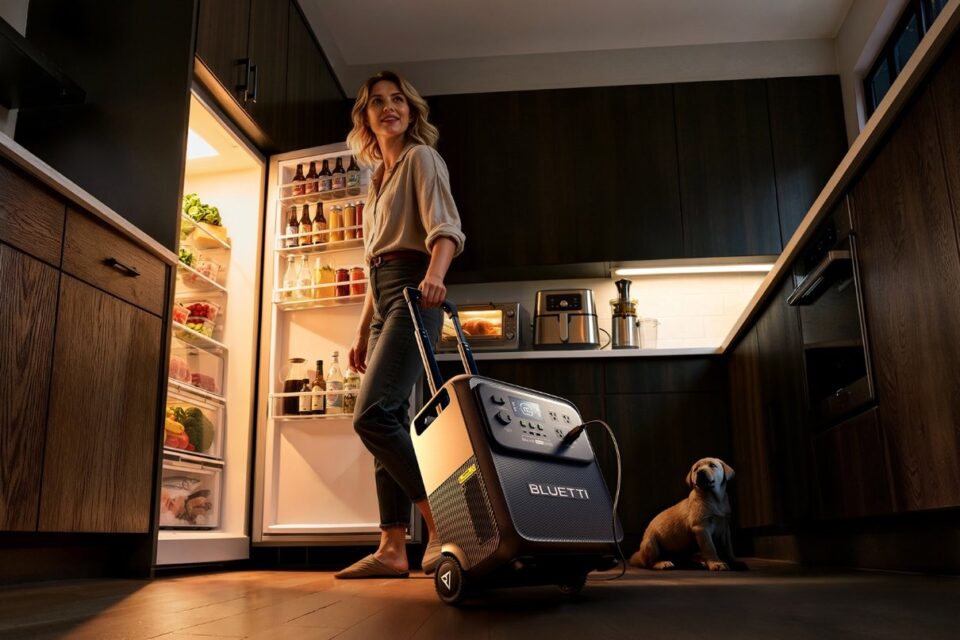
A short outage, a weekend away and a refrigerator full of groceries call for different kinds of backup. The hard part is deciding whether one portable station can cover your needs or a dedicated appliance system makes more sense.
We compared BLUETTI’s Canadian product information for compact and higher-output portable stations with its refrigerator-focused FridgePower system. The key trade-offs are output, portability, and whether you want to power several devices or protect one essential appliance.
This article contains affiliate links. If you buy through them, we may earn a commission at no extra cost to you.
Before you read on
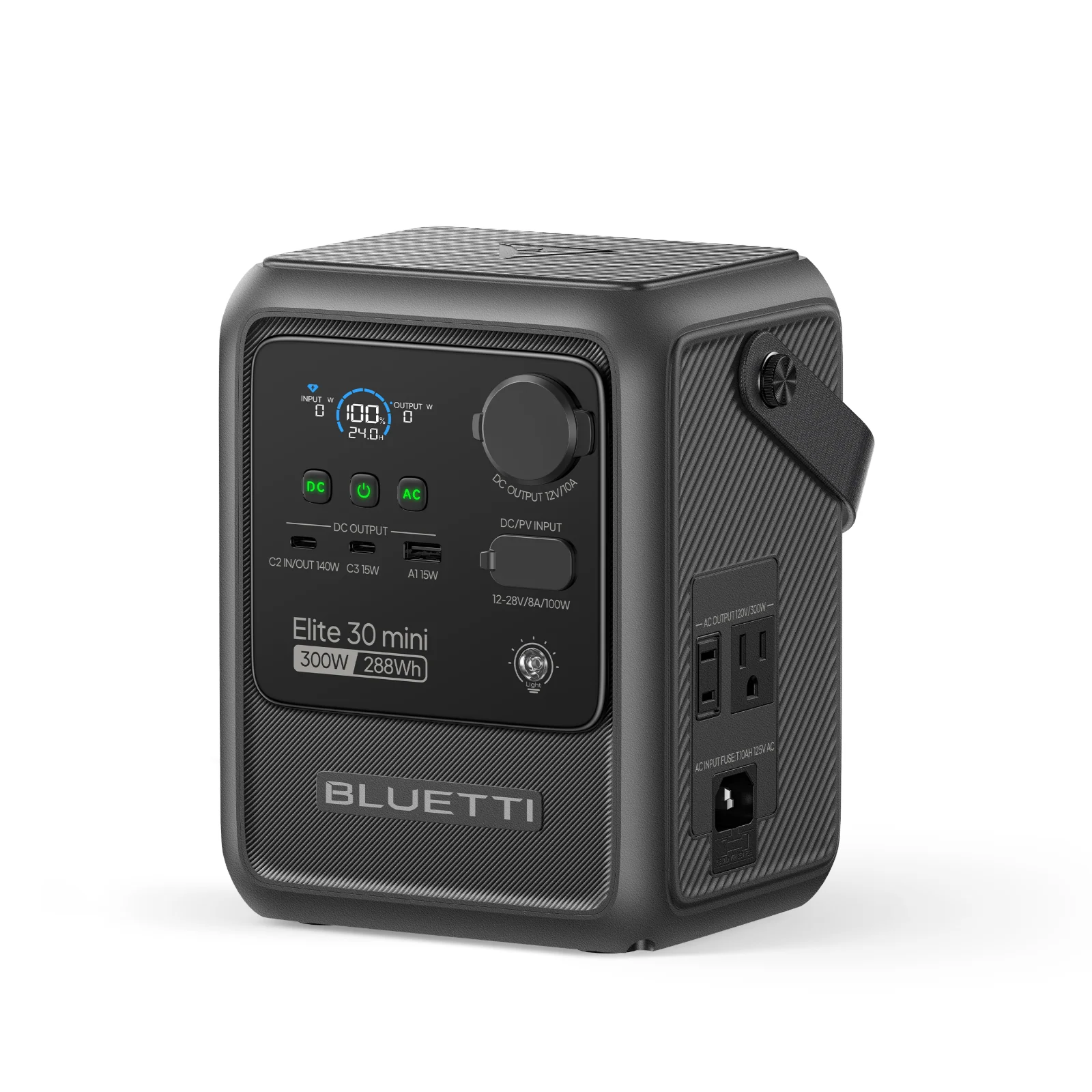
- Elite 100 mini is the lighter-load pick: the store lists 1,004.8Wh capacity, 700W output and nine ports.
- Elite 200 V2 adds more capacity and output for a wider mix of portable backup needs.
- FridgePower is purpose-built for refrigerator continuity, with UPS switching and app alerts described by BLUETTI.
- Compare your actual appliance draw, startup surge and required runtime before choosing any battery system.
What are you trying to keep running?
Start with the load, not the product category. A portable power station has outlets for several kinds of devices, so one unit may cover phones, a router, lights or selected small appliances. A dedicated refrigerator backup is narrower by design: it focuses the system on keeping a fridge supplied when utility power drops.
That distinction matters more than a headline capacity. Refrigerators cycle on and off, and their startup demand can differ from their usual running draw. Check the appliance label and manual, then compare both running and surge requirements with the station’s published output. For a multi-device plan, add the likely loads together and decide how many hours of operation matter.
- Write down the appliances that must stay on.
- Check wattage and any startup surge requirements.
- Estimate how long the devices need to run between recharges.
- Decide whether portability or automatic appliance backup matters more.
When does a compact portable station make sense?
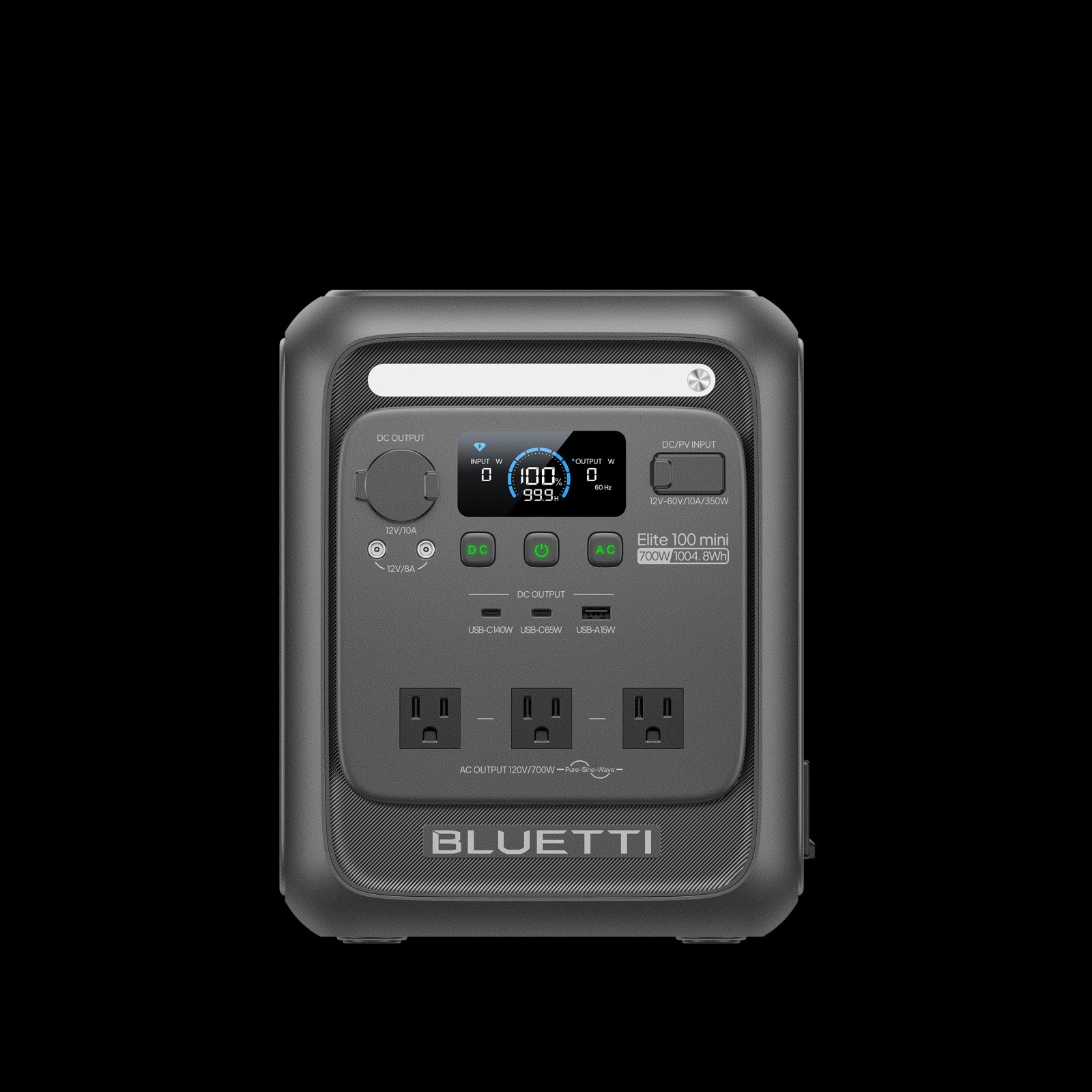
The Elite 100 mini is the straightforward choice when portability and lighter loads lead the decision. BLUETTI lists 1,004.8Wh capacity, 700W output and nine ports, a combination aimed at essentials rather than demanding household appliances. It can be easier to move between a vehicle, campsite and home than a larger backup unit, though runtime falls quickly as the load rises. See the compact station listing for the current port and accessory details.
For a short outage, it may suit communications equipment, lights and device charging. Its 700W output is also a firm ceiling: do not assume it can run a high-draw appliance just because the battery capacity seems ample. Check the product’s current output and compatibility notes before planning around an item such as a kettle or microwave. The Elite 100 mini page is the place to verify what is included and supported. Check its listed output and capacity before relying on it for a specific appliance.
Compared with a conventional gas generator, a battery station avoids fuel storage and exhaust at the point of use, but it has a finite stored-energy supply and needs time or suitable input to recharge. For longer outages, solar input may help when conditions and compatible equipment allow. BLUETTI’s SORA 220 is a separate foldable panel option; its page describes 220W output and IP67 protection. Confirm the station’s accepted solar input before pairing equipment. See BLUETTI’s SORA 220 details alongside station input limits.
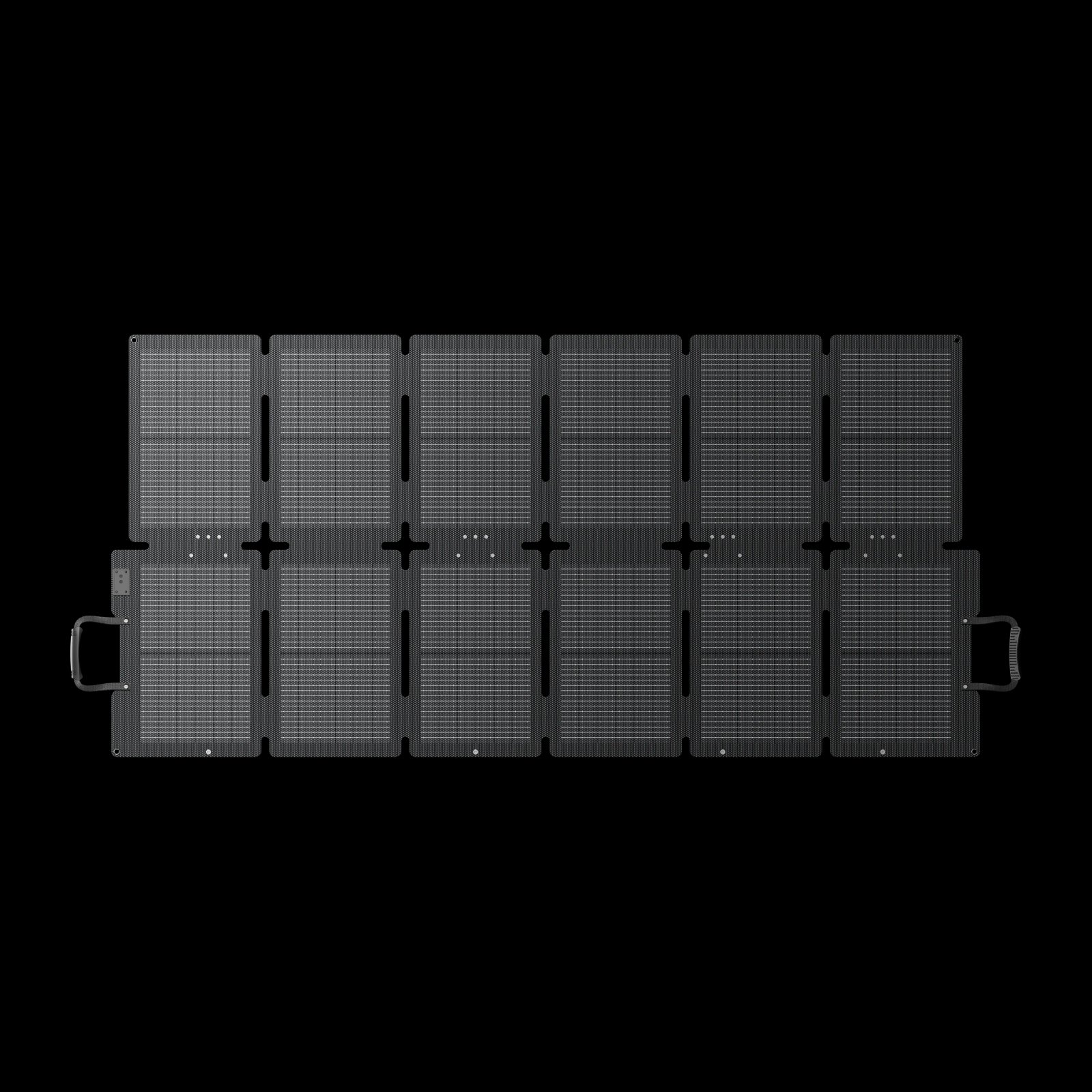
For published specs and current availability, see the Elite 100 mini product page and the SORA 220 page on BLUETTI Canada.
| Option | Best fit | Strength | Limit |
|---|---|---|---|
| Elite 100 mini | Light portable loads | Compact, nine ports | 700W output limits appliance choice |
| Elite 200 V2 | Broader portable backup | 2,600W output, 2,073.6Wh | More bulk than a compact unit |
| FridgePower | Refrigerator continuity | Dedicated UPS switching | Less versatile for whole-room loads |
Is the Elite 200 V2 a better all-rounder?
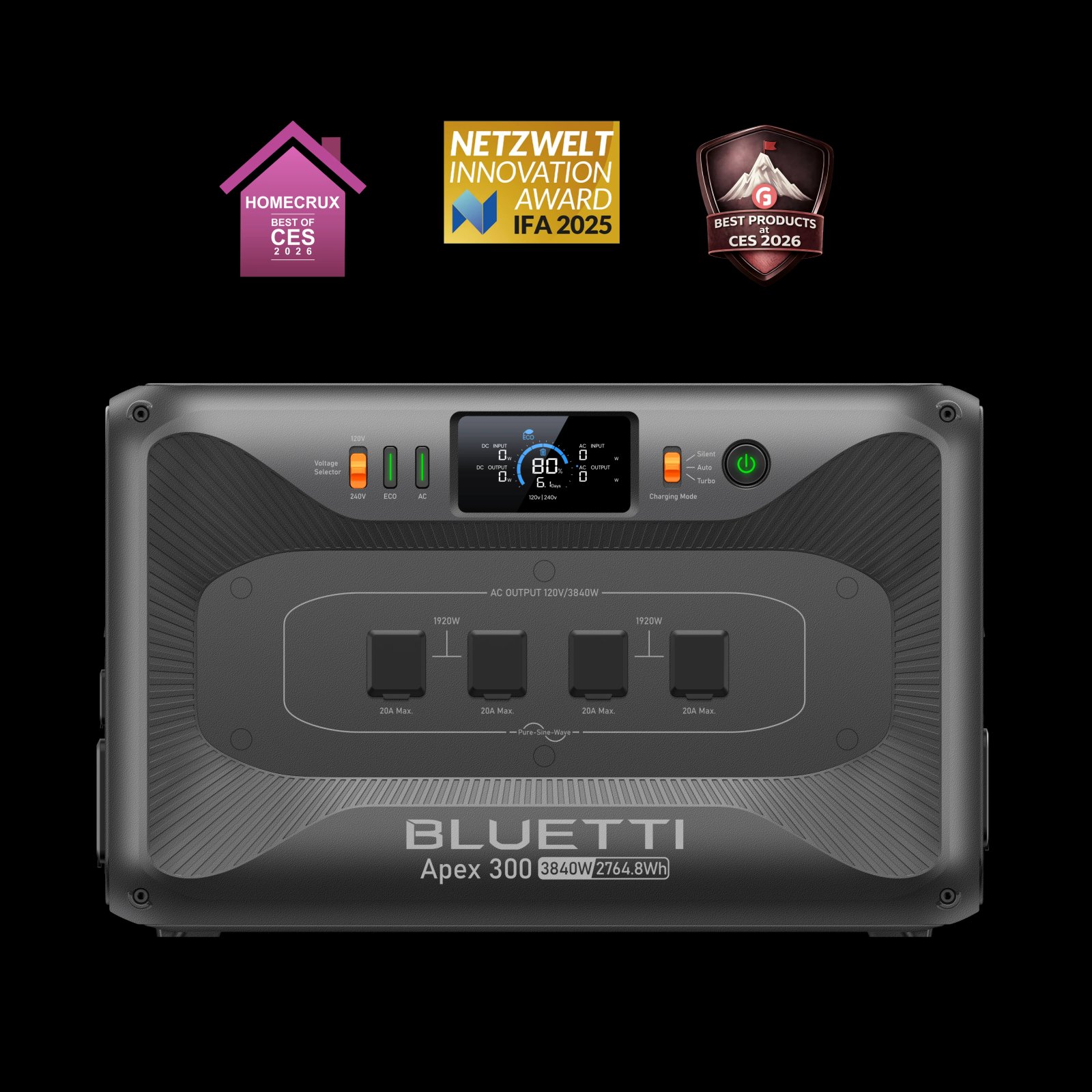
For households that need more headroom but still want a portable unit, the Elite 200 V2 is the more flexible station in this comparison. BLUETTI’s Canadian page states 2,073.6Wh capacity, 2,600W output, peak handling up to 3,900W and support for up to nine devices at once. That makes its power ceiling substantially higher than the Elite 100 mini, while its battery still has a finite runtime that depends on the combined load. See the Elite 200 V2 listing for the supported outputs.
That additional output can open up more appliance choices, but it does not make every home circuit or appliance suitable. Check device startup requirements, the station’s port ratings and any transfer or connection guidance before use. Review the connection and output information on the Canadian page. A portable station is also not the same as a professionally installed whole-home backup system; homes that need multiple circuits covered should compare properly rated fixed systems and installation requirements. Compare FridgePower’s appliance-specific setup if refrigerator continuity is the main goal.
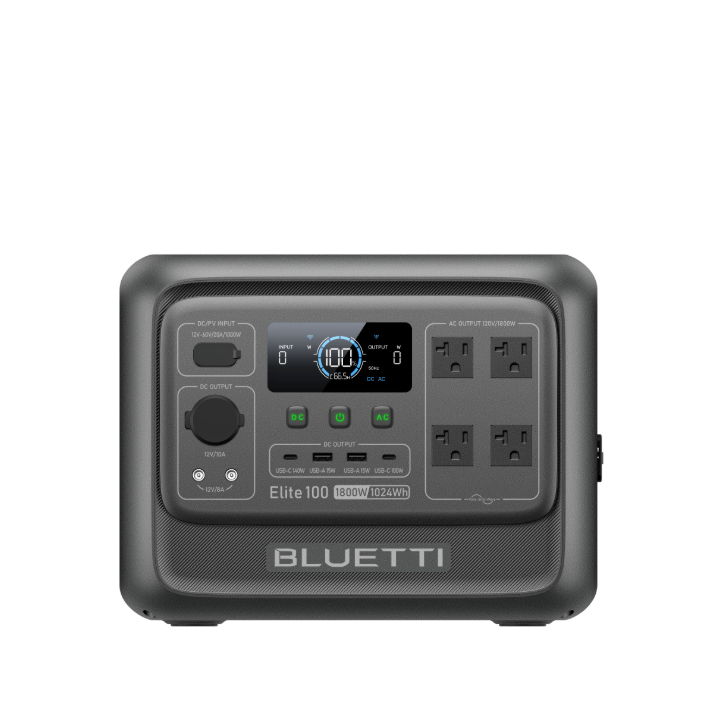
Against typical gas generators, the Elite 200 V2 offers indoor-friendly battery operation at the unit and no refuelling during use, but it cannot keep producing energy indefinitely without recharging. A generator can be a better fit for extended outages where fuel access and outdoor placement are manageable. A smaller battery model is easier to carry, while a larger modular backup can serve heavier loads at higher cost and with more setup. Review the Elite 200 V2 specifications against your load list before treating it as a home backup solution.
Would FridgePower solve a different problem?
FridgePower is the specialist option. BLUETTI describes it as a slim refrigerator battery backup with automatic UPS switching, smart alerts and up to four days of power under its stated conditions. Automatic switchover can reduce the steps required when an outage begins, and a dedicated setup can be appealing if food preservation is the central concern.
The trade-off is versatility. A purpose-built refrigerator backup should not be treated as a general power station for lights, electronics and cooking appliances unless the manufacturer explicitly supports those connections. Runtime also depends on the refrigerator, room conditions and how often its compressor runs. “Up to” is a best-case qualifier rather than a promise for every home. Check which refrigerator types and installation arrangements BLUETTI currently supports. Confirm compatibility on the Canadian page before planning the connection.
Compared with a basic UPS, FridgePower is tailored to a refrigerator use case and the store highlights extended runtime and monitoring. A standard UPS may be cheaper and simpler for a router or computer, but many models are not designed to run a refrigerator compressor for long. Compare FridgePower with a generic UPS on the appliance-specific criteria. If keeping food cold is the priority, check FridgePower’s current compatibility details before comparing generic UPS units.
- Pick FridgePower when refrigeration is the non-negotiable load.
- Pick a portable station when several types of device need backup.
- Use a standard UPS for small electronics if its runtime and output fit.
- Consider a fuel generator for longer high-load use when safe outdoor operation is possible.
How should you compare cost and setup?
We do not quote prices because they change and bundles can differ. Instead, compare the factors that typically drive the total: battery capacity, inverter output, included cables, solar panels, expansion batteries and whether installation or an electrician is needed. A bundle may be more convenient but can include parts that do not match your actual plan.
On the Canadian store, confirm the exact model, included accessories, shipping terms and warranty coverage at checkout. Check whether solar panels are included or sold separately, whether expansion is supported, and how the product is recharged during the kind of outage you expect. A larger station may have more headroom, but it is not automatically the better value if the extra output and capacity will sit unused. Compare the Elite 100 mini with the Elite 200 V2 against the loads you actually need.
Also compare the weight and dimensions with where the unit will live. A station that must be carried up stairs or moved into an RV has a different practical cost than a fixed refrigerator backup. Look for clear Canadian support and service terms, since the purchase is only one part of a backup plan. Read FridgePower’s product information and the Elite 200 V2 details before checkout.
Our recommendation
For a portable mix of lights, communications and moderate appliance needs, we would start with the Elite 200 V2 because its published 2,600W output gives more room than the Elite 100 mini. Choose the Elite 100 mini if compact size and lighter loads matter more. For a refrigerator-first plan with automatic switching, FridgePower is the more targeted match.
The limitation across all three is that runtime depends on real loads and recharge access; specifications alone cannot guarantee how long a particular home’s appliances will run. Check appliance requirements and the latest Canadian product details before settling on a setup.
Can a portable power station run a refrigerator?
It may, if its continuous and surge output match the refrigerator and the battery has enough usable energy for the runtime you need. Check the appliance and station specifications, then allow for compressor cycling and other loads.
Is FridgePower the same as a regular UPS?
It serves a more specific refrigerator backup role, according to BLUETTI’s product description. Compare supported refrigerator types, switching behaviour and runtime with any UPS before deciding.
Do I need solar panels with a BLUETTI station?
No, but compatible solar input can provide a recharge route when sunlight and setup conditions allow. Verify supported input and panel compatibility for the exact station model.