
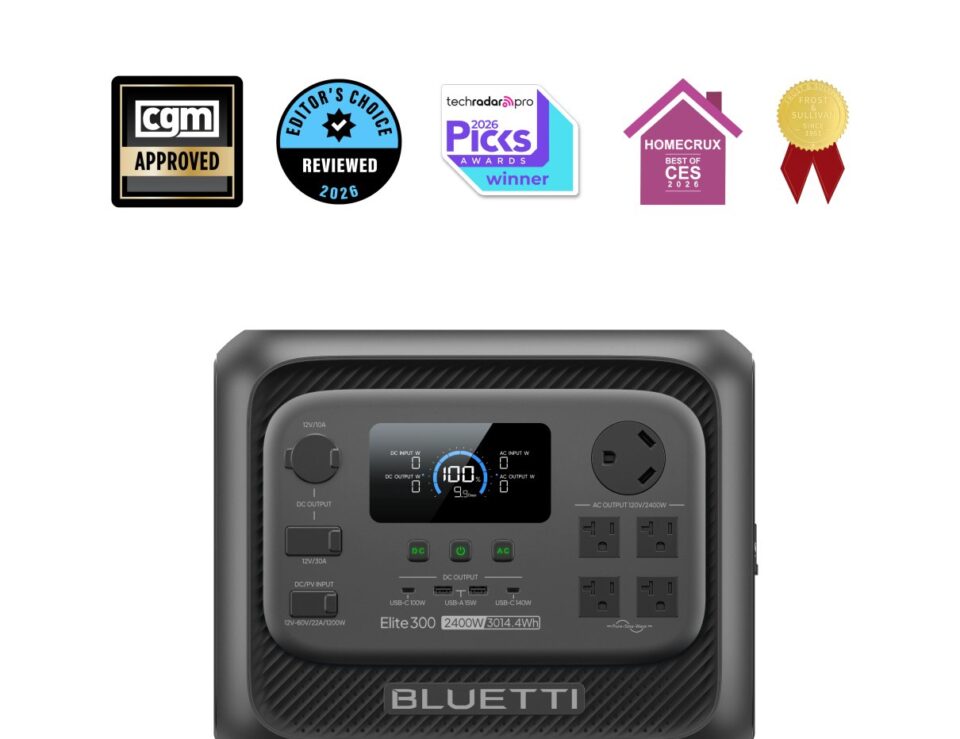
Choosing backup power starts with an awkward question: what do you need to keep running, and for how long?
BLUETTI sells portable stations across several capacity and output tiers, plus panels and expandable systems. The right choice depends less on the biggest number on a product page than on your appliance loads, portability needs and recharge options.
We reviewed the Canada store’s product information for this comparison. Specifications and availability can change, so confirm the current product details before deciding.
This article contains affiliate links. If you buy through them, we may earn a commission at no extra cost to you.
Before you read on
- Elite 100 mini: 1,004Wh capacity and 700W output suit lighter loads and portable use.
- Elite 200 V2: 2,073.6Wh and 2,600W make it the more capable all-rounder for longer or heavier use.
- Apex 200: 2,560Wh, 3,200W and expansion support aim at larger backup plans; the Canada page currently says Coming Soon.
- Compare continuous and surge output with your appliances, then consider runtime, solar input, weight and availability.
What separates the three capacity tiers?
Capacity is the size of the energy reservoir; output is the rate at which a station can supply power. Both matter. A station can have ample stored energy yet still be unable to start an appliance whose demand exceeds its output rating. Conversely, high output does not guarantee long runtime when a load draws heavily for hours.
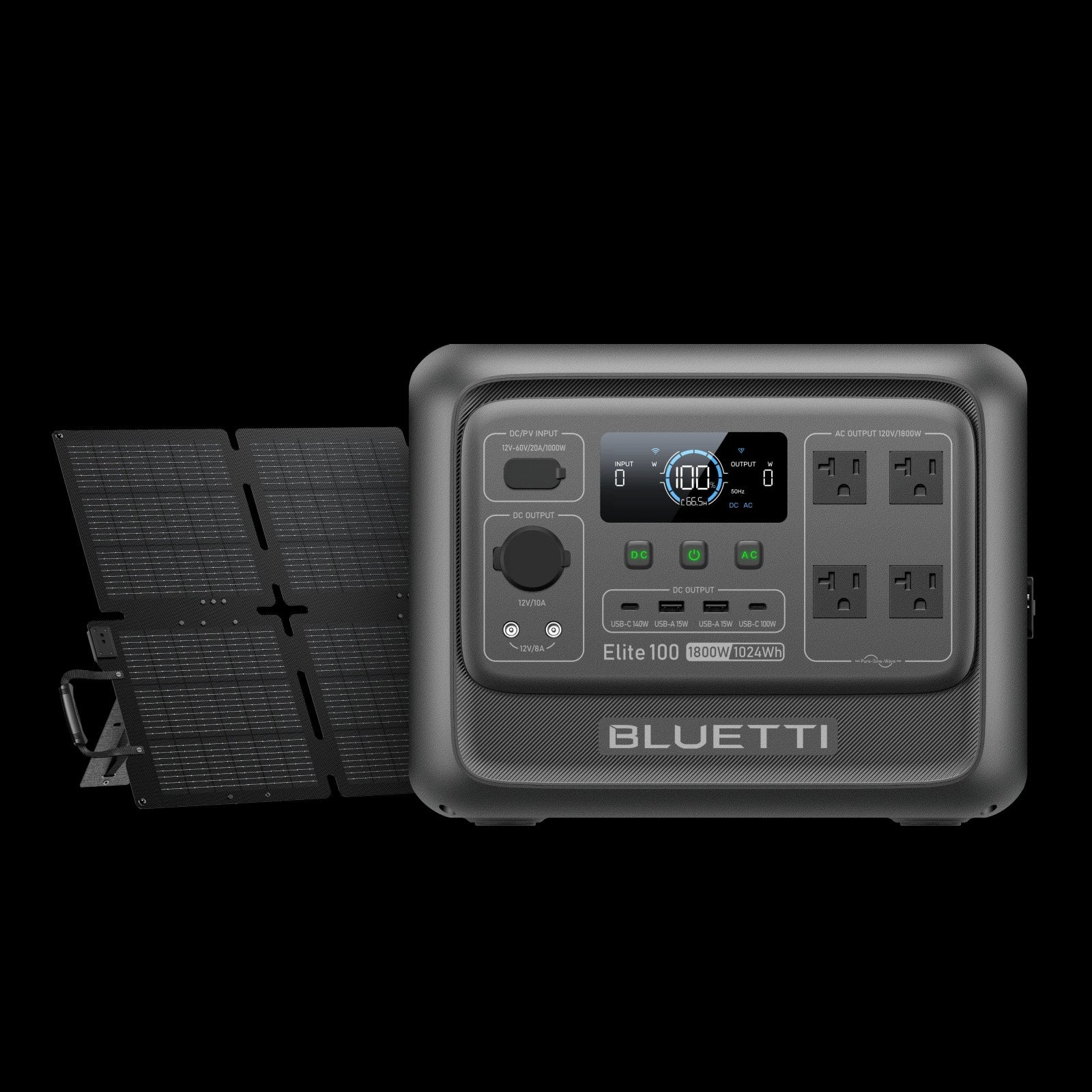
The Elite 100 mini is listed at 1,004Wh and 700W. That makes it the lighter-duty pick in this trio for phones, laptops, lights, networking gear and other modest loads. The ceiling is just as useful to know: add up the running draw and check any startup surge before assuming it can serve a fridge or larger appliance. See the Canada listing for BLUETTI Elite 100 mini if portability matters more than running several demanding devices at once. Buyers who want to add solar can compare the Elite 100 mini with SORA 130 bundle against the station-only option.
The Elite 200 V2 moves into a different class, with a listed 2,073.6Wh capacity and 2,600W output. Compared with the mini, that is a more flexible base for household essentials, longer sessions or multiple devices. It is also a larger commitment in size and carrying weight, and the higher tier only pays off if your loads and runtime justify it. The store’s BLUETTI Elite 200 V2 page is the relevant place to verify its current specifications and included accessories. Its SORA 220 bundle can also be compared if you need a solar recharge plan.
The Apex 200 sits above both on the figures shown by BLUETTI: 2,560Wh capacity, 3,200W output, stated expansion up to 33kWh and solar input up to 3,000W. Those figures point toward a more flexible backup system, but a larger system also means more planning, accessories and space. Its Canada page currently identifies it as Coming Soon, so it is not the practical choice for someone who needs a unit immediately. The Apex 200 Canada page is the place to recheck status and specifications.
| Option | Listed capacity and output | Best fit | Main tradeoff |
|---|---|---|---|
| Elite 100 mini | 1,004Wh / 700W | Portable essentials | Lower output ceiling |
| Elite 200 V2 | 2,073.6Wh / 2,600W | Broader home backup | More bulk and cost |
| Apex 200 | 2,560Wh / 3,200W | Expansion-minded plans | Canada listing says Coming Soon |
These are manufacturer-listed ratings, not a promise of a fixed runtime. Inverter losses, load fluctuations, temperature and battery condition affect usable energy. A sensible shortlist starts with the exact appliances and their wattage labels, rather than picking a capacity tier by name alone.
- Write down which devices must stay on during an outage.
- Check each device’s running watts and startup surge.
- Estimate the hours you need before recharging.
- Leave headroom for conversion losses and loads you may have missed.
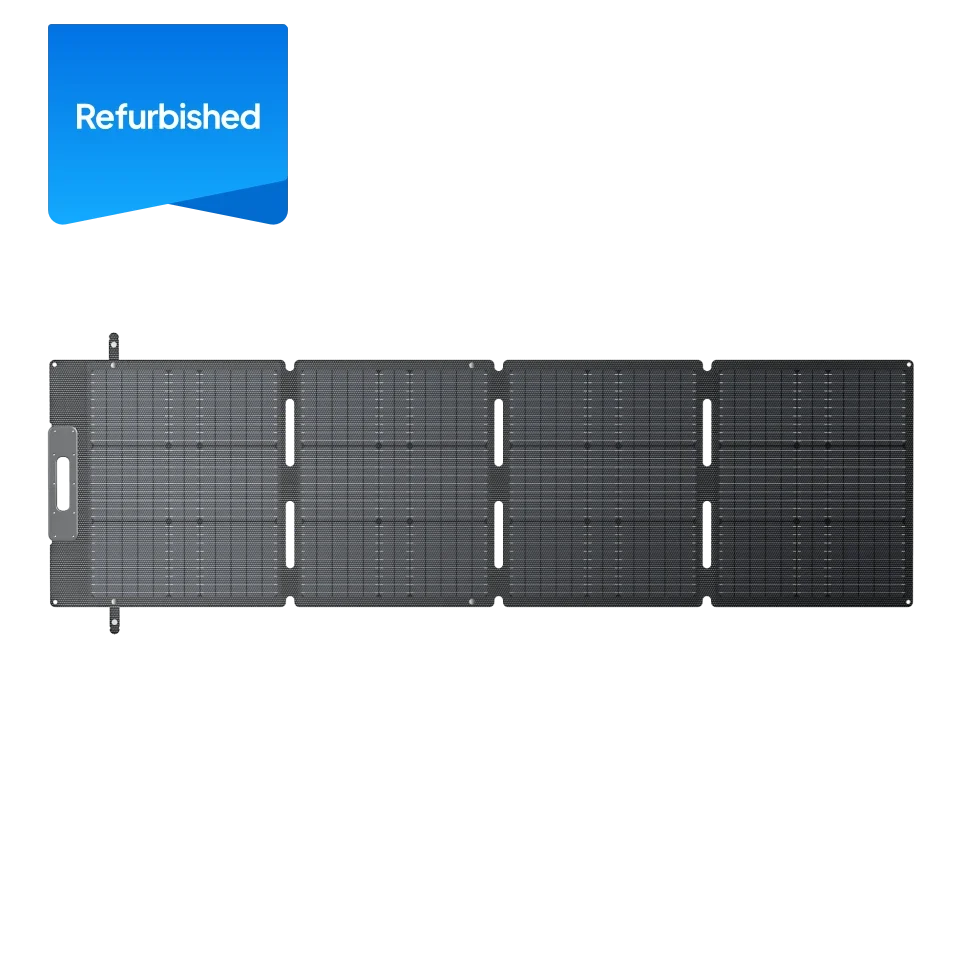
Solar changes the equation when an outlet is unavailable, but panel compatibility and input limits matter. BLUETTI sells folding panels such as the PV200 and PV350, while the Apex 200 page describes a substantially higher solar-input ceiling. That does not mean a panel bundle automatically suits every station: confirm connectors, voltage range and the station’s maximum solar input on the relevant Canada product page. A bigger panel can shorten recharge time in favourable conditions, but clouds, season and panel angle affect the result. Also compare the SORA 130 page and SORA 220 page for alternative panel sizes.
When is a generator the better comparison?
A conventional fuel generator can make more sense when the plan involves sustained high-power loads, long outages and readily available fuel. It generally requires outdoor placement and fuel handling, and it produces exhaust and noise. A battery station avoids routine fuel use and can be useful indoors when operated as directed, but it has a finite stored supply and must be recharged. Solar may extend use, though its contribution depends on conditions. The AC180 listing is another BLUETTI reference for a portable station in this class.
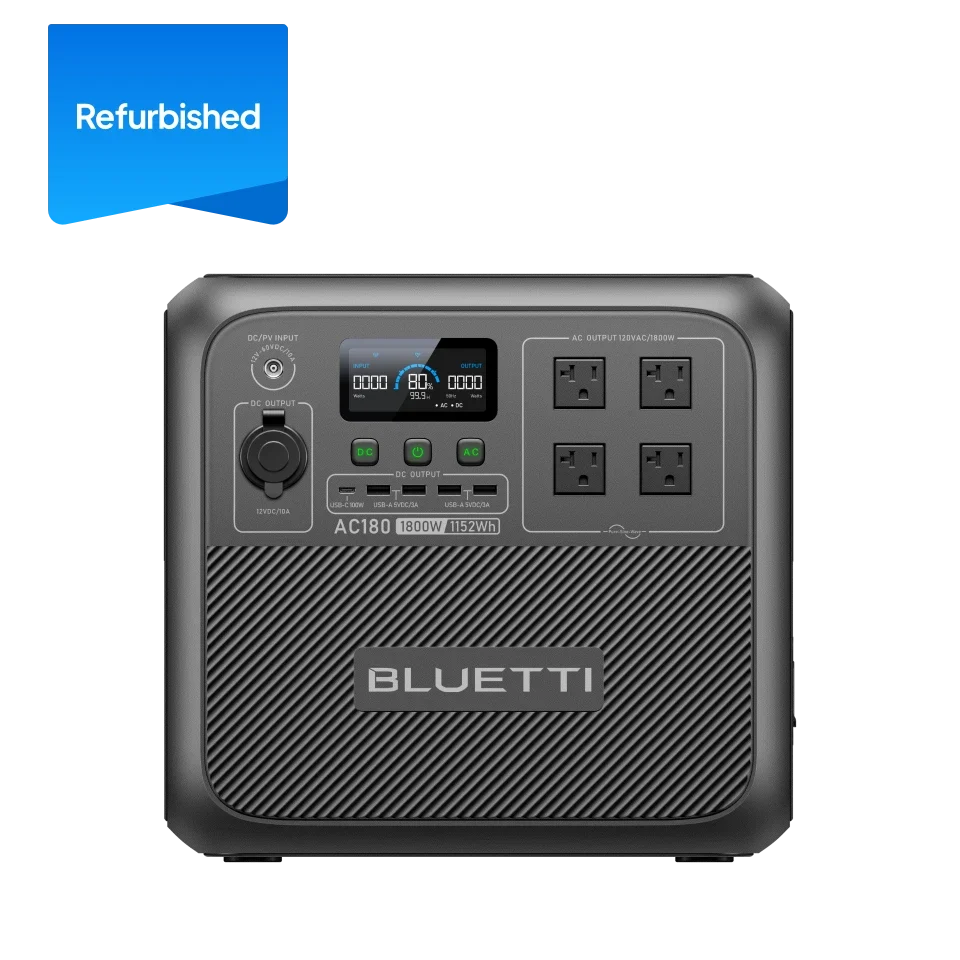
That makes the comparison practical rather than ideological. For quiet, short-duration electronics backup, a battery station is often easier to integrate. For continuous heavy loads, compare generator output, runtime, maintenance and safe operating requirements against a battery system’s capacity, recharge rate and expansion cost. BLUETTI’s range is strongest when portability, stored energy and possible solar charging are priorities. It is less compelling if the central need is indefinite high-wattage operation without time to recharge.
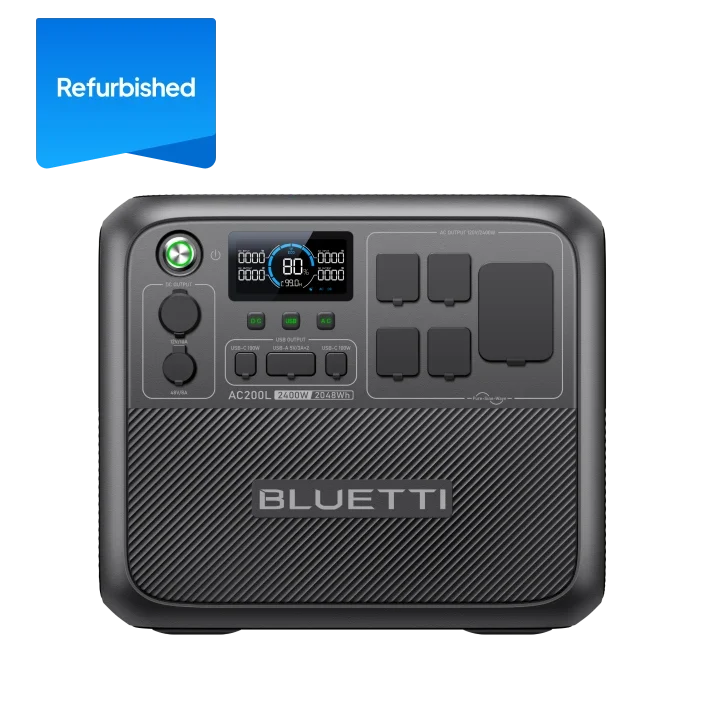
Expansion deserves the same scrutiny. The Apex 200 page describes compatibility with additional batteries, which could let a buyer start with a base system and add capacity later. But expansion adds equipment and expense, and it is only useful if supported components remain available and fit the intended setup. By contrast, a fixed-capacity station is simpler to compare and move. Consider expansion when the use case is clear, not simply because the largest theoretical capacity looks reassuring. For another larger-station point of comparison, review the AC200L listing and its supported accessories.
- Choose the mini for light loads, frequent carrying and a smaller power budget.
- Choose Elite 200 V2 when you need more output and stored energy for a wider set of essentials.
- Wait on Apex 200 if you want its expansion path, and confirm Canadian availability first.
- Compare a generator for sustained heavy loads or when refuelling is easier than recharging.
A solar-generator bundle can make the panel and station pairing easier to assess, but it still needs to match your preferred recharge route and power needs.
What should Canadian buyers verify before choosing?
Product specifications tell only part of the buying story. Check what is included in the box, whether a solar cable or adapter is needed, and which charging methods are supported. Confirm shipping availability to your location and warranty terms on the Canada store. Those details can shift the value comparison between a station-only purchase and a kit. Revisit the Canada pages for the Elite 100 mini, Elite 200 V2 and Apex 200 to compare current product notes.
Also compare the station’s weight and dimensions with where you will store and use it. A larger unit may be sensible as stationary home backup but annoying to move regularly. If you intend to travel with it, check airline and transport rules independently; product capacity alone does not determine whether a battery is permitted on a particular trip.
- Review warranty and included cables on the Canada listing.
- Check the physical size against your storage and carrying needs.
- Verify solar input and connector compatibility before adding a panel.
BLUETTI’s product pages provide the model-specific numbers, but a competitor’s spec sheet should be read using the same criteria: capacity, continuous output, surge handling, recharge choices, portability, warranty and expansion. For the current range, use the official Canada product pages rather than relying on older listings or summaries.
Can the Elite 100 mini run a refrigerator?
It depends on the refrigerator’s running draw, startup surge and the time you need it powered. Compare those figures with the station’s listed 700W output and 1,004Wh capacity, allowing for losses. Do not assume the model name guarantees compatibility.
Is a larger station always better for outages?
No. More capacity and output can cover more loads, but add cost, bulk and charging time. A smaller station matched to communications and lighting may be more useful than an oversized unit that is difficult to move or keep charged.
Should I buy a solar panel with the station?
Consider a panel if you need an off-grid recharge route and can place it in useful sunlight. Verify the specific station’s solar input and connector requirements before choosing a panel or bundle.
Our recommendation
For most buyers choosing among these three levels, the Elite 200 V2 is the balanced pick when its greater output and capacity match real household loads. The Elite 100 mini is the clearer choice for portable essentials and lighter demands; the Apex 200 is more interesting for a future expandable setup, but its Canada page currently says Coming Soon.
The limitation is that no station can be recommended from capacity alone. Check the current specs, availability and system cost against your appliance list, and compare a generator if you expect long, heavy loads without a dependable recharge window.