
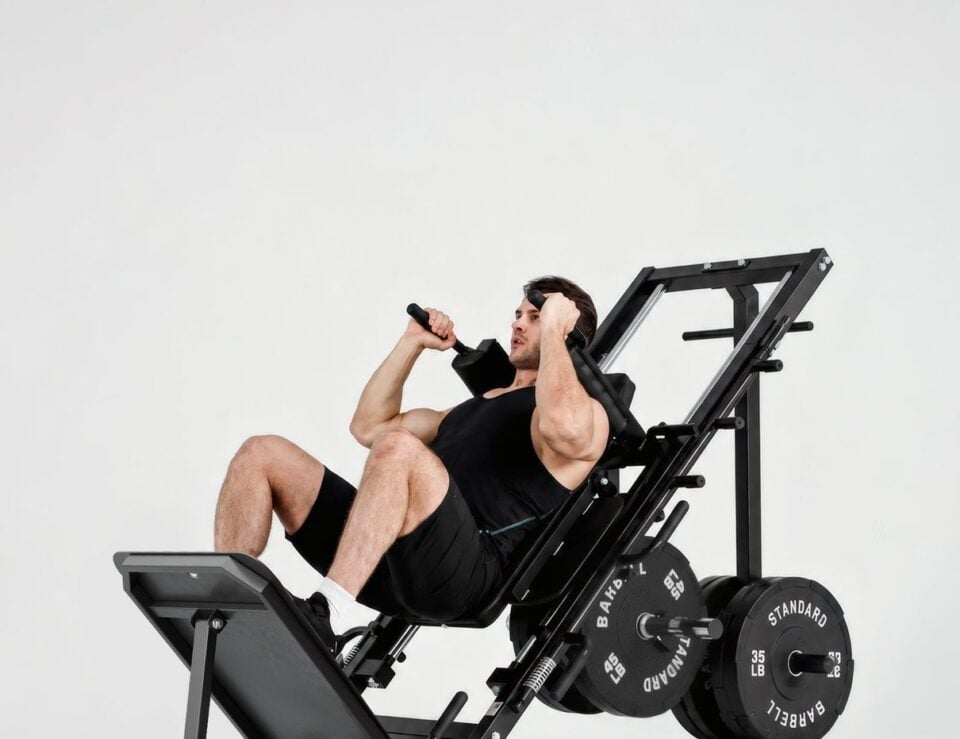
A dedicated leg machine can add useful variety to a home gym, but it also claims a substantial share of the room. The question with WUXTIME’s DD10 is whether its two movement setups and adjustments justify giving it that space.
We reviewed the product information on the US store, focusing on what the machine offers, what its listed specifications mean for planning, and where buyers should pause before choosing it. This is a focused review of one lower-body station, with the rest of the brand’s range only as context.
The product page describes the DD10 as a combined leg press and hack squat machine, with an angled sled, adjustable footplate, safety limiter and integrated band pegs. Those details make it more specific than a basic plate-loaded press, while the footprint and setup requirements call for careful measuring.
This article contains affiliate links. If you buy through them, we may earn a commission at no extra cost to you.
Before you read on
- The DD10 combines leg press and hack squat configurations on one machine.
- WUXTIME lists an 18.8 sq ft footprint and a 500 lb capacity.
- The adjustable footplate has three stated angle settings and supports different stance positions.
- Safety limiters and band pegs broaden the setup, but room access and assembly planning matter.
What does the DD10 put into one station?
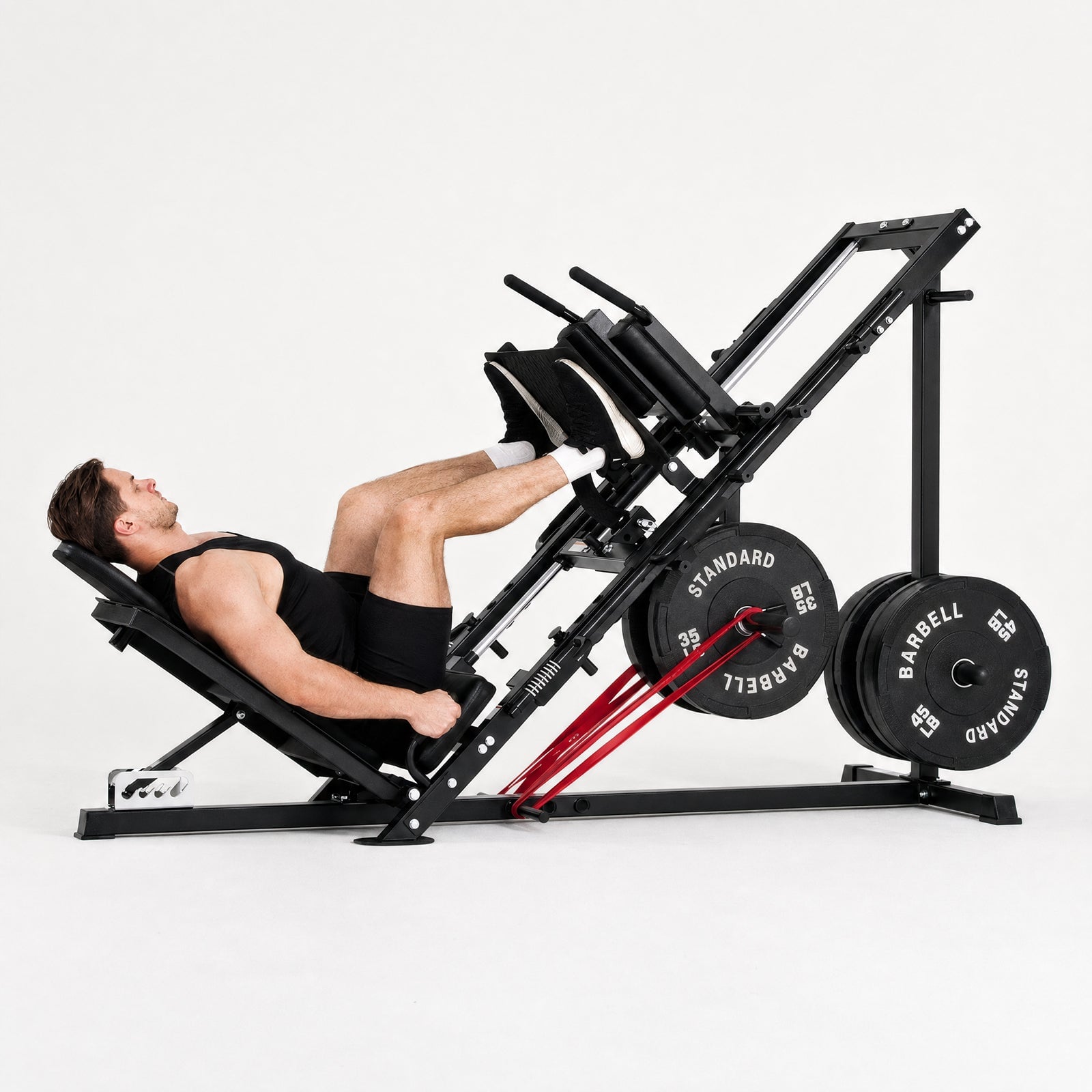
The central appeal of the 2-in-1 Leg Press Hack Squat Machine Combo DD10 is straightforward: one plate-loaded sled is intended to support two familiar lower-body patterns. A conventional leg press emphasizes pushing the platform away while the torso stays supported. In the reverse hack squat arrangement, the body position changes so the movement feels closer to a guided squat pattern. The store presents both modes, making the DD10 most relevant to lifters who want a dedicated quad and glute station without buying separate machines.
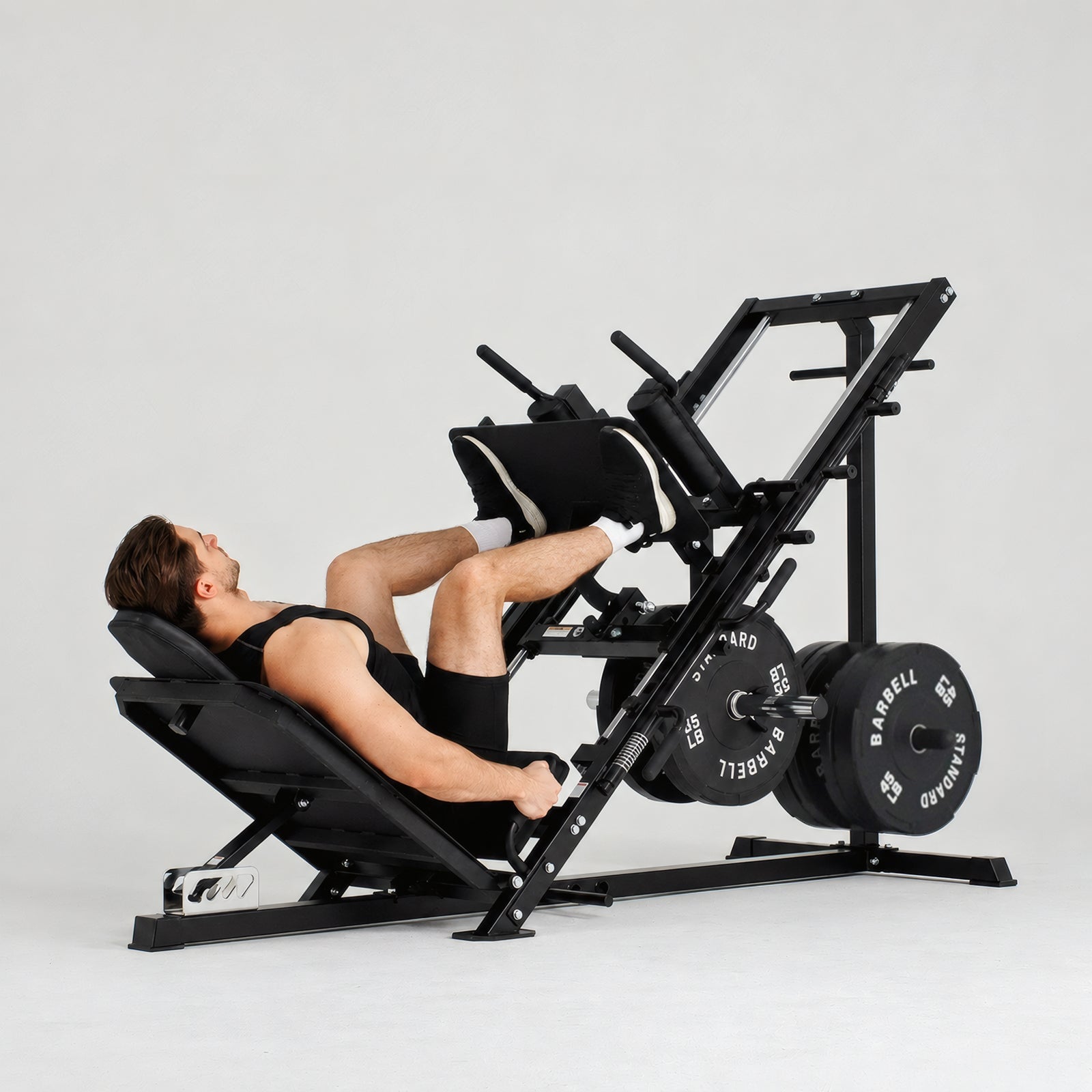 DD10 configured for a leg press movement” />
That two-mode design has practical value if those movements already belong in a training plan. It is less compelling for someone who mainly wants a rack for barbell squats, since the DD10 does not replace a squat rack or provide the same exercise flexibility. The WUXTIME DD10 is a focused machine that can vary lower-body loading, not a complete gym by itself.
- Choose leg press positioning for supported pressing and stance variations.
- Switch to the reverse hack squat setup for a more upright, guided squat pattern.
- Use the product-page movement images to confirm the body position and transition process match your expectations.
Do the adjustments make it easier to fit different lifters?
WUXTIME lists a 23.6 by 13 inch footplate with narrow, wide and high stance options. It also states that the plate angle can be adjusted among 80, 90 and 100 degree positions. In principle, that creates more room to tailor foot placement and ankle comfort than a fixed platform. The store says the machine accommodates users from 4 feet 9 inches to 6 feet 3 inches; this is the brand’s stated range, so buyers at either end should inspect the diagrams and ask the store about fit details.
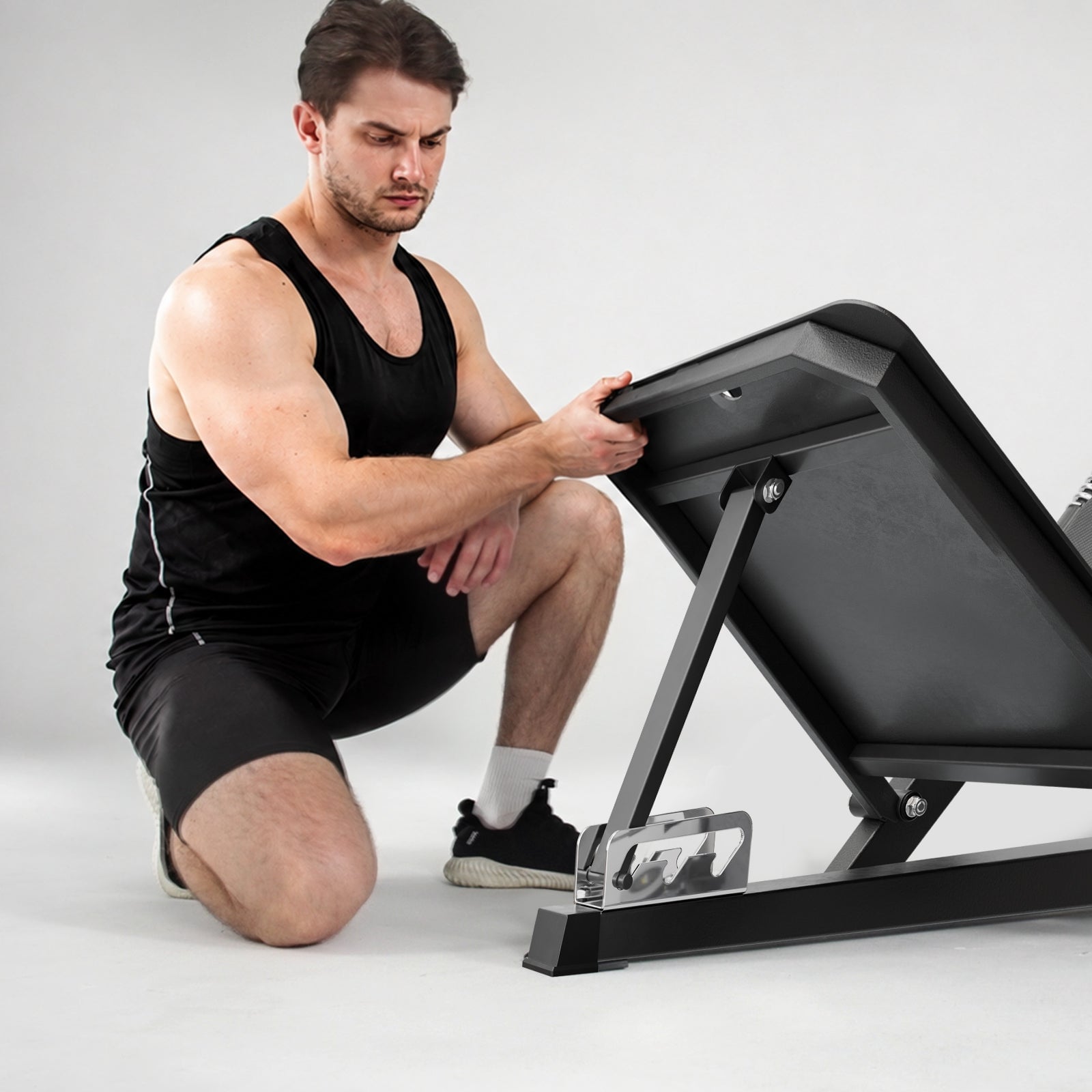 DD10 footplate” />
Adjustment range is useful only when the changes are understandable and repeatable. The listing describes a quick-adjust ladder footplate, but buyers should look closely at the product photos and instructions to understand how each position locks in. A household with multiple lifters may value these options; a single user with a consistent stance may care more about the sled path, back support and ease of moving between configurations.
Who is the DD10 best for?
The clearest fit is a lifter with a dedicated training area who already uses both leg press and hack squat patterns and wants adjustments for stance and footplate angle. It is a weaker first purchase for someone still building a general home gym, sharing a tight room, or looking for a machine that covers upper-body and barbell work too. Space, delivery access and training priorities should decide the choice.
How do its safety and loading details read on paper?
The page specifies a 500 lb capacity, a side-mounted two-position safety limiter and an anti-lift backrest stabilizer. It also mentions anti-slip steel foot pedals and sweat-resistant handles. These are relevant design details for a loaded machine, but capacity is not a recommendation for every user or a substitute for following setup instructions. A purchaser should confirm what the listed capacity includes, how the safety stops are set, and what clearances are required around the sled.
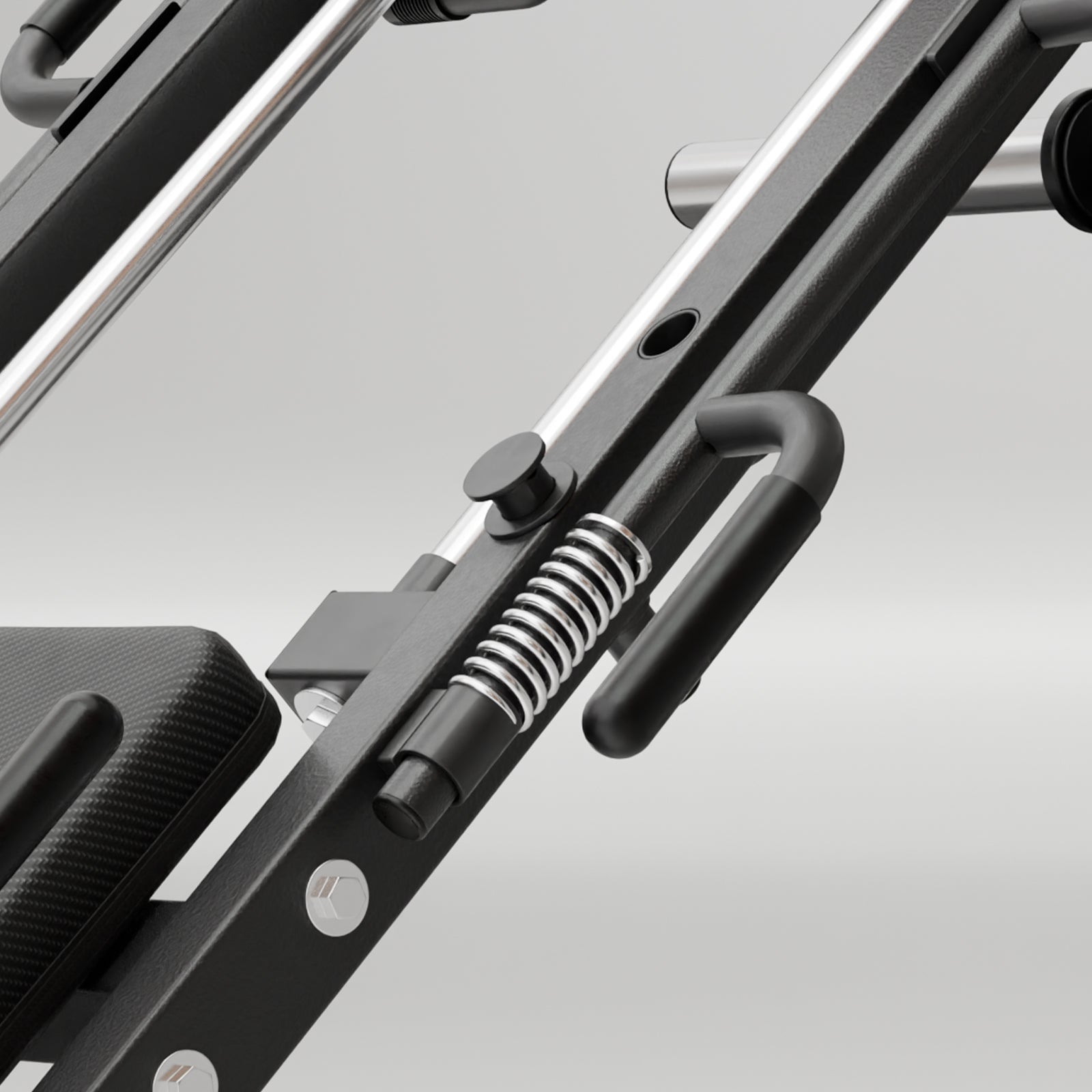 DD10 machine” />
Integrated band pegs are another notable inclusion. The listing says bands can reduce the sled’s effective starting load for lighter sessions and add variable resistance for trained users. The store does not provide enough detail on every compatible band or the resulting resistance, so we would treat this as an optional way to adjust feel rather than a guaranteed load calculation. Check the store’s current instructions before attaching bands.
 DD10” />
Plate storage is built into the machine according to the product information, which may help keep loose plates close at hand. It does not mean the working area can be ignored: the machine itself has a meaningful footprint, and loading plates, entering the seat and reaching the safety controls all need space around it.
What should you measure before choosing it?
The listed footprint is 18.8 square feet, but the space needed to use a machine is larger than the base dimensions alone. Before ordering the DD10, measure the room, ceiling height, route through doorways and turns, and the clearance required for the sled’s travel. The store’s dimensions and assembly guidance should be the reference for the final layout.
- Measure the floor area and preserve a safe route around the moving sled.
- Check doorway widths, stair turns and any elevator or hallway restrictions for delivery.
- Confirm the floor can support the machine and the plates you intend to load.
- Review assembly, shipping, warranty and return terms on the current product page before checkout.
WUXTIME’s catalog offers adjacent equipment, but it serves different needs. The G9 Weight Stack Pulley Tower is a wall-mounted cable option for pulls and general cable work, while the Fixed Barbell Rack is storage for fixed or Olympic barbells. Neither is a direct substitute for the DD10‘s sled movements; they simply show how a buyer might build out separate training and organization priorities over time.
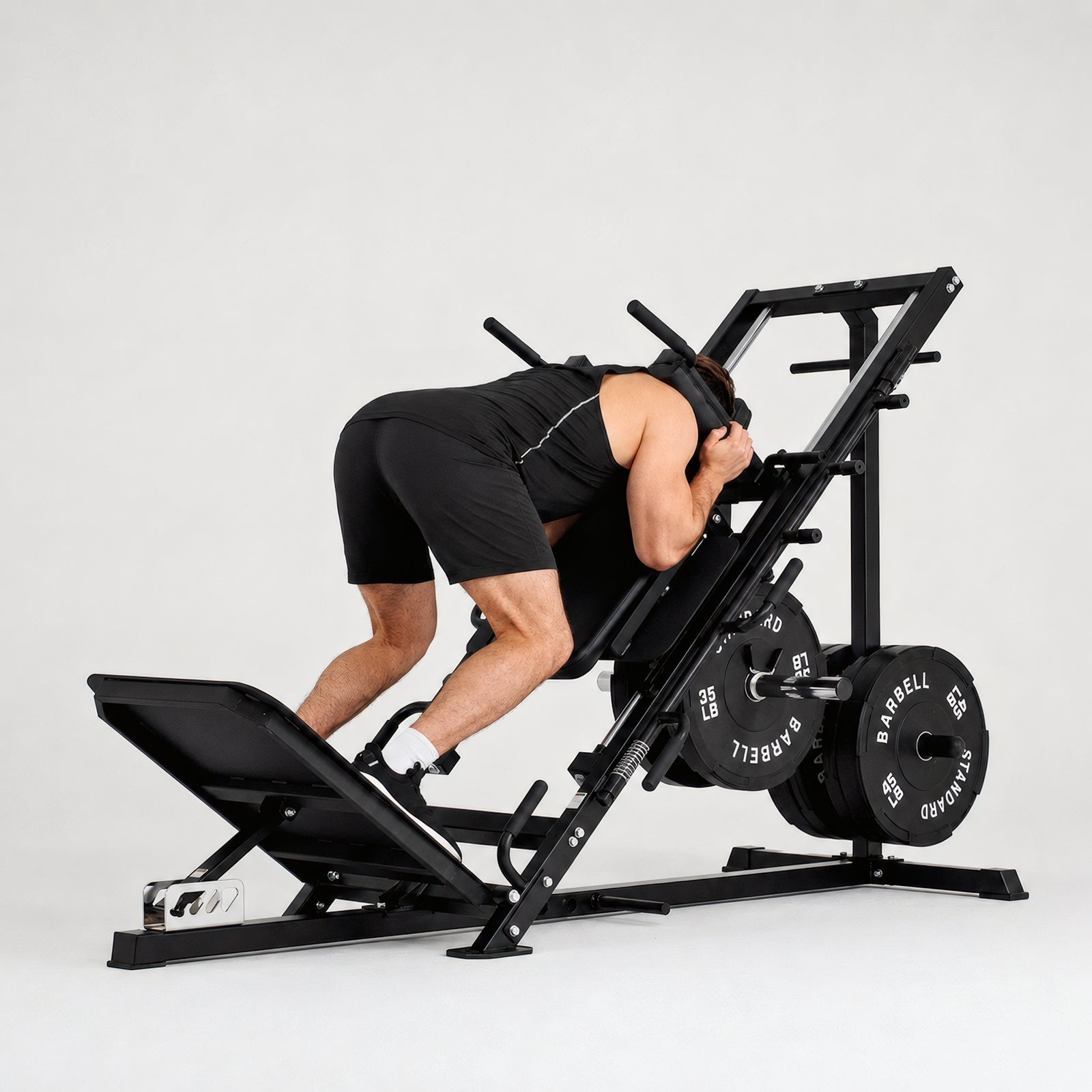 DD10 shown in its reverse hack squat configuration” />
In that context, the DD10 suits a lifter with enough dedicated floor space who already knows they want leg presses and guided hack squats. A smaller room, a beginner still deciding what equipment to use, or a buyer prioritizing full-body versatility may get more from starting with a rack or cable station. The best match depends on the training plan, not the number of movements named in a listing.
What are the DD10‘s main strengths and limits?
- Strength: one machine supports both leg press and reverse hack squat configurations.
- Strength: adjustable footplate angle and stance positions give users several setup choices.
- Strength: safety limiter, band pegs and plate storage address practical training and organization needs.
- Limit: it remains a large, specialized machine with a real space and delivery footprint.
- Limit: the product page cannot answer every fit, assembly or resistance question for a particular household.
For readers weighing adjacent tools, G9 Weight Stack Pulley Tower offers a cable-focused format, while Fixed Barbell Rack addresses storage. These distinct pages help clarify how specialized the DD10 is within the larger range.
The key trade-off is specialization versus versatility. If both movement patterns are central to your lower-body sessions, consolidating them may justify reserving the floor area. If you need a first purchase that covers more training styles, the DD10‘s narrow focus is a real limitation, and the broader WUXTIME catalog includes other equipment categories to compare.
Questions buyers often ask
Does the DD10 include weight plates?
The product description discusses plate loading and storage but the text reviewed does not establish which plates are included. Check the current listing’s package contents and selected configuration before ordering.
Can one person switch between both movements?
The product page presents both setups, but the information reviewed does not specify a changeover time or detailed sequence. Review its instructions and ask WUXTIME if the transition process affects how you plan to train.
How much room does the DD10 need?
WUXTIME lists an 18.8 sq ft footprint. Plan additional clearance for the sled, loading plates, access and safe movement, then confirm the machine’s full dimensions and delivery route on the store page.
Our recommendation
We recommend considering the WUXTIME DD10 if you have measured a suitable training area and want both leg press and hack squat patterns from a dedicated plate-loaded station. Its most persuasive features are the dual configuration, adjustable footplate and clearly stated safety components.
Its honest limitation is its specialization: it occupies meaningful space and will not stand in for a rack or all-purpose trainer. Review the dimensions, package contents, setup and current terms before deciding, then use the product page to confirm whether its details fit your room and routine.