

A portable power station can be reassuring until you have to decide how much capacity is enough. Jackery offers compact units for day trips alongside larger systems aimed at longer outages, and the useful question is where the extra size and solar options actually help.
We reviewed the UK store’s product information and specifications rather than conducting hands-on tests. This makes the range easier to assess by stated capacity, outputs, charging choices and intended scale, while leaving real-world runtime and performance dependent on your devices and conditions.
The short version: the Explorer 300D looks like the most straightforward portable choice; the Solar Generator 500 v2 occupies a useful middle ground; and the Solar Generator 1000 Plus v2 makes sense only when higher capacity is worth the extra footprint and planning.
This article contains affiliate links. If you buy through them, we may earn a commission at no extra cost to you.
Before you read on
- Explorer 300D: listed at 288Wh, with LFP battery chemistry, five outputs and a 2.5 kg weight.
- Solar Generator 500 v2: a step up for people who need more stored energy than a compact day-trip unit provides.
- Solar Generator 1000 Plus v2: aimed at longer backup needs and heavier use, but it needs more storage space.
- Solar charging through SolarSaga panels adds flexibility, with output shaped by daylight and placement.
What does Jackery’s range do well?
The product range is organised around recognisable use cases rather than one all-purpose box. Its compact stations are easier to carry and store; larger units hold more energy for longer sessions; and solar panels can reduce reliance on mains charging when conditions allow. That breadth is the clearest strength of Jackery.’s UK catalogue.
The store also publishes practical specifications that help narrow the choice. For the Explorer 300D Portable Power Station, the stated 288Wh capacity, five outputs, three USB-C ports and up to 140W USB-C PD charging suggest a model built around phones, tablets and selected small electronics. Its listed weight of 2.5 kg gives portability a concrete meaning. The Explorer 300D page has the current configuration.
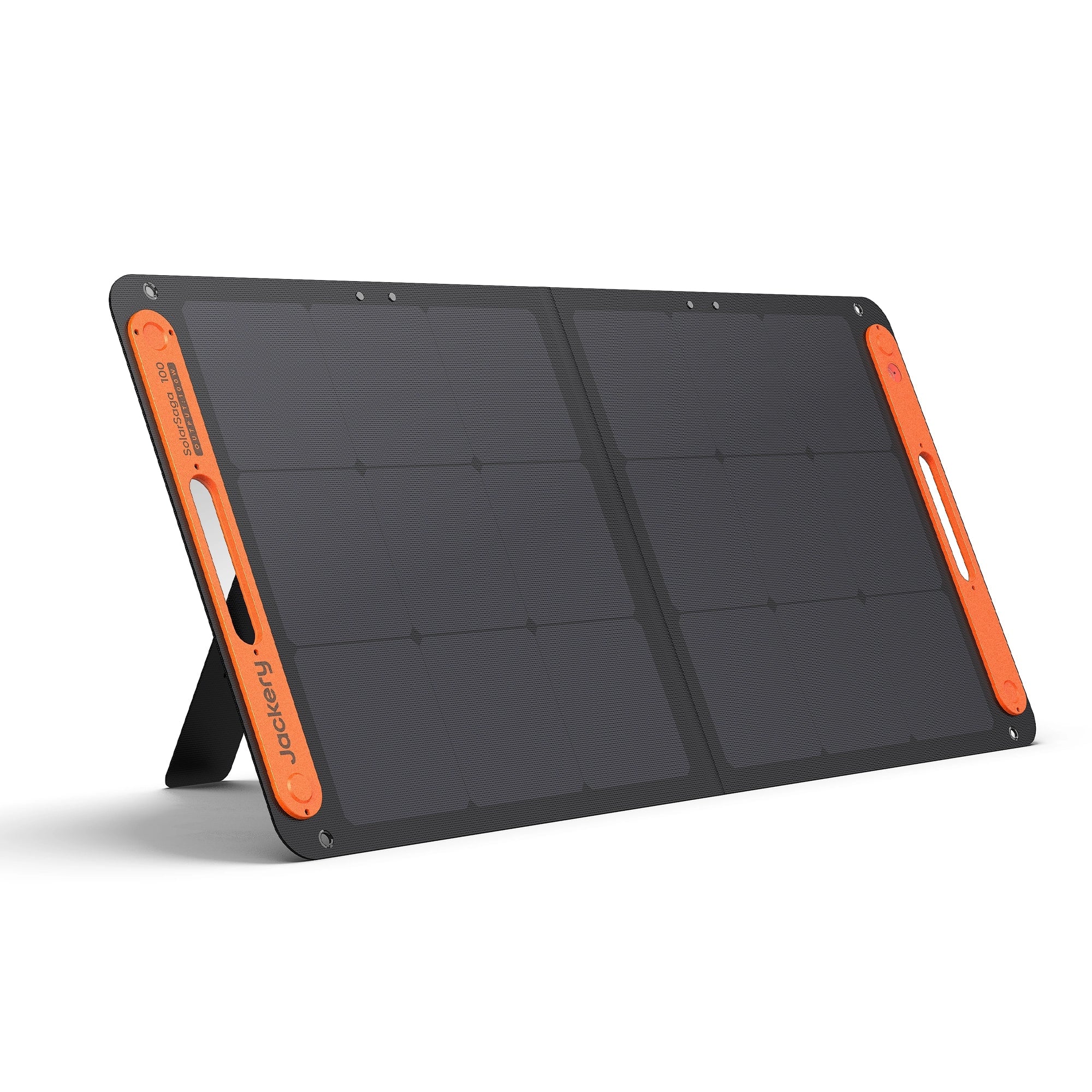
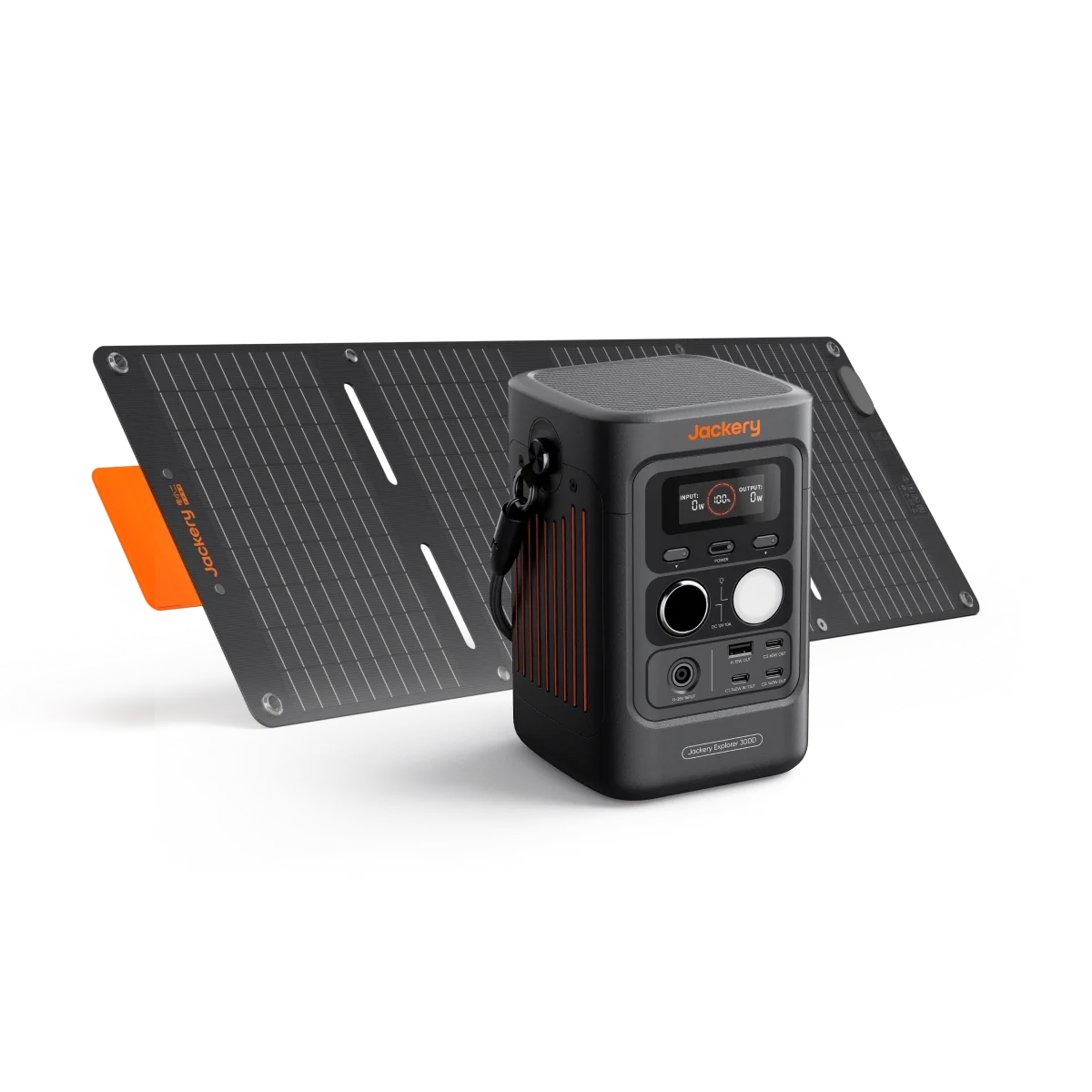
Solar compatibility is another useful part of the proposition. A Explorer 300D can be recharged from AC, a car or solar according to the store, so the owner has more than one charging route. The SolarSaga panel family gives that route a dedicated accessory, although a panel is an additional item to choose, carry and position. Review the 300D charging details alongside the panel listing.
For buyers who want more than a phone-and-tablet reserve, the Solar Generator 500 v2 is a distinct middle step. Its product page positions it as a portable solar generator, pairing a station with solar-panel options. That bundle approach can simplify compatibility decisions, though the right configuration still depends on which devices you plan to power. Check the bundle page for its contents.
- Start with the appliances or devices you need to run, not the largest capacity on the page.
- Separate essential loads from nice-to-have items.
- Check output limits as well as stored energy.
- Decide whether mains charging alone is enough or whether solar has a practical role. The 300D recharge options are worth checking.
Which model suits a realistic use case?
For occasional charging away from a plug, the Explorer 300D is the clearest match in the range reviewed here. Its compact capacity is easier to justify for a weekend bag, work kit or short power interruption than for running household appliances. Five outputs offer connection flexibility, but they do not mean every device can be powered at once: check each port’s limits and your equipment’s draw. See the Explorer 300D specifications before matching it to a device.
The Solar Generator 500 v2 is more persuasive when several devices or longer sessions are involved. The larger class typically trades some convenience in carrying and storage for additional energy reserve. Jackery’s page should be the final reference for the exact output, recharge time and bundle contents, since those details shape whether the upgrade has value for your own routine. Check the 500 v2 listing for output details.
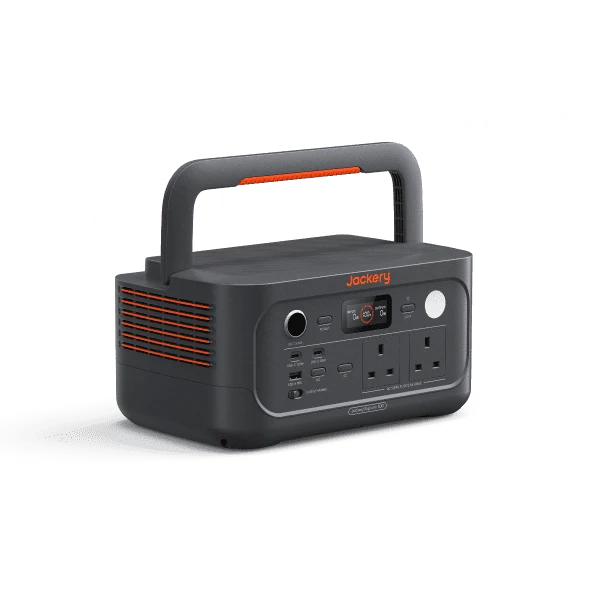
For backup planning, the Solar Generator 1000 Plus v2 is the more relevant starting point. A larger station can support more demanding or extended use, but capacity alone is not a promise that it will run a particular appliance for a particular time. Runtime varies with load, conversion losses and operating conditions. Verify both continuous output and any surge requirements before relying on it. The 1000 Plus v2 product page lists its stated limits.
- Choose the 300D for portability and modest electronics.
- Look at the 500 v2 when you need a broader reserve but still want a portable setup.
- Consider the 1000 Plus v2 for more sustained backup, after checking output compatibility.
Where are the limits and trade-offs?
The first limit is straightforward: capacity is finite. Even a larger station will not act like an unlimited household supply, and the number printed in watt-hours does not translate directly into usable runtime. Buyers should estimate the energy demand of each device and account for how often it runs.
Second, solar input depends on conditions. A panel may be useful for a campsite, garden workspace or planned outage, but cloudy weather, shade, season and panel angle all affect generation. The SolarSaga route is most convincing when you can place the panel in suitable light and tolerate slower, variable replenishment. It is less compelling if you expect predictable charging regardless of weather.
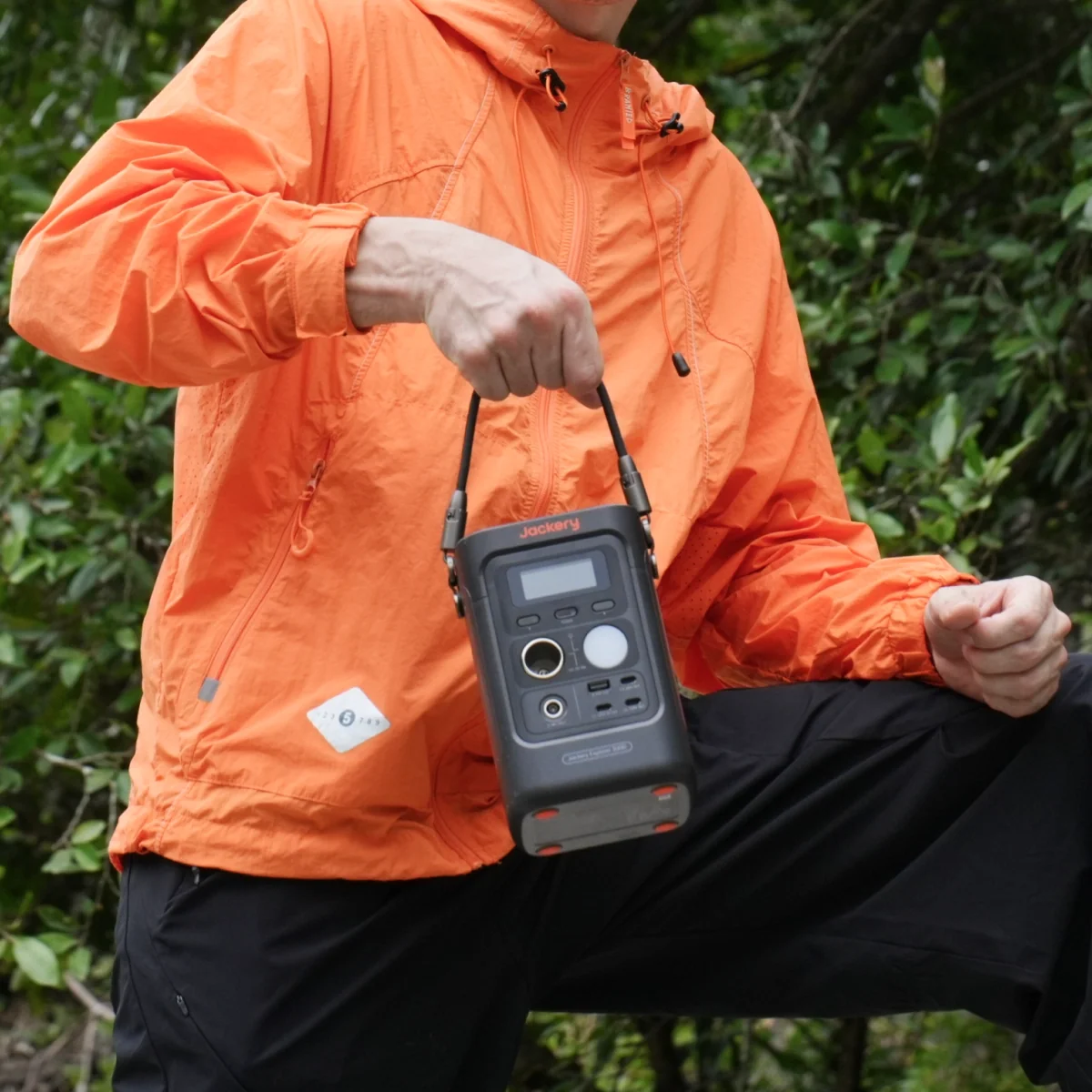
The carry cable is another practical accessory for moving a compact station between storage and a campsite; it does not change the unit’s capacity.
Third, the ecosystem adds decisions. A standalone station can be simpler if mains charging meets your needs. A bundle can reduce uncertainty around compatibility, but it also means checking what is included and whether the panel size suits your available space. Accessories, cables and storage should be assessed as part of the total setup, not assumed to be interchangeable.
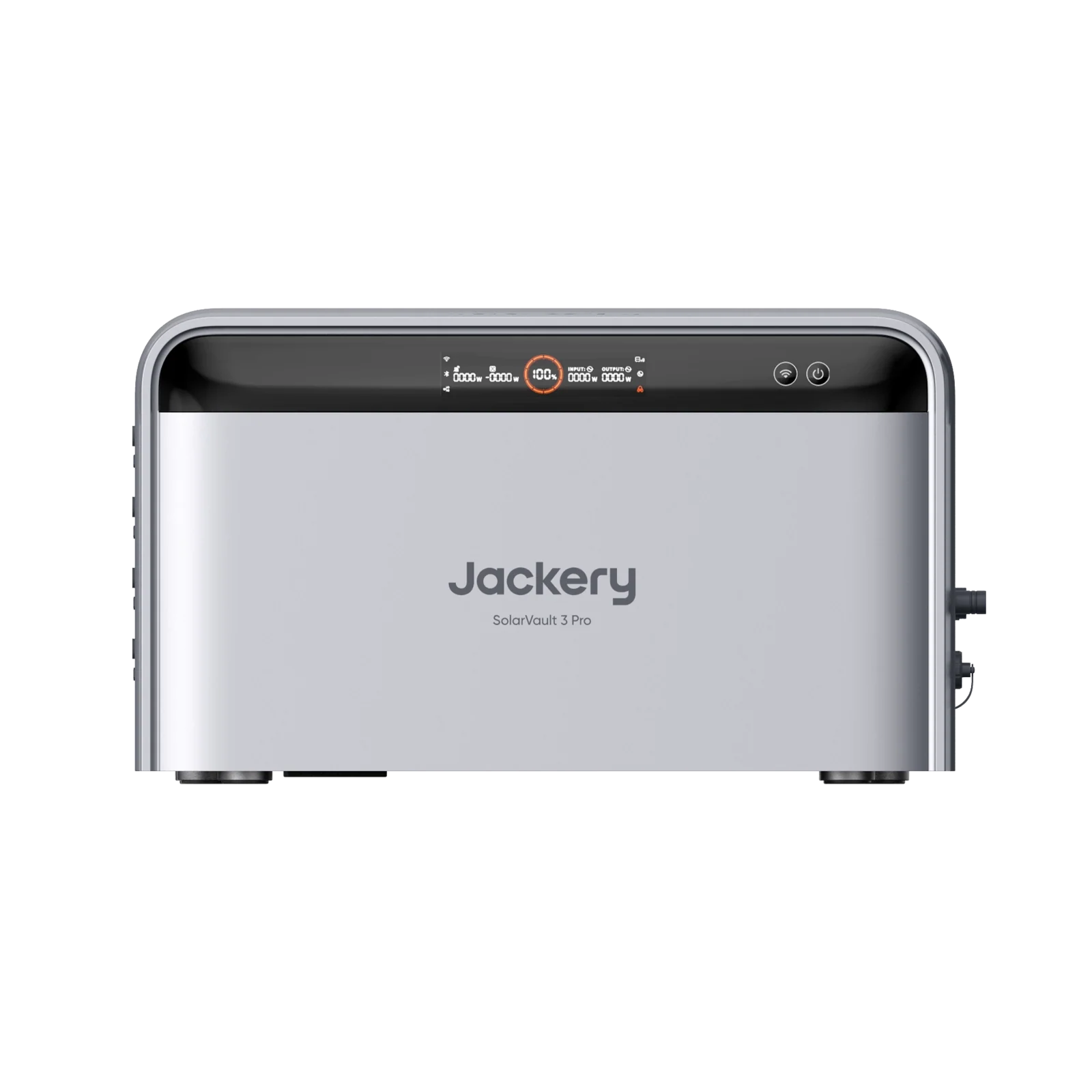
Finally, these products are not a substitute for a fixed home backup installation where a home’s circuits or high-demand appliances need support. Jackery also lists the SolarVault home battery line, a different category from portable Explorer stations. Readers considering home energy changes should compare system requirements and installation needs carefully.
What should UK buyers check before choosing?
Start with the UK product page and confirm the current model configuration. Open the 1000 Plus v2 listing if considering a larger reserve. Product bundles can vary, and the box contents matter: the station, panel and charging cables may differ by listing. Check the exact product name, outputs, recharge methods, warranty terms and delivery details shown on the local store before committing.
Then make a short load list. Note each device’s wattage, whether it needs a standard AC socket or USB-C, and how many hours you expect to use it. For solar, consider where the panel will sit and whether you can reposition it during the day. Review the 500 v2 solar options for panel choices. These checks will usually make the 300D versus 500 v2 versus 1000 Plus v2 decision clearer than selecting by headline capacity alone.
- Confirm the outlet type and power draw for each intended device.
- Check whether the listed bundle includes the panel and cables you need.
- Compare capacity and output separately; both affect suitability.
- Review the UK store’s current specifications and support terms.
Frequently asked questions
Can the Explorer 300D run household appliances?
It depends on the appliance’s draw and the station’s output limits. The stated 288Wh capacity and USB-C/other outputs make it a compact electronics option, not an automatic fit for high-demand appliances. Check the product specifications against the device label.
Does a SolarSaga panel guarantee off-grid power?
No. Solar charging can add energy when sunlight and placement are favourable, but generation varies with conditions. Treat a panel as a flexible charging source rather than a guaranteed constant supply.
Is the largest model always the better choice?
No. A higher-capacity station can support longer or heavier use, but adds cost, size and storage considerations. The best fit is the smallest model that covers your actual loads with a sensible reserve.
Our recommendation
Based on the UK store’s published information, Jackery is strongest for buyers who want a clearly tiered portable power range and value having mains, vehicle and optional solar charging routes. The Explorer 300D is the most defensible starting point for lightweight electronics; the Solar Generator 500 v2 suits broader portable use; and the Solar Generator 1000 Plus v2 deserves consideration when the need for longer backup is specific.
The limitation is that published capacity does not settle runtime, and solar performance is conditional. Make a device-by-device load check and confirm the current UK configuration before choosing. If the numbers fit your use case, compare the live product options on Jackery’s UK store.